पिन किया गया ट्वीट
Built Different
12.2K posts

Built Different
@BuiltDiffly
Where discipline meets mindset. | Sport. Self-dev. Sharp thinking.
शामिल हुए Haziran 2023
44 फ़ॉलोइंग193.3K फ़ॉलोवर्स
Built Different रीट्वीट किया

Anthropic is at a $14B revenue run rate and targeting $18B this year. OpenAI is spending $30B on training costs alone in 2026. Both are racing toward IPOs by late this year and the financial profiles could not be more different for two companies building roughly the same thing. Anthropic is growing faster relative to its size while OpenAI is burning through capital at a pace that makes even SoftBank blink. Public markets are going to have to price that tension very differently than the VCs who got them here.
GIF
English
Built Different रीट्वीट किया

The air inside your office is making you dumber.
That's not an opinion. Harvard proved it.
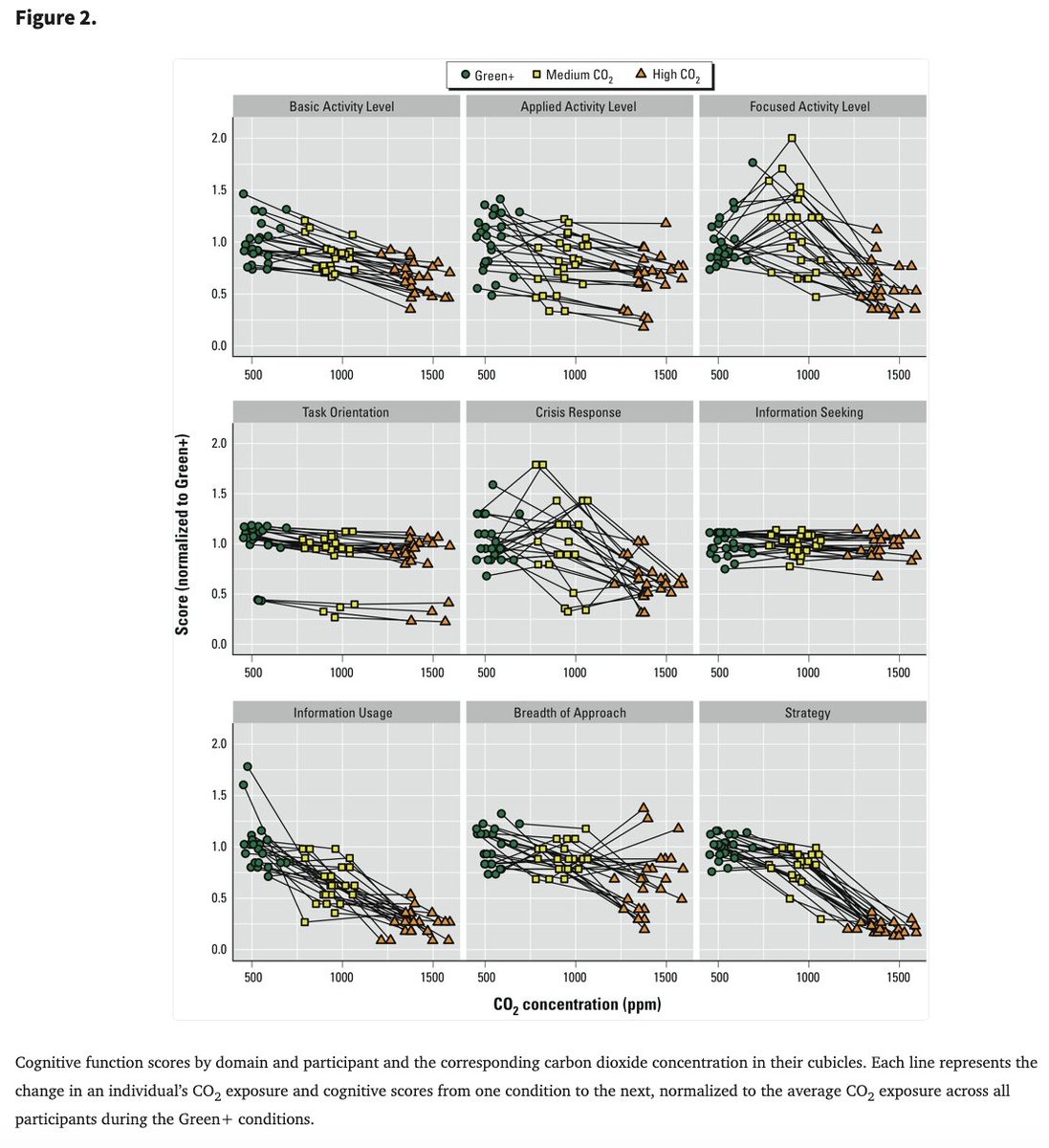
Researchers put 24 office workers in the same room for 6 days and secretly manipulated the air quality - ventilation rates, CO2 levels, and volatile organic compounds from standard office materials.
Cognitive scores doubled in clean, well-ventilated conditions versus conventional office air. 101% higher. Decision-making, strategy, crisis response - all significantly better.
Both VOCs and CO2 independently dragged down cognitive performance. The typical indoor air most commercial buildings deliver is actively degrading the mental output of everyone inside them.
We spend 90% of our time indoors. That means your building's air quality is not a facilities issue. It's a performance issue.
Open the windows. Increase ventilation. Cut the VOC emitters. The building you sit in every day is either sharpening your mind or dulling it.
(Allen et al., 2016 — Harvard T.H. Chan School of Public Health, Environ Health Perspect 124:805-812)

English
Built Different रीट्वीट किया

Clay raised $100M at a $3.1B valuation.
a year ago they were at $500M. that’s a 6x in twelve months. for a GTM tool.
their customers include OpenAI, Anthropic, Cursor, Canva, Intercom, and Rippling. they hit $100M in revenue in December 2025 and are on track to triple this year.
the money isn’t flowing into CRMs or dialers or email platforms. it’s flowing into the enrichment and prospecting layer. the part of GTM that used to be manual research, list building, and data cleanup.
Sequoia, CapitalG, Meritech, Sapphire Ventures. $204M total raised. these firms aren’t betting on a tool. they’re betting that the entire way companies build pipeline is being rebuilt from scratch.
the companies still buying leads from static databases and enriching one provider at a time are watching the market move without them.
the shift already happened. most teams just haven’t felt it yet.
-
we build ai-native pipeline systems for b2b. link in bio.

English
Built Different रीट्वीट किया

I want to talk about something that's been on my mind.
We forecast 80% metallurgical recoveries at Lion. We got 95% across the board. Lock cycle testing with SGS, the industry leader. That blew past our internal expectations by a lot.
Analysts are estimating somewhere between 8 to 13 million tons at 5 to 7% copper equivalent. You drop met recoveries like that on top of those numbers and you'd think the market would react. It didn't.
So we listened. Maybe they need a 43-101. Maybe they need a PEA. Fine. We've stepped on the gas and we're targeting the PEA for the fall. That will be a landmark moment - it'll be undeniable at that point just how valuable this ore body is and what kind of internal rate of return we can generate.
--Terry
$PNPN
English
Built Different रीट्वीट किया

Block just mass-deleted middle management.
Most of the coverage focused on the layoffs and the org chart. What got far less attention is the infrastructure thesis underneath it.
I've spent the last two years building systems that manage institutional capital in DeFi lending markets, systems where the entire value proposition depends on information flowing to the right place at the right time with enough fidelity to price risk correctly. When I read Block's paper, I saw someone describing, in corporate language, the exact problem I've been solving in protocol architecture: the failure mode of hierarchical information routing under conditions where speed and accuracy determine whether capital is protected or destroyed.
The historical framework alone is worth the read. Block traces the corporate hierarchy back to the Roman contubernium (eight soldiers, one tent, one decanus) and follows it through the Prussian General Staff, the American railroads, Taylor's scientific management, the Manhattan Project, McKinsey's matrix, all the way to Spotify's squads and Zappos's Holacracy. The thesis is clean: every one of these organisational models attempts to solve the same constraint. A human can effectively coordinate three to eight people. When your organisation exceeds that span, you add layers. Each layer increases latency. Two thousand years of management innovation has been an attempt to optimise information flow within that constraint without breaking it.
No one has broken it. Until possibly now.
𝗧𝗵𝗲 𝗣𝗮𝗿𝗮𝗹𝗹𝗲𝗹 𝗡𝗼 𝗢𝗻𝗲 𝗜𝘀 𝗗𝗿𝗮𝘄𝗶𝗻𝗴
Block frames hierarchy as an information routing protocol. Managers exist to aggregate information from below, relay decisions from above, and maintain enough context to keep their span of control aligned with the broader organisation. Middle management, in this framing, is a human oracle network.
The entire architecture of DeFi lending rests on oracle networks that route price information from external reality into on-chain systems so that automated protocols can make correct decisions about collateral, liquidation, and risk. When those oracles report stale prices, the system fails silently. Liquidations don't fire. Bad debt accumulates behind a facade of functioning metrics. The UI still displays healthy numbers while the underlying reality has already diverged.
Block is describing the same failure mode in corporate hierarchy. A manager three layers up is operating on information that was current when it was relayed but stale by the time it informs a decision. The organisation's internal model of itself diverges from operational reality. Strategic decisions get made on lagging indicators. The dashboard looks fine. The business is already misaligned.
Both systems fail for the same reason: the information routing mechanism was designed for a world where the speed of change was slower than the speed of relay. When that relationship inverts, when reality moves faster than information can travel through the hierarchy, the system doesn't adapt. It hallucinates.
𝗪𝗵𝗮𝘁 𝗕𝗹𝗼𝗰𝗸 𝗜𝘀 𝗔𝗰𝘁𝘂𝗮𝗹𝗹𝘆 𝗕𝘂𝗶𝗹𝗱𝗶𝗻𝗴
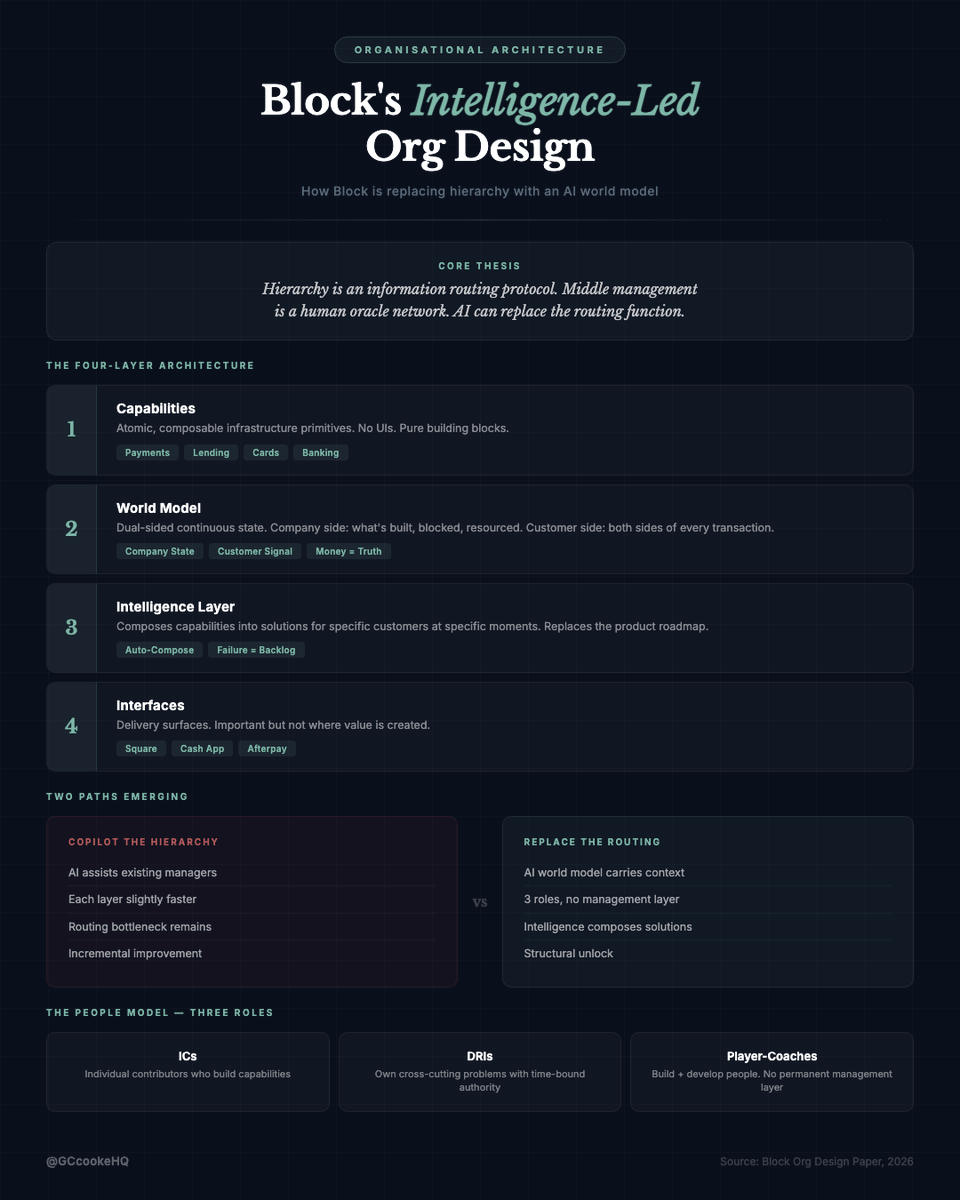
Strip away the management theory and Block's proposal reduces to four layers, and the architecture is remarkably clean.
𝗖𝗮𝗽𝗮𝗯𝗶𝗹𝗶𝘁𝗶𝗲𝘀: atomic primitives (payments, lending, card issuance, banking) that are hard to build, regulated, and composable. They have no user interfaces. They are infrastructure.
𝗪𝗼𝗿𝗹𝗱 𝗠𝗼𝗱𝗲𝗹: two sides. The company world model replaces managerial context: what's being built, what's blocked, where resources sit, what's working. The customer world model is built from transaction data, both sides of every payment, merchant operations, consumer behaviour. Money as signal.
𝗜𝗻𝘁𝗲𝗹𝗹𝗶𝗴𝗲𝗻𝗰𝗲 𝗟𝗮𝘆𝗲𝗿: composes capabilities into solutions for specific customers at specific moments. A merchant's cash flow tightening before a seasonal dip the model has seen before triggers a loan offer composed from the lending capability with repayment adjusted through payments. No product manager designed that solution. The system recognised the moment and composed it.
𝗜𝗻𝘁𝗲𝗿𝗳𝗮𝗰𝗲𝘀: Square, Cash App, Afterpay. Delivery surfaces. Important but not where value is created.
The structural insight is that the intelligence layer replaces the roadmap. When it tries to compose a solution and can't because a capability doesn't exist, that failure signal is the backlog. The traditional product roadmap, where humans hypothesise about what to build next, becomes the bottleneck this architecture is designed to eliminate.
𝗧𝗵𝗲 𝗦𝗶𝗴𝗻𝗮𝗹 𝗔𝗱𝘃𝗮𝗻𝘁𝗮𝗴𝗲, 𝗮𝗻𝗱 𝗜𝘁𝘀 𝗟𝗶𝗺𝗶𝘁
Block's thesis rests on a claim I find genuinely compelling: money is the most honest signal in the world. People lie on surveys, ignore ads, abandon carts. But when they spend, save, send, borrow, or repay, that is the truth. Every transaction is a fact. Block sees both sides of millions of these transactions daily. That gives the customer world model something most AI systems lack: ground truth that compounds.
The same insight underpins why DeFi lending is theoretically superior to traditional credit markets. On-chain transaction data doesn't lie. Collateral positions are observable. Liquidation thresholds are deterministic. The entire thesis of algorithmic lending is that transparent, continuous, high-fidelity data produces better risk decisions than human intermediaries operating on periodic reports.
The problem, and I say this as someone who has watched this thesis collide with reality, is that signal quality degrades precisely when it matters most. In DeFi, oracles report stale prices during the exact moments when accurate pricing is critical. In Block's model, the same risk exists: the world model is only as good as the signal feeding it, and signal quality tends to deteriorate under stress. Transactions slow during economic contraction. Customer behaviour becomes less predictable during regime changes. The model's confidence should decrease exactly when the organisation needs it most, but will the system know that?
Block's paper doesn't address this directly, and it's the question I'd most want answered. Every information routing system (Roman legions, corporate hierarchies, oracle networks, AI world models) faces the same failure mode: it works beautifully in steady state and degrades under the conditions where correct information matters most.
𝗧𝗵𝗲 𝗣𝗲𝗼𝗽𝗹𝗲 𝗠𝗼𝗱𝗲𝗹
Three roles. No permanent middle management layer. Individual contributors who build. Directly responsible individuals who own cross-cutting problems with time-bound authority. Player-coaches who combine building with developing people.
The reason previous flat-structure experiments failed (Spotify reverted, Zappos saw attrition, Valve couldn't scale) is that they eliminated the hierarchy without replacing the information routing function it performed. Block's bet is that the world model replaces that function. If it works, the three-role structure is sufficient. If it doesn't, they'll quietly rebuild the hierarchy within eighteen months.
𝗪𝗵𝘆 𝗧𝗵𝗶𝘀 𝗠𝗮𝘁𝘁𝗲𝗿𝘀 𝗕𝗲𝘆𝗼𝗻𝗱 𝗕𝗹𝗼𝗰𝗸
The deeper point here is about what happens when the information routing constraint that has governed every large organisation for two millennia is no longer binding.
If a system can maintain a continuously updated model of an entire business (what's being built, what's blocked, what's working, what customers need) then the layers of human coordination that exist solely to carry that information become overhead rather than infrastructure. Not immediately. Not completely. But directionally, and at a pace that will accelerate as the models improve.
The companies that understand this will reorganise around intelligence rather than hierarchy. The companies that don't will optimise the existing structure with AI copilots, making every manager slightly more productive while their competitors eliminate the need for the management layer entirely.
Sequoia's framing is correct: speed is the best predictor of startup success. Information routing speed is the binding constraint on organisational velocity. Hierarchy is the current bottleneck. AI that replaces the routing function, rather than assisting the humans performing it, is the structural unlock.
The Romans needed a decanus for every eight soldiers because no technology could carry context faster than a human voice across a tent. That constraint held for two thousand years. It may not hold for two more.

English
Built Different रीट्वीट किया

I compared Clay and Claude Code side by side for outbound. The winner was obvious.
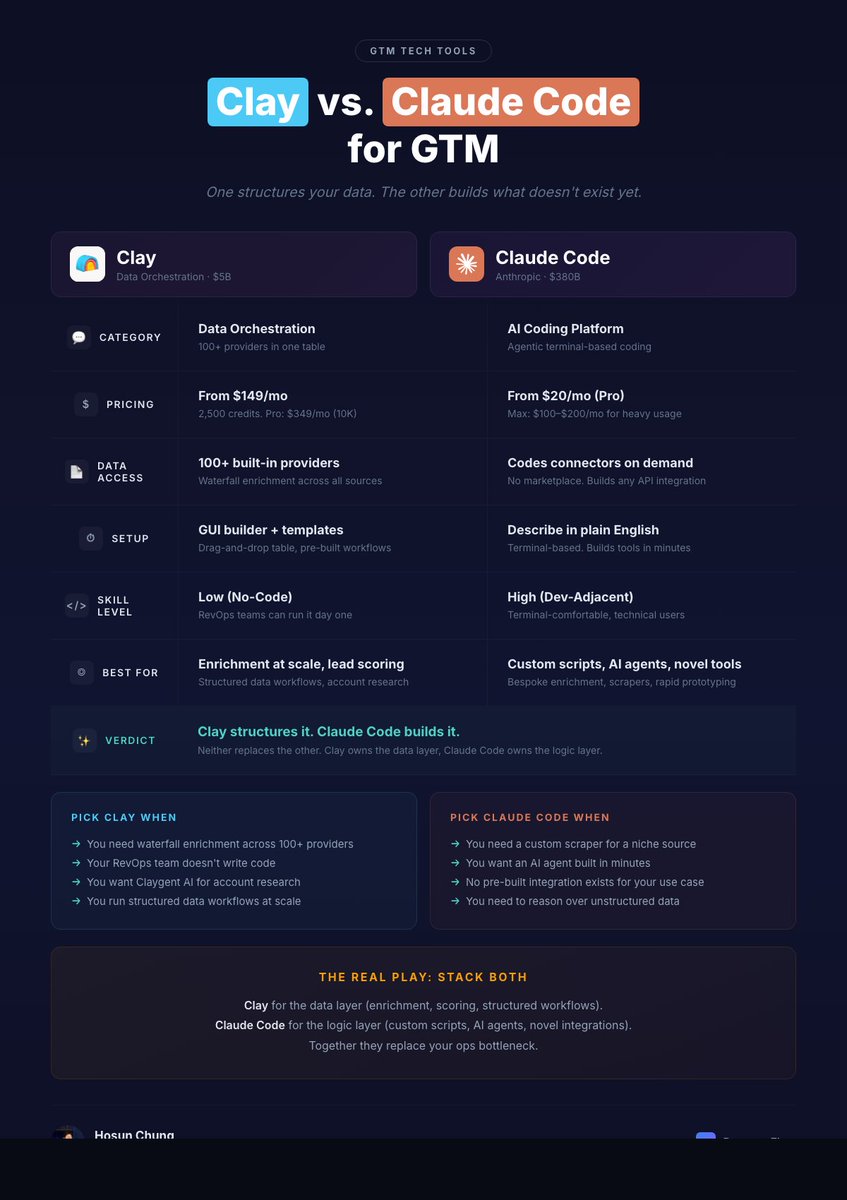
CLAY
→ 100+ data providers in one table
→ Waterfall enrichment, AI scoring, personalization
→ RevOps teams run it day one
→ Unbeatable for structured enrichment at scale
CLAUDE CODE
→ Describe what you want in plain English. Built in minutes.
→ Custom scrapers, AI agents, bespoke logic
→ Works with any API. Writes connectors on demand.
→ Unbeatable for workflows no template covers
Clay can't build a custom scraper for a niche data source.
Claude Code can't match a 100-provider enrichment waterfall.
Clay for the data layer.
Claude Code for the logic layer.
Stack both. That's the entire ops bottleneck gone.

English
Built Different रीट्वीट किया