Climate crisis? There is NO climate crisis

19.8K posts

Climate crisis? There is NO climate crisis

Climate crisis? There is NO climate crisis

@ClimateThere

A collection of papers, articles etc evidencing there is no anthropogenic climate crisis and that many "eco/green" ideas are not all they are cut out to be.

Cambridgeshire, England शामिल हुए Eylül 2020
40.8K फ़ॉलोइंग39.9K फ़ॉलोवर्स
Climate crisis? There is NO climate crisis रीट्वीट किया
CO2 Coalition
CO2 Coalition@CO2Coalition·
But when you get down to a cold day in winter, there's probably 70% coal power that's got my lights on Watch the full episode of Climate Debrief using the link below! youtube.com/watch?v=PL7rgl…
YouTube video
YouTube
English
6
10
15
986
Climate crisis? There is NO climate crisis रीट्वीट किया
Jonathan Cohler
Jonathan Cohler@cohler·
Global Average Temperatures: NOTHING. NADA. ZILCH. MEANINGLESS DRIVEL. DECEPTION AT SCALE. We've all heard it: the planet has warmed by 1.1°C since pre-industrial times. It sounds like a measurement. It feels like a fact. But look closely at what that number actually is, and something strange happens — it dissolves in your hands. Three independent proofs from classical physics show that the global mean surface temperature, and every "anomaly" computed from it, has no connection to anything in the real world. Not a loose connection. Not an approximate one. None. Let's start with the simplest. Not Every Formula Gives You Something Real Here's a question. Measure the pH of your morning coffee — say 5.0. Now take the pH of the seawater off Bondi Beach in Australia — say 8.1. Average them. You get 6.55. Call it your CoffeeOceanpH. What is it? Nothing. pH is what physicists call an intensive property — it belongs to a single solution and only to a single solution. Your coffee has a pH of 5.0. The seawater off Bondi has a pH of 8.1. Both are perfectly real. But the two of them together? They don't have a pH. There's no such thing. They're two separate liquids sitting twelve thousand miles apart; the concept of "their pH" doesn't even get off the ground. Sure, the arithmetic will still hand you a 6.55 — arithmetic never refuses — and plenty of liquids in the world do happen to have a pH of 6.55. But that 6.55 isn't their pH, the joint pH of the coffee and the seawater, because there's no such thing as a joint pH. The reality doesn't exist. And notice the sleight of hand available if you wanted to commit it: you could write "pH 6.55" and call it the joint pH of the coffee and the ocean, as if they had one. That would be a lie dressed in a unit label. pH is a unit used only for the acidity of a single specific solution. Writing "pH" after a number is an assertion that the number is the acidity of some actual liquid the calculation is about. CoffeeOceanpH is an assertion the arithmetic hasn't earned. The label smuggles in a claim about the world that nothing in the world backs up. This is the heart of the Physical Tether Theorem (Cohler, 2026). A formula is a mapping — it takes numbers in and spits a number out. But whether the output has any physical meaning is a completely separate question, and most formulas fail it. For the output to mean something about reality, the mapping must be tethered: the number has to be connected, in some specifiable way, to the physical world the calculation purports to describe. It has to be telling you about something — an object, a process, a relationship, a rate, a flow, anything. Without that tether, you've done math. The result is just digits wearing a unit costume. And here's where dimensional analysis earns a demotion: you may have learned in school that "the units work out," as if that proves a formula makes physical sense. It doesn't. Dimensional checking is a sanity check, a handy rubric for catching errors in physics problems — if your formula for a velocity comes out in kilograms, you know you did something wrong. That's all it is. It's not a certificate of physical meaning. CoffeeOceanpH doesn't even pass the sanity check in any substantive way — averaging two pH's doesn't produce a pH, full stop — but even if you pretended it did, that pretense would tell you nothing about whether the result refers to anything. And nothing is exactly what it refers to. Global Mean Surface Temperature (GMST) Is CoffeeOceanpH on a Planetary Scale You take thermometer readings from thousands of land stations and ocean buoys — each one a real temperature of real air or real water at a real place — and you run them through a formula: sum, divide, weight, grid, average. Out pops a number. Somebody writes "°C" after it. And °C, like pH, is a unit used only for one specific physical quantity — in this case, temperature. Writing "°C" is an assertion: this number is a temperature of some actual thing the calculation is about. It isn't. Temperature, like pH, is intensive — it belongs to a single system at equilibrium, and only to a single system at equilibrium. The air over Lexington has a temperature. The water off Bondi has a temperature. The ice in Antarctica has a temperature. But all of them together? They don't have a temperature. There's no such thing. They're a thousand thermodynamically disconnected systems scattered across a planet. Run the formula anyway and you get a number, and somebody sticks "°C" on it — but that number isn't the temperature of Earth, or of Earth's surface, or of Earth's atmosphere, or of any other actual feature of reality, because no such joint temperature exists. The reality isn't there. And it gets worse than CoffeeOceanpH. GMST doesn't just average temperatures of disconnected systems — it averages temperatures of different substances. Air and water have different heat capacities, different densities, different thermodynamic behavior. A 1° change in air temperature and a 1° change in water temperature represent vastly different amounts of energy and vastly different physical situations. A thermometer in Sahara air and a buoy in Antarctic water are as thermodynamically unrelated as your coffee cup and the sea off Bondi. Averaging their readings is arithmetic. It's not physics. Anomalies inherit everything. Subtracting one untethered number from another untethered number doesn't manufacture a tether. Your CoffeeOceanpH this year minus your CoffeeOceanpH last year is still a number that refers to nothing. Even If You Granted the Rest, Averaging Still Doesn't Work There's a second, independent reason the formula fails, and Cohler (2025) develops it from thermodynamics. Even within a single system, averaging temperatures only corresponds to an actual temperature when the system is at thermal equilibrium — one temperature throughout, one substance throughout. Earth is nowhere close. On any given day the Sahara bakes at +50°C while Antarctica freezes at −70°C. Tropical oceans sit near 30°C while polar waters hover at −2°C. Deserts swing fifty degrees between noon and midnight. There is no equilibrium, no single underlying temperature the average is converging to. Even if you wanted to argue that Earth is "one system," it's not a system to which a temperature meaningfully applies, because it isn't in thermal equilibrium and never will be. And There Isn't Even One Average to Pick Then there's the coup de grâce, delivered almost twenty years ago by Essex, McKitrick & Andresen (2007). Even granting everything else, from the same thermometer data you can compute infinitely many equally defensible averages. Arithmetic mean. Geometric mean. Harmonic mean. Every r-mean for every real r. Each is mathematically valid. Each gives a different answer. And critically — some of them trend up over the last century, some trend down, some stay flat. Choosing the arithmetic mean isn't a discovery about nature. It's a convention. A different convention gives you a different "global warming," or none at all. That alone tells you the output has no physical meaning, because if it did, the world wouldn't depend on which formula you picked. The Phone Number Analogy If you want to feel this in your gut one more way: add up every phone number in America and divide by the population. You'd get a number. You could compute it every year. You could plot it, draw a trend line through the wiggles, write papers about the Great Phone Number Anomaly. And it would mean absolutely nothing. It isn't anyone's phone number. It isn't telling you anything about the phone system, the country, the population, or anything else. It's arithmetic performed on digits that happen to be phone numbers — but the result has no physical meaning. GMST is exactly that. A formula run on temperatures, with "°C" pasted on the answer to make it look like a temperature. It isn't. This Is Not a Quibble Every global average temperature series — HadCRUT, GISTEMP, NOAA, Berkeley Earth, every past version and every future one — inherits all three defects. So does every anomaly built on top of them. The problem isn't the instruments, the stations, the buoys, the adjustments, or the coverage. You could measure every thermometer on Earth with infinite precision and it would change nothing. The formula itself produces a number with no connection to the physical world, and no unit label can put one there. Climate changes. Weather changes. Glaciers advance and retreat, seas rise and fall. These are real things, worth studying with real physical quantities. But the one number everyone argues about — the single headline temperature of the planet — isn't one of them. It's CoffeeOceanpH. 📄 Full proofs: papers.jcohler.com/physical-tethe… papers.jcohler.com/gmst/ scipr.link/essex
English
5
55
122
1.9K
Climate crisis? There is NO climate crisis रीट्वीट किया
John Shewchuk
John Shewchuk@_ClimateCraze·
New Zealand media are experts in climate alarmist narratives, but are clueless when it comes to presenting actual climate "trend data" which show no climate crisis.
John Shewchuk tweet media
English
1
13
34
867
Climate crisis? There is NO climate crisis रीट्वीट किया
katy 🌸
katy 🌸@KatyKray73·
Last night I watched Spotlight: “The Dirty Secret Powering Australia’s Green Future”. Every single story was heartbreaking- destroyed lives, ruined landscapes. I recommend you watch it yourself if you haven’t. How are we letting this happen?! Net Zero must end NOW! 😔💔
English
231
1.2K
3.5K
41.2K
Climate crisis? There is NO climate crisis रीट्वीट किया
Chris Martz
Chris Martz@ChrisMartzWX·
More bad news for the climate cult. A new paper has been published in the Journal of Theoretical and Applied Climatology by Dr. John Christy of UAH detailing the decline in the frequency of hot and cold extremes in the United States. 🗨️ “The results indicate that extremes in heat-related metrics for daily Tmax in the summer have not increased and in fact often show modest declines since 1899, due mostly to the early heat events during 1925–1954. Cold-related extreme events based on winter Tmin show evidence of decreasing occurrences, two causes of which were proposed: (1) increasing human development around weather stations, and (2) an early response to increasing GHGs as they warm the coldest air first.” 🔗 link.springer.com/article/10.100…
Chris Martz tweet mediaChris Martz tweet mediaChris Martz tweet media
English
28
378
1K
17.6K
Climate crisis? There is NO climate crisis रीट्वीट किया
Klimarealisme
Klimarealisme@klimarealisme·
Usædvanligt hurtig temperaturstigning klimarealisme.dk/2026/04/21/usa… Ny forskning påviser, at påstanden om at den nuværende globale opvarmning er hurtigere end nogen sinde før, er en myte. Fortidens klima svingede meget.
Klimarealisme tweet media
Dansk
24
41
113
3.5K
Climate crisis? There is NO climate crisis रीट्वीट किया
Peter Clack
Peter Clack@PeterDClack·
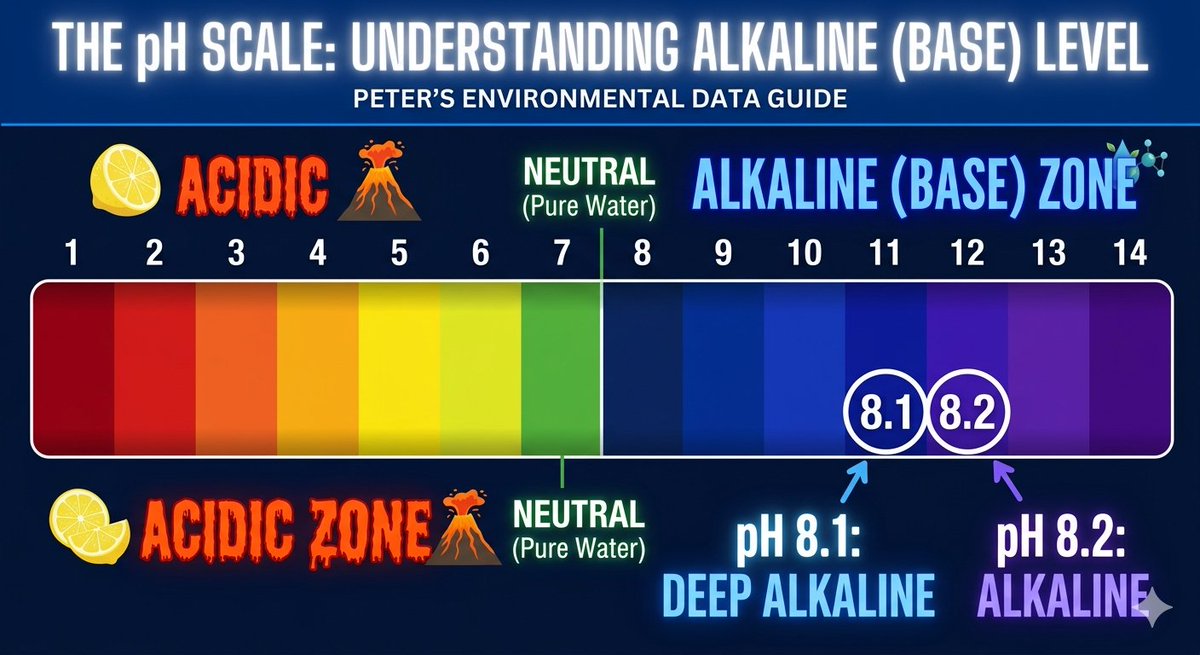
We are told ocean acidity has increased by 30% in two centuries. But oceans aren’t acidic; they are alkaline. On the pH scale, 7.0 is neutral. The oceans have shifted from roughly 8.2 to 8.1 in 200 years - remaining firmly alkaline. So where does 30% come from? The pH scale is logarithmic. A tiny decimal shift represents a 30% change in hydrogen ion concentration, but the water itself is nowhere near becoming an acid. It’s a classic case of math creating psychological exaggeration. Using boron isotope proxies in ancient shells, paleoclimatologists track ocean chemistry back millions of years. The record shows oceans thrived under much higher CO₂ and lower pH levels in the deep geological past. The 'dissolving' narrative ignores the ocean's scale. With an average depth of 2.35 miles and 1.3 billion cubic kilometers of water, the ocean possesses massive chemical inertia. Atmospheric changes take centuries to even reach the deep abyss. Marine life is remarkably resilient. Many species actually calcify faster in CO₂-rich environments. The oceans are not a fragile bowl of acid; they are a vast, self-regulating engine that has remained resilient for millennia. #ClimateNuance #Oceanography #NASA #Greening
Peter Clack tweet media
Bega, New South Wales 🇦🇺 English
43
412
1K
17.9K
Climate crisis? There is NO climate crisis रीट्वीट किया
Andrew Bridgen
Andrew Bridgen@ABridgen·
Astrophysicist Dr. Willie Soon reminds us that "CO2 is the gas of life", refuting claims that it’s a harmful gas capable of causing global warming, hurricanes, and extreme weather events. He describes such claims as "nonsense". More CO2 means more life on Earth.
English
93
908
1.8K
20.1K
Climate crisis? There is NO climate crisis रीट्वीट किया
Electroverse
Electroverse@Electroversenet·
Dr. Richard Lindzen, Professor Emeritus of Atmospheric Science at MIT, says global warming fear isn't driven by data, but by money and control. He recently told the Daily Mail that politicians saw climate policy as a multi-trillion dollar opportunity to reshape industries, to push globalization. The public was fed panic over a minuscule temperature change that means almost nothing. Lindzen calculates that even a doubling of CO2 would warm the planet by only half a degree. He argues nature stabilizes, not amplifies, climate swings, and that today's warmth and CO2 levels actually help plants grow and expand farmland. "People are finally starting to question this," he said. "It'll be an embarrassment to our era."
English
60
846
1.5K
17K
Climate crisis? There is NO climate crisis रीट्वीट किया
matrixbot
matrixbot@thematrixb0t·
Australian Geologist, Ian Plimer on climate alarmists: “Every single prediction they've ever made has been wrong... They still haven't, after 30 years, shown us that human emissions of CO2 drive global warming.”
English
108
747
2.7K
42K
Climate crisis? There is NO climate crisis रीट्वीट किया
Association des Climato-Réalistes
Des preuves montrent que le climat a déjà été plus chaud qu’aujourd’hui 🌍 Il y a 6 000 ans (Maximum thermique de l'Holocène), des forêts poussaient plus haut qu’actuellement. 👉 Le climat change naturellement, même sans #CO2 humain 🤔Via @Electroverse #Climat #Science
Français
14
152
292
3.4K
Climate crisis? There is NO climate crisis रीट्वीट किया
Concerned Citizen
Concerned Citizen@BGatesIsaPyscho·
This number increases every day. There is zero evidence linking 0.04% Co2 in the atmosphere to increased temperatures.
Concerned Citizen tweet media
English
85
1.2K
2.3K
23.7K
Climate crisis? There is NO climate crisis रीट्वीट किया
Peter Clack
Peter Clack@PeterDClack·
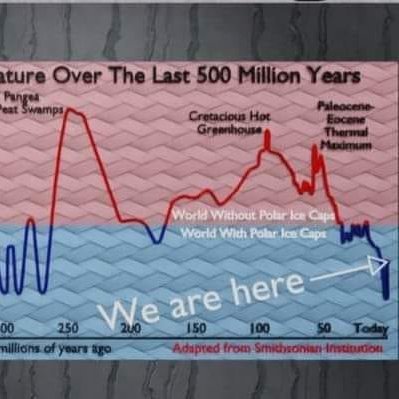
The green expansion is visible from space - a tide of extra CO₂ is a blessing in disguise. The sagas of the past million years reveal a dynamic planet shifting from harsh glaciations to warm interglacial recovery. This is a planetary cycle, unaffected by human turmoil or modern society. It's the world's best news story. CO₂ is boosting photosynthesis in the world's marginal and arid areas, like deserts and barren lands, plus it is driving higher farm production. Data from the NASA Goddard satellite study, Nature Climate Change 2016, and ongoing satellite records, reveal record planetary greening and thriving agriculture. A quarter to half of Earth’s vegetated lands have experienced significant greening over recent decades—thanks to rising atmospheric CO₂. Instruments like MODIS and AVHRR found CO₂ fertilisation is driving 70% of this effect. The result is a net increase in leaf area equivalent to twice the size of the continental United States. It's a great story and an unexpected one. Our world is in recovery from an icehouse; its not a crisis. Homo sapiens and our ancestors thrived in warmer temperatures; the world's been 10 degrees hotter on average than for hundreds of millions of years. We’re not fragile newcomers. We're not facing a climate crisis. Humans are resilent and we’re purpose built for this planet’s variability. The real watershed moment is when we realise the modest rise in CO₂ is greening the Earth and enhancing life, not destroying it.
Peter Clack tweet media
Bega, New South Wales 🇦🇺 English
12
85
206
3.9K
Climate crisis? There is NO climate crisis रीट्वीट किया
Electroverse
Electroverse@Electroversenet·
Denmark is held up as proof a fossil grid can be replaced. But electricity prices have more than doubled since 2000. Moreover, the majority of what is labelled "renewable" is actually biomass. That is, wood. Trees are cut, often abroad, compressed into pellets, shipped in and then burnt for power. At the smokestack, more CO2 is released than just simply burning gas. But it is labelled as "green" because the emissions are not counted at the power plant - they are 1) assigned to the country where the trees were cut, and 2) assumed to be reabsorbed by future regrowth. So the system works like this: Cut trees. Burn them. Emit CO2. Call it clean. Laughably, 64% of Denmark's renewable energy comes from this process.
English
107
565
1.3K
41.1K
Climate crisis? There is NO climate crisis रीट्वीट किया
Peter Clack
Peter Clack@PeterDClack·
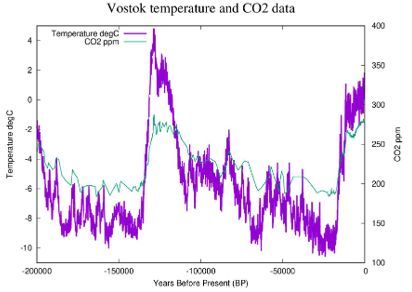
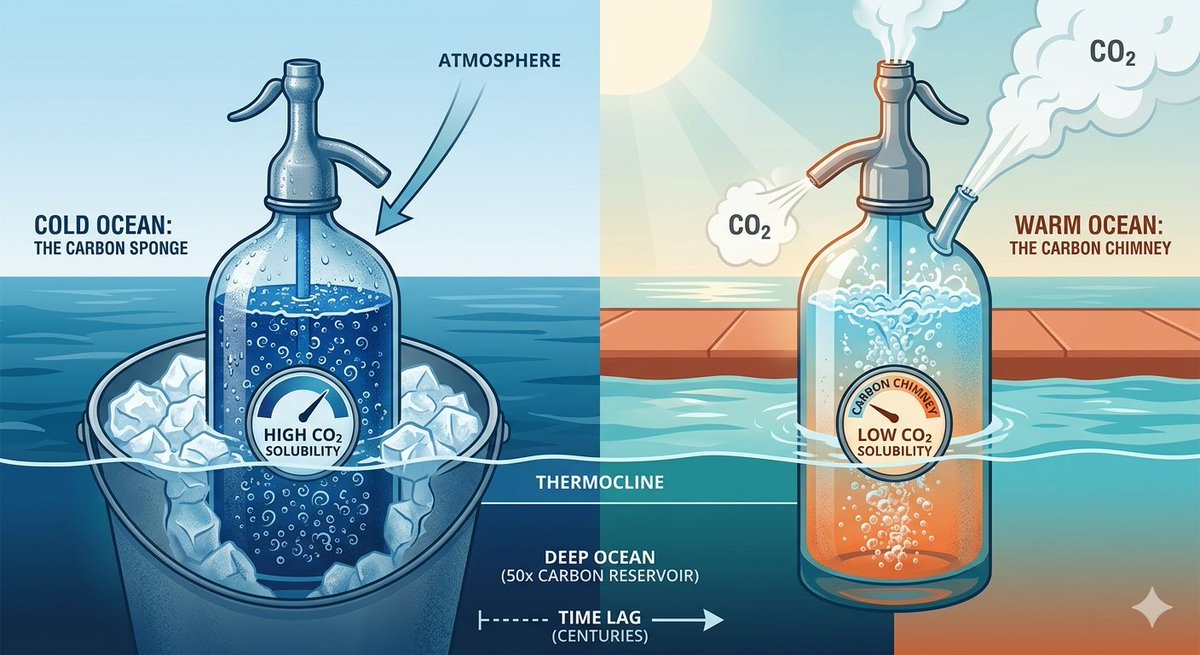
To understand why CO₂ levels rise and fall over millennia, look at a glass of sparkling water. When it’s cold, it stays fizzy. When it warms up, it goes flat as the CO₂ escapes into the air. The Earth’s oceans work exactly the same way. This is the principle of a solubility pump. Cold water is a carbon sponge; warm water is a carbon chimney. Because the oceans hold 50 times more carbon than the atmosphere, even a tiny change in sea temperature causes a massive shift in atmospheric CO₂. This explains the time lag seen in ice core data. Historically, temperature rises first, and CO₂ follows centuries later. Why? Because it takes a long time for the deep, cold thermal flywheel of the ocean to warm up enough to start releasing its stored carbon. When the oceans finally warm—driven by those million-year Milankovitch cycles—they exhale CO₂. This natural outgassing is a primary driver of the atmospheric shifts we see in the geological record. It is a biological and physical response to a warming world, not a trigger for a crisis. The planet is essentially recycling carbon from its massive oceanic reservoir to its parched terrestrial landscapes. It’s a self-regulating system of incredible complexity and beauty.
Peter Clack tweet media
Bega, New South Wales 🇦🇺 English
69
860
2K
44K
Climate crisis? There is NO climate crisis रीट्वीट किया
Peter Clack
Peter Clack@PeterDClack·
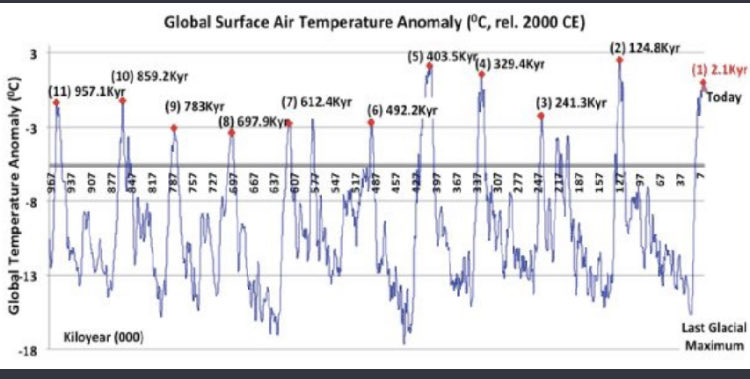
When you look at the spikes on a million-year chart, you see the Milankovitch cycles in action. Most of the last 100,000 years were spent under massive ice sheets. The Holocene (our current interglacial) is the thin sliver of stability that allowed human civilisation to take root. Earth’s wobbles and orbital shifts dictated the pace of these great freezes. Looking at those glacial-interglacial spikes, you see the Quaternary period as a long, cold icehouse punctuated by brief, vital spells of warmth. The current CO₂ fertilisation is a fascinating piece in a planetary puzzle. Its a biological response that often gets lost in broader atmospheric discussion. The NASA and Nature Climate Change data underscore a specific physiological process: photosynthetic efficiency. As atmospheric CO₂ increases, plants take in the carbon they need while keeping their stomata (pores) partially closed. This reduces water loss through transpiration, which is particularly impactful in the arid and marginal lands. Visualise a 25-50% increase in greening sweeping across vegetated lands. This fertilisation effect has undoubtedly played a role in the steady climb of global crop production, a tailwind for food security alongside modern farming techniques. The story of human resilience is strong. We have migrated across land bridges, survived the Younger Dryas, and adapted to radical shifts in local environments for millennia. It’s a compelling good news story.
Peter Clack tweet media
Bega, New South Wales 🇦🇺 English
20
304
720
9.6K