

Freedom Sound Money
276 posts

Freedom Sound Money
@FSoundMoney
#Bitcoin #Ethereum #Defi #NFTs You had my curiosity, now you have my attention
Metaverse शामिल हुए Ağustos 2021
4.9K फ़ॉलोइंग398 फ़ॉलोवर्स

I produced a half-hour animated overview of the Broken Money subject matter.
It covers the history of money, the development of banking, and how new technology changes the way we interact with money over time.
Enjoy:
youtu.be/jk_HWmmwiAs?si…

YouTube
English

I would like to thank everyone for your care and support, be it writing letters, showing support on X, or in any other form. They all mean a lot to me and keep me strong. I will do my time, conclude this phase and focus on the next chapter of my life (education).
I will remain a passive investor (and holder) in crypto. Our industry has entered a new phase. Compliance is super important.
A silver lining of this whole process is that Binance has been under the microscope. And funds are SAFU.
Protect users!
English


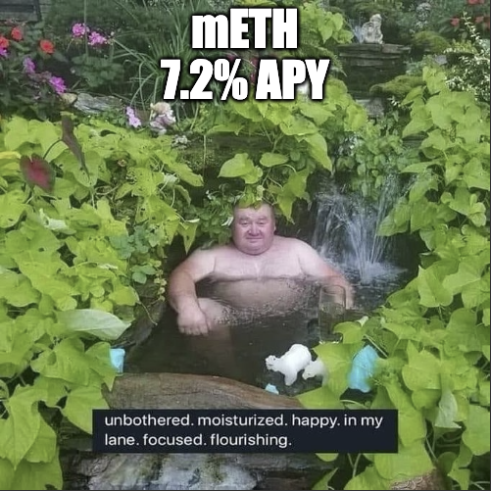

The 20mETH prize for the meme contest has gone up from $44k to $52k++
I guess @poordart wants to stay poor..
Only a couple days left, keep them coming in..!

English

Curious about my collections? 🖼
Check out this explainer video to get started!
Dont hesitate to DM me for any clarifications! 🥰
More info: jeyram.xyz
Join us!: discord.com/invite/M6hU8hc…
English

Low Roar's 10 editions will be minted tomorrow.
Edition price 1E, minted as ERC-721.
If you want to secure it, drop a comment below, it will count as your entry 👇 Some info below too.

English
Last day of the @noble_gallery challenge
Reflection: A fantastic month forming new habits, inspired by "Atomic Habits," revealing the captivating ripple effect across different areas of life.
Art: "Sicilian kiss" by @GuidoDisalle, a iconic free mint creates a beautiful collection

English
Day 1 of @noble_gallery challenge.
Activity: I went for a run by the ocean🏃
Art: TOUCH GRASS by @POSTWOOK, a good reminder that reconnecting with nature is essential; it revitalizes our souls, reminding us of our place in the intricate tapestry of life.
opensea.io/assets/ethereu…

English
Freedom Sound Money रीट्वीट किया

If someone asked me to give investing advice to a 30-year-old today who had just made their first million, I would first point them somewhere else. I’m not a financial advisor and don’t think I’m qualified to give anyone financial advice. The particulars matter too much. But if they insisted, I might say:
(1) If you want to play in early-stage tech investing (or anything high-risk, high-reward), ensure you have a plan for developing an ENORMOUS informational advantage. Aim to develop new skills and relationships through portfolio companies so that you can win over time, even if you “fail” with many bets going to zero. Only bet what you are comfortable losing and what you can recoup in other ways. Though my angel investing snowballed, I began with $10K checks and advising for sweat equity. Think of this as tuition for a real-world MBA. Are you willing to move to the hub of activity to ensure the best possible information and deal flow, as I did when I moved to SF lifetimes ago? Or make commensurate commitments or sacrifices to ensure you are in a position to win? If not, I’d suggest choosing a different game. Other people will take the initiatives that you won’t, and they will beat you. Much of early-stage investing is cooperative, but let’s not kid ourselves, a lot of it is competitive, and not everyone will podium finish.
(2) For the rest—which could be everything—follow Buffett’s advice. Keep it simple.
One cautionary example of doing the opposite: I spotted the COVID curve ball early, and I made a lot of very “sophisticated” (complicated) decisions related to investing, and the associated research, diligence, phone calls, and so on chewed up an unbelievable amount of time and energy. Eighteen to twenty-four months later, I’d done very well but decided to look at how passive S&P 500 returns would’ve added up over the same period, and… they were roughly the same. Of course, you can’t always bank on this outcome, but beware of seeking complexity if you’ve been rewarded for problem-solving throughout your life. Looking back over the last 15+ years, the handful of investment decisions that made all the difference have been simple and were somewhat obvious to me, no major gear-grinding required.
(3) Knowing when to buy isn’t enough. Have policies and rules for when you will sell, or the universe will punish you with very bad and very expensive decisions.
(4) Don’t discount luck, including lucky timing. I started angel investing seriously in 2008 and hit a golden window of converging trends, cheap valuations (by today’s standards), and an uncrowded playing field. The financial crisis had culled the herd of a ton of investors and fair-weather founders. It was a target-rich environment, even for someone with very little to invest. Micro-VCs were just cracking out of their shells, and the big players hadn’t started assailing the seed stage stuff. In retrospect, it was a wildly rare combo of things. I don’t believe I could replicate what I did in 2008–2012 now.
(5) Personally, I’ve largely stepped back from angel investing to double down on writing and the podcast (The Tim Ferriss Show, soon to hit 1B downloads). This comes from a desire for more predictability and less stress. I love the excitement of startups, and I’ve had some lucky wins, but I don’t find it nearly as interesting as developing creative muscles that bring in forecastable revenue year after year. For me, that has compounded more reliably than the all-or-nothing bets. Massive ups and downs in sectors like crypto also take a toll that reduces my creative batteries. In this chapter of my life, I think simplicity is the name of the game (e.g., finding one decision that removes 100 decisions).
(6) Over-optimizing is just as bad, if not worse, than under-optimizing. Past a certain point, buying extra Skittles just doesn’t fucking matter. So, a note to self: stop fiddling around with your goddamn spreadsheets and get more interesting hobbies on the calendar. What hobbies? Exactly.
(7) If we assume the point of investing is ultimately to improve your quality of life and the quality of life of those you most care about, investments that consistently add stress over long periods of time probably don’t make sense. Money is traded for things or experiences that catalyze certain feelings. If your investments are generating the opposite spectrum of feelings, it might be time to reassess.
It’s easy to miss the forest for the trees. Money is a means, not an end.
And in the end, most things matter very, very little. Do what helps you sleep at night and wake up with a low heart rate. To me, those are the hallmarks of a world-class investor who gets the big picture.
tim.blog/2023/03/03/rev…
English