पिन किया गया ट्वीट

The world is noisy.
Competence is quiet.
Most advice for men swings between "hustle until you drop" and "performative alpha nonsense."
We reject both.
Welcome to the Forge. 🧵


English
Forge The Way | History, Habits, Tech & Style
5.9K posts
@ForgeTheWay
The quiet man’s guide to a high-value life. Studying art, military strategy, tech, and timeless style to upgrade how you show up.






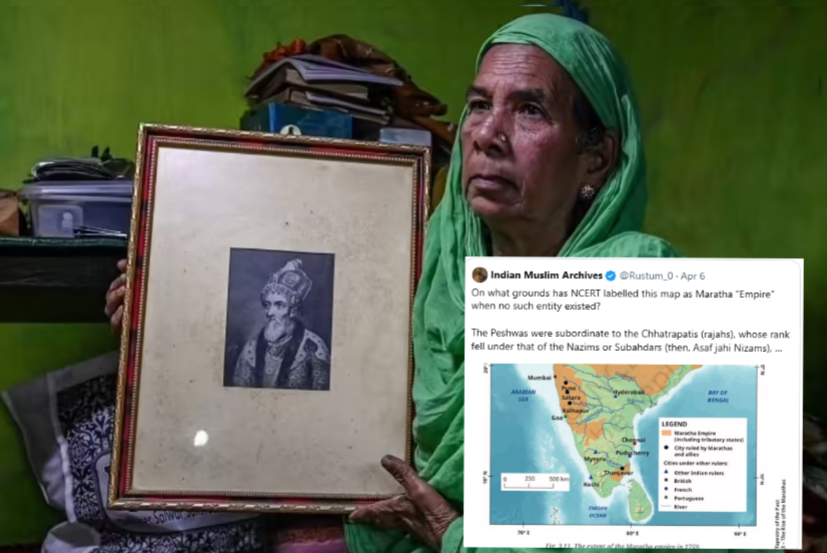
On what grounds has NCERT labelled this map as Maratha “Empire” when no such entity existed? The Peshwas were subordinate to the Chhatrapatis (rajahs), whose rank fell under that of the Nazims or Subahdars (then, Asaf jahi Nizams), who in turn were under the Padishahs (Emperors). In letters dated 16th and 19th September 1717, Chhatrapati Shahu’s seal described himself as a Bundah (servant/slave) of the Emperor of Delhi. Maratha rulers consistently styled themselves as imperial servants. For example, Senasahebsubha Raja Janoji Bhonsle, in a letter dated 21st March, called himself a bound servant of Emperor Shah Alam II. Similar letters from the Scindia and Holkar rulers exist in abundance. The Peshwa also observed ceremonial subordination, saluting the Nizam (until granted higher imperial rank) and always the Emperor upon receiving a firman or khilat. This is evident in 1784, when Peshwa Madhavrao II walked on foot to receive the Emperor’s firman, kissed it, placed it upon his eyes, and saluted an empty seat symbolising the imperial throne three times. Even in 1795, at the Treaty of Kharda, when the Marathas held the upper hand, a clause under Peshwa Bajirao II stated: “The lands of Hindustan and the Deccan are under the authority of the Emperor. Imperial administration and settlement lie within his jurisdiction. The southern districts under imperial law shall remain so, and all orders issued therefrom shall be obeyed.” The Emperor was one. The Empire was one. The Marathas were powerful nobles, even overshadowing imperial authority for few decades, but nobles nonetheless, not sovereign emperors.