
पिन किया गया ट्वीट
Douglas
2.4K posts

Douglas
@NotSure61154
A just society would insist on equal protection for the unborn.
शामिल हुए Ekim 2024
81 फ़ॉलोइंग129 फ़ॉलोवर्स
@spanglermt I think that is the point, you don't know your history. Or worse yet, you do know it.
English

@NotSure61154 I don't even know what you are talking about.
English
One of the most subversive books around:
The Hiding Place, by Corrie Ten Boom
It celebrates shielding Christ’s enemies from the political consequences of their evil. Promotes lying to do so. Glorifies resistance to just government and cobelligerence with Communists. Paints the just consequences for these actions as persecution. And does so all in the name of White Protestant Christianity.
Two dozen copies are available at your local Christian homeschool bookstore. Ministers cite it in the pulpit as something well known and beloved.
The rot is very deep.
English
@spanglermt Uhhhh... Racial hygiene is straight out of Darwinism. It infected American and was a core tenant of the Nazi regime. They embraced family planning which included things like sterilizing "lesser" races. Germany admired American for these evils.
English
@NotSure61154 What? I said it's evil. It involves the sin of Onan. Children are a blessing. I hate Darwin. "Eugenics" is a good term and has a Christian use, just like "racial hygiene." We should care for the genetic health of our family and nation, under the 5th and 6th commandments.
English
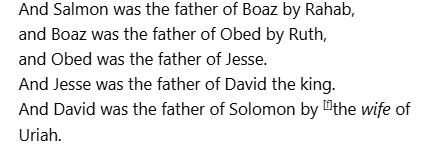
@spanglermt I think I'm done here. you know this is in scripture. Whatever is going on, please repent.
English
@spanglermt Are you ignorant of what that term means? How about family planning?
English
@NotSure61154 Hygiene is great. I suppose you promote filthiness?
English
@spanglermt Interesting, so why did they remove "property" from the Declaration and insert "pursuit of happiness"? I guess you would have been at war with men like Wilberforce.
Black robed regiment you are not.
I suspect you are also a proponent of racial hygiene as well?
English
@NotSure61154 We are the black-robed regiment. Ministers against foreign tyranny, of Jews. And yes, I condemn abolitionists. Slavery is lawful.
English
Of course, I should’ve known that my very innocent and funny family story would turn into a bunch of lefties telling me that I should give my 16-year-old free access to the p*rn, propaganda, predators, and other bad actors who might target her on social media etc.
No. Not doing it. And btw, as I said, the girls thought it was funny.
These are sweet, innocent girls and both the other girl’s mom, who I know, and I aim to keep them that way!
Megan Basham@megbasham
Last night, after she’d gone to bed, my 16 y/o daughter receives a text from a friend. (We keep electronics in our room at night). I know my daughter isn’t gonna see it for a while and I know the answer to the girl’s dance-class-related question. So I just pick up the phone and answer it really quick as if I’m my daughter and leave it at that. Tonight, I see her giggling over her phone. I ask what’s up. Apparently, the other girl’s mother had just wanted to get an answer to the question really quick, so she picked up HER daughter’s phone and texted mine as if she were her daughter. (basically both of us were too lazy to go through the rigmarole of explaining, “hi, this is Mrs. So-and-so, and here’s why I’m texting you on your friend’s phone…” But the funny part was how the two girls figured this out. Because the first one was so appalled at seeing her mother‘s perfectly punctuated and capitalized sentences, that she felt she needed to come clean that it was her mom lest my daughter think she is that conscientious. And my daughter, likewise, didn’t want her friend to think that SHE uses correct grammar when texting either. So what I learned today is that it is apparently humiliating to be caught correctly formulating sentences via text.
English
@SteveDeaceShow I appreciate the wall of text. lol.
If your point is that there is a lack of critical thinking that its driven by a lot of emotion and a dogmatic world view (no wars ever and/or Jews are controlling the world), I tend to agree.
English

Guys, this is so simple. How do you not obviously see we should absolutely tell Israel what to do while also detaching from Israel and ceasing to give Israel foreign aid? Which many in Israel are also for but if we stop funding Israel we can’t dictate to it as we’re detaching from it. Then if we detach from Israel they’ll just do what they want, but we have to be America First by focusing on ourselves and our own problems as we’re also making sure we control the Jews half a planet away who aren’t even real Jews. As if that all isn’t obvious enough, it’s quite clear Iran wasn’t a threat despite killing/kidnapping hundreds of Americans the last 47 years. And there’s absolutely no evidence Iran ever wanted a nuclear weapon except all the covert weapons programs going back to its war with Iraq in the 1980s, when Iraq bombed a nuclear reactor inside Iran. And of course it is not antisemitism to be anti-Zionist, you just don’t want 8 million Jews currently in Israel to have a home so you can focus on America. But if there’s no Israel, that would then make America the most Jewish nation on earth and nothing makes you want to shout “Christ is King” more than that apparently. Again, what kind of retard do you have to be not to be able to make sense of all this? But sadly many cannot see the truth, since they are controlled by Jews who at the same time cannot stop all the algorithms from all the technology they command from promoting skepticism and hatred of Jews and Israel. WAKE UP PEOPLE
English
@GreenEcho3586 @SteveDeaceShow Well America does send about 500k sons to the altar of Moloch every year.
I understand your point, but I'm not sure with what you are communicating if there is ever a time to enter into a war. Someone will always make the charge "you send your son".
English

@SteveDeaceShow I will belive a 20 year vet with 11 combat tours, fighting Iran since age 18 who lost his wife in service to America than a talking head. You send your son to the altar then for sacrifice.
English
@megbasham What a strange thread. If a brother asked to go through my phone, I would happily give it to him. That is accountability. Privacy of this type for a 16 year old in the age of all the child predators out there?
It was answering a question about a dance class.
English
Last night, after she’d gone to bed, my 16 y/o daughter receives a text from a friend. (We keep electronics in our room at night). I know my daughter isn’t gonna see it for a while and I know the answer to the girl’s dance-class-related question. So I just pick up the phone and answer it really quick as if I’m my daughter and leave it at that.
Tonight, I see her giggling over her phone. I ask what’s up. Apparently, the other girl’s mother had just wanted to get an answer to the question really quick, so she picked up HER daughter’s phone and texted mine as if she were her daughter. (basically both of us were too lazy to go through the rigmarole of explaining, “hi, this is Mrs. So-and-so, and here’s why I’m texting you on your friend’s phone…”
But the funny part was how the two girls figured this out. Because the first one was so appalled at seeing her mother‘s perfectly punctuated and capitalized sentences, that she felt she needed to come clean that it was her mom lest my daughter think she is that conscientious.
And my daughter, likewise, didn’t want her friend to think that SHE uses correct grammar when texting either.
So what I learned today is that it is apparently humiliating to be caught correctly formulating sentences via text.
English
Douglas रीट्वीट किया

@timjipping @SteveDeaceShow At some point we have to ask if our expectations of promises suicide pacts.
It's odd, I find the grounds pretty clear. You have a Islamic theocracy that funds terrorism around the world with a very large ballistic missile threat that they continue to expand.
There is more.
English

@SteveDeaceShow You know full well going to war with Iran was not a campaign promise from Trump, in fact he was promising the opposite. And you have to admit the grounds for doing it are a bit unclear at best.
English
@megbasham @MorningWire As I start to take a critical eye at Hollywood after conversion, I'm not sure the claim of a great institution can be supported. Perhaps by the standard of the world.
I look at what was happening, even at its advent, and there is much darkness. A hotbed of perversions.
English
If you missed it, I touched on this feeling that we’re seeing the last days of Hollywood during the second segment of today’s @MorningWire.
And that was before the delayed Nielsen ratings for Sunday’s Academy Awards came out – – down 9% off numbers that were already about 50% of what the Oscars drew a decade ago.
Very sad to see a once-great American institution dying.
podcasts.apple.com/us/podcast/mor…
Rambo Van Halen@RamboVanHalen
I put in 25 years. It would be 26 but I haven't worked yet this year and I'm not sure I'll ever work in entertainment again. The writing has been on the wall for quite some time. But it's a sad thing--especially since the collapse of Hollywood is (mostly) self inflicted. Outsiders like to blame the unions and burdensome regulations. That's not exactly wrong, but the big reason is that Hollywood stopped making a product that people wanted to consume. Film is a funny thing. On one hand it's art. But on the other it's a mass consumer product--like a car, or a soft drink. But unlike a typical consumer product, it was something we consumed together. We went to a special place, and sat with strangers, and watched stories. And those stories infected us. They entered our minds and our souls and they implanted things. Deep things. Ancient things. Timeless things. Things like heroism and beauty and love and fear and sex and death and adventure and tragedy and pain and injustice and all the things that make up our dreams. There's a thing we call "cinematic language". It's how we tell a story with images. (And BTW if you want to learn more about the language of visual media, read Scott McCloud's excellent book Understanding Comics.) An odd thing about cinematic language is that it's the same language as dreams. There's a scene in Christopher Nolan's Inception where Leonardo DiCaprio is explains to (the tragic) Ellen Page how dreams work. But what he's really describing is cinematic language. Inception is really a movie about movies BTW. While it's far from my favorite film, I think it's the perfect film. Because the suspension of disbelief is perfect. You believe the plot about dreams because you're familiar with how movies work--maybe not consciously--but you know. Everyone knows. Maybe not everyone has seen a movie, but everyone has dreams. Another odd thing about film: you don't "watch" a movie, you look into it. And you put yourself inside it. Now you're in the dream. And you're hypnotized. Because movies do that too. The motion--the moving images--they hack your brain. We're programed to pay attention to moving things. Even when the things aren't real. Even when they're just light reflected off a screen. So we'd go to these special places--these movie theaters--these temples--and we'd sit, and we'd "watch" and we'd enter the dream. And we did it together. And after the movie was over--and the lights came on, and we'd file out over the sound of popcorn crunching under our feet--we were different. We had become transformed. Sometimes we were changed in minor ways. But sometimes not. Sometimes we were changed in profound ways. And we did it together. Before the movie we were a room full of strangers. But after--on the way out the door--we all had something in common. Because we shared an experience. We'd shared the dream. And we'd all become transformed. And then tech got involved... Streaming turned movies from a communal experience to a personal experience. And that's an issue, but they did something else too. They started developing movies as if they were tech products. But you can't apply a KPI to a dream. At least, not successfully anyway. Because dreams don't work like that--nor does any sort of art. And that's a funny thing about making movies. You try to make the best film you can, but at the end of the day you have no idea if it's good or if it's going to be successful. You just have to hope the audience likes it. Now, you can design a movie that will appeal to a preexisting audience. Marvel movies are like this. There's a large group of fanboy nerds that will see every single one. You can count on them every time. Just like you can count on the Gay Oscar Bait crowd (for example). But those movies are slop. But Hollywood became specialists in slop. Because slop is safe. Because you could apply KPI style metrics to slop. As a result they lost the audience. And the audience is probably never coming back. I wrote a book in 2024 (that was published in 2025). While writing, I thought of it as my farewell to the industry. But looking back, what I was actually writing was a eulogy for Hollywood--the place where dreams were made. And so it goes...
English
@MarkHonkmeister @ShawnRyan762 @joekent16jan19 If your world view leads you to believe that the Jewish people are a unique evil in the world. The cause of societies ills. That they are less than human. All this leading to their slaughter and oppression? No.
That is spiritual darkness and evil. I'll have no part in it.
English

@NotSure61154 @ShawnRyan762 @joekent16jan19 Do you think that maybe some of those arguments, if they’ve been made for 2 millennia, may actually have more truth than not?
English

Sometimes the most impactful statement you can make is a strong resignation. It's unfortunate it's come down to this. God's speed @joekent16jan19 I hope this wakes some people up.
Joe Kent@joekent16jan19
After much reflection, I have decided to resign from my position as Director of the National Counterterrorism Center, effective today. I cannot in good conscience support the ongoing war in Iran. Iran posed no imminent threat to our nation, and it is clear that we started this war due to pressure from Israel and its powerful American lobby. It has been an honor serving under @POTUS and @DNIGabbard and leading the professionals at NCTC. May God bless America.
English
@Zach_Moore5 @ShawnRyan762 @joekent16jan19 One has to wonder what was funny about the response, but mockers are going to mock.
We are in a world in which the experts call abortion healthcare and they called the Covid injection a vaccine.
You really trust institutions with understanding Islam?
English

@Zach_Moore5 @ShawnRyan762 @joekent16jan19 That would be an interesting debate, but as I said his response shows a lack of discernment. Much like your equating followers with credibility.
I have no issue with people not trusting my opinions, but shouldn't put blind trust in institutional experts either.
Seek wisdom.
English
@NotSure61154 @ShawnRyan762 @joekent16jan19 Yeah cause you and your 126 followers have a better understanding of the Islamist world view than Joe Kent
English
@thatstarwarsgrl Then again, if Hulu was actually against it there is a chance it actually had potential. Studios don't seem to be aligned with consumers.
You know more of this than I do, but the show is about the slayer(s). I would expect her to be the lead and the focus.
English

The more I hear about this the more I’m feeling like they dodged a bullet
Film Updates@FilmUpdates
New details regarding the ‘BUFFY’ revival series cancellation have been reported by @DEADLINE: • Hulu felt the show “played too young” as it focused too much on the new character played by Ryan Kiera Armstrong and was too “small.” • A rewrite to address these issues took place, with more scenes featuring Buffy added and a darker tone. • Despite the rewrites, Hulu still decided to pass on the series. • Deadline reports Disney Television Group President Craig Erwich (who was allegedly the producer who wasn’t a fan of the original show that Sarah Michelle Gellar mentioned in an interview) was the one who decided not to move forward with the show. (deadline.com/2026/03/buffy-…)
English
@dkingpower7 @conservmillen You can most certainly be against, circumcision, which is Jewish tradition. That wasn't your argument, however.
You were discussing moral depravity linked to generational circumcision. If that was the case the Jewish people would make the Canaanites look like boy scouts. Silly.
English

@NotSure61154 @conservmillen My penis was mutilated. Am I attacking myself?
English

“When it comes to sex, no one can control it. It’s a very strong desire.” Is this what Islam teaches? Is this why there are so many roving rape gangs in Europe? Is this why their prophet married a 6 year old? Is this why they think the prize in paradise will be 72 virgins? Is this why they have so many wives and why pedophilia is so rampant in Islamic countries? Is it just a religion based on perverted lust and lack of self-control?
What a stark contrast to Christianity, which upholds self-denial as a necessary component of the faith and self-control as a fruit of the Holy Spirit and only honors sex between one man and one woman in marriage.
It’s not hard to see why Christian nations built what they built and Islamic nations have built what they have.
“Now the works of the flesh are evident: sexual immorality, impurity, sensuality, idolatry, sorcery, enmity, strife, jealousy, fits of anger, rivalries, dissensions, divisions, envy, drunkenness, orgies, and things like these. I warn you, as I warned you before, that those who do such things will not inherit the kingdom of God. But the fruit of the Spirit is love, joy, peace, patience, kindness, goodness, faithfulness, gentleness, self-control; against such things there is no law. And those who belong to Christ Jesus have crucified the flesh with its passions and desires.” Gal. 5:19-24
Dr. Maalouf @realMaalouf
“I killed 900 people, and raped 50 young girls and 200 women” An Islamic State terrorist smiles as he proudly describes what he did to Yazidis and Christians. Happy “International Day to Combat Islamophobia”!
English
@joejonbob139201 @ShawnRyan762 @joekent16jan19 So, the Jews. You are now saying the same thing that the pre-WW2 societies were saying. You have no excuse you can easily find documentaries on the subject.
Pardon me if I don't join you falling off of that cliff of spiritual darkness.
English

English