Sunil Kumar Banerjee

16.9K posts

Sunil Kumar Banerjee banner
Sunil Kumar Banerjee

Sunil Kumar Banerjee

@Wingedream2

गिरते हैं शहसवार ही मैदान-ए-जंग में । वो तिफ़्ल क्या गिरेगा जो घुटनों के बल चले ।।

India शामिल हुए Mart 2018
1.4K फ़ॉलोइंग115 फ़ॉलोवर्स
Sunil Kumar Banerjee रीट्वीट किया
Archaeo - Histories
Archaeo - Histories@archeohistories·
In 1953, Fidel Castro made his first move against the Cuban government of Fulgencio Batista by attacking the Moncada Barracks in Santiago de Cuba with roughly 160 fighters, hoping to spark a nationwide revolt. The assault failed badly, and Batista's forces killed dozens of rebels, with many more captured and executed after surrendering. Castro was arrested, tried, and sentenced to 15 years in prison, where he famously declared before the court, "Condemn me, it does not matter. History will absolve me." Batista eventually released all political prisoners in 1955, bowing to public pressure, and Castro immediately went into exile in Mexico to regroup and plan his next move. In Mexico, Castro connected with Che Guevara, a young Argentine doctor, and began assembling a small revolutionary force with the intention of returning to Cuba and overthrowing the Batista government. The group acquired a 60-foot diesel-powered yacht called the Granma, a vessel originally built in 1943 for the U.S. Navy and designed to accommodate just 12 people. The yacht was in poor condition, with badly worn gears that prevented it from reaching significant speed, and a radio that could only receive signals but not transmit, making communication with allies in Cuba impossible. The craft was dangerously overcrowded with weapons, ammunition, and 82 men, and because the ship's fuel tanks held only 1,200 gallons, an additional 2,000 gallons in cans had to be stored on deck to make the crossing. Just after midnight on November 25, 1956, the 82 fighters slipped out of the Mexican port of Tuxpan in the dark and set sail for Cuba, a crossing that was supposed to take five days. Rough seas, engine problems, excessive weight, and a man who fell overboard all combined to delay the journey, pushing back their scheduled arrival from November 30 to December 2. The delay proved costly, as a coordinated uprising in Santiago de Cuba that was meant to distract Batista's forces had already launched and been crushed before the Granma even landed. The navigator fell overboard while trying to spot the Cabo Cruz lighthouse, and after being rescued, Castro ordered the ship to make for the nearest stretch of land, but the vessel crashed into a sandbar a mile short of the intended landing point, in a mangrove swamp. The men were forced to wade ashore in the mud, abandoning much of their food, ammunition, and medicine in the process. Cuban coast guard vessels spotted them almost immediately and relayed their location to the armed forces, putting Batista's military on high alert across the region. The rebels split into two groups and began pushing inland toward the Sierra Maestra mountains, harassed by helicopters and aircraft that pounded the exposed coastline. On December 5, the exhausted men stopped to rest in a field of sugarcane at a place called Alegria de Pio, but failed to post proper sentries, and at four in the afternoon, government troops tipped off by a local peasant attacked and scattered them. The ambush was devastating, with most of the 82 men killed, captured, or lost in the chaos of the fighting. Only around a dozen men survived intact enough to regroup, among them Fidel, Raul, Che Guevara, and Camilo Cienfuegos. Castro and a companion named Universo Sanchez found themselves alone and were later joined by Faustino Perez, and for days the three of them crept cautiously through the countryside, surviving on sugarcane, until they located a sympathetic farmer who hid them while other survivors were tracked down and reunited with the group. Among those who eventually rejoined were Raul Castro and Che Guevara, who had suffered a flesh wound in the neck during the ambush. This shattered but unbroken core of survivors made their way into the Sierra Maestra mountains, where they would rebuild their forces and wage a guerrilla campaign that would topple Batista's government in just over two years. #archaeohistories
Archaeo - Histories tweet media
English
2
21
63
5.2K
Sunil Kumar Banerjee
Sunil Kumar Banerjee@Wingedream2·
@ParaRjs Makes me sleep well when I know there are many Capt Rajbir Singhs who continue standing on the burning deck by night and the live long day.
English
0
0
0
12
rupinder dhillon
rupinder dhillon@ParaRjs·
And the grateful Nation would like to tax your disability pension(if any sanctioned).
Manan S. Bhatt@mananbhattnavy

A true Naval story of Leadership Back in the early 80s, I was a young SAM Control Officer on a Durg-class corvette (those tough little Russian Nanuchka-II boats the Indian Navy ran, missile launchers, Styx missiles). We followed the "user-maintainer" concept, so my team and I personally serviced the missile launcher gear. No fancy contractors, just us sweating it out. One morning, we did routine maintenance on the launcher's fire-fighting system. (Old-school setup: they used CCl4, carbon tetrachloride, as the fire suppressant in confined spaces like that. Super effective against electrical fires, no residue, non-conductive. But man, it was deadly poison, colorless vapor heavier than air, knocks you out, fries your liver and kidneys, causes unconsciousness or worse in high concentrations. Banned worldwide now for good reason.) Lunchtime rolls around, and suddenly we get the word: toxic gas leaking in the junior sailors' mess (yep, the launcher sat right there in that compartment). We crack open the hatch, do a quick check, it's CCl4 gas pouring out. Invisible, heavy, pooling low and nasty. The shut-off valve? Buried in a tiny crawl-space compartment under the launcher. Height? Barely 2.5 feet. Narrow as hell, valve at the absolute far end from the hatch. You'd have to belly-crawl the whole way like a snake in a pipe, dark, tight, no room to turn or stand. Shit escalated quick. Someone had to go in and crank that valve shut before the whole mess filled with more gas and took out the crew. My expert weapon mechanic, solid, experienced guy, steps up. But I look at him and say, "Bhai, you're married, got a wife and kids waiting at home. You stay the fuck out here. I'll handle it. "He protests, but nah, I wasn't sending a family man into that death trap. I slap on a single smoke mask (basic one, not full breathing apparatus), take a deep breath, and crawl in. Imagine it: pitch black, toxic fumes thick, mask fogging up, scraping elbows and knees on metal, dragging forward inch by inch to reach the valve at the end. Lungs burning, head spinning even through the filter, CCl4 is sneaky, depresses your nervous system fast, dizziness hits hard. But I make it, twist the valve shut, stop the leak. Crawled back out somehow, mission done. Then... blackout. Collapsed right there. Woke up the next day, full unconsciousness for hours from the gas exposure (even with the mask, enough seeped in or hit me systemically). Medics watched me overnight, but I pulled throug, no lasting damage, pure luck and youth maybe. The heavy part, extracting the whole leaking CCl4 bottle, came later. Navy divers geared up in full dive equipment (proper air supply) and squeezed into that same coffin compartment to haul it out safely. No big parade, no medals shouted about, just another hairy day on a Durg boat. The officer steps up, risks everything for his men and the ship, and lives to yarn about it later over chai (or something stronger). Capt Rajbir Singh, I.N. (Retd.)

English
3
7
36
2.1K
Sunil Kumar Banerjee
Sunil Kumar Banerjee@Wingedream2·
Even the hypocritical and ungrateful ruling politicians sleep sound and talk big resting on the selfless sacrifices of soldiers who keep working just as any other day...
Manan S. Bhatt@mananbhattnavy

A true Naval story of Leadership Back in the early 80s, I was a young SAM Control Officer on a Durg-class corvette (those tough little Russian Nanuchka-II boats the Indian Navy ran, missile launchers, Styx missiles). We followed the "user-maintainer" concept, so my team and I personally serviced the missile launcher gear. No fancy contractors, just us sweating it out. One morning, we did routine maintenance on the launcher's fire-fighting system. (Old-school setup: they used CCl4, carbon tetrachloride, as the fire suppressant in confined spaces like that. Super effective against electrical fires, no residue, non-conductive. But man, it was deadly poison, colorless vapor heavier than air, knocks you out, fries your liver and kidneys, causes unconsciousness or worse in high concentrations. Banned worldwide now for good reason.) Lunchtime rolls around, and suddenly we get the word: toxic gas leaking in the junior sailors' mess (yep, the launcher sat right there in that compartment). We crack open the hatch, do a quick check, it's CCl4 gas pouring out. Invisible, heavy, pooling low and nasty. The shut-off valve? Buried in a tiny crawl-space compartment under the launcher. Height? Barely 2.5 feet. Narrow as hell, valve at the absolute far end from the hatch. You'd have to belly-crawl the whole way like a snake in a pipe, dark, tight, no room to turn or stand. Shit escalated quick. Someone had to go in and crank that valve shut before the whole mess filled with more gas and took out the crew. My expert weapon mechanic, solid, experienced guy, steps up. But I look at him and say, "Bhai, you're married, got a wife and kids waiting at home. You stay the fuck out here. I'll handle it. "He protests, but nah, I wasn't sending a family man into that death trap. I slap on a single smoke mask (basic one, not full breathing apparatus), take a deep breath, and crawl in. Imagine it: pitch black, toxic fumes thick, mask fogging up, scraping elbows and knees on metal, dragging forward inch by inch to reach the valve at the end. Lungs burning, head spinning even through the filter, CCl4 is sneaky, depresses your nervous system fast, dizziness hits hard. But I make it, twist the valve shut, stop the leak. Crawled back out somehow, mission done. Then... blackout. Collapsed right there. Woke up the next day, full unconsciousness for hours from the gas exposure (even with the mask, enough seeped in or hit me systemically). Medics watched me overnight, but I pulled throug, no lasting damage, pure luck and youth maybe. The heavy part, extracting the whole leaking CCl4 bottle, came later. Navy divers geared up in full dive equipment (proper air supply) and squeezed into that same coffin compartment to haul it out safely. No big parade, no medals shouted about, just another hairy day on a Durg boat. The officer steps up, risks everything for his men and the ship, and lives to yarn about it later over chai (or something stronger). Capt Rajbir Singh, I.N. (Retd.)

English
0
0
1
8
Sunil Kumar Banerjee रीट्वीट किया
वाक़िफ़ हैं निगाहें 👀
धरती पर भूगोल घास का तिनके भर इतिहास घास से पहले घास यहाँ थी बाद में होगी घास। ~नरेश सक्सेना🌻
वाक़िफ़ हैं निगाहें 👀 tweet media
हिन्दी
1
6
42
1K
Nimish Dubey
Nimish Dubey@nimishdubey·
The man with the odd run up in which his foot ended up pointing towards the sighscreen. The master of swing. The man who came out to face Imran Khan without a helmet or even a cap of his debut and hooked him for a few fours. ...and the man who blushed when mum told him "Arre, you are so handsome in real life too!" Roger Michael Humphrey Binny. A player who should have been an integral part of EVERY Indian cricket team in the 1980s!
Buntyy bagga@bagga_buntyy

From javelin fields to world domination 🏏 Roger Binny 1983 World Cup’s highest wicket taker (18) Athlete ➝ match winner ➝ history written 🐐🔥

English
4
2
26
2K
Supriya Sahu IAS
Supriya Sahu IAS@supriyasahuias·
Much like human babies growing inside their mother’s womb, mangrove seedlings begin life while still attached to the mother tree, a process called viviparous germination. These tiny life forms, known as propagules, grow and develop before they even fall, and when they do, they float across waters for days, sometimes weeks, carrying with them the incredible ability to take root wherever they land. The propagules consist of a stem-like structure with a bulbous cap and a small crown of embryonic leaves. Mangroves are superheroes in the fight against climate change and serve as symbols of resilience and adaptation. #Mangroves #TNForest #Climateaction
English
65
367
2K
96.4K
𝓼𝓪𝓷𝓴𝓪𝓻
Sarod maestro Pandit Buddhadeb Das Gupta once recounted an enchanting story that took place at 25 Dixon Lane, the residence of Pandit Jnan Prakash Ghosh. This house, which now serves as the House Staff Hostel for NRS Hospital, has hosted many maestros, but Ustad Bade Ghulam Ali Khan was a particularly frequent guest. ​The house featured an old, sluggish ceiling fan. Frustrated by its lack of speed, Khansahib looked up at it and pleaded, "Thoda tez chalna, bhai". When the fan failed to oblige, he mocked it by replicating its screeching noise and rhythmic drone through a sharp taan in Raga Multani, singing in perfect synchronization with the fan's mechanical rotations. ​Like many of his contemporaries, Partition deeply affected Ustad Bade Ghulam Ali Khan. He moved to Pakistan in 1947, but he found the cultural atmosphere there stifling and longed to return to India. His wish was eventually fulfilled by Prime Minister Jawaharlal Nehru ten years later, in 1957. Upon his return, he divided his time between Mumbai, Kolkata, and Hyderabad. ​Ustad Bade Ghulam Ali Khan was inarguably one of the greatest musicians of the 20th century, a modern day Tansen who transcended politics, division, and religion. He once famously remarked, "If even one child in every home had been taught music, India would never have been partitioned." On this day in 1902, Ustad Ji was born. Let us remember him on his birth anniversary. Below : a rare Philips Radio Adv
𝓼𝓪𝓷𝓴𝓪𝓻 tweet media
English
4
28
112
5K
Sunil Kumar Banerjee रीट्वीट किया
Raaggiri रागगीरी
फिल्मी पर्दे पर एक्टर्स दिखते हैं प्लेबैक सिंगर नहीं। किसी लोकप्रिय गाने में जब आप उसके प्लेबैक सिंगर को देखते हैं तो वो अनुभव अलग ही होता है। मसलन- इस गाने में हेमंत कुमार (दादा) को देखकर समझ आता है उनकी आवाज को ‘Voice of God’ क्यों कहा जाता था। #Raaggiri @YRDeshmukh @hvgoenka
हिन्दी
16
162
665
20.4K
Sunil Kumar Banerjee रीट्वीट किया
The Cradle
The Cradle@TheCradleMedia·
Britain’s Lebanon surveillance network: A digital map for war London’s security architecture in Beirut serves control, data extraction, and the groundwork for war. By @KitKlarenberg thecradle.co/articles-id/36…
English
6
75
139
19.2K
Sunil Kumar Banerjee
Sunil Kumar Banerjee@Wingedream2·
@SamDalrymple123 The story of the several mutinies of Indian soldiers for being poorly fed and naked discrimination in Malaysia,Singapore and the East Indies during WW II while fighting and helping the Japanese by INA needs to be told to reconcile our undigested and conflicting histories.
English
0
0
0
19
Sam Dalrymple
Sam Dalrymple@SamDalrymple123·
The Headquarters of the INA A short distance north of Kandawgyi Lake in central Yangon stands a gorgeous old teak mansion that once housed Subhas Chandra Bose - an army of diaspora Indians from Southeast Asia, mixed with some prisoners of war, who were willing to fight against Britain during WW2.
Sam Dalrymple tweet media
English
8
17
88
2.9K
Iqtibas اقتباس
Iqtibas اقتباس@iqtibaas88·
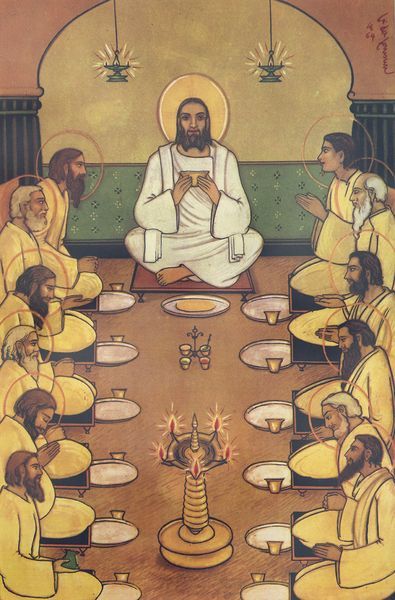
The Last Supper, painted in 1940 by the Indian artist Angelo da Fonseca (1902–1967). Jesus Christ & his disciples are seated on chaukis in traditional Indian style, with thalis before them on the floor.
Iqtibas اقتباس tweet media
English
19
252
1.4K
37.9K
Archaeo - Histories
Archaeo - Histories@archeohistories·
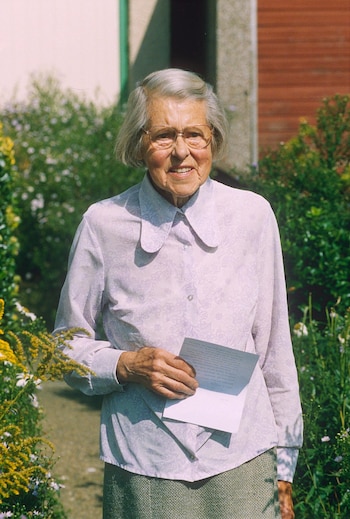
On September 11, 1999, newspapers across Britain broke the story, and an 87-year-old great-grandmother stepped outside her home to face an international press pack assembled on her quiet suburban street. She expressed no remorse, stating plainly that she had acted not for money but out of ideological conviction, believing her actions helped a system that provided ordinary people with affordable food, education, and healthcare. The then Home Secretary Jack Straw announced that, at her age, there was no point in prosecuting her. The KGB considered her to be of more value than the famous Cambridge Five, a ring of British double agents widely remembered as some of the most dangerous Western traitors in espionage history. She never faced criminal charges, lived out her final years in relative quiet, and died on June 2, 2005, at the age of 93. Her story later inspired the 2018 film Red Joan, starring Judi Dench, bringing the tale of Britain's most consequential female spy to a new generation of audiences. Melita Norwood's four decades of espionage had consequences that reverberated far beyond the walls of a London research office, as the technical secrets she passed to Soviet handlers almost certainly accelerated the USSR's atomic weapons program by several years, fundamentally altering the balance of nuclear power during the Cold War and compressing the timeline of a global arms race that shaped every major geopolitical decision of the mid-twentieth century. Her exposure in 1999 triggered a fierce public debate in Britain over intelligence failures, raising uncomfortable questions about how a known Communist sympathizer was allowed to work adjacent to classified nuclear research for so long without meaningful scrutiny, and the government's decision not to prosecute her deepened the controversy, leaving many to argue that ideology and age had placed her above the law. Beyond policy and politics, Norwood's legacy endures as a case study in how ordinary life can conceal extraordinary deception, and as a reminder that the most damaging breaches of national security are often carried out not by trained operatives, but by quietly determined true believers.
English
2
3
10
3.7K
Archaeo - Histories
Archaeo - Histories@archeohistories·
Melita Norwood was born on March 25, 1912, in Bournemouth, England, to a British mother and a Latvian father whose own radical politics would shape her worldview from childhood. Her father, Peter Sirnis, was a committed revolutionary socialist who translated works by Lenin and Trotsky and published a labor newspaper before his death from tuberculosis in 1918, leaving Melita fatherless at just six years old. She excelled academically, winning a scholarship to Itchen Secondary School and later studying at the University College of Southampton before dropping out in 1931. After a year in Heidelberg, Germany, where she became involved in anti-fascist activism, she returned to England and in 1932 took a job as a secretary at the British Non-Ferrous Metals Research Association in London. The organization's mundane name concealed a critical mission: it was deeply involved in Britain's top-secret atomic weapons research program, known by the code name Tube Alloys. Her position as secretary to G. L. Bailey, the head of a department connected to Tube Alloys, gave her access to documents central to Britain's nuclear development. In 1935, she was recruited by the NKVD, the forerunner of the KGB, through a recommendation from a senior Communist Party member, and by 1937 she was a fully active Soviet agent. Her method was remarkably simple and effective: she would slip into her supervisor's office when no one was watching, open his safe, photograph the classified documents inside with a KGB-supplied camera, and return them before anyone noticed. She was operational from 1932 to 1972, stealing documents from her boss, photographing them with a KGB camera, and returning the intelligence to his safe unnoticed. Her Soviet handlers cycled through a series of code names for her, ultimately settling on the name that would define her espionage legacy: Agent Hola. She was briefly connected to the Woolwich Spy Ring, several members of which were arrested in January 1938, though Norwood herself escaped detection entirely. In April 1950, following the conviction of atom spy Klaus Fuchs, Norwood was temporarily placed on hold out of fear she might have been compromised, but contact was resumed in 1951. The Soviets recognized the extraordinary value of what she was providing and in 1958 awarded her the prestigious Order of the Red Banner of Labour. Journalist and personal acquaintance David Burke stated that the information she supplied on the behavior of uranium metal at high temperatures permitted the Soviet Union to test an atomic bomb four years earlier than British and American intelligence thought possible. British security services eventually identified Norwood as a potential risk in 1965, but chose not to question her in order to protect their own investigative methods. She retired quietly from British Non-Ferrous Metals Research Association in 1972, having spent 40 years there, all while conducting one of most sustained espionage operations in British Cold War history. She lived an outwardly ordinary life in a semi-detached house in Bexleyheath, south London, known to neighbors as a mild eccentric who delivered copies of communist Morning Star newspaper and sipped tea from a Che Guevara mug. Her husband, who had changed his surname from Nussbaum to Norwood, died in 1986, and she later acknowledged he had never approved of her secret activities. The entire hidden chapter of her life remained buried until 1999, when former KGB archivist Vasili Mitrokhin, who had defected to Britain in 1992, handed over six trunks filled with thousands of pages of handwritten notes documenting decades of Soviet intelligence operations. Mitrokhin Archive exposed extensive Soviet penetration of Western institutions, identifying over 300 agents and assets in Britain alone, among them Norwood, whose files detailed her recruitment in 1937 and her provision of technical data on Britain's Tube Alloys atomic project from 1943 onward. #archaeohistories
Archaeo - Histories tweet media
English
2
14
55
7.2K
Sunil Kumar Banerjee
Sunil Kumar Banerjee@Wingedream2·
@ParaRjs The neo-liberal values of individualism,success and opportunity-grabs perhaps excites another generation to exploit every exposure or experience for optimum utilisation.Military service is one such with even some of the veterans trying to catch-up with this mistaken idea.
English
0
0
0
9
Sunil Kumar Banerjee
Sunil Kumar Banerjee@Wingedream2·
@Aunindyo2023 Quizzing is like reviews.They give you leads on things early even before you've had the opportunity.Saves time to see the world yonder on high shoulders further.Quizzes are a window or a crack that let's the beam of light in.
English
0
0
1
161
Aunindyo Chakravarty
Aunindyo Chakravarty@Aunindyo2023·
My friend and I organised the 1st proper quiz in our school. Our principal - the legendary Vibha Parthasarathi - opposed the idea of quizzes. She said, quizzing fills the mind with superficial trivia, displacing depth. As I've grown older, I've begun to agree with her.
English
56
56
680
35.8K
Bengal's untold tales
Bengal's untold tales@Gramergolpo·
Kolkata Municipal Corporation is turning unused space under a bridge into a sports complex.
English
3
6
81
1.2K
Nimish Dubey
Nimish Dubey@nimishdubey·
December 18, 1993 Someone had just started writing. And had a letter published in The Sportstar. Thankee, @suubsy!!
Nimish Dubey tweet media
English
14
5
79
2.1K
Sunil Kumar Banerjee
Sunil Kumar Banerjee@Wingedream2·
@IndiaHistorypic @SuparnoSatpathy The trouble is we publish whatever trash we feel like without corroboration or historical evidence.And then circulate it heedless even to the self-respect of the individual in question.Just being of a family does not make a historical signpost !
English
3
0
2
475
indianhistorypics
indianhistorypics@IndiaHistorypic·
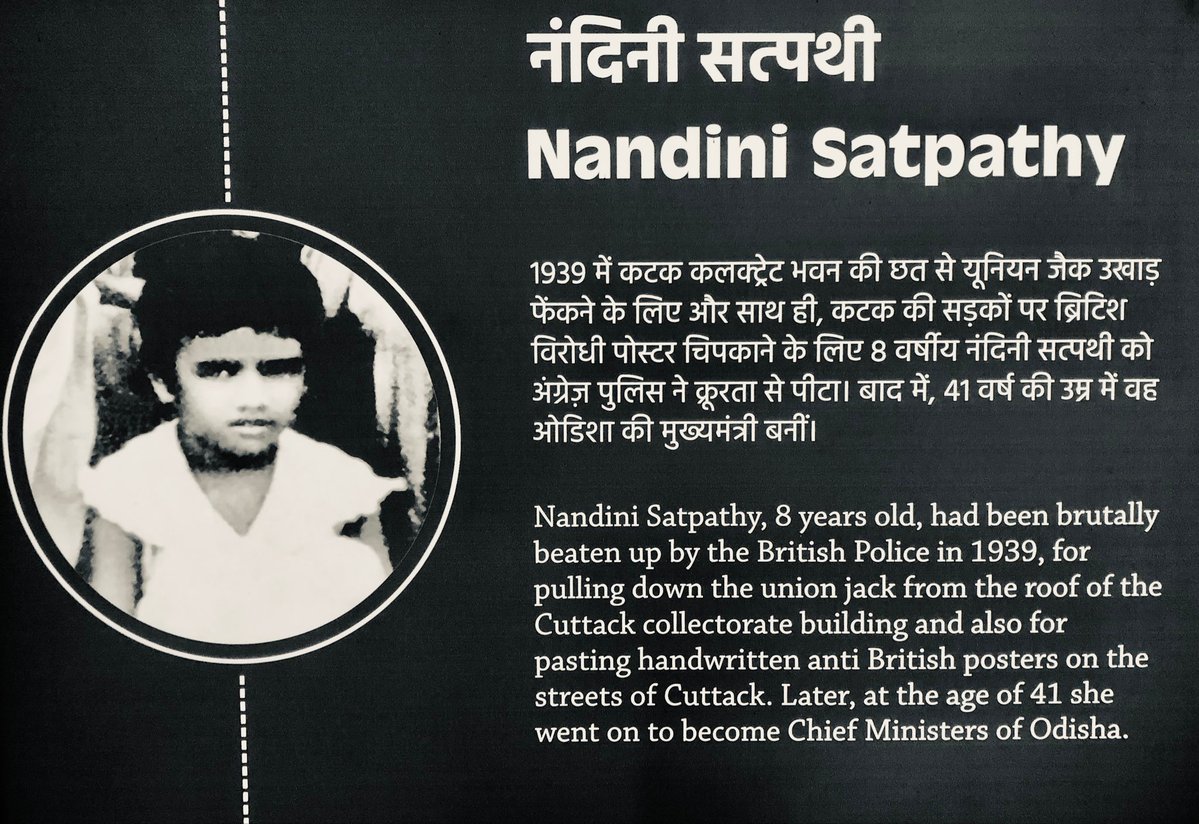
In 1939 8 Yrs Old Child Nandini Satpathy Pulled Down The Union Jack of British Govt Later at The Age of 41 Years She Became The Chief Minister of Odisha ( Kranti Mandir, Red Fort Delhi )
indianhistorypics tweet media
English
7
47
285
7.6K
Sunil Kumar Banerjee रीट्वीट किया
The Wire
The Wire@thewire_in·
A Day in the Life of Der Leader [English] | #memefest *Nothing in this bears any resemblance to anyone dead or alive
English
77
1.4K
4.4K
140.8K