カビアン Hunting4MoreBioBags

4.3K posts

カビアン Hunting4MoreBioBags banner
カビアン Hunting4MoreBioBags

カビアン Hunting4MoreBioBags

@kshahi

MD/PhD-Neuroscience(with a Minor in Stonks). Try and learn something everyday! Definitely not investment advice.

शामिल हुए Ağustos 2009
451 फ़ॉलोइंग585 फ़ॉलोवर्स
カビアン Hunting4MoreBioBags रीट्वीट किया
Tanya
Tanya@Tanyaelisabeth·
If I stay home and raise my own children I am a loser and not ambitious But if I hire and pay another woman to raise and take care of my children for me than I am an empowered woman If that same woman stayed home with her children she would be a loser But if she takes care of my children she is not If we both switched and raised each others children for a paycheck we would be successful ambitious girl bosses But if we do it for our own children we are losers
English
1.7K
8.3K
41.6K
856.4K
カビアン Hunting4MoreBioBags रीट्वीट किया
Amena Bakr
Amena Bakr@Amena__Bakr·
From an overnight speech delivered by Adnoc ceo Sultan al Jaber in the US: “Two futures are competing for the Middle East: one exports instability, the other builds industry.” #OOTT
English
9
28
165
69.7K
カビアン Hunting4MoreBioBags रीट्वीट किया
BioBoyScout
BioBoyScout@BioBoyScout·
50M Americans normalized weekly injections because of GLP-1. That behavioral shift is a one-way ratchet. It does not reverse. Injectable companies just got a tailwind the market hasn't priced. Read about it in the white paper: drive.google.com/file/d/1z7ZwWp… $ARWR #RNAi #biotech
English
0
2
26
1.2K
カビアン Hunting4MoreBioBags रीट्वीट किया
BKactual
BKactual@BravoKiloActual·
@ZavalaA He hasn’t followed politics of the state he wants to govern closely ok buddy. 🙄🙄🙄
English
2
16
488
5.3K
I Meme Therefore I Am 🇺🇸
🚨BREAKING: Code Pink leftist activists are heading to Cuba to tell people living under communism how terrible Trump and America are. I wish Cuba would keep them.
English
8.3K
6.1K
27.9K
2.4M
カビアン Hunting4MoreBioBags रीट्वीट किया
U.S. Senator John Fetterman
U.S. Senator John Fetterman@SenFettermanPA·
The Iranian regime executed a 19 year old for demanding democracy. I stand with his memory and the thousands of other young Iranians. Those who grieve the elimination of Iranian leaders over murdered protesters is telling.
Masih Alinejad 🏳️@AlinejadMasih

Today, in Iran, in the middle of a war, the regime executed a 19-year-old national wrestling champion for the crime of joining January protests. 💔 After signaling to the world, including President @realDonaldTrump, that they would halt executions of protesters, the regime has done the exact opposite. Three young protesters, Saleh Mohammadi, Mehdi Ghasemi, and Saeed Davoudi, were hanged in Qom after a sham trial. Reports indicate torture. Forced confessions. No access to chosen lawyers. Closed-door proceedings. No right to appeal. I call on @GlobalAthleteHQ to stand with Iranian athletes who are being silenced, imprisoned, and executed simply for raising their voices. This is not just about sports. This is about human dignity.

English
8.4K
22.5K
85.9K
3.2M
カビアン Hunting4MoreBioBags
Very cool story
Archaeo - Histories@archeohistories

In 1980, a bioarchaeologist at Emory University named George Armelagos was studying ancient human bones from Sudanese Nubia, the kingdom that flourished along the Nile south of Egypt between roughly 350-550 CE, when something stopped him. Under ultraviolet light, the bones glowed. They fluoresced with a distinctive yellow-green color that Armelagos recognized immediately, because the same glow appeared in the bones of modern patients who had been treated with tetracycline. The antibiotic binds tightly to calcium and phosphorus in bone tissue as the body metabolizes it, leaving a permanent fluorescent marker. What Armelagos was seeing in bones nearly two thousand years old was chemically identical to what he saw in twentieth-century medical subjects. The archaeological community was skeptical. The received history of antibiotics began with Alexander Fleming’s discovery of penicillin in 1928, and tetracycline itself was not isolated until 1948. The idea that a pre-literate population in the Nile valley had been routinely ingesting it seemed implausible, and the initial findings were dismissed as post-mortem contamination from soil bacteria. Armelagos spent three more decades building the case. He eventually partnered with Mark Nelson, a leading tetracycline specialist at Paratek Pharmaceuticals, who agreed to perform a definitive chemical analysis. The process required dissolving the ancient bones in hydrogen fluoride, one of the most corrosive and dangerous acids in existence. What the resulting liquid-chromatography mass-spectrometry analysis found was not a trace of tetracycline. The bones were saturated with it. Multiple tetracycline variants were identified, including chlortetracycline and oxytetracycline, in concentrations indicating sustained exposure beginning in early childhood and continuing throughout life. Ninety percent of the Nubian individuals tested showed the labeling. The exposure had not been accidental or occasional. It had been lifelong and deliberate. The source was their beer. Ancient Egyptian and Nubian brewing began with grain, typically emmer wheat or barley, which in that region was naturally contaminated with Streptomyces, a soil bacterium that produces tetracycline as a metabolic byproduct. The grain was germinated, made into bread, then incompletely baked to preserve an active center, and finally fermented in vats of water. The standard practice was to seed each new batch with ten percent of the previous one, which kept the Streptomyces culture alive and active from batch to batch in a continuous chain. The resulting brew was thick, sour, low in alcohol, and highly nutritious. Everyone drank it, including children as young as two years old. The critical question Armelagos could not fully resolve was whether the Nubians understood what they were doing. The consensus among researchers is that they almost certainly did not know the mechanism. They had no concept of bacteria, no understanding of antibiotics as a drug class, and no language for what tetracycline was doing in their bodies. What they likely did know, accumulated through generations of observation and passed down as practical knowledge, was that this particular preparation of beer had medicinal effects. Ancient Egyptian and Jordanian medical texts record beer being used to treat gum disease, wounds, and other infections. The brewing method that produced tetracycline appears to have been deliberately maintained and refined over centuries, not by any understanding of the chemistry involved, but by the accumulated recognition that it worked. #archaeohistories

English
0
0
0
62
カビアン Hunting4MoreBioBags रीट्वीट किया
First Squawk
First Squawk@FirstSquawk·
ELI LILLY: ISSUING A PUBLIC WARNING ABOUT POTENTIAL SAFETY RISKS ASSOCIATED WITH COMPOUNDED TIRZEPATIDE MIXED WITH VITAMIN B12
English
33
39
537
463.6K
カビアン Hunting4MoreBioBags
Incredible platform for tweaking things and checking effects/results.
Bo Wang@BoWang87

This is really cool (and wild): Scientists simulated a complete living cell for the first time. Every molecule, every reaction, from DNA replication to cell division. The paper (Luthey-Schulten et al., Cell 2026, doi.org/10.1016/j.cell…), just out today, used JCVI-Syn3A — a synthetic minimal bacterium with fewer than 500 genes. A 3D+time simulation of the full 105-minute cell cycle: DNA replication, protein translation, metabolism, division. Every gene, protein, RNA, and chemical reaction tracked through physical space. It took years to build. Multiple GPUs. Six days of compute time per run. And this is the simplest possible cell. A human cell has ~20,000 genes. It lives in tissue. It interacts with neighbors. It differentiates. It responds to drugs in ways that depend on context we haven't fully measured. Mechanistic simulation of the minimal cell costs 6 GPU-days for 105 minutes of biology. You cannot scale that to human cells. The complexity isn't 40x harder. It's exponentially harder. This is why the field pivoted to data-driven models. You can't hand-encode the regulatory wiring of a human hepatocyte. But you can learn it — if you have the right perturbation data collected across enough diverse biological contexts. The two approaches aren't competing. Papers like this generate the ground truth that future ML models need for validation. But the path to a clinically useful virtual cell runs through foundation models, not through scaling up mechanistic simulation. Amazing work!

English
0
0
0
61
カビアン Hunting4MoreBioBags रीट्वीट किया
Throwback Iran
Throwback Iran@Tarikh_Eran·
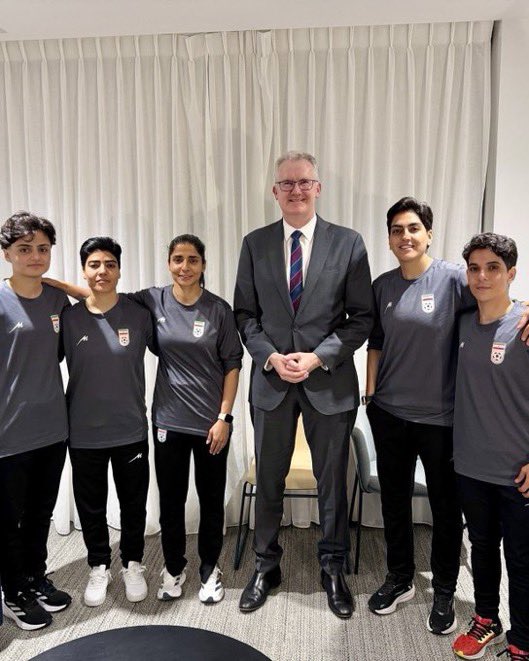
Right after being granted asylum, Iranian women’s national team threw away their hijabs. A huge middle finger to all the regime propagandists and Islamists who told us Iranian women wear hijab because of “their own choosing”.
Throwback Iran tweet media
English
1.1K
11.6K
57K
1.2M
カビアン Hunting4MoreBioBags रीट्वीट किया
Camus
Camus@newstart_2024·
Jimmy Carr nails brutal parenting truth in 25 seconds: "I want to be kind to my kids... but what they want is McDonald's, ice cream, TV, video games. Downstream? Fat, stupid kids. Who wants fat, stupid kids? No one. So you have to be kind to their potential — not their immediate wants. That means broccoli, homework, walks, exercise. Boring now. Kind later." Short-term pleasure vs. long-term character. The hardest "no" is often the deepest love. Where do you draw the line between being "fun" and being truly kind to your kids' future selves?
English
104
956
8.3K
1M
カビアン Hunting4MoreBioBags रीट्वीट किया
Hans Mahncke
Hans Mahncke@HansMahncke·
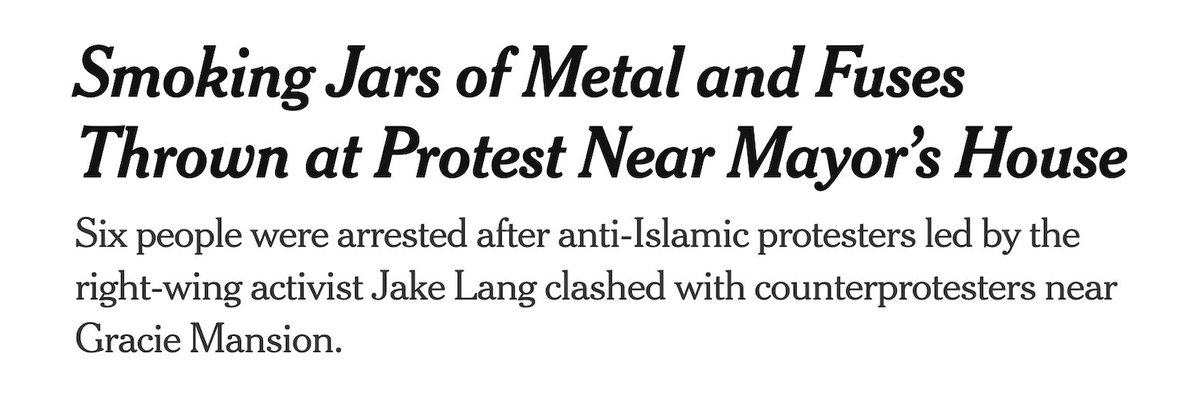
We’ve seen it all now. What any honest person would call an IED, the New York Times calls “smoking jars of metal and fuses.”
Hans Mahncke tweet media
English
444
3.1K
15.1K
695.6K
カビアン Hunting4MoreBioBags रीट्वीट किया
Massimo
Massimo@Rainmaker1973·
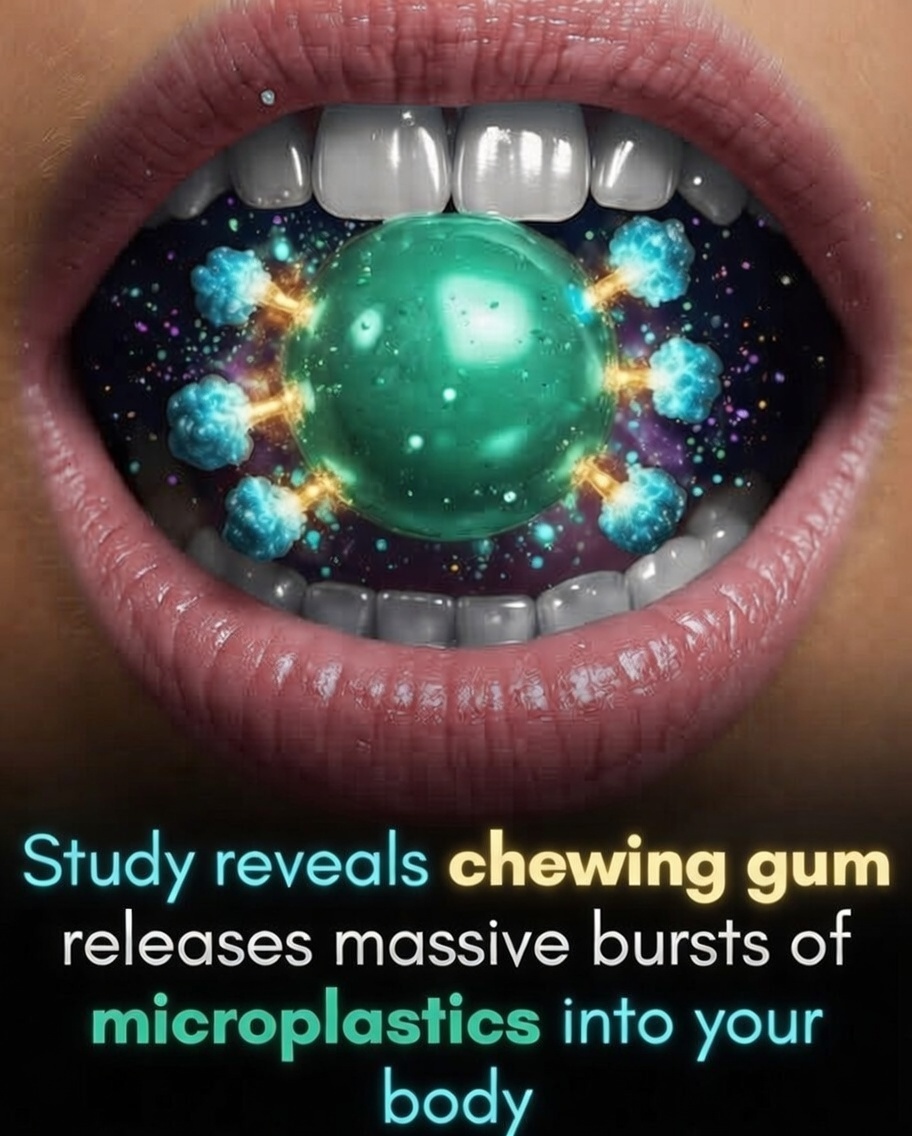
Chewing gum releases thousands of microplastic particles directly into your mouth with every piece you chew. A pilot study from UCLA researchers, presented at the American Chemical Society’s Spring 2025 meeting, has identified chewing gum as a surprisingly significant and previously overlooked source of daily microplastic ingestion. The researchers examined both traditional synthetic gums, which contain polymers such as polyethylene, polyvinyl acetate, and polystyrene, as well as brands marketed as “natural” that use chicle or other plant-based bases. By simulating realistic chewing conditions, they measured how many particles are released into saliva during typical use. The results showed that a single piece of gum can shed anywhere from hundreds to more than 3,000 microplastic fragments over 10 to 30 minutes of chewing. The primary mechanism is mechanical abrasion from teeth combined with friction from saliva, which dislodges tiny particles directly from the gum base. Surprisingly, “natural” gums performed no better than synthetic versions and, in some cases, released even higher numbers of fragments. Most of the particles fell within the microplastic size range of less than 5 millimeters, making them small enough to be easily swallowed. Once ingested, these particles largely resist breakdown by digestive enzymes and pass through the gastrointestinal tract as persistent pollutants. Although the long-term health consequences of chronic low-level microplastic exposure are still under investigation—with emerging concerns about potential links to inflammation, gut microbiome changes, and leaching of chemicals—this represents a meaningful everyday contribution to personal plastic intake, especially for regular gum chewers. Lead researcher Professor Sanjay Mohanty pointed out a practical way to reduce exposure: chewing a single piece for a longer time rather than frequently replacing it with a fresh one, since particle release tends to be highest in the early minutes and then decreases. The study underscores the need for greater transparency in labeling the materials used in everyday consumer products like chewing gum. As microplastics continue to appear in unexpected places—from drinking water to seafood—this discovery adds chewing gum to the expanding list of common items quietly adding to our daily plastic burden. [Lowe, L., Leonard, J., & Mohanty, S. K. (2025). Ingestion of microplastics during chewing gum consumption. Journal of Hazardous Materials Letters, 6, 100164. DOI: 10.1016/j.hazl.2025.100164]
Massimo tweet media
English
79
298
1K
181.6K
カビアン Hunting4MoreBioBags रीट्वीट किया
Harshi Peiris, Ph.D.
Harshi Peiris, Ph.D.@Neuroscope_mp·
Hook 🚨BREAKING: German researchers treated 15 severe lupus patients with CAR-T therapy. All 15 went into complete remission. Many stopped ALL medication. This might be the biggest shift in autoimmune medicine in decades. 🧵
English
45
640
2.5K
134.5K
カビアン Hunting4MoreBioBags रीट्वीट किया
Wall Street Mav
Wall Street Mav@WallStreetMav·
@profstonge This is the real power play by Trump and Rubio. They are cutting off China’s cheap oil supply. 1) Venezuela 800,000 bpd that was going to China, now goes to Texas refineries. 2) Iran 1.2 million bpd was going to China at a big discount. That is finished.
English
110
759
5.5K
186.9K