NEUROLOGICAL APPROACH TO DIZZINESS
Dizziness is one of the most common reasons for a neurology consult. The murky waters of the vestibular system are scary to us mere mortals. But having a framework provides a map to sail these choppy seas!
Thread below:
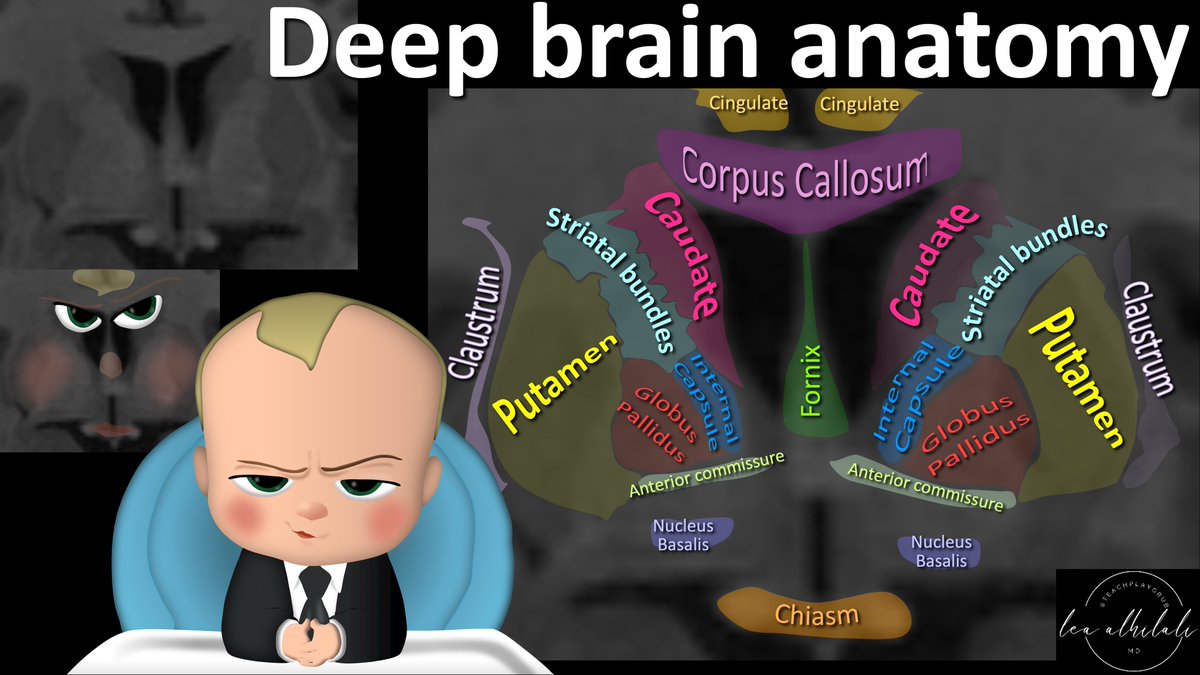
Trying to cover your bases when it comes basal ganglia region anatomy?
Need some core knowledge of the corpus striatum?
Want to be a boss when it comes to anatomy here?
Can you see the Boss Baby w/the puffy cheeks here?
Here's how this baby can help you w/this anatomy...
Deep brain anatomy in the coronal plane looks like a baby with puffy cheeks. This can help you remember the anatomy & function!
Here’s how:
➡️Cingulate gyrus:
🔸Looks like the baby’s hair. It’s a SINGLE tuft of hair for the CINGulate gyrus
🔸Cingulate gyrus is involved in processing painful emotions
🔸Remember: CINGulate is for things that SINGED you
➡️Corpus callosum:
🔸Looks like the evil boss baby eye brows
🔸It’s the crossing fibers so it’s what makes the baby look cross!
➡️Fornix:
🔸Looks like the baby’s nose
🔸Involved in memory
🔸Remember the NOSE KNOWS things and FORnix never FORgets
➡️Corpus striatum:
🔸Looks like the baby puffy cheeks
🔸Made up of many different structures
▶️Putamen: important for motor skills. PUT-amen help you PUT-one foot in front of the other
▶️Striatal bundles: important for learning actions w/a reward. STRIatal bundles make you want STRIVE for better
▶️Caudate: involved in associated learning. CAUdate helps you learn the CAUSES
➡️Claustrum:
🔸Looks like the baby’s ears
🔸Inhibits motor function, esp during sleep
🔸Remember Santa CLAUStrum only comes when we sleep
Hopefully now you have a deep knowledge of these deep brain structures!!
1/Correlate clinically!
It’s harder than you think in THALAMUS—where its size is small & but the clinical symptoms are large.
Here’s a thread to help you remember the main thalamic syndromes & their locations!
One of the most challenging yet essential skills to develop in the practice of medicine is the ability to think
The book "How to Think Like a Neurologist" by @emeltzermd does a great job introducing some foundational principles of neurology
Here's a summary:
1/If you aren’t cheating, you aren’t trying!
Are you looking at MRIs?
Feeling some confusion about the diffusion?
Feel impaired when it comes to the FLAIR?
Wish you could cheat a little?
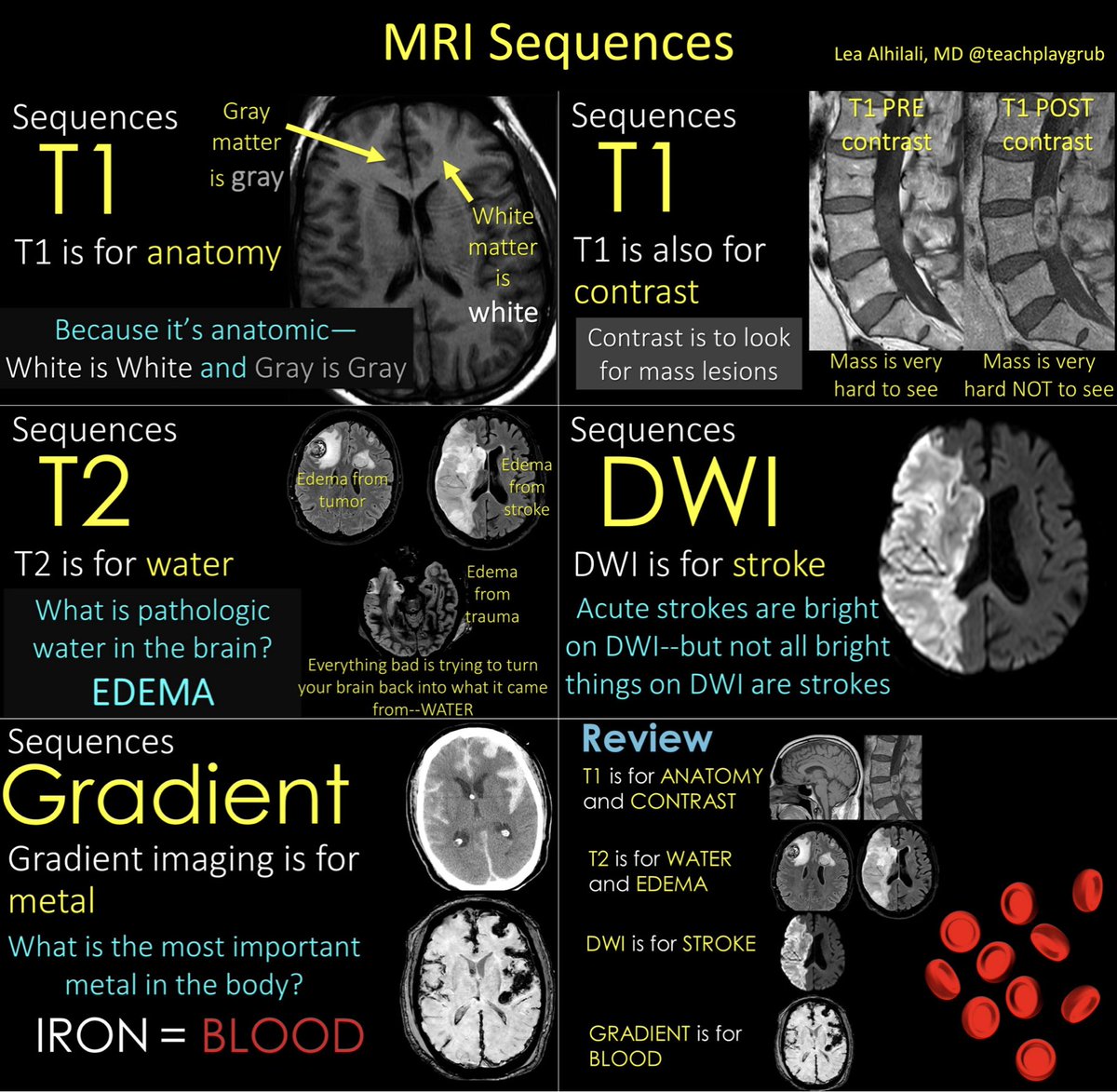
Here’s a little cheat sheet on all the sequences you NEED to know for looking at MRIs!
➡️T1: It’s for anatomy, so brain structures reflect the same color as real life.
🔸So gray matter is gray on T1 & white matter is white on T1.
🔸It’s also for contrast. Contrast is taken up by masses making them light up & easier to see.
➡️T2: It’s the water sensitive sequence.
🔸What is pathologic water in the brain? Edema!
🔸Remember--everything bad in this world is trying to turn you back into what you came from—water!
➡️DWI: Diffusion detects stroke, which are bright on DWI.
🔸But anything that makes space tight in the brain can be bright on diffusion (cellular masses, pus under pressure, etc.)
➡️Gradient: Gradient is sensitive to metals.
🔸What’s the most important metal in body? Iron—bc iron is in blood.
🔸So gradient is our blood sensitive sequence
🌟So remember🌟
▶️T1 is for Anatomy & Contrast
▶️T2 is for Water & Edema
▶️DWI is for stroke
▶️Gradient is for blood
Hopefully, this will help you next time you have an MRI--who says cheaters never win? 😉
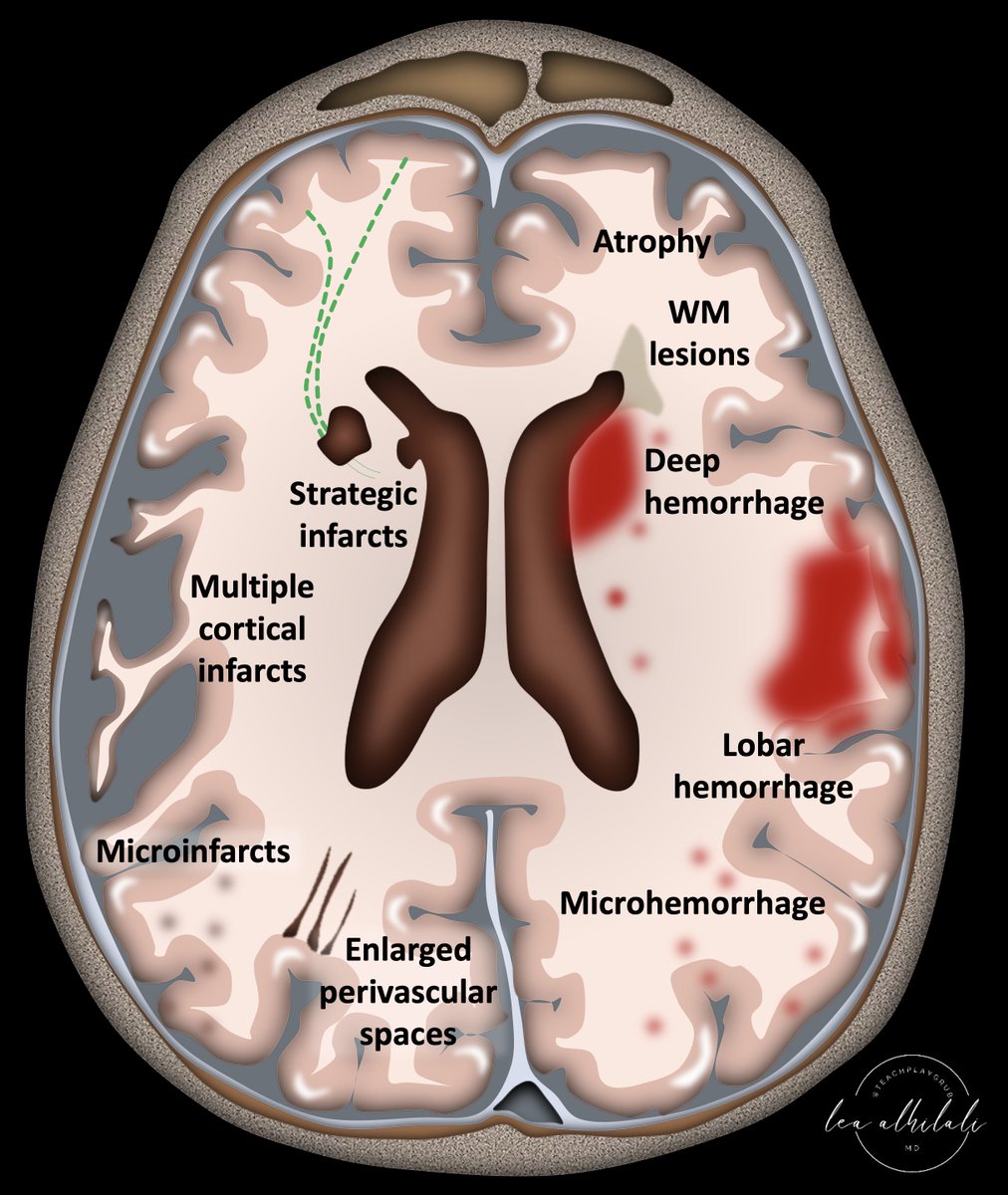
Just because it’s called SMALL vessel disease doesn’t mean it doesn’t have a BIG impact!
Small vessel disease (SVD) is a BIG contributor to vascular dementia, along w/large vessel cortical infarcts
Do YOU know all the faces of small vessel disease?
Common imaging markers of SVD include:
--White matter hyperintensities (WMHs)
--Lacunes
--Enlarged perivascular spaces
--Microbleeds
--Small subcortical infarcts
--Brain atrophy
But what you see isn’t always what you get!
Even in patients w/similar degrees of SVD on imaging, clinical symptoms can be very variable.
Variability exists because of:
--Perilesional penumbra
--Remote effects from disruption of brain connectivity
--Differing brain reserve & compensatory mechanisms
So remember, imaging findings of SMALL vessel disease are just the tip of a very BIG iceberg
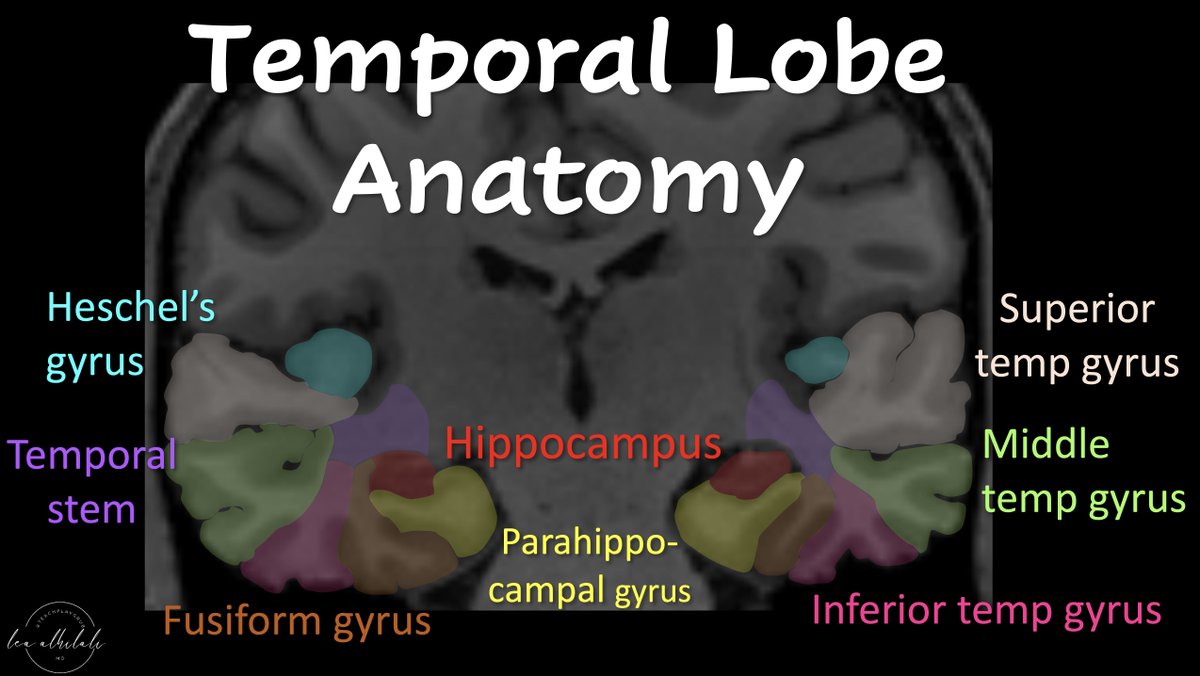
1/Does your ability to remember temporal lobe anatomy seem, well, temporary?
Are you feeling temporally challenged when it comes to this complex region?
Here’s a thread to help you remember the structures of the temporal lobe!
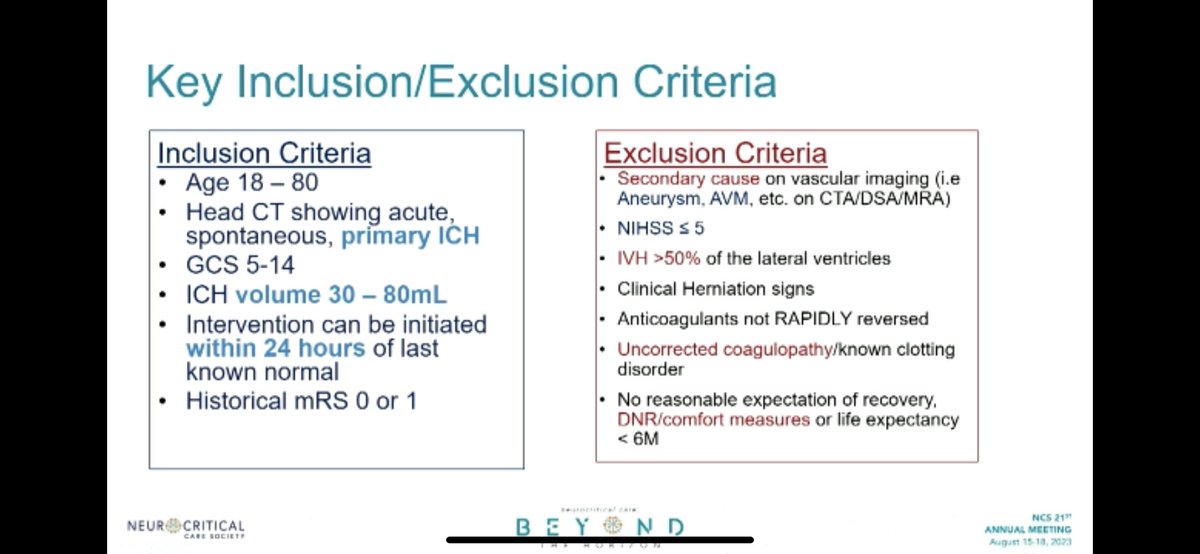
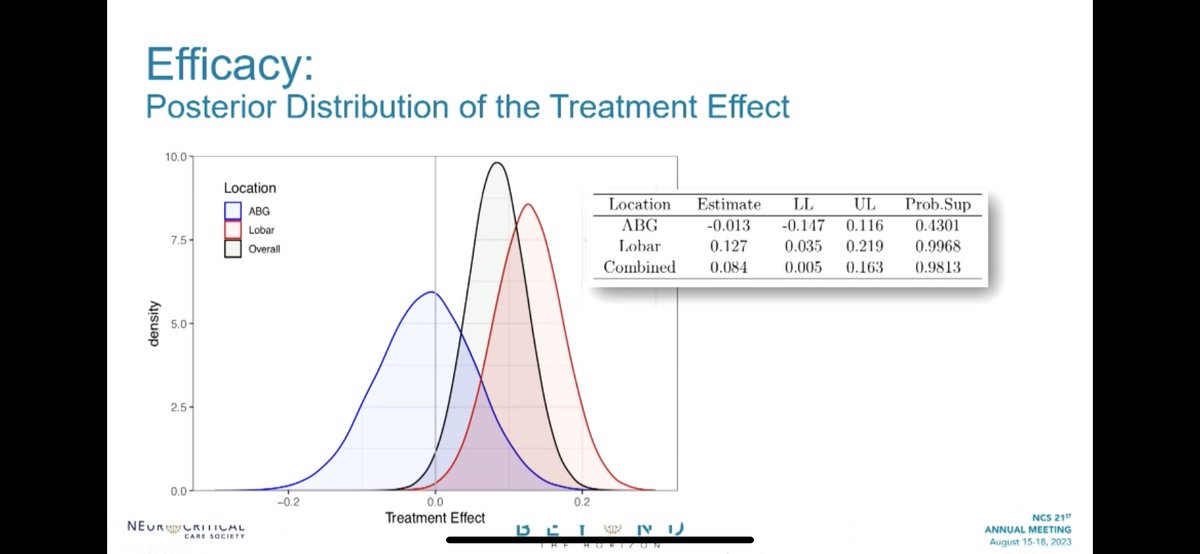
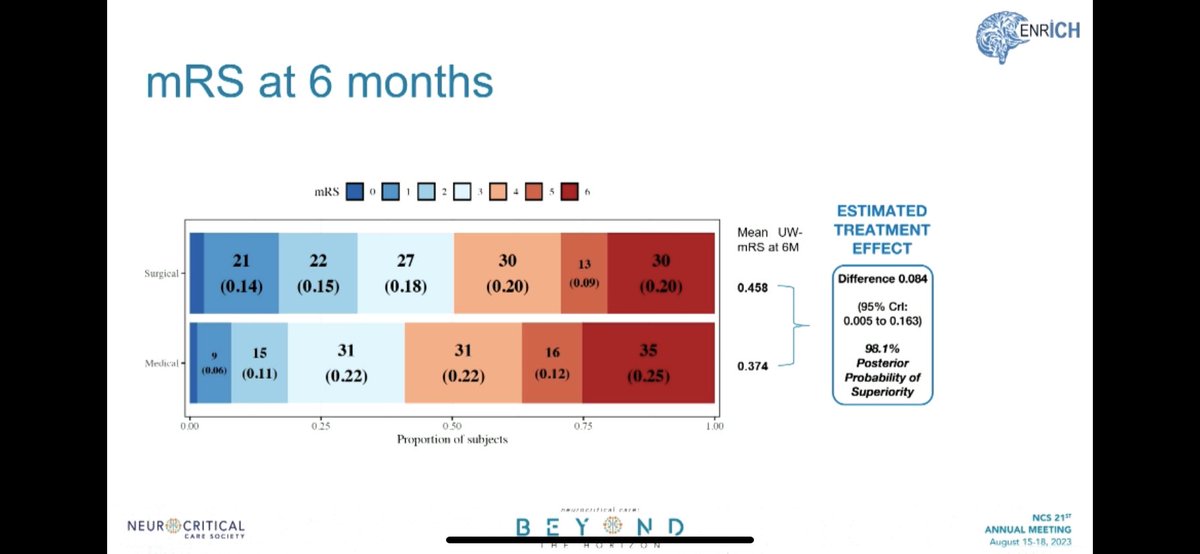
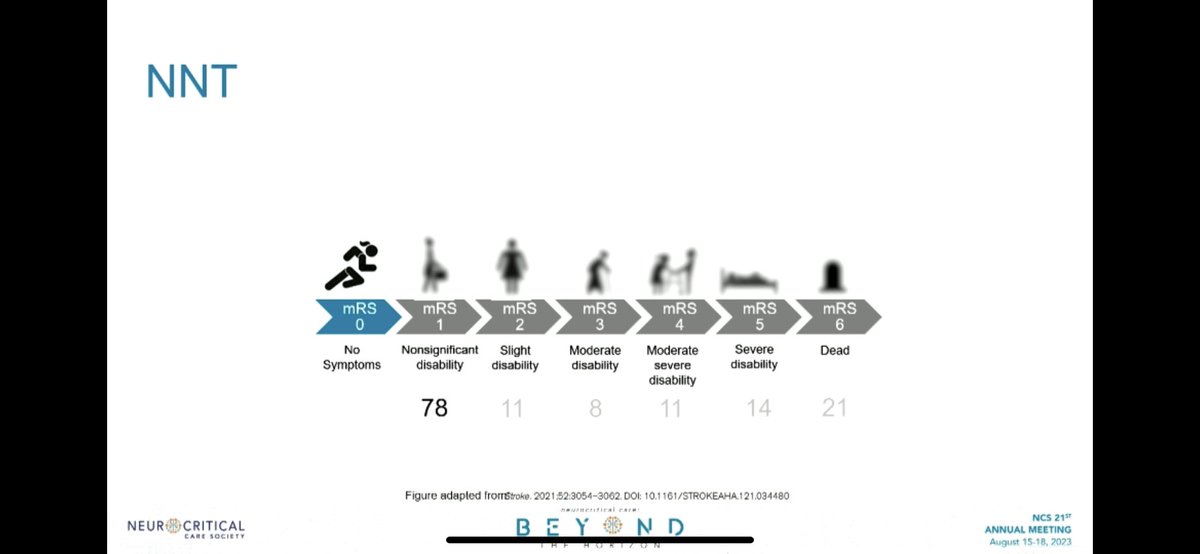
ENRICH trial. Minimally invasive ICH evac. vs medical treatment. Utility weighted mRS better in surgical group, especially lobar (vs anterior basal ganglia) ich location. Better mortality & LOS with surgery #NCS2023
Said every emergency physician and neurologist who has cared for multiple people under age 40 with devastating strokes caused by vertebral artery dissection from rapid neck manipulation by chiropractors.
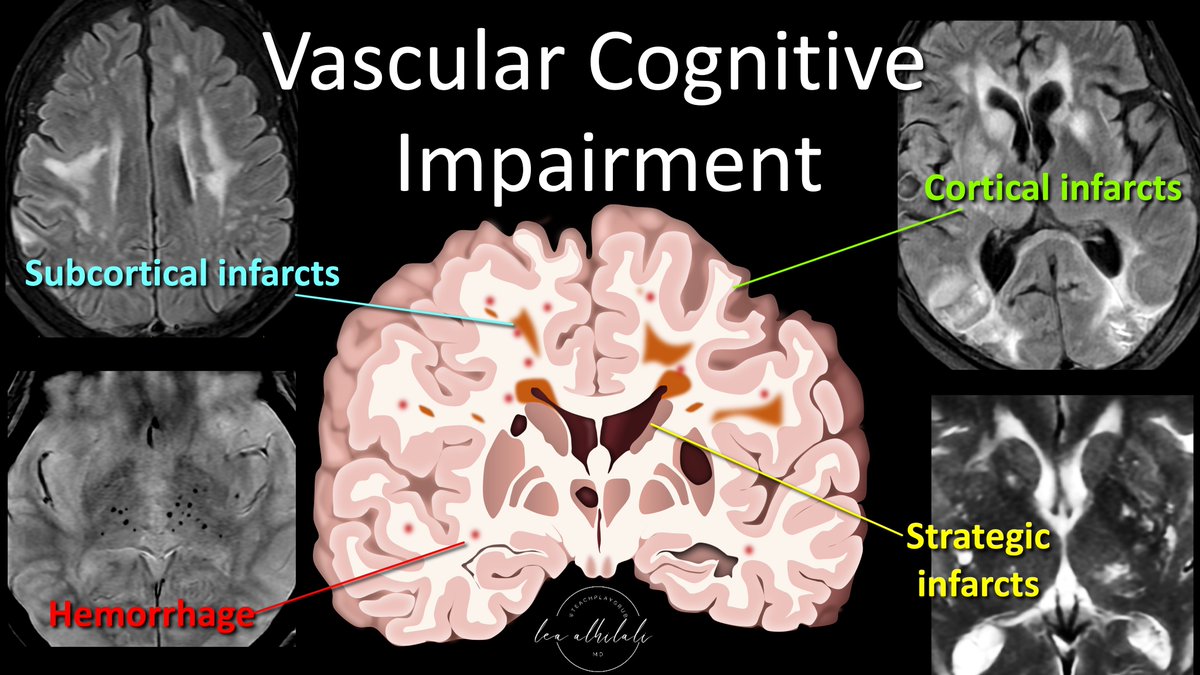
1/Having trouble remembering what you should look for in vascular dementia on imaging?
Almost everyone worked up for #dementia has infarcts. Which ones are important?
Here’s THE FULL #tweetorial this time on the key findings in vascular dementia
#meded#medtwitter#neurotwitter
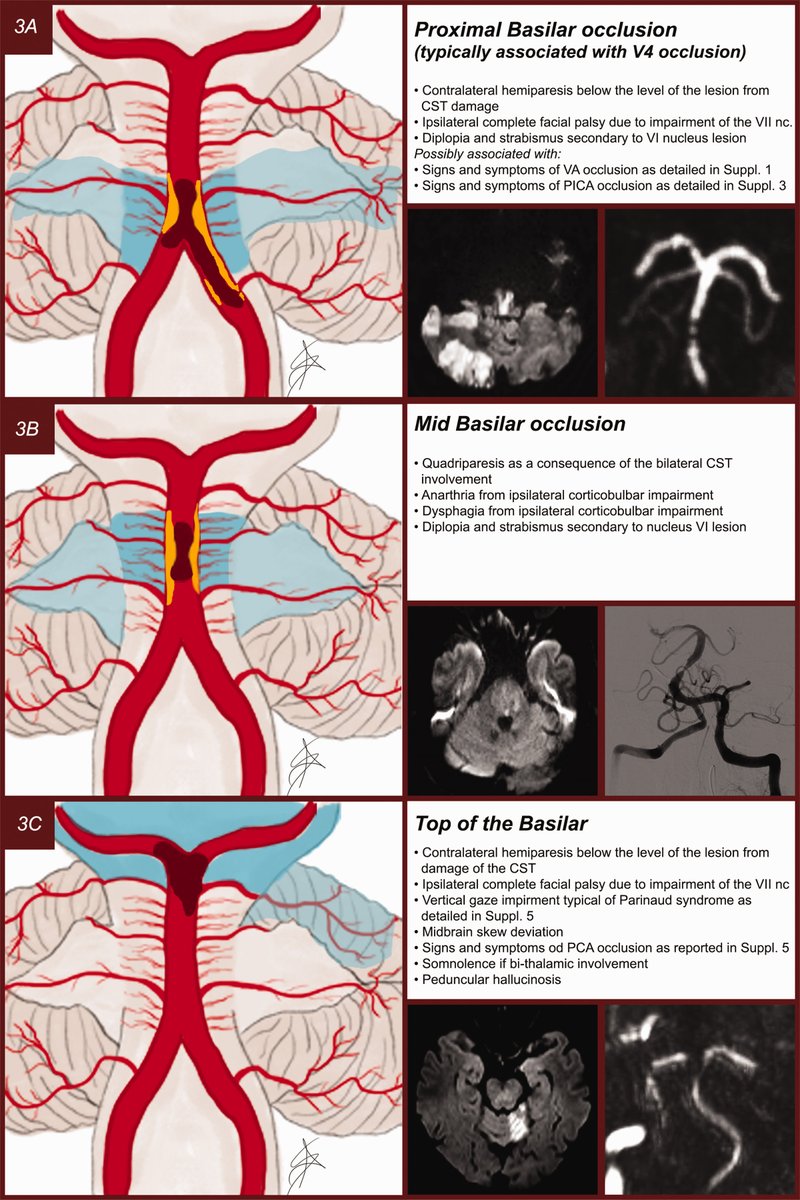
#MondayTip#Basilar artery occlusions:
☝️Proximal/mid occlusions: atherothrombotic. Unilateral/crossed pontine syndromes to ‘‘locked-in’’
☝️Distal occlusions: most cardioembolic. Top of the basilar syndrome (dependins on length and position of the clot and on collateral flow)