Canadian Institute for Historical Education

1.3K posts

Canadian Institute for Historical Education banner
Canadian Institute for Historical Education

Canadian Institute for Historical Education

@CdnInst4HistEd

The CIHE is a non-partisan, not-for-profit research organization dedicated to promoting historical literacy and civic understanding in Canada.

Toronto, Ontario Bergabung Ekim 2023
211 Mengikuti1.9K Pengikut
Tweet Disematkan
Canadian Institute for Historical Education
At the Canadian Institute for Historical Education, our mission is to foster thoughtful, informed discussion about Canada’s history — in all its colour, complexity, context, and humanity. We welcome diverse opinions, but we also believe every discussion should be rooted in respect and evidence. That’s why we’ve published our Community Guidelines, which outline what we expect from those engaging with us — and what you can expect from us in return. ✅ Respect others ✅ Base your comments on evidence and credible sources 🚫 No hate speech, harassment, misinformation, or personal attacks We actively moderate to maintain a safe, constructive space for everyone. Please take a moment to read our full guidelines here: 👉 buff.ly/I3s4j6N Together, we make history — respectfully. #CIHE #CommunityGuidelines #CanadianHistory
Canadian Institute for Historical Education tweet media
English
4
11
28
4K
Canadian Institute for Historical Education
What happens when support for Canadian industries stands still while the market keeps moving? In this clip from History Matters, Richard Stursberg explains how, from the 1990s onward, foreign takeovers, the rise of multinational retailers, and stagnant funding reshaped Canada’s book publishing industry. As resources shrank and competition intensified, the system shifted from one that could grow together—to one where success became a zero-sum game. It’s a case study in how policy, markets, and globalization intersect—and what that means for Canadian cultural production today. 🎧 Watch the full episode—link in bio 👉 Follow CIHE for thoughtful, evidence-based conversations on Canada’s past and present #CanadianHistory #History #Canada #CanadianEconomy #CanadianPolicy
English
0
1
1
31
Canadian Institute for Historical Education
He’s on our $5 bill. His name is on schools, streets, and universities. But how often do we really talk about him? Wilfred Laurier is one of Canada's most recognizable Prime Minister's, but historian and author .@jdmstewart thinks that he doesn't get enough attention. Sir Wilfrid Laurier was Canada’s first French Canadian Prime Minister and one of the most influential leaders in our history. Serving from 1896 to 1911, he guided Canada through a period of rapid growth, westward expansion, immigration, and rising global confidence. Laurier believed Canada could be both British in heritage and French in culture. His vision of compromise and national unity shaped the country at a time when tensions could easily have pulled it apart. He once said, “The 20th century shall be the century of Canada.” More than a century later, his challenge still stands. #WilfridLaurier #CanadianHistory #HistoryMatters #KnowYourPast #TogetherWeAllMakeHistory
English
0
0
4
181
Canadian Institute for Historical Education
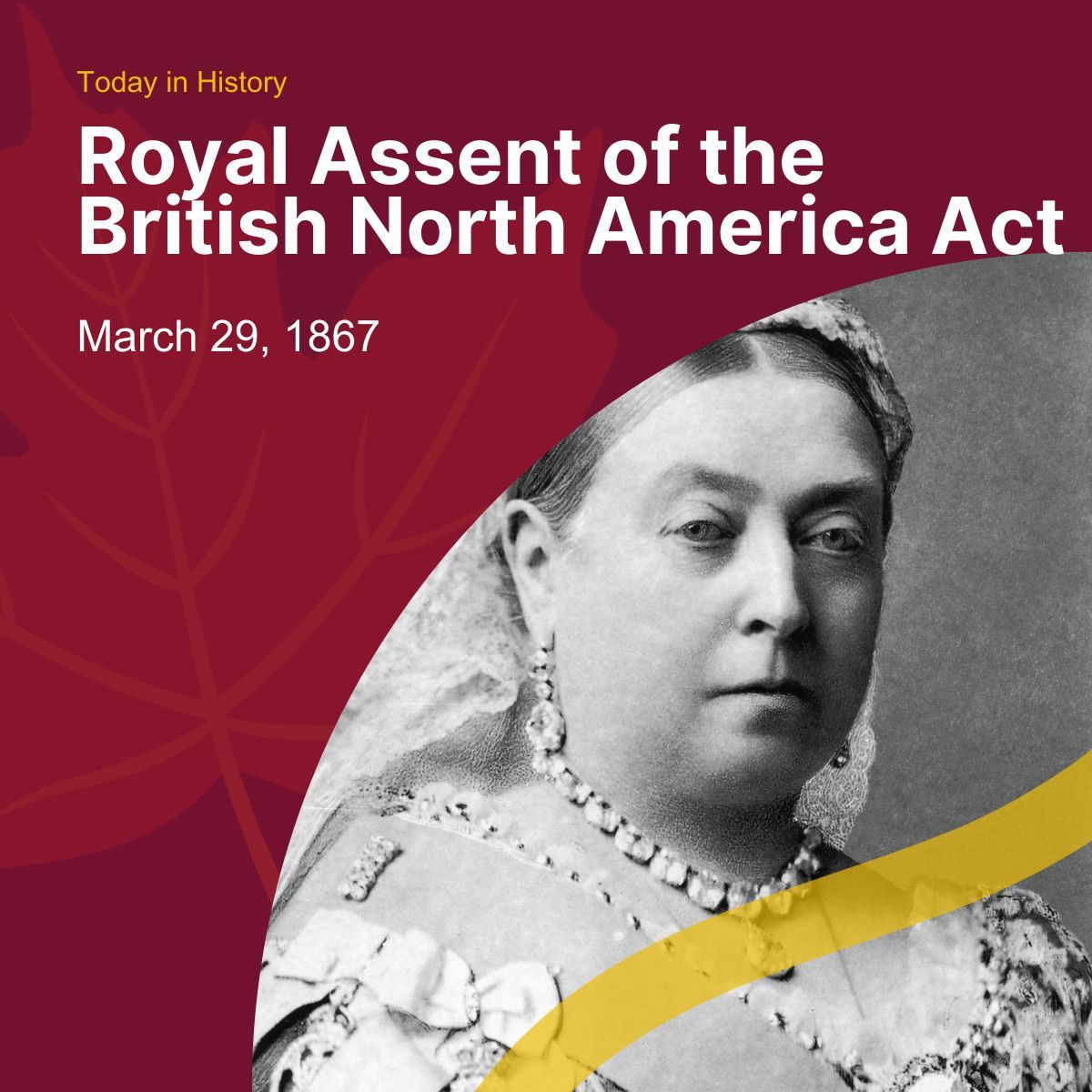
On March 29, 1867, the British North America Act received Royal Assent. Signed into law by Queen Victoria, the Act created the Dominion of Canada — uniting Nova Scotia, New Brunswick, and the Province of Canada under a new federal constitution. This was Canada’s legal birth moment. Leaders like John A. Macdonald had spent years negotiating the terms of union. But it was this Act — passed by the British Parliament — that formally brought the country into existence. On July 1, the new Dominion would take effect. But March 29 is when Canada became law. 👉 Confederation was not declared in rebellion. It was negotiated, legislated, and enacted.
Canadian Institute for Historical Education tweet media
English
3
40
131
3.2K
Canadian Institute for Historical Education
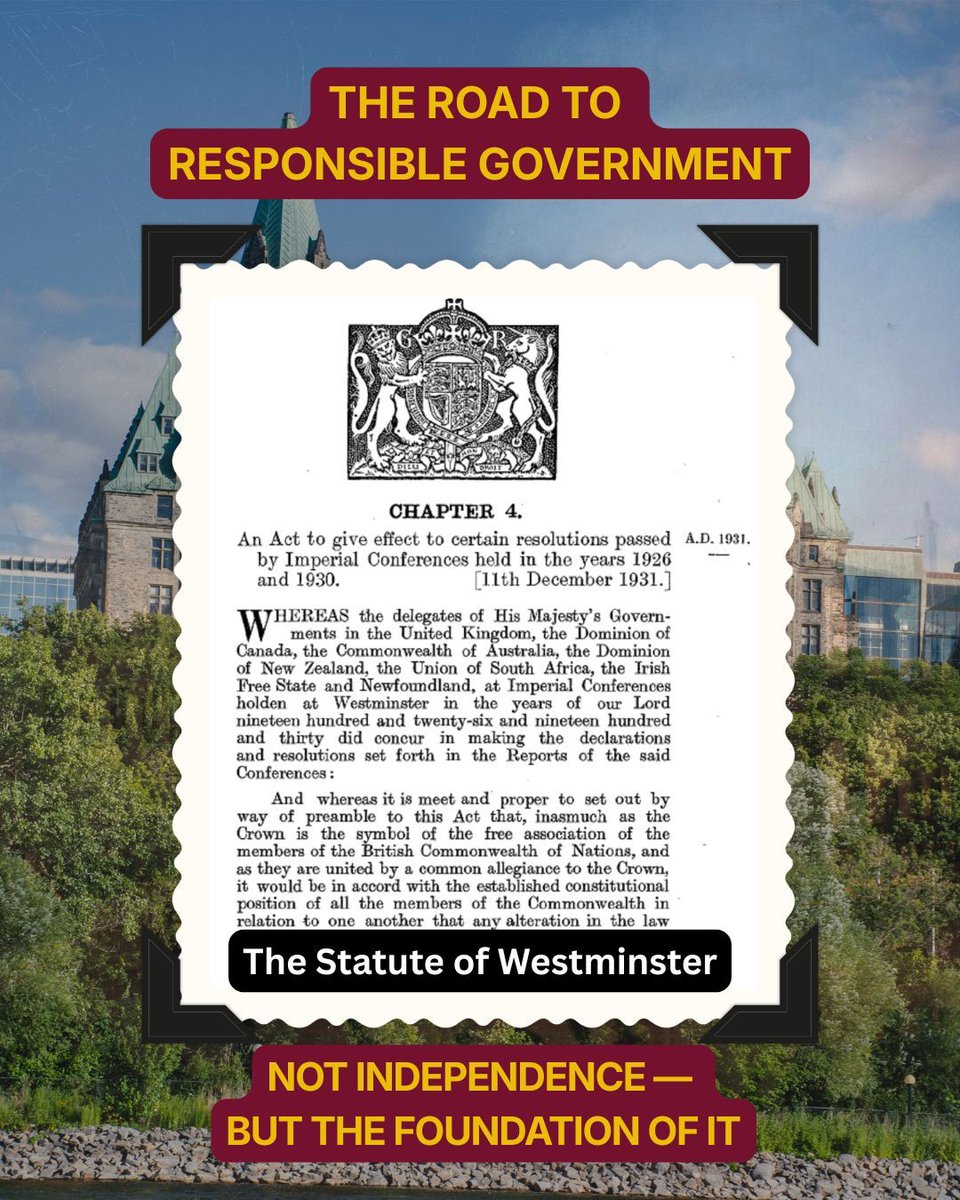
Responsible government did not make Canada independent. In 1848–49, Britain still controlled foreign affairs. The British Parliament still held constitutional authority. The Crown remained sovereign. But something fundamental had changed. Internal governance now flowed from elected representatives. The executive answered to the assembly. The Governor acted on advice. Political legitimacy came from democratic confidence. That shift made later milestones possible: 1867 — Confederation unites the provinces under a federal system. 1931 — The Statute of Westminster grants legislative independence. 1982 — The Constitution is patriated, and the Charter entrenched. Sovereignty in Canada was not declared in a single moment. It developed in stages. Responsible government was the first decisive step. Before Canada became fully independent, it proved it could govern itself responsibly. That matters. Because parliamentary democracy is not self-executing. It depends on confidence, restraint, and respect for institutions — principles established in the 1840s. Responsible government is not a footnote to Confederation. It is the foundation beneath it. Together, we all make history.
Canadian Institute for Historical Education tweet media
English
0
6
22
443
Canadian Institute for Historical Education
Can policy shape culture—and who controls it? In this clip from History Matters, Richard Stursberg compares two major Canadian policy efforts from the 1970s: one that successfully kept broadcasting Canadian-owned, and another that struggled to protect the domestic book industry. The result? A powerful reminder that how policy is implemented can matter just as much as the idea behind it. As Canada continues to navigate questions of cultural ownership in a global media landscape, the lessons from the past still resonate. 🎧 Watch the full episode—link in bio 👉 Follow CIHE for thoughtful, evidence-based conversations on Canada’s past and present #CanadianHistory #HistoryMatters #Policy #History #Canada
English
0
1
1
122
Canadian Institute for Historical Education
On March 26, 1821, the Hudson's Bay Company and the North West Company merged after years of escalating conflict. And it wasn’t just commercial rivalry. In 1816, tensions exploded at the Battle of Seven Oaks in present-day Manitoba. A confrontation between HBC governor Robert Semple and a Métis brigade led by Cuthbert Grant ended in gunfire. Semple and more than twenty of his men were killed. The dispute centered on control of trade routes and the Red River settlement. Both companies were building posts, blocking supply lines, and pressuring Indigenous and Métis traders to align with them. What began as economic competition became armed conflict. By 1821, Britain intervened and forced the companies to merge, restoring order under a single charter. The result? One corporation controlled vast swaths of northern and western North America — governing territory long before Confederation. 👉 Canada’s early history wasn’t just diplomacy and debate. It included corporate rivalry, violence, and contested control of land. #Canada #History #ContextMatters
Canadian Institute for Historical Education tweet media
English
0
1
3
188
Canadian Institute for Historical Education
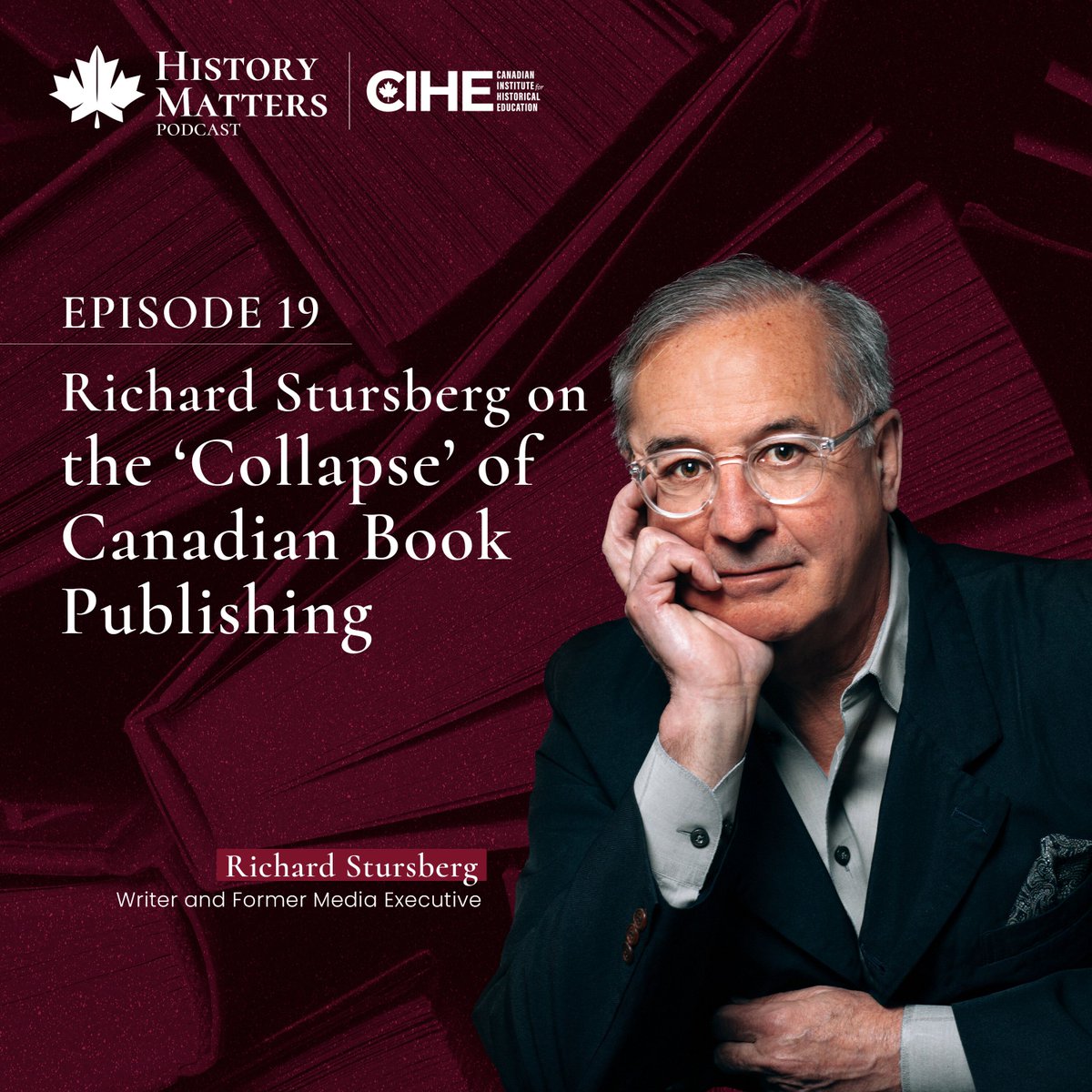
Just dropped, Episode 20 of the History Matters podcast, available at buff.ly/IWTNRdZ In this episode, Allan talks with writer and media executive Richard Stursberg to explore the rise and decline of Canadian book publishing. The conversation breaks down how Canada once built a thriving literary culture, why English-Canadian publishing has lost ground, and what that means for national identity, history, and cultural sovereignty today, along with what can be done to rebuild it. Stursberg examines the dramatic decline of English Canadian publishing, tracing the rise of a vibrant national literary culture in the 1960s through the 1990s and the policy failures that allowed foreign multinationals to dominate the market. The discussion considers the relationship between publishing, national identity, cultural sovereignty, and historical literacy in Canada. Richard Stursberg’s leadership roles have included CBC English-language services, Telefilm Canada, the Canadian Television Fund, and PEN Canada.
Canadian Institute for Historical Education tweet media
English
1
0
0
61
Canadian Institute for Historical Education
In recent weeks, the federal government announced a dramatic shift in Canadian defence policy: an increase in military spending to 2% of GDP in 2025–26, with a long-term ambition of reaching 5% of GDP by 2035. The stated aim is clear. Canada must strengthen its defence industrial base and reduce its dependency on the United States. To some, this sounds like a sharp break from Canada’s past. In fact, it is part of a long and recurring historical pattern. Canada has never been able to think about defence in isolation. Geography, alliances, and proximity to great powers have always shaped the country’s military posture. When Canadians debate defence spending, they are rarely debating weapons alone. They are debating sovereignty. In 1910, Wilfrid Laurier introduced the Naval Service Act, creating what would become the Royal Canadian Navy. His proposal was modest: a small fleet under Canadian control, capable of assisting the British Empire in times of war. His opponents argued Canada should instead fund British dreadnoughts directly. Why build a navy when Britain already had one? The argument was not really about ships. It was about autonomy. Laurier insisted that if Canada was to contribute to imperial defence, it should do so under its own command and Parliament’s authority. Defence policy, even then, was inseparable from questions of national independence. The two world wars transformed Canada. During the Second World War, defence spending surged beyond 35% of GDP. Canada became one of the world’s largest shipbuilders and aircraft producers. By 1945, it possessed the third-largest navy in the world. This industrial mobilization reshaped the economy and helped cement Canada’s postwar prosperity. But as soon as peace returned, so did retrenchment. Spending fell sharply. The surge had been justified by crisis. Without crisis, the political will faded. This pattern, surge and scale back, has defined Canadian defence policy for over a century. The Cold War reintroduced sustained defence commitments. Canada became a founding member of North Atlantic Treaty Organization (NATO) in 1949 and partnered with the United States in the creation of North American Aerospace Defense Command (NORAD) in 1958. Canadian forces were stationed in Europe for decades. Yet tensions remained. The cancellation of the Avro Canada CF-105 Arrow in 1959 symbolized the limits of an independent defence industrial base. Canada would integrate deeply with American systems, particularly in aerospace and continental defence. Cold War spending often hovered between 3% and 7% of GDP. That level was sustained not because it was popular, but because it was deemed necessary. After 1991, defence spending fell sharply. By the late 1990s, it hovered near 1% of GDP. Canada leaned into a peacekeeping identity. Procurement was delayed. Equipment aged. Successive governments assumed that American security guarantees and a relatively stable global order would hold. Operations in Afghanistan briefly reversed the decline, but not to Cold War levels. For three decades, Canada benefited from what was often called a “peace dividend.” It is that dividend which now appears to be closing. The government's recent announcement reflects several pressures at once: NATO’s 2% benchmark, instability in global politics, renewed Arctic competition, and uncertainty in American leadership. It also signals a rediscovery of something older: that defence spending can serve as industrial policy. From wartime shipyards in Halifax to aerospace innovation in Ontario and Quebec, Canada’s defence sector has historically been a driver of economic capacity. The proposed target of 5% of GDP by 2035 would place Canada at levels not seen in peacetime since the early Cold War. It would require sustained political consensus, something historically rare outside moments of existential threat. Across 150 years, the same question reappears. Should Canada rely on the security umbrella of a larger power, or should it invest more heavily in autonomous capacity? How much sovereignty is worth the cost? Laurier’s navy, NATO commitments, the Arrow debate, Afghanistan, and today’s defence industrial strategy all revolve around this central tension. History suggests two things at once. First, Canada rarely increases defence spending without external pressure. Second, once spending rises significantly, it reshapes the country’s economy and global posture in lasting ways. Whether the current commitment becomes a sustained transformation or another temporary surge will depend not only on budgets, but on political will and public understanding. What is certain is that Canada has faced this choice before. Each generation answers it anew. And each answer tells us something about how Canadians understand their place in the world. Together, we all make history. #Canada #History #ContextMatters
Canadian Institute for Historical Education tweet mediaCanadian Institute for Historical Education tweet mediaCanadian Institute for Historical Education tweet mediaCanadian Institute for Historical Education tweet media
English
0
7
17
3.6K
Canadian Institute for Historical Education
Before Google, who settled your arguments? Before the internet, journalists didn’t just report the news—they were the source. In this clip from History Matters, Christina Blizzard shares a story from her early newsroom days—when a simple bar bet about the 1935 Stanley Cup led straight to the sports desk… and a lesson in knowing your facts. It’s a reminder of a different era of journalism—one built on memory, research, and trust. 🎧 Watch the full episode using link in bio 👉 Follow CIHE for more thoughtful, evidence-based Canadian history #CanadianHistory #HistoryMatters #Journalism #Internet #LearnFromHistory
English
0
0
2
140
Canadian Institute for Historical Education
Who is journalism for? In this clip from History Matters, Christina Blizzard reflects on reporting at Queen’s Park with a clear mission: write for the everyday Canadian—the commuter, the worker, the backbone of the community. From streetcars in Toronto to factory floors in Oshawa, newspapers once shaped their stories around the people most affected by them. As industries change and newsrooms evolve, it raises an important question: have we lost sight of who the audience really is? 🎧 Watch the full episode—link in bio 👉 Follow CIHE for thoughtful, evidence-based conversations on Canada’s past and present #CanadianHistory #HistoryMatters #Journalism #CivicEngagement #LearnFromHistory
English
0
0
0
138
Canadian Institute for Historical Education
But the beaver had represented Canada for centuries before that. It appeared on early colonial coats of arms. It was stamped on fur trade emblems. It helped drive the economic engine that financed early settlement. The fur trade shaped exploration, commerce, and the expansion of British North America. In many ways, the beaver was Canada’s first economic icon. By 1975, Parliament wasn’t inventing a symbol. It was formalizing one deeply embedded in our history. 👉 If the maple leaf represents identity, what does the beaver represent — industry, resilience, nation-building? #Canada #History #ContextMatters
Canadian Institute for Historical Education tweet media
English
1
0
1
179
Canadian Institute for Historical Education
One of the most overlooked chapters in our national story? The French Canadian leaders who made the case for Canada — to Quebec. In our latest video, Patrice Dutil highlights the courage it took for Catholic, French-speaking politicians to argue that their future belonged in a country that would be majority English and Protestant. Among them was Joseph Adolphe Chapleau — a brilliant young lawyer and, by many accounts, the finest orator in Canada in both English and French. Chapleau didn’t describe Canada as a “new nation,” but as a new nationality — a civic identity big enough to include difference, language, and faith. It took vision. It took courage. And it helped build the country we know today. Watch now. Remember the story. 🇨🇦 For more context, read about Chapleau online at the Dictionary of Canadian Biography, vol. 12 Together, we all make history. #Canada #History #ContextMatters
English
5
14
45
5.4K
Canadian Institute for Historical Education
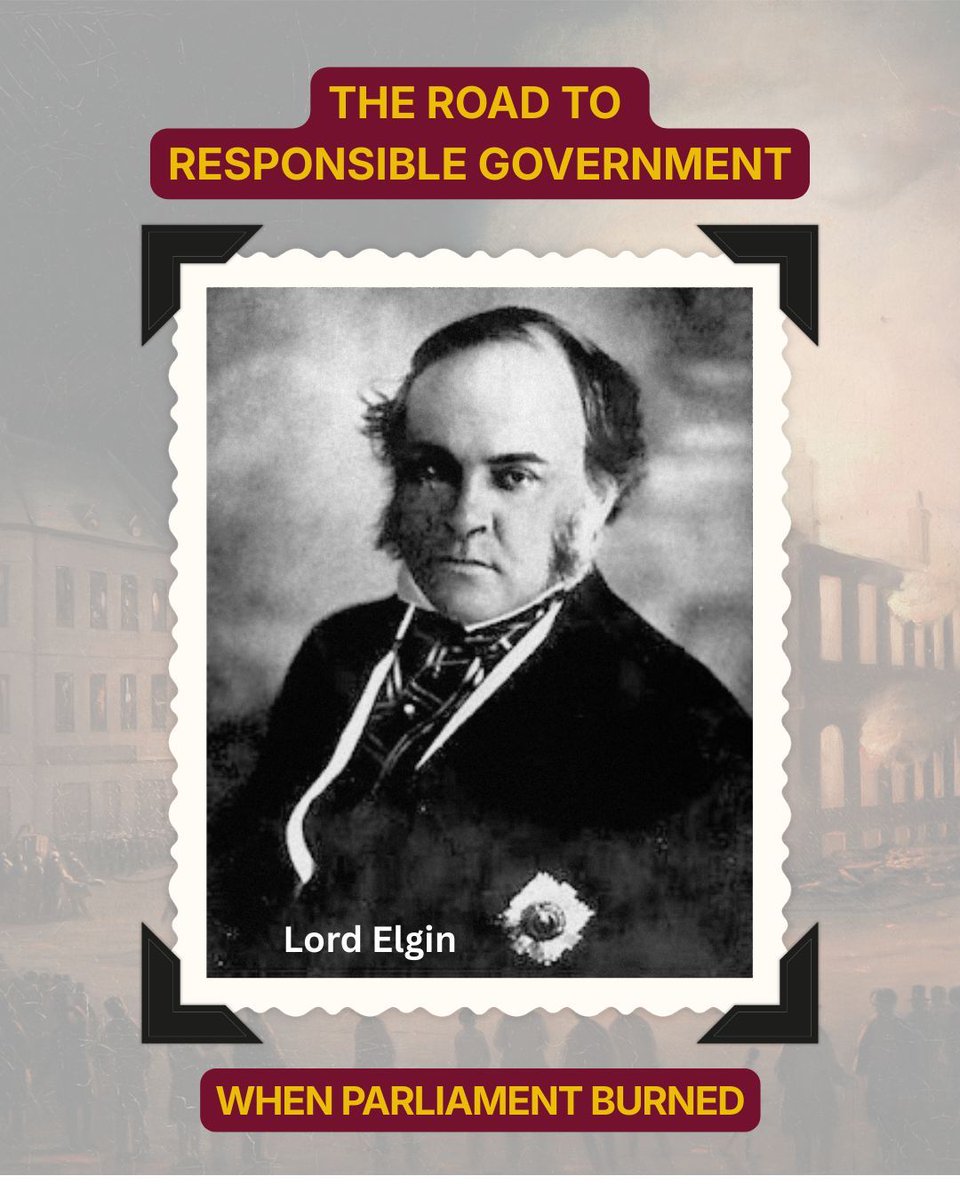
Responsible government was barely a year old when it faced its greatest test. In 1849, the Reform government led by LaFontaine and Baldwin passed the Rebellion Losses Bill. The legislation compensated residents of Lower Canada whose property had been damaged during the 1837–38 unrest. Opponents were furious. They believed the bill rewarded former rebels. When Governor General James Bruce, 8th Earl of Elgin granted Royal Assent — following the advice of his elected ministers — riots erupted in Montreal. On April 25, 1849, protestors burned the Parliament buildings to the ground. Elgin was attacked in the streets. Effigies were hung. Windows shattered. The pressure was immense. He could have dismissed the government. He could have overridden the Assembly. He could have restored direct imperial control. He did not. Elgin upheld the principle that the Governor must act on the advice of ministers who hold the confidence of the elected House. That decision mattered. Because responsible government is not tested when it is popular. It is tested when it is controversial. The Parliament buildings burned. But the principle survived. And from that moment forward, executive authority in Canada rested firmly on democratic confidence — not imperial preference. 👉 Democracy in Canada endured because leaders refused to abandon it under pressure.
Canadian Institute for Historical Education tweet media
English
2
1
1
182
Canadian Institute for Historical Education
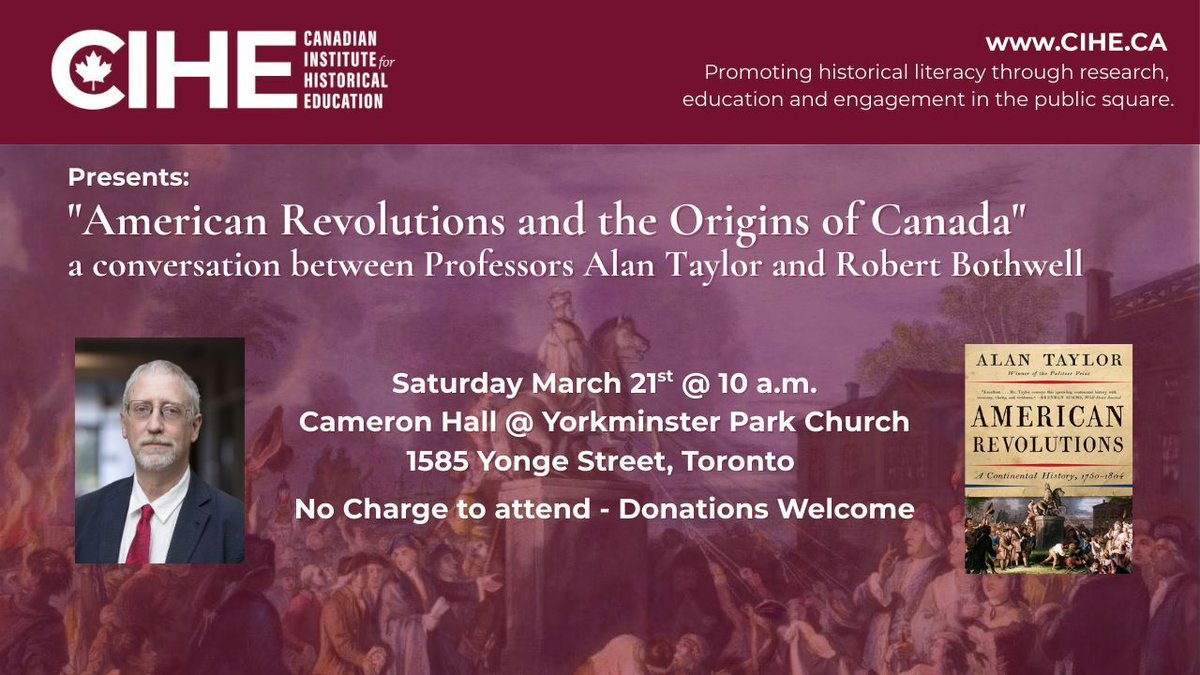
Tomorrow's the day for our Free event with Alan Taylor! On Saturday March 21st, the Canadian Institute for Historical Education is pleased to welcome to Toronto Professor Alan Taylor, one of the most distinguished historians in America today. He specializes in the colonial era to the nineteenth century and is a leading voice in rethinking the history of the American Revolution. Professor Taylor has transformed how historians understand the revolutionary era by placing it in a continental context. Rather than viewing the Revolution solely as the founding of the United States, his work examines the broader forces shaping North America in the late eighteenth century: the rival ambitions of the British, French, and Spanish empires, the decisive role of Indigenous nations, and the profound consequences for regions that would later become Canada. For further details and event tickets, please visit buff.ly/Sq7qd3b
Canadian Institute for Historical Education tweet media
English
0
0
2
105
Canadian Institute for Historical Education
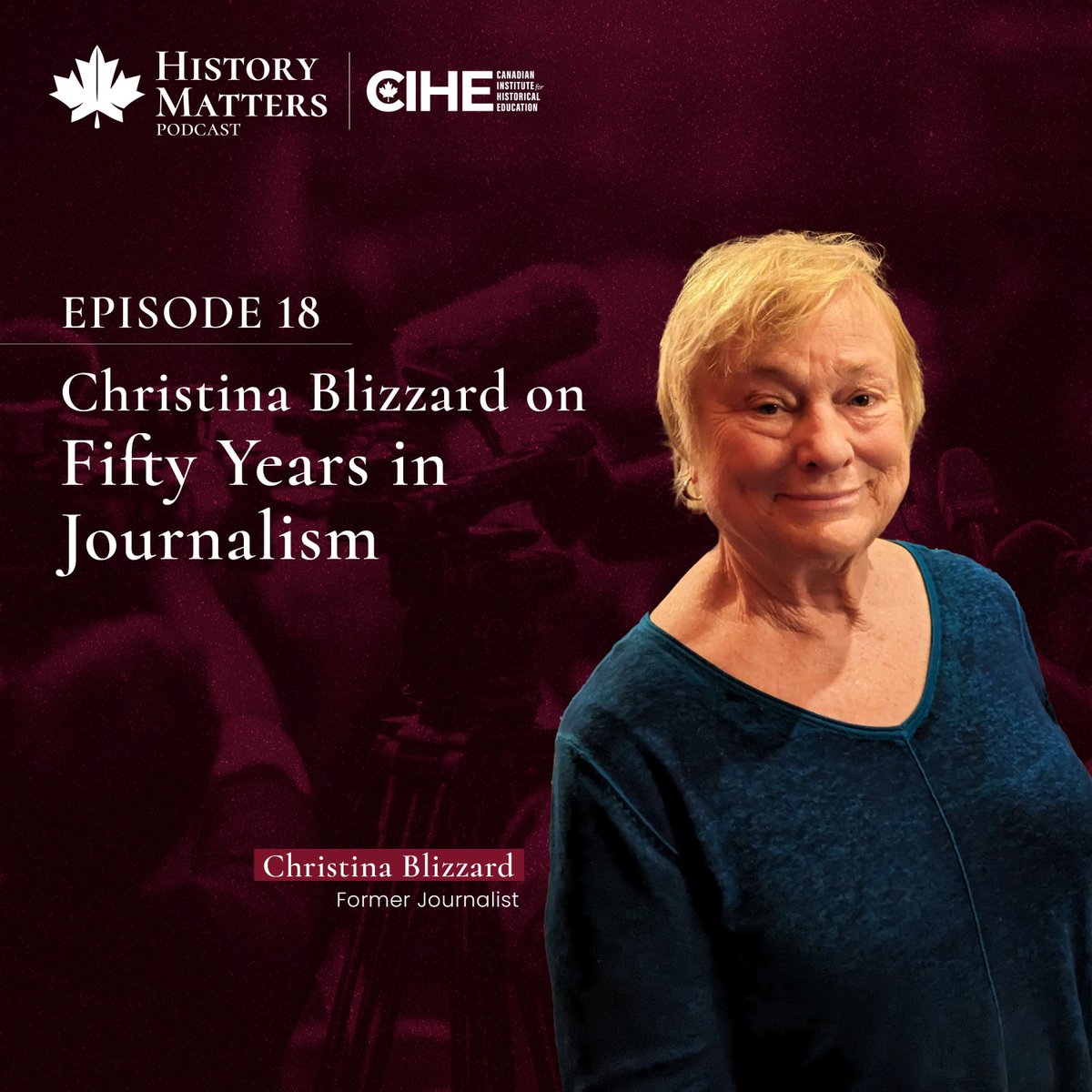
What does 50+ years in journalism teach us about how history is actually made? In this episode of History Matters, veteran journalist Christina Blizzard reflects on a career that spans more than five decades—from the newsroom floors of the Toronto Telegram to today’s fast-moving digital media landscape. Drawing on her time covering politics at Queen’s Park, Blizzard offers a firsthand look at pivotal moments like the “Common Sense Revolution” and the Walkerton water tragedy—while exploring how journalism doesn’t just report history, but helps shape it. As the pace of news accelerates and context becomes harder to hold onto, what role does historical literacy play in understanding the present? 🎧 Listen to the full episode and explore more at CIHE.ca or click the link in our bio. 👉 Follow CIHE for thoughtful, evidence-based conversations on Canada’s past and present #CanadianHistory #HistoryMatters #Journalism #CivicEngagement #LearnFromHistory
Canadian Institute for Historical Education tweet media
English
0
0
3
477
Canadian Institute for Historical Education
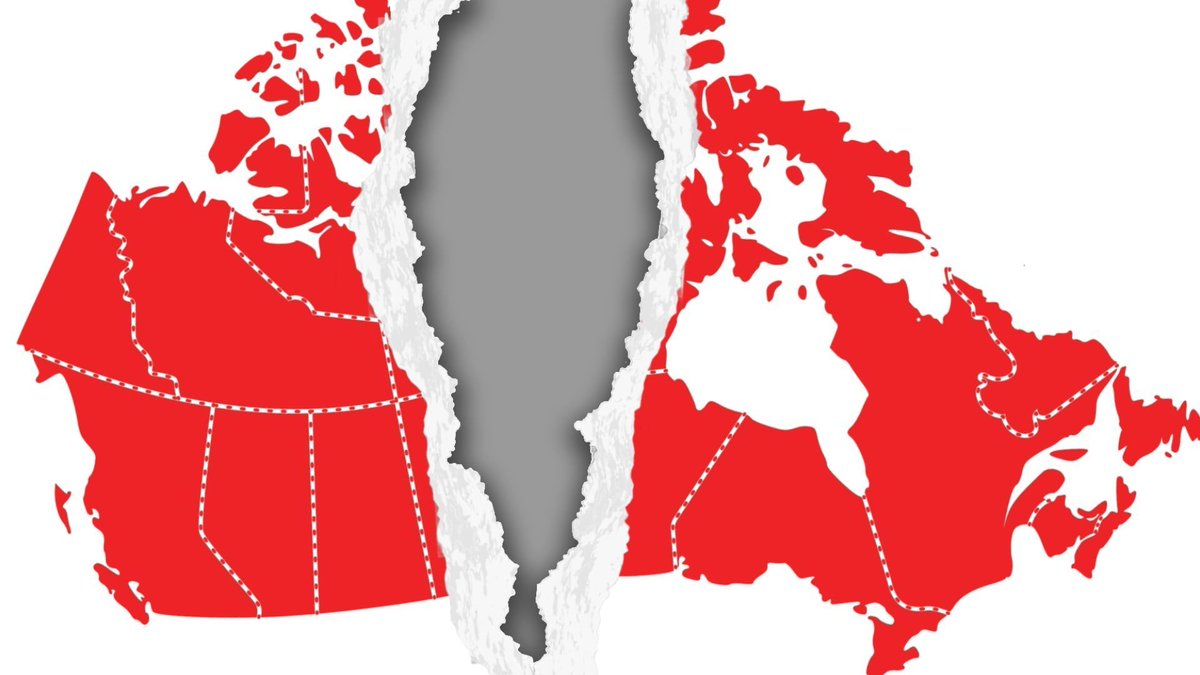
Today, talk of provincial secession has returned to the headlines. There is a familiar rhythm to moments like this in Canada. In Alberta, separatist activists have organized meetings with American officials, framing their movement in the language of self-determination and grievance. In Quebec, the possibility that the Parti Québécois could form government again raises the prospect of another referendum on sovereignty. It can feel unprecedented. It is not. From the beginning, Canada has been shaped by the tension between unity and autonomy. Confederation itself was, in part, a response to fragmentation. In the 1860s, leaders in the Province of Canada worried about American expansionism in the wake of the Civil War and the doctrine of Manifest Destiny. The result was not disunion, but federation: a constitutional structure designed to balance provincial identity with national strength. That tension resurfaced dramatically in Quebec in the late twentieth century. In 1980, the first sovereignty referendum asked Quebeckers to endorse a mandate to negotiate “sovereignty-association.” It failed. Fifteen years later, in 1995, the margin was razor thin: 50.58% voted No, 49.42% voted Yes. The country held together not because division disappeared, but because a majority—however narrow—chose federation over fracture. The federal government responded not with repression, but with law. In 2000, Parliament passed the Clarity Act, establishing that any future secession vote would require a clear question and a clear majority. The Supreme Court had already ruled in 1998 that while Quebec could not unilaterally secede under Canadian law, a clear democratic expression of will would obligate negotiations. The Court grounded its opinion in four principles: federalism, democracy, the rule of law, and protection for minorities. Alberta’s grievances, too, have precedents. Western alienation is not new. In the 1980s, the Pierre Trudeau government’s National Energy Program sparked fury across the Prairies, feeding movements that argued Ottawa was indifferent to regional economies. Earlier still, the 1930s saw the rise of Social Credit in Alberta, a populist response to economic despair that challenged federal authority in novel ways. Canada has endured these centrifugal forces before. What makes the present moment distinct is the broader geopolitical context. The United States is itself in a period of profound political strain. When provincial actors meet with American officials while advocating separation, it inevitably evokes older anxieties about external influence in Canadian affairs. In the nineteenth century, the fear was annexation. In the twentieth, it was economic absorption. In the twenty-first, it may be political alignment in an era of polarized democracy. And yet, history suggests that Canada’s constitutional order has proven resilient precisely because it allows for dissent within structure. The genius of Canadian federalism has never been the absence of disagreement. It has been the channeling of disagreement into ballots, courts, and negotiated reform rather than rupture. Secession talk rises in times of economic anxiety, cultural change, or political mistrust. It did so in the 1860s. It did so in the 1980s and 1990s. It does so now. The question for Canadians is the same one that confronted voters in 1980 and 1995: not whether differences exist, but whether those differences are best resolved inside the federation or outside it. History does not predict the future. But it does remind us that Canada’s story has always included strong regional identities and recurring debates about sovereignty. The endurance of the country has depended less on uniformity than on the willingness, again and again, to choose a shared constitutional framework over separation. In that sense, today’s debates are not signs of collapse. They are chapters in a long and unfinished argument about what Canada is—and how it chooses to stay together. #Canada #History #ContextMatters
Canadian Institute for Historical Education tweet media
English
2
1
6
227
Canadian Institute for Historical Education
Did you know about there was concerted effort in 1775 by the fledgling U.S. colonies to persuade inhabitants of Quebec to join the American revolution? Listen to History Matters most recent guest, author Madelaine Drohan tell the tale of how American colonists, including Benjamin Franklin, sought to bring colonists living north of the border into the fight. Full episode is located here : buff.ly/AoPZq4h #Canada #History #ContextMatters
English
0
0
4
237
Canadian Institute for Historical Education
Sir John A Macdonald was a member of Parliament for Kingston and served as Canada's first prime minister. A statue of Macdonald was installed in City Park in Kingston in 1895, but in June 2021, the statue was removed by the municipal government. His reputation came into question when he was associated with Residential Schools. The statue of Sir John A is currently stored in a warehouse out of public display. Now, based on a survey of Kingston residents conducted by Nanos, seven in ten Kingston residents express support to one extent or another for restoring the statue to its original location. Learn more and support the CIHE and the advocacy role it plays in Kingston by clicking the link in our bio. #Canada #History #Culture #ContextMatters #canadianhistory #SirJohnA #Kingston
Canadian Institute for Historical Education tweet media
English
3
6
43
2.6K
Canadian Institute for Historical Education
Canadian culture and identity always needs to be protected. Listen to historian, educator and author .@jdmstewart1 talk about the importance of how the Massey Commission in 1951 created the foundations for the preservation and growth of the Canadian arts community. For further reading on this subject, you can check out the book "The Muses, the Masses, and the Massey Commission" by Paul Litt (1992). #Canada #History #ContextMatters
English
0
1
3
197
Canadian Institute for Historical Education
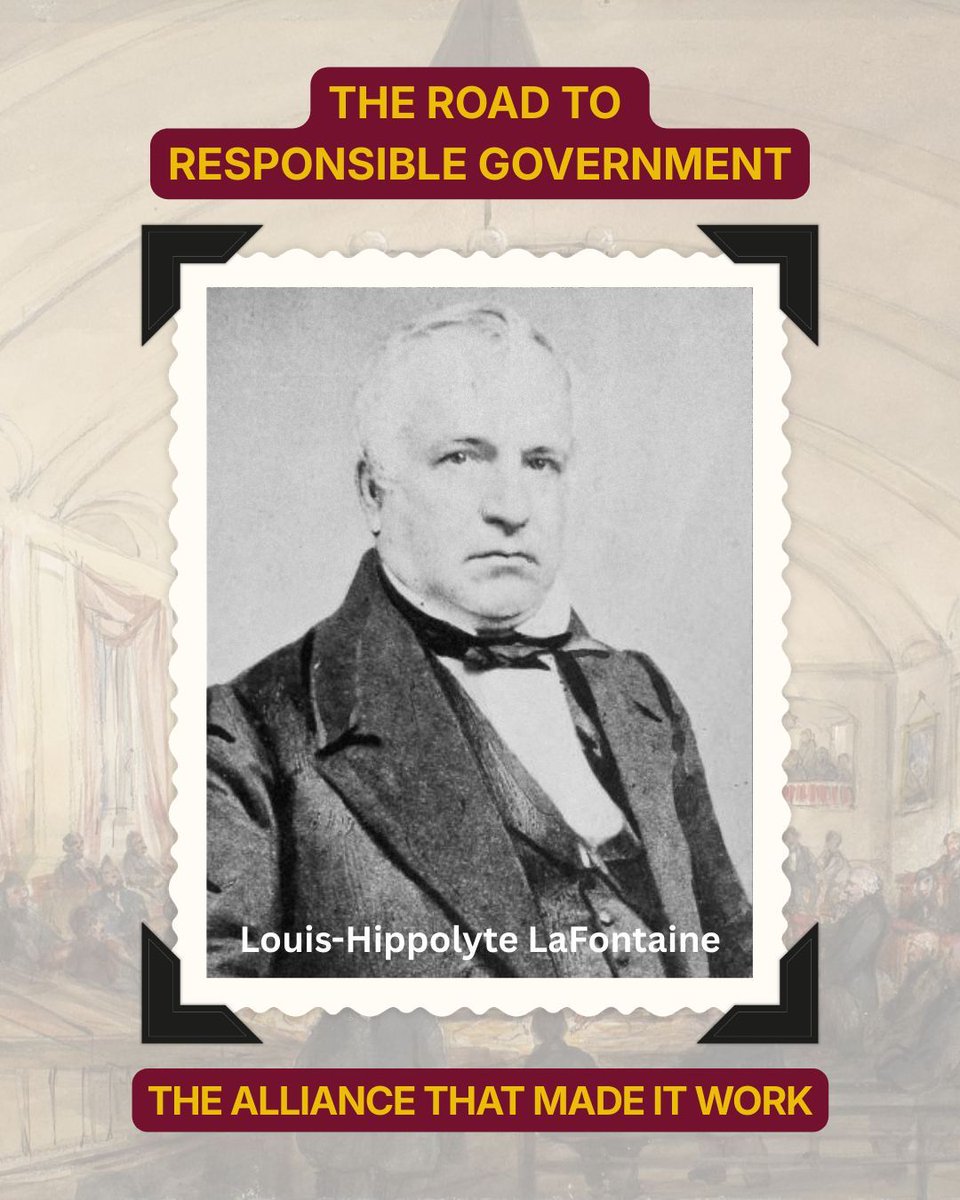
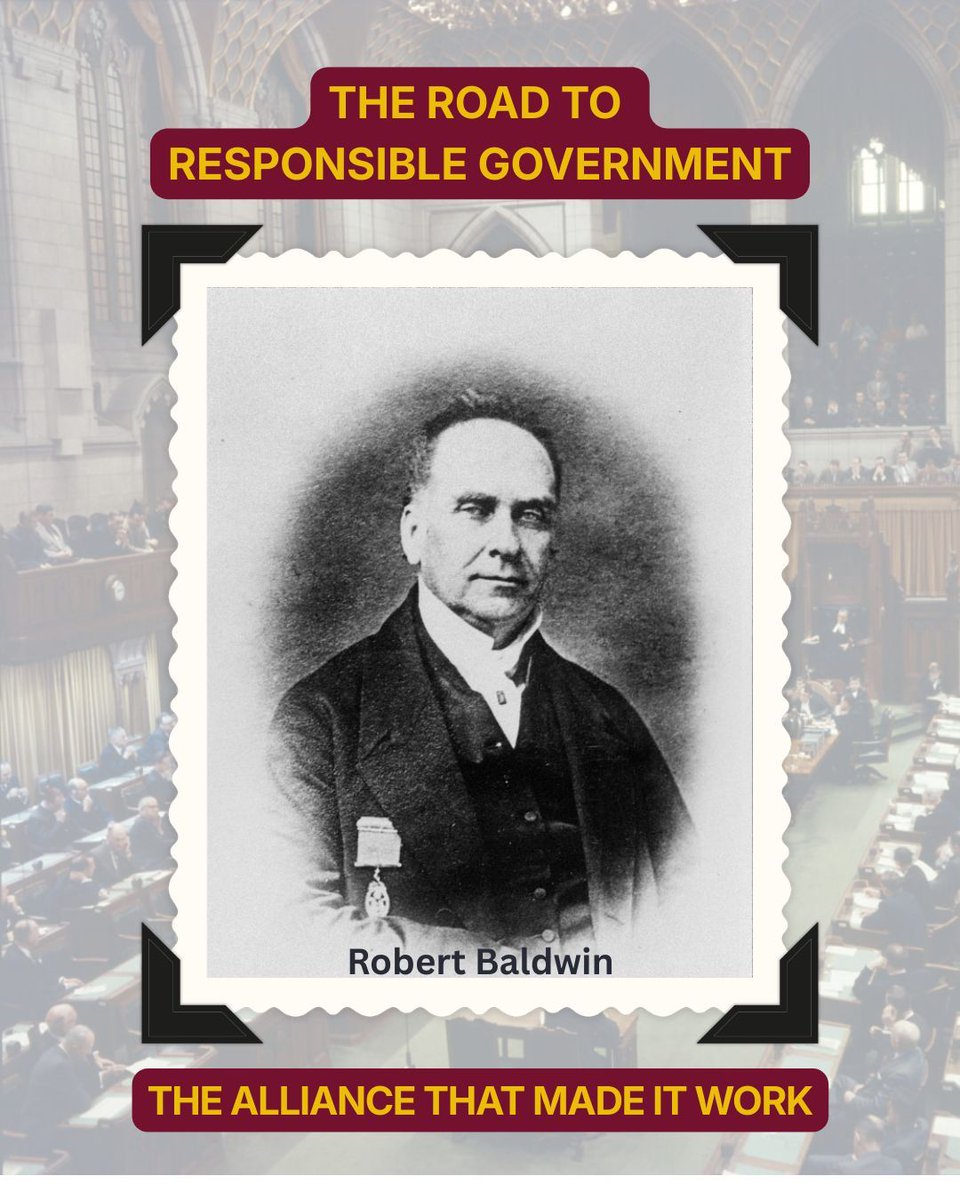
Rebellion created pressure. But reform required leadership. In 1848, responsible government became reality in the Province of Canada because two men chose cooperation over division. Louis-Hippolyte LaFontaine of Canada East and Robert Baldwin of Canada West formed a political alliance across linguistic and cultural lines. At a time when tensions between French and English communities ran high, they built a reform coalition based on one principle: The executive must answer to the elected assembly. In 1848, Governor General Lord Elgin invited LaFontaine and Baldwin to form government after they won a majority in the Assembly. That invitation mattered. For the first time, the Governor accepted that he must call on the leaders who held the confidence of the elected House — not simply those he preferred. Responsible government was no longer theory. It was practice. And it demonstrated something critical: Canada’s parliamentary democracy was built not just on protest, but on partnership. French and English reformers governing together. Accountability over patronage. Confidence of the House over imperial preference. Without this alliance, Confederation twenty years later would have been far less likely. 👉 Responsible government was not simply about limiting British authority. It was about proving that Canadians could govern themselves — together.
Canadian Institute for Historical Education tweet mediaCanadian Institute for Historical Education tweet media
English
1
0
5
147