Cornall_lab
67 posts

Cornall_lab me-retweet

Check out our new @SciImmunology paper about the role of DOCK8 in the survival and differentiation of B cells activated by low amounts of antigen: doi.org/10.1126/sciimm…
A big shoutout to @CornallLab & @BetterKidneys Thank you @MRC_TIDU @HumanGeneticsOx @NDMOxford @CAMS_COI_Ox
English
Cornall_lab me-retweet

B cells activated by low amounts of antigen require DOCK8 to acquire survival and differentiation signals via T cell help @SciImmunology @CornallLab
science.org/doi/10.1126/sc…
English
Cornall_lab me-retweet

Exciting postdoc role with our friendly supportive group and @trig_oxford @fgissa. Cell therapy for IgA Nephropathy, part of EU /Horizon consortium. Do you like immunology, kidneys and translational research? Informal enquires / DMs for more info welcome
my.corehr.com/pls/uoxrecruit…
English
Cornall_lab me-retweet

I am really excited to announce that our paper (@PKlenermanLab) exploring MAIT cell transcriptional and TCR repertoire diversity in human blood and liver has been released @NatImmunol nature.com/articles/s4159… #MAITcells
English
Cornall_lab me-retweet

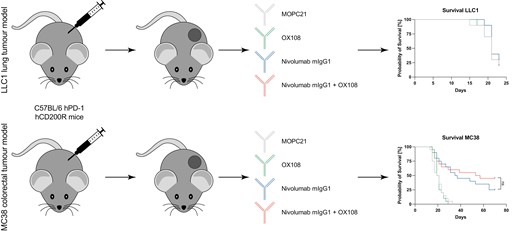
Researchers at @DavisLab_Oxford investigate the potential of a new combination #immunotherapy of #nivolumab, a clinically approved #PD1 blocking antibody, & OX108, a #CD200R blocker
Explore their results in mouse models for colorectal & lung #cancer ➡️bit.ly/3Madlmm

English
Cornall_lab me-retweet

Very pleased to have my first PhD publication published in @IMTadvances. Using humanised mice we trialled the combination immunotherapy of nivolumab and OX108 (a CD200R blocker) in two tumour models.
@DavisLab_Oxford @CornallLab @MRC_HIU @MRC_WIMM @RDMOxford
Immunotherapy Advances Journal@IMTadvances
Our latest article explores the potential of a combination #immunotherapy comprising #Nivolumab, a clinically approved #PD1 blocking antibody, & OX108, a CD200R antagonist, in mouse models for colorectal & lung #cancer Explore the results ➡️bit.ly/3nCdUwU
English
Cornall_lab me-retweet

#AuthorChoice: Prolidase deficiency causes spontaneous #Tcell activation and #lupus-like #autoimmunity | from @BetterKidneys @UniofOxford #FreetoRead #ReadTheJI #immunology 👉 ow.ly/Cmxo50MVZOF

English
Cornall_lab me-retweet

Thanks also to: Tanya Crockford, Aneesha Bhandari, @JessKepple, Jenny Back, Eleanor Cawthorne, Lucie Abeler-Dorner, Adam Laing, Simon Clare, Annie Speak, @David_J_Adams @GordonDougan1 @HaydayLab @MDeobagkar @CornallLab @HumanGeneticsOx @OxfordGenomics
English
Cornall_lab me-retweet

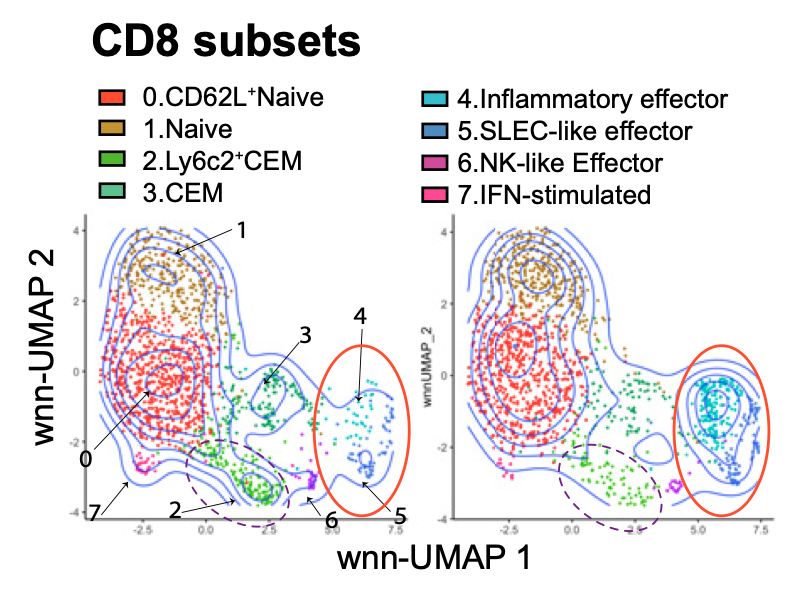
We demonstrate that the autoimmune phenotype is associated with a populations of effector CD8 T cells with a phenotype similar to short lived effector cells (SLEC) in viral infection. Read on to find out more: journals.aai.org/jimmunol/artic… @BetterKidneys

Katherine Bull@BetterKidneys
Chimeric experiments highlight a population of KLRG1+ effector T cells, only observed in association with the autoimmune phenotype.
English

Just published! Prolidase deficient mice have increased incidence of anti-nuclear antibodies, immune complex deposition and altered T cell population composition.
journals.aai.org/jimmunol/artic…

Katherine Bull@BetterKidneys
Delighted to share our paper on autoimmunity due to prolidase deficiency. We confirm loss of PEPD results in ANAs and renal immune complex deposition, assoc with T cell activation. journals.aai.org/jimmunol/artic…
English
Cornall_lab me-retweet

I’m completely thrilled to share our new preprint!
Multiscale topology classifies and quantifies cell types in subcellular spatial transcriptomics
arxiv.org/abs/2212.06505
Joint work with Aneesha Bhandari, @BGI_Genomics, Ulrike Tillmann, @BetterKidneys, and @haharrington
1/9

English
Cornall_lab me-retweet

NDRG1 is a target for cancer treatment. But it was also thought to help immune cells 'switch off', so NDRG1 drugs might cause immune over-activity. However we show that although NDRG1 goes up in these immune cells, they don't need NDRG1 to switch off. rdcu.be/cZska

English
Cornall_lab me-retweet

Our new paper: NDRG1 is an anti cancer therapeutic target, upregulated in anergic B cells, and previously described as a T cell anergy factor, but we show it is not required for B or T cell tolerance. work led by Rose Hodgson, with @CornallLab @NDMOxford rdcu.be/cZska
English
Cornall_lab me-retweet

Fantastic talks and fabulous science at the Oxford Imaging Symposium 2022 today!
Anjali Kusumbe@KusumbeLab
English
Cornall_lab me-retweet

I dunno, you guys. It seems like the "B is for Boring" slogan might have been a campaign funded by Big B Cell. Those guys are up to some nefarious stuff!
nature.com/articles/s4159…
Anyway, T cells to the rescue!
English
Cornall_lab me-retweet

Congratulations Dr Rose Hodgson! Was an absolute pleasure to have you in the lab, already missing the fancy dress @CornallLab @HumanGeneticsOx

English