137+ Swiss supermarkets. 1.4M customers. ICP accepted at checkout.
@DFX_Swiss just integrated ICP and ckBTC into OpenCryptoPay across SPAR Switzerland.
Pay for your groceries with ICP - no banks, no card networks.
Prefer to use Bitcoin? Pay with ckBTC for the smoothest Bitcoin experience around.
→ Payment completed within seconds
→ Near-zero transaction fees
→ No bridges. No wrapped tokens. No custodians.
This isn't a pilot. It's live. 🇨🇭
The new NNS app is built for both newcomers and power users: simple, clean and easy by default.
When you’re ready, unlock advanced features ↓
▪️ Multi-account management
▪️ Topic-based following (17 governance topics)
You stay in control but without the complexity.
1/2
Interesting point but consider the following:
Velocity = utility = value.
An assets that only sits there is just speculation. One that people can actually spend on groceries enables real-world demand.
Also think about the mechanics: when someone pays with ICP at SPAR, they first had to acquire ICP to spend it. That's buy pressure. Circulation doesn't just mean selling, it means a constant cycle of buying, spending, and merchants converting which drives volume and network activity.
The things that are not used are forgotten. The ones that survive are the ones that become part of everyday life.
@grown57489@DFX_swiss BTC was technically first, also at SPAR in Switzerland, since April 2025 but... via Lightning Network.
ICP is the first Layer-1 native coin to be used at this scale
@dfinity Bringing economic competition to hyperscalers was a turning point in my choice to invest in ICP.
Ppl see the consolidation of companies into corporate hands.
Behind y'all all the way.
The internet became foundational infrastructure because it was open, interoperable, and not owned by any single company.
Today, most cloud computing runs on infrastructure controlled by a handful of hyperscalers. The Internet Computer explores a different model: a network of independent node providers running standardized hardware in data centers around the world, collectively powering applications.
If successful, compute could start to resemble the internet itself:
a network anyone can build on, and many can help run.
A judge in a sealed civil lawsuit in New York was persuaded to order Circle to freeze 16 unrelated addresses. One is the ICP ckUSDC minter address.
We are currently working with Circle and others to understand what on earth is going on. Thank you for your patience. @circle@zachxbt
The old NNS Dapp has served the community well, but complexity has a way of creeping in, and we knew it was time to evolve.
The new governance app delivers:
▪️ Sleek, modern design
▪️ Simpler neuron management
▪️ Faster voting & delegation
Less friction, more participation.
Try it now: nns.internetcomputer.org
A reimagined ICP governance experience is live.
Today, the governance team is launching a brand-new app designed to make participating in the NNS simpler, faster, and more intuitive.
Cleaner UX. Streamlined flows. Built for everyone.
Why was this needed?👇
Exciting times for the Internet Computer!
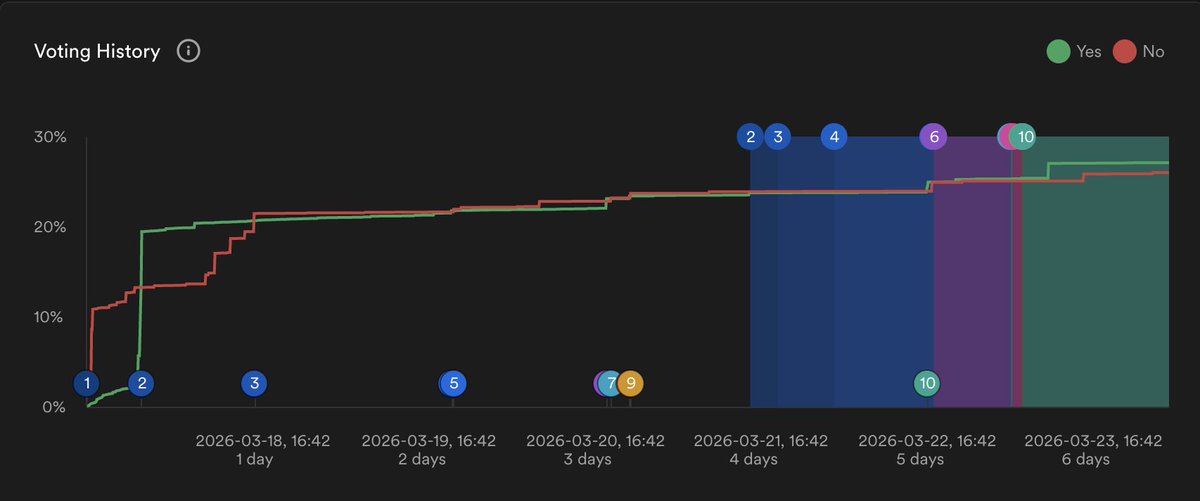
#Mission70 Proposal 140888 passed earlier today. This should massively reduce ICP inflation during 2026, to the benefit of the network's tokenomics 🔥🔥🔥
Proposed schedule coming soon...
dashboard.internetcomputer.org/proposal/140888
Quantifying ICP's Growth
◾ New canisters growth: reached 58,000 by February
▪️ Canister state: 50% increase (from roughly 8 terabytes in July 2025 to over 12 terabytes by February 2026)
▪️ ckBTC supply: increased from approximately 200 Bitcoin to about 360 Bitcoin.
Understand these metrics and why they're important ↓
👽 We keep hearing that ICP is alien tech, but:
How difficult is it to integrate #ICP into your protocol?
See what Hans (@hansrempel) from @diode_chain has to say about it 👇
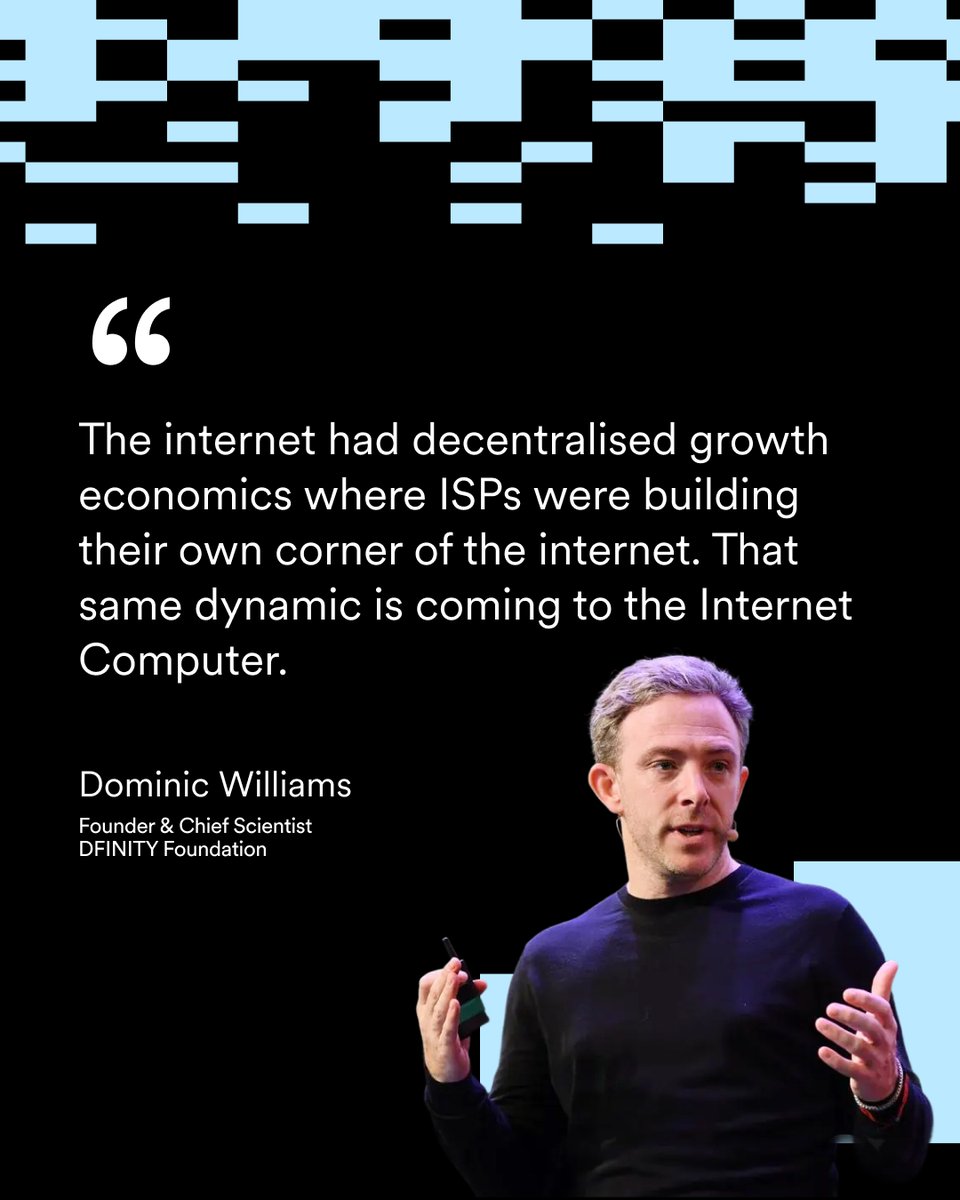
The early internet expanded because independent networks had economic incentives to add infrastructure.
Today’s cloud is largely controlled by a handful of hyperscalers.
The Internet Computer explores a different model: independent operators can contribute compute and participate in the network’s growth.
Node providers run physical machines in independent data centers and are rewarded by the network for the compute they supply.
With cloud engines, that incentive becomes even more direct: ~80% of compute revenue is distributed to node providers, tying infrastructure rewards to real usage of the network