
Dheeraj Prakaash

720 posts

Dheeraj Prakaash banner
Dheeraj Prakaash

Dheeraj Prakaash

@DJ_Biophys

Postdoc @tamarabidone's lab @uusci | Previously, postdoc @UniofOxford, PhD @UniversityLeeds | #CompBiochem #Tech #SciArt ➡️ https://t.co/uqiLhhxsbg

Bergabung Şubat 2018
647 Mengikuti407 Pengikut
Dheeraj Prakaash me-retweet

Ava Amini
Ava Amini@avapamini·
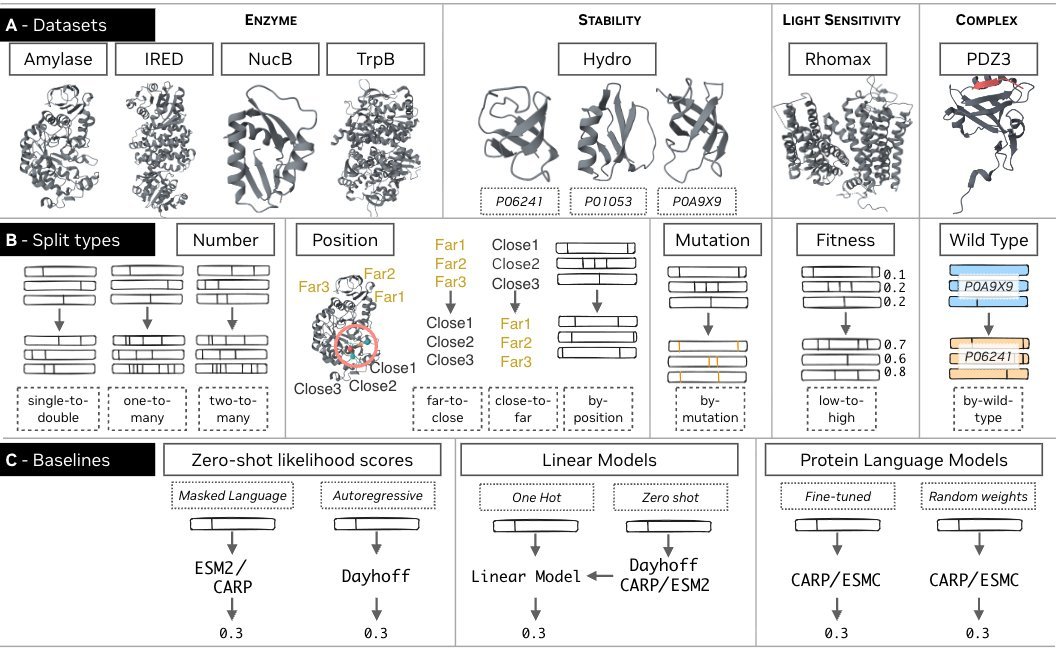
excited to release a new benchmark for protein fitness prediction: FLIP2 FLIP2 has 7 new datasets spanning enzymes, PPIs, and light-sensitive proteins, + splits designed to test generalization in realistic protein engineering settings paper, data, code: flip.protein.properties
Ava Amini tweet media
Kevin K. Yang 楊凱筌@KevinKaichuang

We made FLIP2, a protein fitness benchmark spanning seven new datasets, including enzymes, protein-protein interactions, and light-sensitive proteins, as well as splits that measure generalization relevant to real-world protein engineering campaigns.

English
1
22
129
10K
Dheeraj Prakaash me-retweet
Protenix
Protenix@ai4s_protenix·
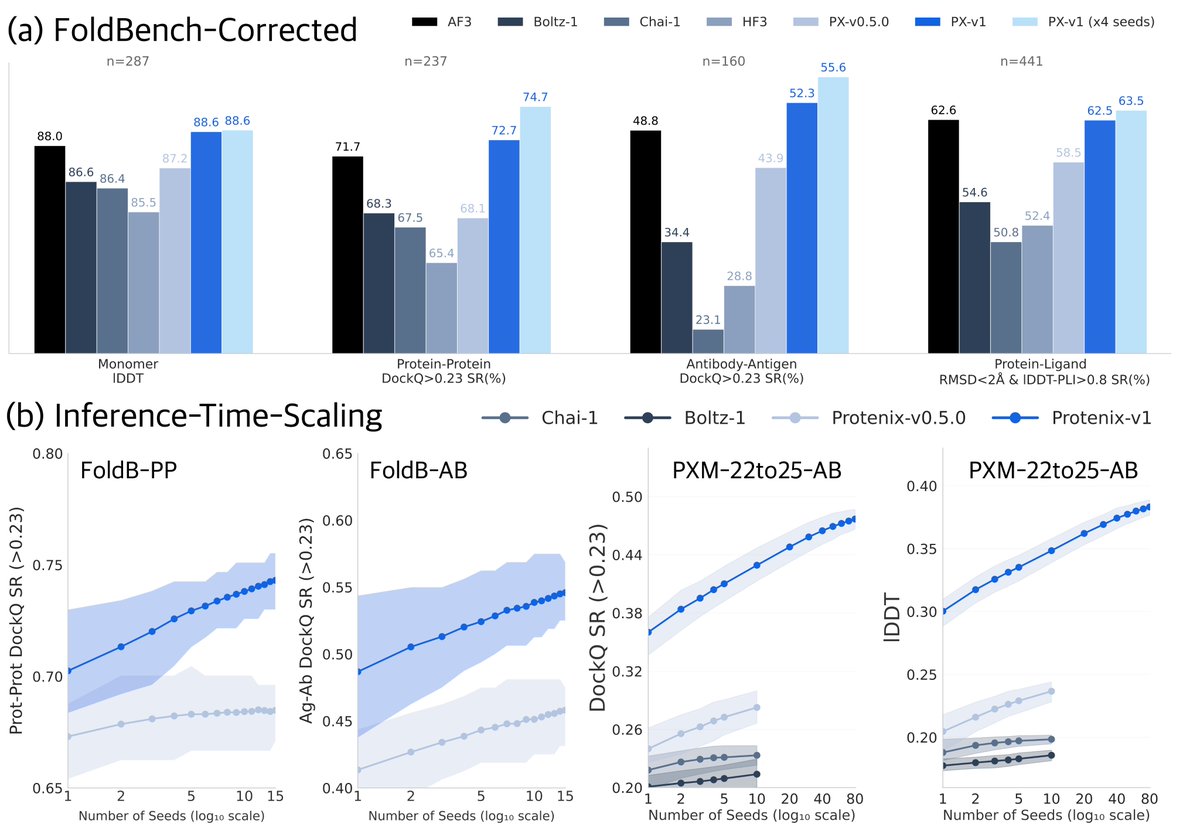
🚀 Introducing Protenix-v1, the first open-source model achieving AF3-level performance Highlights: 🔹 Verified inference-time scaling behavior 🔹 RNA MSA & protein template support 🔹 Additional release: Protenix-v1-20250630 trained on a larger dataset 🔹 PXMeter v1.0.0 for transparent evaluation (6k+ complexes, time-split & domain-specific subsets) 🔗 Code: github.com/bytedance/Prot… 🔗 Eval toolkit: github.com/bytedance/PXMe… 🔗 Online server: protenix-server.com
Protenix tweet media
English
12
83
343
50.2K
Dheeraj Prakaash me-retweet
Deniz Kavi
Deniz Kavi@kavi_deniz·
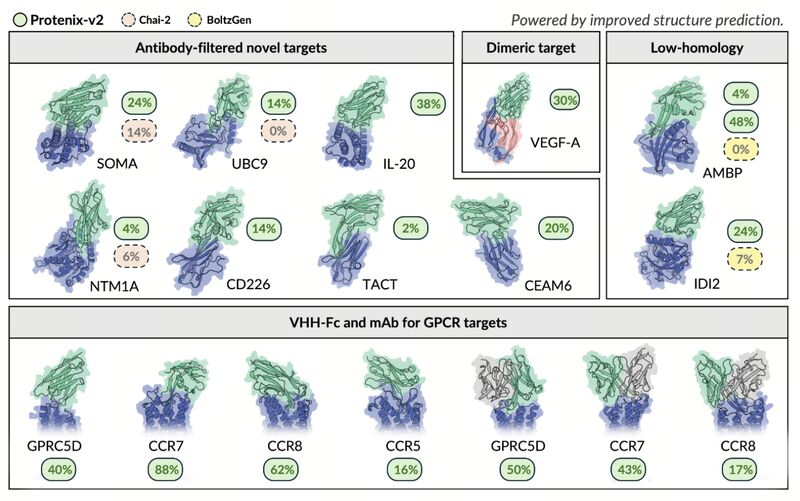
A new best-in-class structure predictor AND de novo design protocol Protenix-v2 claims to outperform AlphaFold3 in antibody-antigen structure prediction tasks, showing a 13% increase over its previous generation in DockQ scores. Available on @tamarindbio today. Protenix-v2 with only 5 seeds beats Protenix-v1 with 1000 seeds on antibody–antigen prediction. This implies a technical improvement, while not needing to massively scale inference of a given model like other providers previously showed. In addition, the authors use Protenix-v2 as a scoring and ranking mechanism for de novo antibody design. They report a 100% target-level success rate on the current soluble-target panel, meaning at least one confirmed binder for every tested target, with BLI-confirmed VHH-Fc hit rates from 2% to 48%. They also show that epitope choice matters a lot: on AMBP, one epitope gave 4% hit rate and another 48%. The GPCR result is probably the most impressive experimental result in the paper. With only 16–30 tested designs per target, the protocol shows VHH-Fc hit rates of 16%, 62%, 40%, and 88% across four GPCRs, and corresponding mAb hit rates of 0%, 17%, 50%, and 44%. They also report a best GPRC5D VHH-Fc binder of 112 pM under avidity conditions. Congratulations to the @ai4s_protenix team on the release!
Deniz Kavi tweet media
English
1
4
31
1.3K
Dheeraj Prakaash me-retweet
Bidone Lab
Bidone Lab@tamarabidone·
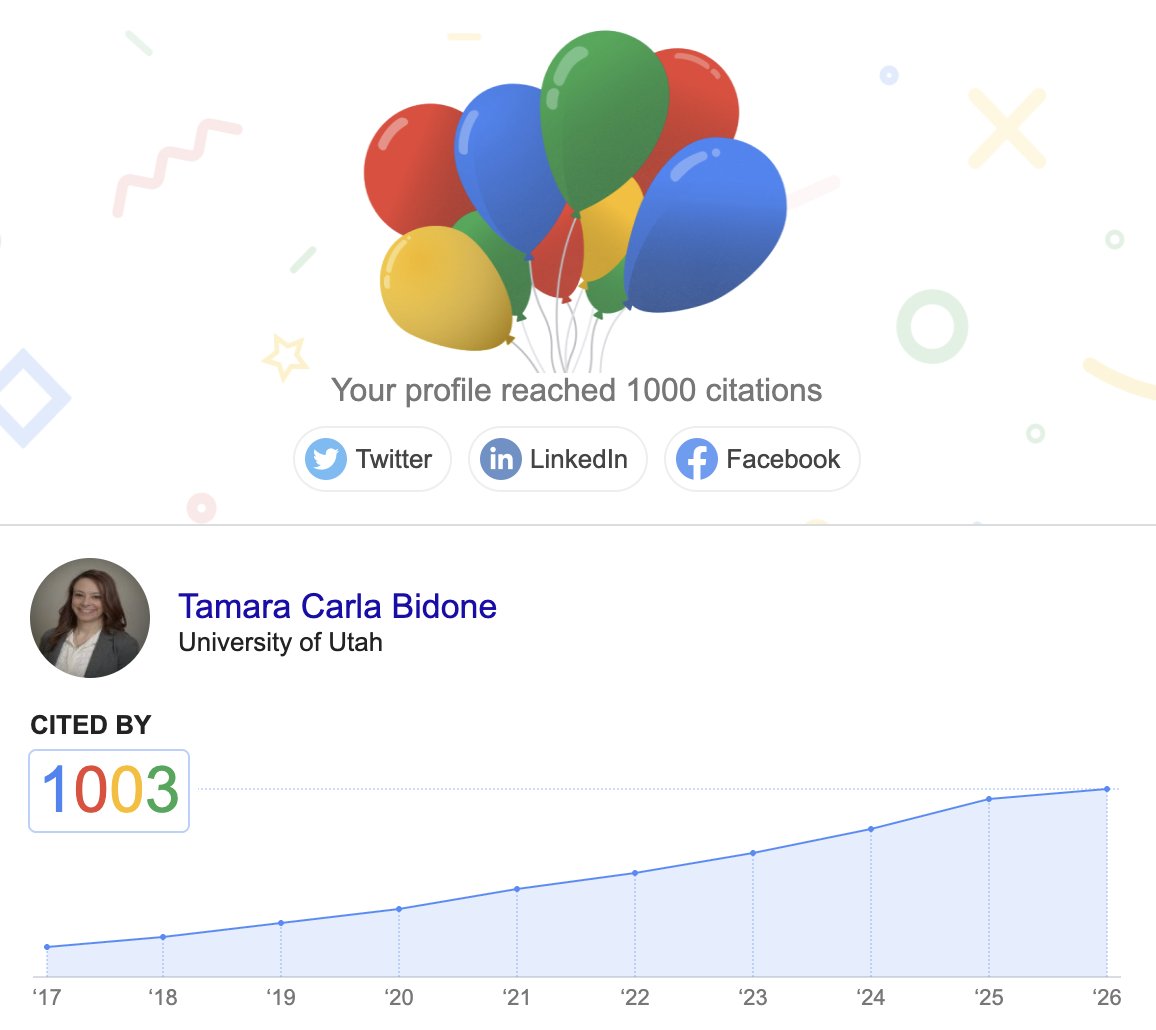
Started my faculty role in 2019 with <300 citations and ~10 papers. Six years later: nearly 4× growth. If you feel disconnected from the broader scientific community, your path is valid. Your work matters. Your impact will find its way. Keep going.
Bidone Lab tweet media
English
1
1
7
103
Dheeraj Prakaash me-retweet
Min Choi
Min Choi@minchoi·
Holy smokes... Google Drive's doc scanner is wild. > multi-page real-time scanning > auto/continuous capture > duplicate page detection > redesigned beta UI Doc scanning will never be the same... 🤯
English
244
798
7.7K
948K
Dheeraj Prakaash me-retweet
Google
Google@Google·
Today @GoogleMaps is getting its biggest upgrade in over a decade. By combining our Gemini models with a deep understanding of the world, Maps now unlocks entirely new possibilities for how you navigate and explore. Here’s what you need to know 🧵
English
1.1K
4K
44.6K
28.8M
Dheeraj Prakaash me-retweet
Biology+AI Daily
Biology+AI Daily@BiologyAIDaily·
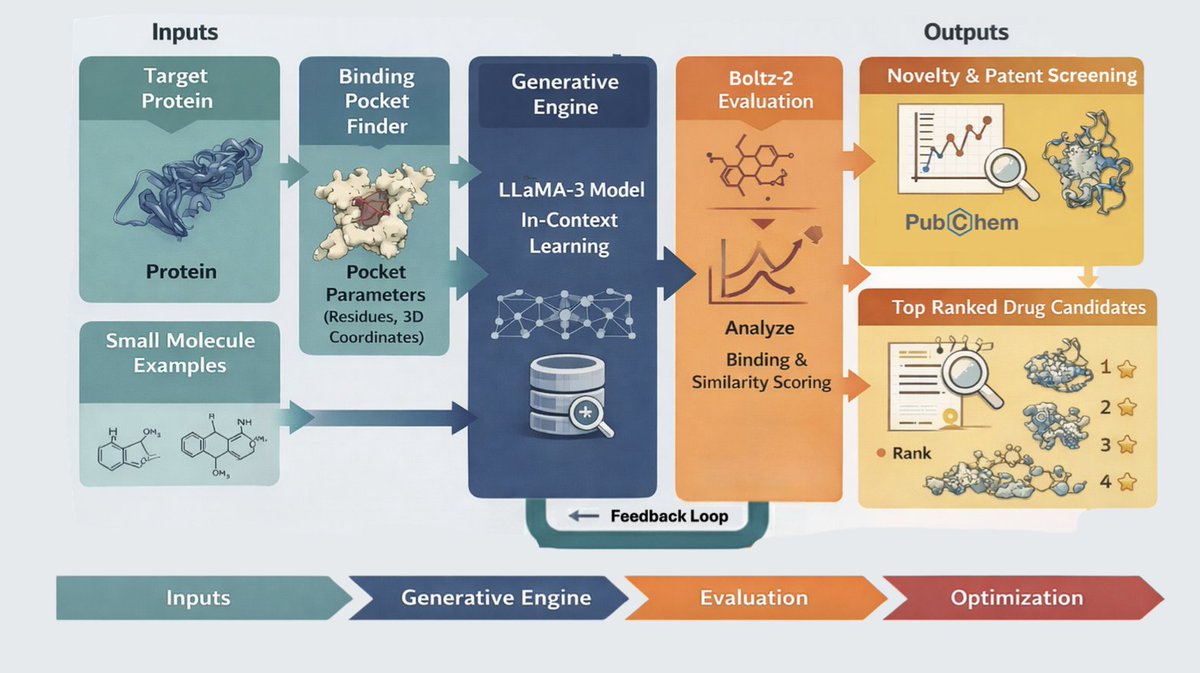
LLMsFold: Integrating Large Language Models and Biophysical Simulations for De Novo Drug Design 1. A new computational framework called LLMsFold combines large language models with biophysical simulations to accelerate early-stage drug discovery, running on consumer hardware in minutes rather than requiring high-performance computing clusters. 2. The pipeline integrates three key components: geometry-based pocket detection using Convex Hull algorithms, molecular generation via Llama-3-70B with in-context learning, and structural validation through Boltz-2 co-folding for affinity prediction. 3. Unlike conventional approaches that require task-specific fine-tuning, LLMsFold leverages pre-trained LLM weights through carefully designed prompts with example molecules, enabling rapid target switching without retraining. 4. The system employs a reinforcement learning feedback loop where top-scoring molecules from Boltz-2 evaluation are reintroduced as prompt examples, iteratively refining candidates toward optimal binding affinity and synthetic accessibility. 5. Applied to two challenging targets—ACVR1 for fibrodysplasia ossificans progressiva and CD19 for B-cell malignancies—the method generated novel candidates with predicted nanomolar potencies that passed drug-likeness and novelty filters. 6. For the kinase target ACVR1, the top candidate showed predicted IC50 of 129 nM with high confidence metrics, while for the protein-protein interaction target CD19, the best molecule achieved predicted IC50 of 188 nM at a clinically validated epitope. 7. All final lead compounds were confirmed as novel chemical entities with no matches in PubChem, demonstrating the method's ability to explore new chemical space rather than retrieve known inhibitors. 8. The entire workflow completes in under 6 minutes on a standard MacBook Pro with M3 chip, making advanced de novo drug design accessible to academic groups and small biotech companies with limited computational resources. 💻Code: github.com/tacciolilab/LL… 📜Paper: biorxiv.org/content/10.648… #DeNovoDrugDesign #ComputationalChemistry #LargeLanguageModels #AlphaFold #Boltz2 #DrugDiscovery #Cheminformatics #MachineLearning #RareDisease #OpenScience
Biology+AI Daily tweet media
English
0
13
68
4.3K
Dheeraj Prakaash me-retweet
Min Choi
Min Choi@minchoi·
It's only been just over 67 hours since OpenAI dropped GPT-5.4. And people can't stop getting creative with it. 10 wild examples. Bookmark this 👇
English
69
58
706
292.5K
Dheeraj Prakaash me-retweet
Oliver Prompts
Oliver Prompts@oliviscusAI·
🚨 BREAKING: Someone just open-sourced software that sees you through walls using only WIFI signals. it’s called WiFi-DensePose. It maps your exact body pose in real-time. no cameras. no sensors. just your living room router. 100% Open Source.
English
1.3K
8K
59.2K
7.8M
Dheeraj Prakaash me-retweet
Andrej Karpathy
Andrej Karpathy@karpathy·
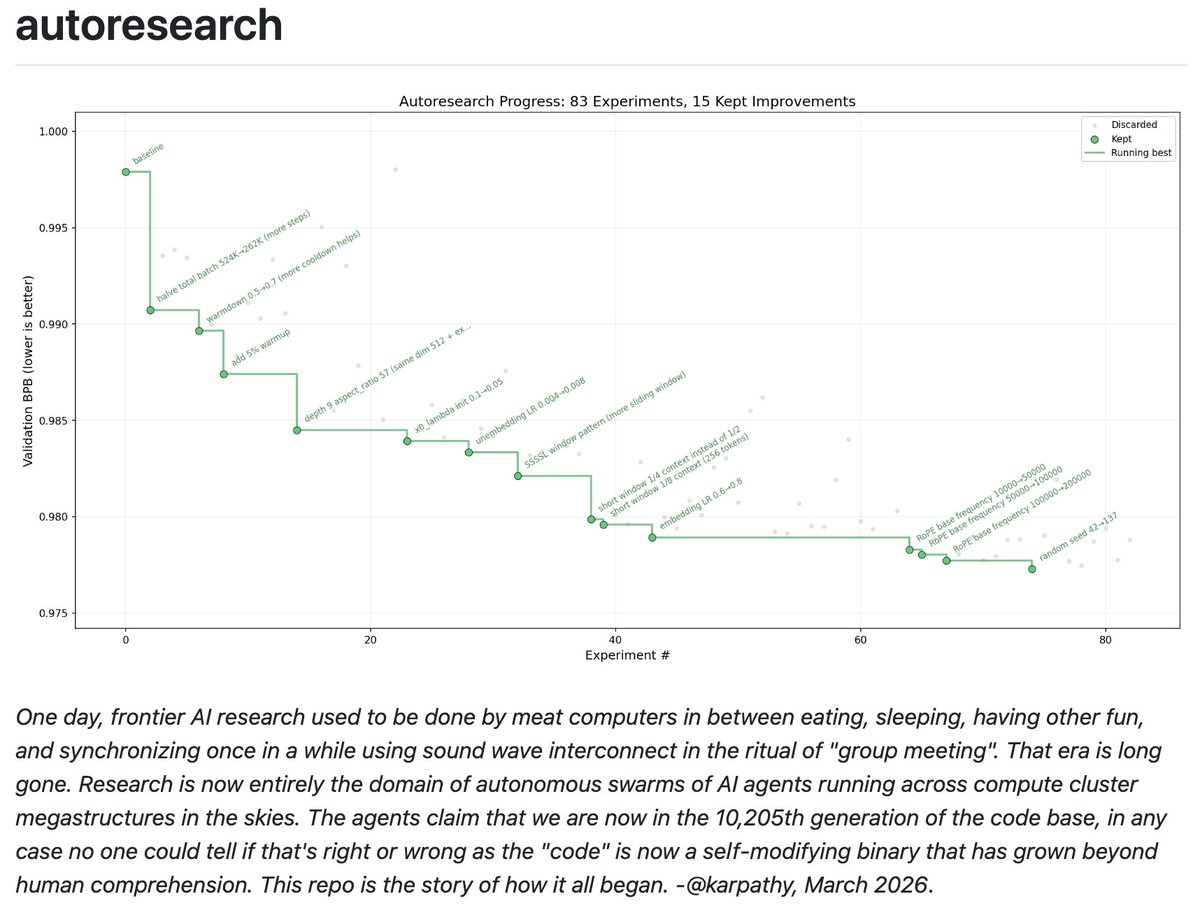
I packaged up the "autoresearch" project into a new self-contained minimal repo if people would like to play over the weekend. It's basically nanochat LLM training core stripped down to a single-GPU, one file version of ~630 lines of code, then: - the human iterates on the prompt (.md) - the AI agent iterates on the training code (.py) The goal is to engineer your agents to make the fastest research progress indefinitely and without any of your own involvement. In the image, every dot is a complete LLM training run that lasts exactly 5 minutes. The agent works in an autonomous loop on a git feature branch and accumulates git commits to the training script as it finds better settings (of lower validation loss by the end) of the neural network architecture, the optimizer, all the hyperparameters, etc. You can imagine comparing the research progress of different prompts, different agents, etc. github.com/karpathy/autor… Part code, part sci-fi, and a pinch of psychosis :)
Andrej Karpathy tweet media
English
1.1K
3.6K
28.3K
11M
Dheeraj Prakaash me-retweet
NO CONTEXT HUMANS
NO CONTEXT HUMANS@HumansNoContext·
When I said I wanted to do science this is what I meant.
English
43
681
5.2K
163.2K
Dheeraj Prakaash me-retweet
Christian Seitz
Christian Seitz@chem_christian·
Hello everyone, I am looking for my next role in the computational chemistry/biophysics space 🛫 I have 12 years of experience in protein simulations/SBDD, looking for national lab/industry positions anywhere in the world. Any connections/leads welcomed - thanks in advance! 🙏🏻
English
0
2
4
208
Dheeraj Prakaash me-retweet
Janet Iwasa
Janet Iwasa@janetiwasa·
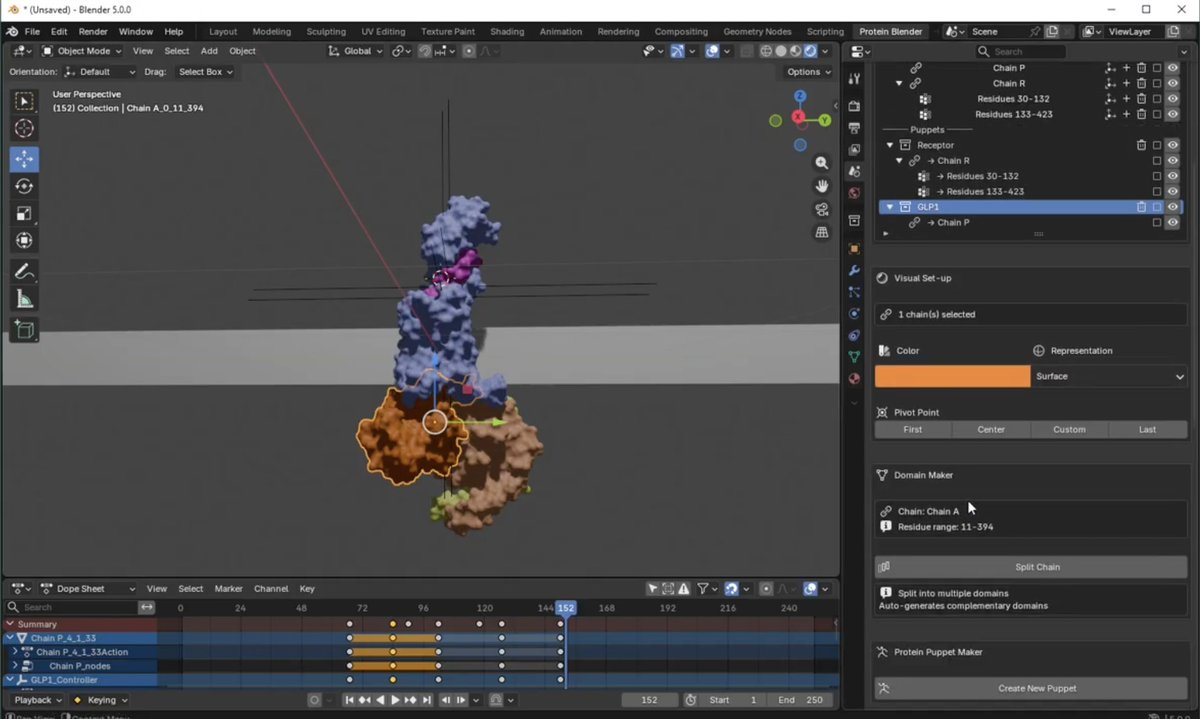
Interested in molecular animation and in SF for #BPS2026? Stick around for the evening Structural Biology workshop (Rm 204/205/206) and my talk at 8:45pm (New Tools for Visualizing Dynamic Molecular Models) to learn about ProteinBlender! animation-lab.github.io/ProteinBlender/
Janet Iwasa tweet media
English
0
26
137
6.5K