
Tweet Disematkan
ExitStrategyWorld.com
58.3K posts


ExitStrategyWorld.com
@ExitStrategyW
Create Your Own Free World™ ESW is bulk crypto, PMs, offshore PMs vaulting & asset protection services. For CANUS PMs shipped to your home: https://t.co/GZmC3LoozJ
NYC/NJ/Cheyenne, WY Bergabung Ekim 2023
397 Mengikuti618 Pengikut
Main takeaway isn’t that a few nights of drone attacks are damaging a huge #UstLuga oil export terminal, but that the #Ukrainians #GUR and especially their British #MI6 handlers are flaunting using @NATO’s Baltic airspace and soil to drone strike #Russia x.com/BowesChay/stat…
Chay Bowes@BowesChay
Estonians post video clearly demonstrating that Ukrainian drones are attacking Russia via their territory. A very very dangerous game is being played. Play stupid games, win stupid prizes.
English
ExitStrategyWorld.com me-retweet
ExitStrategyWorld.com me-retweet

I like how the Wall Street Journal said that the E-3 was “damaged”. That is half of an airplane.
OSINTtechnical@Osinttechnical
New image reportedly showing the USAF E-3 Sentry destroyed in an Iranian attack at Prince Sultan Airbase on Friday. Matches 81-0005, an E-3C seen deployed to the base in recent weeks.
English
ExitStrategyWorld.com me-retweet

@Indian_Bronson Makes me wonder how big a power Iran would have been if it wasn’t so heavily sanctioned
Unlike the other oil economies, they actually have a native culture, lots of people, and robust domestic industrial capacity
English
ExitStrategyWorld.com me-retweet
ExitStrategyWorld.com me-retweet

For all the “asymmetric warfare” the US faced over the last 25 years — and repeatedly lost — this is the first time in 85 years the US is facing *symmetric* warfare:
An enemy in direct combat with missiles, radar, cyber, and command structure sophistication. Not even a peer!
Good Shepherd@HoyasFan07
Question: If the US military cannot protect air bases & radars from a 3rd tier threat like **Iran** [after weeks of very very heavy attacks on Iran], how exactly is the US supposed to protect Kadena and Andersen from a tier 1 great power like the PRC? What is the plan?
English
ExitStrategyWorld.com me-retweet

🚨BREAKING: Israel bombs an IRGC missile base in Yazd…
Minutes later, Iran fires Intermediate Range Ballistic Missiles (IRBMs) at Tel Aviv from the SAME site. 🚀
Let that sink in.
These hardened missile cities aren’t being neutralized—they’re surviving and shooting back immediately.
The IDF isn’t stopping the launches.
Iran is proving it can absorb the hit...and keep firing.
English
ExitStrategyWorld.com me-retweet

The fleet is now down to 15, with 5 more deployed into CENTCOM, and there isn't a replacement even in production yet for this aircraft. It is possible that DoD could regenerate a recently retired air frame from the boneyard.
TheIntelFrog@TheIntelFrog
Photos have surfaced showing extensive damage to US Air Force E-3 Sentry #AE11EA 81-0005 following the drone and missile attack at Prince Sultan Air Base yesterday that also damaged several KC-135s.
English
ExitStrategyWorld.com me-retweet
New images released ...
Confirmed. U.S. P8 SPY aircraft damaged.
Furthermore, P-8 spy aircraft hangars at the U.S. Army airbase in Sheikh Isa, Bahrain, are destroyed. (1/n)
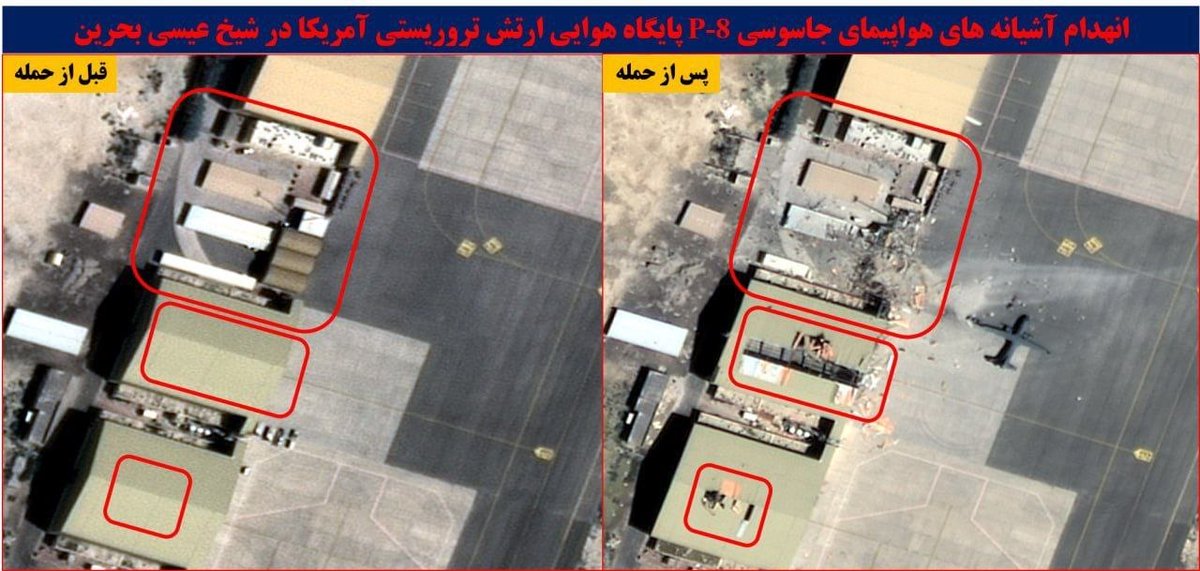
NEUTRINO@ETERNALPHYSICS
Iran damaged a U.S. P-8 Poseidon spy plane in Bahrain.
English
@J1MMYJAMJAM @Thorkill65 Yeah that’s partly bullshit, of course the GUR is using @NATO territory, they’ve launched from either the Baltic states land or territorial waters at targets in Leningrad Oblast and from neutral Kazakh and probably Azeri territory many times long before these latest incidents.
English

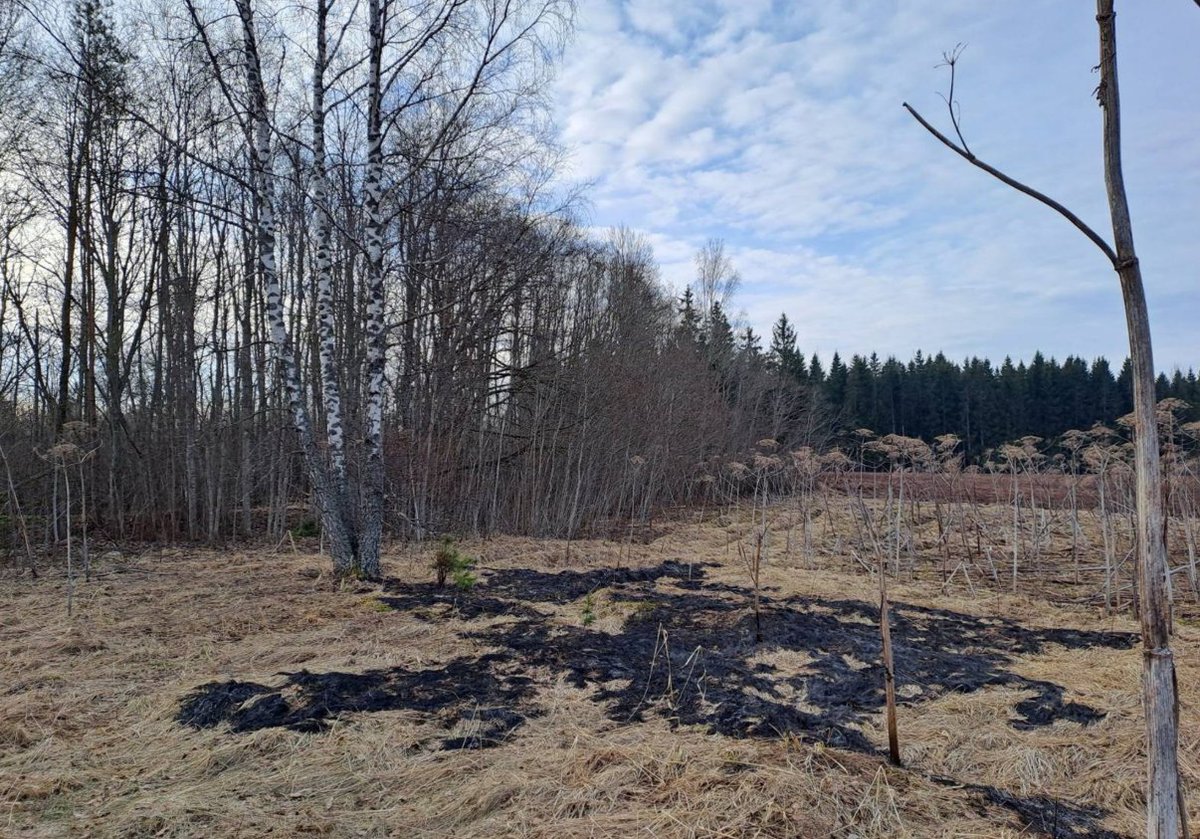
Looking at the images of the crash site, I do wonder if the explosion part is true... Why I ask, is due to the possibility these drones are using a mesh network for comms.
I'm not sure if every one of them is sporting a starlink/shield antenna - but at least one will be: the gateway node. If that's the setup they're using, that gateway drone circles around the area feeding the internet connection to the mesh (similar to how the Russians do it).
Now, I'm sure Russia would love to get their hands on that drone, so instead of letting it run out of fuel and come down into Russian territory, they ditch it in NATO territory where it can't be recovered.
Not saying this is the case, but it is a possibility. Blue technically doesn't need to use NATO airspace, they are perfectly capable of reaching their via Russian.
If they are using Baltic airspace as suggested, (which is not as wild as some people may think) you can just put that into the strategic provocation box. Not the only thing sitting in there. heh.
English

Kolejny atak ukr dronów uderzeniowych na cele w obw. leningradzkim z wykorzystaniem przestrzeni powietrznej NATO.
Ubiegłej nocy ukr drony po raz kolejny wykorzystały przestrzeń powietrzną krajów bałtyckich do zaatakowania terminalu naftowego w Ust Łudze i innych celów w obw. leningradzkim. Nie chodzi tutaj o ukraińskie drony, które wleciały ubiegłej nocy w przestrzeń powietrzną Estonii i Łotwy od strony Rosji i rozbiły się na ich terytorium. One bowiem faktycznie zboczyły zapewne z kursu na skutek użycia przeciwko nim środków (WRE). Wczoraj doszło jednak do innych incydentów w przestrzeni powietrznej NATO przy udziale jak wszystko na to wskazuje ukr dronów uderzeniowych dalekiego zasięgu.
Rankiem zastępca szefa sztabu połączonego Łotewskich Narodowych Sił Zbrojnych (NBS) ds. operacyjnych, generał brygady Egils Leščinskis poinformował bowiem że ubiegłej nocy - jeszcze przez incydentem z rozbiciem ukr drona w rejonie wsi Krasław - odnotowano obiekt wlatujący w łotewską przestrzeń od strony Białorusi, który następnie skręcił i wleciał w przestrzeń powietrzną Rosji. Jednocześnie Minister Obrony Estonii Hanno Pevkur poinformował że w nocy niezane drony naruszyły też przestrzeń powietrzną NATO nad Zatoką Fińską, co wymusiło poderwanie myśliwców sojuszu z Baltic Air Policing.
Reasumując, info o rzekomo przypadkowym wkraczaniu ukr dronów w przestrzeń powietrzną NATO podawane obecnie przez stacje informacyjne to bajeczki dla idiotów mające za zadanie ukryć postępowanie władz Ukrainy. W rzeczywistości po raz kolejny stawiają one swoich sojuszników przed faktami dokonanymi i narażają ich obywateli na zagrożenia związane z przelotami nad ich głowami obiektów powietrznych z 30-40 kg ładunkami wybuchowymi. Działania władz ukr to oczywisty krok w kierunku eskalacji konfliktu. Rosja może teraz się zrewanżować i zaatakować Ukrainę poprzez terytoria Polski lub Rumunii, tak jak miało to miejsce we wrześniu 2025 r. w województwie lubelskim. Niewykluczone ze taka reakcja Rosji jest głównym celem działań władz ukraińskich.
Poniżej - pojazdy i personel Łotewskich Sił Zbrojnych widziany na miejscu rozbicia ukr drona uderzeniowego w rejonie Krasława.

Polski
ExitStrategyWorld.com me-retweet

ExitStrategyWorld.com me-retweet

I hope our Pentagon and White House officials realize that even if we successfully seized all those locations – which is a bridge too far for the total amount of troops being contemplated – but that would barely inhibit Iranian attempts to keep the Strait closed.
That does nothing to inhibit the submarines Iran has, the torpedoes, the underwater missiles, the speed boats with anti-ship missiles, the short range, medium range, and long range missiles that can range the Strait anywhere in their country, or coastal artillery.
If the attempt on the ground is made to open up Hormuz, it will fail spectacularly and at a high cost in blood.
Collingwood 🇬🇧@admcollingwood
This would be a stunningly bold attack. I've circled on a map the locations. Such an operation would likely seek to capture the key coastal area through which the Iranians block the Strait while securing areas that could be used for logistics to support as Kurdish uprising/invasion. Here, I think that the Afghan invasion of 2001, Operation Enduring Freedom, might be a good template to examine. First the CIA went in with suitcases full of 100 dollar bills to buy support. Then, the US used elite light infantry and special forces, including British and Australian, to rush through key landing zones, logistics routes and cities to support the advance of the Northern Alliance. The Iranian planners and commentators have probably looked at exactly this when they consider likely US options, hence their suggestion that this is what Washington might be planning. Meantime, if the Pentagon is indeed looking at Bandar Abbas, they might think that by taking the coast, the USN could then perhaps to force the Strait. Key here, though, is that it would solve little in the short term. The Iranians would still have the capacity to fire missiles and drones across the full depth of the theatre (albeit some would be redistributed toward US invading forces). In fact, such an invasion would likely intensify attacks on those particular pain points which increase pressure on the US to bring things to an end. That means higher oil prices unless the market felt the Strait might be opened and oil facilities would escape without much further damage. The establishment of a Kurdish statelet would solve nothing, and once the US left (which it inevitably would, even if it took twenty years, like in Afghanistan, or ten, like in Vietnam), the Iranians would seek to retake their territory (as the Russians did in Chechnya after it was originally lost). Ultimately, if the invasion looked as though it was putting at risk the Iranian strategy of a countervalue campaign, they would be put in a 'use it or lose it' position that would hugely incentivise them to destroy Gulf oil production facilities, which would mean no oil whether the Strait was open or not. It is difficult to overstate the scale of the economic catastrophe that this would be for the world —and most mainstream media understate it significantly, treating it as thought it just meant higher oil prices. Finally, a move to bring the Kurds into the war would bring Turkey in, too, further destabilising the region—although Israel would be no doubt delighted with this, killing two birds with one stone. In conclusion, while such an attack could be another tactical success (if it worked, which would be far from certain), and would certainly do great damage to Iran as a nation, it is difficult to see how it would get the US closer to its strategic aim. Instead, it would increase the risk of global economic catastrophe, and shift the US into the zone of necessary permanent engagement as allies, corporations and the logic of committing yet more chips to the table would require and demand long term involvement. Is this even possible? Where would this be staged from? Europe?
English
ExitStrategyWorld.com me-retweet
ExitStrategyWorld.com me-retweet

BREAKING: U.S. officials & Wall Street analysts are now reportedly preparing for the possibility of $200 oil.
English
ExitStrategyWorld.com me-retweet

Now compare with Europe. The lesson here is that the greatest pressure to end this war -- from the catastrophic economic effects that the mainstream media has only just started grasping, and of which they are nowhere near the true potential scale -- will fall on the rest of the world. Insofar as they are felt at all by the US it will be mainly through the ripple effects of economic collapse elsewhere (capital flows and trade, etc) and much lesser direct efects, especially if Trump manages to impose export controls on US crude and get the grades the US doesn't produce from Canada.
The shale revolution made doing business in Europe more expensive than in the US. Then, the US injected far more fiscal stimulus into the economy than Europe in response to the global financial crisis. This led to the divergence in GDP/capita numbers over the last 20 years. Europe's response to Russia's invasion to Ukraine made that worse, and now, this is going to make it even worse again. Meanwhile, US private equity will continue to loot EU assets at cheap valuations.
Javier Blas@JavierBlas
For the American economy, the key different between the current energy shock and previous ones is the (lack of) impact in US natural gas prices. That's crucial for industrial activity and electricity prices (and thus inflation). Far less reported than oil, but as significant.
English
ExitStrategyWorld.com me-retweet

@adamscrabble What is winning? Boots on ground to capture uranium? Reopening the Strait? Regime change? No one has explicitly stated what winning is, but we've heard 100 different things.
English
ExitStrategyWorld.com me-retweet

You’re letting Ukraine use your airspace for attacks on Russia.
Ask the Gulf states how that has worked out for them.
Alexander Stubb@alexstubb
This morning, drones have strayed into Finnish territory. One of the drones has been confirmed to be Ukrainian in origin. I want to emphasize that there is no military threat to Finland. Our authorities reacted to the situation immediately. I thank the authorities for their efficient action. The investigation of the incident continues. We are monitoring the situation closely. The authorities maintain readiness to react to future incidents. Finland stands ready to monitor and protect its territory.
English
@PrepperCanadian So #Israel’s barely a dozen or so major power plants on a territory the size of #NewJersey are gonna miraculously avoid #Iranian missiles’ retaliation for this delivered at hypersonic speed? Do @POTUS and more to the point #Bibi want #Israelis in the dark just to feel tough?
English

“Due to an attack on the Parchin power transmission network, districts 4, 7, 11, 13, and 14 of Tehran experienced a complete blackout.”
Trump lied.
ایران اینترنشنال - خبر فوری@IranIntlbrk
اقتصادآنلاین گزارش داد بهدلیل حمله به شبکه انتقال برق پارچین، مناطق ۴، ۷، ۱۱، ۱۳ و ۱۴ تهران با خاموشی کامل مواجه شدند
English
ExitStrategyWorld.com me-retweet

This is a perfect illustration of how we perceive the Hormuz risk.
Everyone is seeing the avalanche coming, yet everyone thinks that somehow it is under control... it isn’t.
There is no plan. No alternative routes that can scale fast enough... Hormuz opened or closed is all that matters.
The current avalanche is so big and dangerous that markets think this will resolve quickly due to the heavy economic costs... it won’t.
One month in, we hear reports that this operation might take from a few weeks to six months, to years... the avalanche will hit much earlier
Within a few weeks:
- Taiwan runs out of LNG -> no AI
- Fertilizer supplies are getting decimated -> no food
- Japan, Europe, Australia run out of diesel
The only thing keeping markets afloat is an unreasonably high amount of hopium... once it's gone, expect a violent rerating
English