

Raymo
16.6K posts

Raymo
@Filterdog1
Just looking for the truth. David Baldacci fan
Charlotte, NC Bergabung Nisan 2012
1.1K Mengikuti813 Pengikut

Melania Trump is dropping occult videos of beehives.
TMZ@TMZ
Melania Trump's new project is a beehive shaped like the White House. 🐝 tmz.me/TwqNe7u
English
Raymo me-retweet

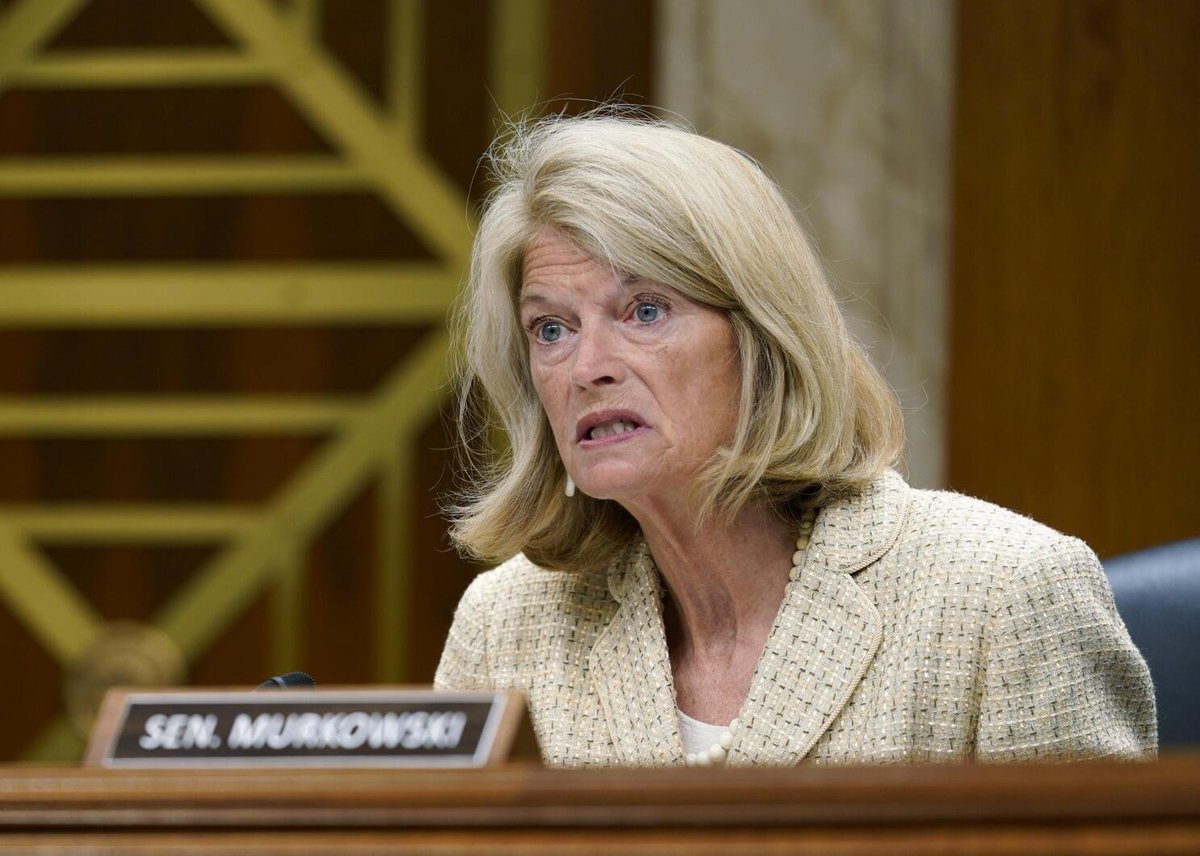
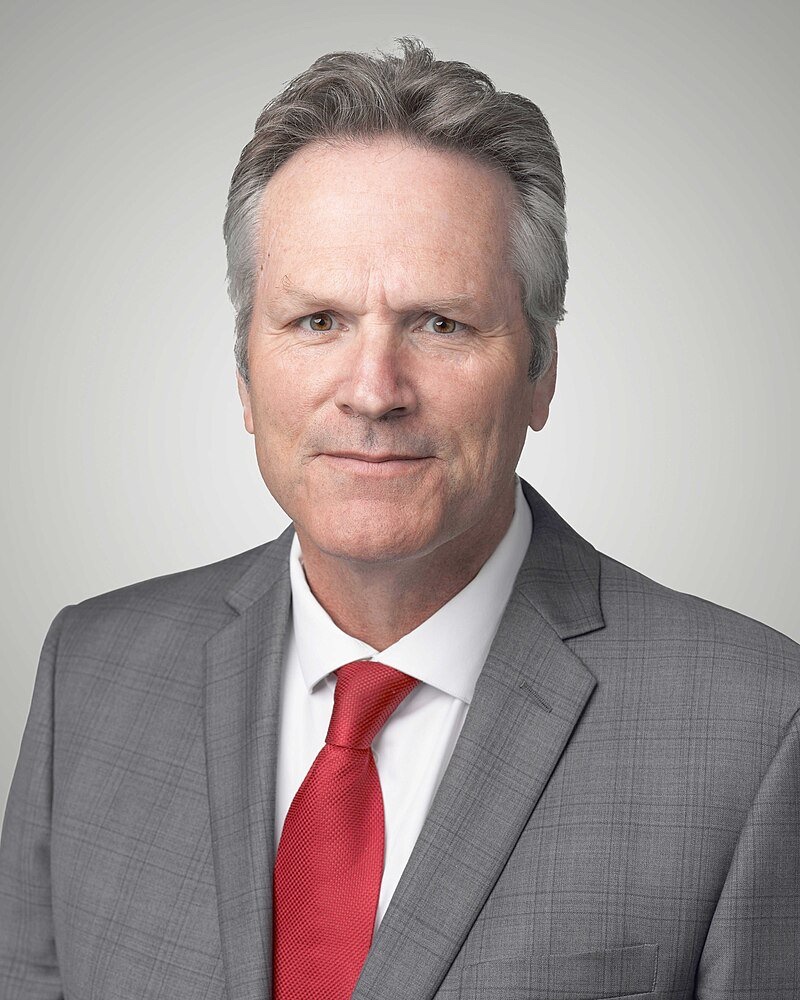
🚨 BREAKING: Senator LISA MURKOWSKI will be primary challenged by Alaska Republican Governor Mike Dunleavy in 2028, per Fox.
English
A reminder to federal officials:
There is no limit on the number of individuals who can use the whistleblower statute.
If you think you were involved in unlawful activity as a result of a directive from Mr. Trump or someone doing his bidding, now is the time to report it.
English
Raymo me-retweet
Raymo me-retweet
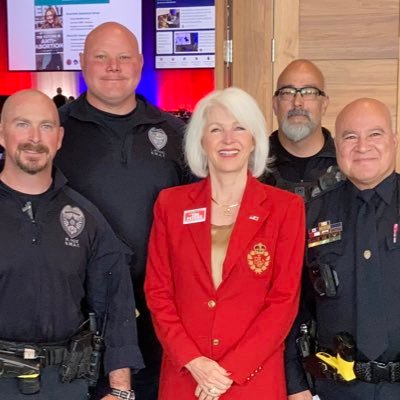
NO ONE Wants to Talk About PARALLEL LOCKSTEP MOTION: Mark Cook, Ed Solomon, and Andy Thompson x.com/i/broadcasts/1…
English
Raymo me-retweet

VIRGINIA (FOR DATA WONKS LIKE ME)
I have placed the up to date CSV file of all New York Times vote updates here:
votedatabase.com/va/referendum.…
Please forward to anyone who wants to see the raw data.
English
Raymo me-retweet

🚨 NOW: For the FIRST TIME in DECADES, the fountains are officially working at Lafayette Park in DC — thanks to President Trump PERSONALLY funding it with others
Beautiful!
“The first time Lafayette Park Fountains, opposite the White House, have worked in decades. My Great Honor to have funded this project (and many others!), and helped. President DONALD J. TRUMP” 🇺🇸
English
Brace yourselves. This may be a rough one for Friday
Drunk Piñata@PinataDrunk
LIVE AT 7PM ET rumble.com/v78y8xm-thinki…
English
Raymo me-retweet
Folks, I have been locked up since October 2024 for daring to protect our election records. Now look around. Machines are still running the show in state and local races. Dems keep grabbing seats with these suspicious 51 percent margins. Taxes keep climbing, schools keep hitting us with bonds, crime gets ignored while they push gender stuff on kids. Americans are told 51 percent want it. Enough is enough.
We have been forced to use these [s]election machines for long enough. 2020 showed us that we could not trust them. It is 2026.
No more machines!
Watch [s]election code at
tinapeters.us/selection-code/
are pray for our nation. Time is ticking.
English
Raymo me-retweet

No Way Out for the SPLC, The New Fed Chairman, Podcast Bro's Flee To Italy
And so much more on the live stream tonight starting at 5:30 PM EST on all my channels below:
Pilled Channel: pilled.net/foxhole/WokeSo…
Sign UP On Pilled: pilled.net/welcome/wokeso…
Youtube: youtube.com/live/vt3PZc8iT…
Rumble: rumble.com/v78yftm-no-way…

YouTube

English
Raymo me-retweet

🚨BREAKING:🚨DOJ REPORTEDLY TO INDICT INFAMOUS "ELECTION RIGGING" DEMOCRAT LAWYER MARC ELIAS, CORRUPT DEMOCRAT LAW FIRMS - The Department of Justice has reportedly been conducting A MASSIVE CRIMINAL INVESTIGATION of Democrat election lawyers and law firms that played a key role in STEALING the 2020 election from President Trump and are already in the process of attempting to RIG November's midterms. Notorious radical left lawyer Marc Elias and his firm are said to be IMMINENTLY FACING SERIOUS FEDERAL CRIMINAL CHARGES related to soliciting and accepting money from hostile foreign governments including communist China, Iran and Venezuela in exchange for using lawfare to illegally change election rules, challenge and fraudulently alter the outcomes of American elections through THE LARGEST VOTER FRAUD OPERATION THIS COUNTRY HAS EVER SEEN... All to the benefit of The Democratic Party. Looming charges for Elias and these dark money Democrat firms reportedly include CONSPIRACY AGAINST RIGHTS, ELECTION INTERFERENCE, BRIBERY, WIRE FRAUD AND MONEY LAUNDERING. President Trump appears to be following up on his campaign promise to investigate, indict and imprison those who are participating in THE THEFT OF OUR ELECTIONS AND THE DESTRUCTION OF OUR DEMOCRACY. Do YOU agree that radical left THUG Marc Elias and these STONE COLD CROOKED law firms should be held CRIMINALLY RESPONSIBLE for their HEINOUS ELECTION CRIMES?📢👊🇺🇸
English
Raymo me-retweet

NGO Execs Left Unemployed After Death of USAID on Red Pill News Live at 5pm est
Zero sympathy for these people... LISTEN LIVE @rumblevideo @PilledNet @GETTRofficial @XSpaces @kick & Youtube LINKS BELOW

English

Today's seed-oil-free, low carb meal:
10 oz of water mixed with 2 tablespoons of Apple Cider Vinegar and 1 tablespoon of lemon juice 20 minutes before eating. [I start drinking it while I cook]
8 oz of 80/20 ground beef
4 large brown scrambled whole eggs
4 pieces of thick cut bacon
1 cup of cottage cheese
2 cans of Chicken of the Sea sardines
1 cup Sauerkraut
1 cup Kefir
Ground beef is being dipped in Primal Kitchen Avocado Oil Mayo as I eat it.
I do not expect to be hungry again until tomorrow afternoon.
I am currently on a 20/4 fasting schedule, planning to eat each day between 3 and 4 pm.
English
@ggreenwald @barnes_law There many sources of credible information. Those two are not on my list. Don't make assumptions. Barnes keeps making wild accusations but has not provided any evidence to back those claims. There appears to be different factions saying conflicting things.
English
@Filterdog1 @barnes_law If you got your news from anywhere other than Sean Hannity and Ben Shapiro, you'd know that the Iranians are explicitly refusing to meet Kushner and Witkoff to negotiate while the blockade is in effect.
x.com/s_m_marandi/st…
Seyed Mohammad Marandi@s_m_marandi
The Iranian foreign minister will not hold any negotiations with the Trump regime in Islamabad and will merely convey Iran’s considerations and views regarding the end of the war to the Pakistani side. This meeting is a response to General Asim Munir’s trip to Tehran, and I have been informed that no negotiations with any Americans are planned during this visit.
English
Completely fake. Just to goose the markets before close.
zerohedge@zerohedge
*LEAVITT: IRANIANS REACHED OUT, ASKED FOR IN-PERSON TALKS *LEAVITT: WITKOFF, KUSHNER TO DEPART TOMORROW MORNING *LEAVITT: VANCE TO BE STANDING BY IN US ALONG W/ TRUMP, RUBIO *LEAVITT: IRAN TALKS HOPEFULLY PRODUCTIVE
English
Raymo me-retweet

The SPLC labels conservatives "hate groups."
Corporate media repeats it without question.
Then conservatives get censored, debanked, and banned.
Meanwhile, the SPLC is secretly funding the leader of the American Nazi Party.
English
Raymo me-retweet

The SPLC funded the Klan.
They funded the Aryan Nation.
They funded Charlottesville.
SPLC has to manufacture racism and violence for political power and money.
Democrats are very publicly returning to their Confederate roots.
The Democrat Party is the party of the Confederacy and the Klan.
Thanks for having me, @JrzyJoePiscopo and @JoePiscopoShow.
English
Raymo me-retweet


Raymo me-retweet

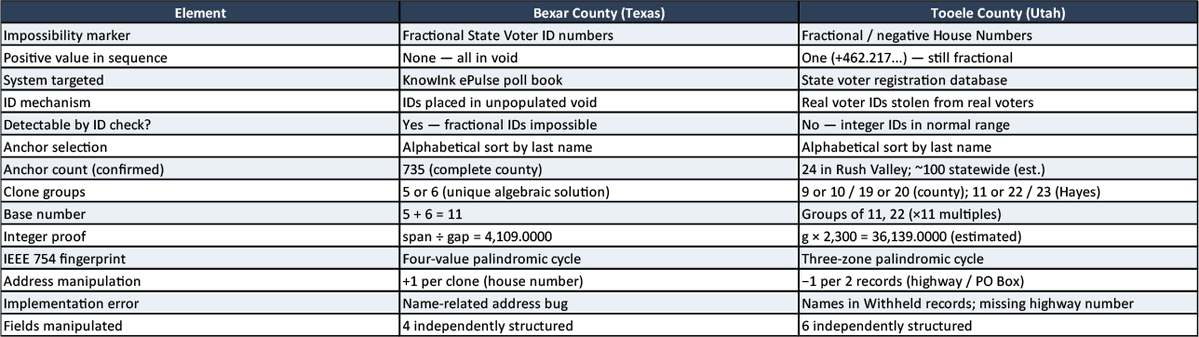
This chart should alarm every American! A glitch does not alphabetize voters, clone them in groups, and leave matching mathematical signatures across states.
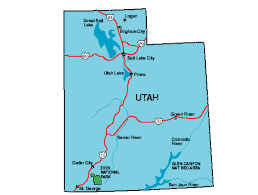
Two counties. Two states: Texas, now Utah! Two different election systems.
Yet the data shows the same fingerprint: real voters used as “anchors,” fake clone records created, impossible numbers inserted, and structured math patterns that do not look random.
In Bexar County Texas, the red flag was fractional voter ID numbers. See my tweets of Feb. 28th, 26th, 30th, Mar 5th on how KnowInk poll books were used to cheat just two months ago.
Now found in Utah, it was fractional and negative house numbers, plus voter IDs tied to real voters.
➡️Ban computers in our elections.
See more details of this election fraud in Dr Paquette's post retweeted here. Subscribe to his substack to help out defray the expenses. @ZarkFiles
Art@ZarkFiles
Two months ago I found mathematically proven election fraud in Bexar County, Texas. Fake voter records, generated by an algorithm, injected into the official poll book. Not suspected. Not alleged. Proven — arithmetically, irreducibly, in the file the county was legally required to hand over. Criminal intent visible in the structure of the data itself. Last night I found the same algorithm in Utah. I need to be precise about what "same algorithm" means because this is not a pattern-matching claim or an inference. Same alphabetical anchor selection from the complete voter file. Same uniform arithmetic spacing with a perfect integer closure proof. Same IEEE 754 floating-point fingerprint — the machine-level signature of the same arithmetic loop executing in the same alternating forward-and-reverse pass architecture. Same base-11 clone group structure. Same class of implementation failures at edge cases that expose the underlying code. The only differences between the two are which fields were targeted and the parameter values. Everything underneath is identical. Utah is actually worse than Texas in one critical respect. In Texas, the fake records carried fractional voter ID numbers — impossible values placed in an empty void in ID space. Detectable if you knew to look. In Utah, the fake records carry real voter ID numbers. Numbers stolen from real, named, registered voters, camouflaged inside the normal populated ID range. And when you cross-reference those IDs against the voter history sheet — the official government record of who voted and when — 78% of them show up. Attached to completely different names. Ballots were cast under these IDs. This is not a registration anomaly. It is a voting record. So here is the question. Texas and Utah. Different counties. Different databases. Different fields targeted. Same algorithm running underneath both. What do they have in common? In Bexar County, Texas, KnowInk poll pads were used, and those poll pads connect to the ePulse server. That is a confirmed, documented fact. As for Utah: @wdaugherity confirmed to me today that while a small number of Utah counties do not use e-pollbooks, and Kane County uses ES&S ExpressPoll, all the remaining Utah counties do use KnowInk. ePulse is a server-based system — not software isolated on a county computer. If malicious code were running on that server, it would not need a conspiracy between Texas and Utah to appear in both places. It would just need to run. That is not an assertion that such code is running there. It is a statement about what the architecture makes possible, and why the common infrastructure is the right place to look. ePulse operates across 29 states. I want to be careful about one further point. My earlier peer-reviewed research documented a structural preference for repunit numbers — 1, 11, 111, 1,111 — in New York voter roll algorithms, and the same base-11 architecture appears in both Texas and Utah. That recurrence across three states is notable and warrants investigation, but New York is a stylistic similarity, not an identical forensic signature. Texas and Utah share the same algorithm. New York shares a mathematical preference that may reflect the same design philosophy or the same hand. The distinction matters. When identical fraud appears across multiple independent client systems, you do not start by looking for a conspiracy among the clients. You start with the common infrastructure. That is not a conclusion. It is the correct first question.
English
Raymo me-retweet
VIRGINIA UPDATE
(See my earlier posts about vote counts going backwards in Virginia if you haven't see them.)
Chesterfield County is reporting that the removed votes was a simple clerical error where some early votes were double entered, nothing to see here.
72,000 votes.
Whoops.
OK, so now I want to know these 2 things from Chesterfield, and you should as well.
1. Who got fired over this unacceptable mistake?
2. When are the retraining sessions scheduled for your county election employees, because obviously they need it?
I repeat those questions for any other county with "mistakes" in the thousands.
Once again, you can play with the data from the election at votedatabase.com/2026, choose Virginia, unknown party (as it was nonpartisan) then "statewide" or whatever county you want, then the referendumb.
Thank you for your time and attention to this matter.
English