
Robert Smith
52.5K posts

Robert Smith
@Ingram10
Former public sector manager and university lecturer. Interested in public policy and management; हिंदी के लिए ऑस्ट्रेलियाई उच्चारण
Richmond, Melbourne Bergabung Mart 2009
1.4K Mengikuti821 Pengikut
Robert Smith me-retweet

Sajjid Chinoy: "The biggest lesson India must draw from this episode is that attracting strong and stable FDI needs to be an urgent macroeconomic imperative – both for macro stability and growth" indianexpress.com/article/opinio…

English
Robert Smith me-retweet

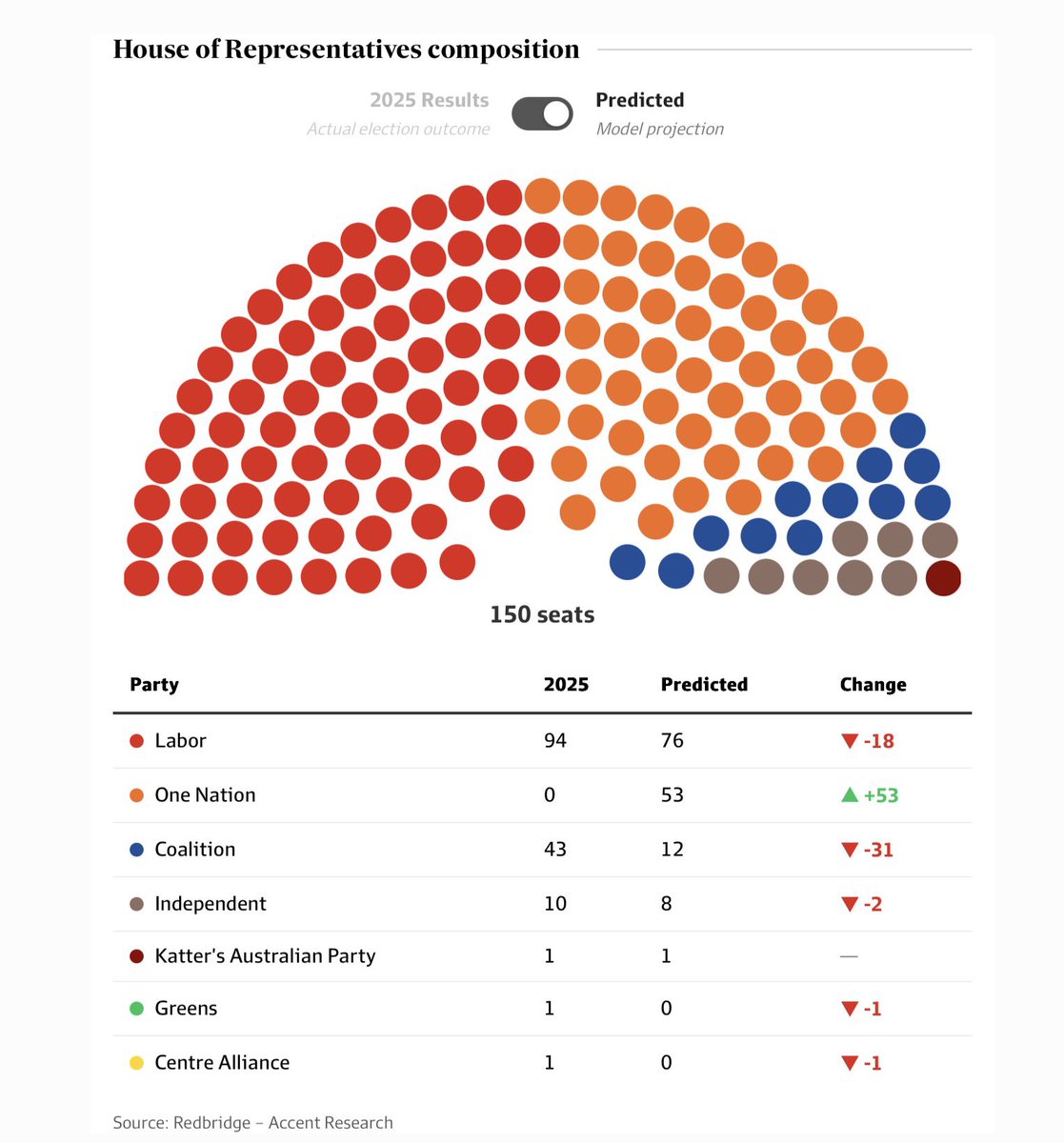
A fragmented electorate. May 2026 RedBridge Accent Research MRP. You can now download the full report below.
The report includes:
• National primary vote and seat projections with full credible intervals
• Seat-by-seat predictions across all 150 divisions
• A complete list of seats changing hands and who they move to
• Methodology
English
Robert Smith me-retweet

My statement in response to media commentary surrounding the potential establishment of a new political party.

English
Robert Smith me-retweet

I am 80+ years old and my reputation is based on long years spent as a bilingual editor and writer. The shape of body, looks or gender do not matter in my profession, only the resilience of a disciplined mind does. And instead of badmouthing me you can Google my bio.😊
Usha@mauna_adiga
@MrinalPande1 You too are a public figure. Shall we start discussing your body shape, age etc.?
English
Robert Smith me-retweet

This week's column for @abcnews in which I explain why Angus Taylor's immigration/housing policy would not result in a cut to immigration and suggest that migration should be run by an independent body like the Reserve Bank.
abc.net.au/news/2026-05-2…
English
Robert Smith me-retweet

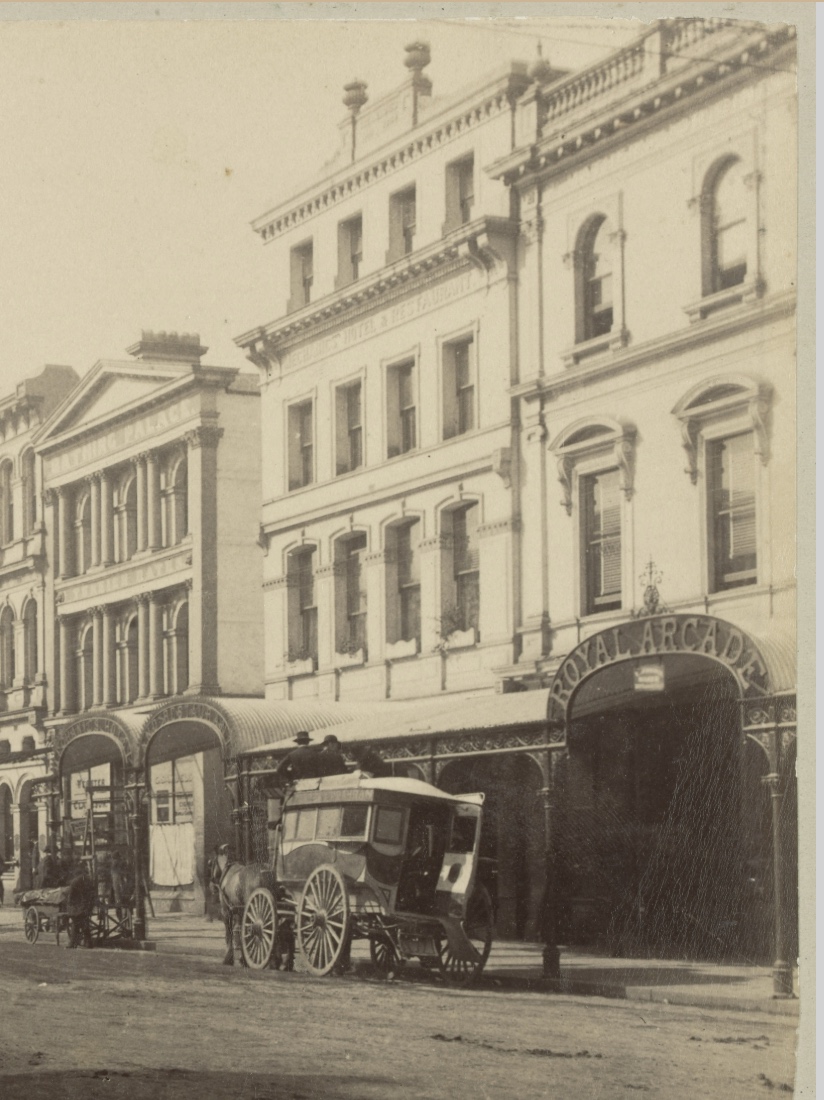
Located on the south side of Bourke Street immediately east of the Block Arcade, the Mechanics Hotel and Restaurant was an important Melbourne institution of the late 19th Century.
It operated as both a budget hotel and charitable institution - after the restaurant had served paying customers each evening, tickets would be issued to the city's down and out entitling them to a free meal.
The process was known as the "8 o'clock rush" - each evening crowds said to number between 40 and as many as 200 would line up in Bourke Street for their free meal ticket - to an extent that it created an obstacle to movement.
Accordingly the crowds were made to assemble in Craig's Lane to the building's east (which was part of the leashold - today known as The Causeway), and modifications were made to the rear of the building to allow the rough and readys to enter that way, and so maintaining the decorum of Bourkle St.
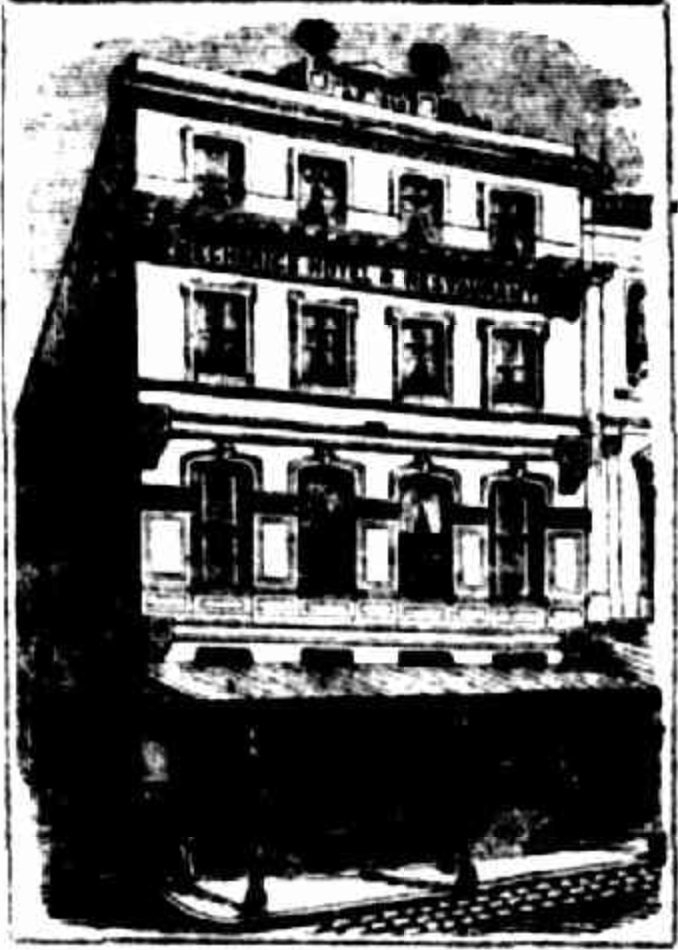
The owner was one Ascendio de Freitas (see image 4) - a Portuguese immigrant, who initially arrived in Melbourne in 1853 as the son of the Portuguese Consul, but he was drawn by the allure of the goldfields, to which he fled - moving around the country as a semi-itinerant.
De Freitas was overwhelmed at the generosity of the Australians he met, who would often house and feed him for nothing in return, and even when they had little of their own to share. So moved was he by this generosity that he vowed if he ever came into means himself, that he would ensure that he gave back to society with the same generosity he had himself encountered.
The limited biographies of de Freitas all go dark at this point, but it appears he may have had some success on the golfields as by the early 1860s he found himself camped in a tent on this site in Boourke St, preparing to build himself a hotel and restaurant.
The building was constructed of bluestone to 4 storeys by 1864. It housed 25 people across 32 rooms, and featured 2 bars as well as the large downstairs restaurant. Accomodation was amongst the cheapest in Melbourne and the rooms were basic but did include running water. It featured the words "Mechanics Hotel & restaurant" below the frieze at the top of the 3rd storey and in the lacework at the front of the building's verandah.
As dark days beset Melbourne following the crash of the "land boom", the Mechanics Hotel & Restaurant became a major cog in the city's charitable ecosystem in days long before government provision of welfare.
De Freitas retired by 1904 and the new owners evidently ended the "8 o'clock rush", by which time it was said that de Freitas had provided more than half a million free meals to Melbourne's needy.
The hotel was delicensed in 1923 and gave way to a new building for Coles Stores in 1924 - still standing here today as Deva House.
But let's take a moment to remember not just the building but the institution and its founder, Ascendio de Freitas - an immigrant who contributed far more to his adopted home than history has remembered, and one of the many millions of such stories which when woven together became the fabric of a new nation.


English
Robert Smith me-retweet
Our MRP today has One Nation surging nationally. The lazy read is that Australia is lurching far right. It isn’t.
In our latest piece, RedBridge’s Alex Fein lays out what’s actually happening: a sophisticated, transnationally-networked information operation has spent years cementing Pauline Hanson as “one of us”, and it’s pushing on a door the major parties left wide open, especially the Coalition.
Collapsed living standards. Failing services. A political class that stopped listening. That’s the door.
In focus groups, voters now call her “Pauline,” like a friend. Gina Rinehart’s plane didn’t hurt her, it thrilled them. One of theirs finally got a taste of what the elites have always had.
And then there are the Please Explain cartoons.
They’ve quietly done something no traditional political communication can. They’ve moved Hanson inside the tribe. These are easily the best political creatives in this country’s history.
Cartoons don’t get scrutinised the way normal political adds do. They get shared. Laughed at. Quoted at the pub. They become the in-joke and once you’re in on the joke, you’re in the tribe. That’s the trick. Please Explain has turned Hanson from a politician you vote for into a character you know and these cartoons have positioned her as the sensible ‘teacher’ in the class room of misbehaving politicians.
The One Nation vote isn’t really about immigration. Few participants even raise it. It’s a kick up the bum, delivered to a class of politicians voters no longer trust to deliver anything else.
The longer the established centre-right misread this, the harder the door is to close.
The link to her piece is below.
English
Robert Smith me-retweet
Robert Smith me-retweet

News of a separate Delhi/NCR Department under MoHUA signals recognition that the capital’s problems need sustained, high-level attention. But after 3 decades and thousands of crores, much has literally gone down the drain chasing what no one wanted to confront — unchecked unauthorised occupation of vacant land, mushroom growth of unplanned colonies, illegal industries, missing sewerage, dysfunctional effluent plants, and crippling road congestion. Much of this starts not just in Delhi- but in the Yamunanagar -Panipat - Gurgaon belt of Haryana as also in Sahibabad and suchlike industrial areas of Uttar Pradesh. It all pours into Delhi. A third of Delhi is unregulated when it comes to sewage and effluent discharge and only if there's coordination can any regulation start. But first, unless hard facts are faced, can anything change? It requires 3 CMs to first understand the gravity of what is happening. Rivers/ Air and human movement have no borders. They can only be controlled if there is zero tolerance for what everyone knows but refuses to confront.
English
Highly publicised at the time.
Lauren Rosewarne@LaurenRosewarne
"We too, smoke TURF" Turf Virginia Cigarettes "The popular choice". Australian Women's Weekly, 1948.
English
Robert Smith me-retweet

Kerala’s new Assembly witnessed MLAs taking oath in four languages - Malayalam, English, Tamil and Kannada. Where else in India does such a scene unfold within one legislature? A reminder that Kerala’s identity is not built on uniformity, but on a confident, lived pluralism.
English
Robert Smith me-retweet
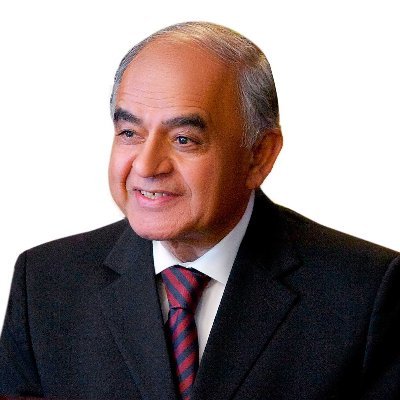
How do we improve relations with America, which have hit a rock bottom? This is the subject of this panel discussion. If interested, do log in.
Time: May 21, 2026 06:00 PM New Delhi
Join Zoom Meeting
us02web.zoom.us/j/4638391931?p…
Meeting ID: 463 839 1931
Passcode: 3FTtGZ
English
Robert Smith me-retweet
New #GrandTamasha: India’s growth numbers shape how we understand everything from jobs to investment to global standing. But what if those numbers don’t tell the full story? @abhishekecon joins me to discuss India’s macroeconomic crossroads grand-tamasha.simplecast.com/episodes/rethi…

English
Robert Smith me-retweet

Happening at #IIC
𝐀𝐮𝐬𝐭𝐫𝐚𝐥𝐢𝐚, 𝐈𝐧𝐝𝐢𝐚 𝐚𝐧𝐝 𝐓𝐡𝐞 𝐍𝐞𝐰 𝐖𝐨𝐫𝐥𝐝 𝐃𝐢𝐬𝐨𝐫𝐝𝐞𝐫
Speaker: 𝐏𝐞𝐭𝐞𝐫 𝐕𝐚𝐫𝐠𝐡𝐞𝐬𝐞 𝐀𝐎, distinguished Australian diplomat, former Australian High Commissioner to India (2009-2012) and Australian Foreign Secretary (2012-2016), currently Chancellor of The University of Queensland and Chair, Australian Public Policy Institute
Moderator : 𝐈𝐧𝐝𝐫𝐚𝐧𝐢 𝐁𝐚𝐠𝐜𝐡𝐢, CEO Ananta Aspen Centre
Discussants:
𝐏𝐫𝐨𝐟 𝐀𝐦𝐢𝐭𝐚𝐛𝐡 𝐌𝐚𝐭𝐭𝐨𝐨, Dean, School of International Studies, Professor and Chair, Centre for International Politics, Jawaharlal Nehru University Gopal Baglay, former Indian High Commissioner to Australia
📆 𝟐𝟑 𝐌𝐚𝐲 𝟐𝟎𝟐𝟔
⏰ 𝟎𝟔:𝟎𝟎 𝐏𝐌
📍 𝐒𝐞𝐦𝐢𝐧𝐚𝐫 𝐑𝐨𝐨𝐦𝐬 𝟏,𝟐,𝟑
👉𝐎𝐏𝐄𝐍 𝐓𝐎 𝐀𝐋𝐋

English
Robert Smith me-retweet

IS AUSTRALIA ABLE TO CHANGE?
Australian politics has been much ado about nothing for decades
Our oppositions have promised that their taxing and spending would more than 99% match those of the government they’re campaigning to replace
And why wouldn’t they? When oppositions did campaign on change (Hewson in 1993 and Shorten in 2019), they lost
And when government leaders proposed change (Rudd in 2010, Abbott in 2014), they also soon lost their job as PM
Meantime, next year will mark four decades since there has been a successful national referendum
Simply put, the Australian electorate loathes change, and so our politicians long stopped challenging us
(OK, the electorate allowed Australia to fight crises such as COVID and the GFC, but those crisis-fighting times were very much the exception)
So it was a break with the patterns of the past when the government’s budget and the opposition’s reply both promised changes
· The government aimed to plug holes in the tax system that allowed some people to cut their taxes in ways that aren’t open to most people
· And the opposition promised to stop the set-and-forget ability of the personal tax system to take an ever-rising share of our wage – the ‘inflation tax’
· There’s lots to like in both those proposals
I recommended personal tax indexation at the government’s reform summit a year ago. And although I think the failure to allow for ‘averaging’ in the government’s changes to capital gains is a big mistake, it is still true that the taxing of capital gains and of family trusts needed a lot of repair
But it isn’t the details of the proposals and counter-proposals that I want to focus on here
It is whether the next few weeks and months show that Australia can change
The post-budget polls are rumbling, and the punters are getting restless. They don’t like the changes to capital gains and negative gearing that have been announced
Yet the first chart shows two lines – the total disposable income of Australians before and after the government’s changes to CGT and negative gearing
(My forecasts of disposable income, and my allocations by year and type of Treasury’s tax forecasts)
For all the horror headlines, the before and after lines are indistinguishable
Ditto if you put it on a per person basis – the second chart below
You can see the difference in percentage terms – the last chart. A decade from now those tax changes are sufficient to reduce disposable incomes by one-fifth of one percent
And yet they dominate the national headlines
To repeat, Australia is terrible at change, and I wonder whether we will
So here’s a crazy thought. Even if you utterly hate these changes (I don’t 100% love them either), I think a part of you should hope that they get through
If they don’t, then I wonder about the long-term prospects of a nation that insists on staying stuck under the blankets
And I wonder just how big a crisis it’ll have to be before something large is finally allowed to change in Australia

English
Robert Smith me-retweet
ABC and SBS reject IHRA antisemitism definition adopted by government, royal commission smh.com.au/business/compa…
English