Jason T Fisher

10.9K posts

Jason T Fisher banner
Jason T Fisher

Jason T Fisher

@JasonTFisherLab

Research Scientist- Wildlife Ecology. Head of #ACMELab @UVicEnvi. Chase wolverines, bears, deer, &c. Camera trapper. Distillery co-owner. Boat Cap'n. Curious.

Victoria, British Columbia Bergabung Haziran 2014
2.4K Mengikuti4.3K Pengikut
Jason T Fisher
Jason T Fisher@JasonTFisherLab·
Folks, I can no longer support the crazy dingdong running this show. I have to say "so long' to my 1000s of followers and followees, and start all over at bluesky. Find me @random-blackbear.bsky.social. Keeping this accountso noone starts posting in my name. It has happened.
English
0
0
2
178
Jason T Fisher me-retweet
Pamela Narváez-Torres
Pamela Narváez-Torres@pamnarvaez·
If you’re interested in the latest update of #wolverines in #Alberta, go check out @JasonTFisherLab ‘s update on wolverine population data and @kentomologie ‘s thread 🌲
Kennedy Halvorson@kentomologie

@ABForestryParks Minister stated that lifting trapping limits on species like #wolverines was necessary to update population data. However, recently published research provides estimates w/o trapping, & was notably "supported by the Government of Alberta" onlinelibrary.wiley.com/doi/10.1002/ec…

English
0
1
6
320
Jason T Fisher
Jason T Fisher@JasonTFisherLab·
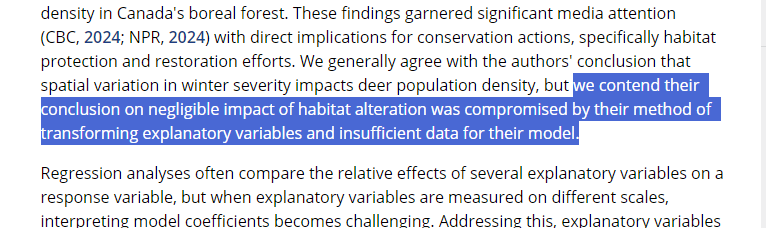
@adamTford Except that in the original analysis habitat alteration is binned as "statistically insignificant", a foundation conclusion of the orig. paper. Re-analysis: habitat alteration is also driving deer densities - with an effect size equal to climate. VERY different conclusion.
Jason T Fisher tweet media
English
0
0
0
191
Adam ™ Ford
Adam ™ Ford@adamTford·
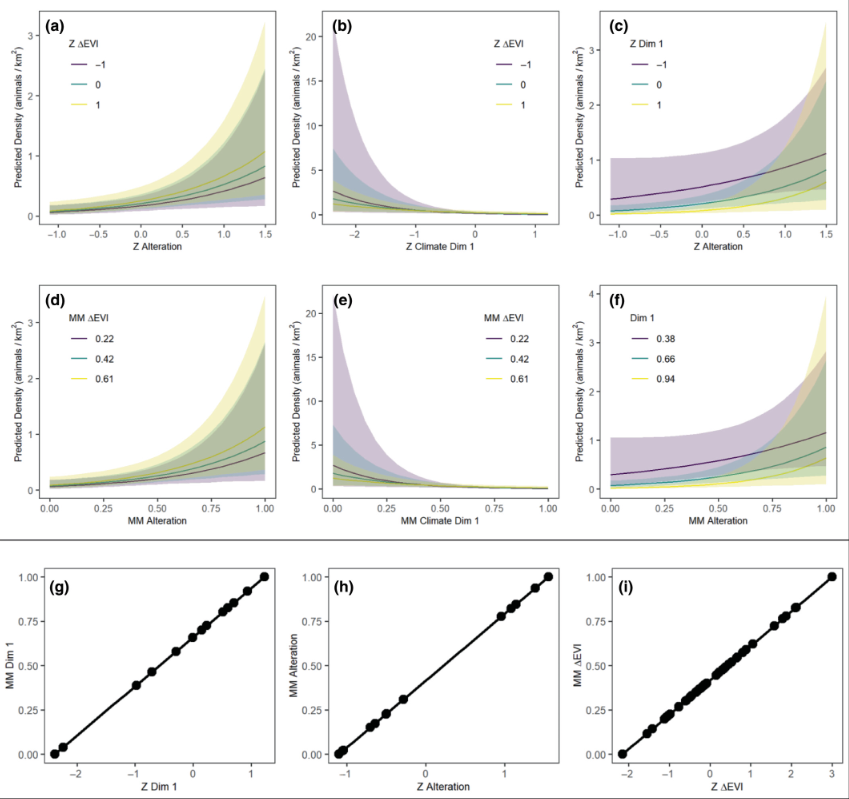
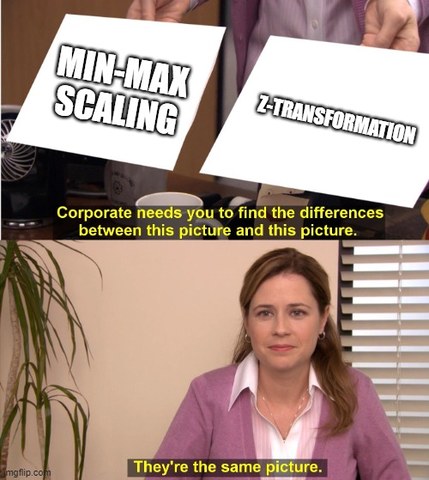
The results of *our* min-max scaling are shown in panels d,e,f. Our colleagues z-trans is in panels a,b,c. The results are qualitatively identical. This outcome is not surprising since these two transformations are correlated (panels g,h,i) /2
Adam ™ Ford tweet media
English
3
0
0
751
Adam ™ Ford
Adam ™ Ford@adamTford·
Recently, we received a response to Dickie et al 2024, with a number of critiques. Including that the effects of data transformation affected our results. They did not. /1
Adam ™ Ford tweet media
English
5
0
10
4.1K
Jason T Fisher
Jason T Fisher@JasonTFisherLab·
@adamTford Notable: min-max scaling is sensitive to outliers. When you have data with many varying and extreme values (as seen in the deer density dataset) they behave differently than z-scaled or robust-scaled data. Yes they have collinear means: stats 101. It's the error that counts.
English
0
0
0
126
Jason T Fisher
Jason T Fisher@JasonTFisherLab·
@taaltree Agreed, which was our point. Like the Gould paper, we need to be very careful with conclusions drawn from a single model, as different decisions yield different outcomes. No harm or foul.
English
0
0
0
203
Taal Levi
Taal Levi@taaltree·
With Z transformation, the main effect of habitat alteration is the effect when winter severity is at its mean. There is now a positive effect of habitat alteration in the main effect that was only evident with interaction with MM. Tricky interpretation!
English
2
0
1
373
Jason T Fisher
Jason T Fisher@JasonTFisherLab·
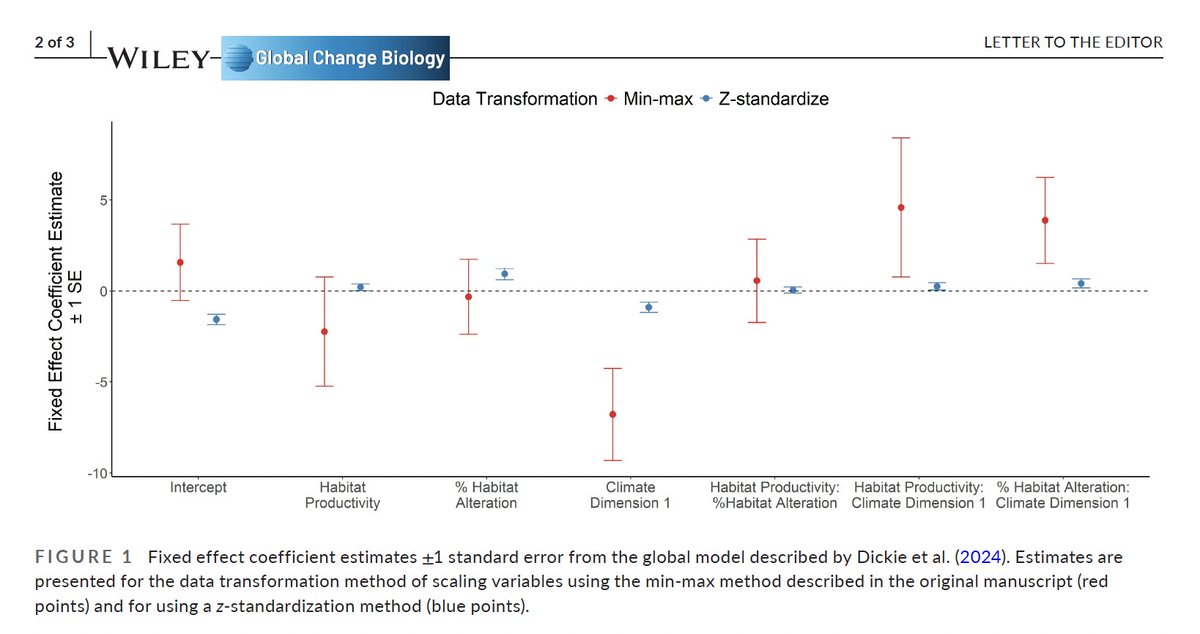
@MelanieDickie This is the crux: scaling change (and other modelling decisions) takes habitat from "statistically insignificant" to something very different -and more in line with what we've been finding for the last decade, that climate and habitat are both significant.
Jason T Fisher tweet media
English
1
0
1
267
Melanie Dickie
Melanie Dickie@MelanieDickie·
@JasonTFisherLab I know they can. But they didn’t? The predictions & SEs are the same. The difference in coefficients and SEs in the summary table reflects a different 0 & the “unit” in 1 unit change are different. Plotting it out on the original scale shows it’s equal.
English
1
0
1
235
Jason T Fisher
Jason T Fisher@JasonTFisherLab·
@MelanieDickie Key point is that there isn't a right or wrong way - you did nothing wrong - but a simple twist of the model goes from "habitat is statistically insignificant" to "significant and of equal effect size". This is common, as we tried to make clear by citing: ecoevorxiv.org/repository/vie…
English
0
0
0
111
Jason T Fisher
Jason T Fisher@JasonTFisherLab·
@MelanieDickie Hi Mel, here is why transformation can change the outcome of models: transf. variables are correlated by carry different RMSE. As GLMs fit models to data based on error structure, one gets different model fits. medium.com/swlh/data-norm…
English
2
0
0
259
Jason T Fisher
Jason T Fisher@JasonTFisherLab·
@adamTford Respectfully my friend, yes we did. A slightly different model treatment turned "habitat is statistically insignificant" to "significant and of equal effect size". This was not an attack on our comrades, or your work. It is just a common phenomenon. ecoevorxiv.org/repository/vie…
English
0
0
0
480
Jason T Fisher
Jason T Fisher@JasonTFisherLab·
@adamTford "Negligible" in that "statistically insignificant" is widely interpreted as such - which is the claim of the OG paper and refuted by us, empirically.
English
0
0
1
92
Adam ™ Ford
Adam ™ Ford@adamTford·
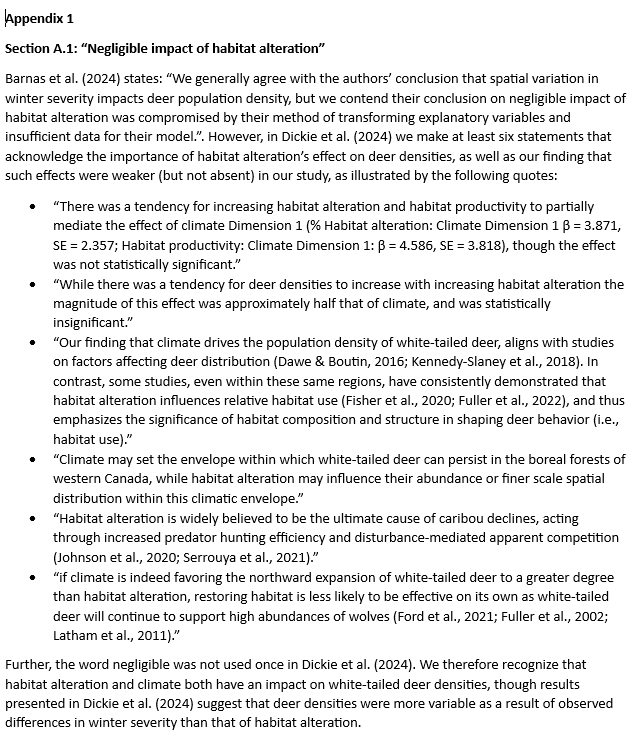
Regardless, it was claimed by Barnas et al that we stated habitat alteration had a negligible effect on deer. This is a misrepresentation of our work. /6
Adam ™ Ford tweet media
English
3
0
0
622
Jason T Fisher
Jason T Fisher@JasonTFisherLab·
@adamTford On these points we fully agree. Unlike the cage-match contest created on the OG paper, the rebuttal matches our contention there are cumulative effects at work here, and cumulative management strategies are needed to solve this problem.
English
0
0
0
84
Adam ™ Ford
Adam ™ Ford@adamTford·
Our results imply that activities to restore caribou in areas facing milder climates and more deer 'invasion' may need to rely more strongly on population-based recovery actions like predator mgt, deer mgt, and caribou reproduction alongside habitat-based recovery actions. /12
English
2
0
1
802
Jason T Fisher
Jason T Fisher@JasonTFisherLab·
@adamTford That this view was amplified by unfortunate reporting in the media, compounds the problem. Many took this as "landscape development is not the deer problem". We just showed that a simple twist of the model yields a very different answer -- and that managers need to be aware.
English
0
0
0
57
Jason T Fisher
Jason T Fisher@JasonTFisherLab·
@adamTford We really appreciate that we can discuss these issues with our colleagues (and hopefully, still friends). The dismissal of habitat effects on deer as "statistically insignificant" is certainly interpreted by managers as "irrelevant - they have told us as much.
English
1
0
0
105
Jason T Fisher
Jason T Fisher@JasonTFisherLab·
@adamTford That is Bolker's view but certainly not Gospel! And his paper targets (rightfully) issues with shrinkage with multimodel averaging, which we did not do.
English
0
0
0
48
Adam ™ Ford
Adam ™ Ford@adamTford·
While many ecologists use model selection to measure the competiveness for subsets of a global model, this approach continues to be debated in the literature. Barnas et al subsetted, we did not. As Buffalo Springfield once sung: "Nobody's right if everybody's wrong" /8
Adam ™ Ford tweet mediaAdam ™ Ford tweet media
English
3
0
3
575
Adam ™ Ford
Adam ™ Ford@adamTford·
In our rebuttal, we re-stated our original wording indicating that habitat alteration *does have* an effect on deer. We collated these statements in an online supplement, as they appeared to be overlooked by our colleagues. /7
Adam ™ Ford tweet media
English
2
0
0
573
Jason T Fisher
Jason T Fisher@JasonTFisherLab·
@adamTford The original title was "Habitat alteration or climate: What drives the densities of an invading ungulate?" - a very binary contest. The original analysis discarded habitat alteration as "not statistically significant". Classically this is interpreted as "negligible".
English
0
0
1
78
Jason T Fisher
Jason T Fisher@JasonTFisherLab·
@adamTford GLMs fit models to assumed PDFs based on error structure. This is why one gets different beta estimates and z scores with different normalizations. Dickie's response contests this, but it is nonetheless true - and why Barnas et al. found different answers in their analysis.
English
0
0
1
67
Jason T Fisher
Jason T Fisher@JasonTFisherLab·
@adamTford Means are correlated true among transformed variables, true, but error structures are not. A very good example is here: medium.com/swlh/data-norm…. Different normalizations yield different RMSE.
English
1
0
2
133