MAKE A STAND 4 AUTISM

9.3K posts

MAKE A STAND 4 AUTISM banner
MAKE A STAND 4 AUTISM

MAKE A STAND 4 AUTISM

@MakeAStandOrg

Unlocking potential through advocacy, research & education.

Bergabung Haziran 2009
362 Mengikuti1.2K Pengikut
Tweet Disematkan
MAKE A STAND 4 AUTISM
MAKE A STAND 4 AUTISM@MakeAStandOrg·
You know what is a human right? Communication
English
9
10
106
23.3K
MAKE A STAND 4 AUTISM me-retweet
HHS Rapid Response
HHS Rapid Response@HHSResponse·
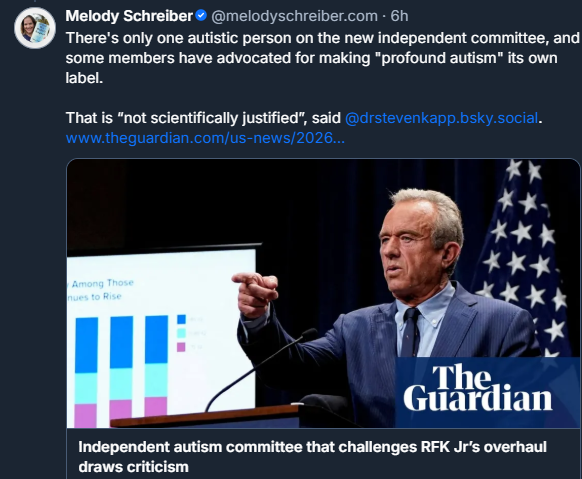
The Interagency Autism Coordinating Committee includes three autistic self-advocates and a dozen members who are parents of children with autism, including many with high support needs. This lived experience brings urgency and purpose to the Committee’s statutory mandate under the Autism CARES Act of 2024. The @guardian declined to clarify or correct its reporting.
HHS Rapid Response tweet media
English
6
18
68
1.7K
MAKE A STAND 4 AUTISM
MAKE A STAND 4 AUTISM@MakeAStandOrg·
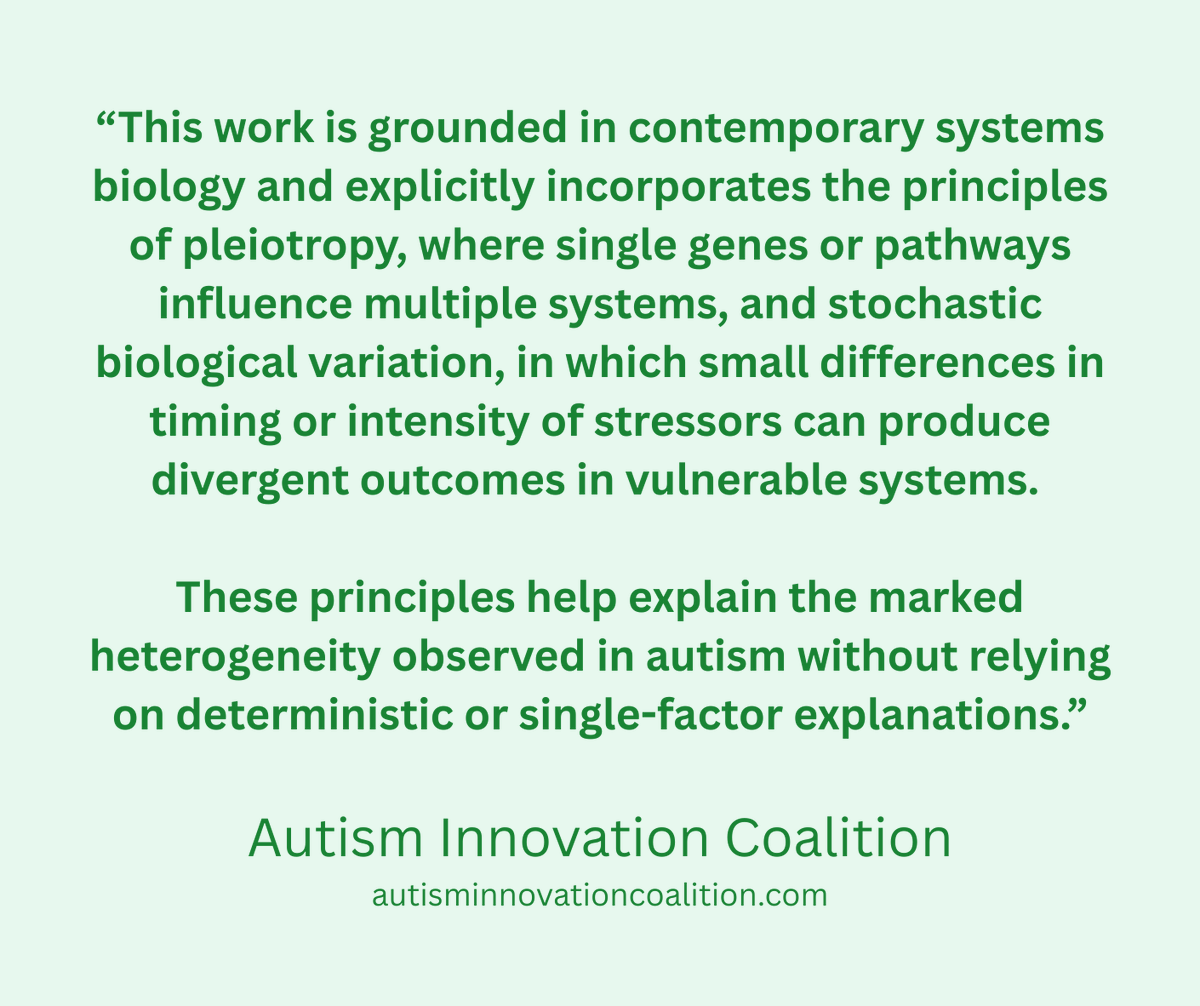
The PTA Model reveals autism as a complex process shaped by interactions across multiple biological systems, with outcomes that depend on timing, context, and contributors that confer exceptional vulnerability. autisminnovationcoalition.com
MAKE A STAND 4 AUTISM tweet media
English
0
6
9
222
MAKE A STAND 4 AUTISM
MAKE A STAND 4 AUTISM@MakeAStandOrg·
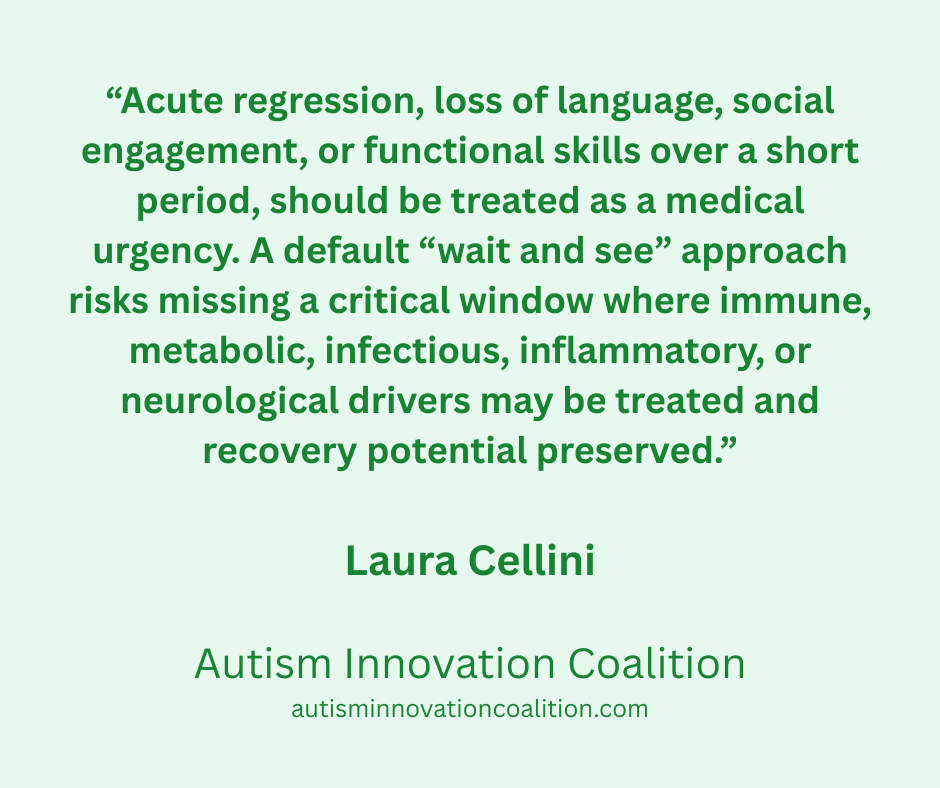
If you are an autism stakeholder, please familiarize yourself with the work of the Autism Innovation Coalition. They are brilliantly and comprehensively communicating what is coming into focus in autism research. Gone are the days of confusion and hopelessness. Here, are days of clarity and progress. autisminnovationcoalition.com
MAKE A STAND 4 AUTISM tweet media
English
4
5
12
599
MAKE A STAND 4 AUTISM
MAKE A STAND 4 AUTISM@MakeAStandOrg·
@CNN this is misleading. Cerebral folate deficiency is not strictly a genetic condition. It can also be diagnosed via detection of binding/blocking autoantibodies, in the absence of a genetic mutation. What you have highlighted here, is that only a small minority of those with CFD have a genetic origin, but you have written it in such a way that makes the entire effort appear unworthy of attention. Shame. There are many different causes of autism. This is merely one.
CNN@CNN

FDA declines to endorse leucovorin for autism after Trump administration touted the drug as a potential treatment. cnn.it/4bAv2JK

English
0
0
3
99
MAKE A STAND 4 AUTISM
MAKE A STAND 4 AUTISM@MakeAStandOrg·
@CNN this is misleading. Cerebral folate deficiency is not strictly a genetic condition. It can also be diagnosed via detection of binding/blocking autoantibodies, in the absence of a genetic mutation. What you have highlighted here, is that the minority of those with CFD have a genetic origin, but you have written it in such a way that makes the effort appear unworthy of attention. Shame. There are many different causes of autism. This is merely one.
English
0
0
1
45
CNN
CNN@CNN·
FDA declines to endorse leucovorin for autism after Trump administration touted the drug as a potential treatment. cnn.it/4bAv2JK
English
91
64
171
111.4K
MAKE A STAND 4 AUTISM me-retweet
Paul Whiteley
Paul Whiteley@PaulWhiteleyPhD·
"a neurological disorder with some symptoms similar to autism". Similar or just another part of the autisms (plural)? Lots of autisms, lots of different aetiologies and lots of different screening and intervention pathways.
The Wall Street Journal@WSJ

The Food and Drug Administration approved leucovorin, a drug the Trump administration has touted as a potential therapy for autism, to treat cerebral folate transport deficiency, a neurological disorder with some symptoms similar to autism. on.wsj.com/4rm3jkQ

English
3
4
15
809
Paul Whiteley
Paul Whiteley@PaulWhiteleyPhD·
@MakeAStandOrg It seems to mirror what the ICD-11 autism diagnostic criteria say about encephalitis: #437815624" target="_blank" rel="nofollow noopener">icd.who.int/browse/2025-01… "Autistic features may become manifest in the context of acquired medical conditions, such as encephalitis."
English
1
2
2
96
Paul Whiteley
Paul Whiteley@PaulWhiteleyPhD·
"The approval is for cerebral folate ​deficiency, a genetic condition that can cause autism-like ⁠symptoms, the report said." reuters.com/business/healt… "and not for autism itself." I think this ranks as a win for the plural autisms.
English
7
6
14
898
Sylvia Fogel MD
Sylvia Fogel MD@FogelSylvia·
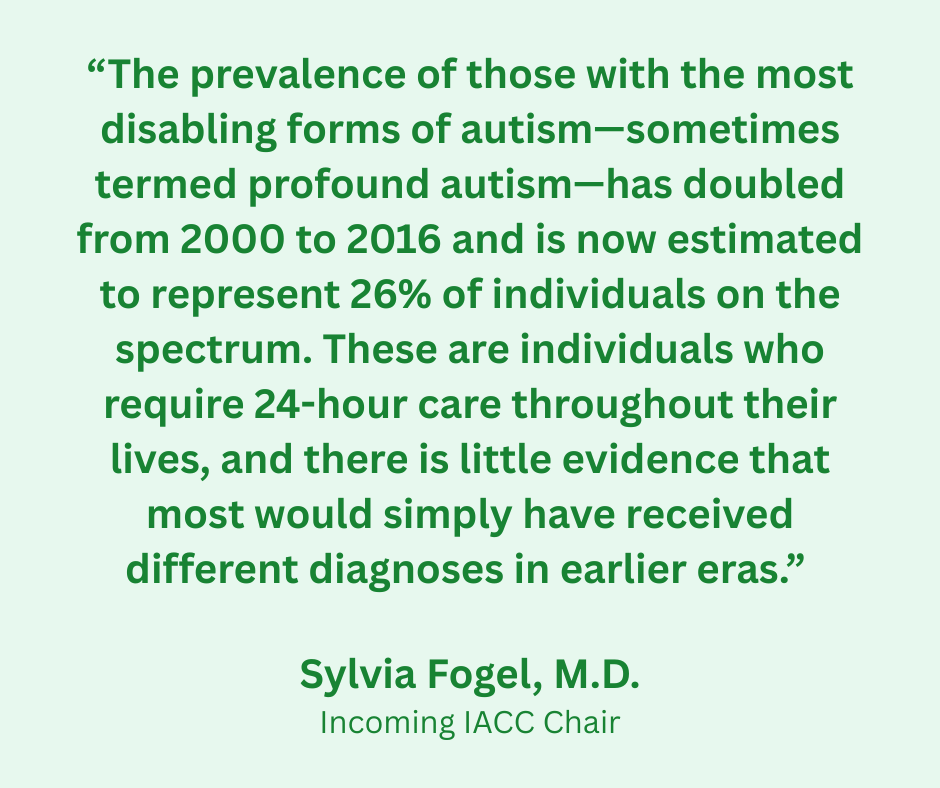
I approach Jill’s perspectives from several vantage points: two decades as a practicing physician, my experience as the parent of a child with profound autism, and years of work as an autism advocate. Together, these experiences shape my commitment to careful scientific inquiry and open debate about the complex biology underlying autism. I fully resonate with Jill's assessment that autism prevalence is rising. While many smaller studies are not designed to determine how much of the increase represents a true rise versus improved recognition, several large-scale epidemiologic analyses suggest that changes in diagnostic practice and broader definitions cannot account for the full increase. At the same time, the prevalence of those with the most disabling forms of autism—sometimes termed profound autism—has doubled from 2000 to 2016 and is now estimated to represent 26% of individuals on the spectrum. These are individuals who require 24-hour care throughout their lives, and there is little evidence that most would simply have received different diagnoses in earlier eras. I also strongly agree, both as a parent and as a clinician who treats individuals with autism, that we urgently need more effective treatments. One area that deserves greater attention is the use of nimble, adaptive clinical trials—including trials of widely available repurposed medications—to help find treatments for some of the most debilitating symptoms associated with autism and/or improve underlying cellular or systems functioning. Adaptive trial designs are particularly important for a condition as heterogeneous as autism. We also share some areas of overlap, particularly an interest in prenatal biology and in the possibility that germline or early developmental factors may influence autism risk and the cytoarchitectural changes observed in the autistic brain. I would step back, however, and emphasize what most researchers would acknowledge as a fundamental truth about autism: there is unlikely to be a singular cause. Autism is almost certainly pluricausal. It is also increasingly recognized that many genetic vulnerabilities and environmental exposures converge on shared biological pathways—particularly mitochondrial function, redox balance, immune signaling, and metabolic regulation. Where I look forward to further dialogue—and where I fundamentally disagree with Jill's assertions—is around neurodevelopmental regression (NDR). We simply do not have enough data to conclude that regression is solely a pre-programmed or inevitable developmental phenomenon. Given what we now understand about underlying mitochondrial vulnerability and oxidative stress in some ASD cohorts, it is entirely plausible that certain exposures could lead to short-term immunometabolic stress that overwhelms fragile systems, triggering a cascade of disruption that the body cannot easily correct. In this scenario, key cellular processes that drive development—energy metabolism, redox balance, immune signaling, and synaptic maturation—may become persistently dysregulated. This phenomenon is well recognized in individuals with established mitochondrial disorders, where relatively minor illnesses or medical stressors—such as infection or anesthesia—can precipitate significant metabolic decompensation and loss of function. Clinicians who care for individuals with autism frequently observe this phenomenon: acute immunometabolic stressors, such as infections, can sometimes precede a regressive cascade that represents a clear and unequivocal departure from prior developmental functioning. For those interested in this perspective, I would encourage exploring the work of the Autism Innovation Coalition. My colleague Laura Cellini developed a simplified systems framework to help organize and communicate variability around vulnerability, exposures, multiple factors, and timing: the Primers–Triggers–Amplifiers (PTA) model. We adopted this framework through our work within the AIC to help organize how biological and environmental influences may interact in autism, especially during critical windows of development. In this framework, primers refer to underlying susceptibilities such as genetics, maternal immune dysregulation, or exposures that affect mitochondrial function or redox balance; triggers include events such as acute illness, metabolic stressors, or toxicant exposure that can activate biological stress responses; and amplifiers are factors such as persistent neuroinflammation, continued metabolic stress, nutrition, or microbiome disruptions that may impair recovery and reduce resilience at the systems level. Importantly, the PTA framework does not assume a single pathway into autism except for very specific circumstances. The framework allows for the possibility that later stressors may interact with underlying vulnerabilities to influence developmental trajectories in some individuals. In this way, PTA provides a systems lens that accommodates individual thresholds or resilience, multiple biological pathways and helps explain the substantial heterogeneity observed across the autism spectrum. Finally, neurodevelopmental regression itself remains significantly understudied. Roughly 30–40% of parents report some form of regression, and a 2019 review from the UC Davis MIND Institute suggests the proportion may be substantially higher. Large population-level epidemiologic studies that measure autism prevalence are simply not designed to answer questions about regression or its biological mechanisms. Even excellent epidemiologic science cannot answer questions it was never intended to address. Emerging work in systems biology also suggests a potential framework for understanding these observations. Research on mitochondrial signaling and the cell danger response (CDR) proposes that diverse genetic vulnerabilities and environmental stressors may converge on shared metabolic pathways that regulate immune signaling, redox balance, and neurodevelopment. In this framework, repeated or prolonged activation of these stress-response pathways during critical windows of early brain development could alter developmental trajectories in ways that are not yet fully understood. While much remains to be investigated, this line of research highlights the importance of studying autism through the lens of dynamic biological systems rather than assuming a single developmental pathway. One of my hopes for the IACC moving forward is to create more opportunities for focused research workshops that bring together scientists from diverse disciplines—genetics, immunology, metabolism, epidemiology, and clinical medicine—to examine these questions more deeply. Autism is a multifactorial, complex condition, and meaningful progress will require open dialogue and a willingness to explore multiple biological pathways. SELECTED REFERENCES King M, Bearman P. Diagnostic change and the increased prevalence of autism. Int J Epidemiol. 2009 Oct;38(5):1224-34. doi: 10.1093/ije/dyp261. Epub 2009 Sep 7. PMID: 19737791; PMCID: PMC2800781. Hansen SN, Schendel DE, Parner ET. Explaining the Increase in the Prevalence of Autism Spectrum Disorders: The Proportion Attributable to Changes in Reporting Practices. JAMA Pediatr. 2015;169(1):56–62. doi:10.1001/jamapediatrics.2014.1893 Nevison C, Blaxill M, Zahorodny W. California autism prevalence trends from 1931 to 2014 and comparison to national asd data from idea and addm. J Autism Dev Disord. 2018;48(12):4103-4117. doi:10.1007/s10803-018-3670-2 Hughes MM, Shaw KA, DiRienzo M, Durkin MS, Esler A, Hall-Lande J, Wiggins L, Zahorodny W, Singer A, Maenner MJ. The Prevalence and Characteristics of Children With Profound Autism, 15 Sites, United States, 2000-2016. Public Health Rep. 2023 Nov-Dec;138(6):971-980. doi: 10.1177/00333549231163551. Epub 2023 Apr 19. PMID: 37074176; Naviaux RK. A 3-hit metabolic signaling model for the core symptoms of autism spectrum disorder. Mitochondrion. 2026 Mar;87:102096. doi: 10.1016/j.mito.2025.102096. Epub 2025 Nov 14. PMID: 41242673. Ozonoff S, Iosif AM. Changing conceptualizations of regression: What prospective studies reveal about the onset of autism spectrum disorder. Neurosci Biobehav Rev. 2019;100:296-304. doi:10.1016/j.neubiorev.2019.03.012 pmc.ncbi.nlm.nih.gov/articles/PMC64…
English
8
4
28
877
MAKE A STAND 4 AUTISM
MAKE A STAND 4 AUTISM@MakeAStandOrg·
@FogelSylvia Brilliantly thoughtful and informative, @FogelSylvia. You give me that much more confidence that we have something coming into focus in autism research that will be significant for our kids. Keep pushing!
English
0
0
2
42
Sylvia Fogel MD
Sylvia Fogel MD@FogelSylvia·
I appreciate @jillescher’s thoughtful comments in her letter to the IACC on Substack. Autism is a complex, heterogeneous condition, and advancing the science will require rigorous debate, openness to multiple hypotheses, and a willingness to examine diverse biological pathways. As Chair of the IACC, I welcome that dialogue. Some reflections below.
English
6
6
33
2.4K
MAKE A STAND 4 AUTISM
MAKE A STAND 4 AUTISM@MakeAStandOrg·
Another thoughtful response from IACC Chair, Dr. Sylvia Fogel. I agree whole-heartedly with everything she says here 💚
Sylvia Fogel MD@FogelSylvia

I appreciate @jillescher’s thoughtful comments in her letter to the IACC on Substack. Autism is a complex, heterogeneous condition, and advancing the science will require rigorous debate, openness to multiple hypotheses, and a willingness to examine diverse biological pathways. As Chair of the IACC, I welcome that dialogue. Some reflections below.

English
0
2
10
343
MAKE A STAND 4 AUTISM me-retweet
Secretary Kennedy
Secretary Kennedy@SecKennedy·
Cooking is a very important ritual that brings families together.
English
937
1.8K
12.8K
500.8K