MapsPeople

157 posts

MapsPeople banner
MapsPeople

MapsPeople

@MapsPeople

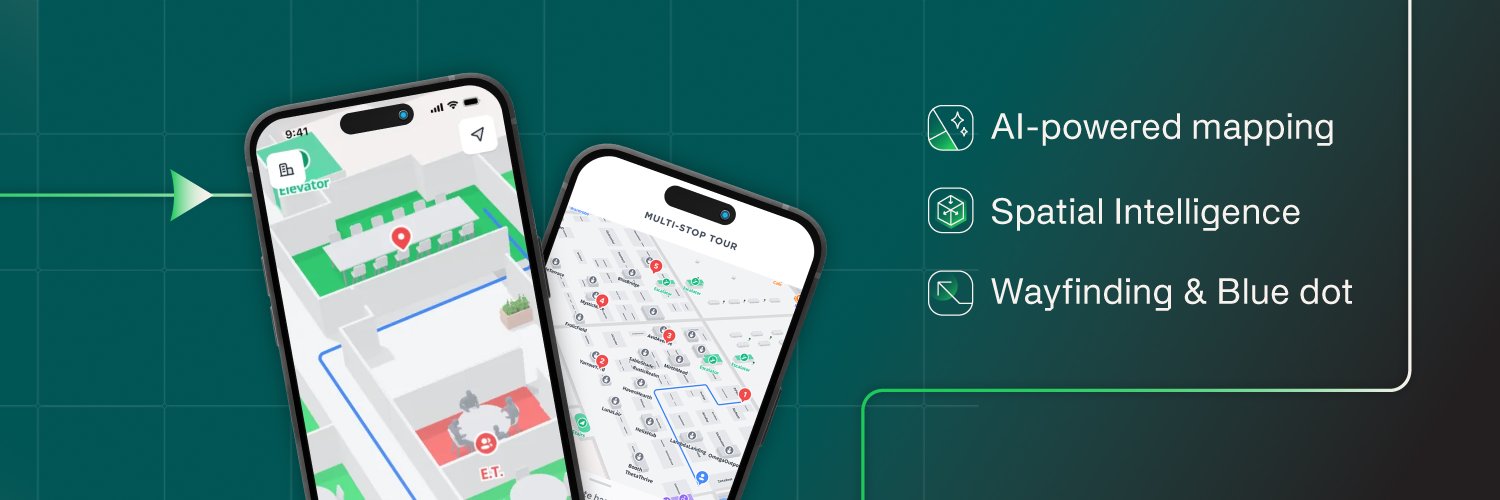
MapsPeople builds the AI spatial intelligence layer for intelligent indoor maps and connected environments.

Aalborg, Denmark Bergabung Mart 2017
22 Mengikuti98 Pengikut
MapsPeople
MapsPeople@MapsPeople·
Companies spend big on workplace tech – booking, desks, sensors. Still, people can’t find quiet rooms or IT. The tools aren’t broken. The map is. Design for how people move, not how buildings are organized. 7 fixes → hubs.la/Q048cR4_0
English
0
0
0
4
MapsPeople
MapsPeople@MapsPeople·
The problem with most airport maps? They only help people find things. The opportunity? Use maps to connect passengers to services, surface retail at the right moment, and feed live operational insights back into the terminal. That’s not just wayfinding. That’s infrastructure.
English
1
0
0
2
MapsPeople me-retweet
WORKTECH Academy
WORKTECH Academy@WORKTECHAcademy·
Workplaces are still built on static maps and fragmented systems. A new WORKTECH Academy report with @MapsPeople explores how spatial data, real time systems and behavioural intelligence can transform environments into responsive, human centred systems. worktechacademy.com/why-organisati…
WORKTECH Academy tweet media
English
0
1
2
40
MapsPeople
MapsPeople@MapsPeople·
The biggest problem in smart buildings isn’t a lack of tech. It’s fragmentation. Booking, sensors, visitor systems, signage, analytics. Dozens of tools, no shared understanding of the building. A dynamic indoor map becomes the spatial source of truth that connects everything.
English
0
0
0
4
MapsPeople
MapsPeople@MapsPeople·
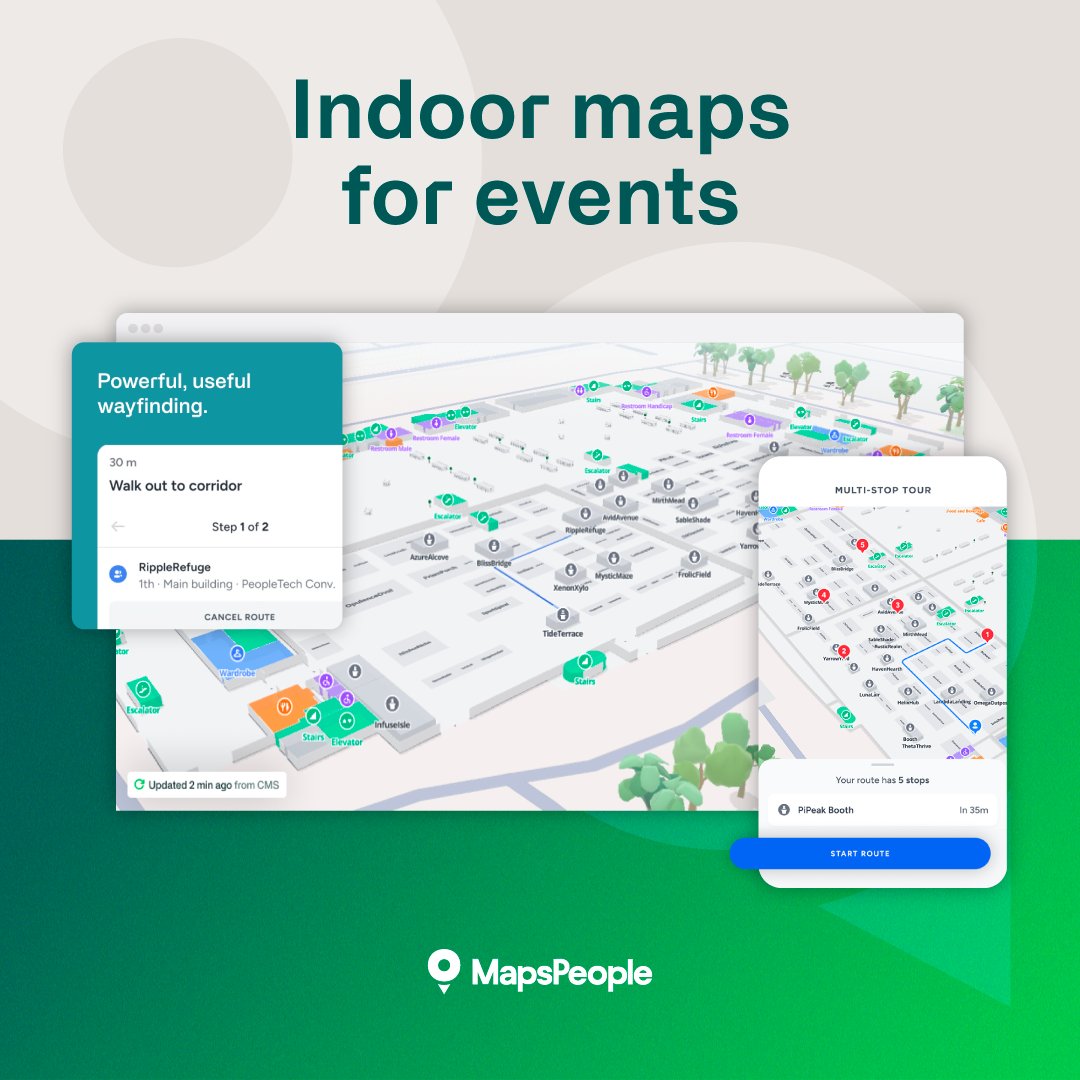
People don’t return to your event for the agenda alone. They return for the experience. A digital indoor map helps you deliver it: • Real-time updates • Multi-stop wayfinding • Event branding • Sponsor visibility Not a nice-to-have. A foundation for repeat attendance.
MapsPeople tweet media
English
0
0
0
8
MapsPeople
MapsPeople@MapsPeople·
People can shop online anytime. They come to your mall for the experience. Indoor maps help visitors find stores, and discover offers based on location. → Better traffic flow → Real space insights → New revenue Experience drives dwell time. Dwell time drives revenue. 📊
English
0
0
0
6
MapsPeople
MapsPeople@MapsPeople·
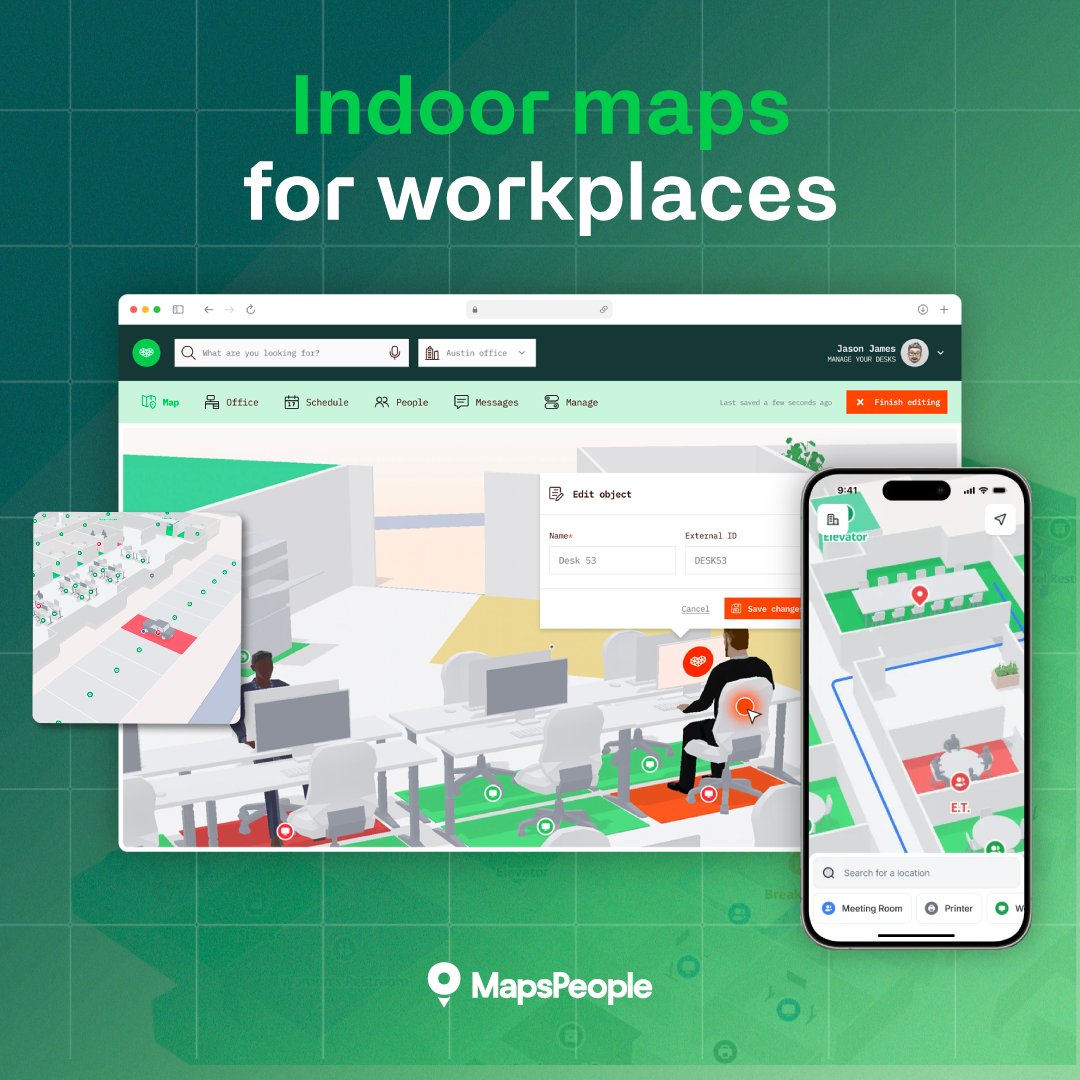
Why static maps don’t work in modern offices 👇 Layouts change. Teams go hybrid. Tools go digital. A live indoor map connects desks, visitors & building systems in one view. = Less searching. Faster onboarding. Smarter space use. If your map is static, your workplace is too.
MapsPeople tweet media
English
0
0
0
5
MapsPeople
MapsPeople@MapsPeople·
Airports aren’t just moving passengers. They’re coordinating people, systems & space at scale. Indoor maps are becoming the digital backbone: • Faster ops • One shared data layer • Personalized journeys • Accessible navigation Better flow. Less stress. Smarter airports ✈️
English
0
0
0
5
MapsPeople
MapsPeople@MapsPeople·
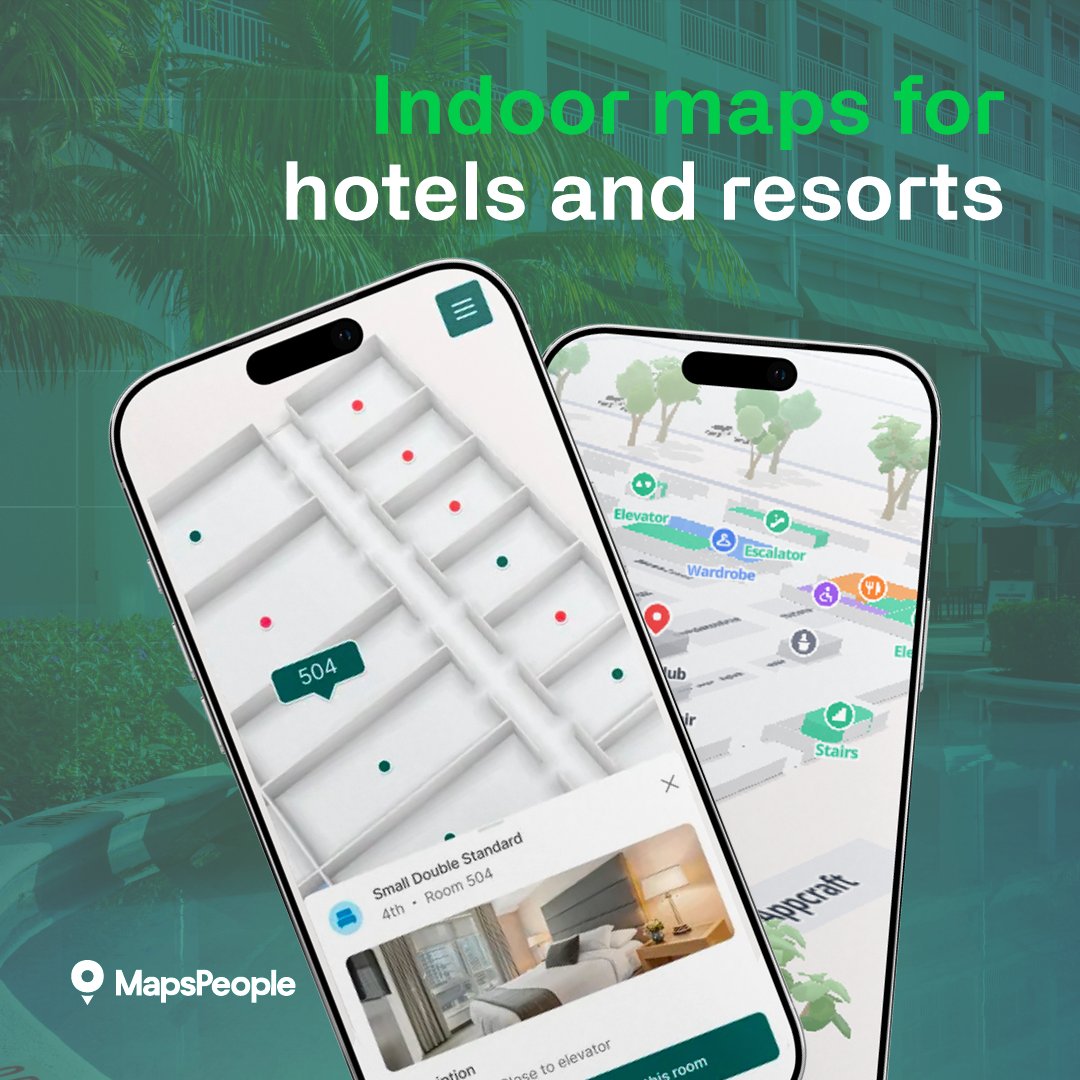
In large resorts, details make the difference. Digital indoor maps help guests move seamlessly, from room to pool, while discovering offers along the way. For hotels: • Fewer front desk interruptions • Smarter space usage • More efficient ops Better flow = better stays.
MapsPeople tweet media
English
0
0
0
12
MapsPeople
MapsPeople@MapsPeople·
Indoor mapping shouldn’t be one-size-fits-all. The real value comes from choosing the tech that fits your space; wayfinding, analytics, sensors, signage, and more. Our Partner Hub brings together best-in-class partners so you can build the map you need →hubs.la/Q042sdCs0
English
0
0
0
2
MapsPeople
MapsPeople@MapsPeople·
Less friction moving through space. Faster decisions from shared spatial truth. Better employee + visitor experiences. Real operational efficiency as buildings adapt in real time. Not just smarter maps, but smarter places.
English
0
0
0
5
MapsPeople
MapsPeople@MapsPeople·
This is what spatial intelligence looks like in real buildings 👇 When indoor space becomes a living, connected layer, the impact shows up fast.
English
1
0
0
7
MapsPeople
MapsPeople@MapsPeople·
What makes a spatial model living? Not more detail, but live context. When spatial data connects to scheduling, access, visitors, ops… space stops being guesswork and starts being actionable. That’s spatial intelligence.
English
0
0
0
4
MapsPeople
MapsPeople@MapsPeople·
Static floor plans are the silent killer of spatial intelligence. Buildings change. PDFs don’t. When maps stay frozen, every system on top slowly breaks. Spatial intelligence needs a living model.
English
0
0
0
11
MapsPeople
MapsPeople@MapsPeople·
Spatial intelligence needs something most buildings still don’t have: a structured model of indoor space. Indoor maps shouldn’t just show where.. They should encode how space works. That foundation is what turns buildings into experiences.
English
0
0
0
5
MapsPeople
MapsPeople@MapsPeople·
From paper maps → digital. From global platforms → indoor navigation. From static data → AI inside buildings. A century of mapping didn’t happen by accident. It happened by adapting before change became obvious.
English
0
0
0
4
MapsPeople
MapsPeople@MapsPeople·
Indoor navigation was just the beginning. Today, enterprises don’t want maps. They want Spatial Intelligence. Not just where things are, but how spaces are used, optimized, and predicted. That’s the shift.
English
0
0
0
8
MapsPeople
MapsPeople@MapsPeople·
V1 of MapsIndoors helped you find your way. Today, it helps enterprises understand their space. From static maps → spatial intelligence. From navigation → decision-making. V1 put us on the map. Today, we are redrawing the map entirely.
MapsPeople tweet media
English
0
0
0
27
MapsPeople
MapsPeople@MapsPeople·
Every chapter demanded reinvention. Every decade demanded new technology. But our mission stayed the same. Turn complex spaces into personalized experiences.
English
0
0
0
5
MapsPeople
MapsPeople@MapsPeople·
We started with ink. We build with AI today. The thread connecting the two isn't just craftsmanship. It is an obsession with accuracy. 🖋️ 1897: Hand-drawn cartography 🗺️ 1990s: Early digital mapping 📱 2010s: Mobile indoor navigation 🤖 2026: AI-driven spatial intelligence
English
1
0
0
12