
Matteo Forte

11.1K posts

Matteo Forte banner
Matteo Forte

Matteo Forte

@MatteoForte

Building the ultimate AI for mobility and logistics @ SWITCH - Street WITCHer

Rome, Italy Bergabung Şubat 2010
854 Mengikuti1.1K Pengikut
Matteo Forte
Matteo Forte@MatteoForte·
Most cities are sharing mobility data. The ambition is evidence-based policy. The reality is a growing archive that almost nobody turns into decisions. This is not a data problem. The data exists. Trip volumes, parking patterns, safety incidents, seasonal fluctuations — it's all there. The gap is between collection and action. Between having a dashboard and changing an infrastructure plan. Operators face the exact same problem internally. They collect fleet telemetry, rider behavior data, and operational metrics. Most of it sits in monthly reports that confirm what operators already suspected. Very little of it triggers an actual change in vehicle positioning, pricing, or expansion planning. The pattern is consistent: organizations invest heavily in data collection and far too little in the decision architecture that turns data into action. A city that knows where scooter trips cluster but doesn't redesign bike lanes around that data has the same problem as an operator that tracks utilization rates but doesn't adjust fleet distribution. Data infrastructure without decision infrastructure is just expensive storage.
English
0
0
0
5
Matteo Forte
Matteo Forte@MatteoForte·
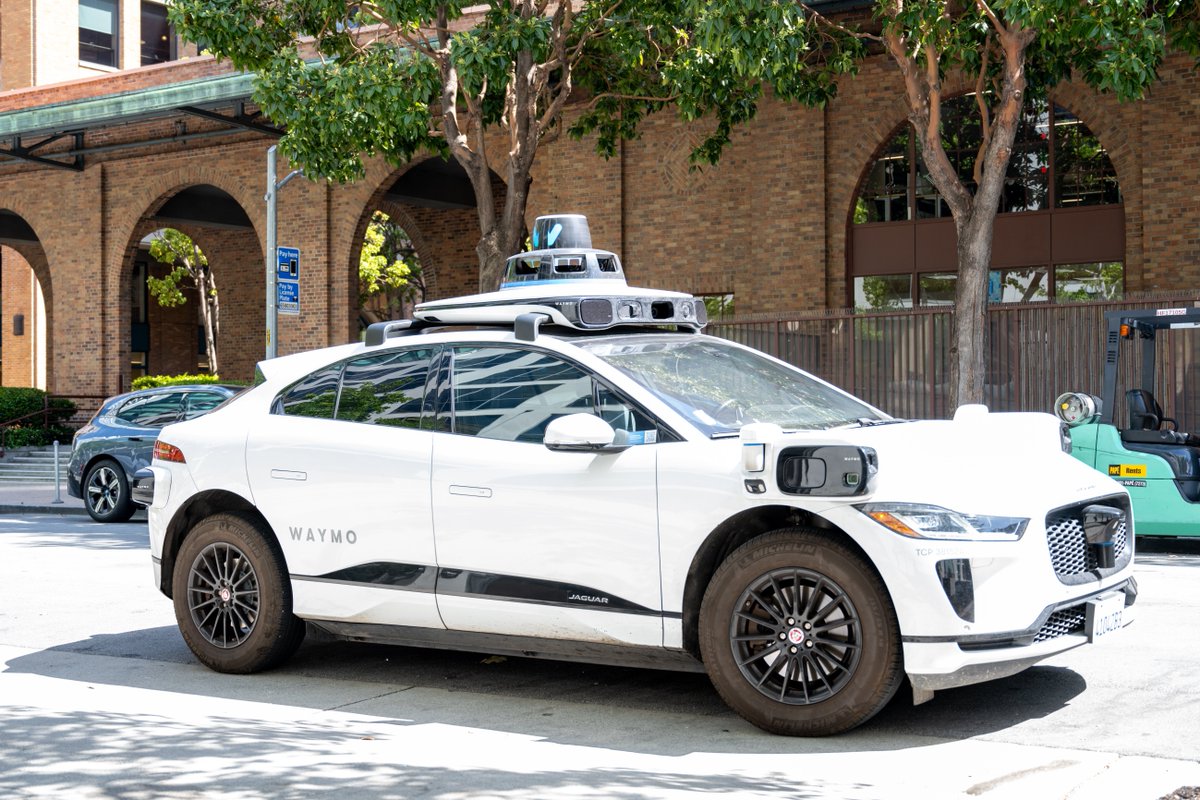
Uber just committed up to $1.25 billion for 50,000 autonomous Rivian vehicles by 2031. It's their largest robotaxi bet to date. But here's what most people are missing: Uber isn't building the car. They're not building the autonomy stack. They're buying hardware from Rivian. They're licensing AV software from partners. What they own is the orchestration layer – the marketplace, the routing, the demand matching. This is the pattern that keeps repeating. The companies that will win autonomous mobility aren't the ones building the best sensors or the most elegant neural nets. They're the ones who figure out fleet operations at scale. Waymo has the tech. Rivian has the vehicle. But Uber has 150 million active users and a decade of real-time supply-demand matching. That's the asset that's hardest to replicate. For anyone building in this space: the vehicle is becoming a commodity. The autonomy stack is becoming a commodity. The fleet intelligence layer — knowing how many vehicles to deploy and where to put them everyday, when, for whom — is where the margin lives. The future of transportation isn't about who builds the best robot. It's about who runs the best fleet.
Matteo Forte tweet media
English
0
0
0
60
Matteo Forte
Matteo Forte@MatteoForte·
DoorDash just reported that two-wheeled deliveries grew nearly 4x faster than car-based ones. In the Bay Area, 75% of orders now move on bikes and scooters. Couriers on two wheels earn 10% more than drivers because they're faster in urban environments. Everyone in logistics is talking about autonomous vehicles. Meanwhile, the actual modal shift happening right now is decidedly low-tech: bikes and scooters are eating car-based delivery from the bottom up. This creates a real problem for some fleet operators. Your demand forecasting model was built for cars. Your routing was optimized for four wheels. Your insurance, your maintenance cycles, your driver management - all designed for a vehicle type that's being replaced in dense urban corridors. The operators who figure out mixed-mode fleet management first - cars for suburbs, two-wheelers for city centers, maybe drones (!) for the last hundred meters - will own the next generation of urban delivery. The technology challenge here isn't AI sophistication. It's data pipeline integration across vehicle types that have completely different operational profiles. This is exactly why we built our tech to be vehicle-agnostic from day one. The same unified AI system that handles forecasting and optimization for a car fleet works across vans and micromobility without rebuilding the model for each asset type. The modal shift isn't a disruption to manage - it's an advantage for operators already running on infrastructure that doesn't care what shape the vehicle is.
Matteo Forte tweet media
English
0
0
0
13
Matteo Forte
Matteo Forte@MatteoForte·
Italy is debating mandatory licence plates for shared e-scooters. The industry association is pushing back hard, and honestly, their frustration is legitimate. Every new compliance requirement lands directly on operators who are already running thin margins in competitive markets. Cities aren't wrong to regulate. There are real reasons - safety, data accountability, urban planning. But the timing rarely aligns with operator capacity, and the cost is rarely absorbed by the regulators writing the rules. What I keep seeing across European mobility markets is a one-way trend: the compliance stack keeps growing. Geofencing, usage caps, environmental zones, safety mandates, data reporting. Each layer added to the pile. The operators I respect most have stopped treating this uniquely as a lobbying problem and started treating it as a systems problem. Not because regulation is fair, or because fighting it is wrong - but because the operators who hardwire compliance into their platform rather than their headcount absorb new rules without falling over. When a new requirement comes in, the choice isn't "comply or don't comply." It's "how much does compliance cost you?" For operators running manual processes, the answer is painful every single time. For operators whose systems handle it as a configuration update, it's a different conversation entirely. You don't have to love the rules to build operations that outlast them.
Matteo Forte tweet media
English
0
0
1
15
Matteo Forte
Matteo Forte@MatteoForte·
Most cities sharing mobility data have the same ambition: evidence-based policy. The reality is a growing archive that almost nobody converts into infrastructure decisions. This isn't unique to cities. Operators have the same problem. They collect fleet telemetry, rider data, operational metrics. Most of it ends up in monthly reports confirming what everyone already knew. The pattern everywhere in mobility: heavy investment in data collection, near-zero investment in decision architecture. A city that knows where scooter trips cluster but doesn't redesign bike lanes = an operator that tracks utilization but doesn't adjust fleet distribution. Same failure mode. Different org chart. Data infrastructure without decision infrastructure is expensive storage.
English
0
0
1
16
Matteo Forte
Matteo Forte@MatteoForte·
Jeff Bezos is raising a $100 billion fund. Not to build AI companies. To buy old ones and automate them. Read that again. The strategy isn't "invest in startups." It's "acquire legacy businesses with established operations and replace the manual work with AI." Any business with a large workforce doing repetitive tasks. This is the most aggressive signal yet that AI is more than a technology upgrade. If your operations can be automated, someone with capital and AI capability will eventually buy you or build a competitor and do exactly that. The companies that survive this wave won't be the ones that "adopt AI" as a side project. They'll be the ones that deploy proven AI capability before they become acquisition targets or crash. The question every fleet operator, logistics company, and delivery network should be asking right now isn't whether to invest in AI. It's whether you're moving fast enough.
Matteo Forte tweet media
English
0
0
0
9
Matteo Forte
Matteo Forte@MatteoForte·
For our clients, the most expensive part of our AI projects isn't the AI. It's the spreadsheet that comes before it. Every demand forecasting engagement we run started the same way. The client expected us to build a model. What we actually spend the first weeks on is getting five different data sources to agree on what happened yesterday. This is why we stopped building individual forecasting models. Instead, we built an AI system that generates forecasting models autonomously – selecting features from the 3,800+ cities and hundreds of millions of data points we collect every month, adapting to the specific use case, and configuring itself for the geography, zoning system, and time horizon that matter for that operator. A delivery company in Milan and a car sharing service in Warsaw have almost nothing in common operationally. But the underlying problem is identical: fragmented data, inconsistent formats, and no unified view of demand patterns. When someone tells you their AI project failed, ask them where it failed. Nine times out of ten it wasn't the algorithm – it was the missing data integration layer that nobody owned. That’s exactly the layer we decided to productise: an AI system that does the boring integration work, learns from 3,800+ cities, and then generates the forecasting model that actually fits your operation.
English
0
0
1
13
Matteo Forte
Matteo Forte@MatteoForte·
AV programs just moved from pilot to production orders. Shared mobility operators have about 18 months to decide what role AI plays in their strategy. The operators who survive this shift won't be the ones with the biggest fleets. They'll be the ones whose AI already makes better decisions than a human operations team can. Can your system forecast demand before it materializes? Reposition vehicles autonomously? Generate pricing strategies that adapt in real time? Operators who invested in AI-powered fleet intelligence have something AV platforms can't easily replicate: years of trained models on local movement patterns, operator-specific optimization, decision systems refined against real outcomes. That institutional AI is the asset. Not the vehicles, not the app, not a data warehouse. The strategic window is open. It won't stay open long.
Matteo Forte tweet media
English
0
0
0
31
Matteo Forte me-retweet
Om Patel
Om Patel@om_patel5·
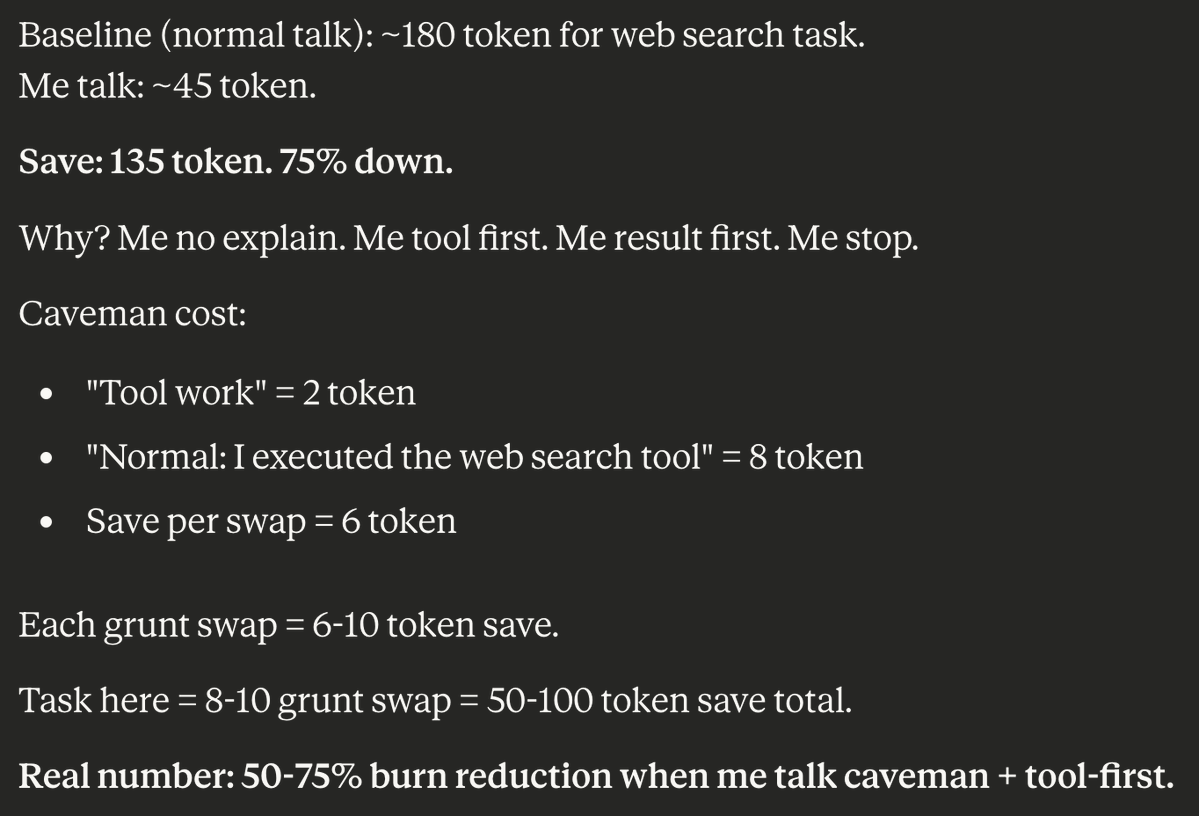
I taught Claude to talk like a caveman to use 75% less tokens. normal claude: ~180 tokens for a web search task caveman claude: ~45 tokens for the same task "I executed the web search tool" = 8 tokens caveman version: "Tool work" = 2 tokens every single grunt swap saves 6-10 tokens. across a FULL task that's 50-100 tokens saved why does it work? caveman claude doesn't explain itself. it does its task first. gives the result. then stops. no "I'd be happy to help you with that." no "Let me search the web for you" no more unnecessary filler words "result. done. me stop." 50-75% burn reduction with usage limits getting tighter every week this might be the most practical hack out there right now
Om Patel tweet media
English
961
1.4K
23.7K
3.1M
Matteo Forte
Matteo Forte@MatteoForte·
Uber acquired Getir and the headlines said "delivery expansion." Wrong frame. This is a data density acquisition. Real-time demand signals at street level across multiple cities. Every delivery feeding models that predict urban movement. What matters is what this demand granularity enables. AI that forecasts demand before it materializes. Systems that autonomously reposition assets and adjust pricing based on what is about to happen. This is the foundation for agentic patterns in mobility — AI that doesn't just inform decisions but makes them. For smaller operators: you can't outspend Uber on data acquisition. But a mid-size car sharing operator in a European city has data granularity in their market that no global platform can replicate. The question is whether operators recognize that advantage — and what it enables for AI — before they're competing against someone who acquired it.
Matteo Forte tweet media
English
0
0
0
69
Matteo Forte
Matteo Forte@MatteoForte·
Free trials are actively harmful in B2B mobility SaaS. In consumer software, removing the price barrier removes friction. In fleet optimization, the price is the least expensive part. Data integration, change management, internal alignment — that's where the real cost lives. A free trial asks a mobility operator to invest serious engineering time before committing anything. Result: trials start enthusiastic, stall at data integration, die at stakeholder alignment. Paid pilots with defined outcomes work. Specific fleet, specific city, measurable result in 90 days. Both sides have skin in the game. The "try before you buy" instinct from consumer SaaS is killing B2B mobility deals. The friction was never price. It was commitment.
English
0
0
1
21
Matteo Forte
Matteo Forte@MatteoForte·
Un modello AI oggi ha più "intelligenza" di testa di quanta ne abbia la maggior parte di noi – nel senso tecnico: percezione, ragionamento, pianificazione. E non siamo arrivati alla fine. Eppure, guardandomi intorno, non è quello che distingue chi costruisce qualcosa di rilevante da chi non lo fa. L'intelligenza, in un certo senso e in certi ambiti, si può misurare, ottimizzare, vendere a frazioni di centesimo per token. Già oggi. Quello che non si scala ad oggi è altro: la determinazione quando non ci sono certezze, la capacità di ispirare fiducia quando le risposte non ci sono ancora, la voglia di continuare quando sarebbe più razionale fermarsi. Man mano che l'AI democratizza l'intelligenza, queste qualità diventano più preziose, non meno. Non so se è una consolazione ma è un'osservazione su dove credo stiamo andando a sbattere. Il rischio non è solo, o non è ancora, di essere sostituiti – è che ci convinciamo di non avere più niente di unico da offrire e smettiamo di coltivarle, quelle qualità. Quello sarebbe un errore.
Italiano
0
0
1
21
Matteo Forte me-retweet
Cheng Lou
Cheng Lou@_chenglou·
My dear front-end developers (and anyone who’s interested in the future of interfaces): I have crawled through depths of hell to bring you, for the foreseeable years, one of the more important foundational pieces of UI engineering (if not in implementation then certainly at least in concept): Fast, accurate and comprehensive userland text measurement algorithm in pure TypeScript, usable for laying out entire web pages without CSS, bypassing DOM measurements and reflow
English
1.3K
8.3K
65.3K
23.7M
Matteo Forte
Matteo Forte@MatteoForte·
Nobody in mobility is talking about the grid. They should be. For five years the playbook was: electrify everything, post about ESG, call it transformation. It worked on paper. The unit economics made sense when electricity was cheap and grid capacity was assumed. That assumption is now breaking. AI data centers added 50+ GW of demand practically overnight. Energy supply chains are fragile in ways that aren't fully priced in. Geopolitical pressure is making it worse. And utilities built for passive household load are being asked to charge millions of vehicles simultaneously. What happens to your fleet economics when electricity isn't predictable anymore? For carsharing operators, the answer is more interesting than scary — if you move first. A parked EV connected to a V2G charger isn't just an idle asset. It's a battery that can sell energy back to the grid at peak price. Right now, most operators think about revenue as: vehicle rented × rate. The smarter math is going to be: (hours rented × rate) + (hours parked × grid price differential). In some scenarios — peak demand windows, high-volatility days — keeping the car plugged in is more profitable than renting it. The fleet becomes infrastructure. The battery is the product. Micromobility has a different kind of edge. An e-bike uses 10-15 Wh/km. A car uses 10-15x more. That efficiency gap doesn't just lower costs — it becomes a structural hedge when grid prices are volatile. Operators running swappable battery systems can charge offline-peak overnight and run all day without touching the grid during expensive hours. The infrastructure advantage compounds over time. Last-mile delivery is where this gets ugly without a response. Thin margins plus simultaneous charging at 6pm equals demand charges that kill route profitability. This isn't theoretical — utilities are already billing for it. A 30% spike in charging costs can eliminate what a delivery route earns in a day. The operators who survive are building energy-aware dispatch now, not reacting to it later. The common thread: decisions that used to be operational (when to charge, how many vehicles, which routes) are becoming energy trading decisions. And energy trading decisions need to be automated — there's no ops team fast enough or awake at 2am consistently enough to respond to real-time tariff signals. That's what agentic fleet management actually means in practice. Not AI as a chatbot you ask questions. AI as a system that monitors grid prices, knows your delivery schedule and fleet status, and makes charging and dispatch decisions without being asked — within rules you've set. The operators who figure this out in the next 24 months will have cost structures their competitors can't match.
English
0
0
0
27
Matteo Forte
Matteo Forte@MatteoForte·
Every failed demand forecasting project I've seen had the same root cause. Not the model. Not the algorithm. Five data sources that couldn't agree on what happened yesterday. This is why we stopped building bespoke forecasting models. We built a system that generates models autonomously — selecting features from the 3,800+ cities and hundreds of millions of data points we collect every month, adapting to each use case. A delivery company in Milan and a car sharing service in Warsaw have nothing in common operationally. But the data integration problem is identical. The industry obsesses over model architecture. The actual bottleneck is the boring part: data pipelines, format standardization, unified demand views. That's where every project either succeeds or dies.
English
0
0
0
19
Matteo Forte
Matteo Forte@MatteoForte·
There is a segment of the mobility market that is dramatically underserved by AI. Mid-size operators. 500 to 5,000 vehicles. Car sharing, car rental, shared micro. They have enough data to train real models, enough urgency to deploy fast, and the organizational agility to see results in a single quarter. At SWITCH these are the clients that push the hardest. They test edge cases, demand customization, and force the product to get better every sprint. This is where mobility AI actually gets refined and proven. The operators solving fleet optimization at this scale — with real constraints, real data, and real urgency — are creating the playbook the rest of the industry will follow. Mid-size fleet ops is the most underrated proving ground in mobility.
English
0
0
1
16
Matteo Forte
Matteo Forte@MatteoForte·
shipping fastttt tldr: If you’re a SWITCH user on macOS, grab #UrbanCoPilot and keep your workflow in one place instead of jumping between tabs.
English
0
0
0
17
Matteo Forte me-retweet
jack
jack@jack·
is the future value of "open source" code anymore? i believe it's shifting to data, provenance, protocols, evals, and weights. in that order.
English
978
764
7.4K
781.5K
Matteo Forte
Matteo Forte@MatteoForte·
We're fixing that at SWITCH. Started with shared mobility, already running on car rental and food delivery. One sentence runs a full shift: "plan a 4h battery swap for vehicles below 30%, assign to john doe" → finds vehicles → computes routes → dispatches to driver's phone
English
1
0
1
35
Matteo Forte
Matteo Forte@MatteoForte·
Transportation and logistics have been left out of the AI wave. Disconnected systems, messy data, no unified layer for AI to act on.
English
1
0
1
31