Ishtar🪐 me-retweet

ويلٌ لمن يُسخّر الأديان واسم الله لخدمة أهدافه العسكرية والاقتصادية والسياسية، ويجُرُّ ما هو مقدس إلى أكثر الأمور قذارة وظلمة!
vatican.va/content/leo-xi…
العربية
Ishtar🪐
31.6K posts


@NeoInanna
I’m a mirror, I give back what I receive.

Facial reconstruction of a 7,000-year-old man from Eridu, Iraq He lived during the Ubaid period, a culture that flourished in Mesopotamia before the rise of the Sumerian cities. The Ubaid people are known for establishing some of the earliest settled communities in southern Iraq, laying the foundations for later urban civilization. The Ubaid culture emerged in southern Mesopotamia through a combination of local development and external influences, such as from Susiana, with additional contributions from northern traditions such as the Samarra culture (particularly irrigation), as well as contact with groups associated with the Arabian bifacial tradition. A Babylonian creation text says of Eridu: "All the lands were sea, then Eridu was made." The history of Eridu goes back to the Ubaid period. Its inhabitants lived largely by fishing. Their harbour was located in a marshy, semi-aquatic environment. During the Uruk period (which follows the Ubaid and represents a key stage in the development of early Mesopotamian urban civilization, preceding the fully historical Sumerian city-state period), there is still ample evidence of Eridu’s importance. However, from the beginning of the historical period, it no longer appears to have been a populous settlement. From the Third Dynasty of Ur onward, Eridu was not so much a city as a complex of religious buildings, raised high above the surrounding plain on an artificial platform. The Sumerians and Babylonians worshipped Ea (Enki) here, the god of wisdom and patron of craftsmen and artisans. He was regarded as the father of Marduk and a principal deity associated with the primordial waters. His name was also reflected in that of the city Dur-Ea and in personal names such as Ea-gamil. The earliest written source mentioning Eridu dates to the time of Ur-Nanshe, founder of the Lagash dynasty (c. 2500 BC). By the time of the Third Dynasty of Ur, Eridu had already undergone desiccation and was largely uninhabited. Ur-Nammu, the founder of the dynasty, cut a new channel to the Euphrates to bring water back to the area in an effort to repopulate it, and he also rebuilt Enki’s temple. At the end of the 2nd millennium BC, Nebuchadnezzar I referred to himself as “Governor of Eridu.” By the beginning of the 1st millennium BC, Eridu functioned more as a sacred site than as a major inhabited city. The Assyrian king Sargon II regarded the occupation of Eridu in 710 BC as a significant achievement. The man, who was about 40 years old, was described as belonging to the South Iraqi type, which still inhabits the region today. His skull was artificially deformed during his lifetime using circular bandages. He had a medium-large cranial length of 184 mm, a small cranial width of 123 mm, a medium-large cheekbone width of 134 mm, and a large condylar width (upper jaw width) of 132 mm. (Istvan Kiszely, 1978)

ذي قار - العراق . .

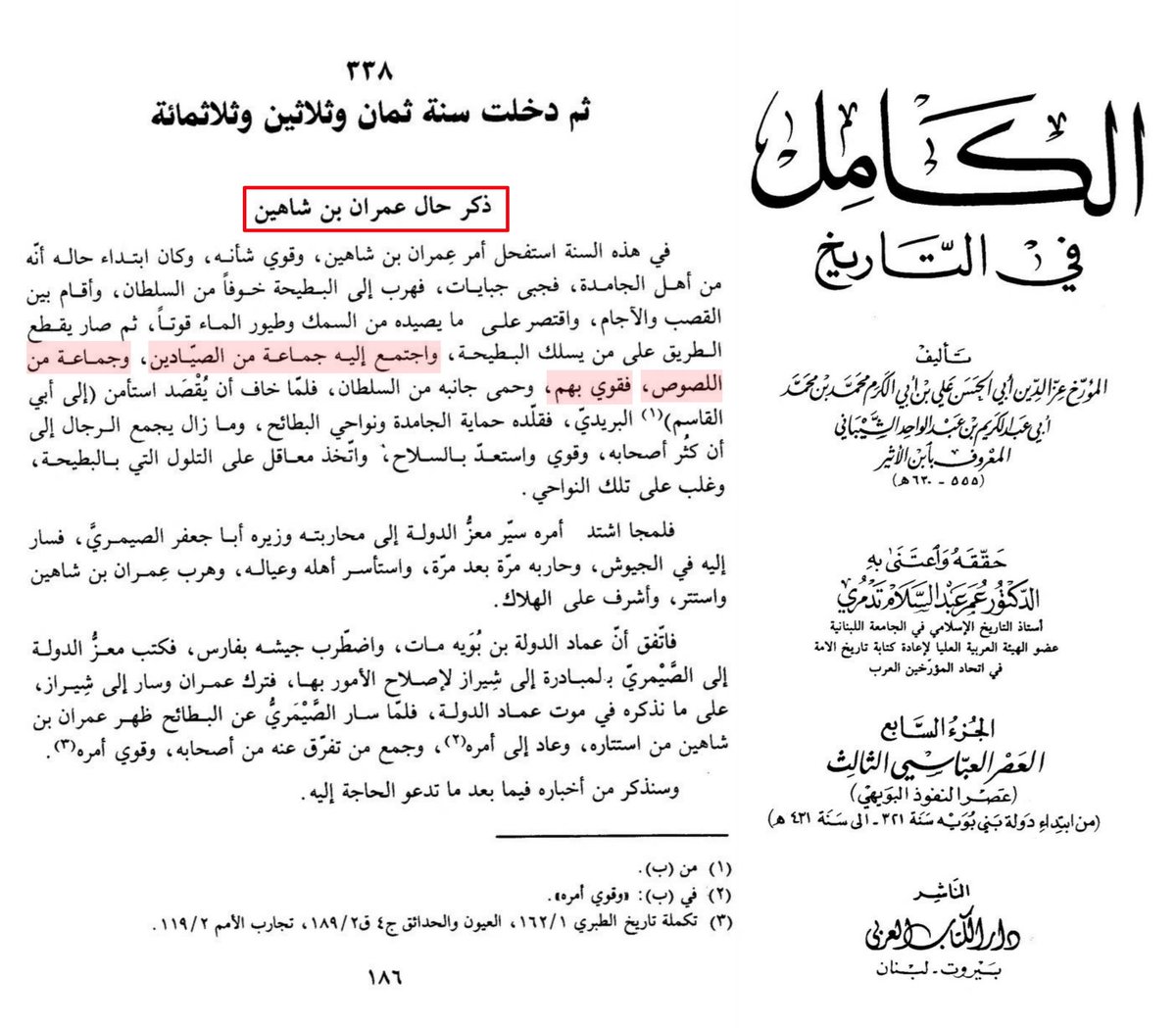
وإذا علمنا أنّ البطائح - الأهوار والمستنقعات - كانت موطن النبيط و دارهم، فهمنا لماذا اختُصَّت مفردة [ المُعيدي ] بـ عُربان البطائح [ المُعدان ]، فالأمر أن العُربان المتلصّصة قد ساكنت النبيط في البطيحة وجاورتها، وخالفتها في مسلك العيش، فـ ذا متلصّص [ مُعيدي ] و ذا صيّاد [ نبطي ] .


State Bank of Pakistan has received funds of US$2 billion from Ministry of Finance, Kingdom of Saudi Arabia in the value date of 15April2026.