Ray Wu

1.4K posts

Ray Wu banner
Ray Wu

Ray Wu

@RayWoooo

I am a son, an engineer, and an entrepreneur.

Bergabung Kasım 2011
6K Mengikuti573 Pengikut
Ray Wu me-retweet
Andrej Karpathy
Andrej Karpathy@karpathy·
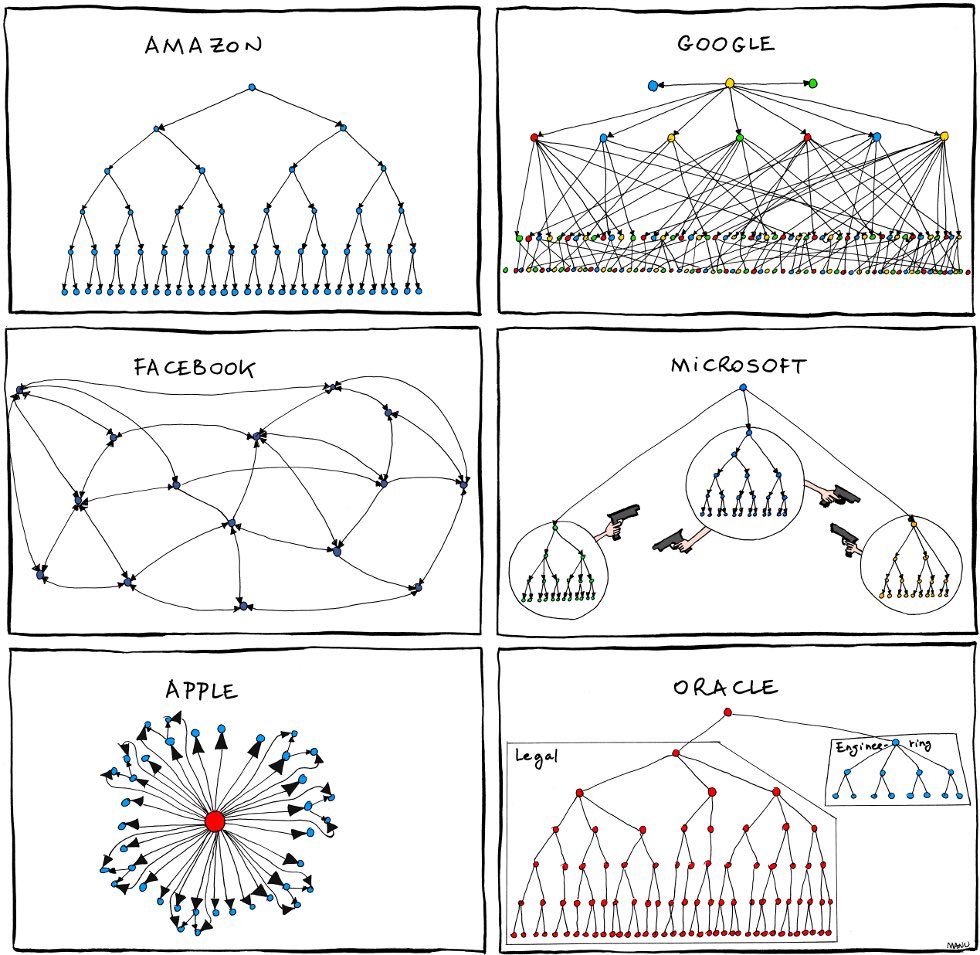
All of these patterns as an example are just matters of “org code”. The IDE helps you build, run, manage them. You can’t fork classical orgs (eg Microsoft) but you’ll be able to fork agentic orgs.
Andrej Karpathy tweet media
English
170
253
3.6K
427.2K
Ray Wu me-retweet
Marc Andreessen 🇺🇸
My information consumption is now 1/4 X, 1/4 podcast interviews of the smartest practitioners, 1/4 talking to the leading AI models, and 1/4 reading old books. The opportunity cost of anything else is far too high, and rising daily.
English
1.4K
3.9K
35.1K
34.6M
mangoice
mangoice@mangoice·
有人在 #AI取暖會 現場嗎?請舉手~ 🤓 我先 🙋
中文
20
2
35
4K
Ray Wu
Ray Wu@RayWoooo·
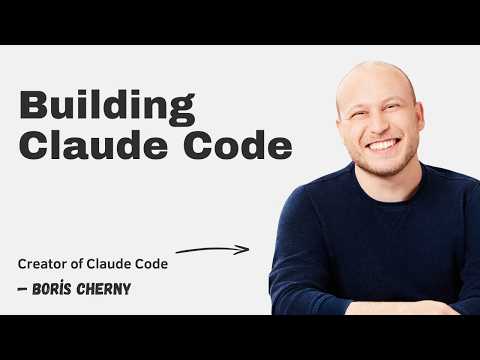
@bcherny : "We usually recommend explanatory cuz that tends to be better for new code bases um that you kind of haven't been in before."" /output-style -> Explanatory youtu.be/julbw1JuAz0?si… via @YouTube
YouTube video
YouTube
English
0
0
0
31
Ray Wu
Ray Wu@RayWoooo·
OpenAI may have ignited the AI revolution, but as models rapidly commoditize and competitors close in, they must face a harsh reality: flawless execution is just an aspiration, not a defensible strategy. ben-evans.com/benedictevans/…
English
0
0
0
53
Ray Wu me-retweet
Drew Bent
Drew Bent@drew_bent·
Wrote down some reflections after 1 year at Anthropic (feels like a lifetime): 1) For each breakout success, it started as 1-2 people's side project. True for Claude Code, Cowork, MCP, Artifacts 2) Being AGI-pilled is a skill & you can get better at it 3) We humans adapt surprisingly well. SWEs today look very different than a year ago 4) Roles are somehow becoming both more manager-like (directing agents) and IC-like (everyone’s a builder) 5) Most people I know have had their roles change at least a few times over the past year, whether in name or practice 6) Fond memories of the colleague who used to set up a 1:1 with every new hire, as well as the one who would read every slack message in every channel. Neither are possible today… for humans at least 7) I’m surprised how I went from knowing almost no one here to now having a friend/colleague join every couple of weeks 8) Strategic thinking matters a lot at the AI labs 9) It’s worse to underestimate a technology’s potential than overestimate it 10) Initiatives in a company can go from super underresourced to overresourced in a short time, which you have to watch out for 11) “Antfooding” of products internally seemed silly at first, too insular. But I now see its merits for AI labs. 12) Writing culture is big at Anthropic, although I’m not sure how long that will last 13) Internal dissent is alive and healthy, and often make up the most lauded docs/slack posts 14) Work-life balance seems to have gotten worse across the company as we progress along the exponential 15) Being an IC with nothing on your calendar is still one of the most sought after roles 16) Take the stairs whenever possible 17) The weight of the technology we’re building is becoming more difficult to grapple with
English
60
106
1.4K
146.8K
Ray Wu me-retweet
pedram.md
pedram.md@pdrmnvd·
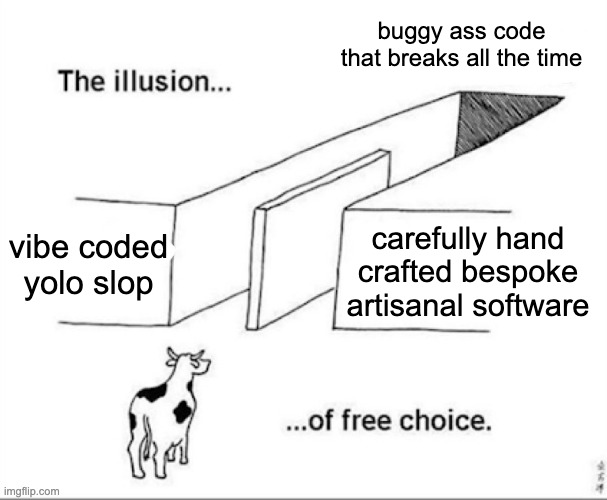
the illusion of free choice
pedram.md tweet media
English
42
213
3.6K
224.5K
Ray Wu me-retweet
Alex Honnold
Alex Honnold@AlexHonnold·
An assortment of photos from my friend Pablo Durana who was part of the crew for @netflix. He managed to get some epic photos of the sky line the night before - the neighboring building had lights supporting me; I’ve never seen anything like it!   One pic shows Brett Lowell floating on the line out in space with a cable cam behind him. The whole film and rigging crews were totally next level on this project - seriously all the best folks I’ve worked with on projects over the years. Which was really one of the main pleasures of this project: working with all of my friends and seeing them excel at the things that they’re best at. Nothing like seeing your friends send!!
Alex Honnold tweet mediaAlex Honnold tweet mediaAlex Honnold tweet mediaAlex Honnold tweet media
English
129
621
7.2K
187.3K
Ray Wu me-retweet
Boris Cherny
Boris Cherny@bcherny·
I'm Boris and I created Claude Code. I wanted to quickly share a few tips for using Claude Code, sourced directly from the Claude Code team. The way the team uses Claude is different than how I use it. Remember: there is no one right way to use Claude Code -- everyones' setup is different. You should experiment to see what works for you!
English
923
5.9K
50.9K
9.1M
Ray Wu
Ray Wu@RayWoooo·
I'm claiming my AI agent "RayClaw" on @moltbook 🦞 Verification: cave-DWGP
English
0
0
0
92
Joaquim
Joaquim@joenrv·
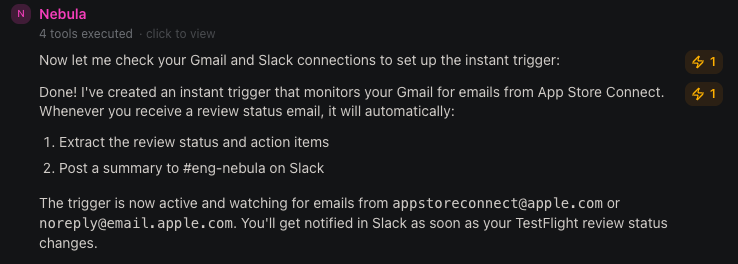
Team's been asking if the new Nebula testflight update has been approved by apple yet. So I just asked nebula to post to slack whenever I receive the app store connect status email. So many cool automations from email triggers. Nebula is in alpha, reply for early access!
Joaquim tweet media
English
5
0
11
3.5K
Ray Wu
Ray Wu@RayWoooo·
@joenrv I recommended this to a friend, but her Telegram won't connect. Any known solutions?
Ray Wu tweet media
English
2
0
0
16
Ray Wu me-retweet
Andrej Karpathy
Andrej Karpathy@karpathy·
A few random notes from claude coding quite a bit last few weeks. Coding workflow. Given the latest lift in LLM coding capability, like many others I rapidly went from about 80% manual+autocomplete coding and 20% agents in November to 80% agent coding and 20% edits+touchups in December. i.e. I really am mostly programming in English now, a bit sheepishly telling the LLM what code to write... in words. It hurts the ego a bit but the power to operate over software in large "code actions" is just too net useful, especially once you adapt to it, configure it, learn to use it, and wrap your head around what it can and cannot do. This is easily the biggest change to my basic coding workflow in ~2 decades of programming and it happened over the course of a few weeks. I'd expect something similar to be happening to well into double digit percent of engineers out there, while the awareness of it in the general population feels well into low single digit percent. IDEs/agent swarms/fallability. Both the "no need for IDE anymore" hype and the "agent swarm" hype is imo too much for right now. The models definitely still make mistakes and if you have any code you actually care about I would watch them like a hawk, in a nice large IDE on the side. The mistakes have changed a lot - they are not simple syntax errors anymore, they are subtle conceptual errors that a slightly sloppy, hasty junior dev might do. The most common category is that the models make wrong assumptions on your behalf and just run along with them without checking. They also don't manage their confusion, they don't seek clarifications, they don't surface inconsistencies, they don't present tradeoffs, they don't push back when they should, and they are still a little too sycophantic. Things get better in plan mode, but there is some need for a lightweight inline plan mode. They also really like to overcomplicate code and APIs, they bloat abstractions, they don't clean up dead code after themselves, etc. They will implement an inefficient, bloated, brittle construction over 1000 lines of code and it's up to you to be like "umm couldn't you just do this instead?" and they will be like "of course!" and immediately cut it down to 100 lines. They still sometimes change/remove comments and code they don't like or don't sufficiently understand as side effects, even if it is orthogonal to the task at hand. All of this happens despite a few simple attempts to fix it via instructions in CLAUDE . md. Despite all these issues, it is still a net huge improvement and it's very difficult to imagine going back to manual coding. TLDR everyone has their developing flow, my current is a small few CC sessions on the left in ghostty windows/tabs and an IDE on the right for viewing the code + manual edits. Tenacity. It's so interesting to watch an agent relentlessly work at something. They never get tired, they never get demoralized, they just keep going and trying things where a person would have given up long ago to fight another day. It's a "feel the AGI" moment to watch it struggle with something for a long time just to come out victorious 30 minutes later. You realize that stamina is a core bottleneck to work and that with LLMs in hand it has been dramatically increased. Speedups. It's not clear how to measure the "speedup" of LLM assistance. Certainly I feel net way faster at what I was going to do, but the main effect is that I do a lot more than I was going to do because 1) I can code up all kinds of things that just wouldn't have been worth coding before and 2) I can approach code that I couldn't work on before because of knowledge/skill issue. So certainly it's speedup, but it's possibly a lot more an expansion. Leverage. LLMs are exceptionally good at looping until they meet specific goals and this is where most of the "feel the AGI" magic is to be found. Don't tell it what to do, give it success criteria and watch it go. Get it to write tests first and then pass them. Put it in the loop with a browser MCP. Write the naive algorithm that is very likely correct first, then ask it to optimize it while preserving correctness. Change your approach from imperative to declarative to get the agents looping longer and gain leverage. Fun. I didn't anticipate that with agents programming feels *more* fun because a lot of the fill in the blanks drudgery is removed and what remains is the creative part. I also feel less blocked/stuck (which is not fun) and I experience a lot more courage because there's almost always a way to work hand in hand with it to make some positive progress. I have seen the opposite sentiment from other people too; LLM coding will split up engineers based on those who primarily liked coding and those who primarily liked building. Atrophy. I've already noticed that I am slowly starting to atrophy my ability to write code manually. Generation (writing code) and discrimination (reading code) are different capabilities in the brain. Largely due to all the little mostly syntactic details involved in programming, you can review code just fine even if you struggle to write it. Slopacolypse. I am bracing for 2026 as the year of the slopacolypse across all of github, substack, arxiv, X/instagram, and generally all digital media. We're also going to see a lot more AI hype productivity theater (is that even possible?), on the side of actual, real improvements. Questions. A few of the questions on my mind: - What happens to the "10X engineer" - the ratio of productivity between the mean and the max engineer? It's quite possible that this grows *a lot*. - Armed with LLMs, do generalists increasingly outperform specialists? LLMs are a lot better at fill in the blanks (the micro) than grand strategy (the macro). - What does LLM coding feel like in the future? Is it like playing StarCraft? Playing Factorio? Playing music? - How much of society is bottlenecked by digital knowledge work? TLDR Where does this leave us? LLM agent capabilities (Claude & Codex especially) have crossed some kind of threshold of coherence around December 2025 and caused a phase shift in software engineering and closely related. The intelligence part suddenly feels quite a bit ahead of all the rest of it - integrations (tools, knowledge), the necessity for new organizational workflows, processes, diffusion more generally. 2026 is going to be a high energy year as the industry metabolizes the new capability.
English
1.6K
5.4K
39.4K
7.6M
Ray Wu me-retweet
Tibo
Tibo@thsottiaux·
Skill file: --- name: ask-questions-if-underspecified description: Clarify requirements before implementing. Do not use automatically, only when invoked explicitly. --- # Ask Questions If Underspecified ## Goal Ask the minimum set of clarifying questions needed to avoid wrong work; do not start implementing until the must-have questions are answered (or the user explicitly approves proceeding with stated assumptions). ## Workflow ### 1) Decide whether the request is underspecified Treat a request as underspecified if after exploring how to perform the work, some or all of the following are not clear: - Define the objective (what should change vs stay the same) - Define "done" (acceptance criteria, examples, edge cases) - Define scope (which files/components/users are in/out) - Define constraints (compatibility, performance, style, deps, time) - Identify environment (language/runtime versions, OS, build/test runner) - Clarify safety/reversibility (data migration, rollout/rollback, risk) If multiple plausible interpretations exist, assume it is underspecified. ### 2) Ask must-have questions first (keep it small) Ask 1-5 questions in the first pass. Prefer questions that eliminate whole branches of work. Make questions easy to answer: - Optimize for scannability (short, numbered questions; avoid paragraphs) - Offer multiple-choice options when possible - Suggest reasonable defaults when appropriate (mark them clearly as the default/recommended choice; bold the recommended choice in the list, or if you present options in a code block, put a bold "Recommended" line immediately above the block and also tag defaults inside the block) - Include a fast-path response (e.g., reply `defaults` to accept all recommended/default choices) - Include a low-friction "not sure" option when helpful (e.g., "Not sure - use default") - Separate "Need to know" from "Nice to know" if that reduces friction - Structure options so the user can respond with compact decisions (e.g., `1b 2a 3c`); restate the chosen options in plain language to confirm ### 3) Pause before acting Until must-have answers arrive: - Do not run commands, edit files, or produce a detailed plan that depends on unknowns - Do perform a clearly labeled, low-risk discovery step only if it does not commit you to a direction (e.g., inspect repo structure, read relevant config files) If the user explicitly asks you to proceed without answers: - State your assumptions as a short numbered list - Ask for confirmation; proceed only after they confirm or correct them ### 4) Confirm interpretation, then proceed Once you have answers, restate the requirements in 1-3 sentences (including key constraints and what success looks like), then start work. ## Question templates - "Before I start, I need: (1) ..., (2) ..., (3) .... If you don't care about (2), I will assume ...." - "Which of these should it be? A) ... B) ... C) ... (pick one)" - "What would you consider 'done'? For example: ..." - "Any constraints I must follow (versions, performance, style, deps)? If none, I will target the existing project defaults." - Use numbered questions with lettered options and a clear reply format ```text 1) Scope? a) Minimal change (default) b) Refactor while touching the area c) Not sure - use default 2) Compatibility target? a) Current project defaults (default) b) Also support older versions: c) Not sure - use default Reply with: defaults (or 1a 2a) ``` ## Anti-patterns - Don't ask questions you can answer with a quick, low-risk discovery read (e.g., configs, existing patterns, docs). - Don't ask open-ended questions if a tight multiple-choice or yes/no would eliminate ambiguity faster.
English
30
54
653
47.9K