
Dr John Bahadur Lamb

31.9K posts

Dr John Bahadur Lamb banner
Dr John Bahadur Lamb

Dr John Bahadur Lamb

@SecuritySheep

@StaffsCJF_Dept Associate Professor. Tweets about National Security & Policing. Society for Terrorism Research Membership Chair. Tweets are my own views.

Stoke-on-Trent, England Bergabung Haziran 2011
4.2K Mengikuti2.4K Pengikut
Dr John Bahadur Lamb me-retweet
House Of The People
House Of The People@HoTPOfficial·
The Tobacco and Vapes Bill, sponsored by @wesstreeting and Baroness Merron, is at Lords amendments stage and close to becoming law. It would ban tobacco sales to anyone born after 1 January 2009, the first generational ban of its kind. On House of the People, 76% of the public oppose it. MPs voted 415-47 in favour - a 66 percent gap between public will and Parliamentary action.
English
10
17
37
4.4K
Dr John Bahadur Lamb me-retweet
Igor Sushko
Igor Sushko@igorsushko·
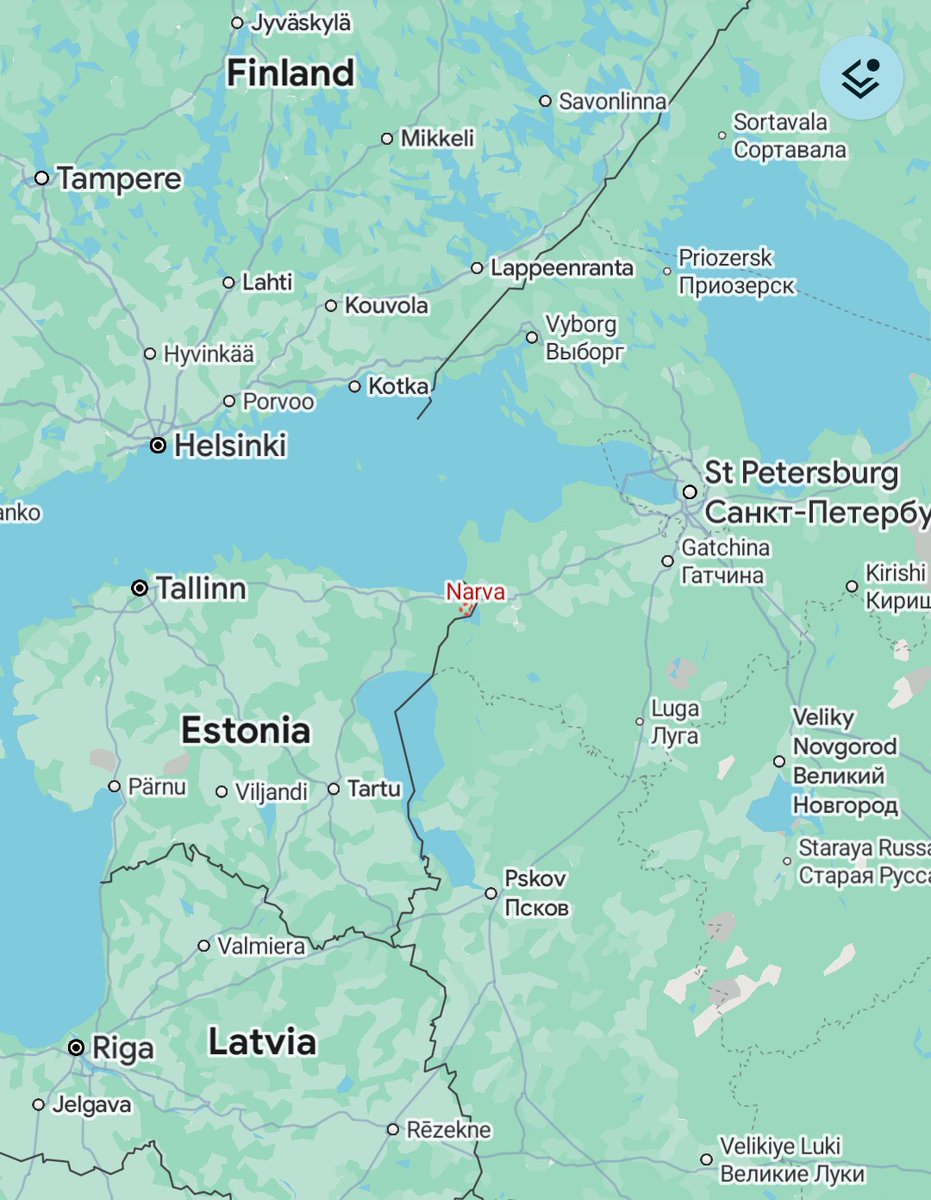
I respect Toomas very much but this attitude is beyond comprehension to me. 1) Baltics are a much easier invasion target for Russia compared to Ukraine. 2) NATO refused to defend Ukraine for irrational fear of attack by Russia and its nukes. What's going to be different? 3) NATO can't defend the Baltics. Insufficient will, munitions, and zero ability to counter Russian drone swarms. 4) Russia can occupy the capitals in hours/days, dig in, mine the area, and then snipe at any allied infantry with artillery and drones that may try to come through. Is NATO going to bomb Tallin, Riga, and Vilnius? Russia is willing to lose millions of soldiers in the war. How many are Poland or Finland willing to lose? What about Germany? 5) Alternately Russia could start by occupying Narva in Estonia and gauge the reaction. Is today's NATO going to go WW3 over a tiny border town with 50,000 population? 6) Europe doesn't have enough missiles to do any meaningful damage to Russia. Once out of conventional munitions, you're crazy if you think France or the UK will launch pre-emptive nukes against Moscow because Russia expanded its border by 10km, 1,700km away in Estonia. 7) If Russia invades the Baltics it's because NATO members refused to defend Ukraine. Every single nation refused to do the right thing - send troops to help Ukraine when it mattered most. They still haven't done it. You reap what you sow.
Igor Sushko tweet media
toomas hendrik ilves@IlvesToomas

Yeah, yeah, yeah. Except Ukraine wasn't in NATO. And what if Russia fails to destroy NATO and St. Petersburgh finds itself under a rain of missiles? Quite a gamble to "destroy NATO"

English
106
115
426
51.8K
Dr John Bahadur Lamb me-retweet
Rafe Heydel-Mankoo
Today (24 March) is the anniv. of the Union of the Scottish & English Crowns in 1603, when James VI of Scotland also became King James I of England (France and Ireland) Never forget: Scotland wasn't colonised by England (as the SNP claim) It was a Scottish king who united the Crowns in 1603 and it was Scotland that first called for a union with England (1690s), resulting in the Act of Union in 1707, which created Great Britain and a single parliament. 🏴󠁧󠁢󠁥󠁮󠁧󠁿🏴󠁧󠁢󠁳󠁣󠁴󠁿
Rafe Heydel-Mankoo tweet media
English
94
341
1.1K
20.3K
Dr John Bahadur Lamb me-retweet
Steven Swinford
Steven Swinford@Steven_Swinford·
Exclusive from @benclatworthy Ministers are being told not to tell people to “stop panic-buying” or to “calm down” over fears it would exacerbate fuel shortages Officials are briefing ministers using a series of documents, including one by the Government Communication Service’s behavioural science team, which lists what language should and should not be used in social media campaigns and media interviews It says: “Approaches that focus on ‘calming’ people may fail to tackle the root causes of the issue. If people are rationally changing their buying behaviour to cope with unexpected situations, then trying to ‘calm’ them will be ineffective (and messages exhorting people to ‘stop panicking’ will likely create a further impression of competition for goods).” Departments are also using the government’s “crisis communications planning guide”, which sets out how to deal with crises. Most of the materials have been drawn up after the Covid pandemic, when Britons stockpiled toilet paper and pasta, and the 2021 fuel crisis, which resulted in huge queues at the pumps The Cabinet Office is also understood to be consulting with behaviour scientists to refine future communication messages in the event oil stocks do run dangerously low, or the public begin stockpiling. The behavioural science guide says: “In most situations, excessive buying is not irrational or selfish at all and is driven by people responding to normal incentives. If an item is rumoured to be in short supply and is at risk of running out, then it is advantageous to buy extra. “If shelves are frequently empty, people will have good reasons to go to the shop more often to secure supplies. If there are long queues to get fuel, then filling your tank and taking extra fuel home is a logical response to the situation.” thetimes.com/uk/politics/ar…
English
9
18
45
20.7K
Dr John Bahadur Lamb me-retweet
Deborah Haynes
Deborah Haynes@haynesdeborah·
Some 40% of UK people believe the country will be at war within 5 years & more than two-thirds fear they’d be unable to cope in a conflict, according to a poll. It was released to coincide with the launch of a private initiative to try to boost resilience news.sky.com/story/british-…
English
14
30
98
15.6K
Dr John Bahadur Lamb me-retweet
Rochdale Borough Council
Rochdale Borough Council@RochdaleCouncil·
Moving moment earlier today as members of the Armed Forces march through the local park in Langley, prior to the dedication service in memory of Fusilier Lee Rigby, Lance Corporal Scott Hetherington, and Corporal Joel Halliwell. #Lestweforget
English
149
1.9K
9.9K
106.6K
Dr John Bahadur Lamb me-retweet
ICDS Tallinn
ICDS Tallinn@ICDS_Tallinn·
An infiltration by the “little green men” into Estonia is a scenario that would fail. The question “Is Narva next?” has become a persistent theme in international journalistic discourse. The answer is unequivocally ‘no’. @MarekKohv explains why Estonia’s security remains firm.
ICDS Tallinn@ICDS_Tallinn

While vigilance is always warranted, there is certainly no need for undue concern in Estonia. Our security is multi-layered and resilient and Estonia’s membership in the EU and NATO provides both economic stability and military protection. @MarekKohv icds.ee/en/estonias-ro…

English
1
33
114
10.8K
Dr John Bahadur Lamb me-retweet
Dovydas Vitkauskas
Dovydas Vitkauskas@Dovydas44444·
🇺🇦Ukraine could run out of diesel supply by the end of this month. Since its neighbours 🇭🇺Hungary and 🇸🇰Slovakia have stopped selling to Ukraine, the country’s biggest diesel supplier now is 🇮🇳India. There is no secret that the Indian diesel is produced mostly from Russian crude. White the lifting of 🇺🇸US sanctions on Russian oil paradoxically makes supply also easier for Ukraine, the maritime logistics from India remain complicated. As 🇪🇺EU countries are releasing strategic oil reserves into domestic markets and are otherwise limiting exports to keep a lid on domestic prices at the pump, Ukraine is being caught in the supply squeeze. This is especially notable for the agriculture-dependent country, as the domestic demand for diesel is greatest in the springtime due to the planting season.
Dovydas Vitkauskas tweet media
English
13
110
424
33.4K
Dr John Bahadur Lamb me-retweet
Linas Kojala
Linas Kojala@LinasKojala·
A suspected drone crossed into Lithuanian airspace overnight and crashed, with footage capturing an explosion and burning debris. Authorities activated emergency protocols, and a security council meeting has been called. Another reminder that spillover risks on NATO’s eastern flank are not theoretical.
Linas Kojala tweet media
English
4
40
111
9.9K
Dr John Bahadur Lamb
Dr John Bahadur Lamb@SecuritySheep·
I mean not totally true! Policing long had a history of violence against cops as being part of the roll. Difference, historically, was that cops would dish it out with full support legally, from their force & the community. In that context it isn’t serious. Today when everything is scrutinised it becomes exceptionally serious
English
0
0
1
44
James Treadwell
James Treadwell@James_Treadwell·
There was a time when the police leaders I knew would have said any assult on one of our officers is serious violence and should not be tolerated. Now we have police managers who lead forces. I wonder how much of the ACCs experience hasn't be spent facing angry men?
English
1
0
12
447
James Treadwell
James Treadwell@James_Treadwell·
Wow. No wonder policing is in crisis. "In my opinion - looking through the lens of a senior police officer who has 30 years policing experience working in the areas that I do - I think it is inaccurate to describe that incident as serious violence."
English
1
1
14
2.4K
Dr John Bahadur Lamb me-retweet
CJ
CJ@UnderSneege·
There is a core democratic issue in here. Local government is being made by law to become the funder of all kinds of welfare expansion - the ever growing cost of adult and child social care and homelessness / post asylum housing - while cutting or charging for the non-statutory services that most people deem core to the reason why they pay council tax. These costs are frequently reaching 60-70% of total spending and go towards <5% of residents. It has been driven by Westminster, it is out of the control of Council’s to remedy it since they lack the legislative power to change it, yet the growing discontent is aimed at councillors and councils. The default response from Local Government and its lobbying bodies is still to beg for more funding, to take on debt for day to day obligations, or to take on debt to expand provision justified by future savings instead of organising around opposition to the obligations themselves. The response from central government has largely been indifference, as the statutory obligations continue to be expanded. Even the Casey inquiry on social care is years away from making recommendations. Council tax will continue to go up and the services people expect will continue to be cut at the same time until people realise that local government is a national government issue.
Robert Largan@robertlargan

Local councils across the country are slowly going bankrupt due to the statutory obligations they have been set by Westminster. People are rightly angry. Unpalatable decisions necessary to prevent disaster.

English
8
59
248
14.8K
Dr John Bahadur Lamb me-retweet
BettyBoo
BettyBoo@BettyBoochichi2·
The Home Office has published the terms of reference for the independent review of police structures which is part of the policing reform white paper. Here are five key things to know: emergencyservicestimes.com/2026/03/23/fiv…
English
10
5
10
5.8K
Dr John Bahadur Lamb me-retweet
Fred de Fossard
Fred de Fossard@defossardf·
This is the best and clearest explanation so far on why we must reopen and exploit our North Sea reserves by @KathrynPorter26. Gas is traded regionally not globally. British gas from the North Sea can bring down European prices in the summer. It is significantly cheaper than LNG. We would also benefit from additional tax revenues, improve our balance of payments, and keep oil and gas jobs in Britain, as well as in the wider supply chain like refining. It looks the Energy Secretary is too dug in to change course, and Starmer is too weak to overrule him. telegraph.co.uk/business/2026/…
English
49
610
1.5K
23.3K
Dr John Bahadur Lamb me-retweet
Daniel Foubert 🇵🇱🇫🇷
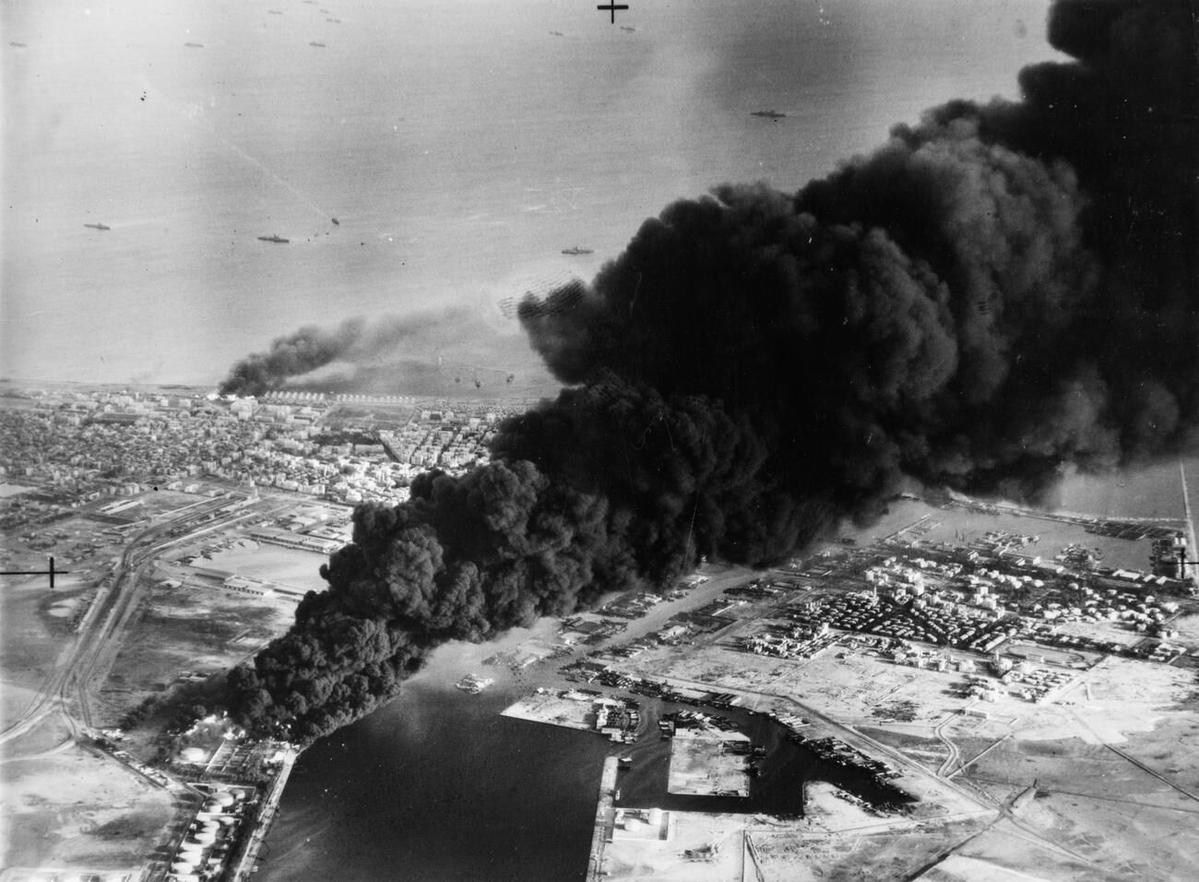
In 1956, the UK 🇬🇧 and France 🇫🇷 requested America's help to secure the Suez Canal. America 🍔 replied "FUCK OFF", humiliated its allies, made a deal with the enemies of the West, and destroyed European empires. Here is the whole story: In July 1956, Egypt nationalized the Suez Canal, controlled until then by Britain and France. They prepared a joint response with Israel, expecting at minimum passive support from Washington. That support never came. The United States refused to endorse the operation and moved rapidly to block it. The method was not rhetorical; it was financial and immediate. Washington threatened the stability of the British currency, refused emergency assistance, and signaled that it would not tolerate a prolonged intervention. At the United Nations, it backed resolutions calling for a ceasefire and withdrawal. The message was explicit: stop, or face systemic consequences. The effect was brutal. British and French forces had achieved their immediate military objectives on the ground, but the operation collapsed under American pressure. Within days, both governments were forced into a humiliating retreat. Two European powers that had dominated global trade routes for a century were publicly compelled to reverse course by their principal ally. This was not a minor disagreement inside an alliance. It was a rupture that exposed a hierarchy. The United States did not merely refuse assistance; it actively sabotaged the operation. From a European standpoint, this amounted to a direct betrayal of shared strategic interests. The consequences were immediate and long-term. Suez marked the definitive end of independent British and French power projection. After 1956, neither country could conduct a major external operation without American approval. Political elites in both capitals understood that their room for maneuver had narrowed to what Washington would tolerate. Decolonization accelerated sharply. The signal sent to colonial administrations was clear: the metropole could no longer guarantee control if challenged. In Africa, the Middle East, and Asia, independence movements gained momentum as the credibility of European authority collapsed. The imperial framework, already under strain, unraveled faster after Suez. The American role in this shift was decisive. Washington opposed the maintenance of European colonial structures because they conflicted with its own strategic objectives. It sought access, influence, and alignment in newly independent states. European empires were obstacles to that expansion. By forcing Britain and France to withdraw in Suez, the United States demonstrated that it would not support the preservation of their overseas systems. What followed was a redistribution of influence. As European control receded, American economic, financial, and security networks expanded into the same regions. Oil arrangements, military partnerships, and monetary dependence increasingly aligned with US structures. The old empires disappeared, but their space did not remain empty. Suez was therefore not only the end of a crisis. It was the moment when Western leadership shifted definitively across the Atlantic. Britain and France lost the capacity to act autonomously on the world stage, and the United States established the terms under which the rest of the West would operate.
Daniel Foubert 🇵🇱🇫🇷 tweet media
English
92
317
1.2K
178.4K
Dr John Bahadur Lamb me-retweet
Proudofus.uk
Proudofus.uk@ProudofusUK·
🏴󠁧󠁢󠁷󠁬󠁳󠁿🇬🇧 In 1839 the farmers of West Wales were being crushed alive. So they put on dresses. And declared war. Their name was Rebecca. 🪓 West Wales. 1839. Rent to the landlord. Tithes to the English Church. And on every road, a tollgate. You couldn't move without paying. On the night of 13 May 1839 a crowd appeared at the Efailwen tollgate in Pembrokeshire. Every single one of them was dressed as a woman. Long skirts. Bonnets. Shawls. Work boots visible beneath the hems. Their leader stood at the front. They called her Rebecca. The name came from the Bible. Genesis 24:60. "Let thy seed possess the gate of those which hate them." They destroyed the gate. The trust rebuilt it. Rebecca came back. They destroyed it again. The trust rebuilt it a second time. Rebecca destroyed it a third time. The trust gave up. 🏴󠁧󠁢󠁷󠁬󠁳󠁿 By 1843 the raids had spread across all of west Wales. Two hundred and fifty tollhouses destroyed. Two thousand people marched on the Carmarthen workhouse and tried to burn it down. Nobody knew who Rebecca was. That was the point. Everyone was Rebecca. One person died. Sarah Williams. Seventy-five years old. The keeper of the Hendy tollgate, Carmarthenshire. On the night of September 9th 1843 Rebecca came for her gate. She was ordered to leave. She refused. They set fire to the tollhouse. She walked to her neighbour's door. She said: "Dear, dear." And fell down dead. Those who were caught were transported to Tasmania. Never to return. 🏴󠁧󠁢󠁷󠁬󠁳󠁿 In 1844, Parliament passed the South Wales Turnpike Trusts Act. The hated toll on lime was halved. The trusts were brought to heel. Two hundred and fifty gates destroyed. One act of Parliament. The farmers won. Nobody knows who Rebecca was. Nobody was ever identified as the leader. Everyone was Rebecca. Did they teach you their story? 🏴󠁧󠁢󠁷󠁬󠁳󠁿🇬🇧 Nobody keeps these stories alive. Unless we all do. 👉 proudofus.co.uk/support Be Part Of Us. Be Proud Of Us. 🇬🇧
English
36
835
3.1K
54.6K
Dr John Bahadur Lamb me-retweet
Денис Казанський
"We must attack Narva to destroy NATO and break Europe's will." Russian state TV is making no secret of Putin's plans. They're now openly claiming that Russia is planning to attack the town of Narva on the Russian-Estonian border. Russian state propaganda convinces Russians that Europe won't respond and this attack will help them win. The Russians said exactly the same thing before their invasion of Ukraine in 2022. Back then, we didn't believe it was serious. Now, there's no doubt that Putin will attack Europe.
English
299
2.3K
5.1K
385.9K
Dr John Bahadur Lamb me-retweet
Mykhailo Rohoza
Mykhailo Rohoza@MykhailoRohoza·
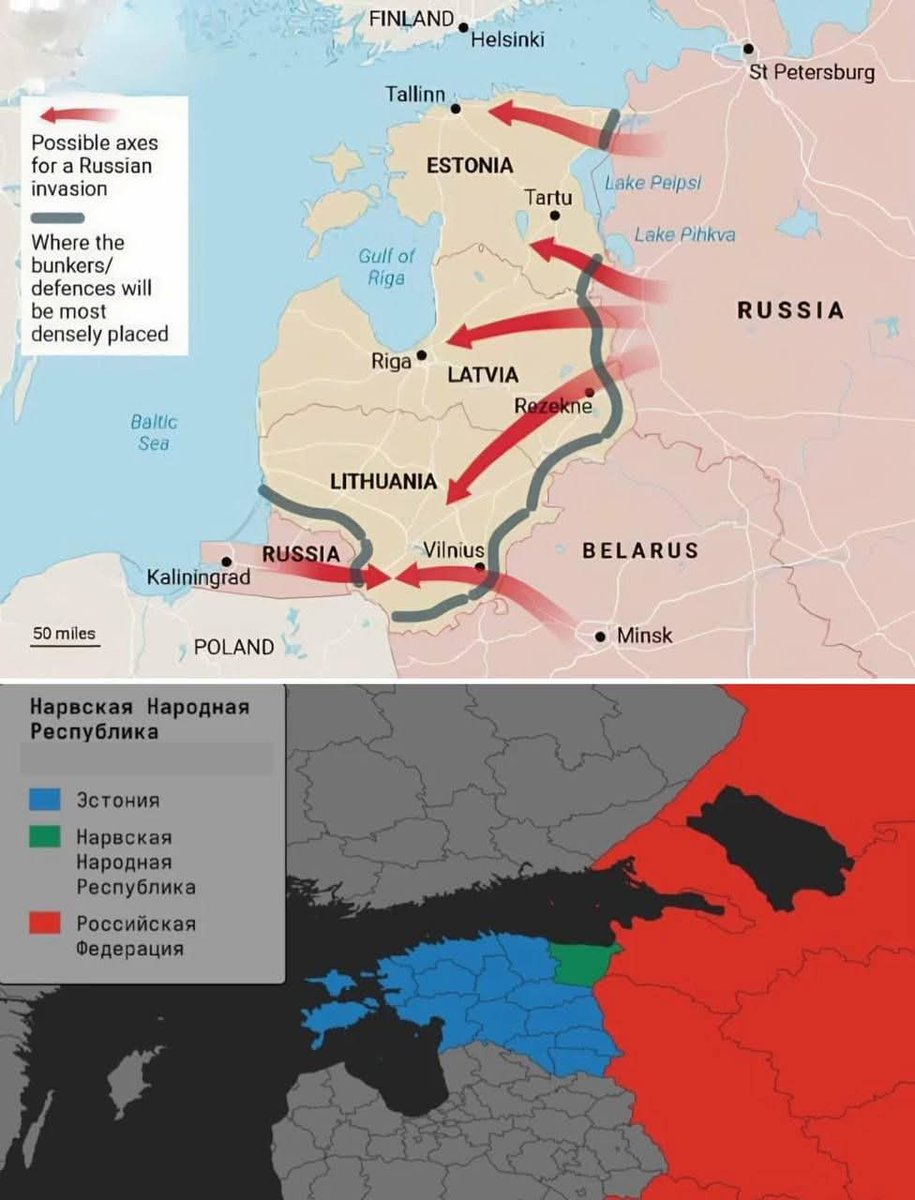
There are growing concerns that Russia could attack the Baltic states within the next 1–2 months. Preparations for a potential invasion of Latvia, Lithuania, and Estonia are reportedly in their final stages. A scenario similar to Ukraine in 2014 is also being discussed — starting with information operations and internal destabilization, followed by possible military action. We already understand that Russia is preparing for escalation. But here’s what’s happening inside the potential target countries: • Social media groups have appeared calling for autonomy in Estonia’s Narva region and the broader Ida-Viru area. • They are sharing a “flag,” a “national anthem,” and even mock plans for a “militia.” • Many posts frame this as “protecting Russian identity.” • Authorities have warned that participation in such activities could lead to criminal charges. Meanwhile, amid growing public concern, Latvia’s State Security Service chief, Normunds Mežviets, made a stark statement: “They will kill us all.” ❗️Some analysts warn that a Russian offensive against the Baltic states could come as early as May 2026 — echoing what happened in Ukraine in 2022. Notably, similar warnings were published in late 2021, shortly before Russia launched its full-scale invasion of Ukraine. At that time, reports that Russia planned to seize large parts of Ukraine — including Kyiv — were widely dismissed. In hindsight, those warnings proved accurate. Now, similar projections are being made again — this time focused on the Baltic region. Whether this is coincidence or a troubling pattern remains to be seen. But one piece of advice for people in these countries is simple: stay alert and be prepared with basic emergency supplies. There are also signs of tightening control inside Russia. Restrictions on mobile internet and platforms like Telegram are increasing. For years, little was done — but now controls are being actively strengthened. This is unlikely about preventing protests — there is little organized opposition left. Instead, it may be part of broader internal preparation. For example, Russia re-established the Moscow and Leningrad military districts in early 2024 — likely to improve mobilization and military administration. Preparation appears to be ongoing and serious. And unfortunately, Ukraine alone may not be able to significantly disrupt it. When a regime feels cornered, its actions can become less predictable — and more dangerous. Yes, the media can sometimes exaggerate threats. But given recent developments, this no longer looks like simple fearmongering. Whether these forecasts come true remains to be seen. But the risk is real. History may one day define this period as the beginning of something much larger. It’s better to be prepared than surprised.
Mykhailo Rohoza tweet media
English
201
467
1.5K
388.8K
Dr John Bahadur Lamb me-retweet
Chris - The Vibe-Based Systems Engineer™️
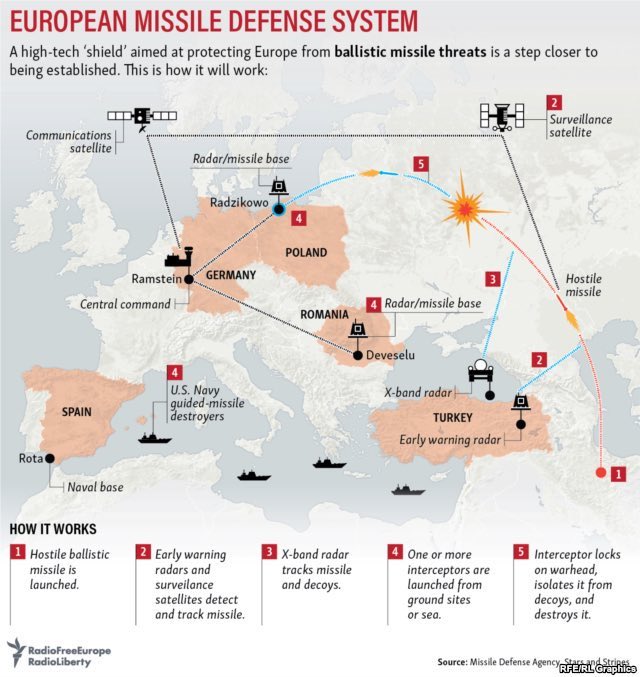
Hi! Missile Defense System expert here. There are two US missile defense systems in Romania and Poland coupled with an advanced radar system in Turkey. Additionally, there are forward based US destroyers in Spain. This is all meant to support the defense of Europe from a rogue nation ballistic missile attack. It’s also called Operation Atlantic Sentry. It is a U.S. European Command (USEUCOM) with a NATO mission primarily focused on Integrated Air and Missile Defense (IAMD). Its specific role involves the operation and integration of advanced radar and interceptor systems to protect the alliance from ballistic missile threats. Hope this helps @piersmorgan
Chris - The Vibe-Based Systems Engineer™️ tweet media
Piers Morgan@piersmorgan

So not only has Iran brazenly lied about its ballistic missile range capacity, but this means it can probably hit the UK with them - and we have zero, I repeat ZERO, defence against these missiles. Very worrying.

English
150
524
2.4K
360.4K