Space Clinton 🇿🇦 me-retweet
Space Clinton 🇿🇦
10K posts

Space Clinton 🇿🇦
@SpaceClinton
space enthusiast,amateur astronomer.🇿🇦
Durban South Africa🇿🇦 Bergabung Eylül 2010
2.6K Mengikuti482 Pengikut
Space Clinton 🇿🇦 me-retweet

Happy Birthday to Eric Idle.
Some things never change and some conversations get better with age.
#MontyPython
English
Space Clinton 🇿🇦 me-retweet

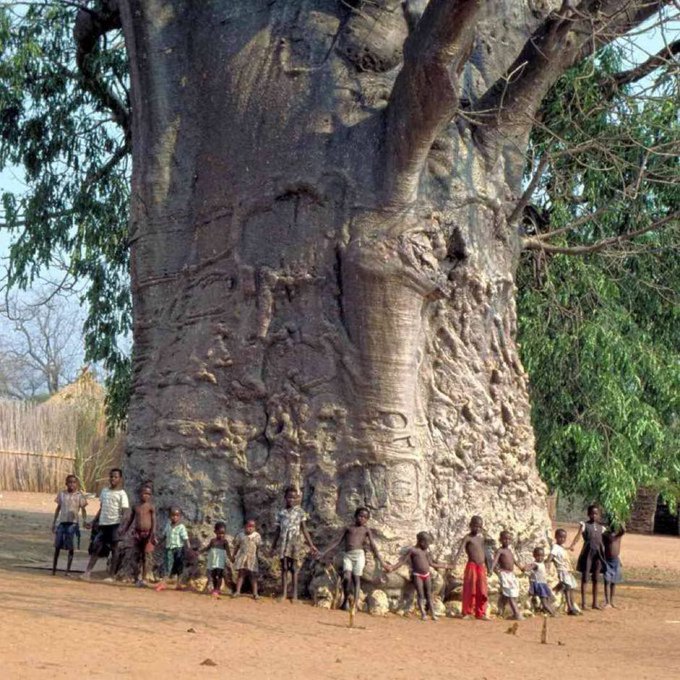
This 2,000 year old tree is located t Zwigodini Village of Mutale in Limpopo, South Africa.
Venda people call it, “Muri Kunguluwa”, which means, “The Tree That Roars”. The tree actually makes a roaring sound when the wind blows through its branches.
It is also called, “The Tree Of Life”, because it serves as a source of life to the animals and the community that lives around it. 80% of its trunk consists of water and it can hold up to 4,500 liters, making it a water source for the community and the animals.
Elephants eat the bark. Baboons eat the fruit. Leaves can also be eaten. Birds, bees, fruit bats and bush babies nest in the tree. Humans use the dried fruit powder in drinks, as a source of vitamins, antioxidants and minerals. The bark can be used to make rope, baskets, mats, cloth and paper.
It also holds a spiritual significance for African people. In ancient times, leaders and elders would hold meetings under huge baobab trees, to discuss important matters. They believed that the spirit of the baobab would help them make wise decisions.

English
Space Clinton 🇿🇦 me-retweet

Only 6 days left until the launch of the Artemis II spacecraft! 🚀
The return to the Moon is just around the corner.
To follow the mission with us and @SETIInstitute, click here: unistellar.com/artemis-ii-the…
Picture made from an image taken by Unistellar's Community member Patrick Huth.

English
Space Clinton 🇿🇦 me-retweet

Time is running out to fly your name around the Moon!
The Artemis II mission is launching no earlier than April 1. Now is your last chance to submit your name to be flown aboard the Orion spacecraft alongside four astronauts: go.nasa.gov/artemisnames

English

Space Clinton 🇿🇦 me-retweet

Our #HubbleTopImage features a young star rebelling against its parent cloud!
There is nothing peaceful about star forming region Sh 2-106. A devilish young star, named S106 IR 😈 lies in it and ejects material at high speed, disrupting the gas and dust around it. S106 IR is in the final stages of its formation – it will soon quieten down by entering the main sequence, the adult stage of stellar life.
For now, it remains embedded in its parent cloud, but it is rebelling against it. The material spewing off the star gives the cloud its hourglass shape!
Read more: ow.ly/peiS50Yytrj
#HubbleTopImage
📷 @NASA & @ESA

English
Space Clinton 🇿🇦 me-retweet

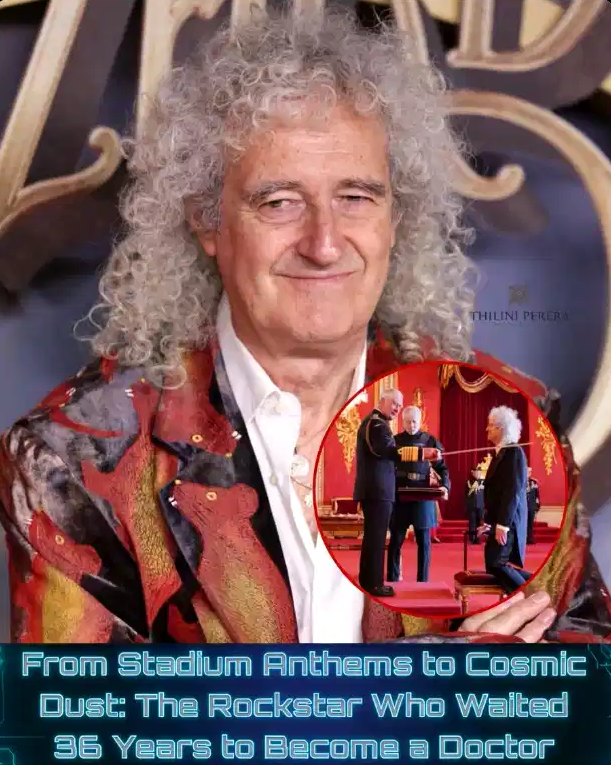
In 1970, a 23-year-old physics student at Imperial College London found himself at a life-altering crossroads.
Brian May was deep into his doctoral research on cosmic dust—specifically the zodiacal dust cloud, the tiny particles that drift through the solar system and scatter sunlight. His PhD was well underway, and a promising academic career in astrophysics lay ahead.
But there was another path calling him.
May was also the lead guitarist of a newly signed rock band named Queen. With a record deal secured and tours on the horizon, the band’s momentum was building fast. Faced with an impossible choice between the guitar and the telescope, May made his decision: he paused his studies and bet everything on music.
Queen’s ascent was meteoric. By the mid-1970s, they had become a global phenomenon. Timeless anthems like “Bohemian Rhapsody” and “We Will Rock You” exploded onto the charts, while May’s iconic homemade guitar, the Red Special, helped define the band’s legendary sound. Stadiums sold out worldwide, and millions of albums flew off the shelves.
Yet throughout his rock stardom, May never fully let go of his scientific passion. Even at the height of Queen’s fame, he stayed connected to astrophysics—reading journals, attending lectures when possible, and maintaining contact with his former supervisor, Professor Michael Rowan-Robinson, who had once told him: “You can always come back and finish.”
Thirty-six years after stepping away, in 2006, May decided the time had finally come. He reached out to Rowan-Robinson, and together they revived the long-dormant project. Though the field had moved forward and his original data needed updating, his early observations still held real scientific value.
Balancing his ongoing music career with late-night research sessions, May updated his work, incorporated new findings, and refined his analysis. In 2007, at the age of 60, Imperial College London officially awarded him a PhD in astrophysics—not an honorary title, but one earned through rigorous research and peer review.
Dr. Brian May had finally completed what he started more than three decades earlier.
His journey is a powerful reminder that passion has no expiration date. Whether on stage under stadium lights or studying the dust between the planets, Brian May proved it’s never too late to finish what you began.

English
Space Clinton 🇿🇦 me-retweet

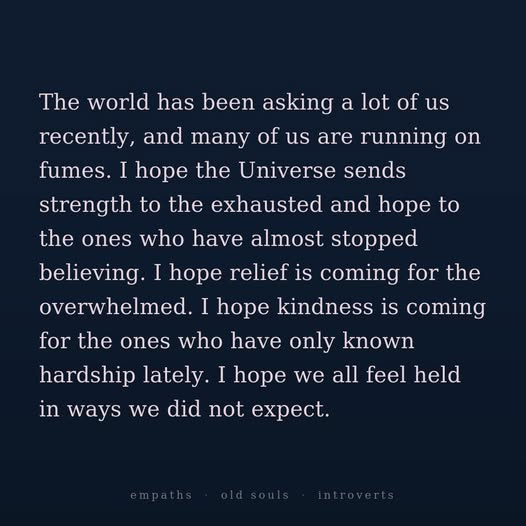
I like quiet people. Who are not loud to be interesting. Who read books no one talks about. Who can sit through a 2-hour documentary about bees. They're smart, but have no need to show off. No performance. Just depth. Just a calm presence. They notice things. They think deeply. They understand more than they say. The ones who stay low-key and private in a world obsessed with being seen. And that’s what makes them rare.
English
Space Clinton 🇿🇦 me-retweet

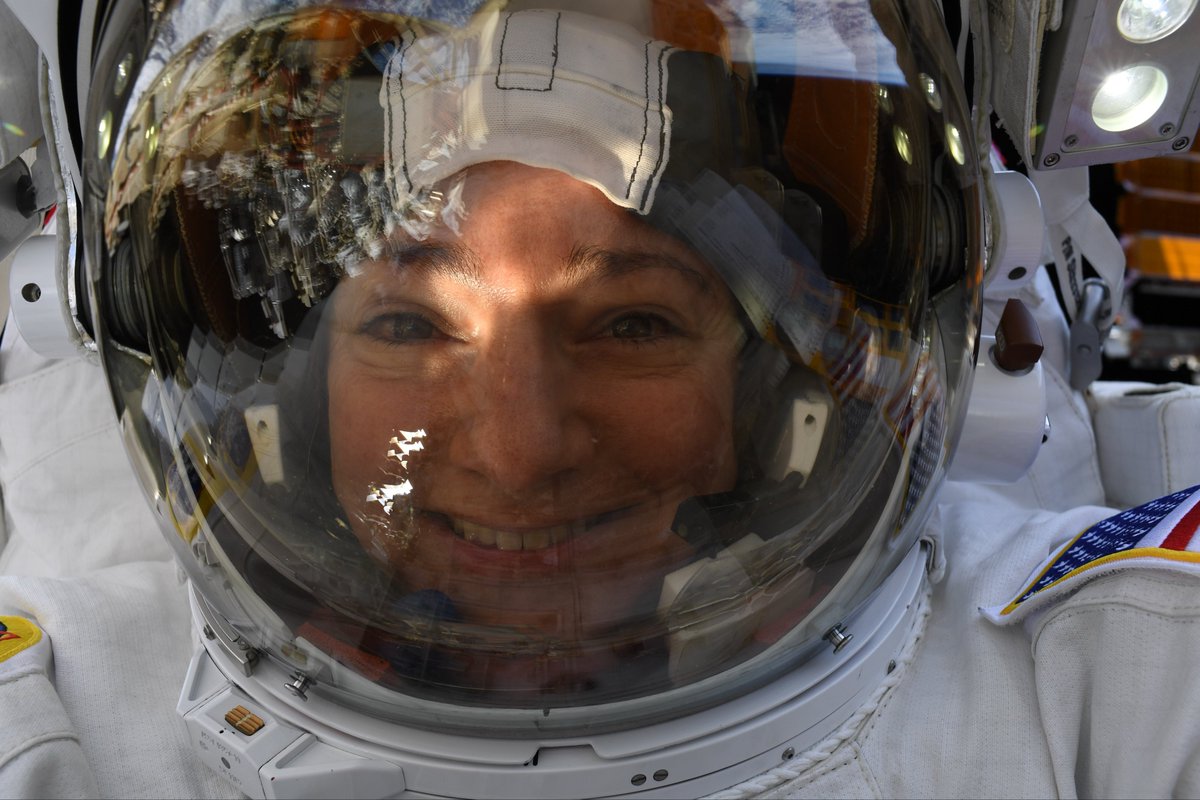
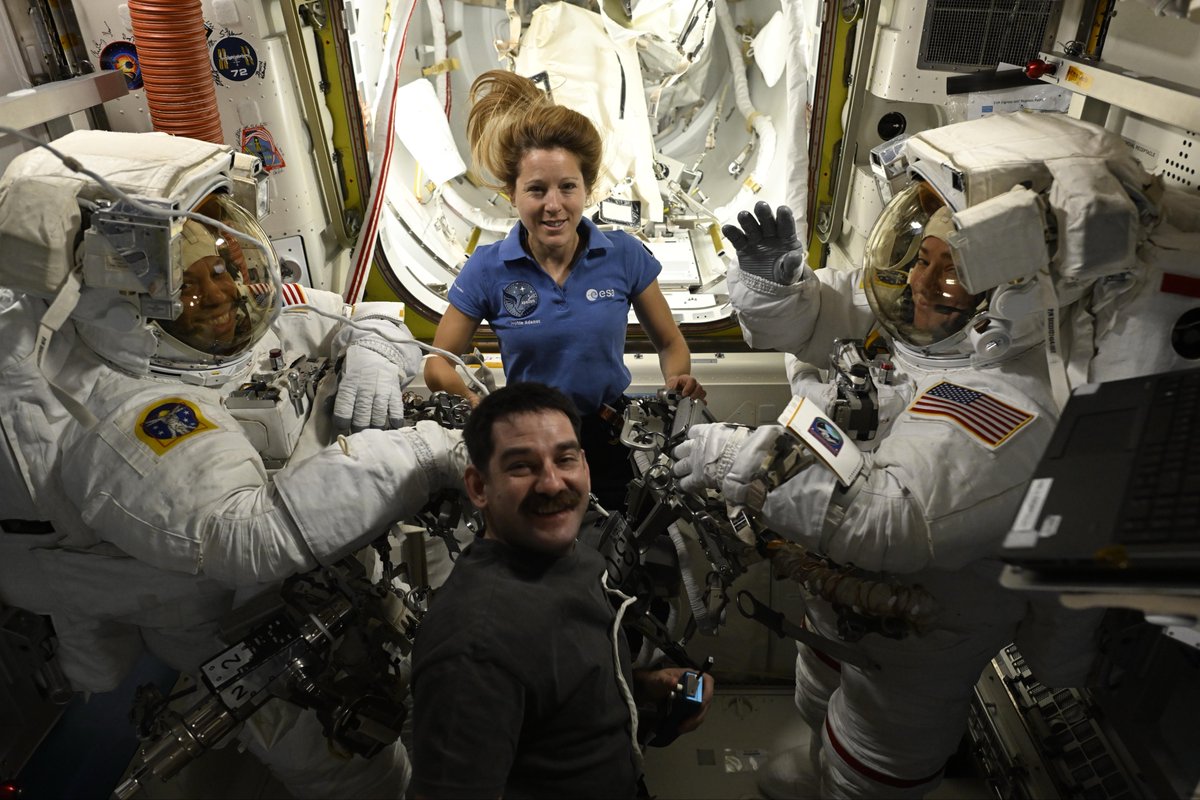
Last week I had the privilege of conducting my fourth spacewalk, venturing out to deploy a bracket to hold a new solar array to augment the power system of the @Space_Station. This spacewalk felt even more special than my previous ones because I shared the experience with a first-time spacewalker, @NASA astronaut @Astro_ChrisW!
It is a tremendously powerful feeling to pass the torch to the next generation of explorers that will keep this space station running.
📷 — NASA Astronaut Chris Williams on his first spacewalk.
📷 — Requisite spacewalk selfie (note the Earth in the top of my visor!)
📷 — Chris (left) and Jessica (right) building the solar panel bracket.
📷 — @astro_hathaway and @Soph_astro getting us suited up in the airlock.


English
Space Clinton 🇿🇦 me-retweet

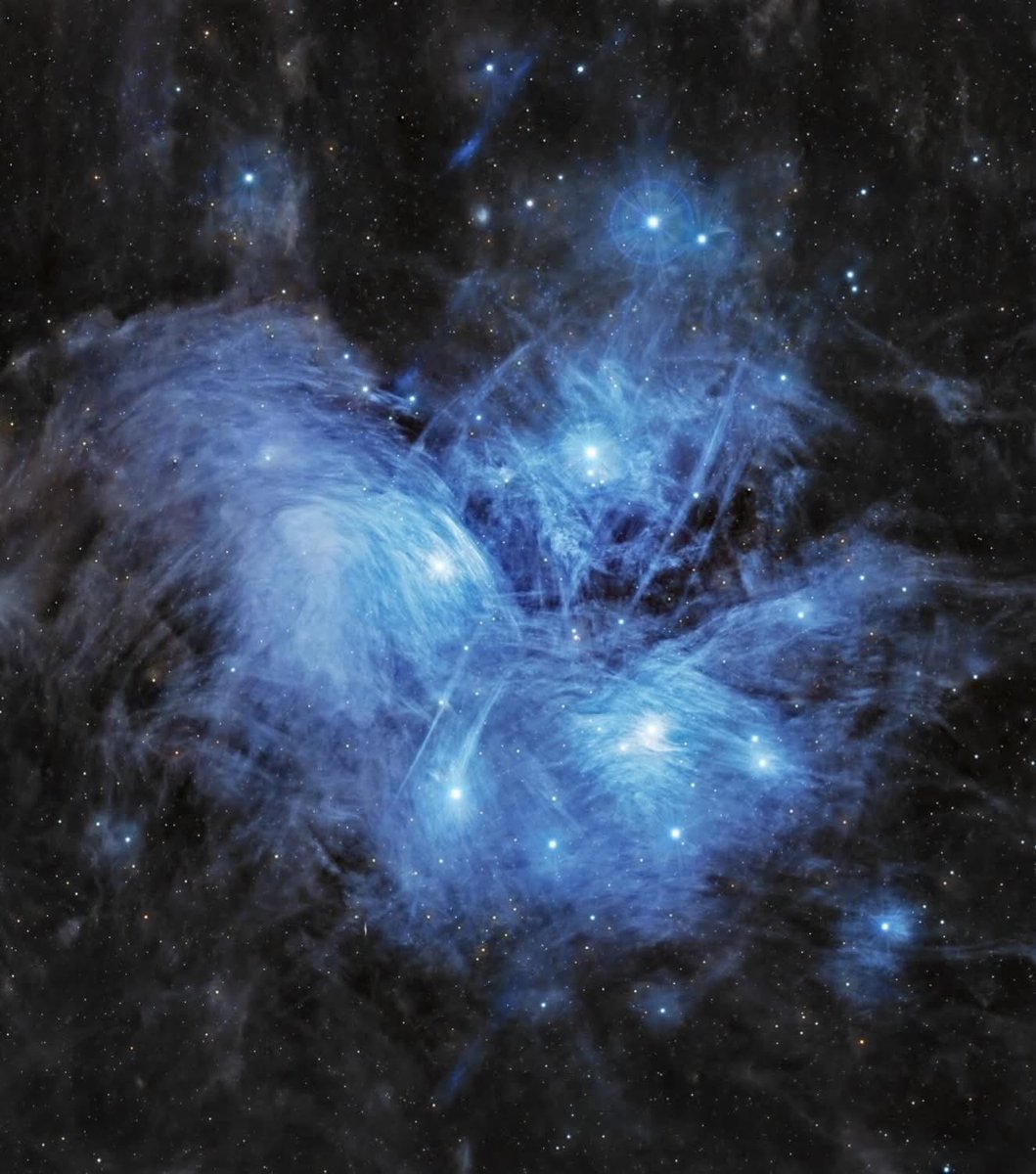
The Pleiades
Brannon captured the Seven Sisters in a two-panel mosaic, revealing the faint blue reflection nebula surrounding this famous star cluster in Taurus.
The Pleiades are a young open cluster about 440 light-years away, made up of hot blue stars that illuminate the surrounding interstellar dust.
240 × 45s exposures
🔭 EdgeHD 14 + HyperStar
📸: @13rannon
#M45 #Pleiades #Astrophotography #Celestron #NightSky

English
Space Clinton 🇿🇦 me-retweet