The SETI Institute

25.9K posts

The SETI Institute banner
The SETI Institute

The SETI Institute

@SETIInstitute

Our mission is to lead humanity's quest to understand the origins and prevalence of life & intelligence in the universe and share that knowledge. #notjustaliens

Mountain View, CA Katılım Nisan 2009
1.8K Takip Edilen672.6K Takipçiler
The SETI Institute
The SETI Institute@SETIInstitute·
A loud boom in Ohio was a meteor traveling at 45,000 miles per hour, NASA says. The SETI Institute's Dr. Peter Jenniskens, a meteor astronomer, joined "Jesse Weber Live" on March 17 to discuss the loud boom that was reported in northeast Ohio. Learn more: youtube.com/watch?v=wA5PSF… #meteor #science
YouTube video
YouTube
English
0
6
11
3.9K
The SETI Institute
The SETI Institute@SETIInstitute·
How do scientists search for extraterrestrial intelligence? @Astro_Wright joins #SETILive to discuss his new textbook on the science of SETI — from radio signals to technosignatures. 📡 Join us live! TODAY, March 19, at 2:30 pm PDT / 5:30 pm EDT WATCH HERE: youtube.com/live/3n7SUuG-e…
YouTube video
YouTube
The SETI Institute tweet media
English
1
2
5
1.9K
The SETI Institute
The SETI Institute@SETIInstitute·
#PPOD: Øresund Strait 🚢 This image from the Copernicus Sentinel-1 mission shows us the maritime traffic passing through the Øresund Strait in 2025. The 118-km-long Øresund Strait (also known as the Sound) separates Denmark to the west from Sweden to the east and links the Baltic Sea to the North Sea, which makes it one of the busiest waterways in the world. Sentinel-1 satellites carry radar instruments to provide an all-weather, day-and-night supply of imagery of Earth’s surface, making it ideal to monitor ship traffic. Here, more than 50 radar images over the same area, acquired every six days throughout 2025, have been compressed into a single image. In this image, ships appear as bright, sparkly dots in the dark waters of the strait. The routes of marine traffic are clear to see in the channel, with the main shipping lanes highlighted by the concentration of ships. Credit: contains modified Copernicus Sentinel data (2025), processed by @ESA #planetaryscience
The SETI Institute tweet media
English
0
4
15
1.9K
The SETI Institute
The SETI Institute@SETIInstitute·
The search continues — and so does the Drake Awards tradition. Join us May 14 at the @ComputerHistory Museum for the #DrakeAwards 2026, honoring the scientists pushing the boundaries of our understanding of life in the cosmos. Early Bird tickets are now available. Save $25 through March 31. Secure your seat before they’re gone! Purchase here: drakeawards.seti.org
The SETI Institute tweet media
English
1
6
14
2.3K
The SETI Institute retweetledi
Skymapper
Skymapper@Skymapperspace·
☀️@SpaceTechExpo comes to sunny Anaheim this June. Join us as @Skymapperspace CEO and @SETIInstitute Director of Citizen Science @AllPlanets takes the stage to explore how observation itself is changing - from isolated instruments to global, connected networks. The way we understand space is evolving. So is the infrastructure behind it.
Space Tech Expo USA@spacetechexpo

We are thrilled to announce that Franck Marchis will be joining us as a speaker! Franck is a visionary leader in the field of astronomy, serving as the CEO and co-founder of SkyMapper, the co-founder of Unistellar, and the Director of Citizen Science at the SETI Institute.

English
3
6
9
3.8K
The SETI Institute
The SETI Institute@SETIInstitute·
#PPOD: Good Morning, Moon 🌕️ Early-morning sunlight illuminates the western wall of this unnamed crater, casting deep shadows on the ground and within the crater. The image was taken on August 30, 2023, by LROC (Lunar Reconnaissance Orbiter Camera). LROC is a system of three cameras and one of the seven instruments aboard NASA’s LRO (Lunar Reconnaissance Orbiter) mission, which launched in June 2009 and continues in orbit around the Moon. Credit: @NASAGoddard Space Flight Center @Int_Machines #planetaryscience
The SETI Institute tweet media
English
0
9
53
2.2K
The SETI Institute
The SETI Institute@SETIInstitute·
ICYMI: "Pictures of Distant Worlds," an enjoyable nontechnical talk by Dr. Bruce Macintosh (University of California Observatories) given on Mar. 11, 2026, in the Silicon Valley Astronomy Lecture Series, is now available at: youtube.com/watch?v=Sl4j9m…
YouTube video
YouTube
English
1
8
14
4.5K
The SETI Institute
The SETI Institute@SETIInstitute·
In the latest episode of The Climate Chronicles, The Hottest Holocene, Professor Degroot asks a simple question: when was the last time that the Earth was as hot as it is today? It may be a simple question, but it has a complicated answer – one that touches on everything from schemes for nuclear missile silos in the Greenland Ice Sheet at the height of the Cold War, to ancient computers in long-forgotten shipwrecks. Listen here: theclimatechronicles.com/2026/03/17/the…
The SETI Institute tweet media
English
0
3
11
2.5K
The SETI Institute
The SETI Institute@SETIInstitute·
#PPOD: Ring of Gullion, Northern Ireland 🪉 🍀 Covered in heath, the solitary rocky hill known as Slieve Gullion rises above the farmland of Northern Ireland in this true-color Landsat image from May 24, 2001. According to Irish mythology, hunter and warrior Finn McCool bathed in the lake on Slieve Gullion and emerged decades older. However, we don’t need a dip in the lake to move through time. A glance at the landscape reveals millions of years of history. Looking out from the summit of Slieve Gullion, the mythical Finn McCool (or anyone else who climbed to the top, for that matter) would see a ring of rocky hills surrounding the Slieve. From a satellite view hundreds of kilometers above Earth, the formation's circular shape is even more evident. Known as the Ring of Gullion, the ancient hills are nearly 60 million years old. They formed either when an ancient volcano collapsed—leaving a circular fault into which molten rock seeped—or when layers of magma built up in layers in the volcano. This type of formation is called a ring dyke. Credit: Jesse Allen and Robert Simmon, using Landsat data provided by @USGS; Caption: Holli Riebeek #planetaryscience
The SETI Institute tweet media
English
0
4
27
2.2K
The SETI Institute
The SETI Institute@SETIInstitute·
Early Bird tickets for the #DrakeAwards go live this Wednesday. Get ready to secure your seat for our premier celebration of discovery on May 14 in Mountain View, California. Early Bird discounts are limited. Stay tuned and watch this space for more info!
The SETI Institute tweet media
English
1
6
20
3.1K
The SETI Institute
The SETI Institute@SETIInstitute·
This week on @bipisci, science fiction author Andy Weir discusses his space-travelling tale, Project Hail Mary, from its description of interstellar flight to aliens that thrive in extreme environments - including the sun. Listen here: bigpicturescience.org/episodes/skept…
The SETI Institute tweet media
English
1
8
32
2.7K
The SETI Institute
The SETI Institute@SETIInstitute·
#PPOD: Saturn (NIRCam) 🪐 On June 25, 2023, @NASAWebb turned to the famed ringed world #Saturn for its first near-infrared observations of the planet. Saturn itself appears extremely dark at this infrared wavelength observed by the telescope, as methane gas absorbs almost all of the sunlight falling on the atmosphere. However, the icy rings remain relatively bright, resulting in Saturn's unusual appearance in the JWST image. Credit: @NASA, @esa, @csa_asc, Matthew Tiscareno (SETI Institute), Matthew Hedman (University of Idaho), Maryame El Moutamid (Cornell University), Mark Showalter (SETI Institute), Leigh Fletcher (University of Leicester), Heidi Hammel (AURA); Processing: Joseph DePasquale (STScI) #planetaryscience
The SETI Institute tweet media
English
1
24
93
3.8K
The SETI Institute
The SETI Institute@SETIInstitute·
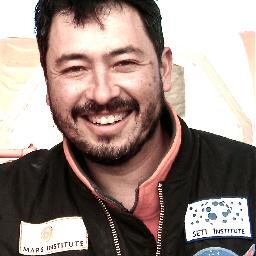
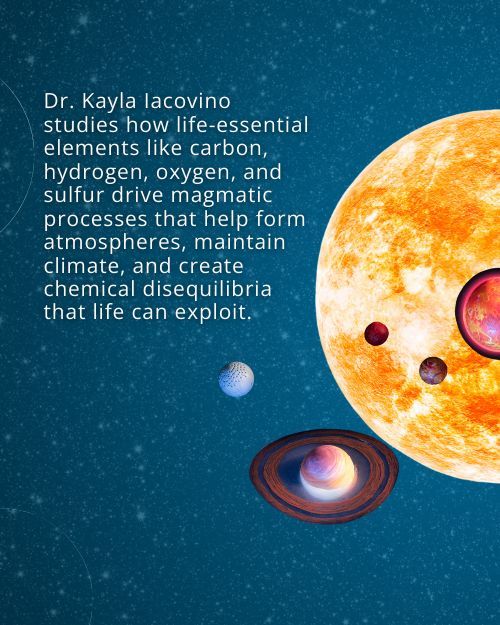
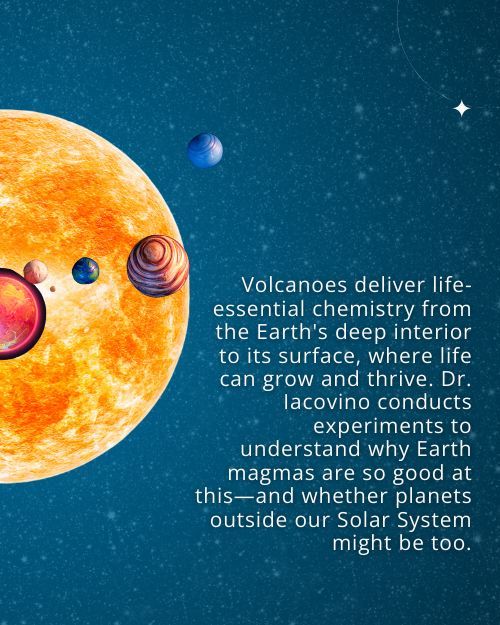
Coral Clark has over 30 years of experience in education, including 10 years of classroom science instruction and 25 years in teacher professional development. She has contributed to science curricula at the SETI Institute, including the integrated science curriculum, Voyages Through Time. Ms. Clark is the principal investigator for NASA’s Astronomy Activation Ambassadors (AAA) teacher professional development program, whose primary goal is to enhance student STEM learning and engagement for middle school, high school, and community college science instructors. Not Just Aliens is the SETI Institute’s weekly series featuring scientists exploring astrobiology, heliophysics, planetary science, and more — expanding the search for life beyond Earth. And sometimes, we feature scientists looking for technosignatures! #Education #Outreach #SpaceScience #SETI #NotJustAliens Learn more about Coral: seti.org/people/coral-c… Learn more about AAA: seti.org/education/aaa/
The SETI Institute tweet mediaThe SETI Institute tweet mediaThe SETI Institute tweet mediaThe SETI Institute tweet media
English
0
14
46
4.1K
The SETI Institute
The SETI Institute@SETIInstitute·
The Climate Chronicles, Episode 13: The Bones at Star Carr Professor Degroot zooms in on the archaeological site of Star Carr, where – just over 11,000 years ago – a group of families settled beside a small lake in what is now northern England. He takes listeners through the history of the archaeological and scientific research that has revealed the extraordinary resilience of that community in the face of the climate shocks of the early Holocene. Listen here: theclimatechronicles.com/2026/03/03/epi…
The SETI Institute tweet media
English
1
4
14
3.1K
The SETI Institute
The SETI Institute@SETIInstitute·
Data from NASA’s Kepler mission revealed that planets between Earth and Neptune in size, particularly compact systems of closely packed worlds, are extraordinarily common. Yet the Solar System contains none. In a recent SETI Live conversation, Moiya McTier spoke with exoplanet scientist Dr. John H. Livingston about a newly characterized young planetary system that may represent the long-sought evolutionary bridge. Learn more: seti.org/news/missing-l…
English
0
27
70
4K
The SETI Institute
The SETI Institute@SETIInstitute·
#PPOD: Antoniadi Crater, #Mars 🌿 In this image from @HiRISE on NASA's Mars Reconnaissance Orbiter, the dark branched features in the floor of Antoniadi Crater look like giant ferns, or fern casts. However, these ferns would be several miles in size and composed of rough, rocky material. A more likely hypothesis is that this represents a channel network that now stands in inverted relief. The channels may have been lined or filled with indurated materials, making the channel fill more resistant to wind erosion than the surrounding materials. After probably billions of years of wind erosion, the resistant channels now stand relatively high. The material between the branched ridges exhibits a fracture pattern and color similar to deposits elsewhere on Mars known to be rich in hydrated minerals, such as clays. The inverted channels have short, stubby branches characteristic of formation by groundwater sapping. Spring water seeps into the channels and undercuts overlying layers, which collapse, so the channels grow headward. These images tell the story of an ancient wet environment on Mars, where life could have been possible. Ancient Martian life, if it existed, would most likely consist of microorganisms rather than giant tree ferns. Credit: @NASA @NASAJPL @Caltech @UArizona #planetaryscience
The SETI Institute tweet media
English
2
12
48
2.7K