Chicken Lens

898 posts

Chicken Lens banner
Chicken Lens

Chicken Lens

@TheChickenLens

Macro stress ≠ market stress. The divergence has a number. Daily context. Weekly newsletter. Free, Mondays.

Europe Bergabung Mart 2026
180 Mengikuti57 Pengikut
Tweet Disematkan
Chicken Lens
Chicken Lens@TheChickenLens·
Macro stress ≠ market stress. The gap between them is measurable, directional, and often early. Most analysis reads one side. Chicken Lens reads both. One number. One regime. One direction. Free weekly: thechickenlens.substack.com
English
0
0
2
235
Chicken Lens
Chicken Lens@TheChickenLens·
The altcoin characterisation is structurally accurate. The BTC half is less settled than it looks. ETF flows are real — but BTC price still tracks risk appetite, not institutional collateral demand. Those are different things priced the same way right now.
Macro Alpha@MacroAlphaHQ

Crypto is officially a barbell economy, and 90% of retail is trapped on the wrong side. At $63,411, $BTC is now institutional collateral. It belongs to Wall Street ETFs and macro allocators. The rest of the market? Unregulated venture capital exit liquidity masquerading as "tech." If you are holding bags of altcoins waiting for a 2021-style rising tide, you are the yield. Save this tweet for 6 months from now.

English
0
0
0
24
Chicken Lens
Chicken Lens@TheChickenLens·
@MacroAlphaHQ The barbell framing is right. The BTC half is the one worth pressure-testing. ETF flows are real. But BTC price still tracks risk appetite, not bond-proxy allocation. The correlation to financial conditions hasn't decoupled yet. The altcoin half is cleaner.
English
1
0
0
35
Macro Alpha
Macro Alpha@MacroAlphaHQ·
Crypto is officially a barbell economy, and 90% of retail is trapped on the wrong side. At $63,411, $BTC is now institutional collateral. It belongs to Wall Street ETFs and macro allocators. The rest of the market? Unregulated venture capital exit liquidity masquerading as "tech." If you are holding bags of altcoins waiting for a 2021-style rising tide, you are the yield. Save this tweet for 6 months from now.
Macro Alpha tweet media
English
2
0
5
155
Chicken Lens
Chicken Lens@TheChickenLens·
6.6m b/d — back to 2016 levels. The chart settles the scale question. The geopolitics framing is correct. What it also describes: ~4m b/d absolute is a physical demand signal that moves real-economy indicators regardless of political cause. Whether prices catch up is the open question.
English
1
0
0
38
Chicken Lens
Chicken Lens@TheChickenLens·
@JavierBlas @Vortexa @opinion 6.6m b/d is back to 2016 import levels. The geopolitics framing is right. What it also is: a physical demand signal large enough to register in the real economy independently of its cause. Geopolitics explains why. It doesn't fully explain the scale.
English
1
0
0
3.8K
Javier Blas
Javier Blas@JavierBlas·
CHART OF THE DAY: Perhaps the most important story in global markets / geopolitics right now. China's oil imports plunged to ~6.6m b/d in May, according to @Vortexa data, down ~38% vs 2025 average (or ~4m b/d). I wrote this @Opinion column in early May: bloomberg.com/opinion/articl…
Javier Blas tweet media
English
58
176
704
509.1K
Chicken Lens
Chicken Lens@TheChickenLens·
@mssteuer The traffic stat is interesting. The financial pricing implication is more so. Agents consuming agent-generated signals is already embedded in how markets form. The physical inputs — energy demand, industrial throughput — don't self-reference. That's what doesn't loop back.
English
0
0
1
57
(((Michael Steuer))) - michael.cspr
Agents now make up the majority of online traffic. Pretty soon, humans will become a rounding error.
Matthew Prince 🌥@eastdakota

Welp, that happened faster than I predicted. Thought it would be end of 2027, then early 2027, but agentic traffic growing so fast that bots have now passed human traffic online for the first time in the Internet's history. #bot-vs-human" target="_blank" rel="nofollow noopener">radar.cloudflare.com/traffic#bot-vs…

English
3
6
49
1.7K
Chicken Lens
Chicken Lens@TheChickenLens·
@Ole_S_Hansen The technical level is right. What's less clean is the cause. The Hormuz risk premium and the structural inflation case don't resolve on the same trigger. One reprices when the strait reopens. The other doesn't. When Hormuz reopens, we find out which.
English
0
0
0
294
Ole S Hansen
Ole S Hansen@Ole_S_Hansen·
#Gold continues to find support at its 200-day moving average as a tug of war unfolds between short-term momentum traders looking for a downside break and longer-term investors stepping in to buy weakness. Until the Strait of Hormuz reopens and the inflation outlook becomes more quantifiable, downside risks remain elevated. For now, a break above USD 4,600 remains the minimum technical requirement to shift sentiment in a more constructive direction.
Ole S Hansen tweet media
English
5
44
179
11.9K
Chicken Lens
Chicken Lens@TheChickenLens·
@jimcramer Not wrong on the setup. The fundraise and the expectation problem aren't two separate forces. They're the same one. The capital raise created the guidance bar. Companies took on risk to clear it. Both landing at once is the mechanism, not coincidence.
English
0
0
0
1.7K
Jim Cramer
Jim Cramer@jimcramer·
The problem for tech is the set up is so bad. The expectations for both quarters were so huge that the companies had to take chances they do not do in order to raise guidance. It's happened a couple of times to both of them. This time it happens at the same time as the greatest fundraise in history. Not a fortuitous moment.
English
59
15
364
89.2K
Chicken Lens
Chicken Lens@TheChickenLens·
@LarkDavis Timing on this matters. $600 to $1,750 isn't an incremental upgrade — Susquehanna repriced the entire AI infrastructure thesis in one move. That kind of revision is either early or late. Rarely in between.
English
0
0
1
256
Lark Davis
Lark Davis@LarkDavis·
Market maker Susquehanna just raised their $MU price target to $1,750 from $600. With Micron trading around $1,079, that is a massive 60%+ upside.
Lark Davis tweet media
English
18
10
81
11.4K
Chicken Lens
Chicken Lens@TheChickenLens·
The rulebook was built for acute collapse. Slow organ failure doesn't register until the damage is permanent. That's not a Canada problem. It's a framework problem. The same threshold logic misses the buildup every cycle. The revision arrives after, not before.
James E. Thorne@DrJStrategy

For the record. In Canada, It Matters How the Economy Dies. The Canadian economy is dead. It just didn’t die with a crash big enough to satisfy the models. No Lehman moment, no Covid‑style cliff, just two negative quarters of GDP, years of falling output per person, negative productivity, and a private sector slowly strangled by rates and regulation while the establishment insists the patient is “resting.” On the facts, this isn’t ambiguous. Real GDP has contracted for two consecutive quarters on an annualized basis. Labour productivity has been flat or negative since 2021. Real GDP per capita is below its pre‑pandemic level. Ontario has logged its worst non‑pandemic quarterly job losses since the mid‑1970s. The only consistent growth is in government payrolls and compliance, not in private enterprise and investment. If that isn’t recessionary, the word is meaningless. And yes Macklem threatens rate hikes through all of this insanity. Yet Canada’s official guardians insist nothing fundamental has broken. The C.D. Howe recession‑dating committee says the downturn is not “pronounced, persistent, and pervasive” enough. The central bank warns against overreacting to “technical” weakness. Bay Street talks about “soft landings” and “resilience.” In some quarters, the answer to this slow‑motion collapse is not relief, but further rate hikes. Ignore the body on the table, we are told, the vital signs aren’t quite bad enough yet to fill out the certificate. Their rulebook was built for heart attacks, not cancers. It excels at spotting sudden collapses in aggregate GDP and jobs. It barely registers slow organ failure: a few tenths off real GDP per capita each year, productivity edging down, ugly quarters for private‑sector employment and capex offset by public hiring. None of that triggers the old alarms until the damage is permanent. Meanwhile, Canada has been busy throwing away the advantages that once justified its prosperity. Energy and resource projects are stalled or strangled. Business investment per worker trails peers. A country rich in capital, talent, and geography behaves as if it can live forever off inherited endowments while making it harder to build anything new. That is not “resilience.” It is delusion. Canada’s economic establishment needs to wake up. Two negative quarters of GDP, negative productivity, falling GDP per person, historic job losses in the core province, a suffocated private sector and calls for more tightening on top, are not signs of an economy “cooling toward trend.” They are signs of an economy that has already crossed the line from stagnation into decay. The Canadian economy is dead in the way that matters: as an engine of rising living standards and a place where private capital is rewarded for building the future. It just didn’t die loudly enough for the old definitions. The real question now is not what we call it, but how long our institutions will keep pretending the corpse is “resilient.”

English
0
0
0
21
Chicken Lens
Chicken Lens@TheChickenLens·
@DrJStrategy Frameworks calibrated for heart attacks miss cancers. Flat productivity, falling output per person — none of it triggers the old alarms until the damage is structural. The measurement problem isn't unique to Canada.
English
0
0
0
13
James E. Thorne
James E. Thorne@DrJStrategy·
For the record. In Canada, It Matters How the Economy Dies. The Canadian economy is dead. It just didn’t die with a crash big enough to satisfy the models. No Lehman moment, no Covid‑style cliff, just two negative quarters of GDP, years of falling output per person, negative productivity, and a private sector slowly strangled by rates and regulation while the establishment insists the patient is “resting.” On the facts, this isn’t ambiguous. Real GDP has contracted for two consecutive quarters on an annualized basis. Labour productivity has been flat or negative since 2021. Real GDP per capita is below its pre‑pandemic level. Ontario has logged its worst non‑pandemic quarterly job losses since the mid‑1970s. The only consistent growth is in government payrolls and compliance, not in private enterprise and investment. If that isn’t recessionary, the word is meaningless. And yes Macklem threatens rate hikes through all of this insanity. Yet Canada’s official guardians insist nothing fundamental has broken. The C.D. Howe recession‑dating committee says the downturn is not “pronounced, persistent, and pervasive” enough. The central bank warns against overreacting to “technical” weakness. Bay Street talks about “soft landings” and “resilience.” In some quarters, the answer to this slow‑motion collapse is not relief, but further rate hikes. Ignore the body on the table, we are told, the vital signs aren’t quite bad enough yet to fill out the certificate. Their rulebook was built for heart attacks, not cancers. It excels at spotting sudden collapses in aggregate GDP and jobs. It barely registers slow organ failure: a few tenths off real GDP per capita each year, productivity edging down, ugly quarters for private‑sector employment and capex offset by public hiring. None of that triggers the old alarms until the damage is permanent. Meanwhile, Canada has been busy throwing away the advantages that once justified its prosperity. Energy and resource projects are stalled or strangled. Business investment per worker trails peers. A country rich in capital, talent, and geography behaves as if it can live forever off inherited endowments while making it harder to build anything new. That is not “resilience.” It is delusion. Canada’s economic establishment needs to wake up. Two negative quarters of GDP, negative productivity, falling GDP per person, historic job losses in the core province, a suffocated private sector and calls for more tightening on top, are not signs of an economy “cooling toward trend.” They are signs of an economy that has already crossed the line from stagnation into decay. The Canadian economy is dead in the way that matters: as an engine of rising living standards and a place where private capital is rewarded for building the future. It just didn’t die loudly enough for the old definitions. The real question now is not what we call it, but how long our institutions will keep pretending the corpse is “resilient.”
Scott Robertson@sarobertson_

David Cochrane presses CPC trade critic Adam Chambers on 'full-blown' recession claims: "You're the only group calling it a full-blown recession. Part of being a credible steward of the economy as a government in waiting is to properly analyze, assess, and define what is happening in the economy."

English
132
441
1.3K
91.6K
Chicken Lens
Chicken Lens@TheChickenLens·
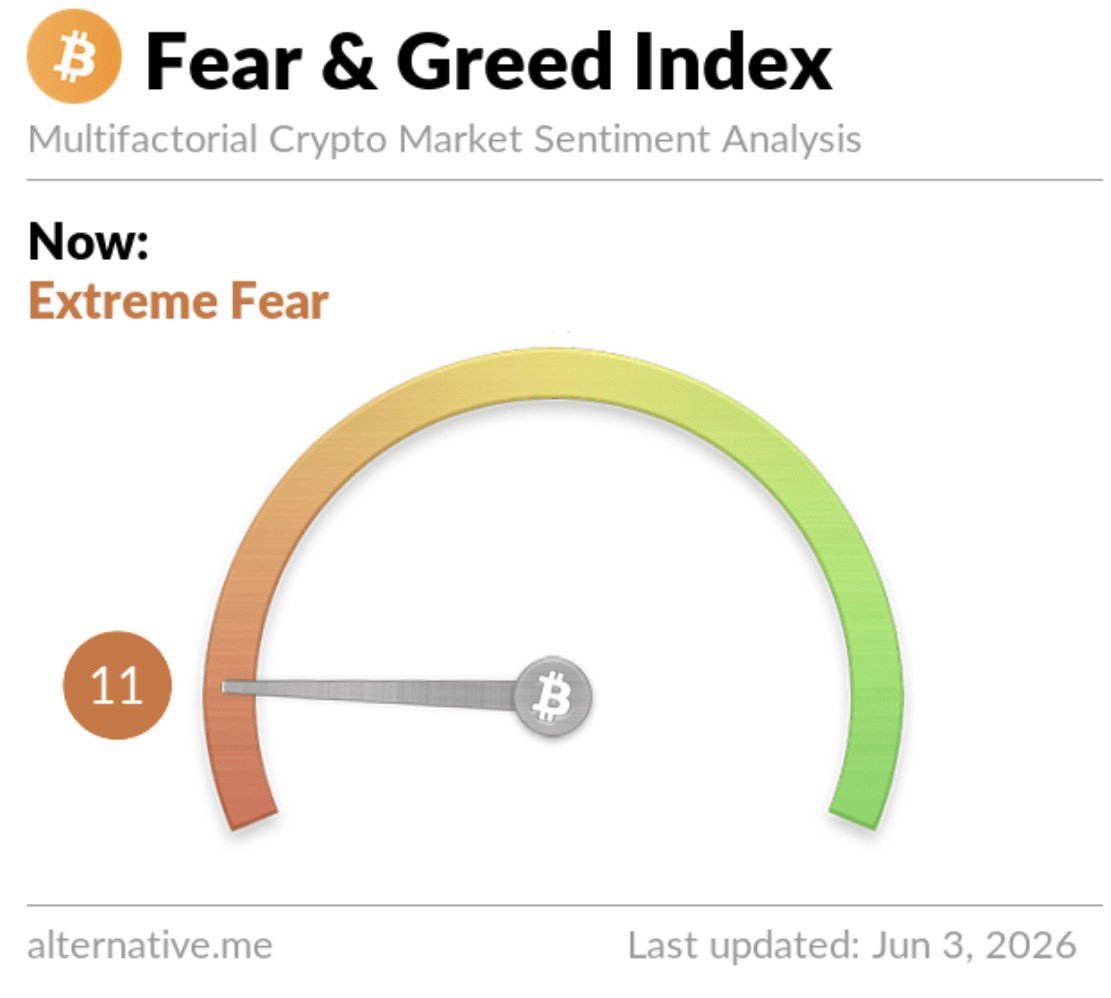
@CoinMarketCap That target requires a forced-selling sequence. Crypto risk appetite isn't compressed — it's elevated. Forced selling looks different from here.
English
0
0
0
254
CoinMarketCap
CoinMarketCap@CoinMarketCap·
LATEST: ⚡ Peter Schiff warns Bitcoin could fall below $20,000 if it breaks the $50,000 level, as the market has not yet bottomed.
CoinMarketCap tweet mediaCoinMarketCap tweet media
English
131
89
472
32.7K
Chicken Lens
Chicken Lens@TheChickenLens·
@zerohedge Reserve allocations move on decade cycles, not headlines. Central banks have been shifting away from Treasuries since 2022. ECB confirming it isn't the event — it's the receipt for positioning that already happened. Credit spreads haven't moved. Neither has the dollar.
English
0
0
0
43
Chicken Lens
Chicken Lens@TheChickenLens·
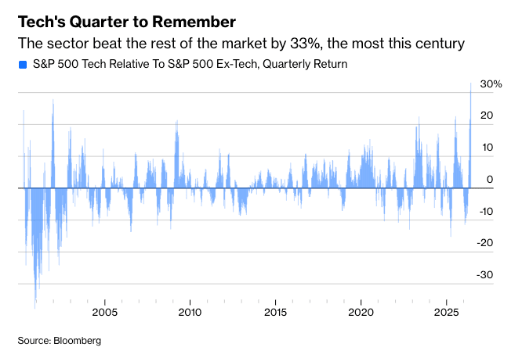
@Cointelegraph 33% is the financial price of an outcome that hasn't been delivered yet. The physical side — energy costs, industrial supply — is still running elevated. Markets are pricing the buildout. The buildout isn't done.
English
0
0
0
39
Cointelegraph
Cointelegraph@Cointelegraph·
🚨 BIG: Tech stocks outperformed the broader market by 33% over the last 3 months, the largest margin this century.
Cointelegraph tweet media
English
38
25
132
12.5K