

Algovedas
25 posts

Algovedas
@algovedas
Algorithmic trading | AI-driven systems | Signal architecture | Market precision engineering | Building structured trading intelligence.
Global Markets Bergabung Şubat 2026
32 Mengikuti15 Pengikut

This isn’t a “market crash”… it’s a chain reaction playing out in real time.Crude spikes → inflation fears rise → central bank pressure builds → foreign capital pulls out → liquidity dries up.
That’s exactly what we’re witnessing here.FPI selling ₹77,000+ crore isn’t panic — it’s risk reallocation at scale.
And when liquidity exits, price doesn’t fall… it drops fast.The HDFC Bank trigger just added fuel to an already fragile sentiment.
But the real driver? Global uncertainty + energy shock.Most traders are reacting to red candles…
Very few are tracking underlying market force and directional bias.This is where people lose money — not because markets fall,
but because they don’t understand when weakness is real vs temporary.Volatility like this isn’t your enemy —
it’s actually where the cleanest opportunities are born.The question is simple:
Are you trading emotions… or reading structure?Because in phases like this,
guessing feels like trading… but it’s actually gambling.Smart money isn’t scared right now —
it’s just waiting for alignment before stepping back in.And when that shift happens…
most people will still be trying to understand what just changed.
English

Stock markets crashing as if it’s the end of the world!
English
It starts quietly… 🚗✨
A car that drives itself, gliding through streets like it already knows tomorrow. At first, it feels like magic—but it’s only the prologue.
Then the world begins to shift. 🌍⚡
Roads start whispering to vehicles. Traffic lights think before they change. Cities breathe in patterns, alive with intelligence. What was once chaos becomes choreography—millions of moving parts, perfectly in sync. 🧠🚦
You’re no longer “driving”… you’re traveling through a living network.
Your car isn’t just a machine—it’s a node, a neuron in a vast digital mind. 🕸️🤖
And somewhere along the way, something bigger unfolds…
Time returns to you. ⏳
Distances shrink. 🌌
And the idea of “commuting” feels as ancient as dial-up internet.
This isn’t just innovation—it’s evolution. 🚀
A future where autonomy, AI, and human imagination merge to rewrite the rules of movement itself.
Self-driving isn’t the destination.
It’s the spark. 🔥
English

Try Tesla self-driving! It’s awesome.
Raoul Pal@RaoulGMI
Tesla FSD is nothing short of magic. Just rented a Cybertruck, picked it up at the airport and it drove us directly to the Airbnb. None of the stress of a new city, new roads, new car. Had it for 5 days and never drove myself. It drove perfectly. So easy and liberating
English
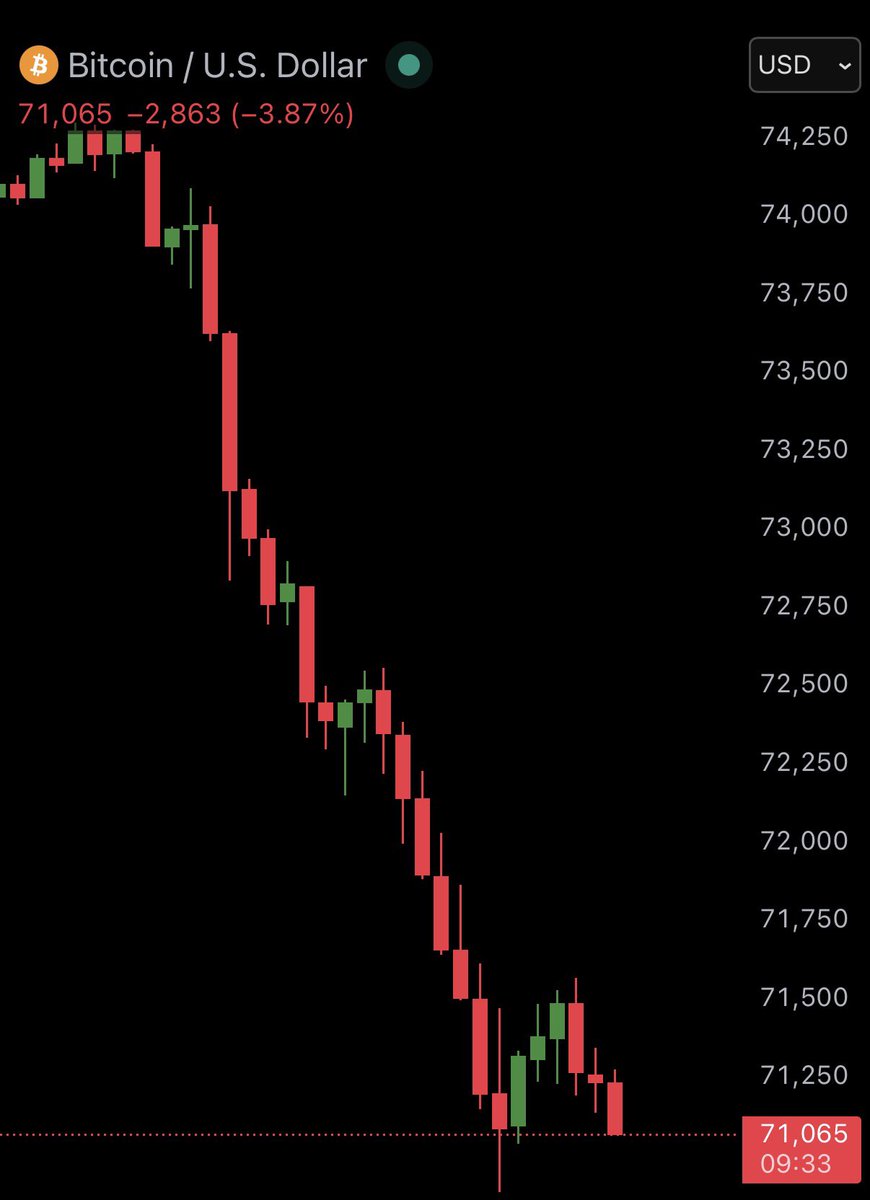
Buy the dip’ sounds simple—until you realize most people are deploying capital emotionally, not strategically.
There’s a big difference between buying a dip and buying every dip. One is calculated, the other is reactive.
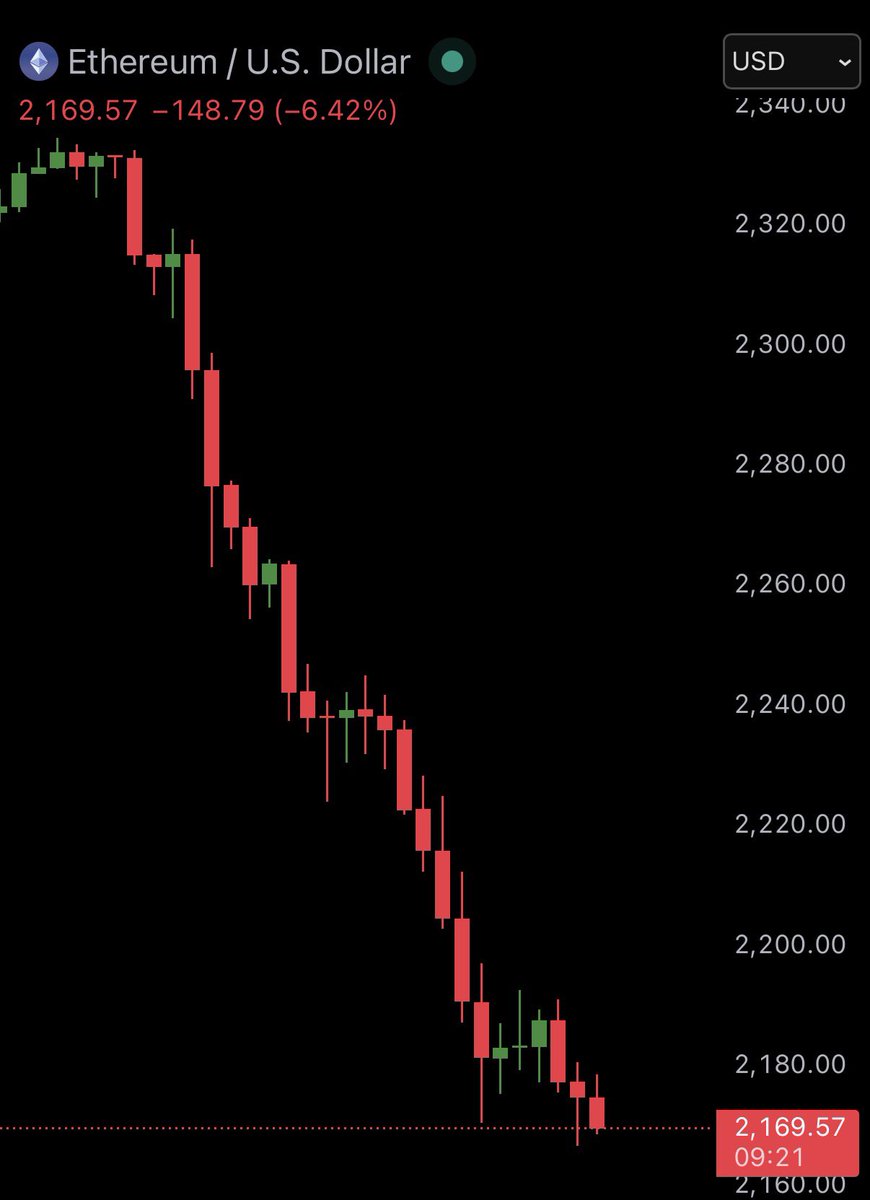
What we’re seeing here is classic trend pressure. In a strong downtrend, dips aren’t opportunities—they’re liquidity traps designed to absorb demand before the next leg lower.
The real edge isn’t in catching bottoms, it’s in preserving capital until the market gives confirmation. Cash isn’t wasted capital—it’s optionality.
Most people don’t run out of conviction… they run out of liquidity.
And in markets like this, survival is the first win. Everything else comes after.
English

“ Buy the dip ”
Bro with what money ????
I’ve seen like 1000 dips in the last 1 year
Only thing I have left now is prayers.
English
$700B wiped in a day sounds dramatic, but this is how markets reprice risk when uncertainty spikes. Powell’s stance signals continuity, but the mention of a DOJ probe adds a layer of political and institutional uncertainty that markets don’t like.
What we’re seeing isn’t just a sell-off—it’s a rapid adjustment in expectations around policy, leadership stability, and future liquidity conditions.
Short term, this kind of move is often driven by positioning and sentiment unwinding. Elevated valuations + fragile confidence = sharp downside when a catalyst hits.
The bigger question is whether this is a one-day shock or the start of a broader risk-off phase. If liquidity tightens and uncertainty lingers, equities—and by extension crypto—could remain under pressure.
Same pattern as always:
When clarity disappears, volatility steps in.
English
🚨 $700,000,000,000 has been wiped out from the US stock market today.
The dump accelerated as Powell said he has no intention to leave Fed until DOJ probe is over.

English
@Jason77880 Hey Jason 👋 just stopping by or something interesting cooking? 😄
English

This is the classic stagflationary tension creeping back into the narrative. An oil-driven shock acts like a tax on the economy—squeezing consumption and slowing growth—while simultaneously pushing inflation higher.
That puts the Fed in a difficult position. Tightening policy further risks amplifying the slowdown, but easing too early could let inflation reaccelerate. It’s a policy trap we’ve seen before, and markets tend to get volatile in this kind of environment.
For risk assets, this isn’t a straightforward signal. Higher inflation expectations can pressure rates upward, but weakening demand can cap growth projections. The result is usually choppier price action rather than a clean trend.
For crypto specifically, the key variable remains liquidity. If inflation forces the Fed to stay restrictive longer, it could delay the next major expansion phase. But if growth deteriorates fast enough, policy easing could come back into play sooner than expected.
Same story, different cycle—energy shocks still ripple through everything.
English

Fed's Powell: The net of the oil shock will still be some downward pressure on spending, employment, and upward pressure on inflation.
English
This is a subtle but important signal about continuity in monetary policy. Markets don’t just react to rates—they react to who controls the narrative around them.
If Powell remains in a pro tem role, it suggests stability over disruption, which markets generally favor in uncertain macro conditions. But it also highlights how much influence central bank leadership has over liquidity expectations, risk appetite, and ultimately assets like Bitcoin.
In the short term, this could reduce policy uncertainty. In the bigger picture, though, it reinforces that markets are still heavily dependent on central bank direction—not fully on organic growth.
For crypto, the takeaway is simple:
Liquidity cycles still rule everything.
Different chair, same system—until proven otherwise.
English
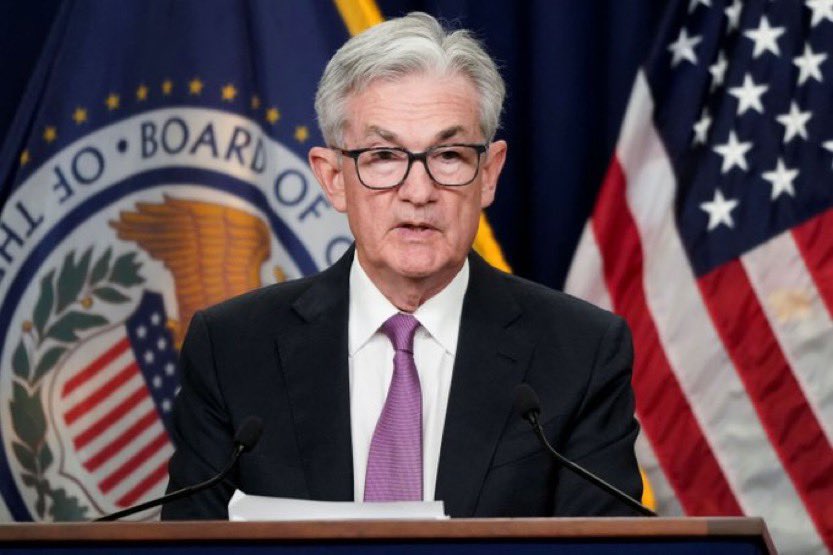
BREAKING:
🇺🇸 Fed Chair Powell says if Warsh isn’t confirmed by the end of his term, he will serve as Fed Chair pro tem.

English
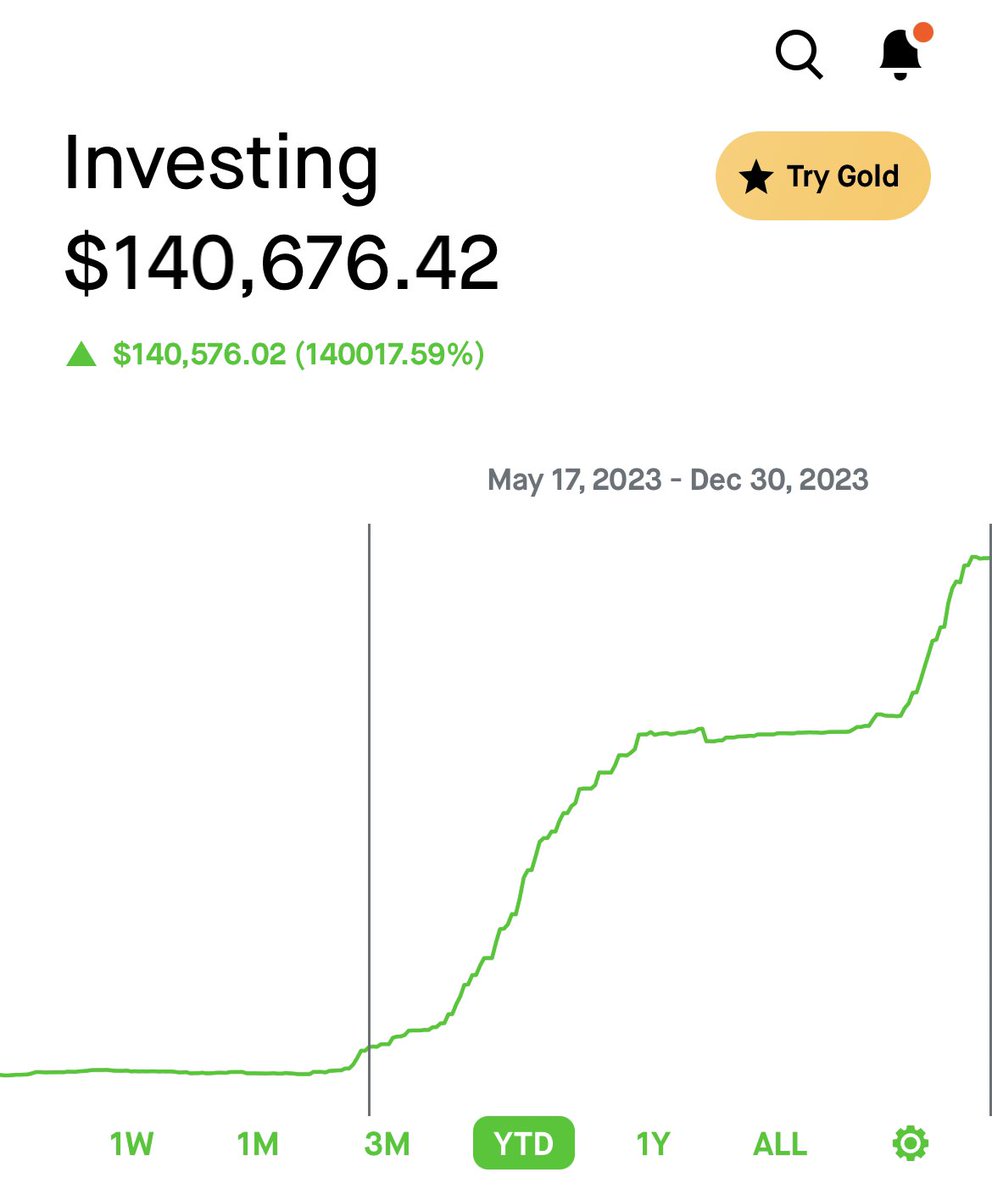
Impressive numbers on the surface, but returns like this deserve a closer look beyond the headline. Turning $100 into $140K in 7 months implies extremely high risk exposure, aggressive compounding, and likely significant leverage or concentrated bets.
The key question isn’t just how much was made, but how it was made. What was the max draw-down? How consistent was the strategy? And more importantly, is it repeatable under different market conditions?
In highly volatile markets like crypto, outsized gains often come from equally outsized risk. Survivorship bias plays a big role—many accounts attempt similar strategies, but only a few make it through without blowing up.
Transparency helps, but true credibility comes from risk-adjusted returns, not just absolute gains. Metrics like Sharpe ratio, win/loss consistency, and capital preservation matter far more in the long run.
That said, if the trades are genuinely documented in real-time and not hindsight-based, it does show strong market timing and execution skills. But sustainability is the real benchmark here—not a single explosive run.
In trading, longevity > virality.
One cycle can make you look like a genius—multiple cycles prove you actually are.
English

small account $100 to $140k in 7 months
total compounded gain of (140,000%)
all trades posted on here 🔔
English
@CoinMarketCap That resistance range aligns with profit-taking zones and elevated open interest. If BTC can absorb selling pressure there, it would signal strong demand—but failure could trigger another round of volatility and liquidations.
English

LATEST: 📈 CryptoQuant says traders have turned bullish ahead of today's Fed decision, but that Bitcoin could face resistance between $75,000 and $85,000 amid potential selling pressure.


English
@elonmusk Those figures are striking, but they highlight how complex homelessness policy really is. Costs often reflect emergency responses, healthcare, and inefficiencies—not just direct support. The real question is how to transition spending toward long-term solutions that actually work
English
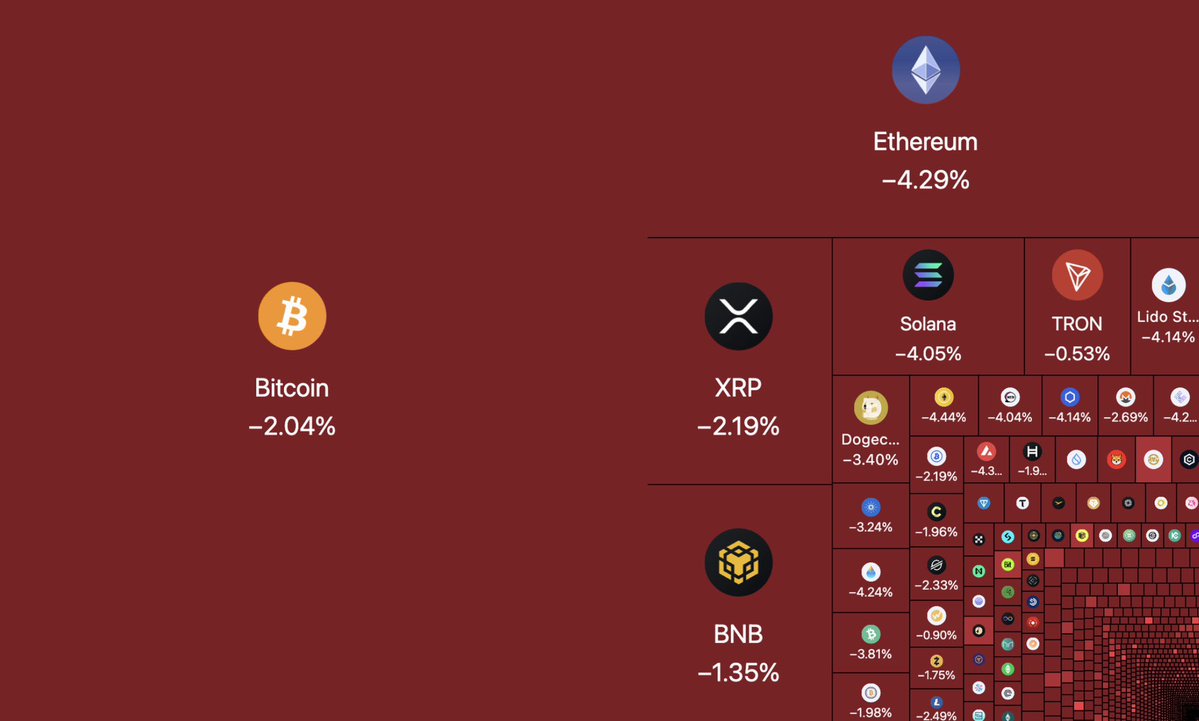
@AshCrypto Large liquidations like this are a reminder of how leverage amplifies volatility in crypto. What we’re seeing isn’t just panic—it’s a cascade effect from over-leveraged positions getting wiped. Structurally, these resets often clear the path for healthier market continuation.
English
🚨 $71,000,000,000 has been wiped out from crypto market in 120 mins
English
@saylordocs Interesting take. On-chain data shows strong long-term holder conviction and reduced exchange supply, which supports a higher price trajectory. Still, global liquidity and risk sentiment remain key variables before we start calling $200K inevitable.
English

BITCOIN IS GOING TO $200,000.
CHART SAYS IT ALL 🚀
English
@CoinMarketCap Big money is flowing in.
But where do YOU think price will react next?
I already have my zones mapped.
English
LATEST: 📈 US spot Bitcoin ETFs have posted their longest inflow streak since October 2025, pulling in $966 million over six consecutive days through Monday.
English
@AshCrypto 80K or 50K?
That’s the kind of guessing game retail gets trapped in.
Price doesn’t care about opinions. It reacts to zones. Every. Single. Time.
While most are voting… I’m trading reactions with precision.
If you’re tired of guessing, go see what I’m actually doing. 👀
English
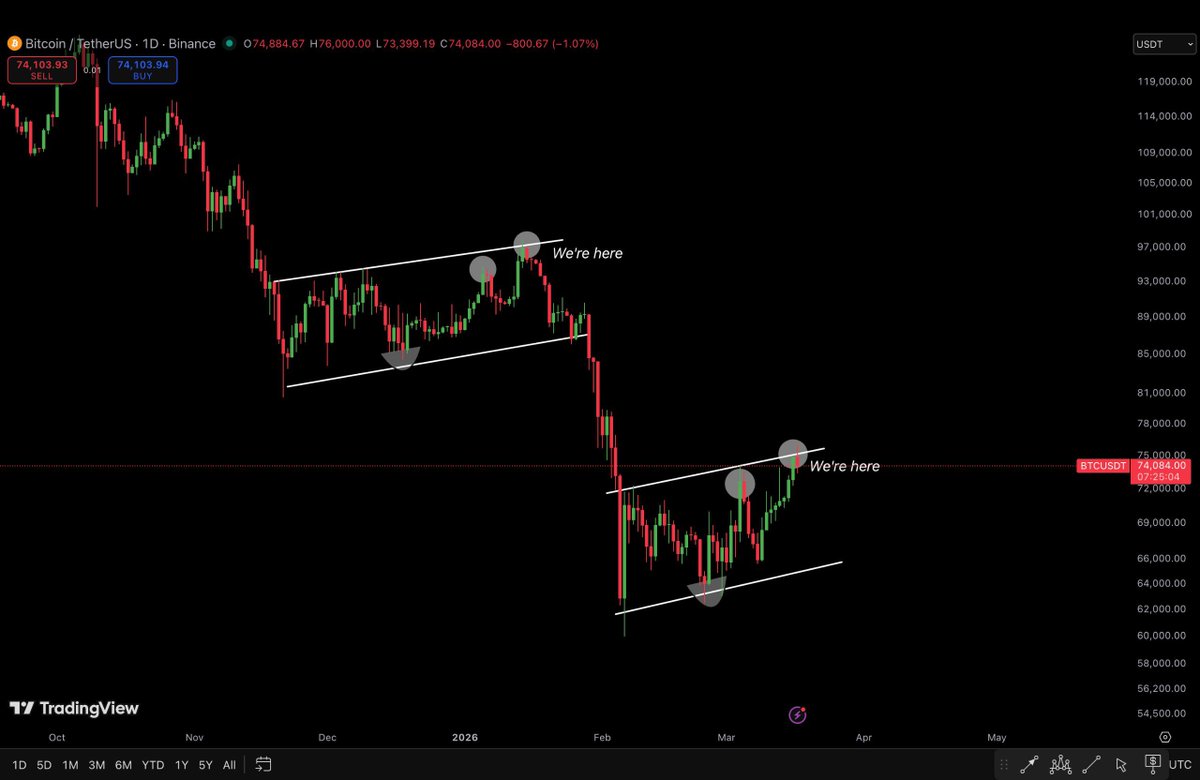
Where do you think Bitcoin is heading:
$80,000 or $50,000 ?
English