
artesian

5.8K posts

artesian banner
artesian

artesian

@artesianvc

Bespoke #VC delivering financial & strategic returns for govt. organisations, corporations, research institutes & institutional investors via deep collaboration

Sydney, Australia Bergabung Temmuz 2010
406 Mengikuti3.4K Pengikut
Tweet Disematkan
artesian
artesian@artesianvc·
Artesian’s Venture Capital as a Service (VCaaS) platform addresses the increasingly complex needs of organizations building/extending VC capabilities & dealing with the financial & strategic challenges / opportunities presented by thousands of potentially disruptive startups #VC
English
2
9
22
0
artesian
artesian@artesianvc·
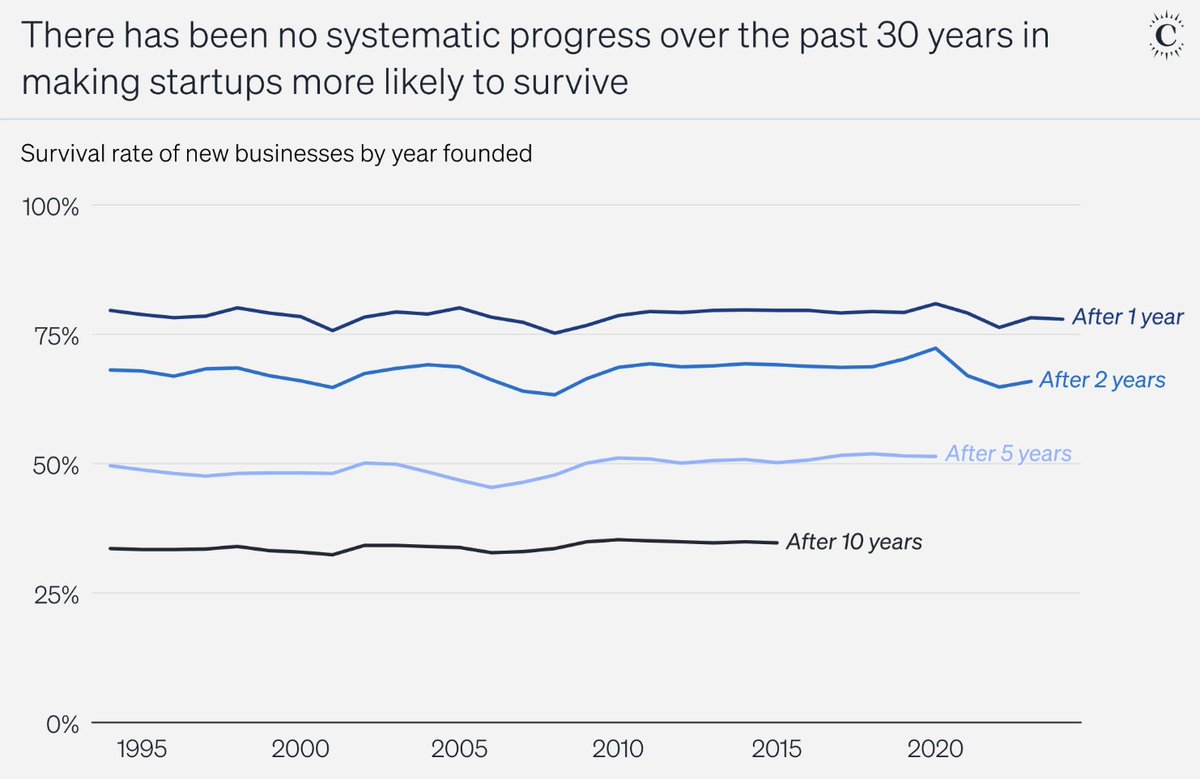
@ganeumann In power law systems, improving the process doesn’t change the distribution - it increases the number of draws. And more draws mathematically guarantee bigger (and rarer) outliers via preferential attachment + multiplicative growth + extreme value effects.
English
2
0
1
25
Jerry Neumann
Jerry Neumann@ganeumann·
This chart has been bothering me for a while. Why, with all the new methods we have to build startups, have failure rates stayed the same? So I wrote about it
Jerry Neumann tweet media
English
6
6
33
5.2K
artesian
artesian@artesianvc·
Congratulations to the team at @hbfhealth on the launch of HBF Ventures, a new $25M corporate venture capital fund investing in health innovations aimed at improving the wellbeing of HBF’s 1.2 million members. Managed by Artesian, the fund will invest over a 10-year horizon
artesian tweet media
English
0
0
0
126
artesian
artesian@artesianvc·
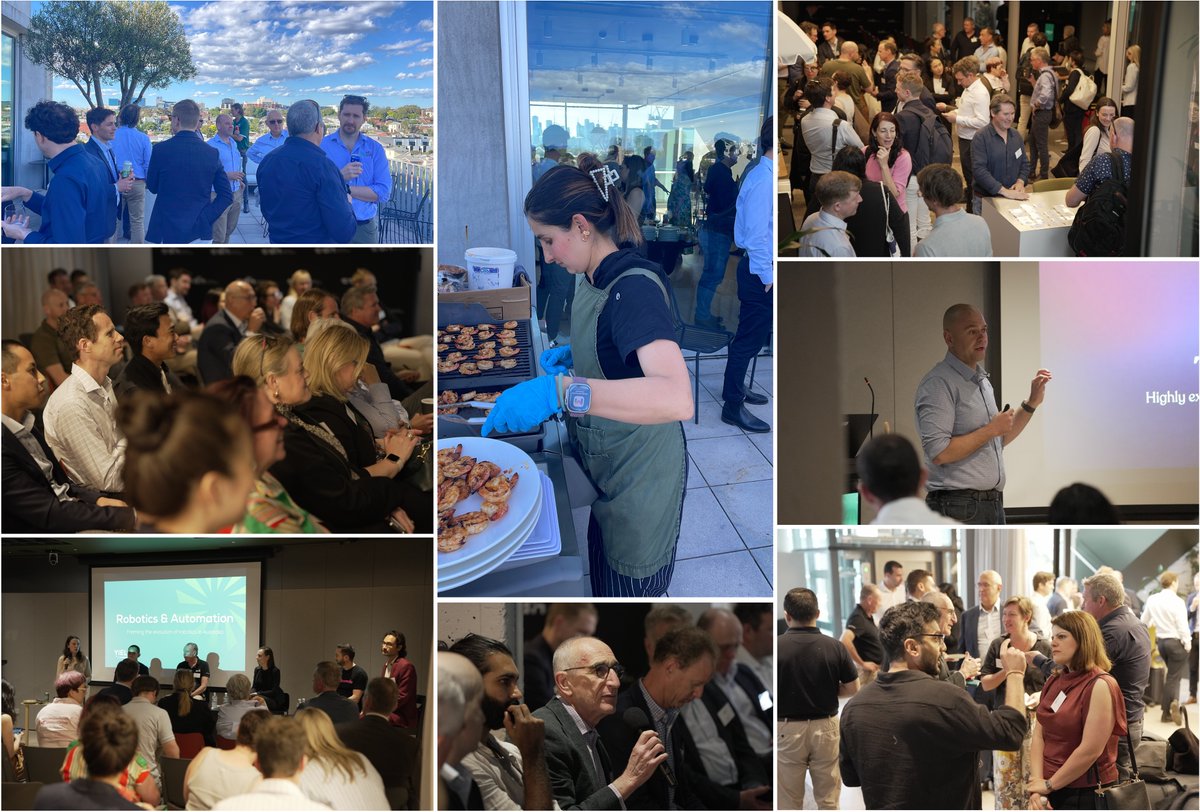
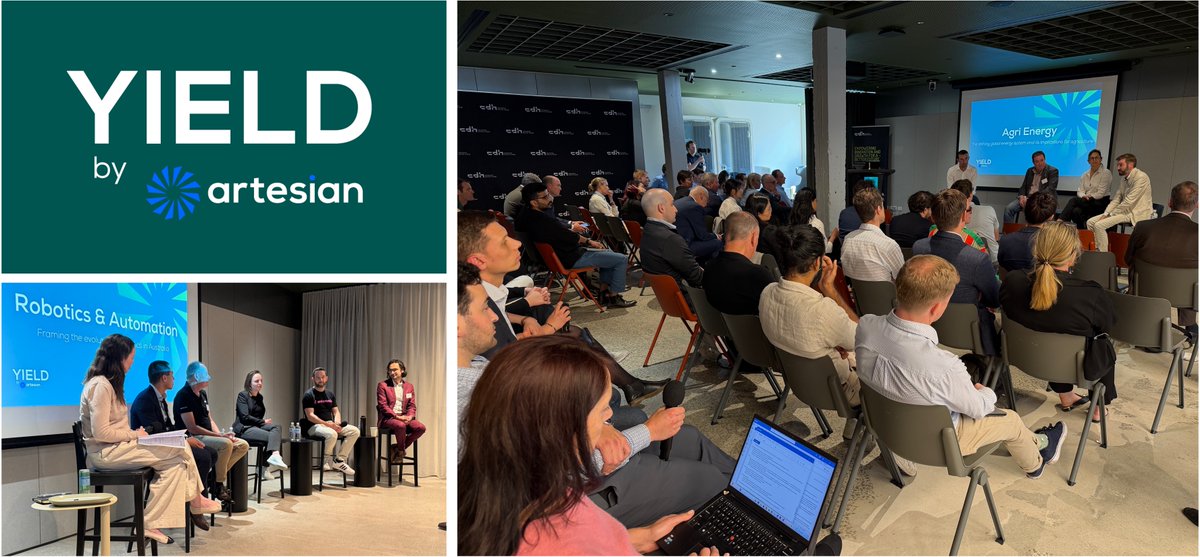
Last week, Artesian hosted our inaugural Yield #agrifood summit in Melbourne, bringing together more than 80 leaders from RDCs, government, corporates, growers, researchers, startups & investors. Read more in our full recap here: lnkd.in/gA-vk28v
artesian tweet mediaartesian tweet media
English
0
0
0
72
artesian me-retweet
TradeTalks
TradeTalks@TradeTalks·
.@artesianvc Managing Partner John McCartney joined @JillMalandrino to discuss why the bond markets will provide the funds to scale energy infrastructure. Watch the full video: spr.ly/6010AkMQI
English
1
1
3
260
artesian me-retweet
SAVCFund
SAVCFund@SAVCFund·
⁦⁦@flavia_space⁩ ⁦@fleetspace⁩ - from its headquarters in Adelaide - makes and sends shoebox-sized satellites into space and uses artificial intelligence technology to find critical mineral deposits. afr.com/wealth/people/…
English
0
1
1
128
artesian me-retweet
Dan Gray
Dan Gray@credistick·
- There's a ~0.5–2.5% chance that a venture backed company, at seed, will produce a unicorn outcome. According to @IlyaStrebulaev: 0.5% According to @AngelList: 2.5% According to: @CBinsights: 1.28% - Most VCs are willing to admit they really can't predict which of their investments will be a winner. "After the deployment period for 20VC Fund I, I did an analysis of portfolio. I predicted the top 5. Three years later, not one of the top 5 is as predicted. The true value from seed is always the messy middle." (source: Harry Stebbings, Founder of 20VC) - We can follow the common wisdom that you need at least one unicorn+ outcome for decent fund returns. "I looked at our top 20 funds by TVPI. What's the common theme amongst the 3x net funds in our portfolio? 85% of them had at least one company that could return the fund." (source: "Franchise Funds: Metrics To Be Extraordinary with Jessica Archibald") If we verge towards generous and assume a 2% hit rate (you don't necessarily need a unicorn to return a smaller fund), the conclusion should be that seed managers should probably target at least 50 investments, to optimise for at least one unicorn. However, the 'rule of thumb' (surprising lack of data here) for a right-sized seed portfolio seems to be 25-30 investments per fund. What explains this? 1) Signalling If you try to sell LPs on a properly diversified portfolio, you may be signalling an inability to pick, and they may interpret your strategy as offering weaker returns. "A slow and steady 'venture is a numbers game' pitch is much less emotionally compelling than 'I am a rock star who can consistently beat the odds.' And GPs need an emotionally appealing pitch to get funded." (source: "The Pervasive, Head-Scratching, Risk-Exploding Problem With Venture Capital") It's far easier to sell them on the idea that you have an asymmetric edge which allows you to find success more easily, and take more concentrated positions. 2) Pattern Matching Success If you want to be a top performer, you might be tempted to emulate the practices of legendary firms. e.g. @USV seems to target 20-25 investments per fund. This has some obvious errors built in. You don't have the brand to get the "best founders" (pick your definition of "best founder") queuing up at your door. More importantly, you don't yet have the experience and perspective to properly manage a process and achieve above-odds success. At the very least, you haven't yet proven that ability — and offering it to LPs is a failure of your fiduciary duty. 3) Less Work / "More Value-Add" A cheap point, but a true one. 50 companies is more to manage, even if you're generally not a lead investor or taking an active role as an advisor. The other side to that, if you tell LPs that you have some brilliant operator wisdom to help guide your portfolio founders, it's easier to make that case in relation to 20 investments than it is for 50+. Here's why all of this is a problem: At 50 investments, with a 2% unicorn hit rate, venture capital is (just about) a portfolio strategy. Your actual probability of landing a unicorn is 63.5% (not 100%, sadly), which is a decent margin over a coin-toss. Importantly: you're able to run a decent process, manage risk reasonably well, optimised for the realities of venture. As such, you can more comfortably back potential outliers, outside of the consensus. "Returns in venture capital are distributed according to a Power Law with the lion’s share of returns earned from a small number of investments. The data demonstrate this distribution to be true across the industry and even within firms. In short, VCs cannot reliably pick winners. They can, however, construct portfolios that consistently generate great returns." (source: "Picking Winners is a Myth") From 49 investments and lower (34 is where your odds become worse than a coin-toss) you are increasingly forced to focus on 'picking', not portfolio strategy. A strategy of picking makes sense in PE, where there's a ~60% chance of success from an individual investment. It does not make sense in venture capital, unless you are able to repeatedly and reliably demonstrate an ability to exceed the usual hit rate. VC is a portfolio discipline. At 15 investments (26.1% hit probability across the portfolio), you are so exposed to the consequence of each pick that you are forced to seek the comfort of irrationality, like overconfidence and confirmation bias. Alternatively, you'll join the herd on a 'safe' consensus theme, sure to generate good markups. Neither of these tends to end well, and at risk of repeating my earlier post: this is why venture capital has such poor aggregate returns, weak persistence, and high churn. Doesn't concentration drive returns? A common rebuttal to this case for diversification is that it might limit your chance of being a bottom top quartile manager, but it does so by jeapordising your chance at hitting top quartile. This is not true. Portfolio modelling and historical data suggests that larger portfolios (to a point) are more likely to outperform. For example, @davemcclure's analysis showed, of portfolios of 15, 30 and 100 companies, the latter was the only top quartile outcome. A larger portfolio, with less concentration, might make it less likely that you land a top 5% fund outcome, but it makes it much more likely that you'll do well enough to survive and raise again. Indeed, we can model two different portfolio approaches to simulate this: Fund sizes: Both start with $50 m; $40 m is investable (typical 2 % / 20 %) Portfolio construction: Diversified: 100 × $0.4 m Concentrated: 20 × $2 m Ownership after dilution: Diversified: 2.46 % (3 % × (1–18 %)) Concentrated: 10 % Exit distribution: Discrete power‑law flavoured mix used in academic VC return papers: 70 % fail (0), 20 % $50 m, 7 % $200 m, 2.5 % $500 m, 0.4 % $1 bn, 0.1 % $2 bn Metric tracked: (MOIC) at the fund level The outcomes are as followed (displayed in the chart below): Mean fund multiple: Diversified: 2.6x Concentrated: 2.1x Median fund multiple: Diversified: 2.5 x Concentrated: 1.9 x Chance of ≥ 1x (capital‑preserving): Diversified: ≈ 99.7 % Concentrated: 81.9 % Chance of ≥ 2x: Diversified: 77 % Concentrated: 47 % Chance of ≥ 3x: Diversified: ×27 % Concentrated: 22 % 95th‑percentile outcome: Diversified: 4.0x Concentrated: 4.8 x As expected, the diversified fund beats the concentrated fund on all outcomes except the 95th-percentile. Importantly, it's significantly more likely to deliver >2x and >3x, which means the GPs are able to raise a successor fund — offering the chance to learn and refine. There is no room for error with a more concentrated fund. Failure is a hard landing. A track record of consistent >3x funds is probably also more valuable to LPs than a one-off 8x fund followed by performance all over the map. You'll be a better partner to them, and a more reliable partner for your portfolio founders. In conclusion, even if you believe picking is your unique strength as an investor, why not give yourself 50+ opportunities to pick? There's nothing stopping you choosing a dozen rockstar outcomes, if you are so enabled. The concentration problem drives a huge amount of underperformance, and is largely why ~50% of funds struggle to deliver 1x back to LPs today. Or the ~75% that struggle to deliver 2x. The extent of underperformance is much bigger component of venture capital's sickness than the razor-thin tail of outperformance.
Dan Gray tweet media
TBPN@tbpn

We asked @credistick what VCs get wrong about risk management. "If you properly manage risk, you can take more risky bets." "According to Dave McClure, a seed stage fund should have 100 startups, because of the small % that some become unicorns or deca-corns."

English
32
34
267
113.3K
artesian me-retweet
Vicky Lay
Vicky Lay@VickyLay_·
At SusHi Tech (Sustainable High City Tech) Tokyo 2025 - one of Asia’s Largest Startup Conference - come say hi! 👋 @artesianvc
Vicky Lay tweet mediaVicky Lay tweet mediaVicky Lay tweet media
English
1
1
2
316
artesian me-retweet
Vicky Lay
Vicky Lay@VickyLay_·
Just left the Australian NY Tech Community Spring meet up event tonight organized by @Austrade at @Macquarie new offices… was a pleasant surprise to run into @artesianvc PortCo, @fleetspace & to finish the night with a pink sunset! 📸👇 (from left) -Ross Compton, Macquarie Group -Richard Hordern-Gibbings, Fleet Space Technologies -Rachel Howard, Trade & Investment Commissioner, AusTrade. -Benjamin Soemartopo, CEO EurekaAI
Vicky Lay tweet mediaVicky Lay tweet mediaVicky Lay tweet mediaVicky Lay tweet media
English
1
1
1
176