Tweet Disematkan
ima ✮
37.3K posts

ima ✮ me-retweet

260404 AEXIS LINE JAKARTA
KARINA THE FINE WOMAN THAT YOU AREEE💙
#KARINA #카리나 #aespa #에스파
#aespa_SYNK_aeXISLINE_JAKARTA
English
ima ✮ me-retweet

ima ✮ me-retweet

Why doesn't the media talk about the peacekeepers killed by Israel in Lebanon?
Israel deliberately killed three UN Indonesian peacekeeper and wounded others in Lebanon.
Israel cannot continue to be treated as a full member of the UN.
Attacking UN peacekeepers is an abomination which was in the past perpetrated by terrorists, but never by members of the UN.
Some of you pretended to care what the UN had to say in 1948. Do you care that the UN of today has had more UN personnel killed in the last 2 years than in its history.
This is the moment we can salvage what remains of the UN and international law. I call on everyone to unite for the sake of our humanity and to end impunity for violating international law.
English
ima ✮ me-retweet

Israel killed 3 Indonesian UN peacekeepers in South Lebanon.
They were wearing blue helmets.
They were in UN uniforms.
They were peacekeepers.
Israel bombed them anyway.
Not a peep in Western media.
Not a word from the international community.
Kick Israel out of the UN.
English
ima ✮ me-retweet

i wonder what i was doing at the exact time this was taken
NASA@NASA
We see our home planet as a whole, lit up in spectacular blues and browns. A green aurora even lights up the atmosphere. That's us, together, watching as our astronauts make their journey to the Moon.
English
ima ✮ me-retweet

In bleach terms, this is like kenpachi leaving the Gotei 13.
Pop Base@PopBase
Mark Lee is leaving NCT, including NCT 127 and NCT DREAM.
English
ima ✮ me-retweet

This photo of Earth is EXTRA spectacular for a good reason... let me explain. Most images you see of Earth from space are the daylight side of the Earth, and it's obviously very bright (see my last image), this means stars are too dim to be seen with that bright exposure setting (low ISO, high shutter and / or stopped down aperture).
BUT this image taken by the Orion crew looks so incredible because you can see the sun is BEHIND the earth, meaning it's night time on the side of the earth facing the crew in this image.
So how do you expose a night time earth from space? Same way you do on Earth! A mixture of opening up the aperture (F4 in this case), cranking the ISO (51,200 here), and using a relatively long exposure (1/4 of a second). We can see the settings used by looking at the exif data from the camera. What this means is our camera is also sensitive enough to see stars in the background of Earth, leading to an extraordinary image!!! GREAT WORK!!! These are the kind of images I've been so excited to see!


NASA@NASA
We see our home planet as a whole, lit up in spectacular blues and browns. A green aurora even lights up the atmosphere. That's us, together, watching as our astronauts make their journey to the Moon.
English
ima ✮ me-retweet

ima ✮ me-retweet

These two images were taken by @astro_reid only minutes apart. The stark difference is the result of camera settings. In the first, a longer shutter speed let in much more light from Earth, while the shorter shutter speed in the second emphasizes our planet's nighttime glow.


English
ima ✮ me-retweet
"Suddenly, we're up there with them."
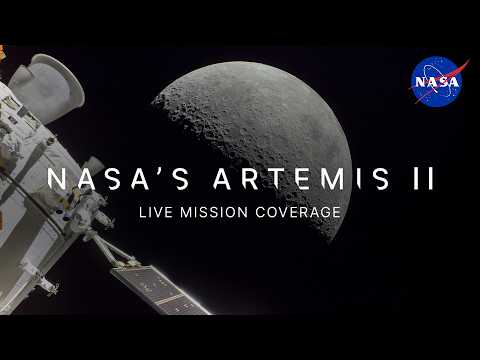
We're sharing the Artemis II crew's first images from space—keep following our 24/7 live feed for the latest mission updates: youtu.be/m3kR2KK8TEs
YouTube
English
ima ✮ me-retweet



ima ✮ me-retweet

That's us! 🌍
The Artemis II crew captured beautiful, high-resolution images of our home planet during their journey to the Moon. As @Astro_Christina put it: "You guys look great."

English


ima ✮ me-retweet

ima ✮ me-retweet