Digital shelf performance comes down to execution.
Small gaps in content, availability, or compliance can shift outcomes over time.
See clearly. Act early.
bit.ly/49rNKRs
What gap impacted you most?
#DigitalShelf#RetailData
As volatility drops, small price movements carry more weight.
Minor changes across competitors can shift the market baseline and impact margin over time.
Continuous, accurate monitoring keeps those signals visible.
#CompetitivePricing#MarketIntelligencebit.ly/49rNKRs
If your data only confirms your strategy, it’s not doing enough.
Leaders look for friction, contradiction, signals that test assumptions early.
That’s what strengthens decisions.
What insight challenged your thinking recently?
#DecisionMaking#DataStrategy#ExecutiveInsights
Some organisations move with confidence.
Others spend the cycle explaining performance shifts.
The difference? Reliable external data.
bit.ly/49rNKRs
Where do you most often see reactive behaviour?
#MarketIntelligence#DataStrategy
The real data risk?
Pipelines that “work”, but wrong.
Resilient ops aren’t dramatic.
They’re consistent, monitored, and intentional.
What’s your most costly quiet failure?
#DataOperations#DataQuality#DataReliability
The difference between a dashboard and a board slide?
Clarity.
Structured data → trusted narrative → confident decisions.
bit.ly/49rNKRs
What’s hardest when presenting insights to leadership?
Post-peak doesn’t mean problem-free.
Ratings drop. Images change. Stock gaps hide in plain sight.
Individually minor. Collectively expensive.
Continuous monitoring protects performance.
Check more here: bit.ly/49rNKRs
What’s the digital shelf gap you catch too late?
January observes.
February decides.
This is when pricing, category bets, and investments get locked.
The quality of those calls depends on one thing: trusted external data.
Check here: bit.ly/49rNKRs
By early February, the noise fades.
January data shows which demand shifts are real, not seasonal.
Clean, comparable data turns volatility into insight.
Check here: bit.ly/49rNKRs
2016 mindset, 2026 stakes.
As external data powers reporting, forecasting, and AI, teams are returning to first principles:
• reusable structure
• consistency over one-offs
• governance that scales
We updated our 2017 article for today’s reality:
bit.ly/3ZFHlh8
The first weeks of January quietly decide data quality for the year ahead.
If pipelines aren’t stabilised now, hidden peak-season issues surface later in dashboards and executive reporting.
January stability = year-long trust in data.
Check here: bit.ly/49rNKRs
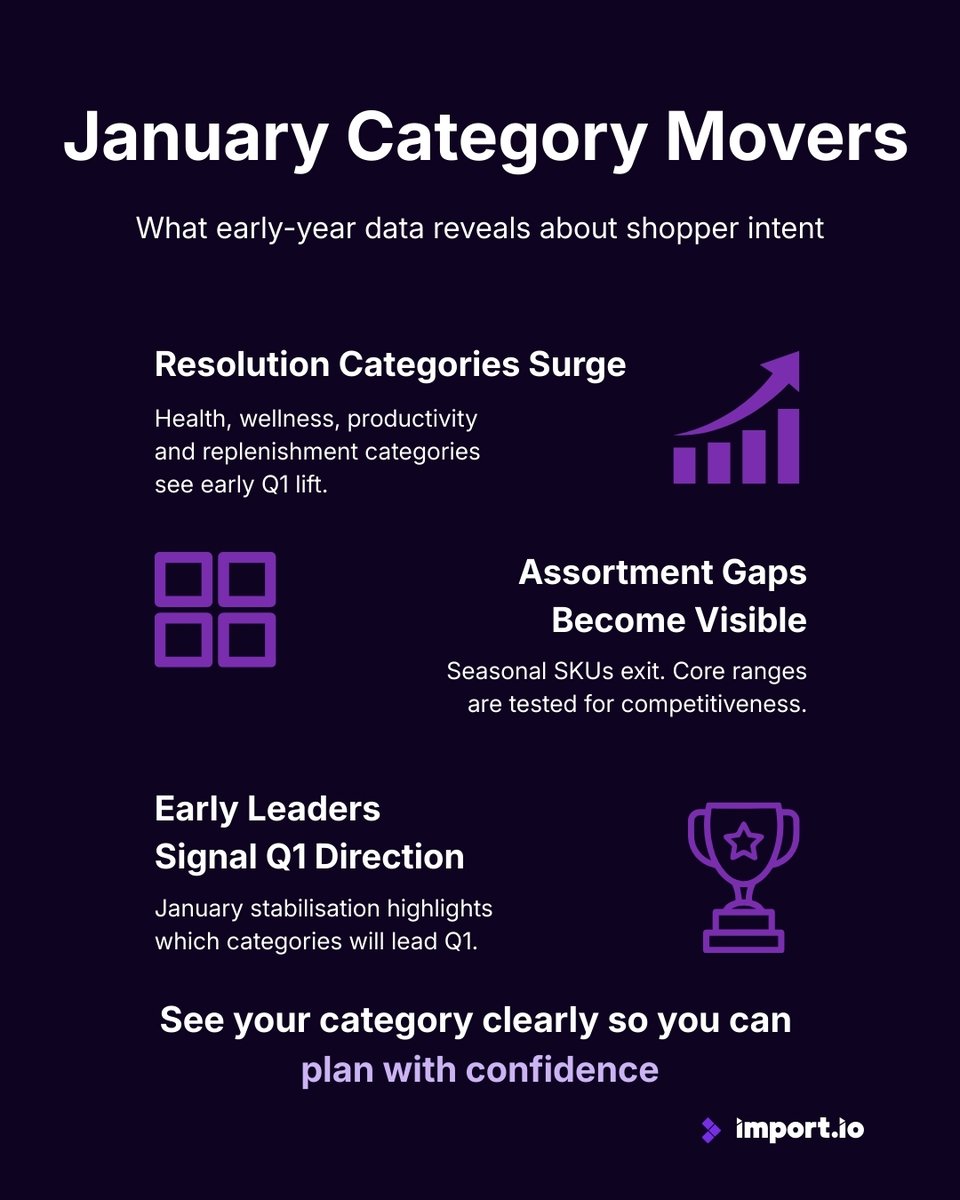
January category data shows:
• resolution-driven demand spikes
• assortment gaps as seasonal SKUs exit
• early winners and laggards as demand stabilises
Teams that act now plan Q1 with clarity and control.
Post-holiday resets bring rapid changes to images, titles, pricing, and availability.
Unchecked inaccuracies distort performance data just when Q1 decisions start.
Daily content monitoring restores clarity, confidence, and conversion.
See your shelf clearly.
Holiday data is not noise.
It signals how categories, price sensitivity and shopper behaviour will shift in Q1.
Teams that structure it into clean time-series datasets gain faster insights, stronger forecasts and better exec narratives.
Use holiday signals before rivals do.