Murray W Stein

692 posts

Murray W Stein banner
Murray W Stein

Murray W Stein

@murraywsteinII

Former President of The International School of Analytical Psychology, Zurich, Switzerland. Author of In MidLife and many other books and articles.

Switzerland Bergabung Mart 2011
225 Mengikuti4.5K Pengikut
Murray W Stein me-retweet
Laura London
Laura London@jungianLaura·
When I showed the music video for #SWIM to Dr. Murray Stein he said this: Map of the Soul, Anima! It shows a journey over the great waters (individuation at midlife). Reminds me of Odysseus. I think #BTS are moving into the stage of individuation after leaving mother and father worlds and moving on to deeper levels than persona, ego and shadow, i.e., encounter with anima. She dominates the film, totally. Dr. Stein returns to the podcast on May 18th for a very special video edition of Speaking of Jung: Interviews with Jungian Analysts. #keepswimming 💜
Laura London tweet media
English
10
288
843
16.8K
Murray W Stein me-retweet
Laura London
Laura London@jungianLaura·
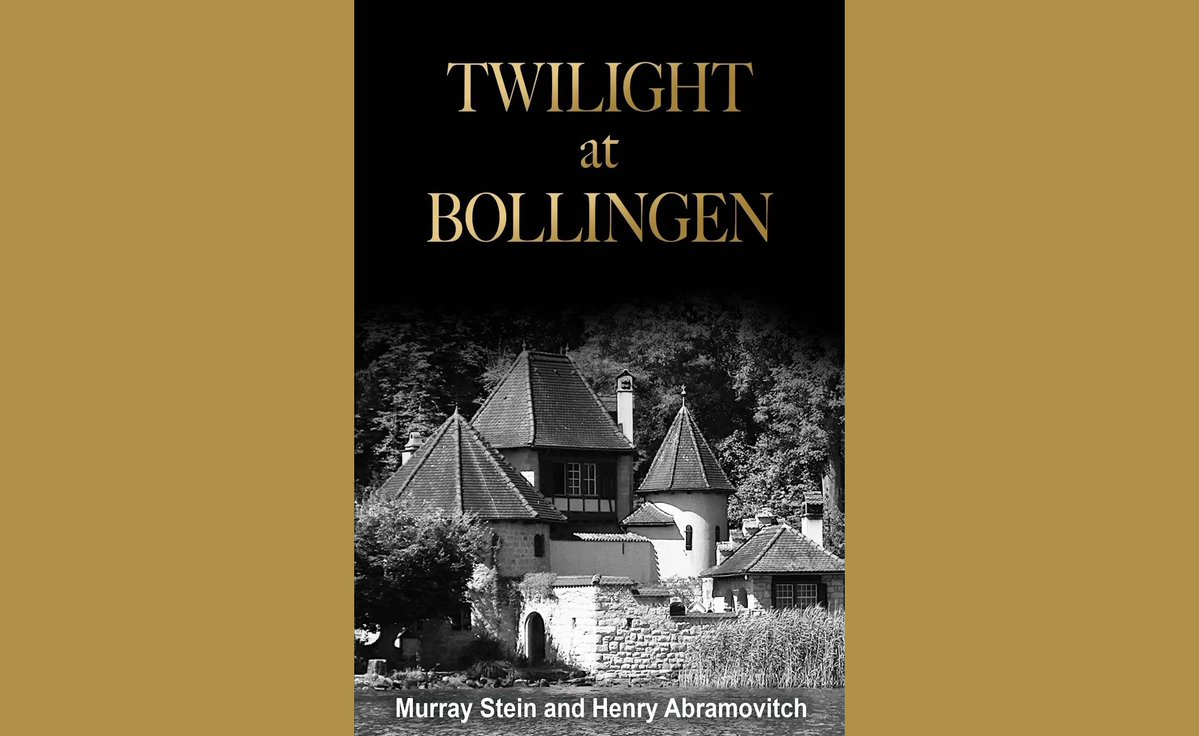
BOOK LAUNCH: Twilight at Bollingen by Jungian psychoanalysts Murray Stein (@murraywsteinii) and Henry Abramovitch, was released by Chiron Publications (@ChironBks) on April 1st. There will be a free book launch on Zoom on Wednesday, April 22nd at 1:00 PM EDT. Twilight at Bollingen is a play with four characters – C.G. Jung, Aniela Jaffé, Erich Neumann and Marie-Louis von Franz – speaking about Jung’s legacy. The play is set at Jung’s tower in Bollingen and takes place in the last years of his life. It is a tribute to Jung and to his successors, as well as a dialogue about the #shadow of Analytical Psychology, the afterlife, and personal destiny. This volume includes chapters by each member of the Ensemble, all Jungian Analysts, specially written, who give unique reflections as performers and analysts. Includes Speaking of Jung guests Murray Stein (15 episodes), Henry Abramovitch (Ep. 47 & 126), Paul Brutsche (Ep. 147), and Kathrin Schaeppi (Ep. 148). Table of Contents: ▪️Twilight at Bollingen: A Play, by Murray Stein (14 episodes) and Henry Abramovitch ▪️Speaking of Twilight at Bollingen: A Conversation between authors Murray Stein and Henry Abramovitch ▪️The Bollingen Tower and Its Symbolic Significance, by Paul Brutsche ▪️Twilight: “I enter into a twilight: I am this and yet also something else.,” by Kathrin Schaeppi ▪️Twilight at Bollingen – A Reflection, by Marco Della Chiesa ▪️The Owl’s Gaze – Announcing the Twilight, by Heike Weis Hyder ▪️Music for Twilight at Bollingen: Excerpts from Serge Rachmaninoff, Sonata in G minor for Cello and Piano, by Barbara Helen Miller 📔 Get the book (*aff link) – amzn.to/4cc8oqm 🖥️ Attend the Zoom Book Launch – #success" target="_blank" rel="nofollow noopener">eu01web.zoom.us/j/68377934727?…
Laura London tweet media
English
1
1
9
497
Murray W Stein me-retweet
Protect Kamala Harris ✊
Protect Kamala Harris ✊@DisavowTrump20·
RETWEET if you stand with the Obamas against Trump’s racist attacks!
Protect Kamala Harris ✊ tweet media
English
2.3K
42.5K
123.8K
2M
Murray W Stein me-retweet
Occupy Democrats
Occupy Democrats@OccupyDemocrats·
BREAKING: Vatican sends Trump’s favorite Cardinal packing as Pope Leo cleans house. In a move that sent shockwaves through both the Catholic Church and MAGA world, Pope Leo has officially shown Cardinal Timothy Dolan the door—replacing Donald Trump’s favorite cleric with a far quieter, far less political bishop from Illinois. Yes, that Cardinal Dolan. The Fox News regular. The inauguration prayer guy. The culture-war crusader who once called slain MAGA commentator Charlie Kirk a “modern-day Saint Paul.” That Dolan is now out as head of New York’s powerful Catholic archdiocese, after Pope Leo accepted his resignation and tapped Bishop Ronald Hicks to take his place. And the message from Rome couldn’t be clearer: the Trump-aligned, red-meat brand of American Catholic politics is officially out of favor. Dolan, long seen as a reliable spiritual cheerleader for Trumpism, was so beloved by the former reality-TV president that Trump once floated Dolan as a potential pope—and even mused about nominating himself for the job. But Pope Leo, the first American pope in history, apparently had other ideas. Enter Bishop Ronald Hicks: 58, low-profile, media-averse, and blessedly uninterested in cable-news culture wars. Hicks, who grew up near Pope Leo in Chicago’s south suburbs and shares a background in missionary work, represents a sharp pivot away from Dolan’s performative politics. The shake-up comes as Pope Leo has increasingly clashed with Trump’s agenda, condemning his “inhuman” immigration policies and urging him to back away from reckless saber-rattling over Venezuela. In other words, the Vatican is done pretending Trumpism and Christian compassion are compatible. Experts say the move is no accident. Dolan didn’t just retire—he was replaced. “This is a sign of change,” said one church scholar, noting that Hicks is far less likely to justify or excuse Trump’s behavior. While not a liberal firebrand, Hicks has made clear he wants a church focused on unity, healing, and cooperation—concepts that don’t exactly poll well on Truth Social. Dolan’s resignation was technically routine—bishops submit them at 75—but popes don’t have to accept them. Pope Leo did. Immediately. Bishop Hicks will be installed as New York’s new archbishop on February 6, marking the end of an era where MAGA politics enjoyed a privileged seat in America’s largest pulpit. In short, Trump lost another ally, the Vatican reclaimed the moral high ground, and the culture-war cardinal just got benched by the pope. Please like and share to thank Pope Leo for the welcome change!
Occupy Democrats tweet media
English
945
5.7K
22K
930.9K
Murray W Stein me-retweet
Laura London
Laura London@jungianLaura·
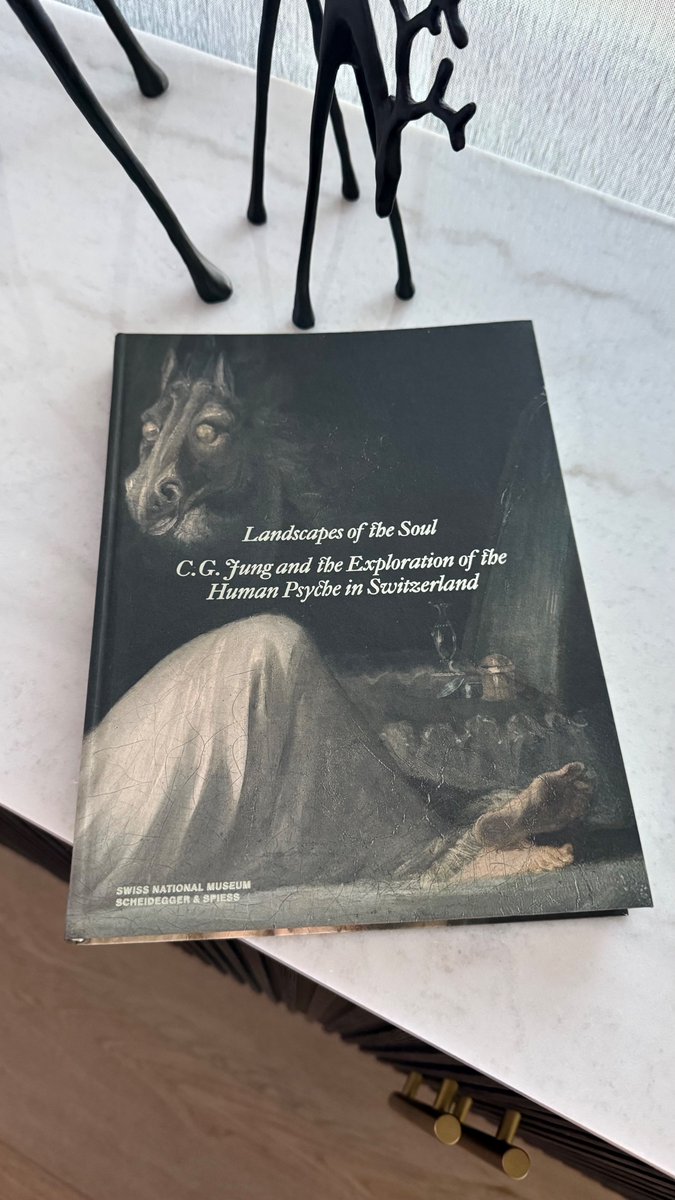
Landscapes of the Soul: C.G. Jung and the Exploration of the Human Psyche in Switzerland, published by the Swiss National Museum (Scheidegger & Spiess, 2025), drops December 22nd. Includes essays by Speaking of Jung guests @MurrayWSteinII, Ph.D. (“C.G. Jung as Thinker and Author”) and Thomas Fischer, Ph.D. (“Emma Jung: A Pioneer in Swiss Depth Psychology”). 🔗 |: amzn.to/3FJlv6a {as an amz assoc we earn from qualifying purchases}
Laura London tweet media
English
1
11
45
1.4K
Murray W Stein me-retweet
Laura London
Laura London@jungianLaura·
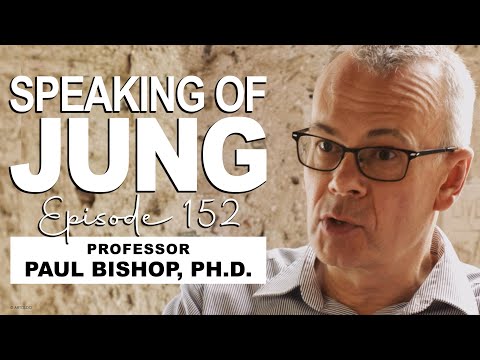
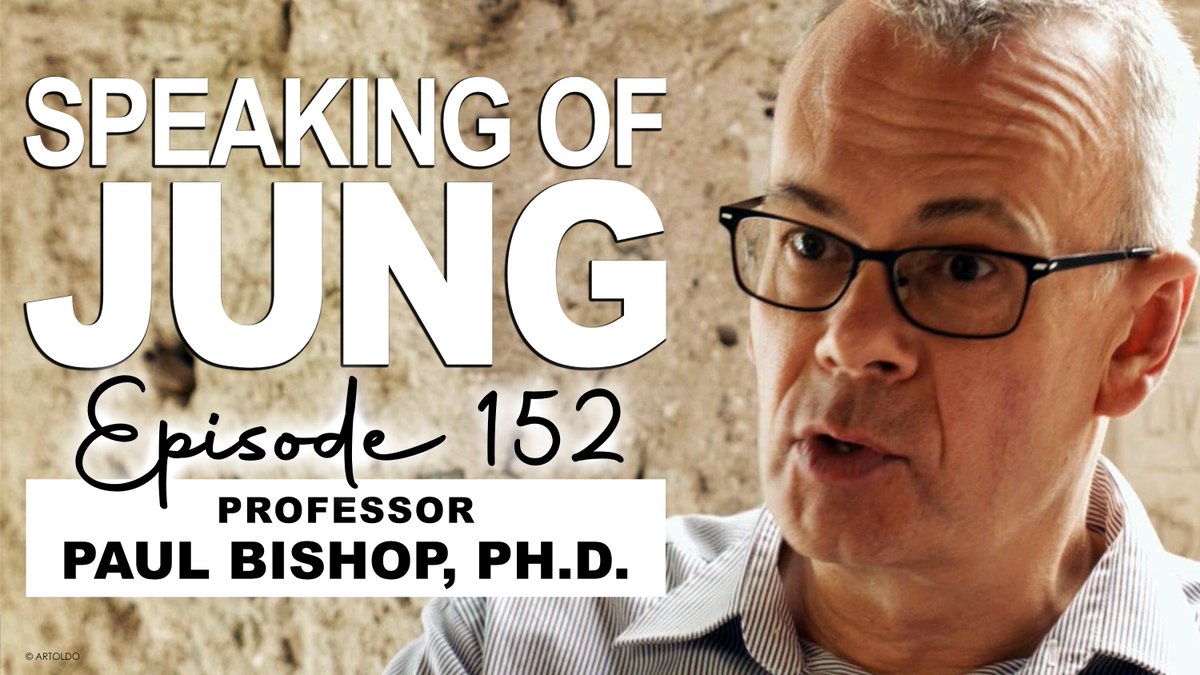
The new episode of Speaking of Jung with Professor Paul Bishop (@paulbishop4U) is now available on YouTube. (Podcast edition with full show notes coming later in the week.) We discuss the influence of Goethe's Faust on C.G. Jung. youtu.be/Nsmix6kT99c
YouTube video
YouTube
Laura London tweet media
English
0
7
23
1.3K
Today In History
Today In History@historigins·
When Robin Williams managed to make Koko the gorilla smile again after six months of mourning
English
424
5.3K
71.6K
1.6M
Laura London
Laura London@jungianLaura·
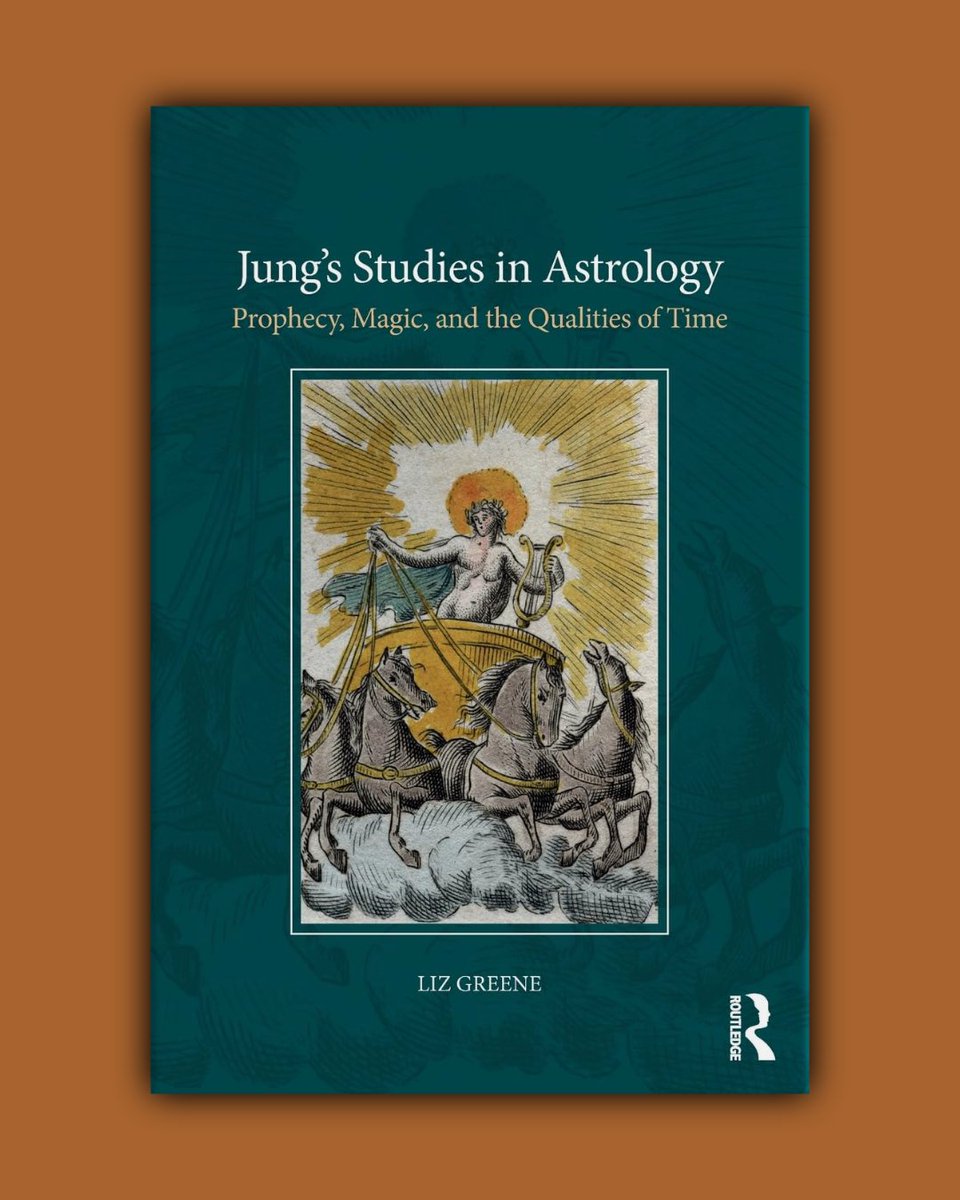
“[L]ittle attention has been paid to #Jung’s own statements: that he began studying #astrology while he was still working with Freud ‘in order to find a clue to the core of psychological truth’;⁷² that he used natal horoscopes to better understand the #unconscious dynamics of his patients ‘in cases of difficult psychological diagnosis’;⁷³ that he recommended that any person training as a psychotherapist should learn astrology;⁷⁴ and that astrology’s value ‘is obvious enough to the psychologist, since astrology represents the sum of all the #psychological knowledge of antiquity’.⁷⁵ These are weighty statements, yet their full significance is usually acknowledged only by astrological practitioners. Nor has any research been done on the large number of interpretations of his own horoscope that Jung requested from astrological practitioners, especially in Britain and the United States, and the numerous horoscopes of patients, friends, and family members, in both his own and Emma Jung’s handwriting, that are found in his private archives. Jung's published statements and, even more, the documentary evidence of his private papers, make clear the fact that astrology was of immense importance to him, personally and in his psychological work. Yet this importance has largely been ignored. Also ignored is the fact that the various late antique cosmologies with which Jung was preoccupied while he worked on Liber Novus [The Red Book] – Gnostic, Neoplatonic, Orphic, Hermetic – were, as he himself noted, based on an astrological cosmology that focused on the celestial origin of the human soul, the dilemma of planetary fate, and the journey of the soul, assisted by theurgic ritual, toward its transformation and freedom beyond the compulsions of the planetary spheres.⁷⁶ Jung’s persistent concern with astral fate as inner compulsion, his interpretation of fate in the context of ‘individuation’, and his use of theurgy in psychotherapy, are not subjects ordinarily discussed in works on the development and application of his ideas. In order to fully explore Jung’s astrology, this book examines these older cosmologies and the interpretations and applications Jung developed, based on what he found in the primary sources and in the later scholarly interpretations available to him. My second book, The Astrological World of Jung’s ‘Liber Novus’, focuses on Liber Novus itself, and the ways in which astrology infuses both the text and the images of this remarkable personal and, at the same time, mythic human journey. If, as Jung himself declared, the years he spent working on Liber Novus provided the raw material for all his later theories, then astrology, as Jung understood and worked with it, is unquestionably one of the most important foundation stones of analytical #psychology and needs to be acknowledged as such, without prejudice and with the same methodological agnosticism that Ninian Smart recommended long ago for all scholars, whatever their domain of research.” ⁷² C.G. Jung, Letter to Sigmund Freud, 12 June 1911, in C.G. Jung Letters, Vol. 1, pp. 23–24. ⁷³ Letter to B. V. Raman, 6 September 1947, in C.G. Jung Letters, Vol. 1, pp. 475–76. ⁷⁴ Letter from Ira Progoff to Cary F. Baynes, courtesy of Sonu Shamdasani. ⁷⁵ Jung, CW15, ¶81. ⁷⁶ For Jung’s discussions on fate and the planetary ascent of the soul, see Chapter 5. For this theme in the religions of late antiquity, see Alan F. Segal, ‘Heavenly Ascent in Hellenistic Judaism, Early Christianity and Their Environment’, in Aufstieg und Niedergang der römischen Welt (ANRW), Vol. 2, ed. W. Haase (Berlin: De Gruyter, 1980), pp. 1333–94; Ioan P. Couliano, Psychanodia I (Leiden: Brill, 1983). ~Liz Greene, Ph.D., Jungian analyst, Introduction: The pursuit of ‘wretched subjects,’ Jung’s Studies in Astrology: Prophecy, Magic, and the Qualities of Time, pp. 10-11 🌞 Astrologer Gary Caton (@HermeticAstro) and I will be discussing Jung’s natal chart next week on the return of Speaking of Jung II (a.k.a. Speaking with Laura).
Laura London tweet media
English
8
23
147
6.4K
Murray W Stein me-retweet
Laura London
Laura London@jungianLaura·
All of my research notes for Episode 151 with Jungian psychoanalysts Murray Stein and Steven Herrmann have been sent to Patreon members. Contribute just $5 per month to our Tip Jar for full access.
Laura London tweet media
English
1
2
16
931
Murray W Stein me-retweet
Laura London
Laura London@jungianLaura·
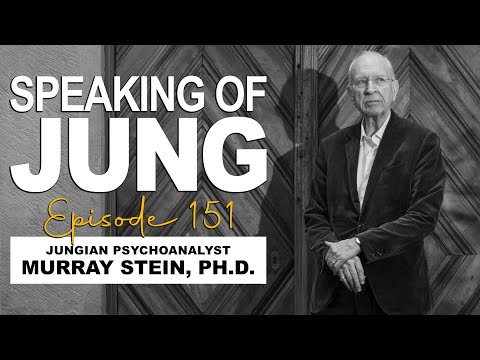
Speaking of Jung, Ep. 151: Jungian psychoanalyst Murray Stein, Ph.D. returned to discuss his latest book, Jung and Alchemy: A Path to Individuation. Then, I was joined by his biographer, Jungian analyst Steven Herrmann, Ph.D. | Video edition ▶︎ youtu.be/rh0ZJc_MAkI
YouTube video
YouTube
Laura London tweet media
English
4
12
40
2.4K
Murray W Stein me-retweet
Laura London
Laura London@jungianLaura·
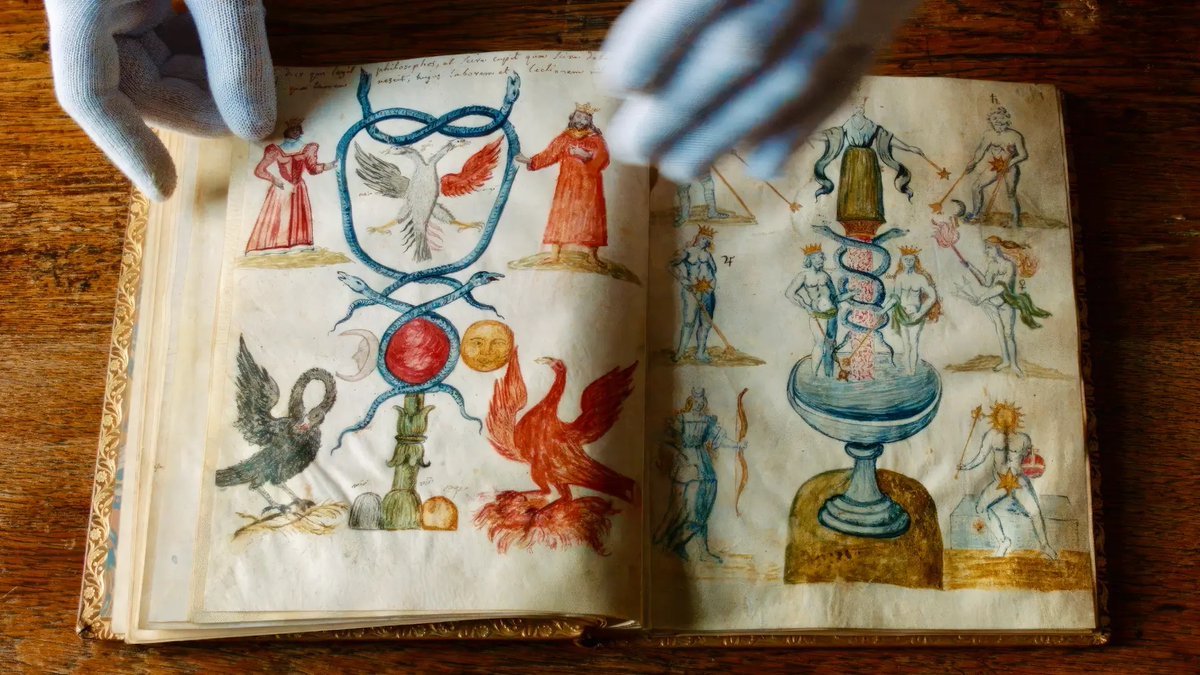
Jung and Alchemy: A Path to Individuation Stages of the Opus – Nigredo, Albedo, Rubedo “The alchemical opus typically unfolds across three stages (though sometimes four), and these are coded in color. Three Latin words relate to the progressive stages of the work: nigredo, albedo, and rubedo. The nigredo refers to a time of darkness – a state of mind associated with #depression and confusion, just as a substance in the dark holds little energy. Sometimes this stage is represented by an image of chaos. However, it is the state of mind in which transformation of the psyche, from less to more #conscious, begins. People often enter analysis following a crisis that plunged them into a state of confusion and disorientation. This is the starting point. And it is necessary, if the process is to be at all deep. However, if an analysand is not confused when they begin the work, they will soon enough find themselves disoriented as the analysis deepens. #Jung once said (I think in jest!): ‘Bring me a sane man and I will cure him.’ The alchemists rejoiced when the material in the vas turned black, as this was a sign that the transformation was beginning. Why? Because old structures must be deconstructed to make room for the new. This stage in analysis, which Jung called ‘confession,’³² brings the #shadow into the foreground – a necessary condition for deeper work. The nigredo is followed, after a time (often a long time!), by the albedo, or ‘whitening,’ during which the ingredients in the vessel turn from black to white. Once the old material has been burned to a crisp, the ashes begin to turn white. This represents the beginning of a new stage – one that, for the alchemist, was associated with the dawn. At the moment of first light, darkness slowly gives way to soft glimmers of sun rays, and it becomes possible to look around and see one’s surroundings. The Aurora Consurgens (‘dawn rising’), an #alchemy text attributed to Thomas Aquinas that Marie-Louise von Franz interpreted, explicates this stage of the opus in great detail.³³ Psychologically, the albedo is associated with a state of mind that has achieved insight after a period of depression and guilt, facilitated by confession. As Nietzsche wrote: ‘The bad conscience is an illness, there is no doubt about that, but an illness as pregnancy is an illness.’³⁴ The albedo is the birth from this pregnancy of a new sense of self, based on an awareness of the shadow dynamics at play behind the screen of egocentrism. Things that were once hidden away from #consciousness, whether due to repression or fear or denial, now emerge into view as a new day’s light. Now, one can begin to sort out the jumble of feelings, of formerly hidden impulses and desires, and of shameful motivations that previously swam like fish in the waters of the #unconscious. At this stage, one begins to develop a more realistic picture of the inner world and what is there. Perhaps this also includes seeing through a personal or cultural #complex and getting a glimpse of something deeper and broader in significance. With the birth of a sense of meaning in one’s personal destiny, the stage of the rubedo makes its appearance. The rubedo refers to the rising of the sun, which brilliantly reddens the sky, bestowing not only light, but also warmth. The appearance of the rubedo in the vas warmed the heart of the alchemist, indicating that the opus was nearing completion. Soon, the alchemical gold would appear and the work would be complete. This was a moment to celebrate. Psychologically, the rubedo represents a state of mind that is not only enlightened, but also energized and strong, able to act. The opus thus proceeds from the darkness of unconsciousness to the dawn of consciousness and eventually a new day of energy and meaningful action. Following this, one is able to create warmth in the environment and provide what is needed for the world around them to blossom and flourish. This is the goal of the alchemical opus – to arrive at the state of mind represented by the rubedo.” ³² Jung, “Problems of Modern Psychotherapy,” CW 16, para. 123ff. ³³ Von Franz, Aurora Consurgens. ³⁴ Nietzsche, On the Genealogy of Morals, 88. ~Murray Stein, Ph.D., Jungian analyst, Jung and Alchemy: A Path to Individuation, pp. 39-42 📸: C.G. Jung on Alchemy: Sara Ferro and Chris Weil – World Premiere at the Hermetic International Film Festival Murray Stein joins me on November 5, 2025 to discuss his new book on Speaking of Jung: Interviews with Jungian Analysts.
Laura London tweet media
English
10
42
220
6.5K
Murray W Stein me-retweet
Laura London
Laura London@jungianLaura·
WEBINAR TODAY! The Guild of Pastoral Psychology in England presents “The Eternal Feminine Draws Us on High (Das Ewig-Weibliche zieht uns hinan): Jacob Boehme, Sophia and the Eternal Feminine” presented by Oxford scholar Professor Paul Bishop, Ph.D. (@paulbishop4U) In Hellenistic philosophy and in Judeo-Christian theology the figure of Sophia is a personification of Divine Wisdom. More recently, in Orthodox theology a school of Sophiology has emerged, building on the work of late nineteenth and early twentieth century thinkers as Vladimir Solovyov, Pavel Florensky, and Sergei Bulgakov. But the figure of Sophia can also be found in the thought of Jacob Boehme, the 400th anniversary of whose death (in 1624) falls in 2024 while the 450th anniversary of his birth (in 1575) falls in 2025. So now seems a good time to consider the role of Sophia in one of the most significant mystics of the Reformation era — whose ideas influenced, among others, Johann Wolfgang von Goethe. In the conclusion to the Second Part of Faust, we are given a glimpse of the post-mortem world as imagined by medieval Catholic theology in which Faust — in striking contrast to the original legend — finds redemption. In the final lines of Goethe’s drama, we are told, “The Eternal Feminine / Draws us on high”; can this celebrated conclusion help us understand the dynamic by which Sophia shares her divine grace? Date: Thursday 2nd October 2025 Location: Online Time: 7:30 – 9:30 pm London time Registration: guildofpastoralpsychology.org.uk/event/the-eter…
Laura London tweet media
English
2
5
20
1.1K
Murray W Stein me-retweet
Laura London
Laura London@jungianLaura·
Coming November 5th to Speaking of Jung: Jungian psychoanalyst and author of Jung's Map of the Soul @murraywsteinII returns to us from Zürich, Switzerland to discuss his new book on Jung and #alchemy.
Laura London tweet media
English
2
12
102
2.7K
Murray W Stein me-retweet
Laura London
Laura London@jungianLaura·
Speaking of Jung guests Leonard Cruz, M.D. and Steven Buser, M.D. (Ep. 78), owners and general editors at Chiron Publications (@ChironBks), at last week's IAAP Congress in Zürich, Switzerland. Photo by Ep. 123 guest Robert Hinshaw, Ph.D.
Laura London tweet media
English
1
1
17
783
Murray W Stein me-retweet
Laura London
Laura London@jungianLaura·
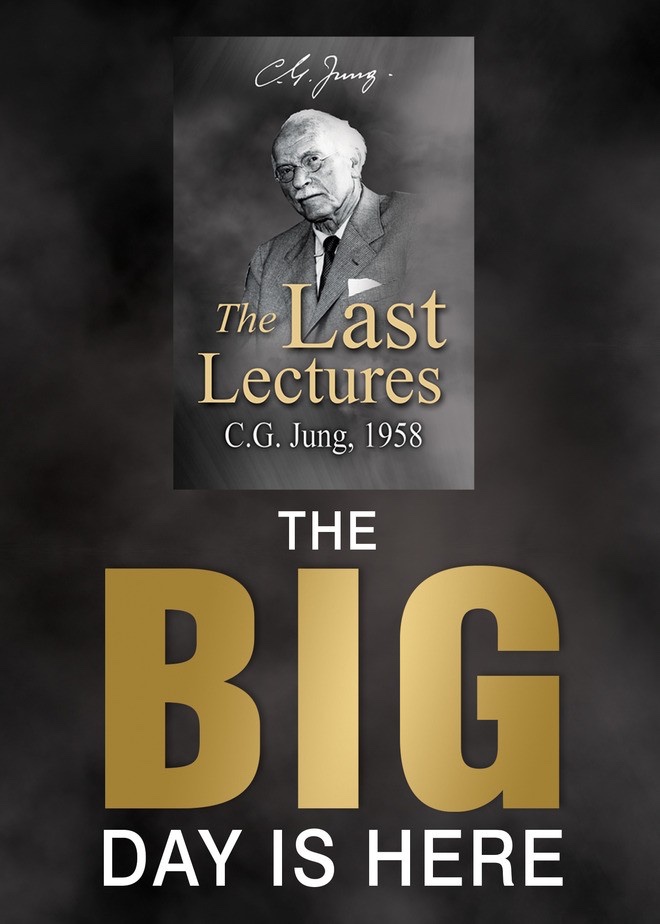
In celebration of the 150th birthday of C.G. Jung, Chiron Publications is offering 20% off their entire online store, including The Last Lectures: C.G. Jung, 1958. Use code birthday150 (ends July 31st). chironpublications.com/shop/the-last-…
Laura London tweet media
English
2
8
29
1.1K
Murray W Stein me-retweet
Laura London
Laura London@jungianLaura·
"This introduces a dimension of coming to terms with one's own #shadow in a realm beyond the boundaries of #ego-#consciousness, which are transgressed, and where one no longer stands in judgment before a human counterpart but before a transcendent Judge. In summary, the play shows us an encounter with the shadow in several stages and dimensions. At the start, there is denial and self-righteous defense against malicious insinuations in the name of self-interest and for the preservation of the #persona. This gives way to the analytical recognition of #unconscious shadow motives. Upon this follows the moral awareness of a devaluing and indifferent attitude toward the 'other's' thinking and being, accompanied by the emotional shock of realizing the extent of the injustice suffered by the 'other.' Then comes the recognition of the objective and active reality of evil. Through the visionary experience, a decisive turning point is reached: It brings an experience of intimate closeness to the rejected 'other' and the overwhelming mystical union that creates a lasting bond. This is symbolically expressed in the image of the sacred marriage of Malchuth to Tifereth. Finally, there is the religious consciousness of one's deep existential dubiousness as a person." ~Paul Brutsche, Ph.D., Jungian psychoanalyst, "From the Perspective of an Actor in the Play," The Analyst and the Rabbi, pp. 81-82 Coming in August to Speaking of Jung: Interviews with Jungian Analysts
Laura London tweet media
English
2
6
29
2.7K
Murray W Stein me-retweet
Laura London
Laura London@jungianLaura·
Hear my full interview with Jungian psychoanalyst and clinical psychologist Nancy Swift Furlotti, Ph.D. on Episode 146 of Speaking of Jung.
English
1
5
21
1K
Murray W Stein me-retweet
Laura London
Laura London@jungianLaura·
New book by Jungian psychoanalyst Murray Stein on C.G. Jung and alchemy coming soon from Chiron Publications: “What #Jung appreciated so much about classical #alchemy was that the alchemists had not split psyche and spirit off from matter. They were thus able to work with the spirit present in physical materials, including ore and plants. To them, there was no division between inner (mind) and outer (matter). Jung thought we could learn something from that—not for the purposes of laboratory chemistry, but for our own psychological work. ... Alchemy, for Jung, served as a vital bridge between modern depth psychology and the ancient wisdom traditions. Thus, he afforded the subject central importance in his Collected Works. Comprising eighteen volumes, the Collected Works includes three volumes (12, 13, and 14) explicitly devoted to alchemy. Beyond these, numerous other volumes contain substantial references to the subject. From the moment Jung began his focused engagement with alchemy in 1928 until his death in 1961, the ‘golden veins’ of alchemical thought ran consistently through his writings. Indeed, nearly all of Jung’s work after 1930 contains some reference to alchemy. ... In alchemy, Jung found evidence of the archetypal basis of psychological transformation, which he called individuation. Indeed, a transformative process with a definite goal is one way of talking about the alchemical opus. When alchemists speak of the opus, they describe a work oriented toward something ultimate and meaningful—not endless and cyclical repetition (akin to Nietzsche’s ‘eternal return’) or aimless drifting. Rather, the stages of alchemy reach toward a goal that is definite, and Jung found in this a compelling analogue to the individuation process as he observed it in both himself and his patients. The sense of historical continuity that Jung discovered in the works of the alchemists was not only important for him personally, but it also linked modern depth psychology to older traditions, extending as far back as the Greek philosophers and the ancient Egyptians. Jung felt that, by exploring alchemy, he was putting depth psychology on a solid footing because, as he wrote in MDR, you can’t have depth psychology without history—or indeed, without ‘deep history.’ You can have a psychology of #consciousness without history, but you can’t have a depth psychology without history. Thus, for Jung, it was essential to create a link to the past, and he found that in alchemy. What he really wanted to do, in the final analysis, was to reunite spirit and matter and link the modern person back to an awareness of the unus mundus—the ultimate unity of psyche and matter.” ~Murray Stein, Ph.D., Jungian analyst, Jung and Alchemy: A Path to Individuation, pp. 17, 19-20, 26-27
Laura London tweet media
English
5
26
129
4.6K
Murray W Stein me-retweet
Taigh
Taigh@Taigh_Solais·
@jungianLaura I never even knew this book was released. Thank you for sharing. 🙏🏼✨
English
1
1
1
275