Nano-Micro Letters

2.1K posts

Nano-Micro Letters banner
Nano-Micro Letters

Nano-Micro Letters

@nmletters

#journal #nano #material #science #technology #chemistry #biology #physics

上海, 中华人民共和国 Bergabung Ocak 2016
269 Mengikuti446 Pengikut
Nano-Micro Letters
Nano-Micro Letters@nmletters·
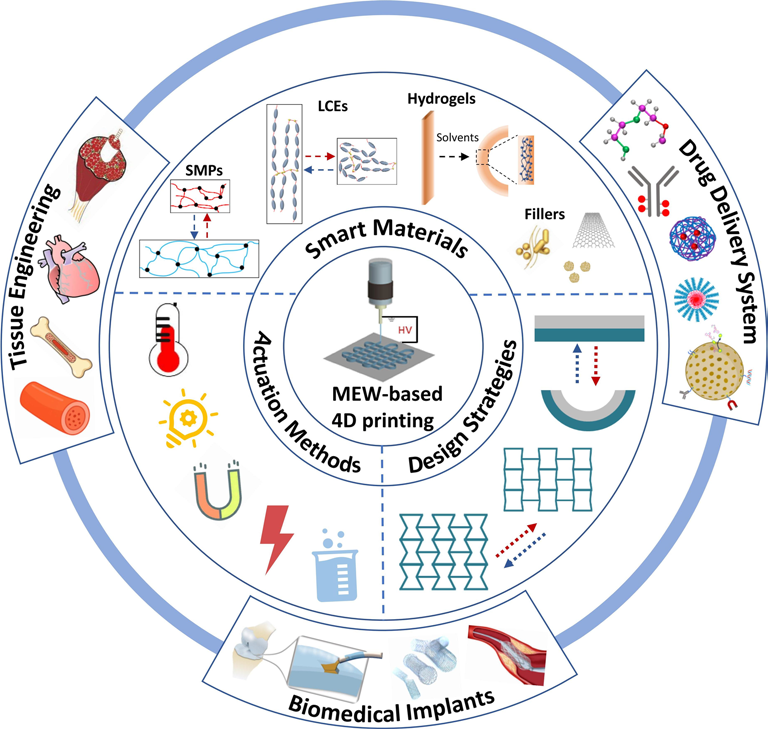
144. Rational Design and Functionalization of Melt Electrowritten 4D Scaffolds for Biomedical Applications Yanping Zhang*, Fengqiang Zhao, Aike Qiao*, Youjun Liu* & Menglin Chen* Nano-Micro Lett. 18, 144 (2026). doi.org/10.1007/s40820… This work is led by Prof. Dr. Youjun Liu (Beijing University of Technology) and co-workers. Prof. Liu's research centers on biomechanics in geometrical multi-scale modeling of the cardiovascular system and predictive medicine. This review systematically elucidates the principles of melt electrowriting (MEW)-based 4D printing for fabricating dynamic biomimetic scaffolds, covering material considerations, actuation methods, structure design strategies, and shape programming mechanisms. It highlights recent progress in MEW-based 4D scaffolds for tissue engineering, biomedical implants, and drug delivery systems, and discusses key challenges and perspectives toward material innovation, fabrication optimization, and actuation control, aiming to provide valuable insights for designing multifunctional dynamic scaffolds. Related articles: Copper Single-Atoms Loaded on Molybdenum Disulphide Drive Bacterial Cuproptosis-Like Death and Interrupt Drug-Resistance Compensation Pathways doi.org/10.1007/s40820… High-Entropy Layered Hydroxides: Pioneering Synthesis, Mechanistic Insights, and Multifunctional Applications in Sustainable Energy and Biomedicine doi.org/10.1007/s40820… Cactus Thorn-Inspired Janus Nanofiber Membranes as a Water Diode for Light-Enhanced Diabetic Wound Healing doi.org/10.1007/s40820…
Nano-Micro Letters tweet media
English
0
1
1
29
Nano-Micro Letters
Nano-Micro Letters@nmletters·
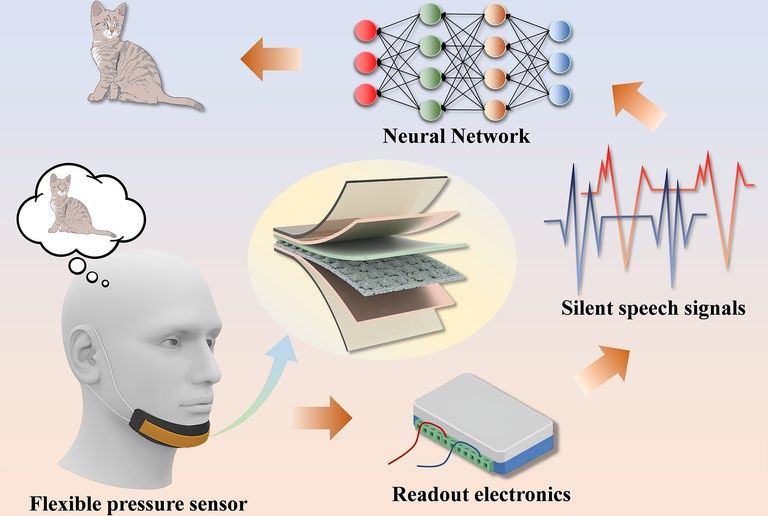
143. TENG-Based Self-Powered Silent Speech Recognition Interface: from Assistive Communication to Immersive AR/VR Interaction Shuai Lin, Yanmin Guo, Xiangyao Zeng, Xiongtu Zhou, Yongai Zhang, Chengda Li* & Chaoxing Wu* Nano-Micro Lett. 18, 143 (2026). doi.org/10.1007/s40820… This work is led by Prof. Dr. Chaoxing Wu (Fuzhou University) and co-workers. Prof. Wu's research centers on future electronic technologies and display technologies. This article presents a real-time silent speech recognition system that integrates a triboelectric nanogenerator-based flexible pressure sensor (FPS) with a deep learning framework. The FPS features a porous pyramid-structured silicone film as the negative triboelectric layer, enabling highly sensitive pressure detection (1 V N⁻¹ for 0–10 N and 4.6 V N⁻¹ for 10–24 N) to precisely capture jaw movements during speech. A CNN–LSTM hybrid network decodes the signals, achieving 95.83% classification accuracy across 30 daily words. The decoded signals can directly control smartphones and connect to AR glasses, offering a novel approach for silent human–machine interaction with promising potential in AR/VR applications. Related articles: Harnessing the Power from Ambient Moisture with Hygroscopic Materials doi.org/10.1007/s40820… Triboelectric Nanogenerators for Future Space Missions doi.org/10.1007/s40820… From Wave Energy to Electricity: Functional Design and Performance Analysis of Triboelectric Nanogenerators doi.org/10.1007/s40820…
Nano-Micro Letters tweet media
English
0
0
0
7
Nano-Micro Letters
Nano-Micro Letters@nmletters·
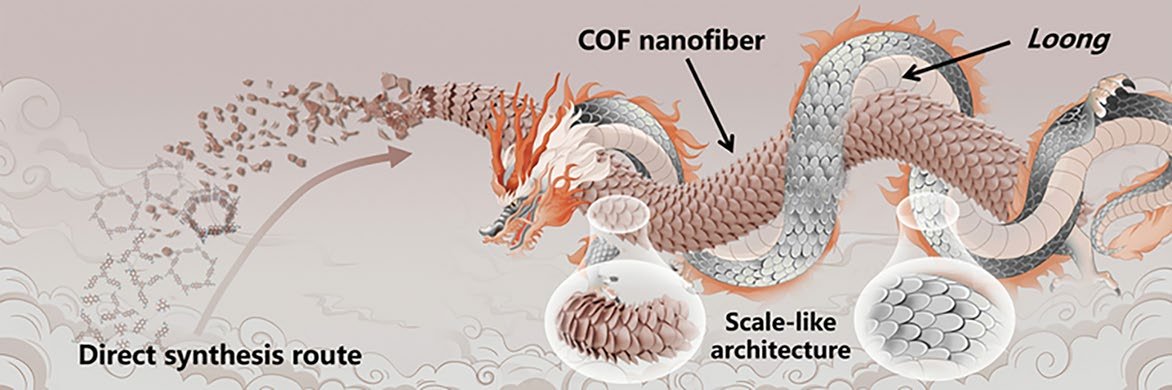
142. Flexible High-Aspect-Ratio COF Nanofibers: Defect-Engineered Synthesis, Superelastic Aerogels, and Uranium Extraction Applications Binbin Fan, Jianyong Yu, Xueli Wang*, Yang Si* & Peixin Tang* Nano-Micro Lett. 18, 142 (2026). doi.org/10.1007/s40820… This work is led by Prof. Dr. Peixin Tang (Donghua University) and co-workers. Prof. Tang's research centers on functional porous fiber materials, and specialty functional fabrics. This article proposes an "alcohol-triggered defect cleavage" strategy to precisely regulate the growth and stacking of covalent organic frameworks (COFs), enabling the direct synthesis of high-aspect-ratio COF nanofibers (CNFs) with a biomimetic scale-like architecture that exhibits superior flexibility and fatigue resistance. By engineering these CNFs into aerogels with programmable porous structures (e.g., honeycomb, lamellar) via directional ice-templating, the resulting CNF aerogels achieve 100% COF content, high specific surface area, and superelasticity. Compared to conventional COF aerogels, this structural design enables an 11.72-fold increase in uranium adsorption capacity (920.12 mg g⁻¹), significantly enhanced adsorption rate (89.9%), and 2.48-fold improved selectivity (U/V = 2.31), providing a direct strategy for developing next-generation COF materials with outstanding functionality and structural robustness. Related articles: Dynamic Network- and Microcellular Architecture-Driven Biomass Elastomer toward Sustainable and Versatile Soft Electronics doi.org/10.1007/s40820… Anionically-Reinforced Nanocellulose Separator Enables Dual Suppression of Zinc Dendrites and Polyiodide Shuttle for Long-Cycle Zn-I2 Batteries doi.org/10.1007/s40820… Skin-Inspired Ultra-Linear Flexible Iontronic Pressure Sensors for Wearable Musculoskeletal Monitoring doi.org/10.1007/s40820…
Nano-Micro Letters tweet media
English
0
0
0
25
Nano-Micro Letters
Nano-Micro Letters@nmletters·
141. Monolithic Integration of Redox-Stable Sn–Pb Halide Perovskite Single-Crystalline Films for Durable Near-Infrared Photodetection Rajendra Kumar Gunasekaran*, Jihoon Nam, Myeong-geun Choi, Won Chang Choi, Sunwoo Kim, Doyun Im, Yeonghun Yun, Yun Hwa Hong, Sang Hyeok Ryou, Hyungwoo Lee, Kwang Heo & Sangwook Lee* Nano-Micro Lett. 18, 141 (2026). doi.org/10.1007/s40820… This work is led by Prof. Dr. Sangwook Lee (Kyungpook National University) and co-workers. Prof. Lee's research centers on functional semiconductors. This article develops a coordination-engineered crystallization strategy using a low-donor number cosolvent system to enable direct, low-temperature (<40 °C) growth of micrometer-thick Sn–Pb halide perovskite single-crystal thin films on device-compatible substrates. The resulting films exhibit smooth morphology, high crystallinity, compositional uniformity, and ultralow trap densities (~3.98 × 10¹² cm⁻³). When integrated into near-infrared photodetectors, they deliver high responsivity (0.51 A W⁻¹ at 900 nm), specific detectivity up to 3.6 × 10¹² Jones, fast response (~188 μs), and excellent operational stability, establishing a scalable platform for redox-stable, low-temperature growth and expanding the processing–structure–function landscape for next-generation infrared optoelectronics. Related articles: Tri-Band Regulation and Split-Type Smart Photovoltaic Windows for Thermal Modulation of Energy-Saving Buildings in All-Season doi.org/10.1007/s40820… Ferroelectric Optoelectronic Sensor for Intelligent Flame Detection and In-Sensor Motion Perception doi.org/10.1007/s40820… Bio-Based Flexible Solar-Driven Sustainable Generator with Efficient Electricity Generation Enabled by Plant Transpiration System doi.org/10.1007/s40820…
Nano-Micro Letters tweet media
Filipino
0
0
0
53
Nano-Micro Letters
Nano-Micro Letters@nmletters·
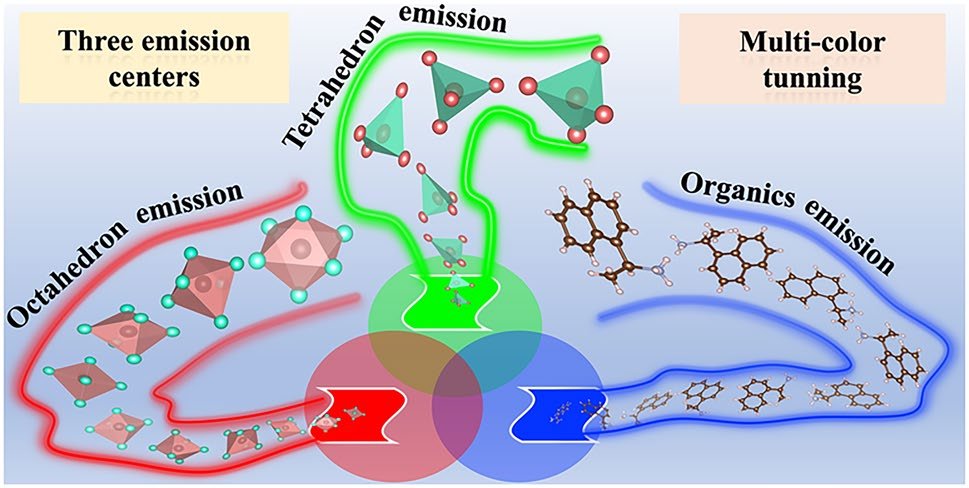
140. Modulation of Trichromatic Emission Centers in Organic–Inorganic Hybrids for Optoelectronic Applications Weidong Cai, Chongyuan Li, Qiang Guo, Fuxiang Ji, Muyi Zhang & Yiqiang Zhan* Nano-Micro Lett. 18, 140 (2026). doi.org/10.1007/s40820… This work is led by Prof. Dr. Yiqiang Zhan (Fudan University) and co-workers. Prof. Zhan's research centers on photovoltaic devices and LEDs based on organic-inorganic hybrid perovskite and organic semiconductor, flexible electronics, smart electronics and sensors. This article presents a novel organic–inorganic metal halide (NEA)₂MnBr₄ that integrates three tunable emission centers—tetrahedral Mn (green), octahedral Mn (red), and organic components (blue)—to achieve multicolor luminescence within a single material. By optimizing the organic component ratio and incorporating chirality, the blue emission is enhanced, yielding high-quality films with a photoluminescence quantum yield of up to 96%. Through dual manipulation of excitation wavelength and temperature, the material emits at least seven distinct colors, including standard white luminescence (0.33, 0.33), opening promising prospects for applications in anti-counterfeiting, LEDs, X-ray imaging, and sensing.
Nano-Micro Letters tweet media
English
0
0
1
22
Nano-Micro Letters
Nano-Micro Letters@nmletters·
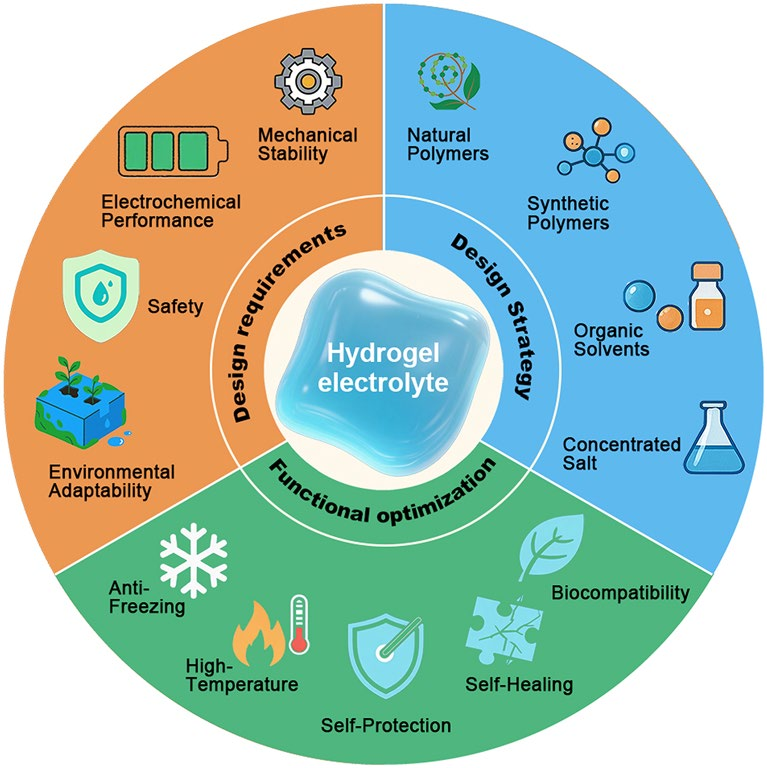
139. Hydrogel Electrolytes for Zinc-Ion Batteries: Materials Design, Functional Strategies, and Future Perspectives Zhengchu Zhang, Yongbiao Mu, Lijuan Xiao, Hengyuan Hu, Tao Xue, Limin Zang, Eiichi Sakai, Meisheng Han*, Chao Yang*, Lin Zeng* & Jianhui Qiu* Nano-Micro Lett. 18, 139 (2026). doi.org/10.1007/s40820… This work is led by Prof. Dr. Jianhui Qiu (Akita Prefectural University) and co-workers. Prof. Qiu's research centers on composite materials and interfaces, and machine materials and mechanics. This review systematically summarizes the fundamental characteristics and design criteria of hydrogel electrolytes for zinc-ion batteries, including mechanical flexibility, ionic transport, and environmental adaptability. It explores compositional design strategies involving natural and synthetic polymers, as well as functional optimization such as anti-freezing, self-healing, and biocompatibility. The review also outlines current challenges and proposes future research directions for safe, sustainable, and high-performance energy storage systems. Related articles: Superhydrated Zwitterionic Hydrogel with Dedicated Water Channels Enables Nonfouling Solar Desalination doi.org/10.1007/s40820… Radiative Coupled Evaporation Cooling Hydrogel for Above-Ambient Heat Dissipation and Flame Retardancy doi.org/10.1007/s40820… Three-dimensional Patterning Super-Black Silica-Based Nanocomposite Aerogels doi.org/10.1007/s40820…
Nano-Micro Letters tweet media
Filipino
0
0
1
33
Nano-Micro Letters
Nano-Micro Letters@nmletters·
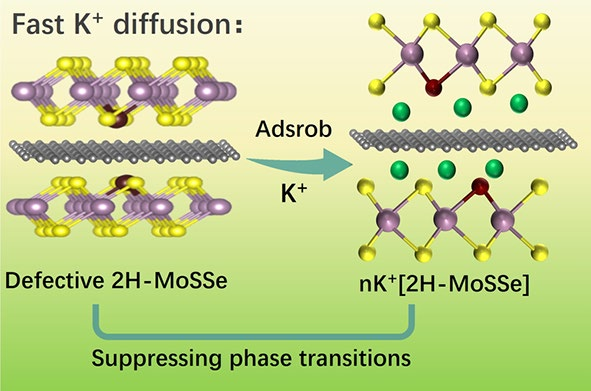
138. Nanoreactor-Structured Defective MoS2: Suppressing Intercalation-Induced Phase Transitions and Enhancing Reversibility for Potassium-Ion Batteries Chunrong Ma, Cyrus Koroni, Jiacheng Hu, Ji Qian, Guangshuai Han* & Hui Xiong* Nano-Micro Lett. 18, 138 (2026). doi.org/10.1007/s40820… This work is led by Prof. Dr. Hui Xiong (Boise State University) and co-workers. Prof. Cheng's research centers on the synthesis, characterization and development of advanced functional nanomaterials for sustainable energy systems. This article proposes a rationally engineered nanoreactor architecture comprising defect-rich MoS₂ stabilized by interlayer carbon and encapsulated in a nitrogen-doped carbon shell (MoSSe@NC) for potassium-ion batteries. The heterostructure synergistically accelerates K⁺ diffusion and electron transfer, achieving unprecedented rate performance (107 mAh g⁻¹ at 10 A g⁻¹) and ultralong cyclability (86.5% capacity retention after 1200 cycles at 3 A g⁻¹). Mechanistic insights reveal a distinctive "adsorption-conversion" pathway enabled by sulfur vacancies, with in situ analyses confirming structural reversibility and strain accommodation, providing a versatile strategy for designing high-performance conversion-type anodes. Related articles: Wide-Temperature Electrolytes for Aqueous Alkali Metal-Ion Batteries: Challenges, Progress, and Prospects doi.org/10.1007/s40820… High-Entropy Materials: A New Paradigm in the Design of Advanced Batteries doi.org/10.1007/s40820… Understanding Electrolytes and Interface Chemistry for Sustainable Nonaqueous Metal–CO2 Batteries doi.org/10.1007/s40820…
Nano-Micro Letters tweet media
English
0
1
2
71
Nano-Micro Letters
Nano-Micro Letters@nmletters·
137. Direct Repair of the Crystal Structure and Coating Surface of Spent LiFePO4 Materials Enables Superfast Li-Ion Migration Yuanqi Lan, Jianfeng Wen, Yatian Zhang, Xuexia Lan, Tianyi Song, Jie Zhu, Jing Peng, Wenjiao Yao*, Yongbing Tang* & Hui-Ming Cheng Nano-Micro Lett. 18, 137 (2026). doi.org/10.1007/s40820… This work is led by Prof. Dr. Huiming Cheng (Chinese Academy of Sciences) and co-workers. Prof. Cheng's research centers on carbon nanotubes, graphene, and other two-dimensional materials. This article reports an integrated direct regeneration protocol for spent LiFePO₄ cathodes that simultaneously repairs the degraded crystal structure and reconstructs the damaged carbon coating. The regenerated material exhibits superfast lithium-ion diffusion kinetics, achieving remarkable rate capabilities (122 mAh g⁻¹ at 5C, 106 mAh g⁻¹ at 10C) and stable cycling at subzero temperatures. Life cycle assessment combined with economic evaluation confirms the high economic and environmental benefits of this approach. Related articles: Interfacial Evolution and Accelerated Aging Mechanism for LiFePO4/Graphite Pouch Batteries Under Multi-Step Indirect Activation doi.org/10.1007/s40820… Confining Li⁺ Solvation in Core–Shell Metal–Organic Frameworks for Stable Lithium Metal Batteries at 100 °C doi.org/10.1007/s40820… Dual-Atom Doping MoS2-Mediated Phase Transition for Efficient Polysulfide Adsorption/Conversion Kinetics in Lithium–Sulfur Battery doi.org/10.1007/s40820…
Nano-Micro Letters tweet media
Filipino
0
1
2
79
Nano-Micro Letters
Nano-Micro Letters@nmletters·
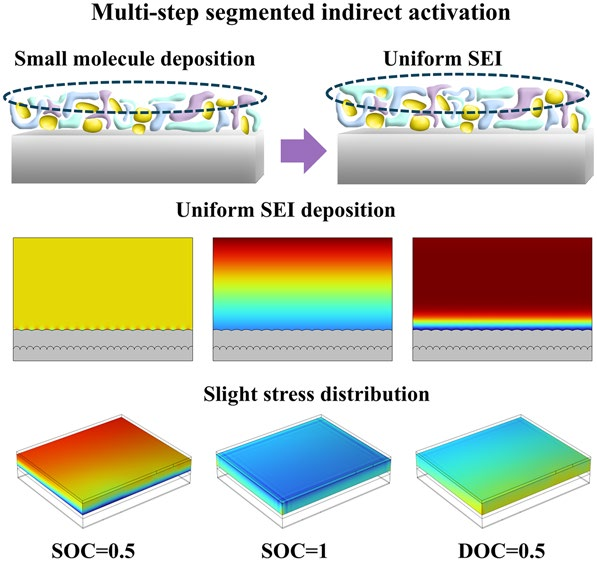
136. Interfacial Evolution and Accelerated Aging Mechanism for LiFePO4/Graphite Pouch Batteries Under Multi-Step Indirect Activation Yun Liu, Jinyang Dong*, Jialong Zhou, Yibiao Guan, Yimin Wei, Jiayu Zhao, Jinding Liang, Xixiu Shi, Kang Yan, Yun Lu, Ning Li, Yuefeng Su*, Feng Wu & Lai Chen* Nano-Micro Lett. 18, 136 (2026). doi.org/10.1007/s40820… This work is led by Prof. Dr. Lai Chen (Beijing Institute of Technology) and co-workers. Prof. Chen's research centers on lithium-rich cathode materials for lithium-ion batteries, nickel-rich ternary cathode materials, and construction of high-energy-density lithium-ion secondary batteries. This article investigates the aging mechanism of LiFePO₄/graphite batteries by analyzing the spatial distribution of the electrode/electrolyte interface (EEI) and iron dissolution using multi-step segmented indirect activation (IA). The findings reveal that IA facilitates the migration of solvated ions toward electrodes while inhibiting the formation of organic species such as ROCO₂Li, promoting a uniform and continuous solid electrolyte interphase (SEI) composed of mixed organic and inorganic small molecules. This study provides insights into the interaction between dissolved Fe²⁺ and the EEI, offering constructive guidance for advancing accelerated lifetime prediction strategies in lithium-ion batteries. Related articles: Confining Li⁺ Solvation in Core–Shell Metal–Organic Frameworks for Stable Lithium Metal Batteries at 100 °C doi.org/10.1007/s40820… Dual-Atom Doping MoS2-Mediated Phase Transition for Efficient Polysulfide Adsorption/Conversion Kinetics in Lithium–Sulfur Battery doi.org/10.1007/s40820… Multifunctional Dipoles Enabling Enhanced Ionic and Electronic Transport for High-Energy Batteries doi.org/10.1007/s40820…
Nano-Micro Letters tweet media
Indonesia
0
0
1
62
Nano-Micro Letters
Nano-Micro Letters@nmletters·
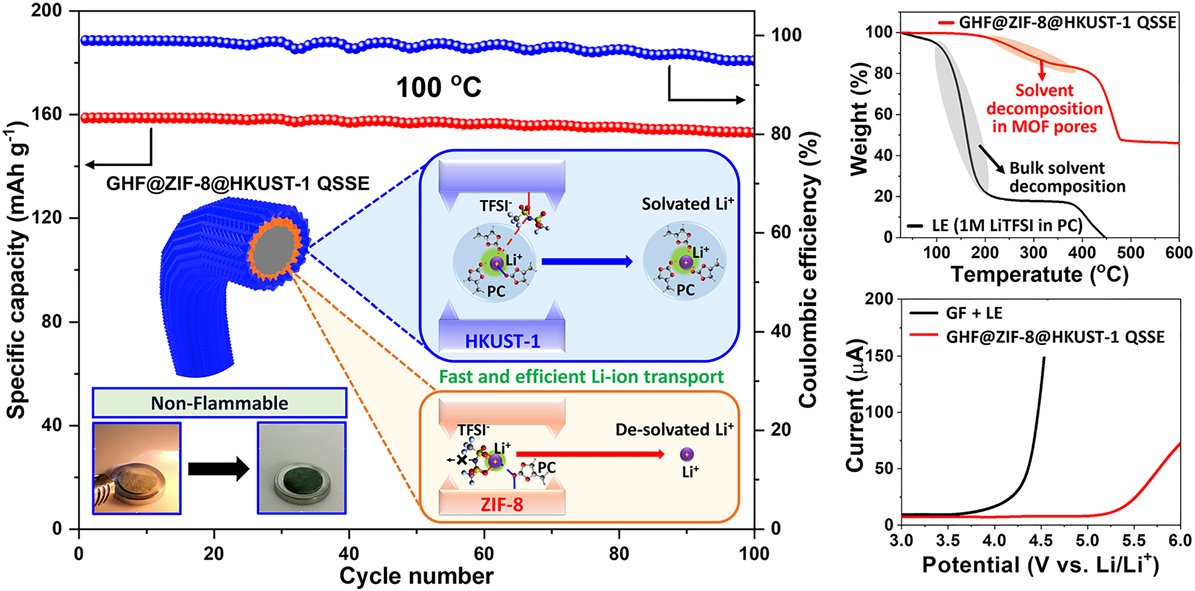
135. Confining Li⁺ Solvation in Core–Shell Metal–Organic Frameworks for Stable Lithium Metal Batteries at 100 °C Minh Hai Nguyen, Jeongmin Shin, Mee-Ree Kim, Quan Van Nguyen, JinHyeok Cha* & Sangbaek Park* Nano-Micro Lett. 18, 135 (2026). doi.org/10.1007/s40820… This work is led by Prof. Dr. Sangbaek Park (Chungnam National University) and co-workers. Prof. Park's research centers on all-solid-state batteries, nanostructure design, and electrochemical energy storage. This article introduces a one-dimensional MOF model architecture that eliminates interparticle effects to enable direct observation of Li⁺ solvation and de-solvation dynamics in high-temperature lithium metal batteries. Comparative studies of 1D HKUST-1 and ZIF-8 reveal distinct transport behaviors, guiding the design of a hierarchical core–shell MOF structure that integrates both materials to achieve continuous ion pathways, directional Li⁺ conduction, and enhanced thermal and electrochemical resilience. Related articles: W/V Dual-Atom Doping MoS2-Mediated Phase Transition for Efficient Polysulfide Adsorption/Conversion Kinetics in Lithium–Sulfur Battery doi.org/10.1007/s40820… Multifunctional Dipoles Enabling Enhanced Ionic and Electronic Transport for High-Energy Batteries doi.org/10.1007/s40820… Ultrafast Sulfur Redox Dynamics Enabled by a PPy@N-TiO2 Z-Scheme Heterojunction Photoelectrode for Photo-Assisted Lithium–Sulfur Batteries doi.org/10.1007/s40820…
Nano-Micro Letters tweet media
English
0
0
1
110
Nano-Micro Letters
Nano-Micro Letters@nmletters·
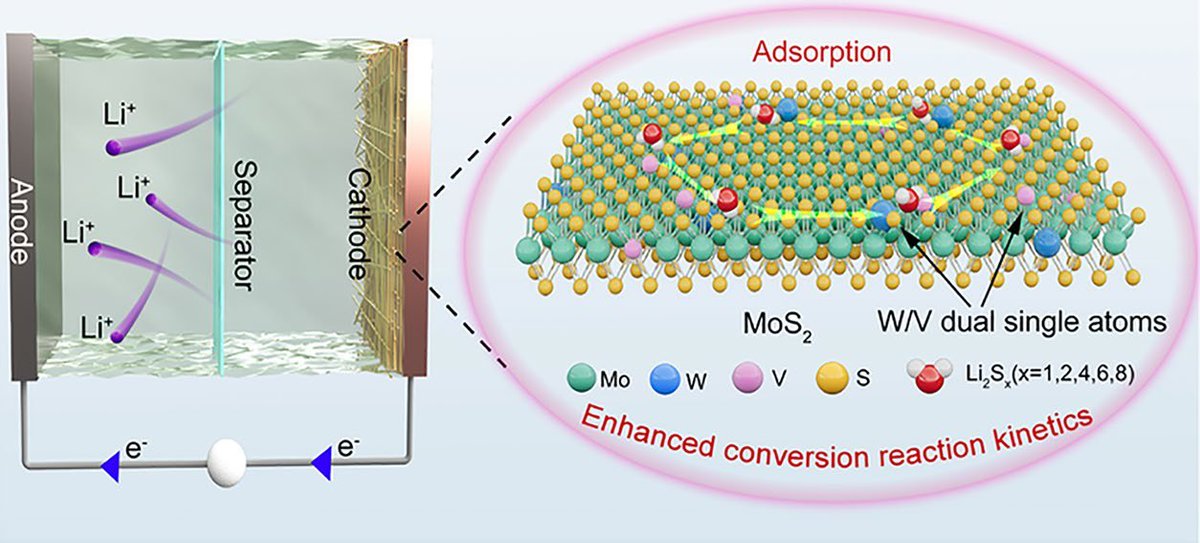
134. W/V Dual-Atom Doping MoS2-Mediated Phase Transition for Efficient Polysulfide Adsorption/Conversion Kinetics in Lithium–Sulfur Battery Zhe Cui, Ping Feng*, Gang Zhong, Qingdong Ou* & Mingkai Liu* Nano-Micro Lett. 18, 134 (2026). doi.org/10.1007/s40820… This work is led by Assistant Prof. Dr. Qingdong Ou (Macau University of Science and Technology) and co-workers. Prof. Ou's research centers on nanophotonics and optoelectronic devices. This article presents a dual-doping strategy for MoS₂ by incorporating W and V single atoms, which simultaneously enhances lithium polysulfide adsorption, induces a phase transition to 1T-MoS₂, and generates abundant edge sulfur atoms. The resulting catalyst, grown on carbon nanofibers, enables superior conversion kinetics and delivers outstanding Li–S battery performance—including a high initial capacity of 1481.7 mAh g⁻¹ at 0.1 C, stable cycling over 1000 cycles, and a high areal capacity of 8.2 mAh cm⁻² under lean electrolyte and high sulfur loading conditions—demonstrating great promise for practical applications. Related articles: Multifunctional Dipoles Enabling Enhanced Ionic and Electronic Transport for High-Energy Batteries doi.org/10.1007/s40820… Ultrafast Sulfur Redox Dynamics Enabled by a PPy@N-TiO2 Z-Scheme Heterojunction Photoelectrode for Photo-Assisted Lithium–Sulfur Batteries doi.org/10.1007/s40820… Crystallographic Engineering Enables Fast Low-Temperature Ion Transport of TiNb2O7 for Cold-Region Lithium-Ion Batteries doi.org/10.1007/s40820…
Nano-Micro Letters tweet media
English
0
0
1
26
Nano-Micro Letters
Nano-Micro Letters@nmletters·
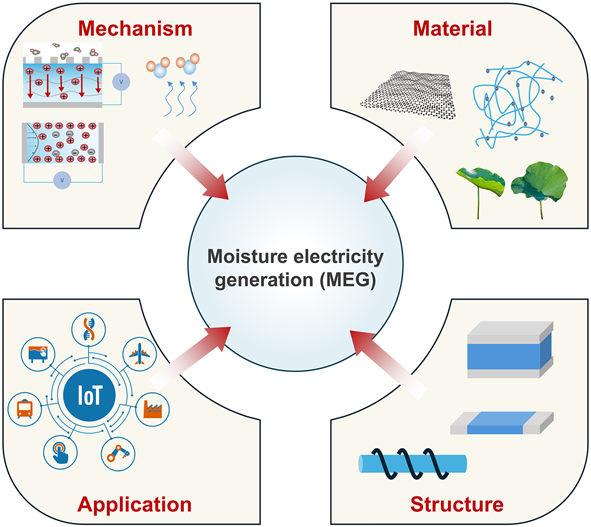
133. Harnessing the Power from Ambient Moisture with Hygroscopic Materials Daozhi Shen*, Fangzhou Li, Yanjie Su* & Limin Zhu* Nano-Micro Lett. 18, 133 (2026). doi.org/10.1007/s40820… This work is led by Associate Prof. Dr. Daozhi Shen (Shanghai Jiao Tong University) and co-workers. Prof. Shen's research centers on intelligent recognition, energy harvesting, and micro-nano devices. This review provides a comprehensive overview of moisture electricity generation (MEG) technology, covering fundamental mechanisms (ion diffusion, electric double layer, streaming potential), material innovations (carbon-based materials, conductive polymers, hydrogels, bio-inspired systems), and diverse device architectures (planar, flexible, textile-integrated). It analyzes key challenges and strategies for overcoming them, concluding with a forward-looking perspective on future directions, including hybrid systems and AI-assisted material design for practical and sustainable energy solutions. Related articles: Advances in TENGs for Marine Energy Harvesting and In Situ Electrochemistry doi.org/10.1007/s40820… Triboelectric Nanogenerators for Future Space Missions doi.org/10.1007/s40820… Wafer-Scale Vertical 1D GaN Nanorods/2D MoS2/PEDOT:PSS for Piezophototronic Effect-Enhanced Self-Powered Flexible Photodetectors doi.org/10.1007/s40820…
Nano-Micro Letters tweet media
English
0
0
1
36
Nano-Micro Letters
Nano-Micro Letters@nmletters·
132. Tri-Band Regulation and Split-Type Smart Photovoltaic Windows for Thermal Modulation of Energy-Saving Buildings in All-Season Qian Wang, Zongxu Na, Jianfei Gao, Li Yu*, Yuanwei Chen, Peng Gao, Yong Ding*, Songyuan Dai, Mohammad Khaja Nazeeruddin* & Huai Yang* Nano-Micro Lett. 18, 132 (2026). doi.org/10.1007/s40820… This work is led by Prof. Dr. Huai Yang (Beijing University) and co-workers. Prof. Sun's research centers on small molecule liquid crystals, polymer liquid crystals, and liquid crystal/polymer composite materials. This article presents a smart photovoltaic window (SPW) that integrates a perovskite solar cell, a broadband thermal-managing unit (combining SiO₂ passive radiative cooling and Ag low-emissivity layers), and electrically responsive polymer-dispersed liquid crystals (PDLCs) whose driving voltage is reduced by 28.1% through molecular engineering while maintaining high solar transmittance (83.8%) and a high solar modulating ability (ΔTsol = 80.5%). The tri-band regulation and split-type design enable zero-energy-input solar energy control and compensate for daily building energy consumption, achieving a superb all-season energy-saving effect with scalable manufacturing potential for real-world applications. Related articles: Coordination Thermodynamic Control of Magnetic Domain Configuration Evolution toward Low-Frequency Electromagnetic Attenuation doi.org/10.1007/s40820… Scalable and Healable Gradient Textiles for Multi-Scenario Radiative Cooling via Bicomponent Blow Spinning doi.org/10.1007/s40820… Micro/Nano-Reconfigurable Robots for Intelligent Carbon Management in Confined-Space Life-Support Systems doi.org/10.1007/s40820…
Nano-Micro Letters tweet media
Filipino
0
1
2
68
Nano-Micro Letters
Nano-Micro Letters@nmletters·
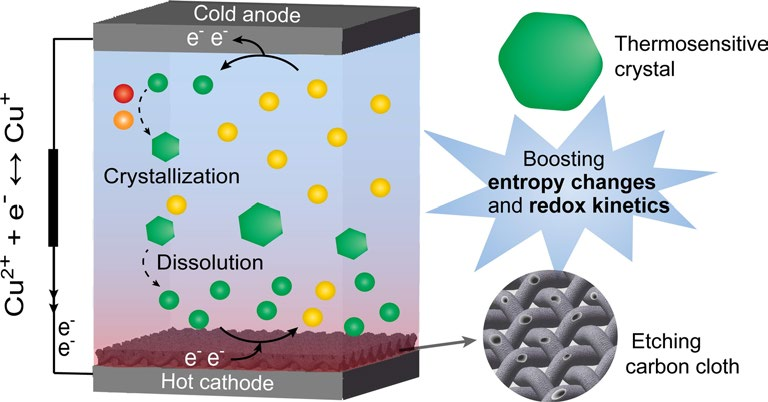
131. High-Performance Cu-Based Liquid Thermocells Enabled by Thermosensitive Crystallization and Etched Carbon Cloth Electrode Wei Fang, Zeping Ou, Yifan Wang, Zhe Li, Qian Huang, Pengchi Zhang, Xinzhe Li, Yujie Zheng, Lijun Hu, Chen Li, Jianyong Ouyang & Kuan Sun * Nano-Micro Lett. 18, 131 (2026). doi.org/10.1007/s40820… This work is led by Prof. Dr. Kuan Sun (Chongqing University) and co-workers. Prof. Sun's research centers on the principles and technologies for efficient use of renewable energy, with extensive experience in material design and device construction. This article enhances the performance of Cu-based liquid thermocells by integrating a thermosensitive crystallization process with etched carbon cloth electrodes, achieving a persistent Cu²⁺ concentration gradient that boosts thermopower from 1.47 to 2.93 mV K⁻¹, while etched electrodes provide a larger surface area for higher current density. The optimized system delivers an exceptional normalized power density of 3.97 mW m⁻² K⁻², and a 20-cell module successfully powers electronic devices at a 40 K temperature difference, demonstrating the strong potential of the Cu⁺/Cu²⁺ redox couple for low-grade heat harvesting. Related articles: High-Density 1D Ionic Wire Arrays for Osmotic Energy Conversion doi.org/10.1007/s40820… Ferroelectric Optoelectronic Sensor for Intelligent Flame Detection and In-Sensor Motion Perception doi.org/10.1007/s40820… A Comprehensive Review of the Functionalized Integrated Application of Gel Polymer Electrolytes in Electrochromic Devices doi.org/10.1007/s40820…
Nano-Micro Letters tweet media
Filipino
0
1
2
94
Nano-Micro Letters
Nano-Micro Letters@nmletters·
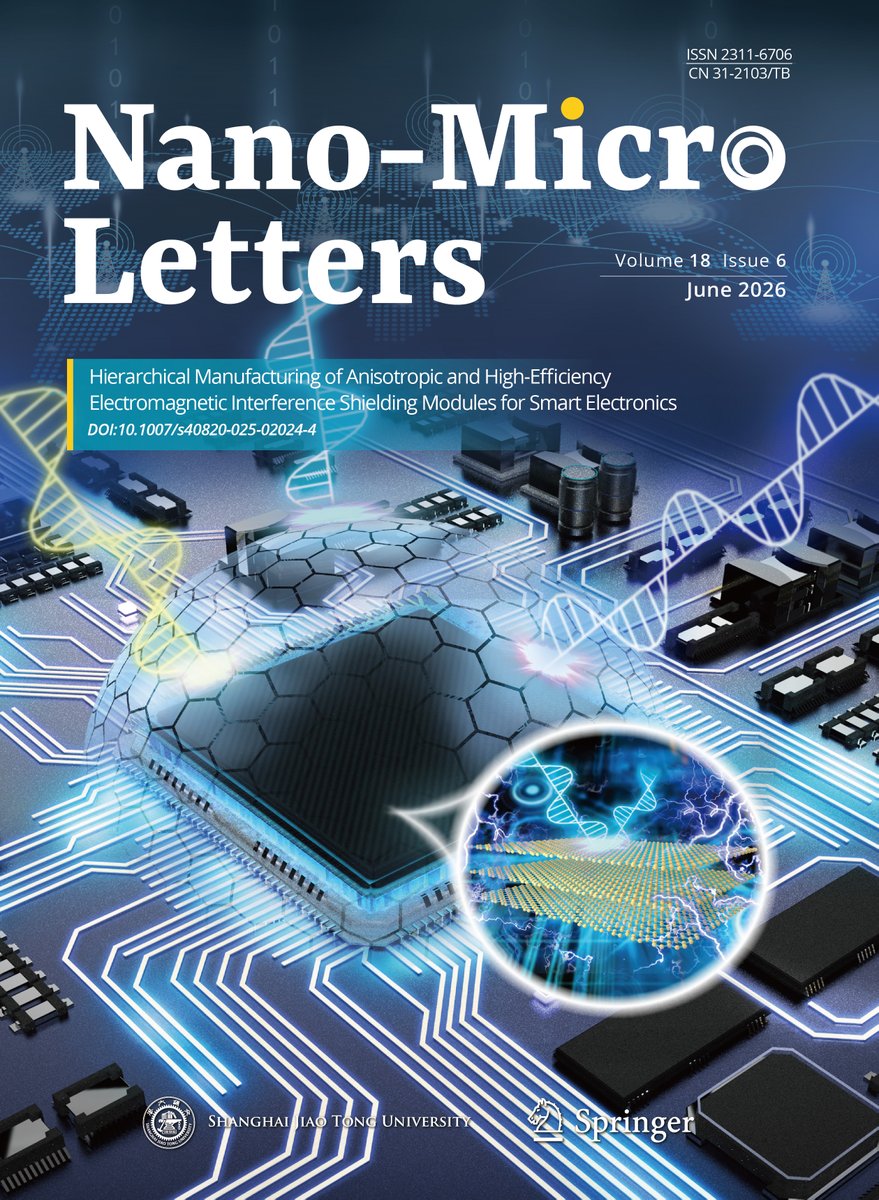
Cover paper: From Shaohong Shi, Siwen Deng, Yuheng Jiang, Jiabin Chen, Lukas Sporrer, Fangchao Cheng, Quanquan Guo, Jingjing Jing & Yinghong Chen Hierarchical Manufacturing of Anisotropic and High-Efficiency Electromagnetic Interference Shielding Modules for Smart Electronics. Nano-Micro Lett. 18, 181 (2026). doi.org/10.1007/s40820…
Nano-Micro Letters tweet media
English
0
0
1
60
Nano-Micro Letters
Nano-Micro Letters@nmletters·
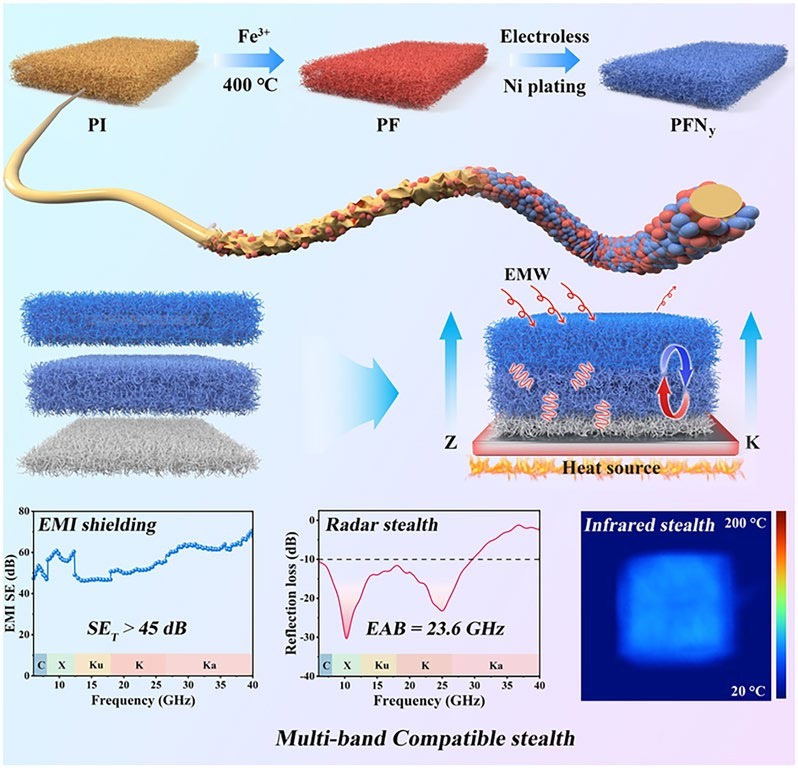
130. Dual-Gradient Impedance/Insulation Structured Polyimide Nonwoven Fabric for Multi-Band Compatible Stealth Xinwei Tang, Wei Hong, Hongmiao Gao, Shuangshuang Li, Wei Li, Kaixin Lai, Mingzhen Xu, Zaiyin Hu, Yan Li, Zicheng Wang* & Tianxi Liu* Nano-Micro Lett. 18, 130 (2026). doi.org/10.1007/s40820… This work is led by Prof. Dr. Tianxi Liu (Jiangnan University) and co-workers. Prof. Liu's research centers on polymer nanocomposites, aerogel functional composites, nanofibers and their composite materials. This article presents a conductive/magnetic polyimide-based nonwoven fabric with a hierarchical dual-gradient impedance/insulation structure, achieved through alkali treatment, Fe₃O₄ growth, and electroless nickel plating. The gradient design enables effective electromagnetic wave dissipation and thermal radiation inhibition, delivering outstanding EMI shielding, radar stealth, and infrared stealth performance. Strong interfacial interactions between Fe₃O₄, Ni, and the polyimide fiber further confer high-temperature resistance, making the material promising for military camouflage applications against multi-spectral detection. Related articles: A Multi-Scale Cross-Band Defense System Integrating Decoupled Visible, Dynamic Infrared Camouflage and Electromagnetic Shielding doi.org/10.1007/s40820… Coordination Thermodynamic Control of Magnetic Domain Configuration Evolution toward Low-Frequency Electromagnetic Attenuation doi.org/10.1007/s40820… Directional Three-Dimensional Macroporous Carbon Foams Decorated with WC1−x Nanoparticles Derived from Salting-Out Protein Assemblies for Highly Effective Electromagnetic Absorption doi.org/10.1007/s40820…
Nano-Micro Letters tweet media
Filipino
0
1
4
104
Nano-Micro Letters
Nano-Micro Letters@nmletters·
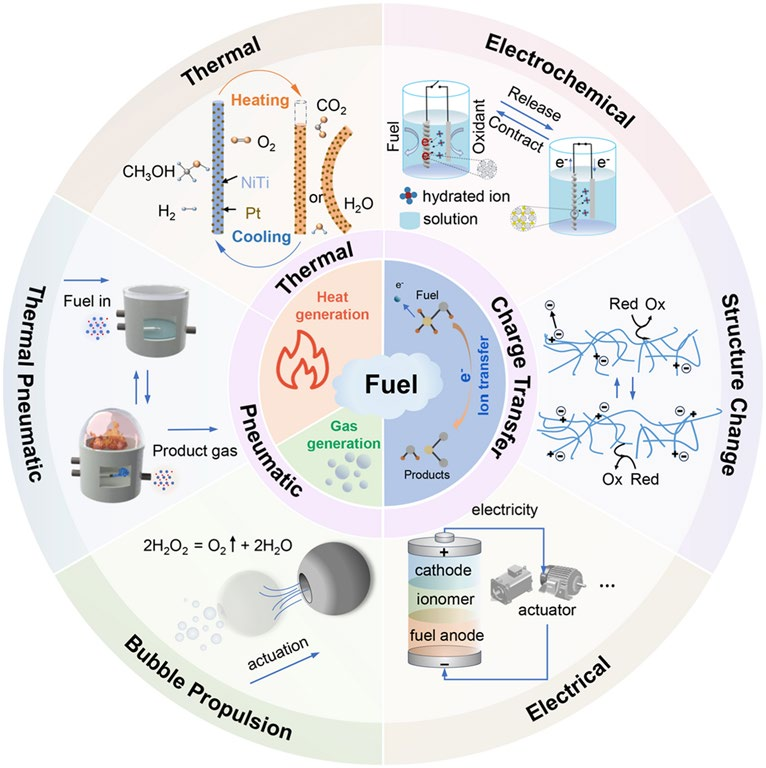
129. Fuel-Powered Soft Actuators: Emerging Strategies for Autonomous and Miniaturized Robots Cheng Zhou, Zhoutao Li, Hailong Wei, Guorong Zhang, Fengrui Zhang, Xiaoshuang Zhou, Hongwei Hu, Guanggui Cheng, Jianning Ding, Shi Hyeong Kim, Ray H. Baughman & Xinghao Hu* Nano-Micro Lett. 18, 129 (2026). doi.org/10.1007/s40820… This work is led by Prof. Dr. Xinghao Hu (Jiangsu University) and co-workers. Prof. Hu's research centers on actuation principles and applications of artificial muscles, electrochemical artificial muscles, and carbon nanotube fiber artificial muscles. This review provides a comprehensive overview of recent developments in fuel-powered soft actuators, covering their fundamental principles, energy conversion mechanisms—including electron transfer, structural changes, combustion, and pneumatic actuation—and key challenges. It concludes with an outlook on their integration into miniaturized and autonomous robotic systems.
Nano-Micro Letters tweet media
Filipino
0
1
2
75
Nano-Micro Letters
Nano-Micro Letters@nmletters·
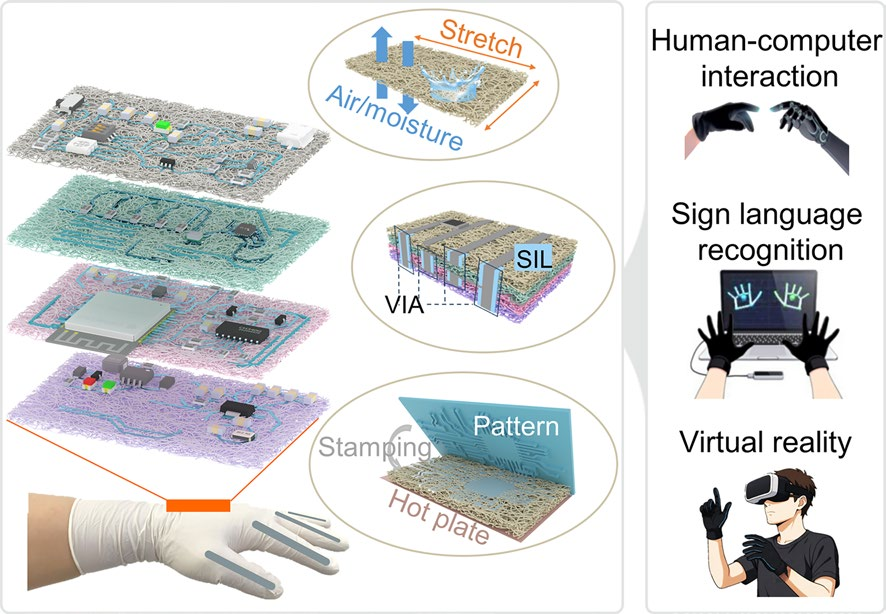
128. A Highly Permeable and Three-Dimensional Integrated Electronic System for Wearable Human–Robot Interaction Wenqiang Wang, Zebang Luo, Xingge Yu, Xiaojia Yin, Li Xiang* & Anlian Pan* Nano-Micro Lett. 18, 128 (2026). doi.org/10.1007/s40820… This work is led by Prof. Dr. Anlian Pan (Hunan University) and co-workers. Prof. Pan's research centers on controlled growth of low dimensional semiconductor structures, physical properties and device applications of optical and photonicnano structures. This article reports a three-dimensional permeable electronic system fabricated by combining electrospun SEBS nanofiber mats with thermally imprinted liquid metal conductors and strain isolators, achieving ultrahigh air permeability (>5.09 mL cm⁻² min⁻¹), exceptional stretchability (750% fracture strain), and reliable conductivity over 32,500 cycles. The system integrates multilayer circuits and sensors into a wireless gesture recognition glove that enables 98% accurate sign language interpretation and seamless robotic hand control, establishing a versatile platform for wearable electronics and human–robot interfaces. Related articles: Bio-Based Flexible Solar-Driven Sustainable Generator with Efficient Electricity Generation Enabled by Plant Transpiration System doi.org/10.1007/s40820… Photo-Assisted Flexible Energy Storage Devices: Progress, Challenges, and Future Prospects doi.org/10.1007/s40820… Dynamic Network- and Microcellular Architecture-Driven Biomass Elastomer toward Sustainable and Versatile Soft Electronics doi.org/10.1007/s40820…
Nano-Micro Letters tweet media
English
0
1
2
54
Nano-Micro Letters
Nano-Micro Letters@nmletters·
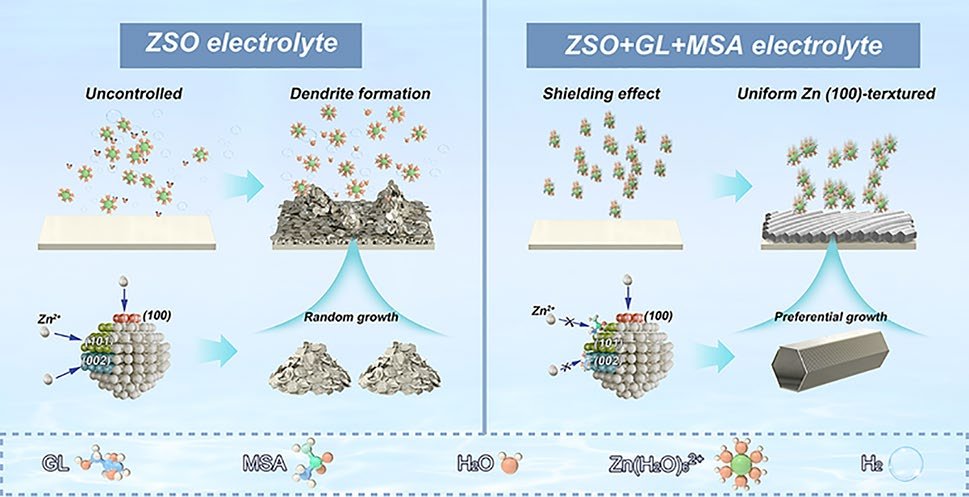
127. Decoding Hydrogen-Bond Network of Electrolyte for Cryogenic Durable Aqueous Zinc-Ion Batteries Xiyan Wei, Jinpeng Guan, Yongbiao Mu*, Yuhan Zou, Xianbin Wei, Lin Yang, Quanyan Man, Chao Yang, Limin Zang*, Jingyu Sun* & Lin Zeng* Nano-Micro Lett. 18, 127 (2026). doi.org/10.1007/s40820… This work is led by Prof. Dr. Lin Zeng (Southern University of Science and Technology) and co-workers. Prof. Zeng's research centers on electrochemical energy storage and conversion systems. This article presents an electrolyte design strategy using glycerol and methylsulfonamide to reconstruct the hydrogen-bond network and promote a (100)-oriented Zn anode, significantly broadening the operating current and temperature windows of aqueous zinc-ion batteries. The approach enables exceptional cycling stability—4,000 h at 1 mA cm⁻², 600 h at 40 mA cm⁻², and over 5,400 h at −20 °C in symmetric cells—while full cells retain 77.3% and 85.4% capacity after 2,000 cycles at 30 °C and −20 °C, respectively, demonstrating enhanced practicality and low-temperature adaptability. Related articles: Creation of an Artificial Layer for Boosting Zn2+ Mass Transfer and Anode Stability in Aqueous Zinc Metal Batteries doi.org/10.1007/s40820… Exposing Zn(002) Texture with Sucralose Additive for Stable and Dendrite-Free Aqueous Zinc-Ion Batteries doi.org/10.1007/s40820… Rational Electrolyte Structure Engineering for Highly Reversible Zinc Metal Anode in Aqueous Batteries doi.org/10.1007/s40820…
Nano-Micro Letters tweet media
Filipino
0
1
2
114
Nano-Micro Letters
Nano-Micro Letters@nmletters·
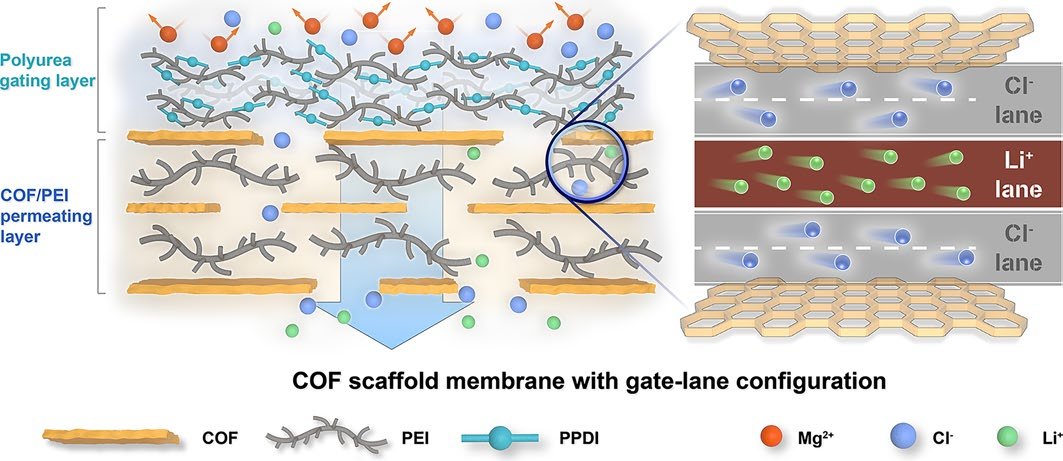
126. COF Scaffold Membrane with Gate-Lane Nanostructure for Efficient Li+/Mg2+ Separation Zixuan Zhang, Yan Kong, Runlai Li, Xiaolin Yue, Hao Deng, Yu Zheng, Sui Zhang*, Runnan Zhang* & Zhongyi Jiang* Nano-Micro Lett. 18, 126 (2026). doi.org/10.1007/s40820… This work is led by Prof. Dr. Zhongyi Jiang (Tianjin University) and co-workers. Prof. Jiang's research centers on enzymatic catalysis, biomimetic and bioinspired membranes and membrane processes, and photochemical catalysis. This article designs a covalent organic framework scaffold membrane featuring a gate-lane nanostructure for efficient Li⁺/Mg²⁺ separation. A polyurea gating layer with tailored small pores provides high Mg²⁺ rejection, while a PEI-intercalated permeating layer with asymmetric charge and spatial nanostructure creates individual lanes for Li⁺ and Cl⁻ to facilitate Li⁺ transport. The optimized membrane achieves a Li⁺ permeance of 11.5 L m⁻² h⁻¹ bar⁻¹, a true selectivity of 231.9, and 120.2% Li⁺ enrichment at a Mg²⁺/Li⁺ mass ratio of 50, outperforming all previously reported positively charged nanofiltration membranes and breaking the permeability–selectivity trade-off. Related articles: Construction of Modifiable Phthalocyanine-Based Covalent Organic Frameworks with Irreversible Linking for Efficient Photocatalytic CO2 Reduction doi.org/10.1007/s40820… Molecular Mechanism Behind the Capture of Fluorinated Gases by Metal–Organic Frameworks doi.org/10.1007/s40820… Precision-Engineered Construction of Proton-Conducting Metal–Organic Frameworks doi.org/10.1007/s40820…
Nano-Micro Letters tweet media
Filipino
0
0
2
249