Solomon Adeola me-retweet
Solomon Adeola
48.7K posts

Solomon Adeola
@olas411
Supply Chain Management, Data Scientist.
Nigeria Bergabung Kasım 2010
520 Mengikuti728 Pengikut
Solomon Adeola me-retweet

The four astronauts aboard the Artemis II have set a new distance record, travelling 406,788 km (252,760 miles) from Earth—a mark that has stood for 55 years.
Al Jazeera's @johnhendren reports.
English
Solomon Adeola me-retweet

More about the US pilot rescue operation! 🔥🇺🇸
The video is AI generated!
LynneP@LynneBP_294
First message from the downed pilot in Iran: God is good! 🙏🏻🇺🇸
English
Solomon Adeola me-retweet

Jeremy Hansen: "I just want to thank you on behalf of Canada..."
@POTUS: "Well, I have to say, I spoke to a very special person, Wayne Gretzky, who I think you know — the Great One, and I spoke to your Prime Minister... they are so proud of you."
English
Solomon Adeola me-retweet

Artemis II astronauts made history Monday, passing the distance record set during the Apollo 13 mission in 1970 at 248,655 miles from Earth. They are now farther from Earth than any humans in history. cbsn.ws/4va7xiF
English
Solomon Adeola me-retweet

The Artemis II crew made its closest approach to the moon — about 4,070 miles above the surface of the moon — at 7:01 p.m. ET.
Follow live updates on Artemis II: abcnews.link/KxBo649
English
Solomon Adeola me-retweet

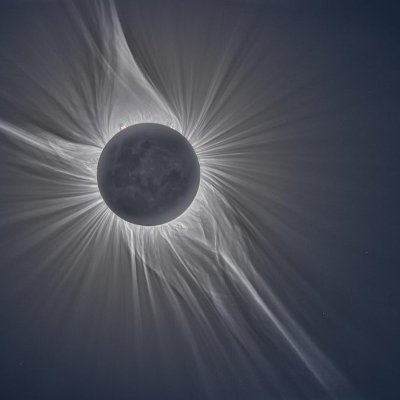
🚨 #ÚltimaHora La tripulación de Artemis II verá este lunes un eclipse de 53 minutos, invisible desde la Tierra
El eclipse solar total, unas siete veces más duradero que los vistos desde la Tierra, comenzará alrededor de las 20:35 hora del este de Estados Unidos (00:35 GMT del 7 de abril), según la NASA.
Ocurrirá unos 90 minutos después de que la nave Orion alcance su máxima distancia de la Tierra: cerca de 407.000 kilómetros, lo que equivale a unos 6.400 kilómetros más lejos de lo que llegó la misión Apolo en abril de 1970.
📍 #Internacionales
📝 @EFEnoticias | 📸 Cortesía @NASA
Español
Solomon Adeola me-retweet

🚨🇺🇸 Artemis II just sent back footage of the Moon so close and detailed you can see every crater and ridge like you're flying over it.
Humans are orbiting the Moon again for the first time in over 50 years and the view is absolutely unreal.
x.com/NCNewsOnX/stat…
Mario Nawfal@MarioNawfal
🚨🇺🇸 Artemis coming back online after a 40 minute blackout while on the dark side of the Moon. “We do not leave Earth. We choose it.” Source: @NASASpaceflight
English

@OneJoblessBoy Forget about being president in Nigeria. You’ll only continue to see it. You never merit it!
English
Solomon Adeola me-retweet

🚨 BREAKING: Incredible moment as Artemis II pilot Victor Glover shares the Gospel mere MOMENTS before reaching the back side of the Moon, losing communication with Earth
"Christ said, in response to what was the greatest command, that it was to love God with all that you are." 🙏🏻
"And he also, being a great teacher, said the second is equal to it, and that is to love your neighbor as yourself."
"And so, as we prepare to go out of radio communication, we're still going to feel your love from Earth, and to all of you down there on earth and around earth, we love you from the moon." ❤️
English
Solomon Adeola me-retweet

LIVE: Watch with us as the Artemis II astronauts make their closest approach to the Moon, traveling farther from Earth than ever before. twitter.com/i/broadcasts/1…
English
Solomon Adeola me-retweet

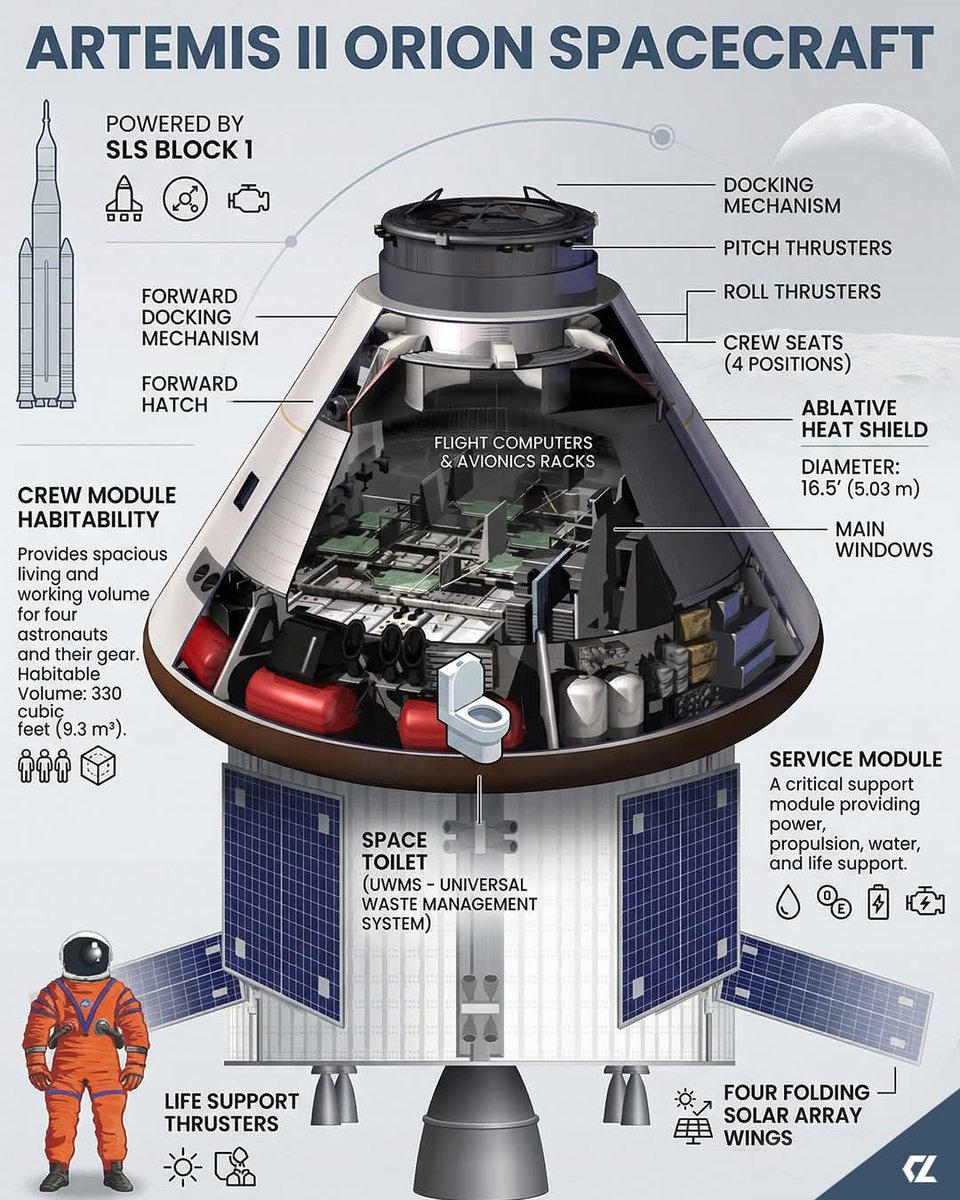
Peek inside the Orion spacecraft: how four astronauts live, breathe, and survive on a journey to the Moon.At the top sits the Crew Module — the astronauts’ home in deep space. Picture sharing a living space no larger than two minivans with three crewmates for weeks on end. This compact habitat is where they work, sleep, eat, exercise, and yes… use the famously tricky space toilet (microgravity makes even basic biology an engineering challenge). It’s an intensely intimate environment that tests both technical skill and human resilience every single day.Yet this small Crew Module would be lifeless without the powerhouse directly beneath it: the European Service Module. Built by ESA, this vital section is the spacecraft’s life-support engine room. It carries the main propulsion engines that will maneuver Orion around the Moon, massive solar arrays that generate electricity, and the sophisticated systems that recycle air, produce drinkable water, and maintain comfortable temperatures in the deadly vacuum of space.Together, the Crew Module and European Service Module form Orion — not just a spacecraft, but a carefully engineered oasis designed to keep humans alive and thriving in the harsh, unforgiving void of deep space.

English