Tweet Disematkan
What did Larry actually say... 🧵
Let's take a deeper look at the @Bloomberg interview with Larry Fink (ceo of @blackrock) after the Bitcoin ETF introduction. Here the vid, below the dissection.
English
Patrick de Laive
12.5K posts
@patrick
Founder https://t.co/FXDfAW1GaG (formerly know as the guy who founded TNW) - At my best where business, creativity and technology converge.


NEW: Dutch Parliament Member Michel Hoogeveen explains how the 36% unrealized capital gains tax, just passed by the House of Representatives, will work. Here is a more detailed example: Step 1. Starting position You own 500 shares. Value on Jan 1, 2028: €50,000 Value on Jan 1, 2029: €100,000 So the paper gain is: €100,000 − €50,000 = €50,000 unrealized profit You did not sell. But for tax purposes, that €50,000 is treated as income. Step 2. Apply exemption You are married, so you get a €3,600 exemption. €50,000 − €3,600 = €46,400 taxable amount Tax rate: 36% €46,400 × 36% = €16,704 tax bill That bill is due in May, even though you never sold anything. Step 3. Market falls before you pay Now suppose by May the shares drop in value. New total value: €60,000 So your portfolio is no longer worth €100,000. It’s worth €60,000. But the tax bill is still €16,704, because it was calculated based on the January 1 valuation. Step 4. You must sell shares to pay tax To raise €16,704, you sell part of your shares. After paying the tax, you’re left with: €60,000 − €16,704 = €43,296 Originally you had 500 shares. Now you have 360 shares left. You were forced to sell 140 shares. 140 ÷ 500 = 28% of your shares gone. Step 5. What happened economically? Before the correction: Paper gain was €50,000. After the correction: Portfolio is worth €60,000. Original cost basis was €50,000. Real gain is only €10,000. But you paid €16,704 in tax. So instead of being up €10,000, you are now: €43,296 − €50,000 = €6,704 below your original starting value. You turned a €10,000 real gain into a €6,704 net loss. And you lost 28% of your shares permanently.
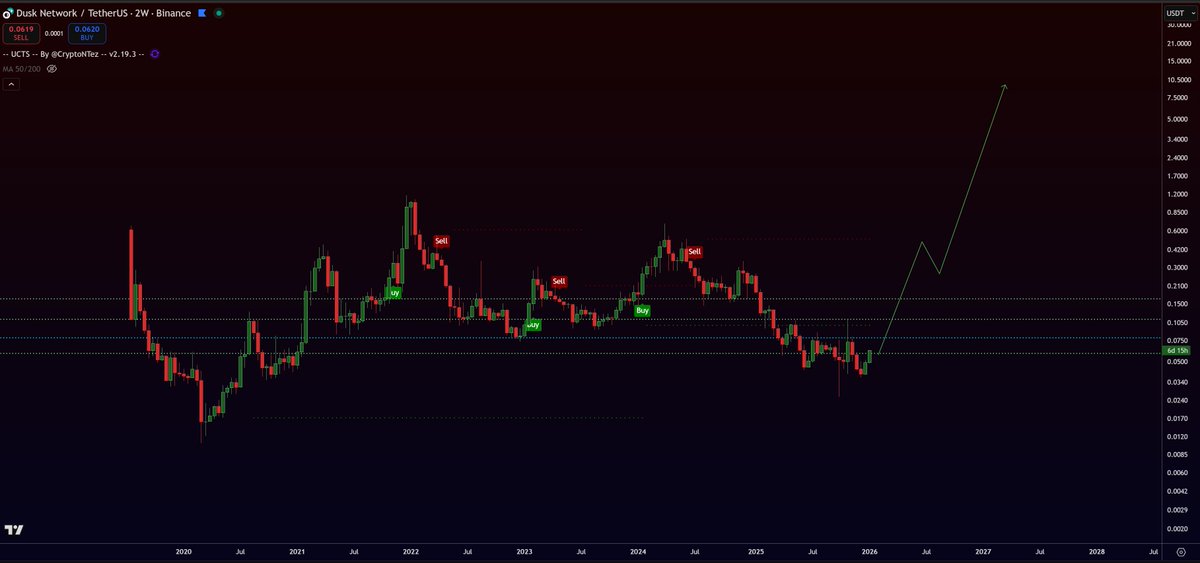
Privacy ≠ anonymity. Your bank doesn't publish your transactions to a public ledger. Neither does your broker or your CSD. But they all see everything. Every intermediary in the chain sees your data. That's how TradFi privacy works: hidden from the public, fully visible to everyone in between. Public blockchains made everything visible to everyone. Not because anyone wanted that, but because early architectures couldn't verify state without showing it. @DuskFoundation does something different. You can have private transactions or fully public ones, and mix both on the same network. When private, even the node operators don't see transaction details unless you explicitly disclose. The receiver can decrypt and cryptographically prove who paid, but nobody else needs to know. Compliance doesn't mean giving up privacy either. Smart contracts enforce the rules at execution. Non-compliant transactions don't go through. You don't need to expose data to prove you're following the rules if the rules are already built into the execution layer. Selective disclosure only where regulation actually requires it, and only to the parties that need it. Not TradFi privacy, not full transparency. Both options on one network, with compliance built in. $DUSK #RWA


Het CBS komt met de feiten. Groot alarmisme over vertrekkende bedrijven is onterecht. “In 2021-2023 verplaatste ruim 5 procent van de middelgrote en grote bedrijven een deel van hun activiteiten naar het buitenland. Dit is vergelijkbaar met de voorgaande periode.” cbs.nl/nl-nl/nieuws/2…



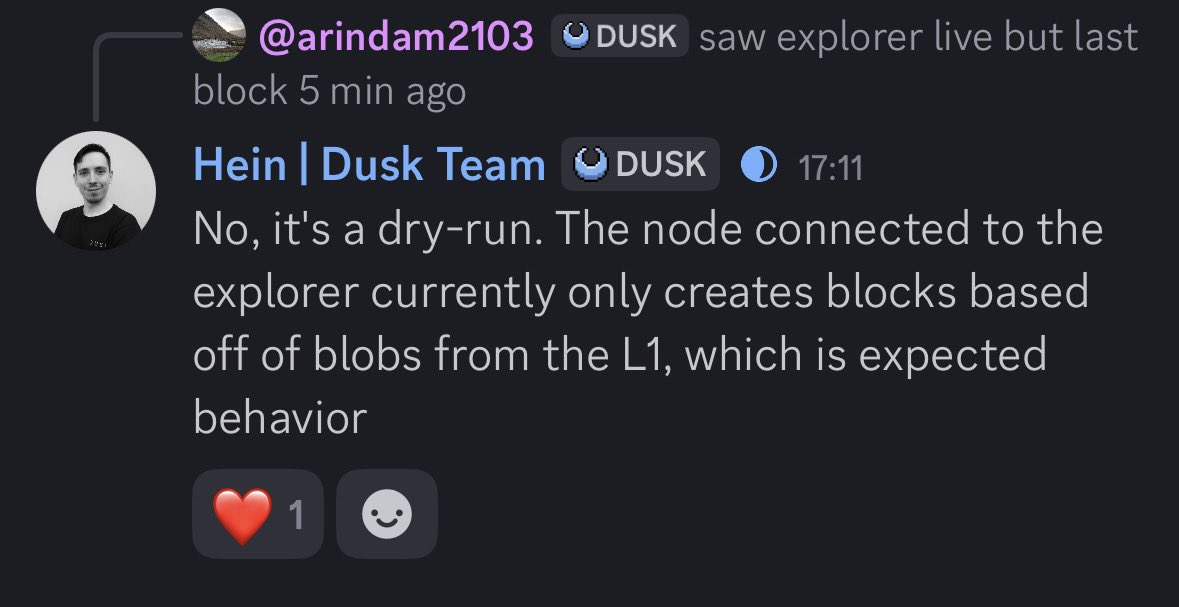
Dusk is joining @binance for a Binance Square AMA. 📅 Jan 22, 2026 at 13:00 UTC 🎙️ @HeinDauven (CTO at Dusk) 🎁 4000 $DUSK in red packet rewards Set a reminder below👇