Alex Simakov

3.5K posts

Alex Simakov banner
Alex Simakov

Alex Simakov

@Alexei_Simakov

Energy Abundance & Climate Transition • Big Batteries🔋☢️ 🥑• Amateur Outdoorsman • First Gen 🇨🇦

Toronto, Ontario 参加日 Mart 2016
3.9K フォロー中1.4K フォロワー
Alex Simakov がリツイート
Alex Trembath
Alex Trembath@atrembath·
AI data centers are maybe the single biggest source of demand pull ever for nuclear, geothermal, batteries, transmission, and grid flexibility. So naturally climate activists are trying to ban them.
Jordan Weissmann@JHWeissmann

Relatedly, it's not obvious that banning data centers is a net win for climate activists. Yes, they're keeping some fossil fuels on the grid. They're also arguably the key force driving the U.S.'s clean tech industry now, after Trump eviscerated EV subsidies.

English

8
13
63
4.3K
Alex Simakov がリツイート
Yuan Yi Zhu
Yuan Yi Zhu@yuanyi_z·
Paul Ehrlich was genuinely one of the worst people of the 20th century. Everything he stood for was wrong; everything he advocated for was evil. x.com/derektmuller/s…
English
205
826
7.7K
432.5K
Alex Simakov がリツイート
Robert Boswall
Robert Boswall@RobertBoswall·
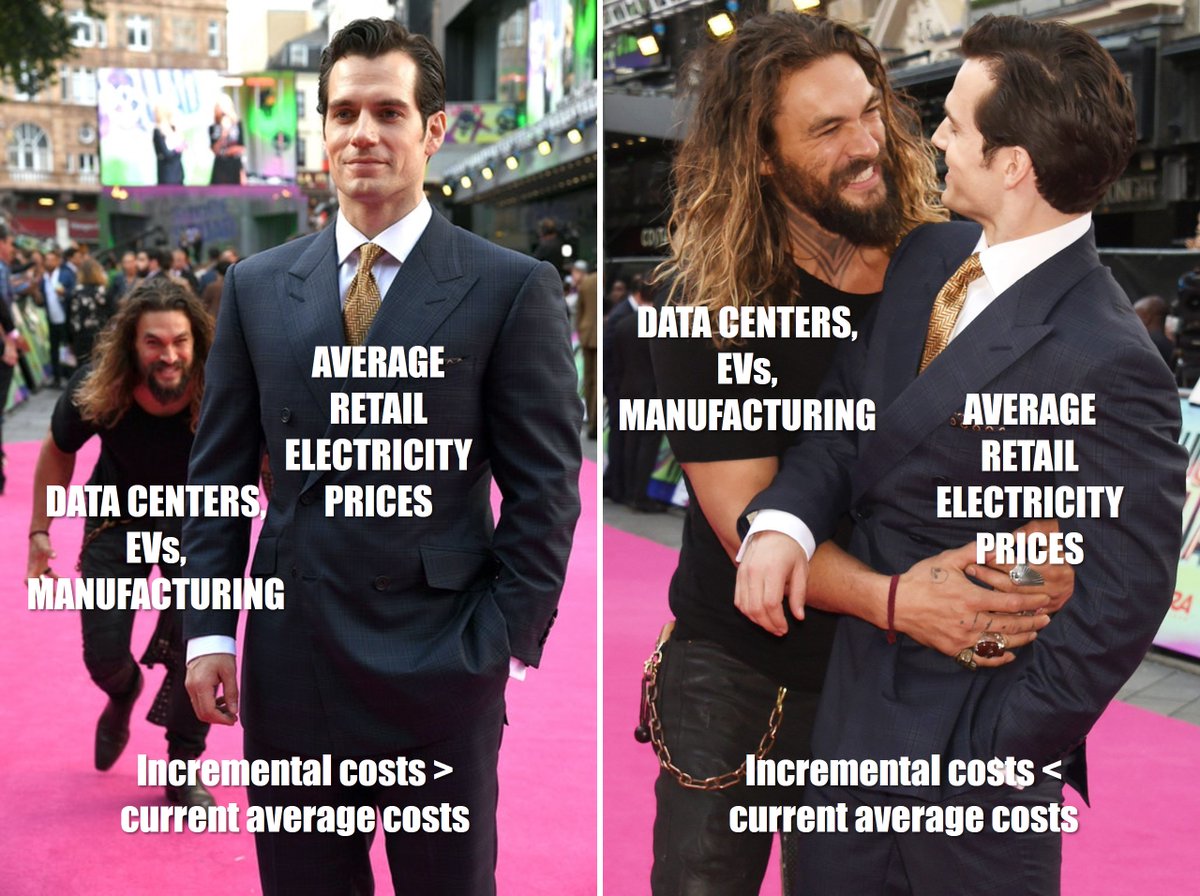
As the grid connection crisis trundles on I hope it is not unbritish to point out that queues are not the best way to allocate valuable and scarce resources. With the boom in data centre demand there are yet more proposals for ‘strategic’ assessments of projects’ ‘alignment’ with national ‘needs’ and ‘readiness’ to deliver. One more consultation will fix everything. Please can we just use prices. Auction the grid connection rights, selling the connection rights at their value rather than handing them out at cost. Capture that upside value to pay down the network costs that will soon be driving up household bills; or use it to accelerate the grid connections supply chain.
Robert Boswall tweet media
English
2
7
82
12.7K
Alex Simakov がリツイート
Michael Thomas
Michael Thomas@curious_founder·
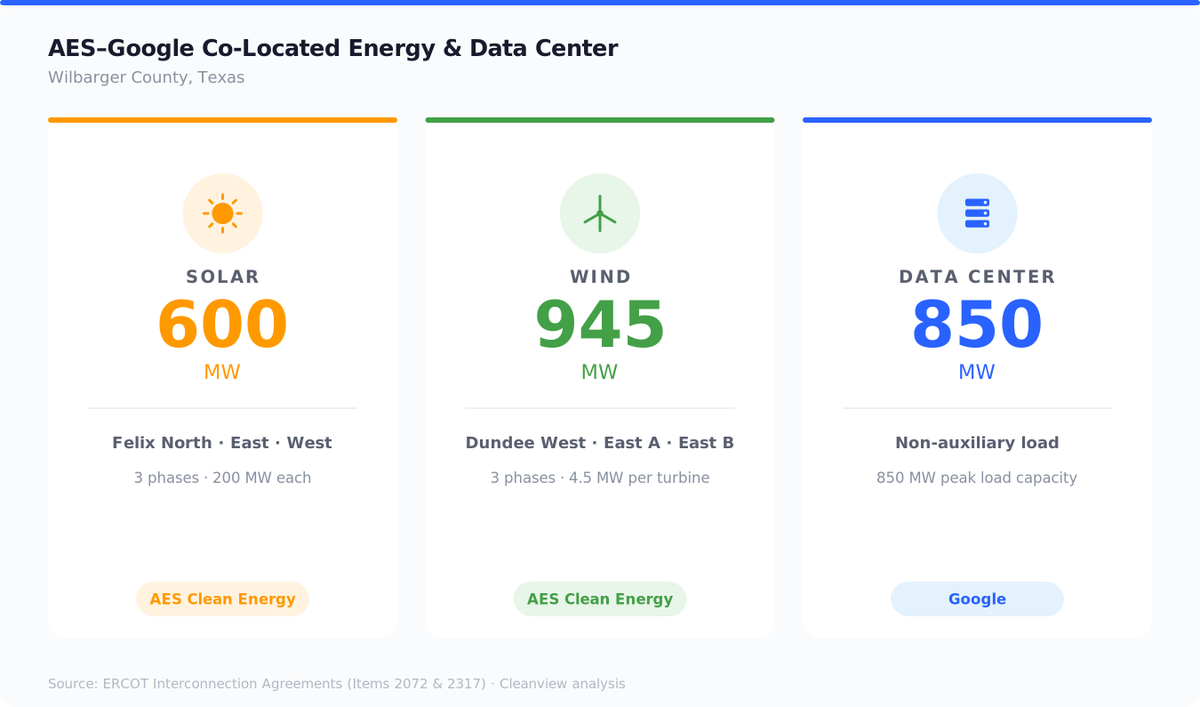
Amazon and Meta have said they are building gas plants to power their data centers because it's the fastest path to power. But this week, Google proved you can do it even faster with co-located renewables. And I found documents showing their strategy. On Wednesday, Google announced a new data center in Texas that will be powered by renewables built by AES Clean Energy. The press release was light on details, so I used Cleanview's platform to try to learn more about the project. In December AES filed a document showing that it plans to connect an 850 MW data center (Google’s) to its massive solar and wind project in West Texas. The project would use 600 MW of solar and 945 MW of wind power. Using both solar and wind enables near round-the-clock clean energy. And by connecting to the grid, Google gets the reliability it needs when solar and wind output drop. But the creative part is how this deal enables Google to skip Texas’ large load queue and get online in 18 months instead of 5+ years. Like the rest of the country, Texas has a massive backlog of data centers trying to connect to its power grid. At the end of 2025, the backlog was 225 GW—equivalent to 20 New York City’s of power demand. For data center developers like Google that backlog means waiting years to connect to the grid. These delays have led some companies like Meta to start building their own gas power plants as I wrote in our latest report. But Google found an alternative path—one that relies on a huge amount of onsite renewable energy. Thanks to a recent rule change, a data center in Texas can piggyback off a power project’s interconnection agreement if its co-located. And that’s what Google appears to be doing here with AES. The documents we found suggest Google is using AES’ grid connection, which took years to secure to get around the ERCOT large load queue. The wind phase of the project is expected to come online in August 2027. If Google had gone the traditional route, there’s no way they could have achieved that timeline. If they had tried to connect this data center in Virginia, they would have had to wait until the early 2030s. It’s worth noting that this timeline is similar to the one Amazon and Meta are achieving by using natural gas. They’ve argued that they have to use gas because waiting for renewables delivered through the grid would take too long. But with this project, Google is proving that it’s possible to build a 850 MW data center in 18 months powered almost entirely by co-located renewables. Developers and policymakers should take note. We wrote more about this project in a brief for Cleanview research subscribers. That brief includes a detailed project timeline, the equipment being used, and the broader policy and market context. Send me a note or visit our website if you’re interested in becoming a subscriber.
Michael Thomas tweet media
English
36
75
416
73.5K
Alex Simakov がリツイート
Christian Britschgi
Christian Britschgi@christianbrits·
In Loudon County, Virginia, which has most data centers of anywhere in the world, taxes on data centers pay for a third of local government. Beyond the tech enabled by data centers, that’s a pretty good deal.
one dozen rats at a keyboard@PanasonicDX4500

has anyone, even the ardent AI defenders, given an example of how building a data center actually benefits a community? because as far as I know the offer is that your utility bills will go up in exchange for maybe someday making it easier for your boss to downsize your job.

English
19
54
528
47K
Liam Gill
Liam Gill@realLiamGill·
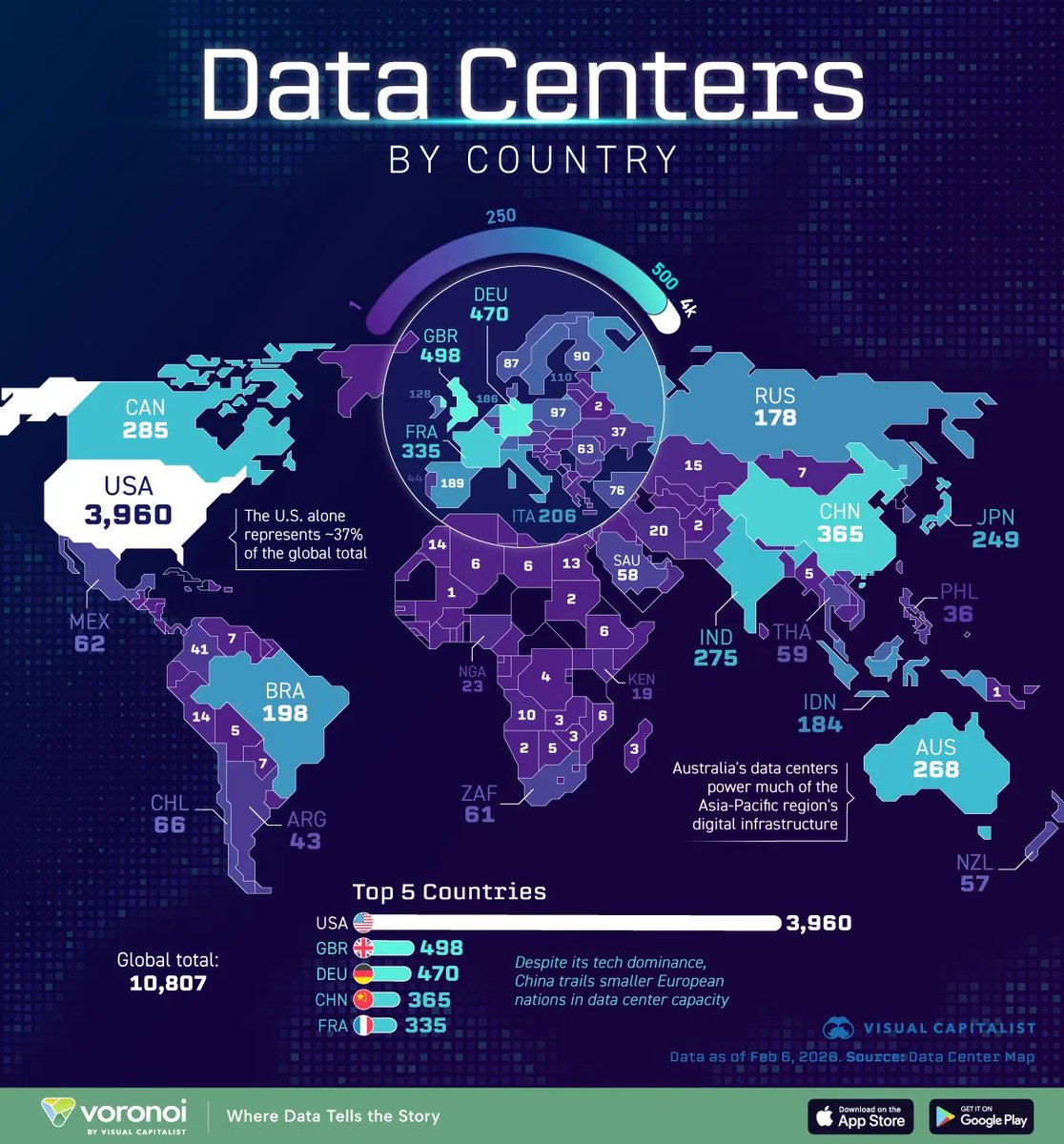
How does Canada have fewer data centers than the UK, Germany or France? We have: (i) clean, cheap, renewable energy, and (ii) a cold climate; these are the two biggest advantages you can have when building a data center.
Liam Gill tweet media
English
1
0
0
294
Alex Simakov
Alex Simakov@Alexei_Simakov·
@ChrisSpoke @realLiamGill Big picture, we also need to see utilities pursue Non-Wires Solutions (NWS) instead of maxing costly poles & wires build-out – @OntEnergyBoard did some completed work on this last fall, now up to @EDA_ONT members to deliver 4/fin
English
1
0
0
22
Alex Simakov
Alex Simakov@Alexei_Simakov·
@ChrisSpoke @realLiamGill opposition, and our expanding hydro + nuclear resources are a better long-term fit than gas Am optimistic we’ll see some substantive policy reforms in 2026 that allow for BESS BTM + Virtual Solar/Wind PPAs that are price competitive for AI without straining the grid 3/
English
1
0
0
17
Alex Simakov がリツイート
BuccoCapital Bloke
BuccoCapital Bloke@buccocapital·
For 50 yrs we treated the supremacy of asset-light businesses as a permanent economic law But if AI commoditizes asset-light businesses, we’d just be reverting to the historical mean where value accrued to atoms, infrastructure, energy It would be a 50 year blip. An anomaly
English
171
413
5.5K
1.1M
Alex Simakov がリツイート
Colin D'Mello | Global News
Colin D'Mello | Global News@ColinDMello·
Here’s something you don’t hear ofter: ahead of time and under budget. Energy Minister Stephen Lecce is set to announce the refurbishment of the Darlington nuclear plant is four months ahead of schedule and $150 million under budget. globalnews.ca/news/11648179/… #onpoli
English
45
52
518
35.2K
Alex Simakov がリツイート
Michael Thomas
Michael Thomas@curious_founder·
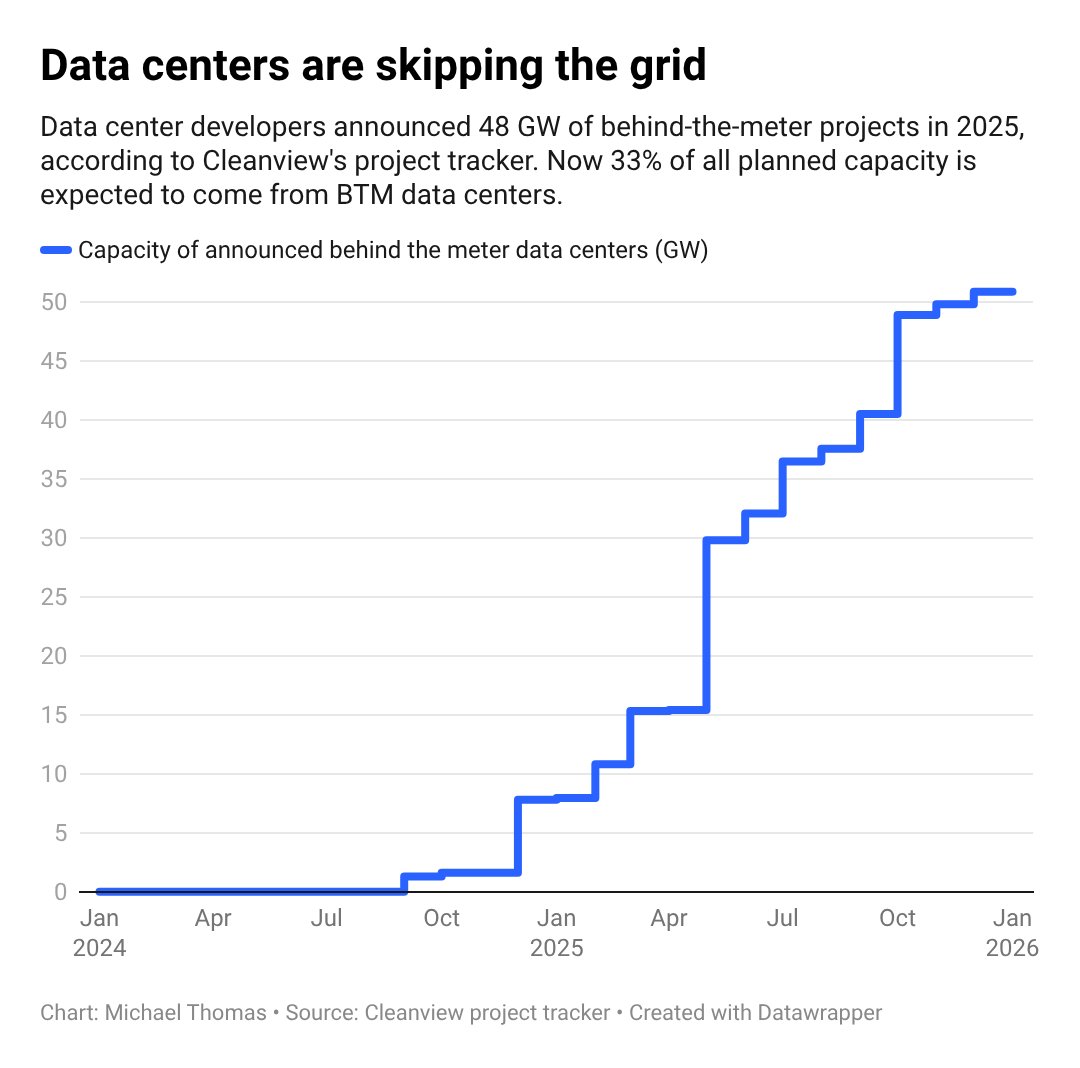
I'm working on a report about data center developers building their own power plants and this data shocked me: 48 GW of proposed data centers—roughly 33% of all planned capacity—now plan to skip the grid by building "behind-the-meter" projects. This is a very new trend. A little more than a year ago, virtually all data center developers planned to use the electric grid to power 100% of their projects. In December 2024, there was less than 2 GW of planned behind-the-meter data center capacity, according to our data center tracker at Cleanview. Then in 2025, developers announced roughly 40 projects that planned to skip the grid partially or entirely. Some of these projects will soon be home to America's largest fossil fuel power plants, like Homer City Energy Campus in PA—a proposed 4 GW+ natural gas plant that will send all of its power to an onsite data center. Other projects will use a combination of technologies—everything from solar, wind, batteries, and even nuclear. Natural gas is by far the most common, though. 72% of projects plan to use it. All projects are motivated by the same goal: getting their data center online as soon as possible. It can take as long as 7 years to connect a hyperscale data center to the grid in a place like Virginia. Building behind the meter power in a red state with lax regulations can get that time down to less than 2 years. But speed comes with a cost. Homer City's 4 GW project could soon become one of the largest single sources of carbon emissions in the country. At Cleanview we're tracking more than 30 projects that plan to use onsite gas with a combined 48 GW of capacity.
Michael Thomas tweet media
English
123
375
1.7K
656.9K
Alex Simakov がリツイート
Matt Fernley
Matt Fernley@matt_fernley·
Looks like Chinese battery producers taken to the wood shed! This may combine with higher raw material prices to have an impact on battery prices - both BESS and EV - in coming months ess-news.com/2026/01/19/chi…
English
4
9
62
5K
Alex Simakov がリツイート
Zeyi Yang 杨泽毅
Zeyi Yang 杨泽毅@ZeyiYang·
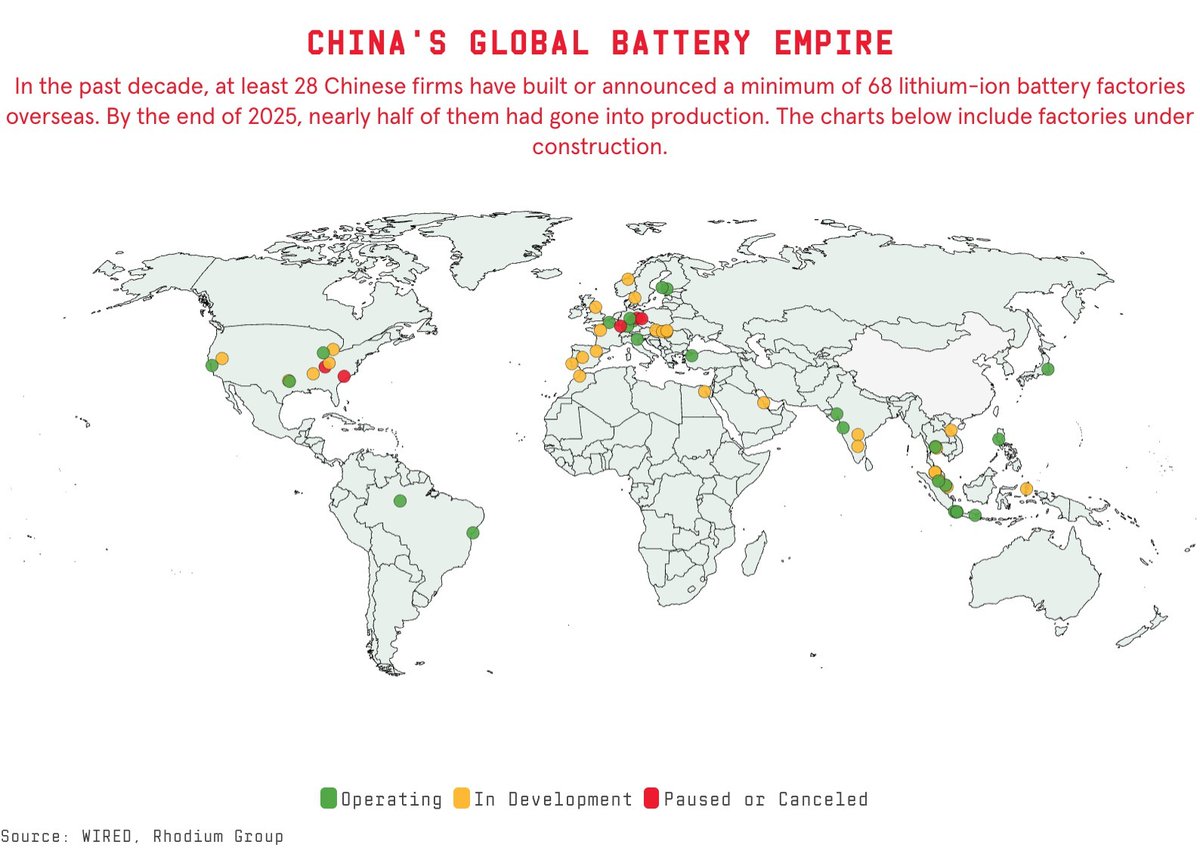
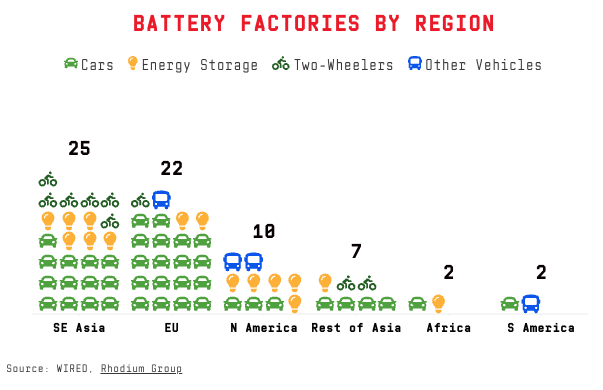
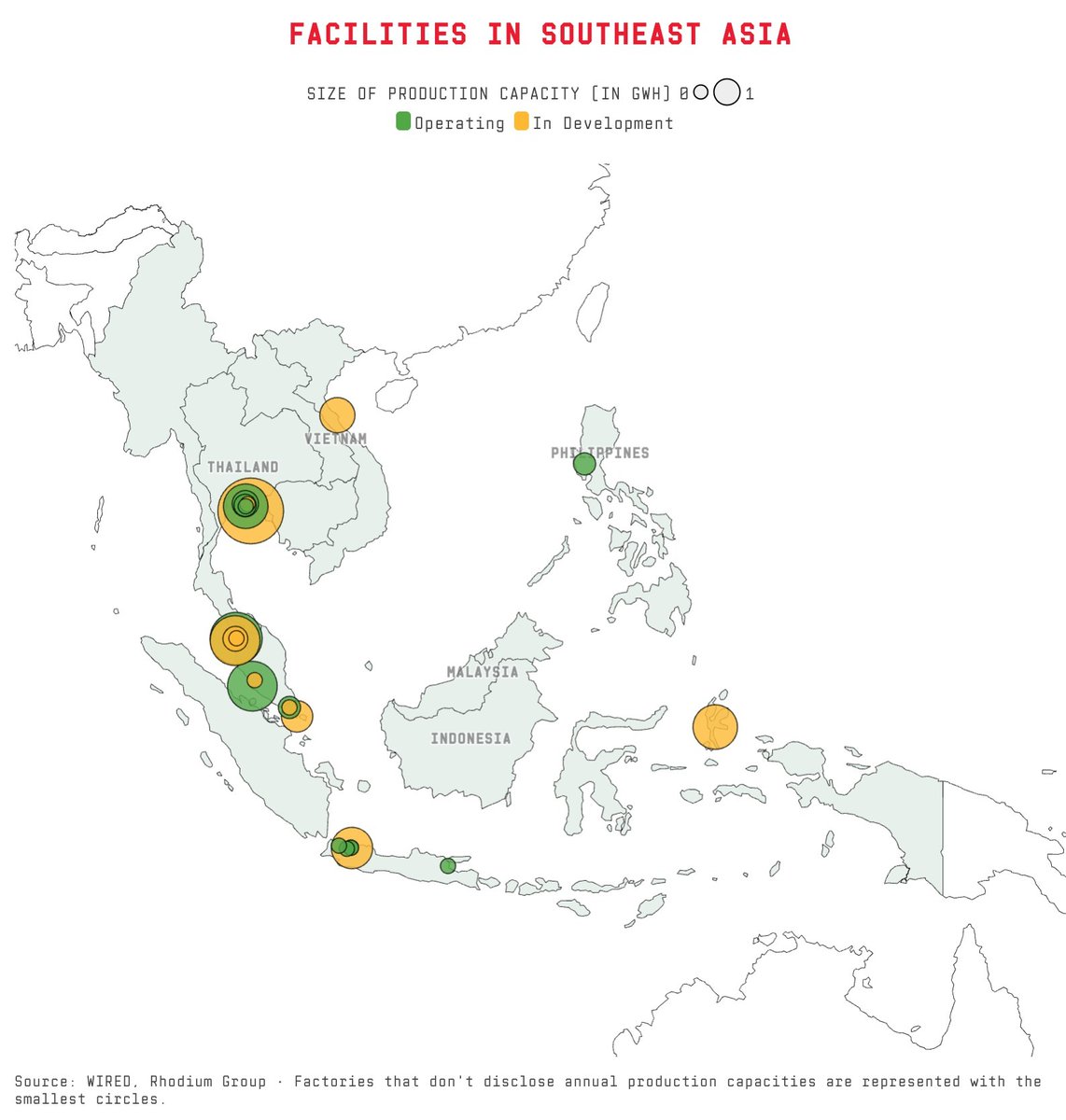
NEW: I tracked all the Chinese lithium battery factories announced or built in the past decade 𝗼𝘂𝘁𝘀𝗶𝗱𝗲 China's borders. The truth is, companies like CATL and BYD are so technologically advanced that there's little international competition. As batteries receive global spotlight for their roles in EVs and renewable energy storage, European and Asian countries are welcoming these factories with open arms. Last June, @EmmanuelMacron was in a Chinese battery factory in France praising the investment. This week he doubled down in Davos and said China is welcome to invest in Europe if it can “contribute to our growth, to transfer some technologies, and not just to export towards Europe.” With help from @Armd_meyer at the @rhodium_group, I mapped 68 factories in the world that are either set up by a Chinese company, by a joint venture with Chinese stakes, or by licensing the crucial manufacturing technologies from a Chinese battery maker. I also looked at what the batteries' end uses are, how big the production capacity will be, and whether they are up-and-running. I'm really proud of the visualizations we have in the end, showing both the big picture of battery manufacturing activities globally but also the regional nuances. Aside from the impact of these batteries, the trend also poses some difficult questions: if "Made in China" still means cheap gadgets put together in a Shenzhen factory, what should we call the cutting-edge battery manufacturing facilities that Chinese companies are building across the world? And how would people react to the Chinese factories popping up in their neighborhood?
Zeyi Yang 杨泽毅 tweet mediaZeyi Yang 杨泽毅 tweet mediaZeyi Yang 杨泽毅 tweet mediaZeyi Yang 杨泽毅 tweet media
English
29
257
1K
151K
Alex Simakov がリツイート
Shanu Mathew
Shanu Mathew@ShanuMathew93·
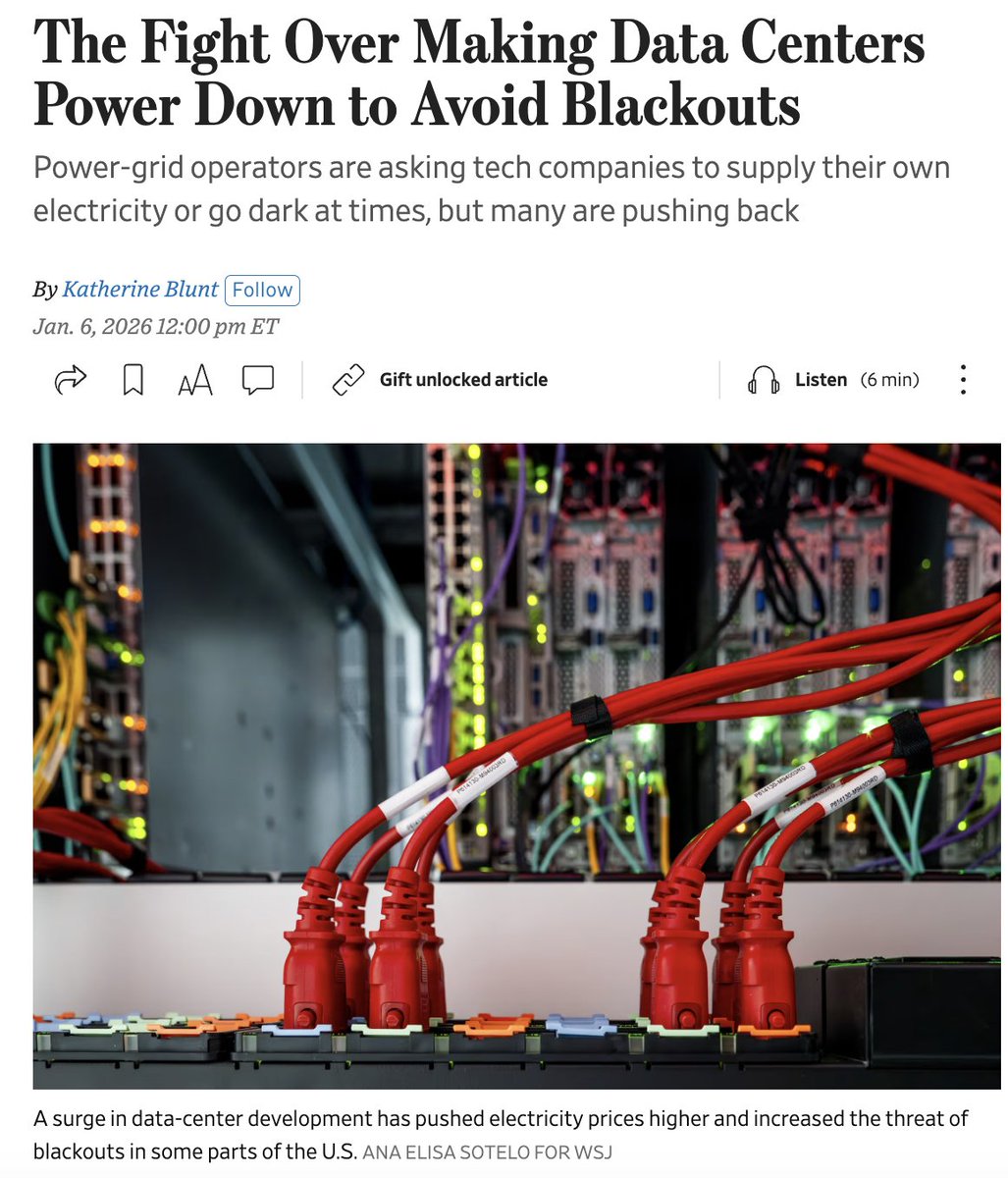
Nice summary piece of all the moving parts. Data centers face a critical choice: agree to curtailment (powering down or switching to backup during peak demand) to connect 3-5 years faster, or wait in the queue. PJM hit stalemate on mandatory curtailment after pushback from hyperscalers citing 24/7 cloud/AI obligations. Texas passed law allowing forced disconnection during supply shortages. Google piloting demand response programs. Core tension: $100B+ capex plans versus grid operators saying transmission/generation buildout will take years. Princeton study found self-generation plus curtailment agreement could cut wait times by half.
Shanu Mathew tweet media
English
9
40
195
27.6K
Alex Simakov がリツイート
Shanu Mathew
Shanu Mathew@ShanuMathew93·
Wrong framing here from a16z. Energy is not the capital constraint as it’s typically <5-10% of the fully loaded cost. It IS the bottleneck - it takes years to get equipment ordered, projects built, and longer for grid interconnect. This is why even folks are paying premium power prices under contract or bringing your own power (BYOP), because it accelerates time to power.
a16z@a16z

Energy might not be the main bottleneck to AI: a16z.news/p/charts-of-th…

English
14
24
196
41.1K
Alex Simakov がリツイート
John Arnold
John Arnold@johnarnold·
“To get a sense of how little electricity people use in sub-Saharan Africa, imagine each person there turning on a 50-watt light bulb. That alone would instantly double consumption. Nigeria, with 240m people, generates less electricity than Wyoming, with 0.6m” —@TheEconomist
English
36
163
1.4K
258.8K