

kisha 🪬
2.9K posts


Who wants the famous #Bitcoin Fibonacci levels again?
Nebraskangooner@Nebraskangooner
#Bitcoin We won't know if that was THE top unless we close weekly below $67,250 If that happens AND $BTC remains historically predictable then we have key levels below Distribution - Accumulation - Instant reversal These levels have been respected for every BTC bear market
English
@Nebraskangooner Can u pls do this chart for this cycle as well?
x.com/i/status/10386…
Nebraskangooner@Nebraskangooner
#bitcoin I've been trying to find a range for proper accumulation in this bear market. @tradingroomapp recommended the use of Fibonacci based on the July low in 2017 which tells us 78.6% fib is already tested. What happens if it breaks down? It could go something like this:
English
Next HTF #Bitcoin support cluster I see is $57,000-$58,500 area.
Not much I'm seeing below that until $45k.
So... I guess we gotta hold that with maybe a wick below to see more sideways/small bounce action down here.
English
@Persian_TA اگر تحلیلی نگاهی هست که بدونیم که تو چه محدوده ایی یا شرایطی مطلوبه شروع کنیم به انباشت بیتکوین
ریورسال تایم سالانه ممکنه کل سایکل بعد رو تبدیل به رنج کنه یا ریزش غیر قابل انتظار؟
مرسی🫶🏽
فارسی

kisha 🪬 がリツイート

بچه هایی که دارید با اپ conduit اینترنت برامون به اشتراک میذارید، دمتون گرم🫂
واقعا کار میکنه
فارسی
kisha 🪬 がリツイート

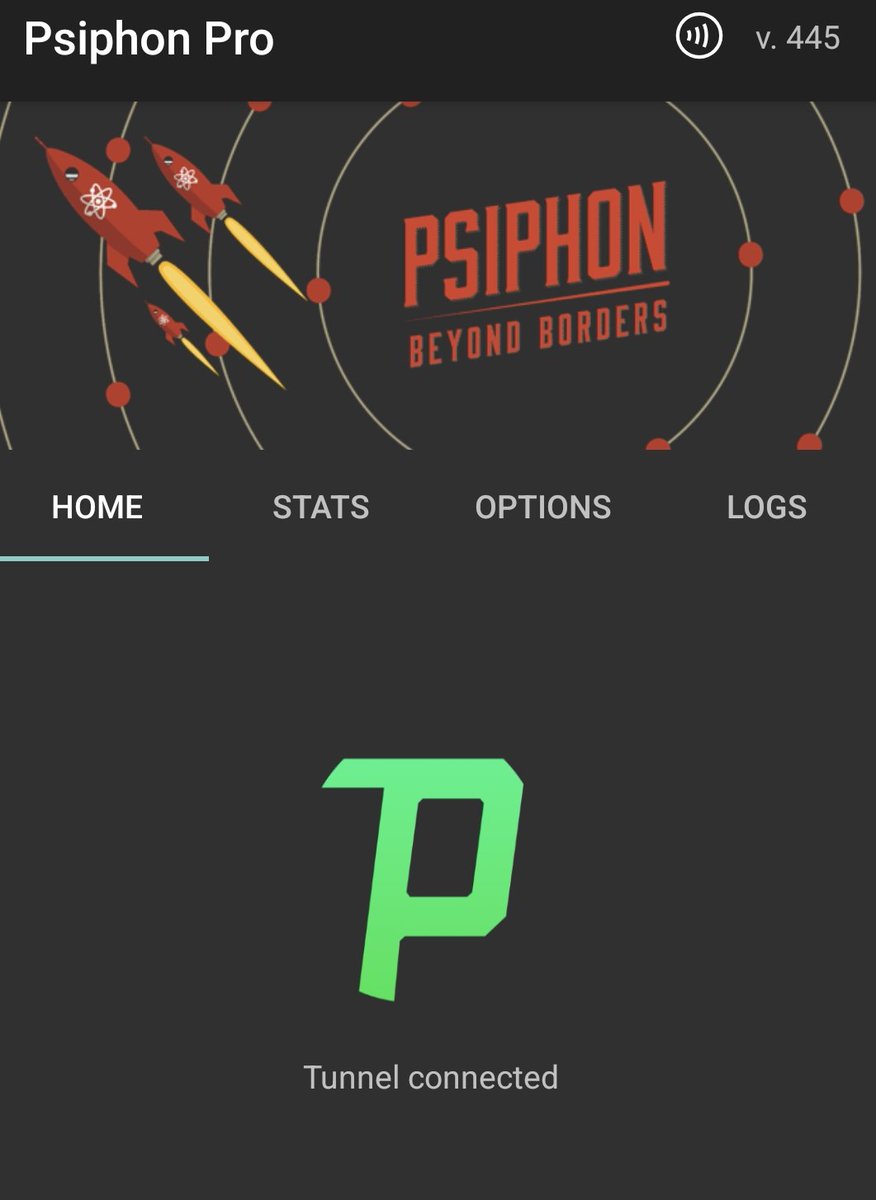
نرم افزار Psiphon سایفون پرو نه
نسخه v. 435
تنظیمات access point
name: google.com
apn: google.com
اینترنت همراه اول
سیستم عامل اندروید
متصل شد
فارسی
kisha 🪬 がリツイート

الان وقت خرید ویپیان نیست، هر مدل کانفیگی بخواید رایگان هست!
یه لیست از کانالهای رایگان ساختم، میتونید تو تلگرام راحت اضافه کنید.
t.me/addlist/dIF8di…
فارسی
kisha 🪬 がリツイート

داخل اپ InviZible Pro وارد بخش Fast Settings شده و گزینه Spoof SNI رو روشن کنین. سپس لیست مشخص شده رو وارد کرده و روی اتصال بزنین.
اتصال زمانبر هست، اما روی برخی از اپراتورها مثل همراه اول جواب میده.
البته ممکنه نیاز باشه در تنظیمات Bridges رو روی Use Bridges Default List قرار بدین و بعد Snowflake رو انتخاب کنین، تا شرایط اتصال بهتر بشه.
🏴 Amin 🏴@amin_o__o
این روش به سختی روی همراه اول وصل میشه حدود یک ربع طول کشید اما وصل شد درحالیکه هیچ کانفیگ من وصل نمیشه بدون bridge
فارسی
@Thisismrfti داشبردی تحلیلی از Base هست که ببینیم چه مقدار آدرس فعال هست و ...؟
فارسی

تحلیل توزیع $MON در ایردراپ موناد
➖کل آدرس ها: ۷۶۰۲۲
➖کل توکن ایردراپ: ۳،۳۳۰،۵۸۳،۳۹۶
➖حداقل توکن: ۱۵۰۰ تا (۴۹۸۰ آدرس)
➖حداکثر توکن: ۱۲.۲ میلیون
➖ میانیگن: ۴۳،۸۱۱ توکن
➖۷۳٪ آدرس ها، کمتر از ۲۵ هزار توکن دریافت کردند و ۳۵٪ از کل ایردراپ در دست ۴۵۶ آدرسه!
Mrfti@Mrfti_plus
$MON Allocation Analysis I have analyzed the $MON airdrop distribution and here are the key findings:👇 ➖76,022 addresses are eligible to receive $MON as airdrop ➖Total $MON allocated: 3,330,583,396 tokens (fully claimable by eligible addresses) ➖Minimum allocation: 1500 $MON (received by 4980 addresses) ➖Maximum allocation: 12.2M $MON (allocated to address: 0xfE25BBE82c87Fab5D8283799B3627b98543D29CF) ➖Average $MON allocated: 43811.36 $MON ➖Median $MON allocated: 12000 $MON ➖~73% of addresses (55,537) received less than 25,000 $MON ➖~35% of total airdrop is concentrated in just 456 addresses (>1M $MON each) Many users like @monad airdrop because big holders got huge rewards, which excites investors and creates buzz. Many others don’t like it, saying it’s unfair and gives too much to a few while most get little. Is this setup strong enough to keep the $MON price high? 🫡 Data source: raw.githubusercontent.com/monad-crypto/a…
فارسی
kisha 🪬 がリツイート

Helping users become better farmers… or just farming the users?
English
kisha 🪬 がリツイート

Convenience is not always your friend.
Don't rush things in crypto guys, take your time.
@okutrade would show the full details for aggregated swaps.
farrier@farrierng
⚠️ Be Careful When Using @Rabby_io 2 days ago, I lost $1,000 while swapping tokens using Rabby Wallet due to a wrong route execution. i’ve been using Rabby for swaps for over a year, sometime had some problem but small. Here’s what happened: I swapped 0.35 ETH (~$1,400) to $baseshake on Base chain. The UI showed the best route as KyberSwap with ~5% slippage - i didn’t change anything. But after confirming, the swap executed through OpenOcean with 67% slippage, and I only received around $500 worth of tokens. I swapped $baseshake on Rabby 2–3 times before this event with no problem. But this time, the route changed without any notice. I contacted Rabby support, but they simply replied that nothing was wrong with their product - no accountability, no help. My follow-up message was seen but never replied to. 1k is not much but imagine if this happens to someone swapping $50k or $100k - it could ruin lives. People trust Rabby because of its UI and convenience, but this kind of issue is serious and dangerous and the customer service is disaster. I wasn’t planning to post this publicly if I had received a proper answer from Rabby support - but unfortunately, I didn’t. So i'm writing this to remind pp be careful when using Rabby. I will never use it again.
English
kisha 🪬 がリツイート

⚠️ Be Careful When Using @Rabby_io
2 days ago, I lost $1,000 while swapping tokens using Rabby Wallet due to a wrong route execution. i’ve been using Rabby for swaps for over a year, sometime had some problem but small.
Here’s what happened:
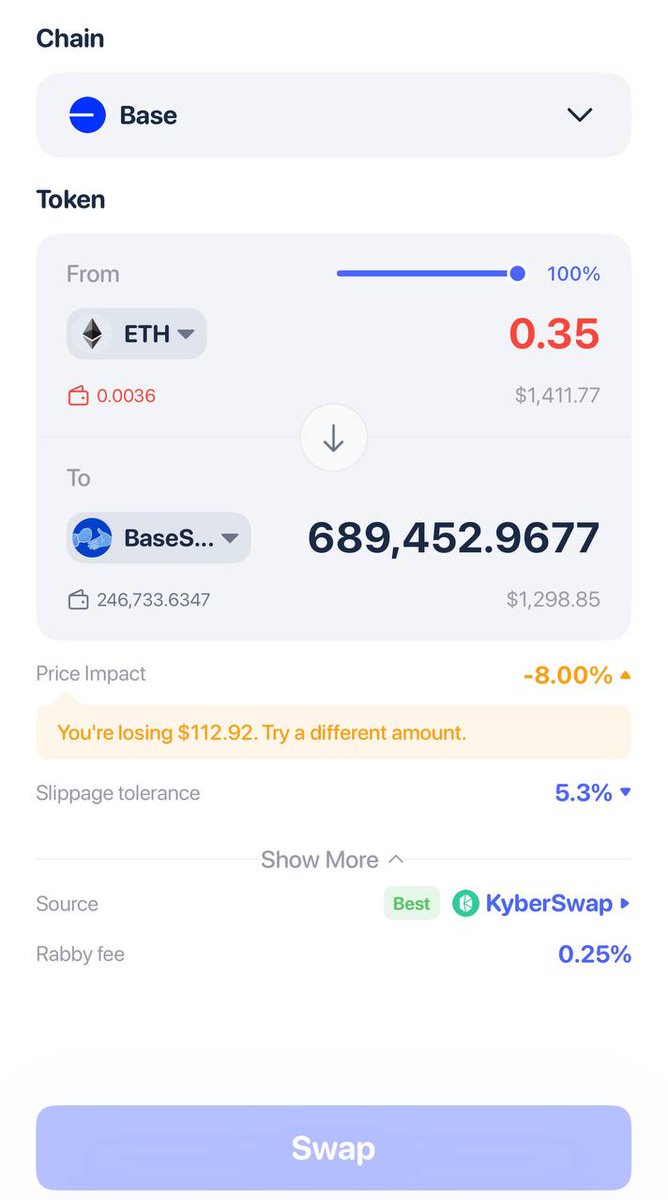
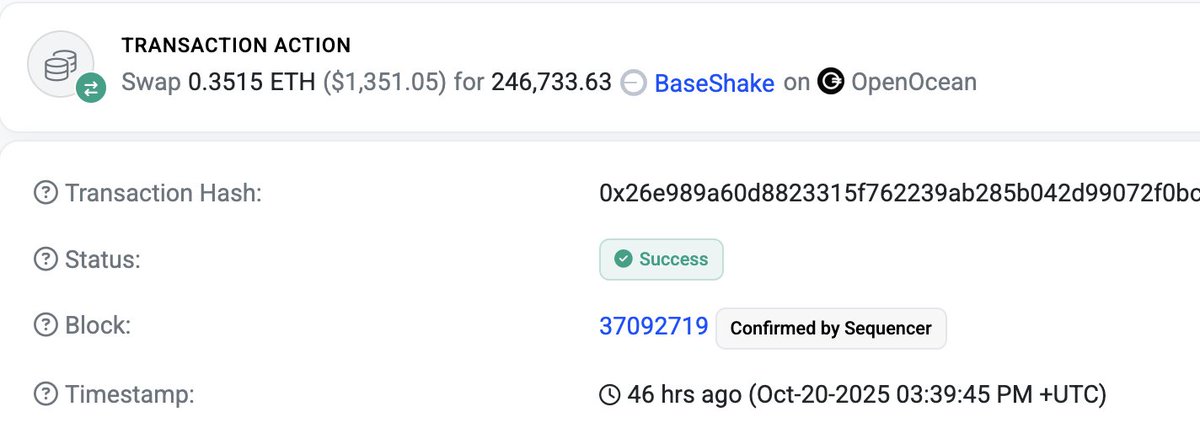
I swapped 0.35 ETH (~$1,400) to $baseshake on Base chain. The UI showed the best route as KyberSwap with ~5% slippage - i didn’t change anything. But after confirming, the swap executed through OpenOcean with 67% slippage, and I only received around $500 worth of tokens.
I swapped $baseshake on Rabby 2–3 times before this event with no problem. But this time, the route changed without any notice.
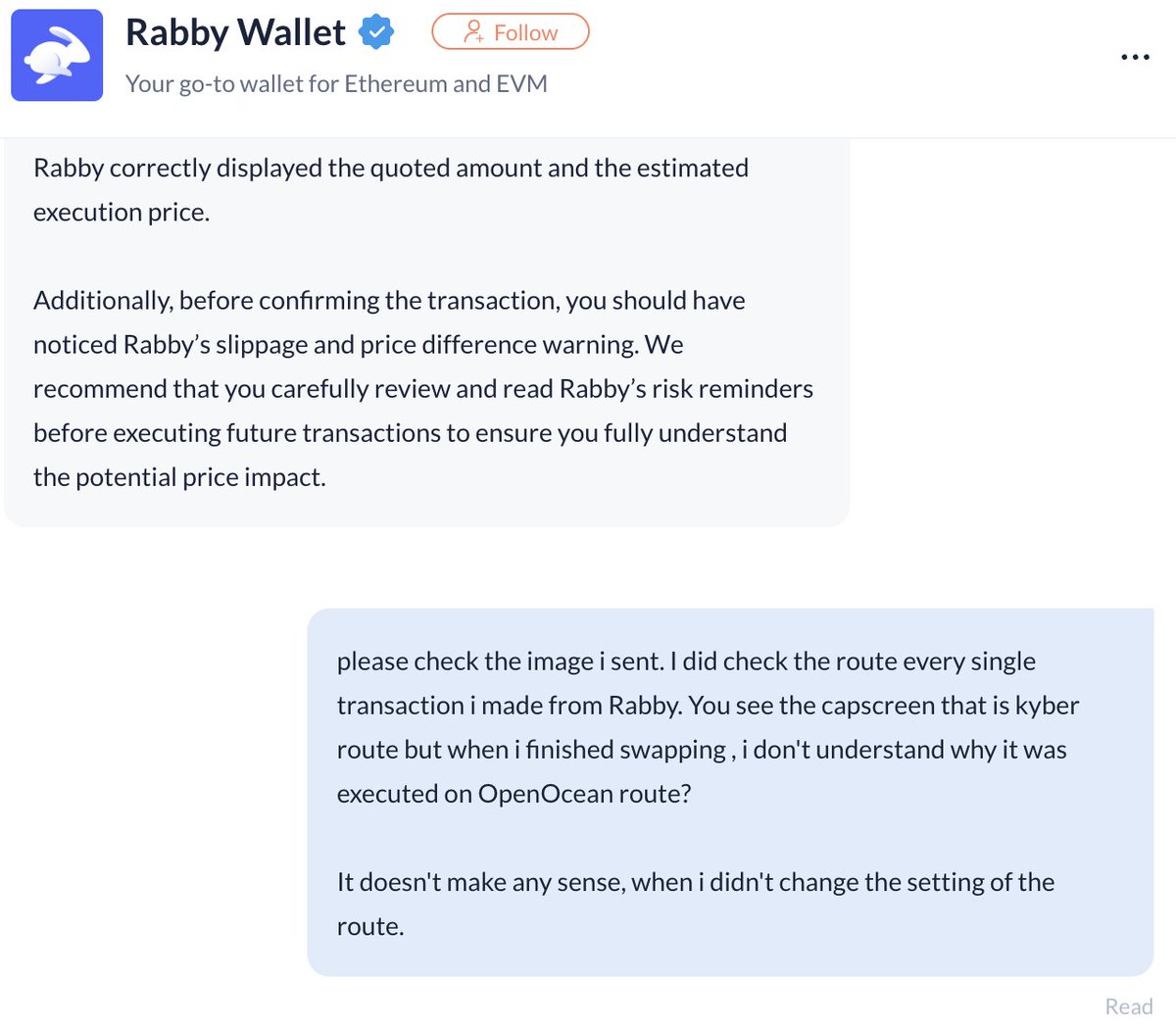
I contacted Rabby support, but they simply replied that nothing was wrong with their product - no accountability, no help. My follow-up message was seen but never replied to.
1k is not much but imagine if this happens to someone swapping $50k or $100k - it could ruin lives.
People trust Rabby because of its UI and convenience, but this kind of issue is serious and dangerous and the customer service is disaster.
I wasn’t planning to post this publicly if I had received a proper answer from Rabby support - but unfortunately, I didn’t. So i'm writing this to remind pp be careful when using Rabby.
I will never use it again.
English
kisha 🪬 がリツイート

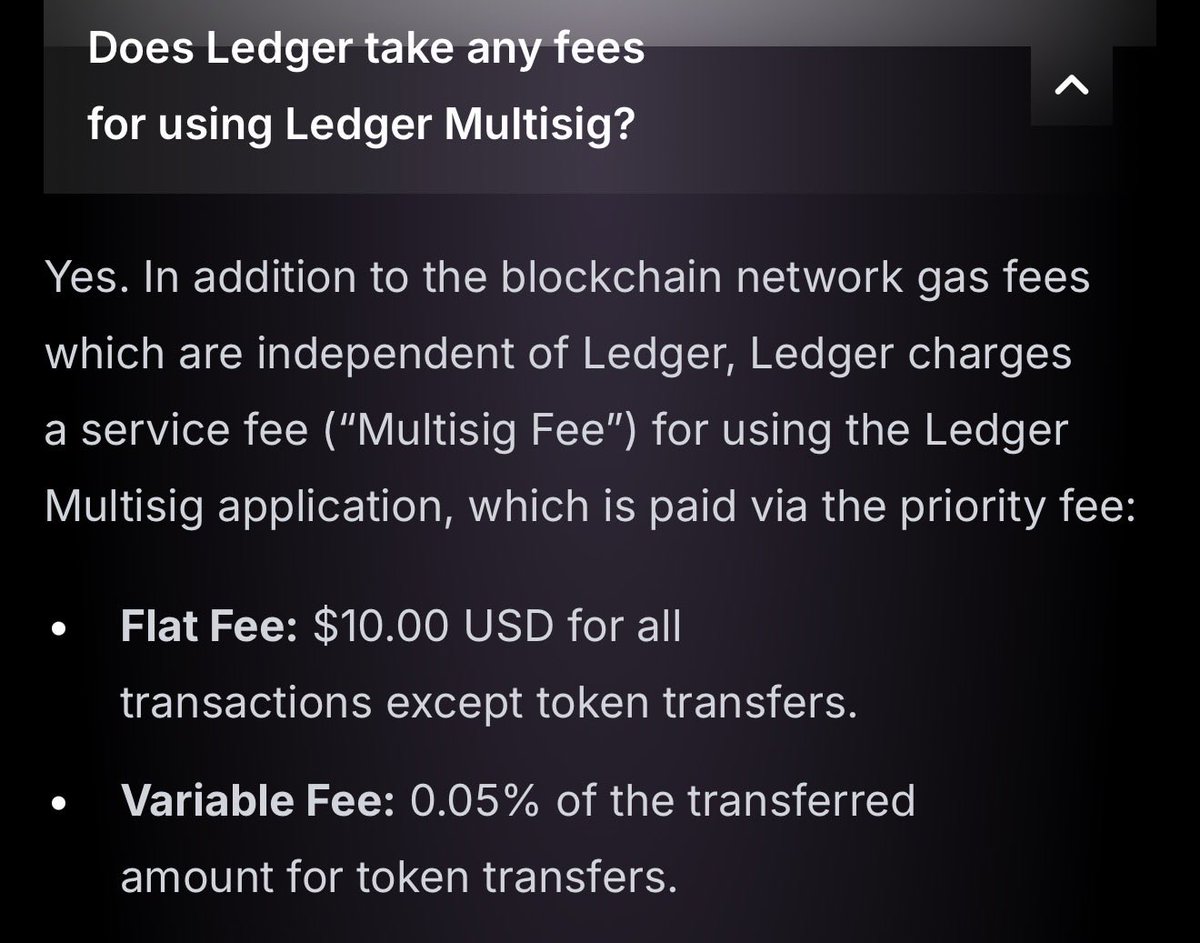
Damn Ledger. Writing a novel to respond to a yes or no question. Sounds like a no.
Ledger@Ledger
At Ledger, we strongly believe in an open-source approach. It's a great set of principles that advocates openness and transparency, some of our core values. That's why we're constantly working towards making source code components available, reviewable, and auditable. Importantly, a majority of Ledger's code is open source, including Ledger Wallet™, Wallet API, Secure SDK, and embedded applications on our devices. Open-source software reduces the need for trust from users, however, it's not entirely bulletproof. Open-source software on non-secure chips will still be highly vulnerable to side-channel and fault attacks. Given the choice of using the Secure Element and being almost completely open-source vs using a non secure chip and being fully open-source, Ledger chooses the more secure approach. We encourage everyone to research thoroughly and make informed decisions about their security. With a decade of innovation, over 8 million devices sold, and a track record of zero hacks, Ledger stands as the trusted leader in hardware wallet security. Ledger takes transparency seriously. While we employ proprietary software for our Secure Elements, this choice ensures the highest level of tamper resistance and security. You can review key components like the OS commands dispatcher and entry points of Ledger Recover implementation, with more parts of the Ledger OS being gradually released for verification. Our proprietary software is essential for the security of the Secure Elements, which utilize advanced technology from trusted manufacturers to implement hardware countermeasures against potential attacks, even with physical access. Some code is tied to the Secure Element's security peripherals, which are proprietary intellectual property of the manufacturer. Revealing this would compromise the very security we aim to protect. Learn more: support.ledger.com/article/111323…
English
kisha 🪬 がリツイート


kisha 🪬 がリツイート

Interesting!
Been active on @Monad analytics since its testnet launch and have created over 30 dashboards (Flipside, Dune), publishing constant updates about it (and its eco) and many accounts/users use my dashs for their content creation...
Not Eligible for Monad Airdrop!🤡

English
kisha 🪬 がリツイート

kisha 🪬 がリツイート