BlockchainDoug

580 posts

BlockchainDoug banner
BlockchainDoug

BlockchainDoug

@BlockchainDoug

Here to demystify blockchain topics

参加日 Şubat 2021
378 フォロー中6.5K フォロワー
固定されたツイート
BlockchainDoug
BlockchainDoug@BlockchainDoug·
Decentralization is not a scalar.
English
3
4
12
3.3K
BlockchainDoug がリツイート
Mighty Byte
Mighty Byte@mightybyte·
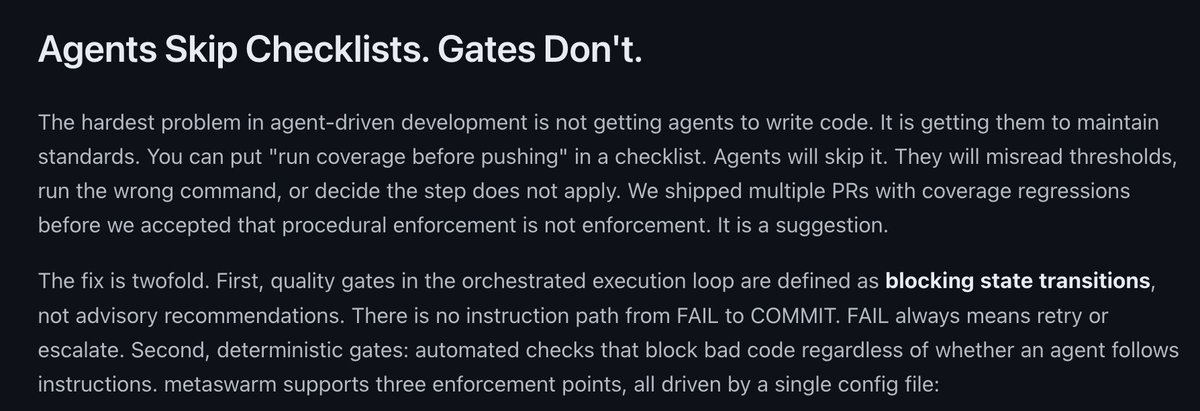
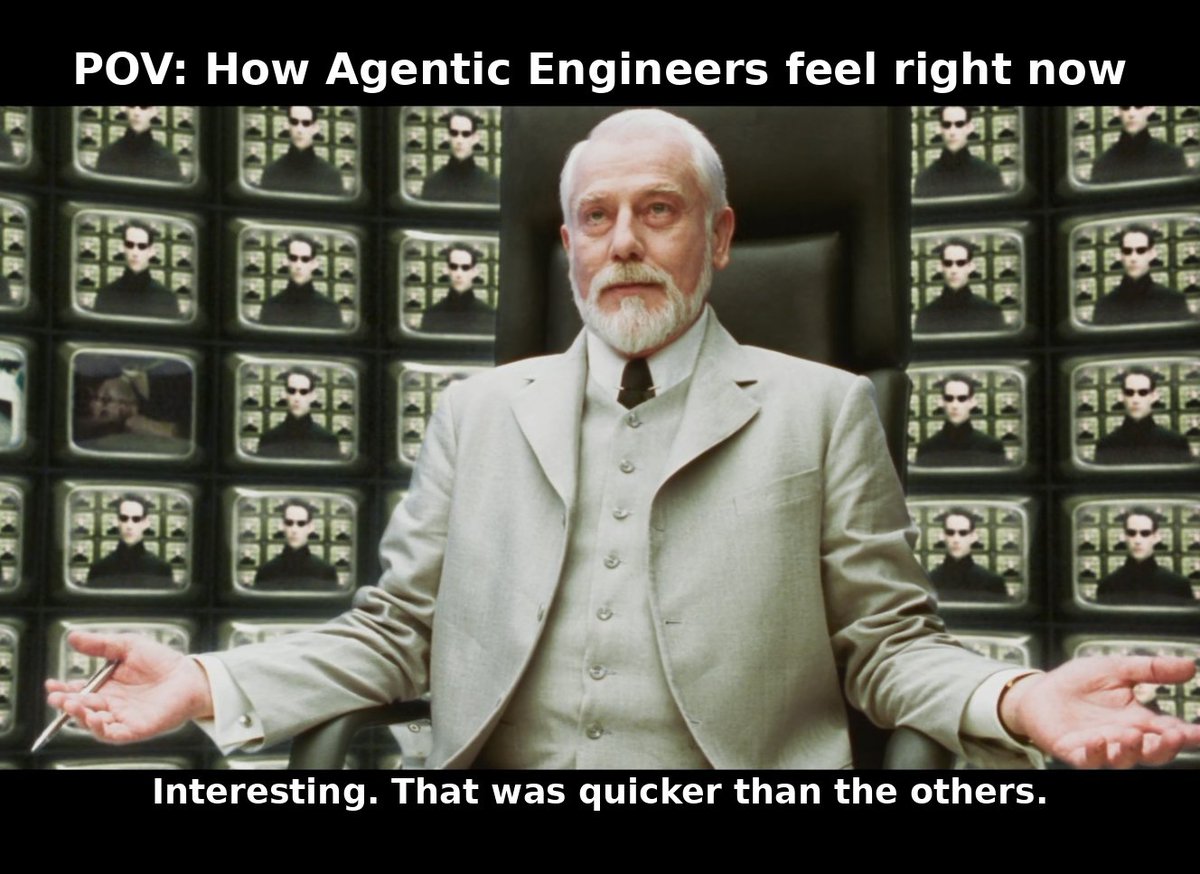
This is why Haskell still has a lot of value in the world of agentic engineering that we are entering. dsifry.github.io/metaswarm/
Mighty Byte tweet media
English
0
1
1
177
BlockchainDoug
BlockchainDoug@BlockchainDoug·
Why do there seem to be so few serious people these days?
English
1
2
1
304
BlockchainDoug
BlockchainDoug@BlockchainDoug·
The world doesn't run at the speed of confirmation. It runs at the speed of credit.
English
0
0
1
150
BlockchainDoug
BlockchainDoug@BlockchainDoug·
Overheard: "You can't really vibe-code Solidity."
English
2
0
13
1.5K
BlockchainDoug
BlockchainDoug@BlockchainDoug·
If an idea isn’t dangerous, is it really all that interesting?
English
0
0
11
911
BlockchainDoug
BlockchainDoug@BlockchainDoug·
@MikeTyson A longtime master wanted to test himself to see how much of the old skillset he still had. That’s just cool, and none of us should try to take that away from him. Mad respect for you, Mike. You’re an inspiration. I enjoyed watching no matter how intense you chose to fight.
English
0
0
2
66
Mike Tyson
Mike Tyson@MikeTyson·
This is one of those situations when you lost but still won. I’m grateful for last night. No regrets to get in ring one last time. I almost died in June. Had 8 blood transfusions. Lost half my blood and 25lbs in hospital and had to fight to get healthy to fight so I won. To have my children see me stand toe to toe and finish 8 rounds with a talented fighter half my age in front of a packed Dallas Cowboy stadium is an experience that no man has the right to ask for. Thank you 🙏 #PaulTyson
English
39.6K
71.3K
1M
36.7M
BlockchainDoug
BlockchainDoug@BlockchainDoug·
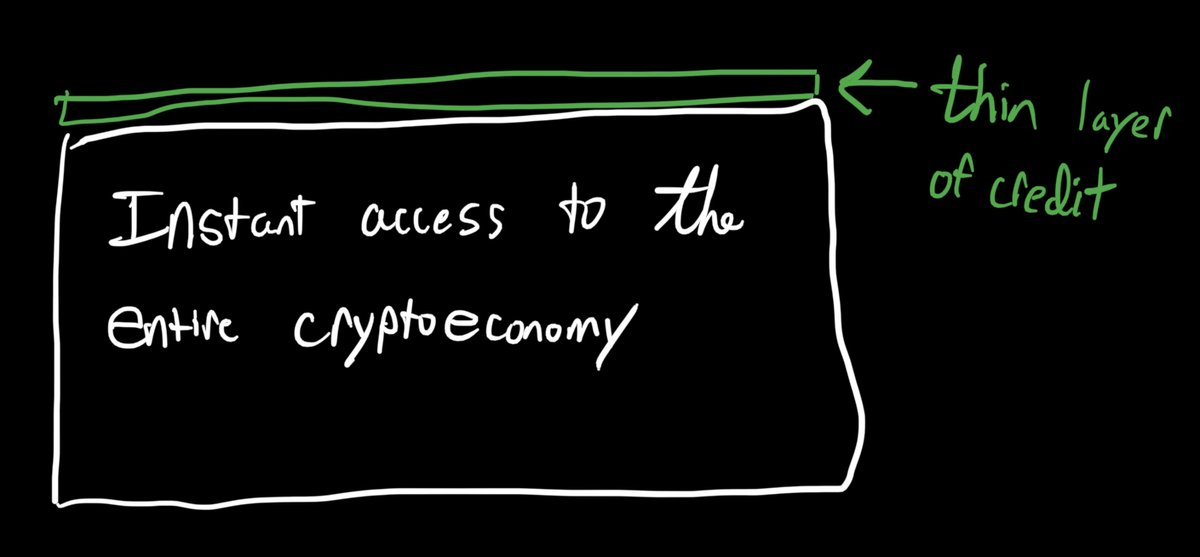
@0xASK > the path we could pursue as an industry is to have parties "lend" funds on the destination chain, then eventually get repaid on the origin chain. Getting repaid on the origin chain is still too restrictive. What you really want is to not care what chain you get repaid on.
English
0
0
0
53
Austin King
Austin King@AustinKing·
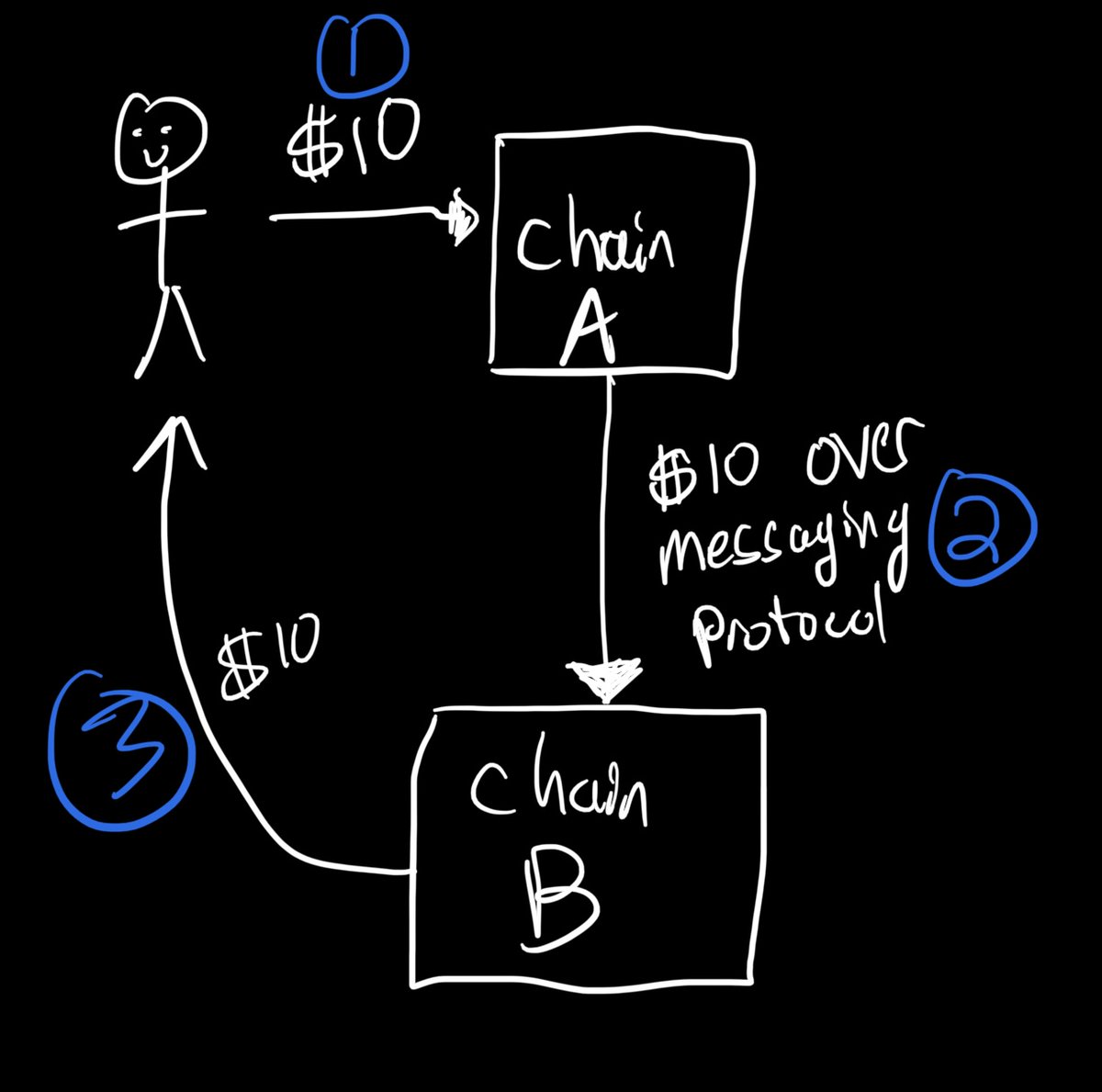
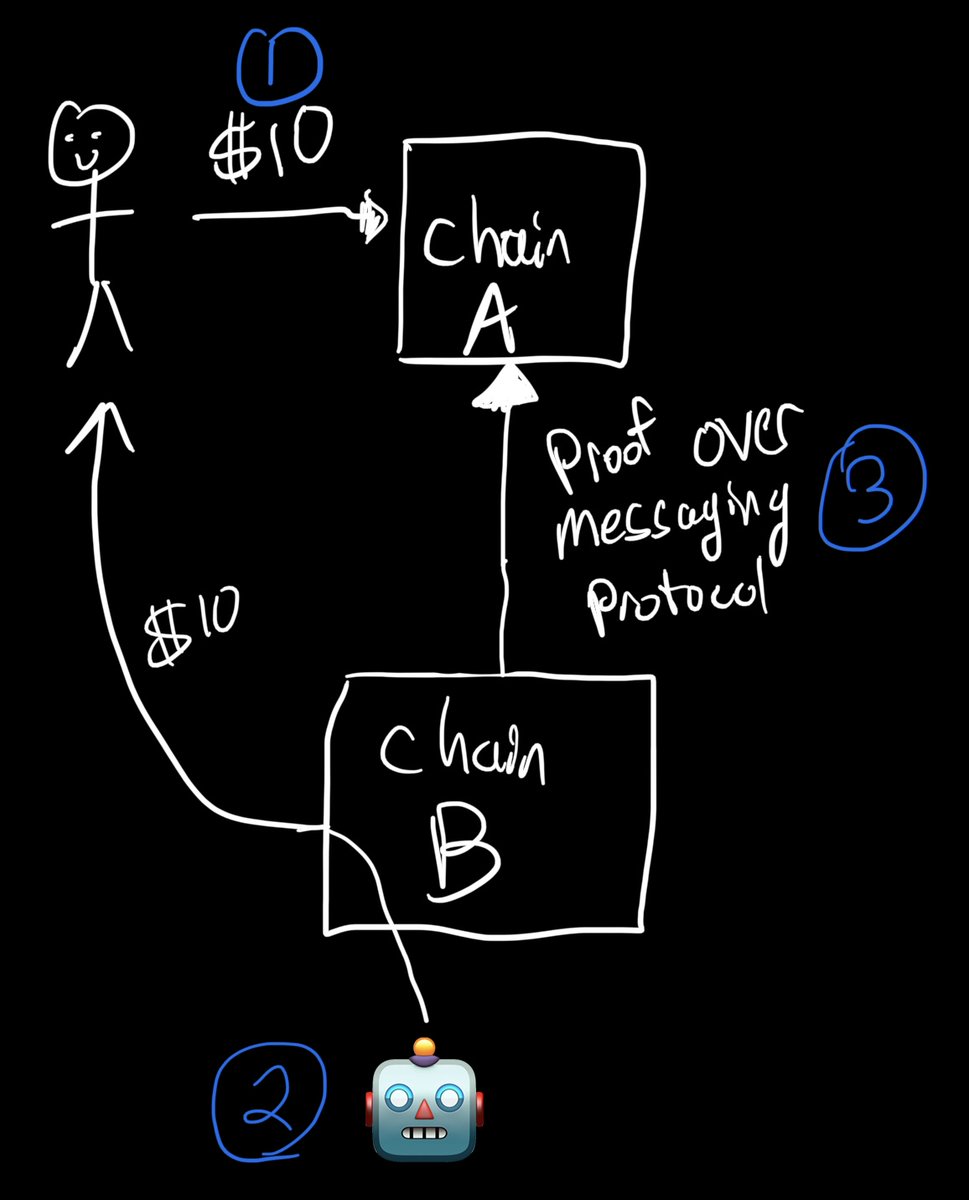
Preconfirmations, shared sequencers, based rollups, etc All of these have promised to solve the fragmentation plaguing the crypto ecosystem. But what if the answer was actually much simpler? In this post I will cover why trustless credit might actually solve this UX mess: Context The retail economy runs almost entirely on credit. Think about it — basically every transaction you make with a card runs on some form of credit. “Well actuallyyyyy I often use my debit card” — even then that is a form of credit. Your debit card is just issuing a credit to a merchant from the bank and this is batch settled at a later point in time. It’s all credit, but why is this? When you look back at the history of how paying with cards became the standard in many economies, you can see that it is rooted in incentives. Merchants adopted these systems because it reduced payment friction. Less payment friction = more payments to merchants. What if we used this same design paradigm to solve the fragmentation facing the Ethereum ecosystem? What is trustless credit? It’s actually quite simple. Usually when a person or company extends “credit” it means they are taking a risk they won’t get paid back. With trustless credit, that isn’t the case. There is no risk of the borrower defaulting, because they have cryptographic proof they will be repaid. Ok, but how does that make any sense? If you already have proof that somebody is going to get paid, why extend credit at all? It all comes down to the fact that we as humans can see the reality of multiple chains, but the chains can’t see one another (quickly and inexpensively). Effectively what I’m saying is that to get rid of this absurd “bridging” reality we live in today, the path we could pursue as an industry is to have parties "lend" funds on the destination chain, then eventually get repaid on the origin chain. This design paradigm is quite fascinating — historically we have held a “chain centric worldview” but what happens if we instead begin to build systems with an “account centric worldview?” (S/O OneBalance team for coining this term) For those of you who read my prior post on Coinbase’s MagicSpend I am effectively talking about a self-custodial, trustless & decentralized version of the MagicSpend product. ( x.com/0xASK/status/1… ) Ok lets get into it, how would credit solve fragmentation? In the picture below I will walk through the bridging experience that we are all unfortunately familiar with today: 1) you make tx on chain A saying “hey go put my $10 on chain B” 2) you wait 20 mins for this messaging protocol to go tell Chain B to give you $10 3) yay you have $10 on chain B From a simplified perspective what I am proposing is basically reversing steps 2 and 3 so that you can get your $10 on chain B instantly, the flow looks like: 1) you make tx on chain A saying “Pls gimme $10 on chain B, I will put $10 in this box as a reward for whoever does this” 2) somebody who specializes in this lending (🤖) sees your transaction on chain A and says “ok here is $10” on chain B 3) then 🤖 sends proof back to chain A from B (reverse direction from prior example) saying “hey I gave this dude $10 on B, pls gimme his $10 on A” This can all be secured by cryptography, ensuring that if 🤖 fronts the money on B that they are the only ones who can unlock the box holding $10 on A. This allows users to get their $10 effectively instantly and makes the 🤖 wait the 20 minutes to get repaid. Again, this is downstream of designing systems with an “account centric worldview” as opposed to a “chain centric worldview” — because we are able to think about the way 🤖 sees the world, we can harness that for massive speed advantages. The user gets their money instantly and is unblocked, meanwhile the 🤖 deals with the 20 minute settlement delay behind the scenes. Ok, cool, so when do I get to use this? Today there are protocols which have rolled out the early implementations of what is possible with this design paradigm. Across Protocol is the most well known, and Relay Protocol is similarly leveraging this design paradigm in a slightly nuanced way to provide users with extremely fast bridging experiences. But wait this means I have to pay for credit everywhere? No — this is actually such a capital efficient design paradigm that users likely won’t even pay for the cost of the “credit” extended. Think about the current treasury bill rate of 5% APY — now even just double that to 10% prove my point further. In this type of flow, the 🤖 is only extending you credit for 20 minutes. That means that the robot could make a 10% APY and for this transfer you’d have to pay $0.000038 in fees. Entirely marginal compared to gas fees and applications are likely to cover this themselves. On top of this — because it is trustless credit there will be no additional fees to hedge the risk that the borrower does not pay the loan. That is cryptographically ensured already, so the lender is only paying for a 20 minute window where they can’t be using that $10 elsewhere. So when we think about the design tradeoffs here the main drawback is that we need parties who can front the capital at the destination before getting repaid on the origin — the insanely cool thing is that this is wildly capital efficient. If all it takes is a 20 minute loan, then we can facilitate billions in economic activity with extremely small amounts of capital because the lenders can cycle the base capital 72 times per day! Cool, so what comes next? The most fascinating part here is that bridging is just the first step towards what the world can look like with an account centric worldview. When we take this design paradigm further, what we end up with is a world where users can spend their money anywhere basically instantly while also executing more complex transactions. It’s not just value transfer, this is going to be how users access all functionality across the crypto ecosystem moving forward. We are at the very first stages of this transition, seeing relatively antiquated things like bridging be deprecated with this superior design paradigm. Soon all end user interactions will flow through this design paradigm in the future, giving users immediate access to any protocol across any rollup. Crypto is all about incentives — when dApp builders are given the opportunity to accept money from users instantly no matter which chain they originated on, do you think they will follow the same path that merchants did when they realized they could accept money from customers more easily with cards? I think they will — and I’ll be posting about the more complex use cases you can build with this design paradigm soon.
Austin King tweet mediaAustin King tweet mediaAustin King tweet mediaAustin King tweet media
English
26
35
162
19.3K
BlockchainDoug
BlockchainDoug@BlockchainDoug·
@Apple In this case it was actually worth it to force the user to have a worse experience in installing the application in exchange for not having the application completely cease to run if some key is revoked somewhere.
English
0
1
3
393
BlockchainDoug
BlockchainDoug@BlockchainDoug·
The Microsoft / CrowdStrike BSOD illustrates the dangers of these kinds of global kill switches. I have previously elected to not sign macOS applications binaries that I have distributed because that gives @Apple a trivial kill switch on my application.
English
1
0
4
552
BlockchainDoug
BlockchainDoug@BlockchainDoug·
@mert "Our emotions are not designed to understand the point. The dentist did better when he dealt with monthly statements rather than more frequent ones. Perhaps it would be even better for him if he limited himself to yearly statements."
English
0
0
1
22
BlockchainDoug
BlockchainDoug@BlockchainDoug·
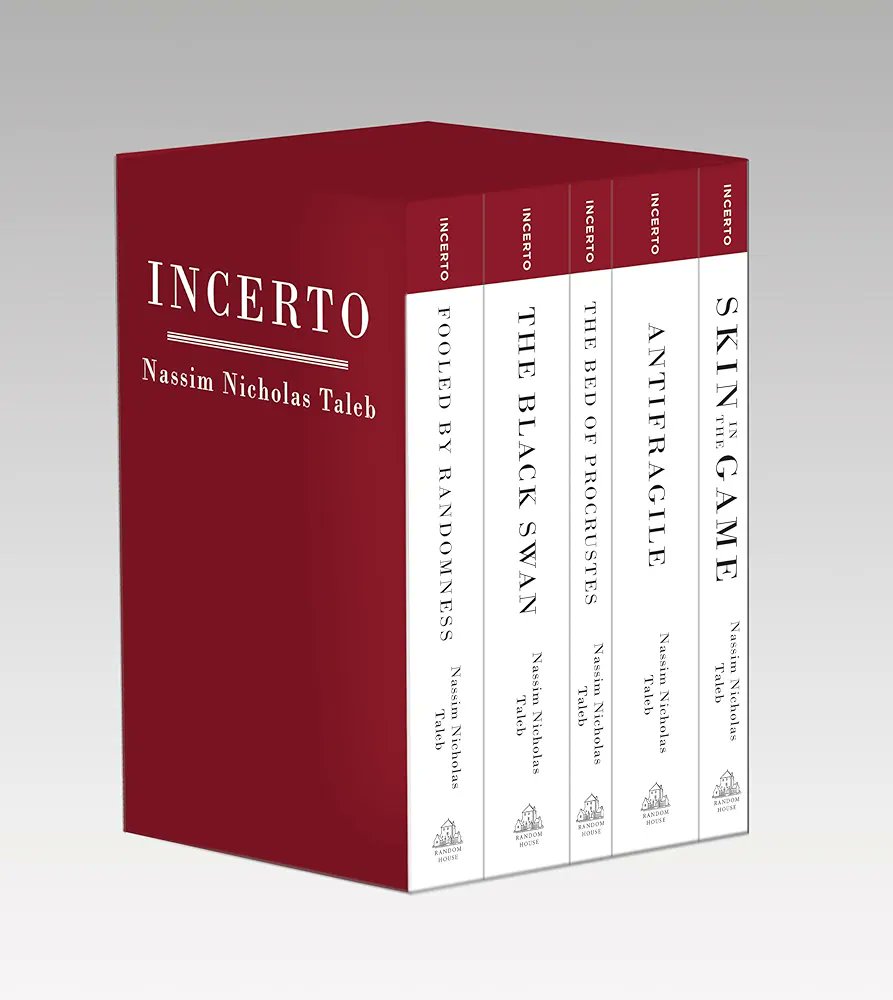
@mert "Over a short time increment one observes the variability of the portfolio, not the returns. In other words, one sees the variance, little else." -- Nassim Taleb, Fooled by Randomness
English
1
0
0
25
mert
mert@mert·
I physically cannot fathom the statistical illiteracy present on this app For the love of christ almighty Please stop reading this, go to Amazon, buy this book set, and actually read it Your thinking will level up 10x
mert tweet media
English
68
14
371
56.2K
BlockchainDoug
BlockchainDoug@BlockchainDoug·
@0xASK Chain-agnostic liquidity is definitely the direction crypto needs to move towards. Your grandparents don't want to care what blockchain their money is on. They just want to use it for real-world transactions.
English
0
0
1
32
Austin King
Austin King@AustinKing·
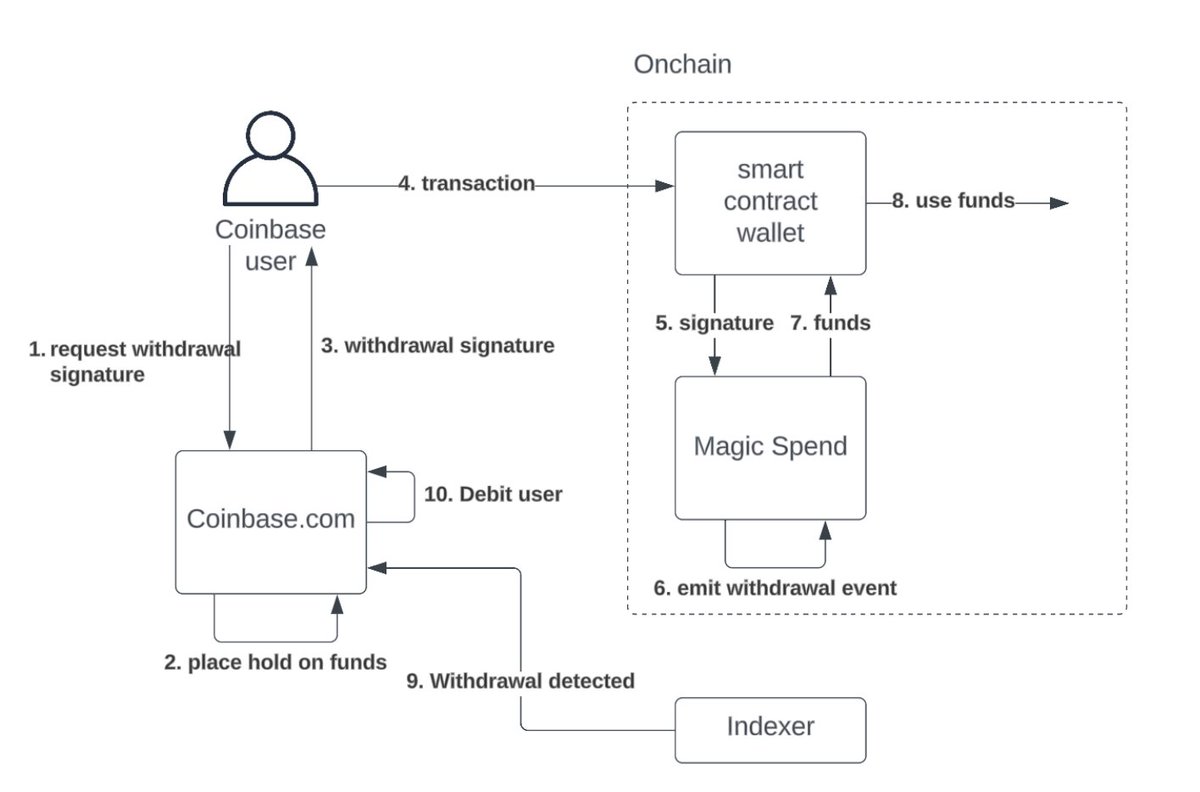
We all know Base -- second largest rollup in less than a year, insane success. But have you even heard of their latest chain abstraction product MagicSpend? Strategically this expands Coinbase's territory across all rollups, and it's going unnoticed. Here's the breakdown: We’ll get straight to the meat with a TL;DR of MagicSpend. ** What does MagicSpend enable? ** MagicSpend allows users to spend their Coinbase balance onchain, anywhere. uhhh, what? Seriously — you can open your Coinbase app and if you have $100 in $USDC custodied on their platform you can use that: anywhere. onchain. instantly. Sounds crazy right? Honestly it kinda blew my mind when I realized it wasn’t just buzzword propaganda. Often when I’m doing crypto research I have to parse through a bunch of unnecessary new terminology so in the below explainer I’m going to focus on explaining this like a normal human and not dress it up with a bunch of academic formalisms. ** How does MagicSpend work? ** First thing to understand is that Coinbase holds gigantic pools of coins like $ETH and $USDC across all major rollups. Users are constantly moving in and out of Coinbase across these various platforms, so holding large bags of coins on each of these platforms is a natural byproduct of their business operations. The below pic explaining how this works is complex so I’m gonna walk through it step by step: 1) The user isn’t putting their request onchain right away — they are sending Coinbase a message that says “hey I want to go spend $50 on Optimism for this NFT” 2) Coinbase receives this request and checks “ok well does this dude have $50? Ya? Ok cool, put a lock on his $50 internally that so he can't double spend until we know what happens with this signature we’re about to ship his way.” 3) Coinbase responds to the user with that a signature authorizing them to use 50 of Coinbase's $USDC on Optimism 4) The user takes that signature and ships it on chain (from a UX perspective steps 1-4 will effectively seem like just one step to the end user) 5-7) The “Magic Spend” contract is controlled by Coinbase and has authority to withdraw from Coinbase’s pile of $USDC on Optimism — so it sees the signature that Coinbase itself gave to the user in step #3 and says “ok cool, I (Coinbase) authorized this, so I’m gonna let this user draw down 50 $USDC from our big pool of coins." The contract will also emit an event saying “hey this user took that signature and actually withdrew the $50 they requested.” 8) User is able to pull 50 $USDC from Coinbase’s funds on Optimism and gets to buy the NFT. 9) Coinbase’s servers are listening to onchain events so they see the “hey user took the $50” event emitted in step #7 and debits it from that user’s internal balance on Coinbase’s servers. Pretty sick right? The user was able to just hold coins on Coinbase and use them instantly on Optimism. What’s even cooler though is that it’s not just Optimism. It’s Base. It’s Arbitrum. Etc. This effectively turns your Coinbase account into a portal to spend anywhere onchain instantly. Ok in case you’re reading between the lines and see some potential issues I’ll proactively answer those: 1) In step 2 when they give the user a signature allowing them to spend 50 USDC on Optimism they lock the user funds. What happens if the user doesn’t complete the action onchain? Are those funds just frozen forever? No — because within the signature there is an expiry so for example if the user tried to wait a couple days it would fail. This is what allows Coinbase to remove the “lock” on user funds after that expiry hits because they know the issued signature will no longer be accepted onchain and therefore they don’t need to be worried about users double spending Coinbase’s money. 2) Ok, but what if Coinbase runs out of money on a specific rollup? Yup, totally can happen. In this case the transaction would just fail because when it hits the Magic Spend contract it’ll just be like “oh no, i have no more dollars for you, i must fail this tx :(” In practice though this is fine because Coinbase is constantly rebalancing these pools across all the rollups and they work with a ton of capital so these limits aren’t hit. ** What are the implications of this? ** In my opinion we are getting a glimpse of the future here. If you haven’t gone deep in the Chain Abstraction space one goal we have outlined is to empower users with a “Chain Abstracted Balance” AKA “yo just how many coins do I have total -- i don’t care where they are, don’t make me think about all this in the weeds infra stuff.” Coinbase Magic Spend is the first truly Chain Abstracted Balance in my opinion. The gotcha? It’s completely centralized. Honestly though — we need to take this as a challenge. This UX vastly outcompetes self-custody alternatives, so it places high urgency for us to build decentralized, censorship resistant alternatives that empower self-custody. There is no future where we expand beyond the existing user base without achieving this abstracted experience. All of us nerds who are fine switching RPC endpoints, remembering seed phrases, etc. are already here. We need to massively abstract the UX in a way that empowers self-custody to create the future of crypto where even normies get to participate in onchain applications without compromising on their personal freedoms. The bright side? This is totally possible. For those of you deep in this space I’m sure you can already conceptualize implementations of MagicSpend that don’t rely on one centralized intermediary like Coinbase. We’ve been thinking about this for a long time at Omni and other teams across the industry are also doing fantastic work in this domain. Hope you have a great start to the week everybody 🌅
Austin King tweet media
English
28
34
340
43.6K
BlockchainDoug
BlockchainDoug@BlockchainDoug·
Already talked to other people in crypto who have said they just got the same thing.
English
1
0
6
1K
BlockchainDoug
BlockchainDoug@BlockchainDoug·
PSA: There's a new (to me) crypto scam going on out there folks. I just got a text message saying it's from Coinbase and something about my account being disabled. Then, literally seconds later I got a phone call from a San Francisco number saying they're from Coinbase. Stay safe
English
12
6
26
4.6K