Sam Clamons

646 posts

Sam Clamons banner
Sam Clamons

Sam Clamons

@ClamonsSam

Today I Learned: Every Tuesday, Thursday, and Saturday morning, three facts I learned the day before.

参加日 Aralık 2016
112 フォロー中88 フォロワー
Sam Clamons
Sam Clamons@ClamonsSam·
@szetoinsitu @AsimovPress Is "cell wall to nucleus in 50 nanoseconds" more intuitive, or less intuitive? I think they both have their uses. Though "wall to nucleus" implies they can fly in a straight shot, which is very far from the truth.
English
0
0
0
4
司徒
司徒@szetoinsitu·
@AsimovPress Miles per hour is contextual for modern cosmopolitan humans in a busy city perhaps 40 miles in diameter, but I guess something like “cell wall to mitochondria in fractions of a second” is probably the similar appropriate frame of reference. Stuff moves fast and JIT
GIF
English
1
0
0
79
Asimov Press
Asimov Press@AsimovPress·
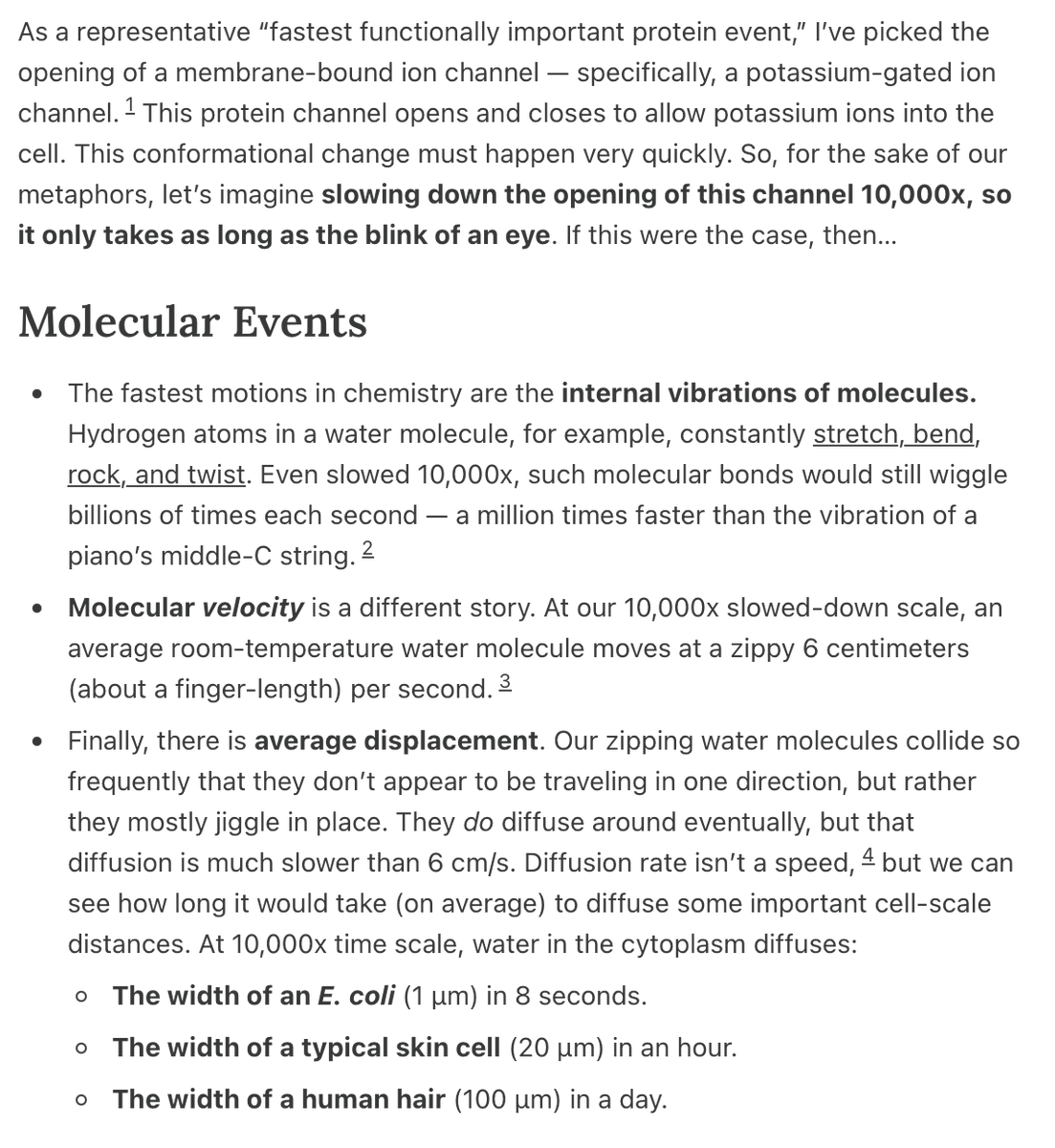
A cell is an incredibly crowded and quick place. Sugar molecules fly through at 250 mph. Each protein collides with ten trillion water molecules per second. It is difficult to understand biology, in part, because these speeds boggle the mind. For our column today, author Sam Clamons puts these numbers into context using a quantitative metaphor. Specifically, by setting the speed of a potassium ion channel opening to the blink of an eye, Clamons examines how quickly everything else in the cell happens in comparison. Here are some of our favorite metaphors: - A water molecule would diffuse across a skin cell in about one hour. - It would take about 6 days to translate a single protein. - A kinesin motor would take one step every 30 seconds. - Most proteins in the cell would have a median half-life of 300 days! Check out the full piece :)
Asimov Press tweet mediaAsimov Press tweet media
English
3
20
96
9K
Sam Clamons
Sam Clamons@ClamonsSam·
Another year, another set of book reviews. Here are the books I read in 2025, and my thoughts about them. @samredhaired/my-2025-in-books-e6665a3767e9" target="_blank" rel="nofollow noopener">medium.com/@samredhaired/… Top book: "Embassytown" by China Miéville. Close second: "The Best of Greg Egan" by Greg Egan (20 short stories by the master).
English
0
0
0
61
Josie Zayner
Josie Zayner@josiezayner·
Why are there so many responses from anime character PFPs? Be honest when was the work actually done? Can you give me a sound argument why we can't leave fruit flies behind as a model organism? Or even that working towards moving into more complex organisms is a bad thing? Are you implying that if we never ever did fruit fly research again and instead switched to other organisms to understand the same things society would be at a monumental loss?
English
4
0
0
1K
Josie Zayner
Josie Zayner@josiezayner·
Academic science lost the plot. We're past the era where studying fruit flies could change the world. Aerospace took startups to move forward, science/biotech needs the same. Universities can’t compete with a team willing to bleed for a dream.
English
52
18
143
124.4K
Sam Clamons
Sam Clamons@ClamonsSam·
@johndillon2022 @60Minutes Science has huge RoI but it's diffuse and long-term, therefore difficult to capture by a private funder. Mostly impossible to do with venture capital, but stupidly efficient at generating society-wide value for a large, non-profit-motovated org like the government.
English
0
0
1
21
John Dillon
John Dillon@johndillon2022·
@60Minutes Find private investors. It’s not the government’s job to fund research.
English
89
0
70
26.3K
60 Minutes
60 Minutes@60Minutes·
Harvard researcher Joan Brugge says her work has the potential to prevent breast cancer, but she was notified last spring that her federal funding was terminated. “It was just like a gut punch. My knees buckled, and I had to sit down,” she says.
English
6.4K
10.1K
35.8K
14.3M
Sam Clamons
Sam Clamons@ClamonsSam·
@mikpom123 @AsimovPress 34 unmetaphorical millimeters is pretty damned long to a cell! And that's one chromosome - one set of 46 gets into the meter scale. (And if you start adding together all the DNA in your body...)
English
0
0
1
25
Asimov Press
Asimov Press@AsimovPress·
Most metaphors in biology are qualitative and vague. "DNA is the blueprint of the cell." OK but, like, how big is that blueprint? For our latest essay, @ClamonsSam gives a bunch of QUANTITATIVE metaphors to help you understand the sizes of biology, from molecules to cells. He imagined that each water molecule in a cell was blown up to the size of a grain of sand, and then calculated what that would mean for everything else. At this scale: 1. A typical protein would now be a knobby ball the size of a blueberry. 2. An antibody would consist of three blobby arms, each roughly the dimension of a grain of basmati rice, connected to a common center by a short chain. 3. A typical human chromosome would be a thread of double-stranded DNA about 100,000,000 bases long, which is just long enough to span the English Channel (34 km). 4. A human virus is now the size of a ping-pong ball. 5. A mitochondrion is as wide as a cow. And there are so many more metaphors in this essay. We think it could be a valuable resource for schoolteachers and students who are looking to "grok" the scales of things in biology.

Asimov Press tweet media
English
3
25
103
22.1K
Sam Clamons
Sam Clamons@ClamonsSam·
My latest article for Asimov Press is out!
Asimov Press@AsimovPress

Most metaphors in biology are qualitative and vague. "DNA is the blueprint of the cell." OK but, like, how big is that blueprint? For our latest essay, @ClamonsSam gives a bunch of QUANTITATIVE metaphors to help you understand the sizes of biology, from molecules to cells. He imagined that each water molecule in a cell was blown up to the size of a grain of sand, and then calculated what that would mean for everything else. At this scale: 1. A typical protein would now be a knobby ball the size of a blueberry. 2. An antibody would consist of three blobby arms, each roughly the dimension of a grain of basmati rice, connected to a common center by a short chain. 3. A typical human chromosome would be a thread of double-stranded DNA about 100,000,000 bases long, which is just long enough to span the English Channel (34 km). 4. A human virus is now the size of a ping-pong ball. 5. A mitochondrion is as wide as a cow. And there are so many more metaphors in this essay. We think it could be a valuable resource for schoolteachers and students who are looking to "grok" the scales of things in biology.

English
0
0
2
264
FilmLadd
FilmLadd@FilmLadd·
@ClamonsSam Well, stop cooking all of your food and tell me you don't spend at lot more time chewing.
English
2
0
0
74
FilmLadd
FilmLadd@FilmLadd·
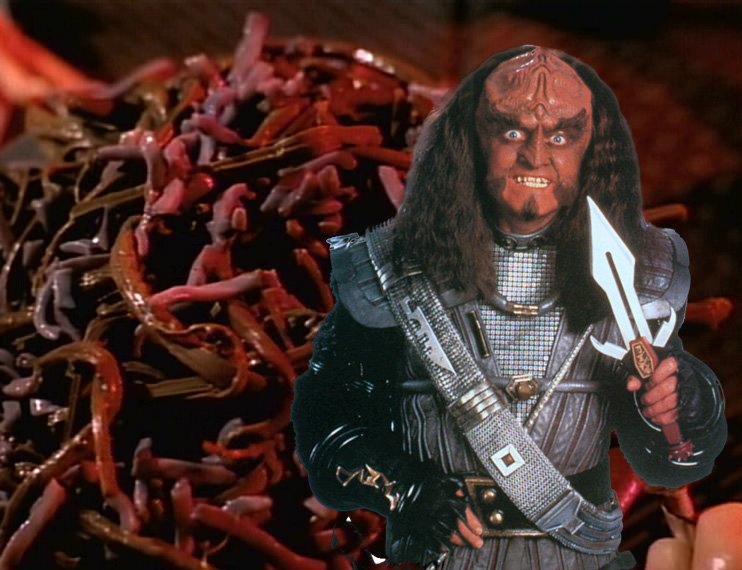
While I found it amusing that the Klingons in Star Trek only ate raw food, I also found it implausible. They could not have evolved into an intelligent space-faring species on a raw food diet. As neuroscientist Suzana Herculano-Houzel has pointed out, cooking is what made humanity's intelligence possible. Our brains have an astonishing 86 billion neurons in a compact skull, far more dense than any other animal on earth. But that neural density demands a lot of energy: 20% of our calories, despite the brain being just 2% of our mass. You can't fuel a densely-packed brain like ours without constant munching. Consider the panda, or the sloth. The reason they're so slow-moving and stupid is because they have to spend the majority of their time finding and chewing their low-calorie foods. Cooking food allows us to shovel more calories into our bodies faster, freeing up energy for the evolution of intelligence. Which points to the possibility that we started cooking food before we evolved higher intelligence... If that's the case, then Klingons eating "gagh" and other raw foods, and sneering at our cooked food, is cute, but probably wrong. In reality they'd probably still be hanging out in trees, chewing. Not sure why I wrote this, but I did, so there you go. Link to Suzana Herculano-Houzel's video on the subject of neuro density and food cooking in replies...
FilmLadd tweet media
English
128
28
404
34.7K
Sam Clamons
Sam Clamons@ClamonsSam·
@nfinf5 Also, this stuff is hard to get right the first time.
English
0
0
0
10
Sam Clamons
Sam Clamons@ClamonsSam·
@nfinf5 I think you overestimate the amount of poor-quality thinking out there. Never attribute to malice what could be just as well explained by incompetence.
English
2
0
0
263
Ilya V.
Ilya V.@nfinf5·
It is impossible to believe that this is just an innocent mistake of Piketty, Saez, and Zucman. Their goal is to science-wash the narrative of their political allies. They want to mislead the public by wearing the skin of expertise. Academia is unfortunately full of people like that, and the population getting increasingly aware of this will tank the whole enterprise. It might be good in the long term, as the scientists will be forced to regain the public trust the way they originally earned it, which is by being correct in a useful way. However, we will miss out on the good parts that come with the bad. I am personally particularly bitter about this. I remember seeing these graphs in Piketty's "Capital", which came out when I was in college, during my socialist phase. I was highly impressed by them, and the book in all made a huge impact on my thinking at the time. That's why I was so outraged to learn that it was all based on deliberate lies, aimed to mislead people like me.
Sylvain Catherine@sc_cath

C’est marrant de suivre ce débat dans deux pays. Tiré d’un papier d’octobre 2025 de David Splinter : en gris, le fameux graphique de Piketty, Saez et Zucman du taux moyen d’imposition par quintile de revenu dans sa version américaine. En rouge, la version corrigée des transferts, des crédits d’impôt et de la neutralisation de certains choix méthodologiques bizarres. Parmi ces choix bizarres, on retrouve le fait que, plus les ménages à faible revenu reçoivent d’allocations sociales ou de crédits d’impôt, plus la méthode de PSZ conclut que leur taux d’imposition est élevé. Je traduis : « Pour les ménages à faible revenu, les taux d’imposition PSZ sont surestimés, car ils incluent les taxes sur les ventes dans le numérateur mais omettent, au dénominateur, les revenus de transfert utilisés pour financer ces achats. Ils ne tiennent pas non plus compte des crédits d’impôt remboursables. »


English
26
208
1.2K
140.6K
Simon Maechling
Simon Maechling@simonmaechling·
Twitter is cool. But it’s way better when you connect with people who love science. If you’re into biology, chemistry, or physics - say hi 👋
English
1.7K
412
8.5K
235.8K
Sam Clamons
Sam Clamons@ClamonsSam·
@ArmandDoma Scale, in general, is how fishing industries strip productive ecosystems until they're functionally dead, so I for one am glad for this particular one.
English
0
0
0
8
Science girl
Science girl@sciencegirl·
those born before 2000, what's a small or once-common skill you have that hardly anyone uses today
English
1.6K
42
786
299.1K
Aella
Aella@Aella_Girl·
Can u guys comment with the top 3 words you feel best defines your understanding of the word "fascism" It's ok if you aren't sure
English
947
9
513
150.4K
Eliezer Yudkowsky
Eliezer Yudkowsky@allTheYud·
Actual reality being: most humans are barely anchored in reality independent of social reality, and then an alien comes along and gaslights them into occupying an alien frame as a stronger anchor.
English
13
7
148
6.6K
Eliezer Yudkowsky
Eliezer Yudkowsky@allTheYud·
It's a problem that "AI psychosis" is not actually psychosis. The best writeup of actual outcomes tried "AI parasitism", but it's not very evocative of the reality and isn't catching on. What would be better terminology?
English
224
11
418
40K
Sam Clamons
Sam Clamons@ClamonsSam·
@wifesthong @thesoypill Bioengineer here. Being fast-growing and immortalized is a feature of cancer cells, but it's casually downstream of the things that also cause cancer to be poor regulators of other things. Just making a cell fast-growing doesn't give it all the features of cancer.
English
0
0
0
30
See the way
See the way@Nyxalorent·
1) lab grown meat is grown with cells that have fast multiplication and do not grow into actual muscle strands. It’s why it has to be printed. These cells are cancerous by definition. Cancerous cells do not care about impurities. 3) There are thousands of private cattle ranches across America. Corporate entities do own large beef ranches and supply major food chains, but pretty much anyone can have their own beef as long as they have the land for it. Phase out beef for synthetic meat and the ability to produce your own cattle becomes difficult due to the rarity of cattle. 3) cattle has replaced buffalo as grazers. Unless we plan on expanding the buffalo population be two thousand fold, something that will be extremely difficult, you’re inducing an equally disastrous ecological situation. Methane contribution is a non issue. Legit propaganda. Fucking with peoples livelihoods so you can virtue signal the same people who want nothing to do with your idea of changing what they can eat is not going to go over the way you think it will.
English
47
12
693
88.7K
Sam Clamons
Sam Clamons@ClamonsSam·
@MatthewJBar Would you still hold this opinion IF it were the case that building AGI had a 5% chance of killing off or totally disempowering all of humanity, and rushing it doubled those chances?
English
0
0
0
25
Matthew Barnett
Matthew Barnett@MatthewJBar·
It's frustrating when people say "AI progress is too fast" while over 100,000 people still die from aging per day, with no sign of abating. It's like we're in a huge, deadly war and people say our leaders are rushing to agree to a peace settlement. No, they should go even faster.
English
52
20
334
79.4K