dan linnaeus
33.9K posts


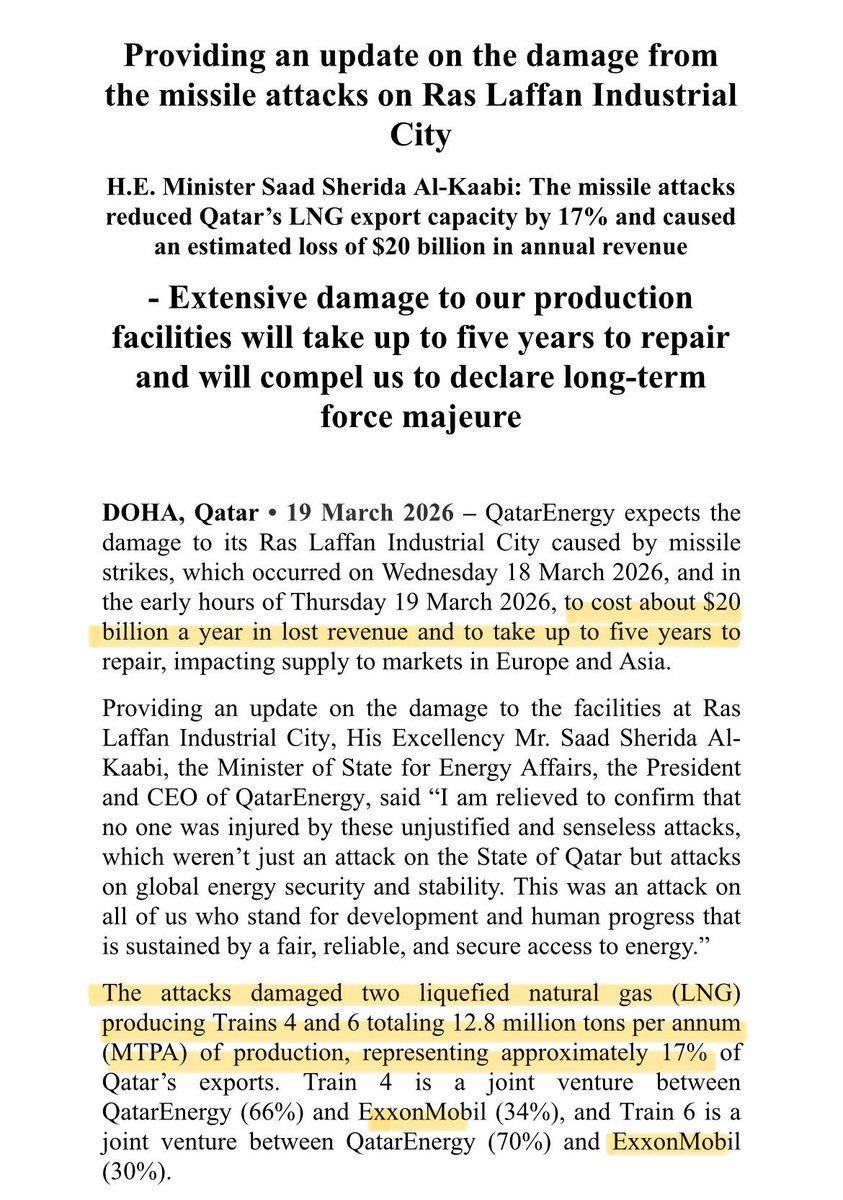
The conventional wisdom in the 2010s was that energy independence would reduce US military involvement in the Middle East. In practice, high domestic production lowered the economic risks of disruption, making actions like a strike on Iran viable.


@NawafAlThani Welcome, Pakistan sincerely wish peace in the region & Muslim Ummah at large, Pakistan will play its role to protect Muslim brothers & sisters, our stand is principled, we condemn US Israel aggression against Iran & Iran's attacks on GCC, it's time to unite & defend Muslim lands

דיווחנו הערב ב״עובדה״: ראש המוסד דדי ברנע העריך ערב המבצע כי השגת שינוי משטרי באיראן זו מטרה אפשרית. העמדה המקצועית שהניח בפני השרים היא שאם יושגו המטרות הצבאיות של המבצע קרי פגיעה קשה באישים בהנהגה, במוסדות השלטון ובכוח הדיכוי המשטרי, המוסד והCIA יידעו בתורם להביא תוצאה של החלפת המשטר כשהוא מתכוון להוצאת העם האירני לרחוב ולמציאת אלטרנטיבה שלטונית.

NEW REPORT Update to Bushehr strike analysis: We annotated the image to show the debris pattern is fan shaped away from an apparent crater towards the south, which is more suggestive of an incoming projectile from the north and not from the Gulf. See the impact point and Bushehr's location on the coast below. This adds Iran to the suspect list, along with Israel and the United States. The IAEA provides no details about the "structure" that was "hit and destroyed," but satellite imagery taken a week before the strikes shows an unidentified object in an open field, measuring about 5 meters in length. We join IAEA DG Grossi in condemning any attacks in the vicinity of the reactor or of any electrical lines coming into the plant that may be needed to provide power to run reactor emergency systems. Israel and the United States must make sure that the communication channels with Russia remain open and functioning, and all US and Israeli operational personnel are fully aware of the risks. Link to the full report: isis-online.org/isis-reports/i…

SCOOP | Documentary evidence of historic China-Iran sanctions evasion and media cooperation uncovered in hacktivist group leaks. The document was leaked by Black Reward in October 2022 as part of its Press TV email server leaks, but was not attached to any particular email and has never been publicly released before. It is a July 2019 foreign-exchange request from Islamic Republic of Iran Broadcasting (IRIB) instructing Iran’s central bank to remit ¥1,068,420 RMB to “Wulumuqi Ailiqin Farmers Specialized Co-operatives” via Bank of Kunlun for “leasing satellite space for broadcasting TV channel.” It demonstrates how IRIB—under U.S. and EU sanctions since 2013—continued to finance overseas satellite capacity by routing transactions through a Chinese bank that itself has been under U.S. secondary sanctions for facilitating Iranian business since 2012. The use of Kunlun protects IRIB from dollar-clearing exposure and exploits China’s renminbi settlement system to bypass Western compliance filters. The beneficiary name and address point to a rural-cooperative front in Ürümqi, Xinjiang, not to a recognised satellite operator—a layered cut-out structure: IRIB paid a low-profile agricultural entity that could onward-transfer funds inside China to a licensed satellite-service firm, masking the true end-use of the money. This reduced the risk that the satellite provider itself would appear in sanction-screening databases. The applicant on the invoice, “Vista Energy Arghavan,” is an Iranian energy-sector company unrelated to broadcasting, utilized as a cutout to obfuscate IRIB’s role. The timing aligns with broader evidence that Tehran was deepening technological partnerships with Chinese space and imagery companies to secure resilient, higher-bandwidth broadcast and ISR capabilities. The letter shows that by mid-2019 the financial architecture for this cooperation was already functioning: central-bank hard-currency accounts, renminbi invoicing, Kunlun as correspondent, and Xinjiang-based fronts acting as fiduciaries. Taken together, the document offers concrete evidence of a live sanctions-evasion mechanism that fuses Iranian state media, Chinese financial channels, and front-company intermediaries to maintain IRIB’s global broadcast reach despite U.S. and EU restrictions. For intelligence and enforcement agencies, the paperwork provides a template—amount, currency, bank branch, SWIFT code, account numbering conventions—for tracing additional IRIB-related payments that may still be flowing through China’s domestic banking rails. The 2019 satellite lease is not an isolated deal; it fits into a broader mosaic of China-Iran cooperation. When Iran sells oil or petrochemicals to China, the proceeds (since 2012) have largely been deposited in RMB at banks like Kunlun, because U.S. sanctions barred dollar transactions . Those RMB funds are essentially stuck in China – Iran can’t easily repatriate them – but they can be used to buy Chinese goods and services. From jointly countering Western media influence, to sharing tools of domestic surveillance, to collaborating on space and military tech, the two countries are increasingly synced across arenas. This cooperation network makes Iran more resilient to Western pressure (be it information blackouts or tech embargoes) and allows China to launder its influence into the Middle East subtly via Iranian information networks.


Iranian Armed Forces Spokesman: Based on our information, the Zionist regime intends to attack energy infrastructure in the region, including Saudi Aramco facilities. As it has in the past, the regime will accuse Iran to create discord among regional countries.