固定されたツイート
David Dack
37.3K posts

David Dack
@DavidDack
🏃♂️ Running Junkie | 🌄 Trail Runner | 🌍 Endurance Athlete living in Bali. Inspiring athletes to push their limits one step at a time.
Bali 参加日 Aralık 2010
9.7K フォロー中22.6K フォロワー

HOT TAKE:
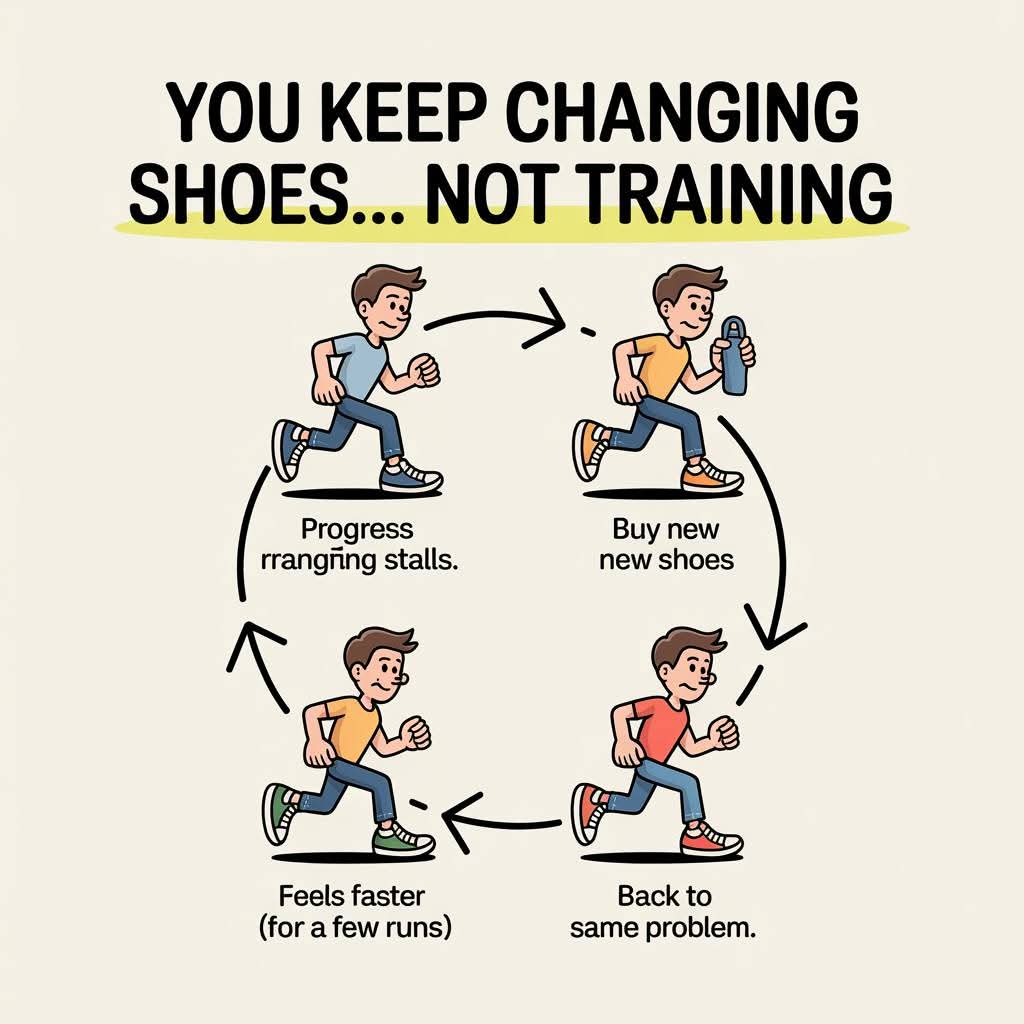
Expensive shoes aren’t why you’re stuck. But they’re a very convenient explanation.
Because every time something feels off, pace stalls, workouts fall apart, progress plateaus, there’s always another model to point at.
“This one’s faster.”
“More bounce.”
“Better return.”
And for a few runs, it even feels true. Until it doesn’t.
And now you’re right back where you were. Same ceiling. Same fatigue. Same drop off.
So you start looking again.
Because changing shoes feels like action. Changing habits doesn’t.
You’ll read reviews. Compare stack heights. Watch videos on foam, but won’t hold the same structure for 8 to 12 weeks straight.
That’s the part people avoid.
Because gear feels like progress. Discipline feels like pressure.
And most runners will choose the one that feels better in the moment. Then defend it.
“Shoes make a difference.”
“Elites use them.”
“I run faster in these.”
Maybe.
But faster for a few runs isn’t the same as getting better.
And that’s where people get stuck.
Because the shoe gets the credit, and the training stays the same.
You’re not stuck because of what’s on your feet. You’re stuck because nothing underneath it has changed.
Be honest.
How many pairs have you bought, instead of fixing the part you already know needs work?

English

Running three times a week gets treated like you’re not serious.
Like you’re just… dabbling.
Because somewhere along the way, running turned into a status ladder.
More days = more committed
Fewer days = not really a runner
So people start adding runs they don’t need.
A late-night jog just to keep the streak alive.
An extra day squeezed in when the body’s already tired.
Not because it helps.
Because it feels like it proves something.
That’s the trap.
You stop training for progress… and start training for identity.
And for a lot of runners, especially once life gets full, that trade doesn’t hold up.
You don’t need more days.
You need weeks you can actually repeat.
And three runs a week?
That forces you to be honest.
No hiding behind volume.
No padding the week.
Just doing enough… and doing it well.
It doesn’t look impressive.
But it holds.
And most runners chasing “more” can’t say that.
So yeah…
maybe the goal isn’t to run more days.
Maybe it’s to build a week you don’t have to recover from.
Be honest
are you adding runs because they help… or because you think they make you look like a real runner?
English

There are a few things I don’t think are cool to brag about.
Running a marathon without training.
Running through pain just to prove you can.
Collecting stress fractures like they’re badges of honor.
Refusing to fuel on long runs because you want to feel “tough.”
I’ve learned this the hard way. Surviving something isn’t the same as training well for it. Ignoring pain isn’t grit. It’s usually a warning sign. Under fueling doesn’t make me disciplined. It makes me slower and more fragile later.
Real progress is boring sometimes. It’s consistent training. Smart recovery. Eating enough. Pulling back when something feels off.
If you had to choose, would you rather look hardcore for a week… or still be running strong five years from now?
English

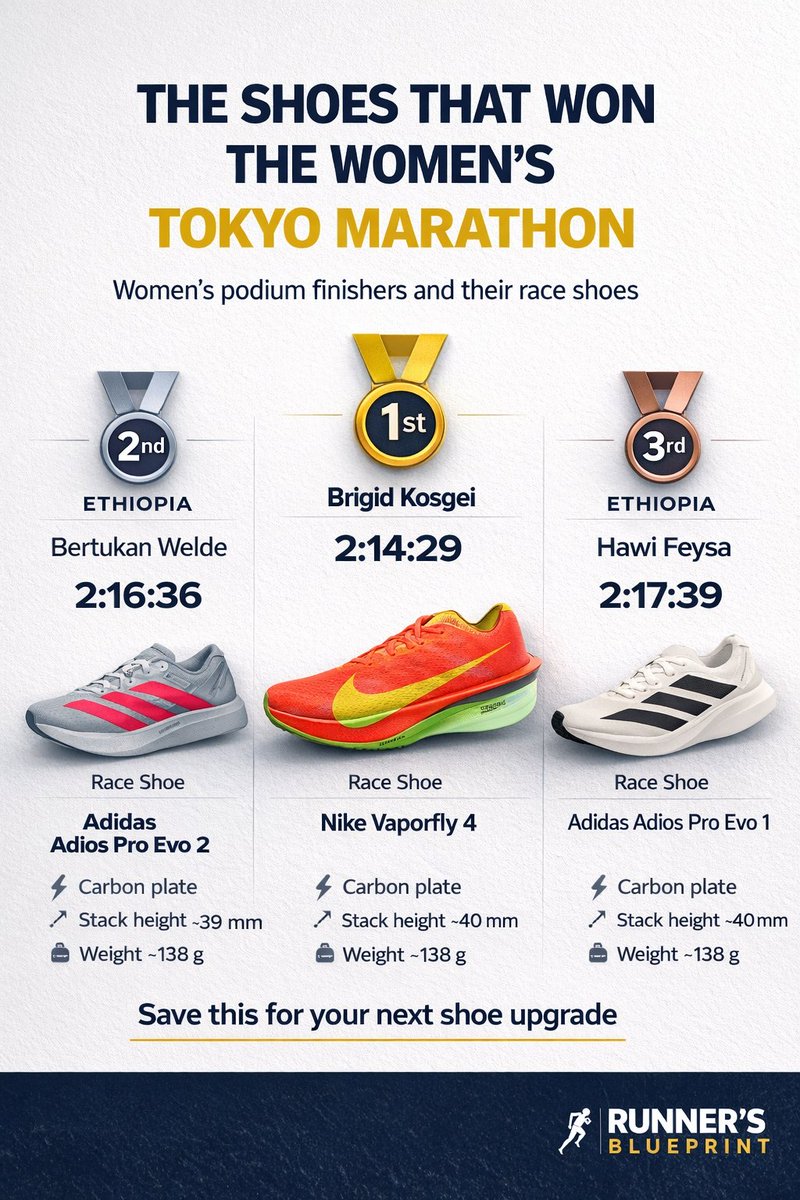
The shoes in this graphic are fast.
But shoes don’t run marathons.
People do.
Behind every 2:14 finish is years of quiet training nobody saw.
Slow mornings.
Long runs.
Discipline.
Your journey starts the same way.
One run at a time.
#running

English

There’s a respected belief in running that sounds harmless until you live inside it.
More mileage = more serious.
It’s the classic ladder:
30 miles a week is “solid.”
40 is “committed.”
50 is “real runner.”
60 is “don’t talk to me unless you understand.”
Nobody says it like that. We just feel it.
Then you open Strava and it gets worse.
Because mileage is the easiest thing to broadcast, and kudos is a tiny reward loop that teaches your brain what the community notices.
So the hidden status trap becomes: I’m not training to get fit. I’m training to keep my number from dropping.
That’s where the anxiety shows up.
You skip a run and it feels like you lost something.
You rest and you feel guilty.
You do an “easy” day and then add miles at the end because you’re scared of the weekly total.
Myth: more mileage makes you confident.
Hidden cost: more mileage can make you constantly self-monitor, constantly compare, constantly negotiate your worth with a number.
And I’ve noticed this hits 40+ runners hard, especially the ones restarting.
Because you’re not only comparing to other people.
You’re comparing to your old self.
And the temptation is to protect the identity by keeping the volume high… even when your body is clearly asking for a smoother ramp.
Soft landing, because I know that fear: lowering mileage feels like admitting you’re declining.
But sometimes lowering mileage is not decline. It’s strategy. It’s how you stay available.
When did mileage first become the thing that decided whether you felt like a “good runner” that week?
#running
English

Everyone wants motivation.
New shoes. New playlist. New race. New year energy.
But motivation fades fast. Especially after 40 when life gets heavier. Work. Family. Stress.
What actually changes your fitness is boring repetition.
Same time. Same route. Same discipline. Even when you don’t feel inspired. Even when nobody is watching.
The runners who last 10+ years are not the most hyped.
They’re the most consistent.
If you only run when you “feel like it,” you’re building emotion, not endurance.
Be honest.
Are you waiting to feel motivated… or building habits that don’t require it?
English

If running had an ‘unspoken rulebook’, what’s Rule #1 that would calm beginners down?
English

If you’re thinking about goals for 2026, I’m going to suggest something simple.
Sub 30 5K.
Sub 60 10K.
Sub 2 hour half.
Sub 4 hour marathon.
Not because the internet will clap. Not because it sounds impressive at dinner. But because those benchmarks usually mean you’ve built a solid engine. Consistent training. Decent strength. Good habits. The kind that carry into the rest of your life.
When I chase times like that, I’m not chasing ego. I’m chasing capacity. Heart health. Durability. The ability to keep showing up year after year without falling apart.
It’s not about being elite. It’s about being strong enough to age well.
Which one of those feels within reach for you right now?
#running
English

Hot take.
Some of you don’t hate running.
You hate how slow you are.
You hate how your body looks while doing it.
You hate that you’re not where you used to be.
You hate that it doesn’t feel easy anymore.
So you say “I hate running.”
But what you really hate is the gap between your expectation and your current reality.
Especially as we get older, the body changes. Pace changes. Recovery changes. And if your identity is tied to how you used to perform, every run feels like a reminder of decline.
That’s not hatred of running.
That’s grief.
And grief needs adjustment, not abandonment.
If you removed comparison… if nobody could see your pace… would you still hate running?
Be honest.
English

Let people run how they want.
If I want to wear race shoes on a regular Tuesday, that’s my choice. If I bring a hydration vest to a 5K because I like being prepared, that’s fine. If I walk the uphills, that’s not weakness. That’s pacing.
If someone is brand new, they belong. If someone runs slow, they belong. If their body doesn’t look like a magazine cover, they still belong. If they use run walk intervals or train for fun instead of a PB, that’s valid.
Running is already hard. It asks a lot from our bodies and our minds. We don’t need to add judgment on top of it.
I’d rather be part of a community that supports than one that ranks.
What’s one thing you’ve felt judged for in your running?
English