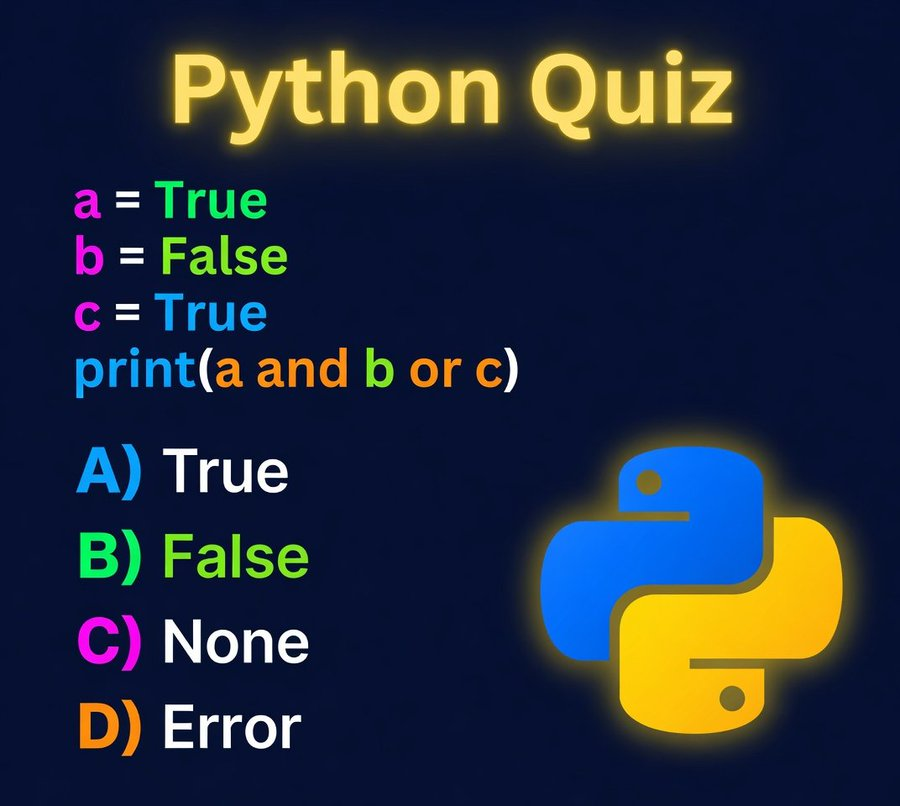
Python patterns look simple… until you understand the logic behind them 🧠🐍
These 4 pattern examples help you practice: ⭐ nested loops
⭐ conditions
⭐ rows and columns logic
⭐ spacing and output control
🚀 From Punch Cards to AI: The Evolution of Code 💻
Ever wonder how we got from Ada Lovelace’s first algorithm in 1843 to the modern languages powering today's AI?
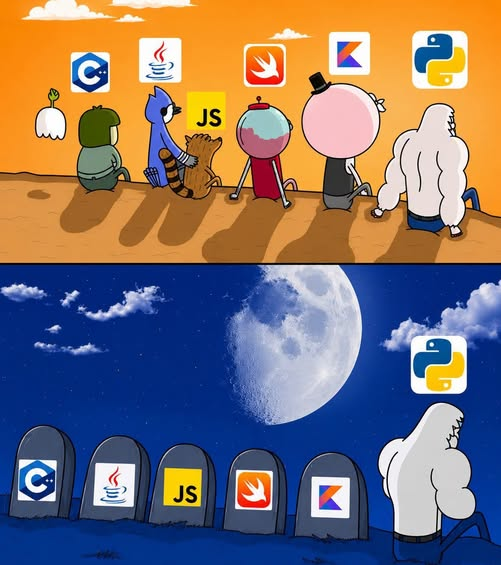
Look at how the foundations laid by pioneers like Grace Hopper (COBOL) and Dennis Ritchie (C) paved the way for JavaScript, Python, Rust, and the tech we rely on every single day.
What was the very first programming language you learned? Let me know in the comments! 👇
#Programming#CodingLife#TechHistory#SoftwareEngineering#java#rust#Python#JavaScript#WebDevelopment#ComputerScience#CodeNewbie
Loops in Python are used to repeat a block of code multiple times. They help make programs shorter, faster, and more efficient by avoiding repeated code.
Python mainly uses "for" loops and "while" loops for iteration and repetitive tasks.
#python#learningcoding#coder
RAG has three generations. Most teams are still on the first one. 🧠
Classic RAG → Retrieves
Fast, simple, single-hop. Perfect for FAQs and policy lookups.
Graph RAG → Connects
Entity-rich and relational. Shines when the answer lives *between* documents, not inside them.
Agentic RAG → Reasons
Adaptive, multi-step, self-correcting. The agent chooses its own tools and checks its own work.
The upgrade path isn’t about complexity for its own sake — it’s about matching retrieval to the shape of the question.
Classic RAG handles “what.” Graph RAG handles “how are these related.” Agentic RAG handles “figure it out.”
Save this for your next architecture review. 📌
Which generation is your team building on right now? 👇
Credit: codewithbrij
#RAG#AIEngineering#LLM#AgenticAI#generativeai
Most people are using AI.
Almost nobody is actually getting good at it.
They open ChatGPT, type a question, get an answer.
Call it "using AI."
But there's a massive difference between using a tool and mastering it.
I see this all the time with founders and operators I work with.
They're not bad at AI.
They're just stuck at Level 2 when the real leverage starts at Level 5.
I spent years on this.
The people compounding the fastest aren't prompting better.
They're operating at a completely different tier.
Here's the full breakdown of what each level actually looks like:
→ Level 1: AI Awareness.
You understand what AI is, how LLMs work, and where the limits are.
Most people skip this.
Big mistake.
→ Level 2: AI User.
You're prompting, summarising, researching.
Saving time.
This is where 80% of professionals sit right now.
→ Level 3: AI Power User.
You know few-shot prompting, prompt chaining, structured outputs.
You're building repeatable systems, not one-off queries.
→ Level 4: AI Creator.
You're using APIs, triggers, logic flows, and integrations to create actual AI-powered assets across text, image, video, and audio.
→ Level 5: AI Automation Builder.
You're connecting workflows with tools like Zapier, Make, and n8n.
RAG, memory systems, tool calling.
This is where time starts multiplying.
→ Level 6: AI Agent Builder.
You're building agents that plan and act.
Full stack with frontend, backend, database, and LLM layers working together.
→ Level 7: AI Engineer.
Python, deployment, evaluation.
You're shipping production AI apps, chat systems, SaaS tools.
→ Level 8: AI Architect.
Security, governance, monitoring, cost control.
You're designing enterprise-grade systems at scale.
→ Level 9: AI Researcher.
You're working on transformers, RLHF, alignment, safety, fine tuning.
Pushing what's actually possible.
Most professionals will get real business value by reaching Level 5 or 6.
You don't need to become a researcher.
But you do need to move past "I use ChatGPT sometimes."
The infographic maps every level.
Save it.
Come back to it in 90 days and ask yourself which step you've climbed.
If this kind of content is useful to you,
The rest of my posts are in the same vein.
Worth a follow if you're building seriously with AI.
Pass this along to someone on your team who's been meaning to level up their AI skills.
They'll get it immediately.
Where do you honestly think you sit right now on this scale?
Curious what you say.
Fix This Python Code
Test your Python skills with this fun debugging challenge. Can you find and fix the error in this code? Perfect for beginners who want to improve problem-solving and coding skills. Save this pin and try it yourself.
Master these Python list methods and your code gets cleaner fast 🐍⚡
From .append() to .sort(), these are the beginner friendly operations you’ll use again and again when working with lists.
Save this cheat sheet for your next Python project 📌