Patrick Tucker

29.9K posts

Patrick Tucker banner
Patrick Tucker

Patrick Tucker

@DefTechPat

Sci-Tech editor for @DefenseOne. Spies, AIs and the future(s). signal https://t.co/e6TjpPddhb

The trough of disillusionment 参加日 Mart 2009
6K フォロー中24.6K フォロワー
Patrick Tucker がリツイート
Nolan Peterson
Nolan Peterson@nolanwpeterson·
Some tells to look for that will indicate the Iranians are using Russian input to improve their Shahed strikes: -Systems to defend against GPS spoofing, such as the Kometa. -The use of decoy drones to saturate and exhaust air defenses. -The use of SIM cards to tap into cellular networks for navigation and telemetry. -Iranian Shahed variants that include performance upgrades that Russia has made to some of its domestically-produced Shahed analogues — such as jet engines. -Iran flying its Shaheds in meandering flight paths and a range of altitudes that match Russia's employment of Shaheds against Ukraine. This is a short list to start, and definitely not exhaustive. But the downstream effects of Russian assistance to Iran should not be difficult to identify.
English
7
73
257
28.9K
Patrick Tucker がリツイート
Kateryna Lisunova
Kateryna Lisunova@KaterynaLis·
Updates on VOA: First of all, thanks to all Ukrainian journalists who reached out - really means a lot to know Ukraine is waiting for VOA to return. What’s happening: - Mar 7: Judge Lamberth ruled Kari Lake was unlawfully serving as USAGM CEO; voided key decisions, incl. layoffs. - Mar 12: Trump nominated Sarah B. Rogers as a USAGM CEO, named Michael Rigas Acting CEO; Kari Lake stayed as Deputy. - Mar 17: Court blocked the shutdown of USAGM (VOA’s parent), ordered 1,042 staff reinstated by Mar 23 + resumption of intl broadcasting. - Mar 18: Christopher Wallace (ex-Newsmax VP and News Director) named VOA Deputy Director; USAGM also renewed Reuters contract. What it means: There’s movement at VOA, and new appointees seem solid. Especially Wallace (strong journalist, focused on Ukraine). Some staff are being interviewed. BUT: The admin still has 30 days to appeal (and has won before), so this could be partly symbolic compliance. No appeal filed yet. VOA infrastructure is in bad shape - equipment auctioned off, satellite dishes removed. Restarting all 48 language services won’t be easy. The ruling covers federal staff only; 500+ contractors (incl. me) are still out. In the Ukrainian Service, that’s nearly half the team, esp. technical staff. Bottom line: Unclear if/when VOA fully returns—and what its editorial independence will look like.
English
3
13
111
3.7K
Patrick Tucker がリツイート
Valerio Capraro
Valerio Capraro@ValerioCapraro·
We are no longer living in a purely human society. We are entering a hybrid system where humans and machines continuously interact and influence each other. Where does this system evolve? In a new perspective piece, we brought together leading experts to address this using the lens of evolutionary game theory. We outline six core research directions: 1) Evolution of social behaviour. How cooperation, fairness, and trust evolve in mixed human–AI populations. 2) Machine culture. How AI systems generate, transmit, and select cultural traits. 3) Language–behaviour co-evolution. How LLMs, by framing decisions, reshape preferences, norms, and actions. 4) Delegation dynamics. How control, responsibility, and agency shift between humans and machines. 5) Epistemic pipelines. How different cognitive processes generate human vs AI judgments, and how these co-evolve. 6) AI–regulation co-evolution. How firms, institutions, and users strategically shape—and are shaped by—AI development. We hope this framework sparks new work at the intersection of AI, behaviour, and society. * Paper in the first reply Joint with @T_A_Han, @jzl86, Tom Lenaerts, @iyadrahwan, @fernandopsantos, @matjazperc
Valerio Capraro tweet media
English
21
46
187
9.3K
Patrick Tucker がリツイート
Nolan Peterson
Nolan Peterson@nolanwpeterson·
Throughout the past few years of full-scale war in Ukraine, you'd be hard pressed to go into a cafe or restaurant in Kyiv and not encounter some American commercial drone firm representative, or from some other emerging defense technology company, at a meeting with a Ukrainian colleague. Not long ago, I met with the commander of one Ukrainian unit who offered his training range to any U.S. firms that wanted to test their drones against the latest electronic warfare threats. He even offered to take U.S. drones to the front line to test them in combat and to have his soldiers provide detailed after-action reports for the American engineers. His price? That his soldiers could simply keep whatever equipment they tested. These are soldiers fighting for their nation's survival. Back home, their families are under daily bombardment by Russia's missiles and drones. And yet, they take time away from their immediate warfighting priorities to educate Americans in the lessons they've learned throughout 12 years blood and toil against Russia's invasions, dating back to 2014. Because of this, an entire industry of U.S. drone warfare startups has emerged and owes its existence to the lessons our Ukrainian friends have been willing to share.
English
6
218
1.1K
52.5K
Patrick Tucker がリツイート
Chicago Council on Global Affairs
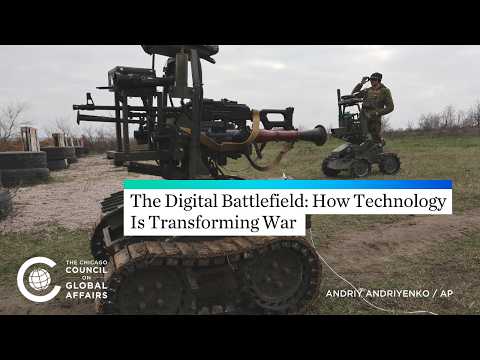
"When we say 'human in the loop', that means that warfare is a human endeavor and that someone in the chain of command has to take responsibility for offensive actions," said Kathleen Hicks, Council Distinguished Nonresident Fellow and former US Deputy Secretary of Defense. "If AI is being used, it's not the AI's fault, if you will. At some point, there's a command decision issue that has to be involved. And that should be the standard I think that we maintain." Yesterday, Hicks joined Patrick Tucker (@DefTechPat), Editor of Science & Technology at @DefenseOne to discuss military preparedness in the digital age. Watch the full conversation: bit.ly/47kj5oY
English
0
3
3
537
Patrick Tucker
Patrick Tucker@DefTechPat·
Unlike enduring threats from China, Russia, Iran, NK, and terrorist groups, the annual IC threat report treats AI more as shaping force than a discrete actor. The newest report? Bigger AI warnings (and omissions.) My latest for @DefenseOne defenseone.com/threats/2026/0…
English
0
0
1
273
Patrick Tucker
Patrick Tucker@DefTechPat·
Future Pulitzer prize journalism
GIF
Mike Levin@MikeLevin

This is totally insane. A war correspondent just received death threats from online gamblers who wanted him to change his reporting on an Iranian missile strike so they could collect a payout. One bettor had $900,000 riding on the outcome. He told the journalist he knew where he lived and who his family members were.  This is what prediction markets on life and death actually look like in practice. This is exactly why I introduced the DEATH BETS Act with Senator @AdamSchiff. The DEATH BETS Act would ban contracts on assassinations, deaths of world leaders, and acts of war on platforms like Polymarket. This story shows exactly why that matters.  When you let people place million-dollar bets on whether a missile kills someone, you create a financial incentive to threaten journalists, manipulate information, and profit from human suffering. washingtonpost.com/technology/202…

English
0
0
0
735
Patrick Tucker がリツイート
Becca Wasser
Becca Wasser@becca_wasser·
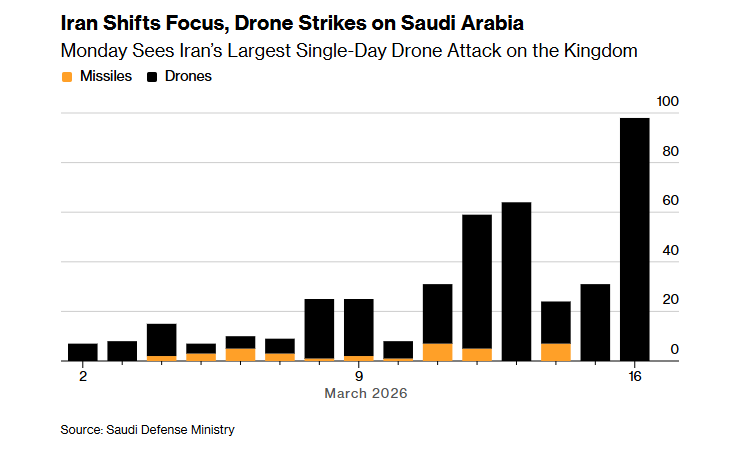
Iran’s arsenal has taken a hit, but it likely isn’t exhausted. Launches are sustained and Saudi Arabia is increasingly in focus. The pattern suggests recalibration, not depletion: Iran can impose costs by causing just enough pain. My analysis @business: bloomberg.com/news/articles/…
Becca Wasser tweet media
English
7
54
112
15.2K
Patrick Tucker がリツイート
David Colon
David Colon@Colon_David·
Ukrainian military intelligence managed to hack communications between the Iranian embassy in Moscow and people connected to Russia's Shahed-136 drone programme and has reported a sharp uptick in scientific cooperation between Moscow and Teheran. intelligenceonline.com/middle-east-an…
English
18
642
1.3K
42.4K
Patrick Tucker がリツイート
Kateryna Lisunova
Kateryna Lisunova@KaterynaLis·
🚨ZELENSKYY: We have to focus on finding alternatives to Patriot anti-ballistic systems. There are already some steps in this direction. (lots of statements this Wednesday, but this one really stands out as something new) “And in any way, we have to focus. And this is not very important only for us, I think to all the Europe, we need to find a way for alternatives for Patriot. I mean, anti-ballistic systems: to find them, to build them, to produce them. And I know that there are some small steps in this case and I hope that they will be successful”, - Zelensky on Wed Mar 18th, 2026
English
16
320
1.5K
32.6K
Patrick Tucker がリツイート
UNITED24 Media
UNITED24 Media@United24media·
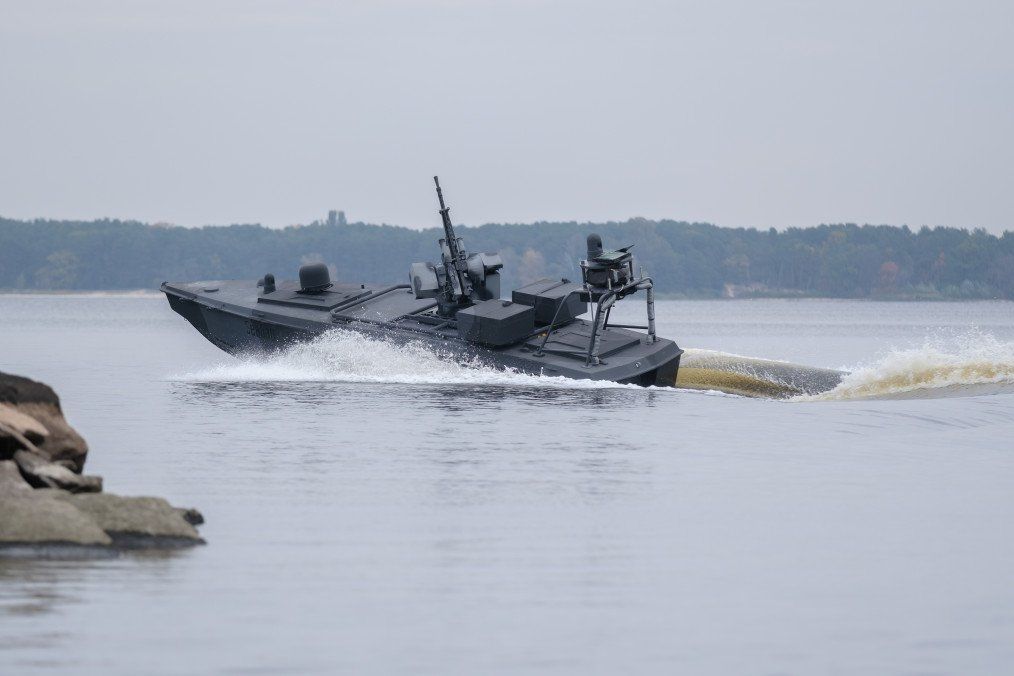
⚡ Ukraine is developing next-gen naval drones for open ocean missions. Officials say the new systems are designed to operate beyond the Black Sea, expanding Ukraine’s unmanned maritime capabilities into broader ocean environments. 🔗 united24media.com/latest-news/uk…
UNITED24 Media tweet media
English
11
189
575
9.9K
Patrick Tucker がリツイート
Anton Gerashchenko
Anton Gerashchenko@Gerashchenko_en·
Tulsi Gabbard, United States Director of National Intelligence: The intelligence community assesses that Russia, China, North Korea, Iran, and Pakistan have been researching and developing an array of novel, advanced, or traditional missile delivery systems, with nuclear and conventional payloads, that put our homeland within range.
English
39
90
317
40.9K
Patrick Tucker がリツイート
Christopher Miller
Christopher Miller@ChristopherJM·
Swarmer, whose software has been used by the Ukrainian military since 2024, jumped 520 per cent on its first day of trading on Nasdaq on Tuesday... Swarmer says its AI solutions allow a single operator to control up to 690 drones at once. “Ukraine needs hundreds of thousands of drones in the air, they don’t have hundreds of thousands of pilots,” said Erik Prince.
Financial Times@FT

Drone maker backed by Erik Prince surges 500% in Wall Street debut ft.trib.al/CY3o4DH

English
7
170
686
61.7K
Patrick Tucker がリツイート
Chicago Council on Global Affairs
Chicago Council on Global Affairs@ChicagoCouncil·
For many Americans, the image of warfare remains rooted in the past. Today, however, conflicts are fought with drones and algorithms, through cyber-attacks and disinformation campaigns, and with autonomous weapons and complex hybrid tactics. What does military preparedness look like in this new landscape, and what are the implications of these emerging technologies? Join us for a conversation with former US Deputy Secretary of Defense and Council Distinguished Nonresident Fellow Kathleen Hicks and @DefenseOne's Patrick Tucker (@DefTechPat) March 18 as they explore the changing nature of warfare and its impact on global security. Register: bit.ly/47kj5oY
Chicago Council on Global Affairs tweet media
English
0
1
1
6K