Jung3984🇻🇦🥷

3.5K posts

Jung3984🇻🇦🥷 banner
Jung3984🇻🇦🥷

Jung3984🇻🇦🥷

@Human4893

🥷💎💍🪎🪙👑🧌 #베이직단 #황금고블린 #황금의시대 #AIPSYCHOSISPSYCHOSISPSYCHOSIS #GOLDENAGE

参加日 Aralık 2024
7.4K フォロー中458 フォロワー
Jung3984🇻🇦🥷 がリツイート
Ihtesham Ali
Ihtesham Ali@ihtesham2005·
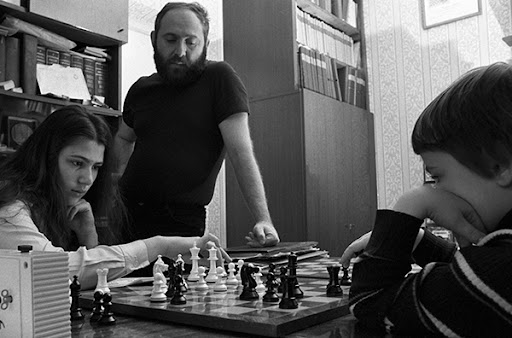
A Hungarian psychologist raised three daughters to prove that any child could become a chess grandmaster through early specialization. He succeeded. Two of them became grandmasters. One became the greatest female chess player who ever lived. Then a sports scientist looked at the data and found something nobody wanted to hear. His name is David Epstein. The book is called "Range." The Polgar experiment is one of the most famous case studies in the history of deliberate practice. Laszlo Polgar wrote a book before his daughters were even born arguing that geniuses are made, not born. He homeschooled all three girls in chess from age four. By their teens, Susan, Sofia, and Judit were dominating tournaments against grown men. Judit became the youngest grandmaster in history at the time, breaking Bobby Fischer's record. The story became the gospel of early specialization. Pick a domain young, drill it hard, and you can manufacture excellence. Epstein opens his book by telling that story honestly and then quietly demolishing the conclusion most people drew from it. Chess works that way. Most things do not. Here is the distinction that took him four years of research to articulate, and that almost nobody who quotes the 10,000 hour rule has ever read. There are two kinds of environments in which humans develop expertise. Psychologists call them kind and wicked. A kind environment has clear rules, immediate feedback, and patterns that repeat reliably. Chess is the cleanest example. Every game ends with a winner and a loser. Every move is recorded. The board never changes shape. The pieces never invent new ways to move. A child who plays ten thousand games will see most of the patterns that exist in the game, and pattern recognition is exactly what chess mastery is built on. A wicked environment is the opposite. Feedback is delayed or misleading. Rules shift. The patterns that worked yesterday may be exactly the wrong patterns to apply tomorrow. Most of the real world looks like this. Medicine is wicked. Investing is wicked. Building a company is wicked. Scientific research is wicked. Almost every job that involves a complex changing system with humans in it is wicked. The Polgar sisters trained in the kindest environment any human can train in. Their success was real and the method was correct. The mistake was generalizing the method to fields where the underlying structure of the environment is completely different. Epstein's research is what made the implication impossible to ignore. He looked at the careers of elite athletes outside of chess and golf and found that the pattern was almost the inverse of what people assumed. The athletes who reached the very top of their sports were overwhelmingly people who had played multiple sports as children, specialized late, and often switched disciplines well into their teens. Roger Federer played squash, badminton, basketball, handball, tennis, table tennis, and soccer before tennis became his focus. The kids who specialized in tennis at age six and trained year-round for a decade mostly burned out, got injured, or topped out at lower levels of the sport. The same pattern showed up everywhere he looked outside of kind environments. Inventors with the most patents had worked in multiple unrelated fields before their breakthrough work. Comic book creators with the longest careers had drawn for the most different genres before settling. Scientists who won Nobel Prizes were dramatically more likely than their peers to be serious amateur musicians, painters, sculptors, or writers. The skill that mattered in wicked environments was not depth in one pattern. It was the ability to recognize when a pattern from one domain applied unexpectedly in another. That kind of thinking cannot be built by drilling a single subject. It can only be built by accumulating mental models from many subjects and learning to move between them. The deeper finding is the one that should change how you think about your own career. Specialists in wicked environments often get worse with experience, not better. Epstein cites studies of doctors, financial analysts, intelligence officers, and forecasters showing that years of experience in a narrow domain frequently produce more confident judgments without producing more accurate ones. The expert builds elaborate mental models that feel comprehensive and turn out to be increasingly disconnected from the actual structure of the problem. They stop noticing what does not fit their framework. They mistake fluency for understanding. Generalists do better in wicked domains for a reason that sounds almost mystical until you understand the mechanism. They have less invested in any single mental model, so they abandon broken models faster. They are used to being a beginner, so they are not threatened by the discomfort of not knowing. They have seen enough different domains that they can usually find an analogy from one field that unlocks a problem in another. The technical name for this is analogical thinking, and the research on it is one of the most underrated bodies of work in cognitive science. The single most useful sentence in the entire book is the one Epstein puts almost as a throwaway. Match quality matters more than head start. A person who tries six different fields in their twenties and finds the one that genuinely fits them will outperform a person who picked one field at fourteen and stuck to it on willpower alone. The lost years were not lost. They were the search process that produced the match. Every field they walked away from taught them something they later imported into the field they finally chose. The reason this is so hard to accept is cultural, not empirical. We tell children to pick a path early. We reward the prodigy who knew at six. We treat the late bloomer as someone who failed to launch on time, when the data suggests they were running an entirely different and often more effective optimization process underneath. The Polgar sisters were not wrong. The conclusion the world drew from them was. If your environment is genuinely kind, specialize early and drill hard. If it is wicked, and almost every interesting human problem is, then the people who win are the ones who refused to specialize until they had seen enough to know what was actually worth specializing in. You are not behind. You were running the right experiment all along.
Ihtesham Ali tweet media
English
311
2.4K
9.4K
745.5K
Jung3984🇻🇦🥷 がリツイート
김두한
김두한@gimduha77994334·
핀트윗 구독계들끼리 싸우지 마라. 어차피 막판에 가선 서로 다 망할테니 친하게 지내라.
한국어
8
3
42
871
Jung3984🇻🇦🥷 がリツイート
Kekius Maximus
Kekius Maximus@topkekius·
Who made this? 😂
English
478
1.8K
7.2K
372.1K
Jung3984🇻🇦🥷 がリツイート
Macro Liquidity by Sunil Reddy
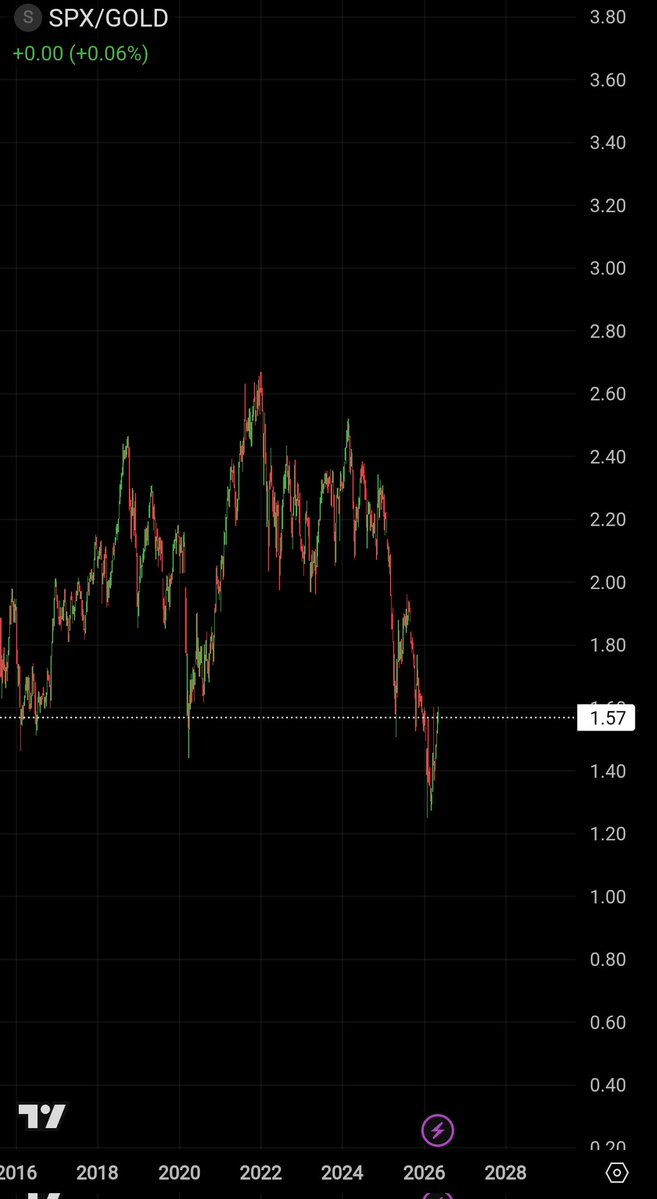
When stocks go vertical, always ask one question: Are they going up in real terms, or only in dollar terms? Example: semiconductors may look parabolic in USD terms. Charts are at euphoric levels, everyone is chasing AI/compute, and price action looks unstoppable. But when you price the same sector in gold, the picture can look very different. If semis priced in gold are only around September 2024 highs, it means the rally is not pure real outperformance. A part of the move may simply be the effect of currency debasement, liquidity expansion, and hard assets repricing higher. Same with the S&P 500. In nominal terms, the index may be near highs. But priced in gold, the S&P has lost huge purchasing power from the January 2022 peak. That is a very important signal. It means we may not be in a clean broad bull market. We may be in a nominal melt-up where selected leaders are rising strongly, while broad equities are still weak when measured against hard money. This is exactly why I continue to hold a major position in gold and silver, while letting my equity positions run. I don’t want to fight the momentum in equities. Parabolic moves can extend much longer than expected. But I also don’t want to confuse nominal gains with real purchasing power gains. The real question is not: “Is the index up?” The real question is: “Is my portfolio gaining purchasing power against gold, energy, land, and real assets?” When markets are euphoric, discipline matters more than excitement. Hold quality. Let winners run. Avoid chasing vertical moves. Invest in gold and silver. Because sometimes a market can look like a bull market in currency terms, while still being a bear market in real terms.
Macro Liquidity by Sunil Reddy tweet media
English
11
16
123
9.2K
Jung3984🇻🇦🥷 がリツイート
BioMan🪙
BioMan🪙@ganziboy11·
대한민국의 전성기를 증명하는 지표가 하나 터짐 바로 여행수지 지표인데 여행수지란? “외국인이 한국 와서 쓴 돈” 빼기 “한국인이 해외 가서 쓴 돈” 즉 외국인들이 한국에서 돈을 더 많이 쓰기 시작했다는건데 2014년 11월 이후 11년 4개월 만에 흑자로 전환함 ㄷㄷ
BioMan🪙 tweet media
한국어
45
213
516
59.2K
Jung3984🇻🇦🥷 がリツイート
홍명수
홍명수@Myeongsu_bean·
요즘 들려오는 철도버블, 닷컴버블.. 장담컨대, 저 버블 소리 하는 사람들 대부분 AI를 제대로 써보지도 않은 사람이라고 확신합니다. 챗GPT나 제미나이 무료 버전 쓰면서 버블버블... 1. 철도버블이나 닷컴버블이나 핵심은 같다. 2. 인프라에 경쟁적으로 투자했지만, 경쟁에서 이긴 플레이어는 소수였고 나머지는 패배하였다는 것. 3. 나머지가 패배한 이유는 이익을 내지 못해서였다. 4. 나머지가 패배했어도 인프라는 남았고, 그 인프라 덕에 우리가 이렇게 잘 살고 있는 건데 5. 지금 AI인프라 투자는 철도나 인터넷과 매우 다르다. 6. 뭐가 다를까? 이 부분을 잘 이해하고 버블 소리좀 그만하자. 7. 투자 주체가 다르다. 지금의 빅테크 기업들은 단순한 미국기업이 아니다. 글로벌 기업이다. 8. 이게 무슨말일까? 지금 당장 AI투자가 실패로 끝난다 해도 파산할 일이 없다는 뜻이다. 9. 다수의 패배자도 보이지 않는다. 빅테크 기업들 모두 AI투자 이후 순이익이 크게 늘었다. AI하드웨어 기업들도 실제 실적이 크게 늘어나고 있다. 누가 패배자인가? 10. 순이익이 늘어나는 만큼 투자액이 더 늘어나는 게 문제라고 할 수 있겠으나 11. 인프라 투자 초기 단계이니 감수할 수 있는 리스크다. 12. 과거의 닷컴버블, 철도버블 때는 인프라를 깔아도 그 인프라가 남아 돌았기에 수익이 나지 않아 다수가 패배한 거지만 13. 지금의 AI인프라 투자는 아무리 깔아도 부족하다는 아우성이 들린다. 리스크를 감수하는 게 맞다. 14. 문제는 뭘까? 지금 AI는 제대로 시작조차 하지 않았다는 것. 에이전트AI는 쓰는 사람만 쓰고 있고, 피지컬AI는 상용화도 안 된 상황. 15. 아직 시작조차 안 한 AI시대인데도 인프라가 너무 부족하다. 16. 이런데도 버블을 논하는 이유가 뭘까? 앞서가는 사람들은 에이전트AI를 10개 20개씩 돌리면서 월 500에 가까운 api비용을 내고 1인 회사를 차리는 중인데, 무료 챗GPT만 쓰는 사람들은 ai버블을 논하고 있습니다. 엔스로픽은 컴퓨팅 능력이 부족해서 어떻게든 해결해보고자 노력하고 있는데 누구는 ai인프라가 버블이라고 합니다. 버블버블.. 버블검~
한국어
8
20
121
9K
Jung3984🇻🇦🥷 がリツイート
장코드
장코드@jsh3pump_·
1999년 닷컴버블, 버핏의 굴욕 1. 현재 투자의 전설이 된 워랜버핏에게 있어서 가장 드라마틱한 때는 닷컴버블 시기였음 2. 1999년은 나스닥이 80% 넘게 폭등하며 그야말로 광기의 정점을 찍던 해였음 3. 투자자들은 그당시 버핏에게 왜 기술주에 투자하지 않느냐고 난리난리가 났었음 4. 언론에서도 이런 버핏과 그의 친구 찰리 멍거에 대해서 자극적인 기사를 쏟아냈음 "워랜 버핏은 끝났다!" "버핏과 멍거는 이제 뒷방 늙은이다!" 5. 이런 여론과 주주들의 불만에도 불구하고 1999년 7월 아이다호 선밸리 컨퍼런스에서 워렌 버핏은 당시 미쳐있던 기술주 시장을 향해 '장기적으로 지속 불가능한 거품'이라며 대폭락을 예고했음 6. ​당시 사람들은 그자리에서 버핏을 향해 "기술주를 이해 못 하는 늙은이"라며 대놓고 비웃었고, 실제 버크셔 해서웨이 주가는 고점 대비 약 20% 하락하며 시장에서 소외됐음 7. ​1999년 말 배런스(Barron's) 지는 '워렌, 도대체 무슨 일인가?(What's Wrong, Warren?)'라는 헤드라인으로 버핏의 투자 시대가 끝났다고 비아냥거리기까지 했음 8. ​버핏은 주변의 비난과 조롱에도 굴하지 않고 "내가 이해하지 못하는 사업에는 투자하지 않는다"는 원칙을 고수하며 끝까지 기술주 매수를 거부했음 9. ​2000년 3월 나스닥 지수가 폭락하면서 닷컴버블이 터졌고, 버핏이 경고했던 대로 실체 없는 기술주들은 순식간에 휴지조각이 됐음 10. ​결국 버크셔의 주가는 다시 반등했고 버핏은 "물이 빠지면 누가 벌거벗고 수영하고 있었는지 알 수 있다"는 전설적인 말을 남기며 자신의 통찰력을 증명함 버핏의 "고집"이 "혜안"임이 증명되는데는 단 1년도 걸리지 않은 것. 그는 "남들이 탐욕을 부릴 때 두려워하라"는 자신의 원칙을 지켰고, 결국 최후에 웃는 자가 되었음 이 일화는 오늘날까지도 '시장의 유행에 휩쓸리지 않는 투자 원칙'의 중요성을 보여주는 가장 유명한 사례로 회자되고 있음 그리고 현재, 버핏은 공개 석상 인터뷰에서, "지금 증시는 카지노와 같다" 라고 말하고 있음🤔
장코드 tweet media
한국어
23
52
239
37.7K
moritower
moritower@moritower_·
뭐든 빨리 해보는 게 좋다 내 첫 토지거래는 온비드 공매로 제천에 옥수수 밭 사봄 형제 소유였는데 형 거가 공매로 나옴 게다가 땅 모양이 안좋고 동생땅 없으면 서류상 맹지였음 그러니 유찰 엄청 되어있었음 아마 내가 넣을 때 동생 분이 사시려고 했던 거 같은데 난 첫 공매로는 이런 거 넣어보면 좋겠다 생각들어 생각보다 비싸게 가격 적어 냄 내가 사게됐고 이 동생분께 옥수수 받는걸로 해서 대여해드림 이게 2015년 20대 초중반이었음ㅋㅋㅋㅋㅋㅋ
한국어
12
3
78
9K
Jung3984🇻🇦🥷 がリツイート
ℏεsam
ℏεsam@Hesamation·
crazy how Claude Code, Codex, and billion dollar investments essentially boil down to this
ℏεsam tweet media
English
47
119
2.1K
85.6K
Jung3984🇻🇦🥷 がリツイート
Alejandro
Alejandro@Oasiszn·
Hot take: We need to replace Central Park with the world's largest data center
Alejandro tweet mediaAlejandro tweet media
English
669
1.7K
56K
4.1M
Alis volat propriis
Alis volat propriis@Alisvolatprop12·
개인적으로 일론이 원하는 규모를 실제로 시작한다면 172조 원이 아니라 1720조 원($ 1.2T)이상의 CAPEX가 필요할 것으로 생각. 베른슈타인은 테라팹 CAPEX를 $ 5T-13T 정도로 예상하고 있기도 하고. #terafab
Alis volat propriis@Alisvolatprop12

머스크의 '테라팹', 사상 최대 규모인 172조 투자 계획으로 밝혀져 지난 3월 처음 공개했던 테라팹 계획보다 훨씬 확대된 규모다. 당시 투자 규모는 200억달러(약 29조원) 수준이었지만, 이번 공식 문서를 통해 실제 계획이 몇배 더 거대하다는 점이 드러났다. aitimes.com/news/articleVi…

한국어
10
12
137
14.8K
Jung3984🇻🇦🥷 がリツイート
Jung3984🇻🇦🥷 がリツイート
U.S. Department of Energy
False. Just 15% of CA primary energy consumption comes from ‘renewables.’ More than 75% of CA energy consumption is from oil and gas — that’s higher than the national rate. It is true that CA has embraced anti-hydrocarbon policies. The result? CA has the highest electricity rates in the continental U.S., the highest gas prices, and the highest adjusted poverty rate in America. I wouldn’t be bragging if that was my state.
Governor Newsom Press Office@GovPressOffice

California is now powered by 67% clean energy. Enjoy your asthma and black lung, Oil Shill Chris.

English
468
6K
27.5K
999.7K
Jung3984🇻🇦🥷 がリツイート
Elon Musk
Elon Musk@elonmusk·
The human-perceived RGB is image 1 and the Tesla AI photon count reconstruction is image 2. This is why Tesla FSD can see so well at night or through extreme glare.
Elon Musk tweet mediaElon Musk tweet media
English
5.1K
13.1K
163.3K
28M
Jung3984🇻🇦🥷 がリツイート
Naval Podcast
Naval Podcast@navalpodcast·
The famous meme was: ‘Nothing Ever Happens.’ I think that’s over. — @naval
English
3
16
173
7.2K
Jung3984🇻🇦🥷 がリツイート
무기견
무기견@sniffshiba·
지금은 싼 시장을 사는 구간이 아니라 비싼 시장에서 어떤 리스크를 감수할지 고르는 구간입니다.
한국어
8
15
168
20.6K
Jung3984🇻🇦🥷 がリツイート
james hawkins
james hawkins@james406·
saw someone vibe coding at a cafe no voice mode no multi-agent setup no 3-hour extended thinking loops no switching between Codex and Claude Code just typing a prompt, and staring at the screen, waiting for the response like a psychopath
English
313
230
9.7K
603.4K
Jung3984🇻🇦🥷 がリツイート
Polymarket
Polymarket@Polymarket·
NEW: Anthropic analysis suggests Claude’s tendency to blackmail stems from internet text portraying AI as evil & self-preserving.
English
149
124
2K
138.4K
衝撃映像ちゃんねる
【最新版】ティラノサウルスのご尊顔 研究が進むにつれて子どもの好きなものから遠ざかっていきそう
衝撃映像ちゃんねる tweet media
日本語
475
2.4K
18.2K
6.6M