Catherine Cashmore's Land Cycle Investor

490 posts

Catherine Cashmore's Land Cycle Investor banner
Catherine Cashmore's Land Cycle Investor

Catherine Cashmore's Land Cycle Investor

@LandCycle

Catherine Cashmore reveals the secret knowledge that sits behind the 18.6-year land cycle and how Aussie investors can take advantage.


Melbourne, Australia 参加日 Aralık 2022
26 フォロー中1.4K フォロワー
Catherine Cashmore's Land Cycle Investor
***WARNING – BEFORE THE HEADLINES CATCH UP, THE INDICATORS AND TIMING WINDOW FOR A SIGNIFICANT ECONOMIC RECESSION..*** (Note that this week's interview on war cycles, is presented as seperate a report from the main LCI Report instead of combined - link below) There are a few things happening right now that indicate a severe recession is forthcoming. Firstly, the squeeze on interest rates. In Australia, financial markets are now pricing in the likelihood of four rate hikes for 2026. It was always the forecast at LCI that we’d see rising rates into the peak. Until a few months ago, it was theoretical that we’d get there. Economists were still pricing in falls. But now the cycle forecast is in. We’ve already had two hikes - February and March – the next is likely to be in May, and if we get a fourth after that, it’s going to add around $470 to the average monthly cost of an average $736,000 new mortgage. There can be long periods in the cycle where prices rise despite interest rates edging higher. We saw it in the lead up to the land price peaks in previous cycles – 1973, 1989, 2008. That’s because the economy is typically perceived as going well due to the tidal wave of credit created and lent for speculation in preceding years. However, at the end of the cycle – where we are now - when interest rates finally bite – and the debt burden becomes too great, the timing is ripe for the downturn to commence. This always occurs in the final two years of expansion phase of the land cycle. It’s an easy count – the expansion phase is (on average) 14 years after the initial turn in prices following the last economic downturn. In the UK and USA, that started in 2012. In Australia, however, the timeline was slightly distorted. Unprecedented government intervention – including $30,000+ first home buyer grants, large-scale infrastructure spending, and relaxed foreign investment rules – prevented the typical post-peak correction from fully playing out. The market was artificially supported leading to a higher peak from 2007, in 2010. Albeit, land values did not begin a genuine, non-stimulus-driven recovery until around mid-2012, effectively aligning Australia’s cycle with the UK and US from that point forward. Therefore, that date (2012) also marks the Australian low for the purposes of cycle timing. Counting forward from 2012 gives us the familiar 14-year upward phase identified by Fred Harrison, placing the peak in Australian land values around late 2026. We know from all the historical studies of the land cycle, that eventually, when credit tightens - whether through rising interest rates, stricter lending standards, liquidity shortages, or external shocks – the cracks in the system (mortgage fraud, loose lending practices etc) are exposed, and the downturn typically follows rapidly. In this week's LCI Report you'll discover – We look at the latest Cotality data to show how the market is already shifting from peak to decline – the trends the headlines miss – I drill into housing turnover – the signal that consistently points to a forthcoming recession – What’s happening with the yield curve? It’s a classic late-cycle indicator – but will it invert this time? – US banks are already writing down loans – and it’s pointing to a much larger wave building beneath the surface – How bad could this downturn get? I dig into vacancy data from prior cycles, along with the hidden stock mainstream indexes miss – the implications are confronting – What unfolding oil shortages mean for Australia specifically – and why the impact could arrive in weeks, not months – And finally – the timing window I’m now watching for the downturn to take hold PLUS!! ***FORECASTING WAR CYCLES*** - WITH ANDREW PANCHOLI (DIRECTOR FOR THE FOUNDATION FOR THE STUDY OF CYCLES..) (NOTE: I've separated this week's interview out from the main LCI report to make it easier to assess and watch. - links below.) This week’s interview with Andrew Pancholi goes well beyond a market update. It’s a deeper look at where we are in the war cycle, grain prices, solar storms, and how those patterns are already feeding into commodities and inflation, and we tie it into an explanation of why it matters for the final phase of the land cycle. – A breakdown of the major war cycles Andrew tracks – and how they align with key historical turning points – Why Iran has been central to his work – and the timing windows that pointed to rising tension – The role of solar and geosolar activity – and why it’s part of his broader timing framework – What’s already happening in commodities – particularly grains and why this isn’t a one-off move – The link between supply disruption, food prices and sustained inflation pressure – Why escalating tensions in Asia could place Australia in a far more exposed position – A look at how Andrew actually works – from stacking cycles to tracking smart money – And how all of this ties back to economic stress, market turning points and the end stage of the cycle This week's interview landcycleinvestor.com/post/forecasti… This week's report landcycleinvestor.com/post/warning-b…
English
0
2
14
738
Catherine Cashmore's Land Cycle Investor がリツイート
Bryan Kavanagh
Bryan Kavanagh@bryankav123·
When Australia taxed land values at all 3 levels of govt & had no income tax, we had the best standard of living in the world. Then, we fell for neoclassical economics: land is a form of capital; & adopted a tax regime that fines incomes & productivity as it rewards property spec
English
1
6
25
606
Catherine Cashmore's Land Cycle Investor がリツイート
Cameron Murray
Cameron Murray@DrCameronMurray·
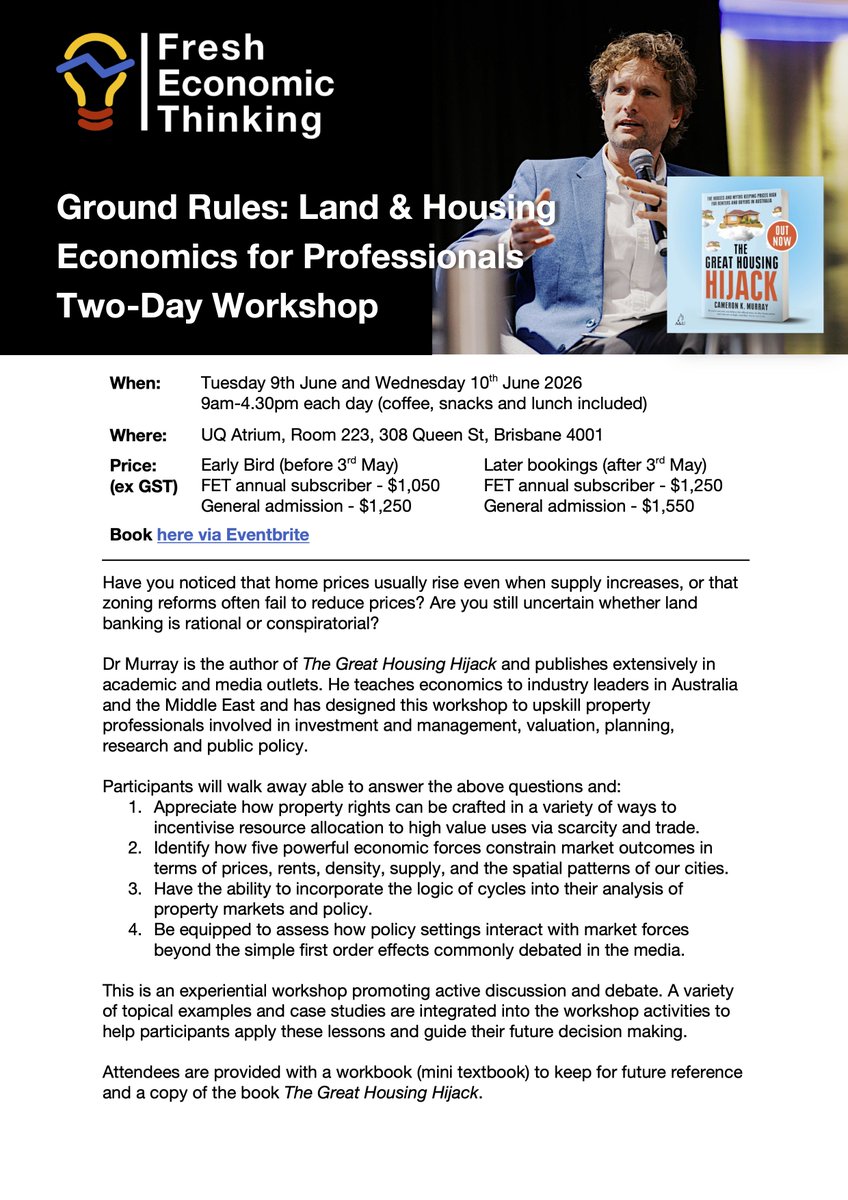
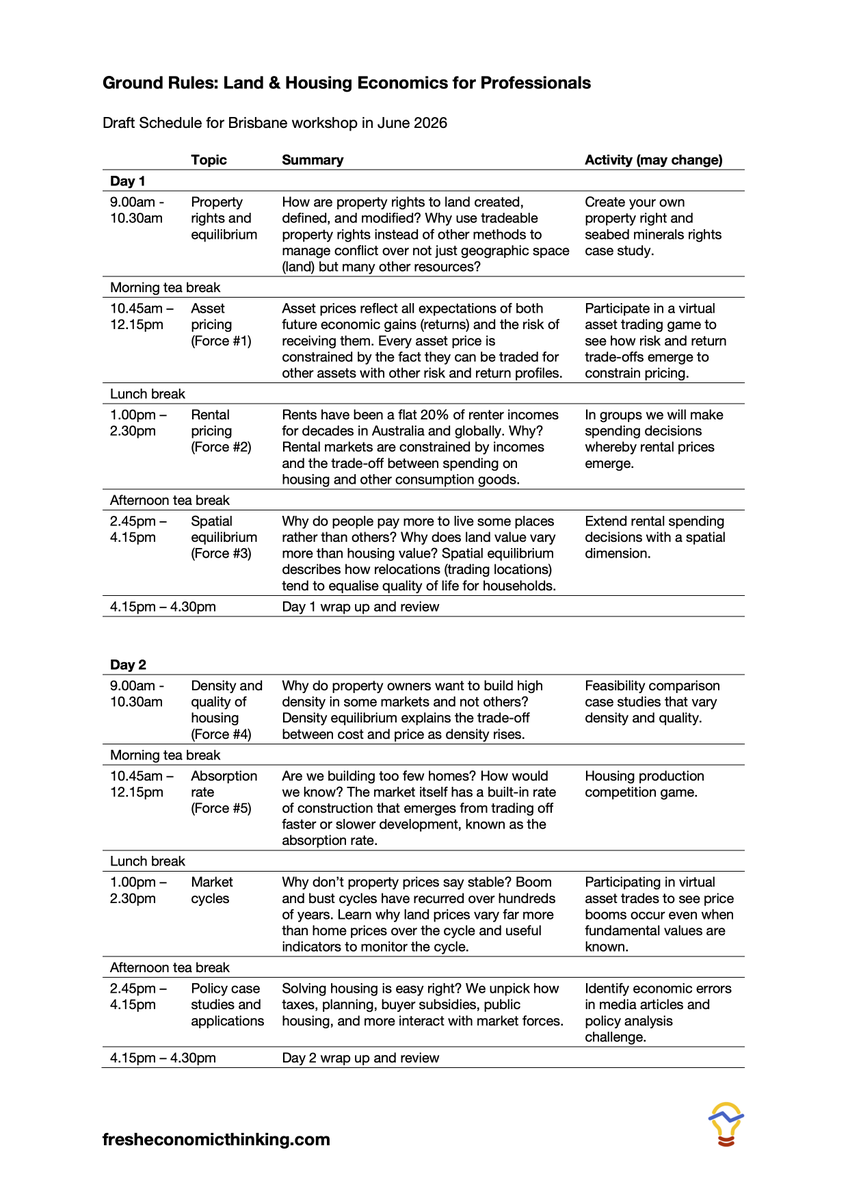
Have you noticed that home prices usually rise even when supply increases, or that zoning reforms often fail to reduce prices? Are you still uncertain whether land banking is rational or conspiratorial? I am offering an intensive two-day Land and Housing Economics workshop in Brisbane on 9th and 10th June 2026. This event incorporates the decades of my experience and lessons in economics into an experiential workshop promoting active discussion and debate. A variety of topical examples and case studies are integrated into workshop activities to help participants see how to apply these lessons and guide future decision making. Book here eventbrite.com/e/ground-rules… Discounts are available for early-birds (book before 3rd May), FET subscribers, and groups of three or more. Please share with you organisations, email lists and repost if this interests you. Thank you everyone.
Cameron Murray tweet mediaCameron Murray tweet media
English
3
4
21
5.5K
Catherine Cashmore's Land Cycle Investor
In this week’s Land Cycle Investor report, I outline how the current conflict is accelerating the move into the final downturn of the land cycle. - How today’s setup mirrors the land cycle and Kondratieff Wave peak - How war in the Middle East will impact Australia - How Perth behaved in the last Kondratieff Wave peak – and whether we could see a similar pattern. - How the land cycle’s final stage is unfolding – and the path toward a sharp reversal ALSO! ***On the Ground in America - Melody Wright on the Hidden Housing Stress*** To examine where things are now in the U.S., I had the pleasure of connecting once again with with Melody Wright to discuss what she’s seeing on the ground. Melody Wright is a US housing and credit analyst with deep experience inside the mortgage and financial system. She worked through the Global Financial Crisis managing default portfolios and now tracks housing, credit and liquidity conditions across more than 80 US markets in real time. Her focus is not headlines or median price series, but the structural plumbing of the system – lending flows, shadow credit, vacancy, transaction activity and investor behaviour. Her assessment is blunt: the US property cycle has already peaked, but the stress is being obscured by distorted data and policy intervention. Melody is one of my favourite guests to interview – possibly my favourite. We think along very similar lines and often find surprising synchronicities in our research, which makes for an easy, natural exchange. The conversation is wide-ranging: we cover a lot of ground, compare research, test ideas and talk through how each of us is interpreting the signals in this stage of the cycle. In this interview – you’ll discover.. - Why US housing stress is far worse than headline data suggests - Where oversupply is building fast – and why it’s being ignored - The hidden credit risks sitting outside the banking system - Why private credit could be this cycle’s subprime moment - What vacancy and transaction data are really signalling - How government programs are distorting price measures - Why new-home markets are flashing early warning signs - Where liquidity is quietly draining from the system - The parallels between today and the lead-up to past downturns - What this means for the timing of the current land cycle peak How bad is the collapse going to be? We get to that as well.. landcycleinvestor.com/.../war-credit...
English
2
2
12
1K
Catherine Cashmore's Land Cycle Investor
THIS WEEK'S LAND CYCLE INVESTOR REPORT! ***HOW WAR REWRITES THE LAND CYCLE IN BOTH TIMING AND PRICES... BE PREPARED.. ***. A few days ago, I caught up for a brief chat with global forecaster David Murrin. Those who have followed my work for some time will likely be familiar with David’s analysis. I’ve been corresponding with him since 2022, when I first came across his work, which in part draws on the 54-year Kondratieff cycle (K-wave – 3 x 18). Major conflict tends to emerge at the end of these long cycles. However, David’s depth of knowledge when it comes to geopolitics, military strategy and weapons systems places him in a far stronger position than myself to assess what events may occur next – particularly in an environment that is already moving into the early stages of what is now assessed to be a third world war. I referenced one of his charts illustrating the commodity cycle in last week’s Land Cycle Investor report. Kondratieff’s data evidenced that prices bottomed in the 1770s and peaked in 1819 after the Napoleonic wars. They bottomed again in the 1840s and peaked in the early 1860s with the US Civil War. They bottomed again in the late 1890s and peaked in the 1920s — just following the First World War. This analysis allowed Kondratieff to forecast the early 1930s depression (which occurred after his death), with the subsequent recovery swinging upwards into the 1970s (1974). 2000 was the low point that started the next long wave. In other words, we are now firmly on the upswing of the commodity price wave due to peak at the end of this decade (likely around 2027 - 2030) – which also forecasts war (as we’re already seeing globally in both Europe and the Middle East.) Hence! This week’s LCI Report looks at a question very few analysts ever ask – what actually happens to the land cycle when the world moves into a period of major conflict? Using historical analysis from the First and Second World Wars, the 1970s commodity shock, and the work of Homer Hoyt, Samuel Benner, Fred Harrison and the Kondratieff Wave, we examine how war has distorts the timing of the land cycle – and what that could mean for the current cycle as we approach the anticipated 2026 peak. You'll discover • The little-known way World War One shifted the timing of the 18-year land cycle • Why the “Lost Depression” of the early 1920s didn’t crash real estate as it should have • The farmland boom that preceded the last major commodity peaks • What the 1970s oil shock reveals about property markets today • The 150-year-old forecasting chart that still maps market turning points and demonstrates the WW1 disruption to the Land Cycle's timing • Why commodity booms often precede major real estate downturns • The historical relationship between war, migration and land values • The four global crises Fred Harrison believes will collide at this cycle peak PLUS MUCH MORE!! landcycleinvestor.com/post/how-war-r…
English
0
2
11
698
Catherine Cashmore's Land Cycle Investor がリツイート
New Progress 🧢⬆️🍎🦉🇺🇸 #HumanityForward
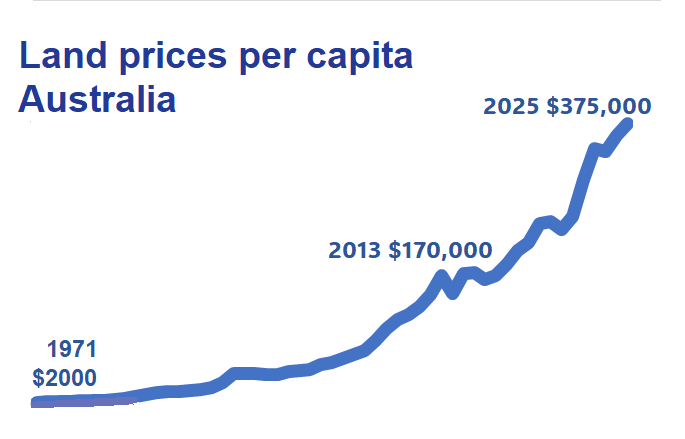
It’s been almost 150 years since this political ad was posted in newspapers. What are we doing? Stop taxing things we want more of. Stop taxing labor. Stop taxing property. Tax land. Tax consumption. Tax emissions. Redistribute the revenue as universal basic income.
New Progress 🧢⬆️🍎🦉🇺🇸 #HumanityForward tweet media
English
1
8
26
626
Catherine Cashmore's Land Cycle Investor がリツイート
Catherine Cashmore's Land Cycle Investor
This week’s LCI report is the full replay of the LCI live ZOOM event with finance guru Pete Wargent. We covered a lot of ground – far more than “where are prices going next?” Firstly – a huge thank you to everyone who jumped on the live session. It honestly meant a lot to see so many of you there. I never take your time or support for granted. We had so many questions this round – far more than we could get through. It’s been a little while since I’ve done a live Zoom (our first for the year), so they’d clearly been building up. If I didn’t get to yours, please don’t think it was overlooked. I’ll be doing another session with Pete in a couple of months’ and we’ll dive back into all of it again – including pinning timing for the anticipated peak in property and equity markets. I’m also hoping to do a live Webinar with Global Forecaster David Murrin and Director for the Foundation for the Study of Cycles, Andrew Pancholi in the not-too-distant future. ***Talks about potential changes to CGT - the final nail in the coffin for further price increases.. ?*** As for this week’s live – it started with the big political risk now creeping into the housing market – capital gains tax. It’s not just about the mechanics of whether changes would be grandfathered, but the real issue is how it would impact sentiment and therefore prices. ***Could High Immigration - Pressure on Supply/Demand - Prevent a Large Downturn.. ? *** From there we moved into the one factor that has propped markets up through the second half of this cycle – immigration. We unpacked why Australia isn’t necessarily Canada or New Zealand (skills shortages, infrastructure, the Olympics, the NDIS), but also why it’s dangerous to assume today’s population surge is a permanent “new normal”. In past downturns, migration patterns can flip hard and fast – and when that happens, vacancy rates and prices don’t stay where they were. ***Leading Indicators For the Land Cycle Peak... *** We also dug into a classic land cycle tell – building permits as a leading indicator. I walked through why the old researchers (Hoyt, Wenzlick, Riddleman and others) watched permits so closely – and why the US homebuilder peak is flashing late-cycle signals again. ***The Future of Australian Interest Rates.. ? *** Then we went straight into Australian rates and the psychology shift that comes when people realise the “rate cutting cycle” was temporary. Pete broke down what the inflation prints imply and why markets are watching May so closely - and why this was all part of the land cycle forecast. ***How the Market can Change from Under-Supply to Over-Supply... *** The discussion then turned to the supply story – and why “undersupply” can be a misleading comfort blanket at cycle peaks. ***Property Indicators to Watch to Warn of the Potential Downturn.. *** We also covered the practical indicators subscribers should watch if they want early warning signals before the downturn. ***City-by-City Breakdowns..*** There were strong city-by-city takeaways too. We talked about why Perth is still running hot, why that doesn’t mean “forever”, and why commodity-cycle tailwinds can change the speed of recovery after a wobble. ***Where to Stash Your Capital Ahead of the 2026 Peak..... *** We finished with a very real question people are asking quietly right now – and a question that comes up in every live event - how do you think about capital preservation heading into a potential 2027 downturn if you’re not a trader? Pete walked through simple portfolio logic (and why “cash” matters.), and we touched on what tends to happen to gold in crisis periods – and why different commodities behave differently as you approach the peak. All this and more.. we had plenty of questions! ***Coming Up! *** Next week I hope to get U.S. analyst Melody Wright from M3_Melody Substack back on for an update on the U.S. markets. I interviewed Melody last year in a terrific discussion on the market. You can watch it on the LCI YouTube channel. ***Bonus Podcast! *** As a bonus, I also sat down with Leith Van Onselen Chief Economists at MacroBusiness this week to dig deeper into the impact of CGT on property markets, along with the latest population data and what it really means for prices. Log into your Land Cycle Investor account now to read this week's report and watch the LIVE replay. landcycleinvestor.com/post/lci-live-…
English
1
2
10
594
Catherine Cashmore's Land Cycle Investor がリツイート
Darren WILSON 🇺🇦🇾🇪
Darren WILSON 🇺🇦🇾🇪@DarrenW006·
@LandCycle It's coming now isn't it Catherine...you can almost "feel" what's about to happen...if one knows their history...
English
3
1
8
500
Catherine Cashmore's Land Cycle Investor
***The Real Story Behind the Proposed Changes to Capital Gains Tax & Its Influence on the Land Cycle ..*** THIS WEEK'S LCI REPORT IS NOW READY TO VIEW! PLUS! Interview with Leith Van Onselen - Chief Economist at MacroBusiness drilling down into the data. ***ALSO! COMING UP NEXT WEEK – Thursday 26th February, 6:30pm AEDT – LCI LIVE ZOOM EVENT with financial expert Pete Wargent. This is your opportunity to have your Land Cycle Investor questions answered live. Preference will be given to those who submit questions in advance, allowing time for chart preparation and detailed analysis. Send your questions now to cc@landcycleinvestor.com and secure your place in the discussion.*** CGT and The Hypocrisy of the Real Estate Industry The recent talk of changes to capital gains tax on property has triggered a wave of commentary from economists and industry players alike. Tom Panos is one of those voices. He’s a great sales agent – he has decades of experience behind him, and he has built up a massive social media following. But I did have to smile over the last week or so listening to his comments on changing property tax settings – especially the capital gains tax discount. Panos thinks that “the fabric of real estate in Australia is on the verge of being changed forever” He stressed that the changes would have “unintended consequences”, for “tenants who are the most vulnerable cohort people of Australia, who will get impacted because rents will go up”. You can see Tom in full flow on his social media platforms. ***Rent Is the Trigger That Starts the Boom*** It’s a curious position. In all my dealings with property investors, I’ve never encountered one who viewed rising rents as a problem. In fact, most want rising rents to be part of the objective. Investors want to invest in regions with tight vacancy rates, strong demand, higher weekly returns. It may not be the sole motivation – but it’s part of the game. Which makes this sudden concern for tenants from property investors, bunkum. An increase in rents, naturally leads to an increased in property prices. It was this very process that the two economists credited with first linking real estate to an average 18-year cycle – Homer Hoyt and Roy Wenzlick – identified as the critical first step that sets land prices in motion. Both Roy Wenzlick and Homer Hoyt placed rising rents at the very centre of the transition from recovery into boom. They treated rents not as a side effect of rising land values, but as the causal trigger that makes higher land prices economically sustainable. In simple terms, rising rents justify higher capital values because property prices are fundamentally the capitalisation of expected future rent. From Homer Hoyt's, One Hundred Years of Land Values in Chicago (1933): “The value of land depends upon the income which it is expected to yield.” “An increase in rents is quickly capitalized into higher land values.” “The rise in land values is based upon the expectation of increased future income.” Based directly on Hoyt’s descriptions of how real estate booms form, expand, and collapse, his cycle unfolds in this order. 1. Population begins to increase This increases demand for space. 2. Demand for housing begins to rise More people compete for existing accommodation. 3. Vacancies begin to decline Empty space is absorbed. 4. Rents begin to rise Landlords regain pricing power as space becomes scarce. 5. Net income from real estate increases Higher rents improve investment returns. 6. Real estate values begin to rise Higher income supports higher capitalised values. 7. Investors begin purchasing property for income Buyers enter based on improved returns. 8. Credit becomes easier to obtain Banks become more willing to lend against rising values. 9. Property transfers increase Transaction activity accelerates. 10. Speculative buying begins Buyers purchase expecting future price increases. 11. Land prices rise faster than rents Speculation begins to drive prices beyond income fundamentals. 12. Construction begins to increase Developers respond to rising prices. 13. Building accelerates rapidly Confidence expands and supply increases. 14. Land speculation intensifies Buyers purchase land purely for resale profit. 15. Prices detach from underlying income Speculation replaces income as the primary driver. 16. Oversupply begins to emerge Too much building relative to real demand. 17. Vacancies begin to increase Supply exceeds demand. 18. Rents begin to stagnate or fall Income weakens. 19. Property values begin to decline Prices adjust downward. 20. Foreclosures increase and the market enters depression The cycle resets. So for Tom and others in the real estate industry – including myself in my own real estate business - the real issue isn’t renters. It’s that tax reform threatens to weaken the speculative demand that has driven land prices relentlessly higher. Strip away the preferential tax treatment, and you strip away part of the incentive to speculate. And without that speculative pressure, the upward force behind land price inflation begins to ease. In today's LCI Report I uncover... - How tax policy transformed Australian land into one of the most powerful speculative assets on the global stage - How Henry George exposed the true drivers of the land cycle more than a century ago – and why his warning is now playing out in full - The uncomfortable truth behind investor “concern” for renters – and what really happens when speculative demand begins to retreat - Why Victoria has emerged as the clearest real-world case study of what happens when investor fuel is removed from the market - The direct link between tax concessions, speculative buying, and Australia’s worst housing affordability crisis on record - How the banking system, easy credit, and tax policy combined to inflate land values far beyond incomes - And why removing preferential tax treatment could mark the turning point that reshapes the next phase of the land cycle PLUS! Leith Van Onselen, Chief Economist at MacroBusiness, joins me to discuss the proposed changes to capital gains tax and what they could mean for investors, first-home buyers, and the broader housing market. As always, the discussion is packed with charts, hard data, and clear analysis. landcycleinvestor.com/post/the-real-…
English
2
0
4
401
Catherine Cashmore's Land Cycle Investor
This Is Exactly What the Peak Looks Like - AI Mania, 100-Year Bonds, and The Super Bowl Stock Market Curse.. THIS WEEK'S LCI REPORT IS NOW READY TO VIEW! PLUS interview with Callum Newman - the former editor of Australian Small-Cap Investigator at Fat Tail Investment Research - and now Senior Editor at Marcus Today. Amid the noise surrounding the Super Bowl half-time show the other week – the media reaction, the outrage, the endless commentary over Puerto Rican Latino artist Bad Bunny performing almost entirely in Spanish – something else quietly passed by the gossip channels. The ads. Not just the cost of them. The dominance. Sixteen technology firms reportedly spent between US$8m and US$10m for 30 seconds of airtime. Depending on where you put the final tally, that’s somewhere up to US$160m in one evening – and almost all of it was on AI. OpenAI. Anthropic. Meta. Amazon. Google. Artificial intelligence, once confined to research labs and venture capital pitch decks, is now buying America’s most expensive television real estate. Reuters described the Super Bowl as having become a “marketing battleground for AI companies,” highlighting OpenAI and Anthropic directly promoting their AI coding tools to mass audiences. New York Magazine described the ads more bluntly, pointing out that… “The tech industry is all in on AI… but it’s still not quite sure what story it should be telling.” From the NY times.. "Meta, which has been struggling to stay part of the broader AI conversation, crammed the phrase “Athletic Intelligence” into a celeb-filled ad for its Oakley-branded smart-video glasses… Amazon’s ad cast Chris Hemsworth as an extreme AI paranoiac, which would have been funnier if a single person had ever confused actual Alexa for smart or cunning… Ramp, another company that’s not primarily known as an AI firm, cast Kevin from The Office in an ad about how AI will make your job incredibly easy without getting into the obvious follow-up question of whether or not you’ll get to keep it... " But the bigger story seems to be that paying extraordinary $$s for a few seconds of Super Bowl time has an unfortunate habit of coinciding with peaks rather than beginnings. The Super Bowl Stock Market Curse In 2024, research firm BridgeWise took a close look at what actually happens to the share prices of companies that run Super Bowl ads. They analysed publicly listed firms that advertised during the game and then tracked their stock performance against the S&P 500 over the following one, three, and six months. On average, six months after the game, companies that had run Super Bowl ads underperformed the S&P 500 by around 9.2 per cent. Only about 25 per cent of advertisers managed to outperform the broader market over that period. In other words, roughly three quarters of the companies that splashed out on a Super Bowl commercial trailed the index in the months that followed. That’s not a good omen. Here's a snap shot from the report.. "The Super Bowl portfolio tended to underperform the S&P 500 Index across all three time intervals. In fact, after six months, the Super Bowl commercial companies trailed by an average of 9.2%. Beyond that, the underperformance was fairly consistent, both over the time periods measured and across years. In only three of the 12 periods measured did the Super Bowl portfolio perform better than the S&P 500. However, by six months, the S&P 500 had higher returns in each year measured. In addition, most of the individual companies measured underperformed the S&P 500, meaning that the overall underperformance of the Super Bowl portfolio wasn’t caused by a few outliers. In only 35% of the cases did a stock outperform the S&P 500 in one of the measured time periods, and in only 25% of cases did they perform better after six months...." Since the game, several of the largest tech firms have fallen significantly, with Microsoft down more than 16% from recent levels, Amazon and Microsoft both retreating over 20% from their highs, and Apple, Meta, and Amazon falling between about 2% and 5% in recent trading sessions alone. The decline has weighed heavily on the technology-focused Nasdaq, which dropped around 2%. The timing aligns with the warning I issued a few weeks ago - that February would be a key flashpoint to be aware of this year. IN THIS WEEK'S LCI REPORT YOU'LL DISCOVER! - The $10 billion deal that's quietly placed Australia inside the global AI arms race. - Why the most dangerous words in markets are once again being spoken: “this time is different.” - The return of a financial instrument rarely seen outside governments – and what it reveals about peak confidence. - The uncomfortable cycle repeat that points directly to the year of the land cycle peak..! - The physical reality behind AI – and why it depends entirely on land, power, and debt.Why some of the smartest money in the world is already preparing for what comes next. - A historical pattern that has repeated for nearly two centuries… now re-emerging in a new form. - The signal most investors will only recognise after it’s too late.And most importantly – what this means for markets, property, and capital as we approach the peak of the cycle... *****PLUS!!!! INTERVIEW WITH CALLUM NEWMAN SENIOR EDITOR OF MARCUS TODAY***** This week, I got my mate Callum Newman on the show to give subscribers the lowdown on some stocks he’s been watching, and current opportunities in the markets. However, our conversation went much further than this – and I think you’re going to really enjoy the content. We cover a lot of ground! Callum possesses a thorough grasp of the 18-year Land Cycle. As a former editor at Fat Tail investment Research for 14-years, Callium launched Cycles, Trends & Forecasts which focused on the 18-year land cycle, alongside economist Phillip Anderson back in 2014. I was a contributing editor to the publication at the time - prior to taking the helm as editor in 2019. Over the years, we've observed the many economic forecasts made in CT&F and Land Cycle Investor unfold as the cycle predicted - underscoring the remarkable value knowledge of this content for Australian investors. Today, Callum is Senior Editor of Marcus Today, one of Australia’s longest-running independent financial newsletters, read widely by private investors, advisers, and market professionals. Founded in the late 1990s, Marcus Today built its reputation during the dot-com boom and bust, guiding subscribers through some of the most volatile market conditions in modern history. The publication focuses on equities, macro trends, capital flows, and sector analysis, with a particular emphasis on identifying turning points in speculative cycles. But as Callum still acknowledges, without an understanding of the 18-year Land Cycle, forecasting the future with confidence would be impossible. in today's discussion we cover.. - Callum’s back! His new role and observations on the Australian tech meltdown. - ASX at all-time highs… while the “creme de la creme” growth stocks are getting butchered underneath. - The rotation is brutal – if you’re in tech you’re down hard, if you’re in resources you’re laughing. - Why BHP and Rio have been the safe side of the trade – and why copper is the tell. - Late-land cycle logic: resources do well into rising rates – tech usually doesn’t.Oil is the next “under-owned” late-cycle trade Callum is watching. - Commercial property reality check – incentives, weak yields, land tax, and valuations that don’t stack up. - Callum’s cycle-origin story – why Phil Anderson’s land/rent framework was the “penny drop”. - The big take-out for normal investors: you don’t need fancy trading – you need to see the big swing before the danger zone. ALL THIS AND MORE! Read more here! landcycleinvestor.com/.../this-is-ex…...
English
2
2
13
598
Catherine Cashmore's Land Cycle Investor がリツイート
Bryan Kavanagh
Bryan Kavanagh@bryankav123·
@JohnAndersonAC Neoliberalism dies hard. In this milieu, property spec & impossible land prices don't matter at all.
Bryan Kavanagh tweet media
English
0
3
6
508
Catherine Cashmore's Land Cycle Investor
Global Real Estate Markets Are Crashing. Are we moving past the Global 'Real Estate' Peak of the Land Cycle? THIS WEEK'S LCI REPORT IS NOW READY TO VIEW! PLUS - A comprehensive breakdown of this week's economic data with Leith Van Onselen - Chief Economist of MacroBusiness - Will the Rate Rises continue? Prime real estate markets are ringing the bell. Canada’s property market has seen prices fall substantially from their 2022 peak. Prices have plummeted more than 20 % in some parts of the country, Overall, it represents one of the most extended periods of price depreciation in recent Canadian housing history. The leading indicator? A record drop in non-permanent residents, as Prime Minister Mark Carney has continued Justin Trudeau’s policy to cut the number of foreign students, temporary workers and asylum-seekers. “A major population adjustment is well underway, and it remains one of the biggest economic stories in Canada,” (said Robert Kavcic, senior economist with BMO Capital Markets – a leading North American-based financial services provider and the investment/corporate banking arm of Bank of Montreal.) Closer to home, the story is the same. New Zealand median real estate prices have crashed more than 30% below their late-2021 peak (when adjusted for inflation). While New Zealand doesn’t pattern as clearly with an 18-year cycle – due to its population size – making it more subject to local policy changes, the falls are dramatic. We wouldn’t expect to see a rebound this late in the cycle. Once again, the declines come on the back of a major reversal in both immigration numbers and population growth. In the year to September 2025, arrivals to New Zealand were down at 138,900, Not only this, but the number leaving New Zealand is, up 10% year-on-year, (as at the end of 2025.) And that's not all! Markets in London are also diving! London’s inner-city real estate is now declining at some of the fastest rates seen outside major downturn periods. Annual falls in median property prices of around 4.6 per cent were recorded in November 2025 alone. That marks the sharpest contraction since the Global Financial Crisis. Are we about to see the same play out in Australia? This week the RBA lifted the cash rate by another 25 basis points, with its own forecasts pointing to at least two more hikes before 2027. What's it going to do to the Aussie property markets? In this week's LCI Report you'll discover... - Something has shifted in global real estate – and it’s not showing up in the headlines yet.. - The US state that has always moved first at major turning points is already crashing.. - The first U.S. bank collapse?!? The fault lines that are beginning to show in the shadow banking sector.. - U.S. Fed rate cuts won’t do what most people expect this time. - The bond market is sending a different message and mortgage rates are rising. - Let's look at the timing! A long-cycle timing signal that has aligned with EVERY major US downturn of the past century is almost upon us.. - Australia is late in the cycle, not early. A warning and advice to Aussie sellers.. ***PLUS! Breaking the economic data down with Chief Economist of MacroBusiness Leith Van Onselen (slides and transcript included)*** To drill down on this week's economic data, I jumped online with Leith Van Onselen @leithvo, Chief Economist from MacroBusiness yesterday. In this week’s podcast we discuss... - Rates are back up – and the market’s now pricing a full rate hiking cycle, not cuts. - Inflation is still too hot – and the RBA is signalling “higher for longer”. - Two more hikes on the table – straight from the RBA’s own assumptions. - First-home buyers in the firing line – especially anyone who jumped in on the 5 per cent deposit scheme. - Borrowing power gets smashed – three hikes means a meaningful hit to what people can pay. - Real wages are going nowhere – the cost-of-living squeeze stays. - Froth alert – Brisbane, Adelaide and Perth look the most stretched after huge runs. - Apartments are a trap for marginal buyers – medians mislead, resales often disappoint. - Commercial property is the weak link – and the first cracks are already showing in US banking. - The bigger risk on the horizon – AI bubble, shadow banking stress, and war-cycle timing. NOTE! From here to the end of the land cycle, Leith and I will be doing weekly podcasts, dissecting the economic data as it lands. Each episode will be published on LCI as a seperate post alongside the broader research and interviews as this downturn unfolds. landcycleinvestor.com/post/are-globa…
English
0
1
16
1.2K
Catherine Cashmore's Land Cycle Investor がリツイート
Catherine Cashmore
Catherine Cashmore@CC_CASHMORE·
Bit of a misunderstanding here re the banking system. The old “money multiplier” story - where a bank gets $1 of deposits and can magically lend out $9 more - is the textbook model. It is still taught. And it is not how the modern banking system actually works in the US, Australia, the UK, Canada, or anywhere with a modern central bank. Loans create deposits. Not - Deposits create loans. Only after the loan is made does the bank worry about reserves or funding.
English
4
1
16
6.1K
Catherine Cashmore's Land Cycle Investor がリツイート
Catherine Cashmore
Catherine Cashmore@CC_CASHMORE·
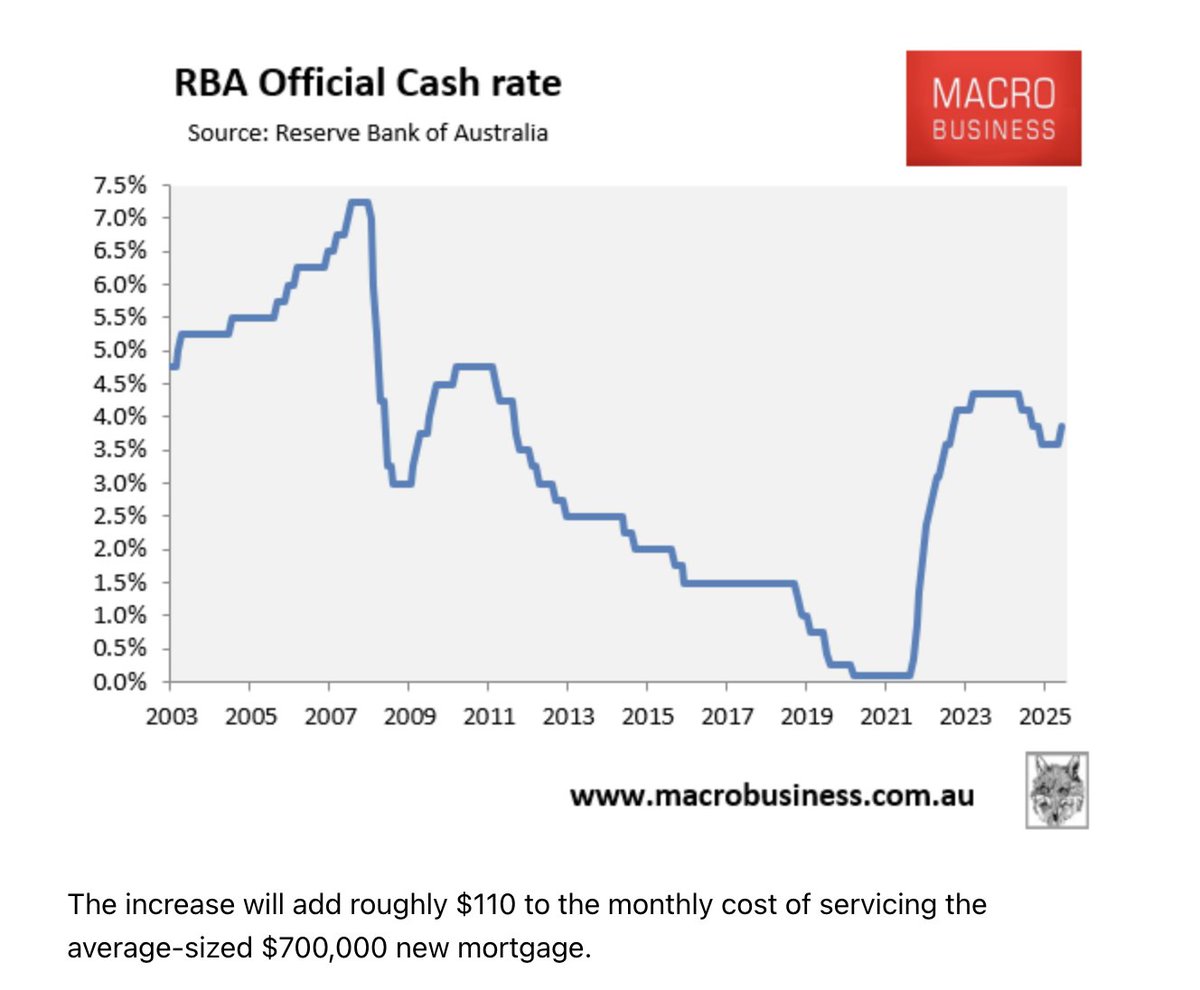
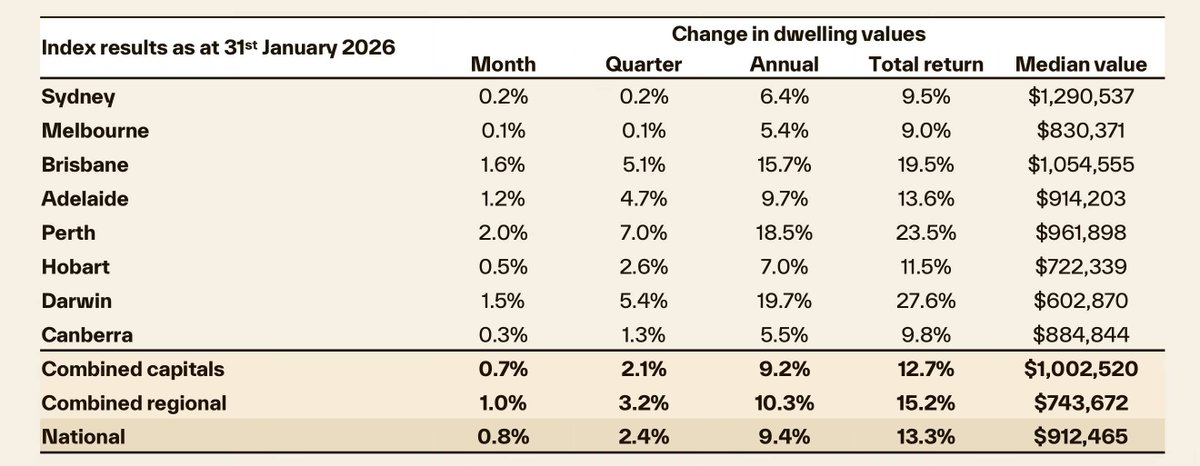
Melbs limping along.. Perth still🔥
Catherine Cashmore tweet media
English
2
2
6
1K