Microsoft Game Dev

3.9K posts

Microsoft Game Dev banner
Microsoft Game Dev

Microsoft Game Dev

@MSFTGameDev

The official account for Game Development at Microsoft -empowering creators and gamers across all platforms. Join our community at https://t.co/qRKw6a2AZn

Redmond, WA 参加日 Kasım 2018
845 フォロー中123.9K フォロワー
固定されたツイート
Microsoft Game Dev
Microsoft Game Dev@MSFTGameDev·
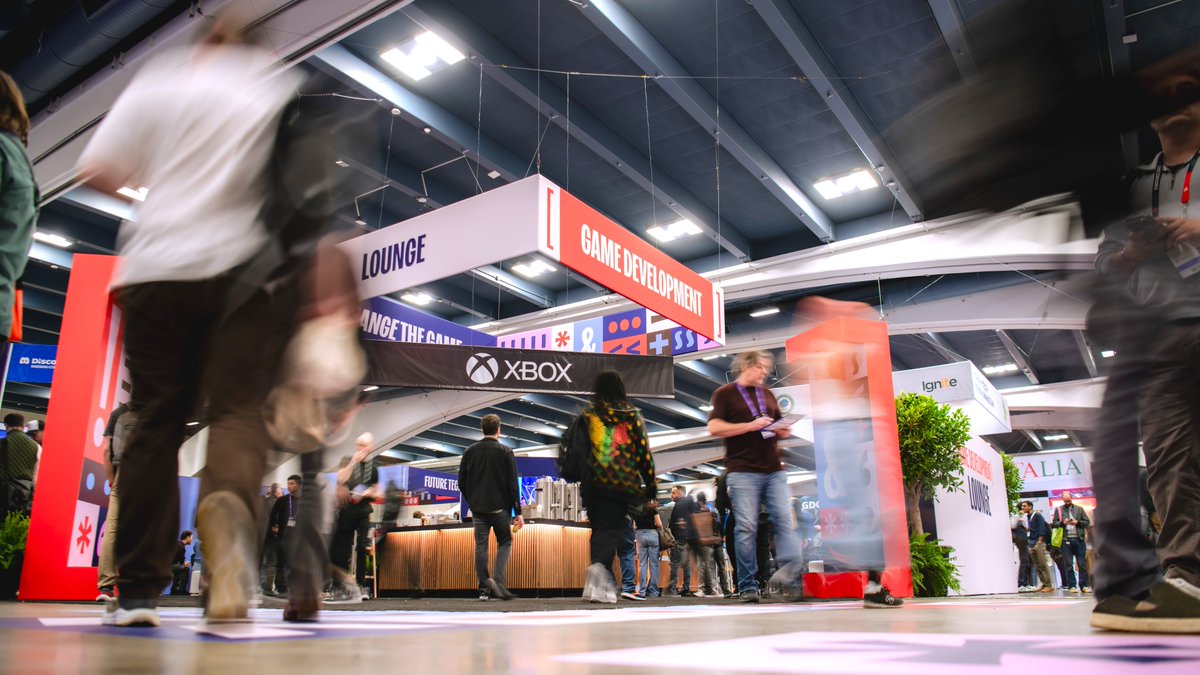
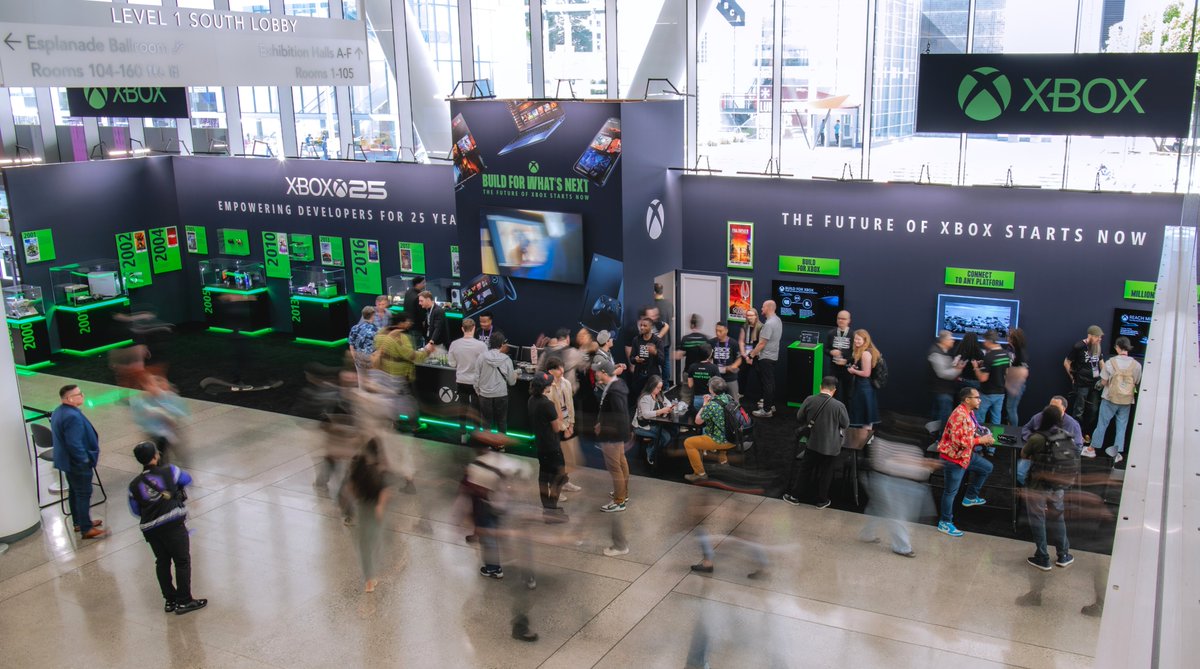
Thank you to everyone who stopped by to chat with us, joined our sessions & events, or tuned in online for Xbox at GDC 💚 It was amazing connecting with all of you! Huge shoutout to the teams across Xbox, Microsoft, Activision, Bethesda, Blizzard, King, and our partners for coming together to make #GDC2026 such an incredible week 🌟

Microsoft Game Dev tweet media
English
8
66
499
14.4K
Microsoft Game Dev
Microsoft Game Dev@MSFTGameDev·
Celebrating 25 years of Xbox history 💚 Continuing the timeline from our GDC booth... 🌟 2005 | Backward Compatibility Backward compatibility on Xbox 360 reinforced a key promise: players can continue to enjoy the games they love across hardware generations. Enabling play for hundreds of original Xbox titles meant less perceived risk for both players and developers, supporting longer-tail engagement and preserving catalog value during a generational transition. For studios, compatibility extended the commercial life of back-catalog titles and reduced the "hard reset" effect that can disrupt franchises and player communities at hardware changeovers. For the broader industry, it signaled that platform continuity was becoming a strategic feature rather than a nice-to-have. #GDC2026
Microsoft Game Dev tweet media
English
3
9
59
887
Microsoft Game Dev
Microsoft Game Dev@MSFTGameDev·
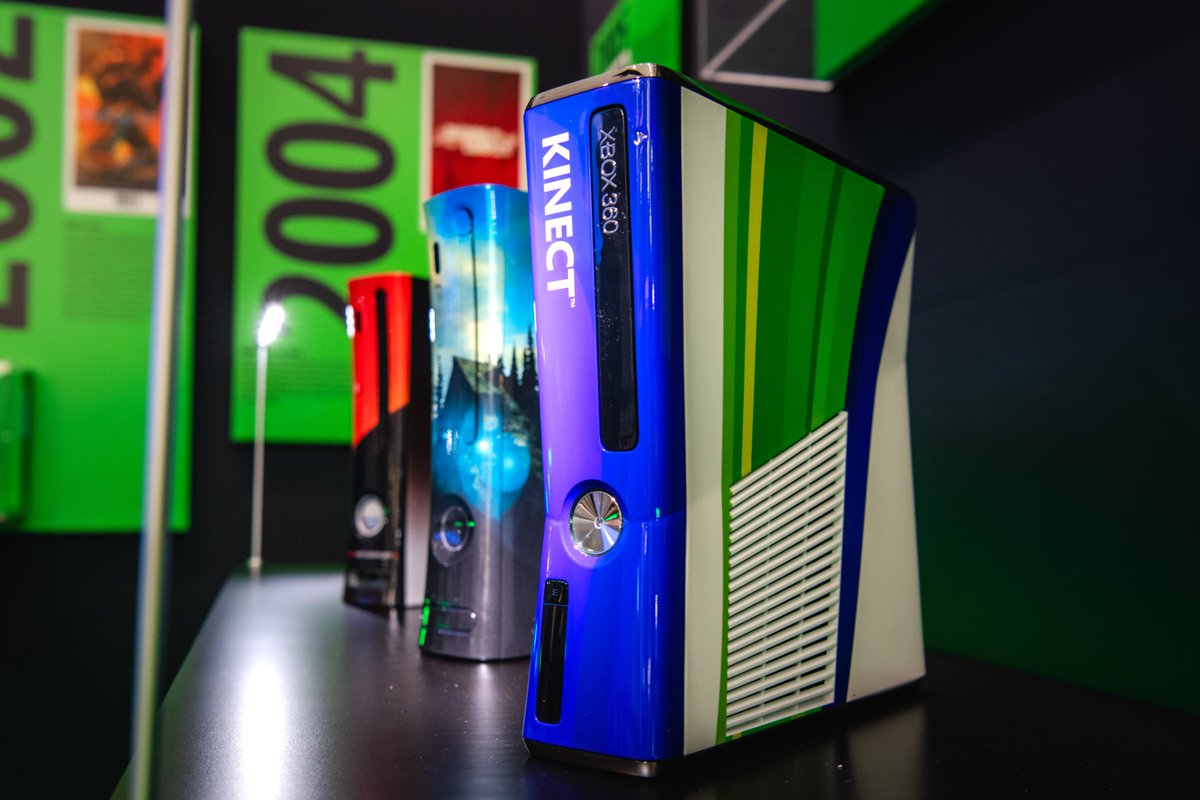
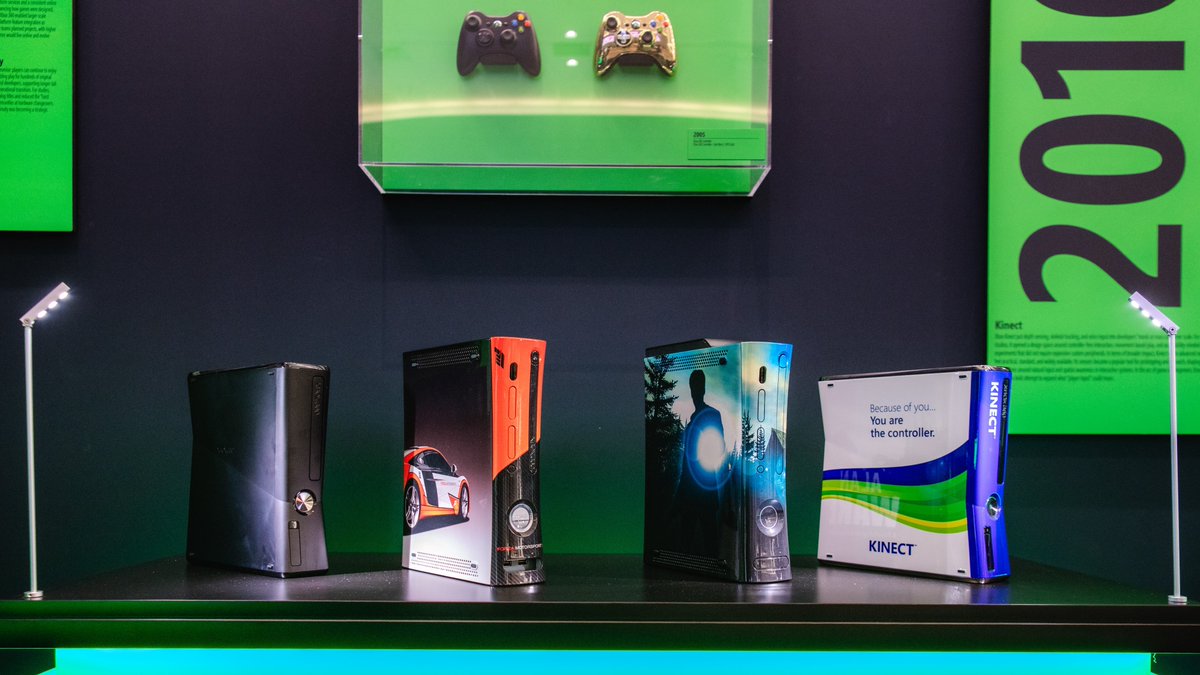
Celebrating 25 years of Xbox history 💚 Next stop from our GDC booth… 🎮 2005 | Xbox 360 Xbox 360’s development environment helped move console production decisively into the HD era, raising expectations for asset pipelines, performance targets, and online integration. For studios, it was a generation where platform services and a consistent online identity became central to the player's experience, influencing how games were designed, supported, and marketed. On the production side, the Xbox 360 enabled larger-scale content, more demanding art workflows, and deeper platform feature integration as standard practice. The result was a step-change in how teams planned projects, with higher fidelity, larger scope, and a clearer assumption that games would live online and evolve after launch. 💫 #GDC2026 🧵
Microsoft Game Dev tweet media
English
14
87
557
12.5K
Microsoft Game Dev
Microsoft Game Dev@MSFTGameDev·
ICYMI 🔥
NVIDIAGameDev@NVIDIAGameDev

New announcements from #GDC2026 📣 In collaboration with @Microsoft, we are standardizing hardware-accelerated AI through DirectX to boost GeForce RTX GPU efficiency and provide a unified workflow for the broader development community. Additionally, we are working to address long compilation times and in-game stuttering by evolving shader handling to distribute precompiled shaders during the game download rather than at runtime. Read 👉 nvda.ws/4s4g9oT

Polski
0
9
66
2.5K
Microsoft Game Dev
Microsoft Game Dev@MSFTGameDev·
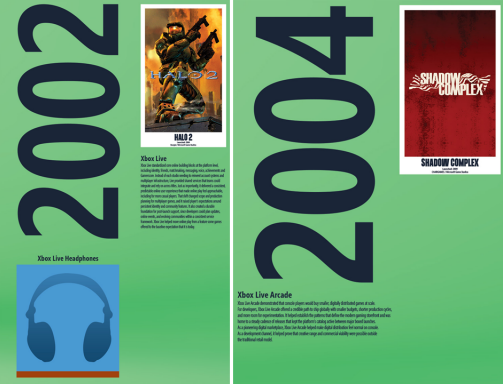
🌟 2004 | Xbox Live Arcade Xbox Live Arcade demonstrated that console players would buy smaller, digitally distributed games at scale. For developers, Xbox Live Arcade offered a credible path to ship globally with smaller budgets, shorter production cycles, and more room for experimentation. It helped establish the patterns that define the modern gaming storefront and was home to a steady cadence of releases that kept the platform’s catalog active between major boxed launches. As a pioneering digital marketplace, Xbox Live Arcade helped make digital distribution feel normal on console. As a development channel, it helped prove that creative range and commercial viability were possible outside the traditional retail model.
English
0
4
15
914
Microsoft Game Dev
Microsoft Game Dev@MSFTGameDev·
Xbox at GDC 🔥 Celebrating 25 years of Xbox history A walk through our #GDC2026 booth continues... 2002 | Xbox Live Xbox Live standardized core online building blocks at the platform level, including identity, friends, matchmaking, messaging, voice, achievements and Gamerscore. Instead of each studio needing to reinvent account systems and multiplayer infrastructure, Live provided shared services that teams could integrate and rely on across titles. Just as importantly, it delivered a consistent, predictable online user experience that made online play feel approachable, including for more casual players. That shift changed scope and production planning for multiplayer games, and it raised player's expectations around persistent identity and community features. It also created a durable foundation for post-launch support, since developers could plan updates, online events, and evolving communities within a consistent service framework. Xbox Live helped move online play from a feature some games offered to the baseline expectation that it is today. 💫 🧵
Microsoft Game Dev tweet media
English
2
25
140
2.8K
MOUSE: P.I. For Hire
MOUSE: P.I. For Hire@mousethegame·
Yes, MOUSE: P.I. For Hire will be available with Xbox Play Anywhere on 16 April 2026!
English
67
213
1.8K
71.9K
Microsoft Game Dev
Microsoft Game Dev@MSFTGameDev·
One week ago at GDC 🌟 Every year we look forward to reconnecting with partners, meeting new devs, and coming together as an industry. 💚 Thanks for stopping by our Lobby Lounge and Game Dev Lounge to chat with us and making it an amazing #GDC2026!
Microsoft Game Dev tweet media
English
1
22
160
2.6K
Microsoft Game Dev がリツイート
Xbox
Xbox@Xbox·
More ways to personalize your Xbox! ⏯️ Toggle Quick Resume per title 🗂️ Up to 10 groups on Home 🎨 Custom colors across your console ✨ Cleaner Guide and profile visuals These will start with Xbox Insiders today and will roll out over time to everyone. Full breakdown in the blog 👇 xbx.lv/4sRVJiP
English
342
679
5.8K
970.4K
Microsoft Game Dev
Microsoft Game Dev@MSFTGameDev·
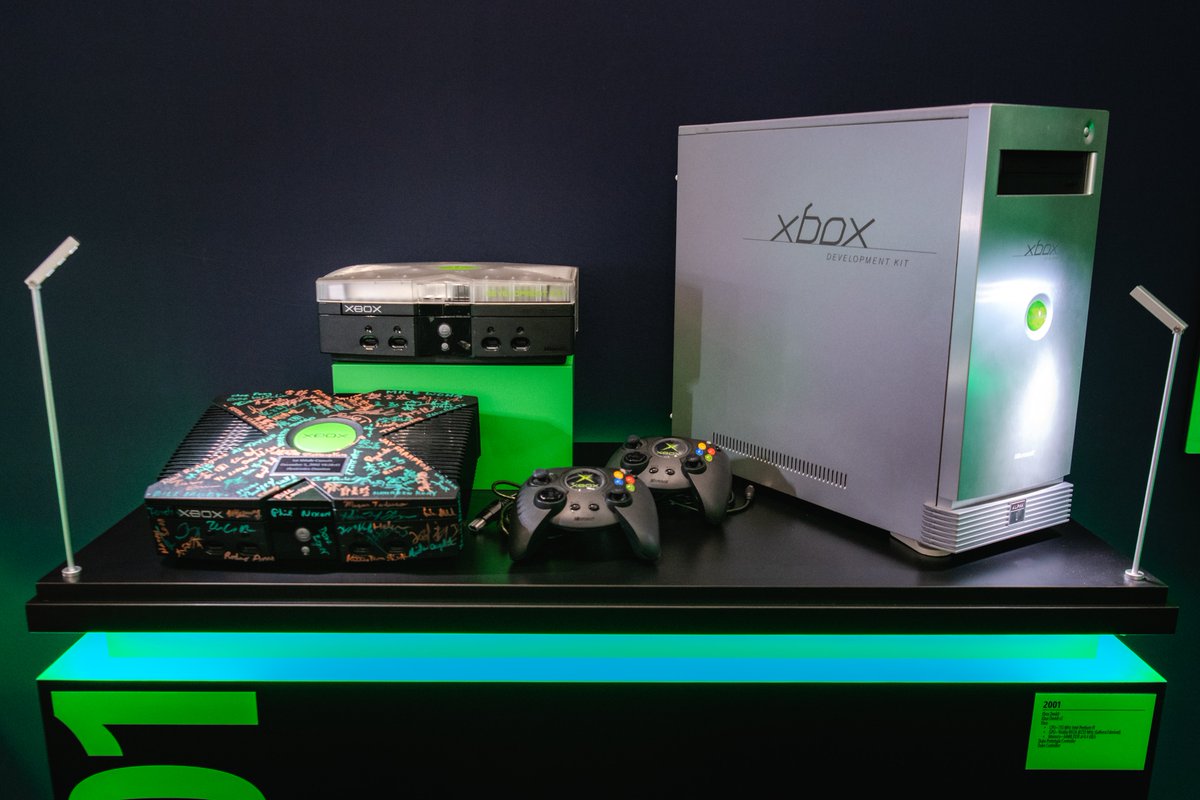
Xbox at GDC 🔥 Celebrating 25 years of Xbox history Let's continue walking through our #GDC2026 booth… 2001 | The Original Xbox The first Xbox console was designed to help make teams quickly productive, especially studios coming from PC. The PC-inspired architecture, with a hard drive and ethernet port as standard equipment, gave developers a familiar baseline, reducing ramp-up time and making early technical decisions feel less like a leap into proprietary unknowns. On the tooling side, the XDK treated developer experience as a primary feature, with workflows built to reduce friction in prototyping and day-to-day iteration. Later, dev kit revisions even supported CD-ROM emulation via a ribbon-cable setup, cutting down the burn-test-repeat cycle that slowed iteration. More studios were able to start building sooner, iterating faster once they were in production, and planning more confidently for online-enabled design as part of a longer-term platform roadmap. For players, that promise clicked immediately through the console’s LAN capabilities and day-one tunneling for Halo, which made Xbox feel like a real step forward for connected play. 🎮Xbox Specs: CPU – 733 MHz Intel Pentium III GPU – NVIDIA NV2A @ 233 MHz (GeForce 3 derived) Memory – 64MB DDR at 6.4 GB/s 📷Shown in the photo: - The original Xbox Devkit (silver) - Xbox Devkit v2 (resting on the green block) - Duke Prototype Controller (right) - Duke Controller - The original Xbox signed by the team
Microsoft Game Dev tweet media
English
4
65
375
7.5K
Microsoft Game Dev
Microsoft Game Dev@MSFTGameDev·
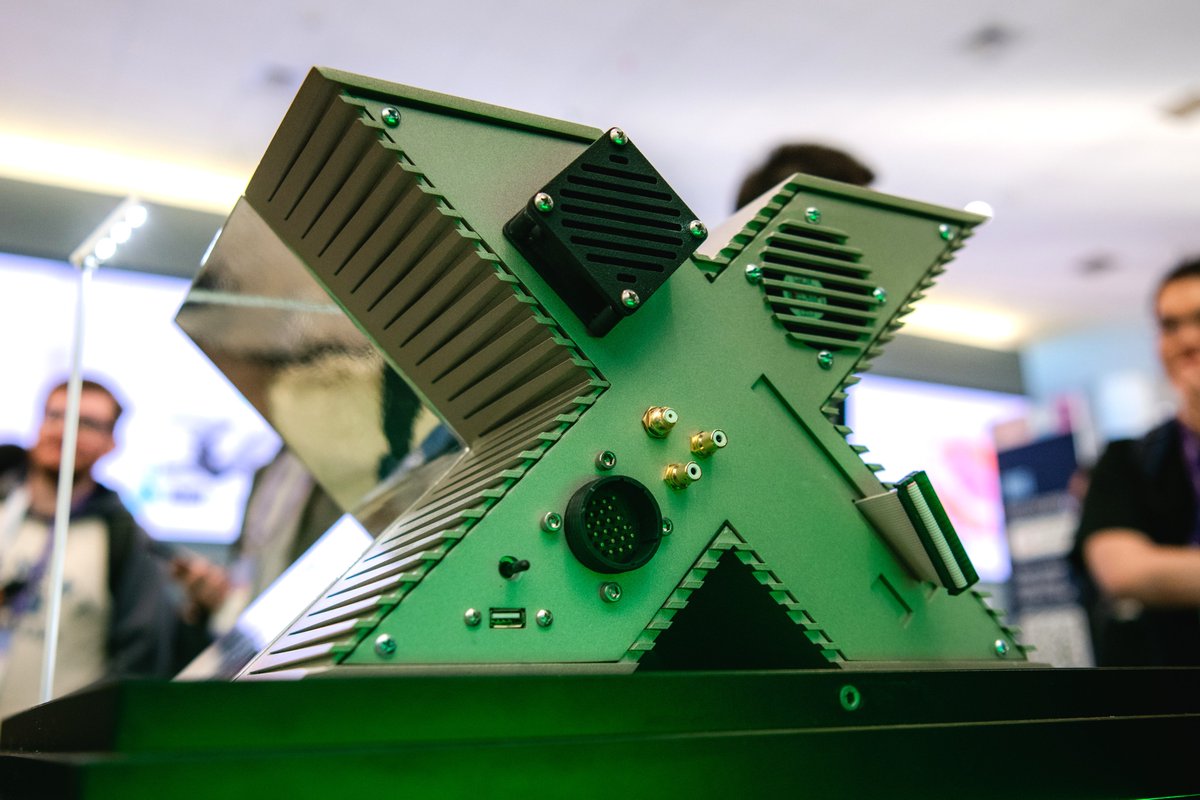
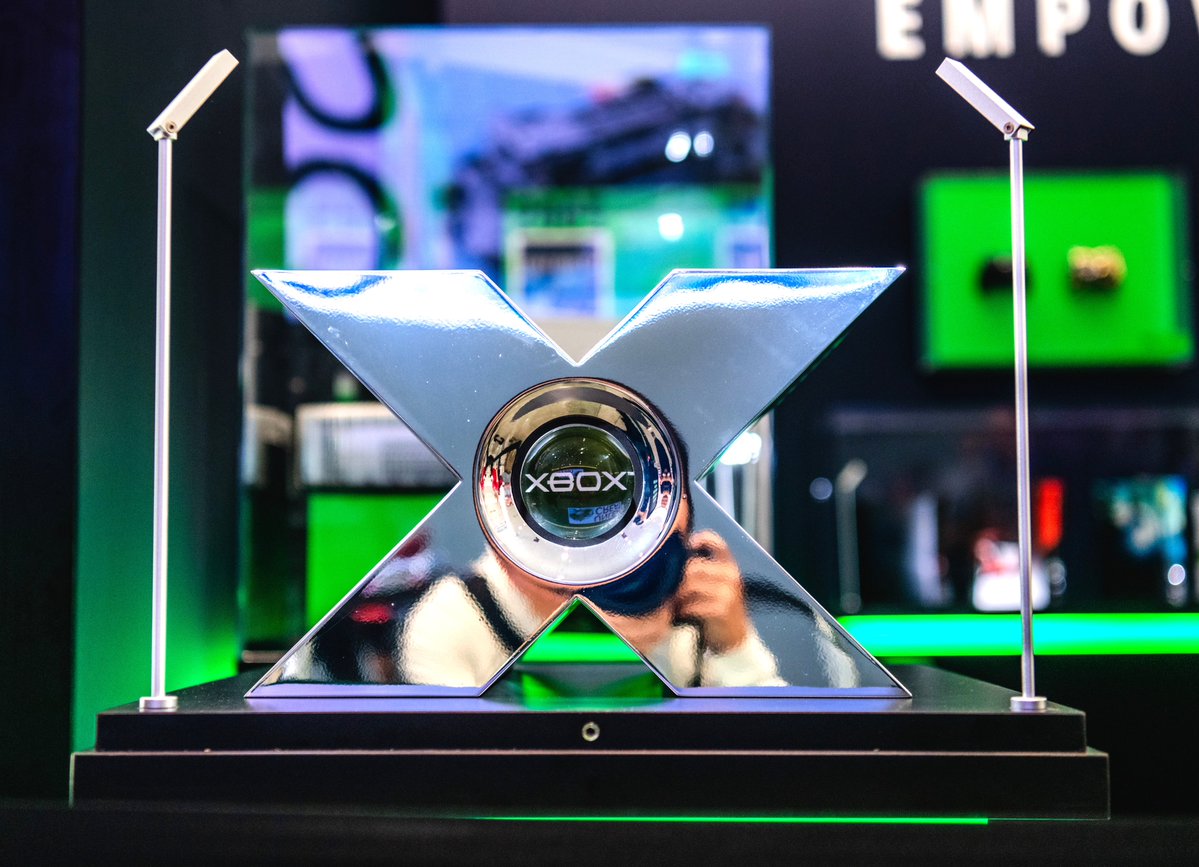
Xbox at GDC 🔥 Celebrating 25 years of Xbox history and journey throughout the years 💚 Didn't make it to #GDC2026? We'll walk you through our booth, without the cases - so you can see all the details. 2000 | Xbox Prototype “DirectX Box” - Microsoft’s original prototype console was known internally as the “Direct X Box,” and the name stuck, albeit in a shortened form. The original Xbox represents a deliberate bet on consoles evolving from sealed appliances to dynamic platforms that developers would be excited to build on. Designed as a forward-looking console with high-end PC-class performance, the project also leaned into “PC-style” development and the coming shift to broadband. Its goal was to shrink the gap between PC and console development by using familiar tools, standard APIs, and a smoother path from prototype to shipped product. For studios, Xbox wanted to be approachable, transparent, and ready for iterative development at a time when console tech was often opaque and proprietary. For the industry, it signaled that connected services would be central to the next era of games. 💫 🧵 More photos below
Microsoft Game Dev tweet media
English
7
96
513
12.2K