
MSUDeerLab

231 posts

MSUDeerLab banner
MSUDeerLab

MSUDeerLab

@MSUDeerLab

All About Deer Biology & Management

Mississippi State University 参加日 Nisan 2014
53 フォロー中2K フォロワー
MSUDeerLab
MSUDeerLab@MSUDeerLab·
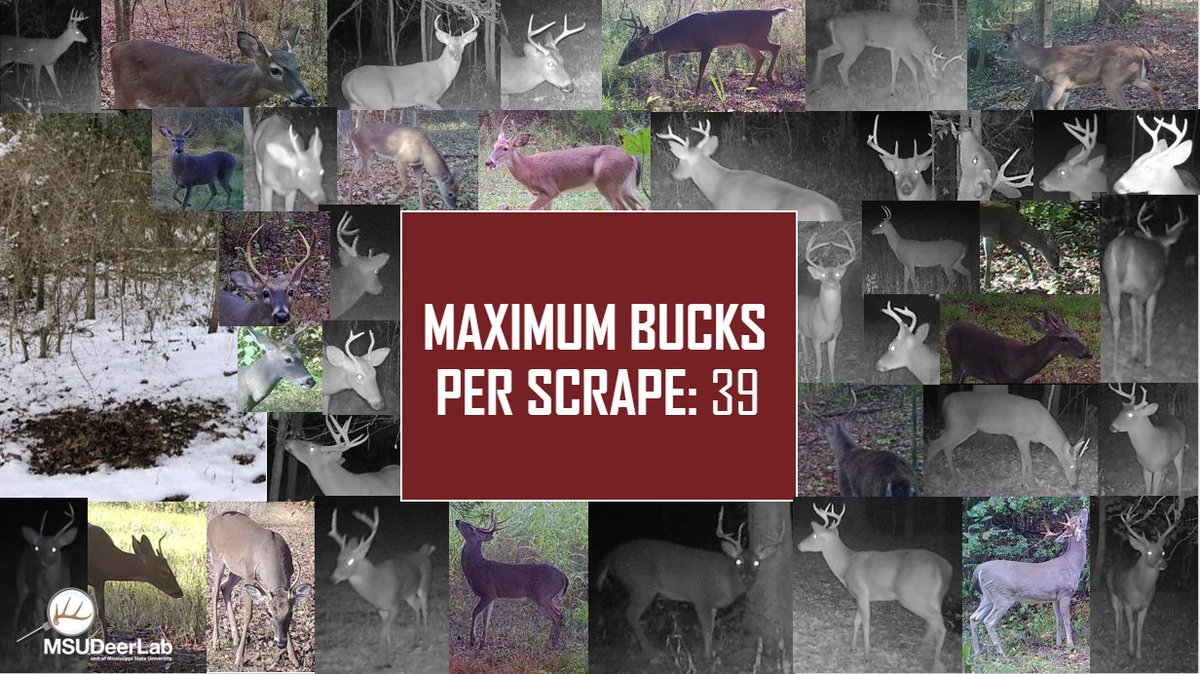
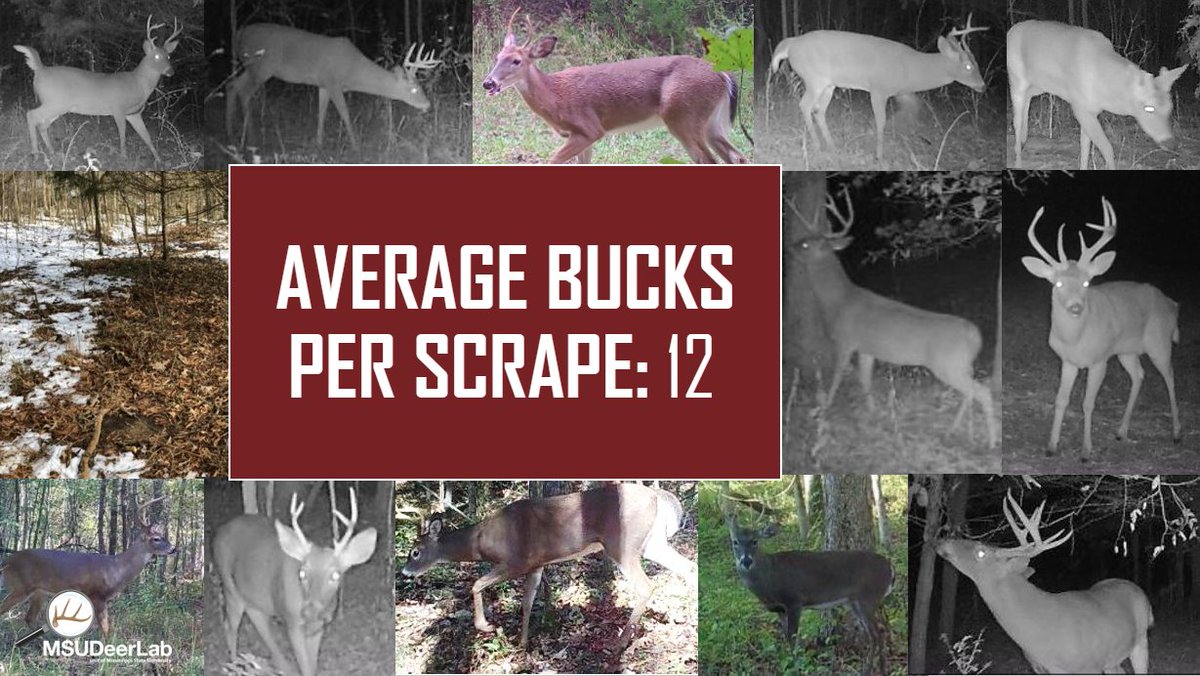
Have you wondered how many different bucks have visited the same scrape? We found that 12 unique bucks visit the average scrape. Our most popular scrape was visited by 39 different bucks! Scrapes are a way deer indirectly communicate with each other throughout the breeding season
MSUDeerLab tweet mediaMSUDeerLab tweet media
English
2
5
15
2.7K
MSUDeerLab
MSUDeerLab@MSUDeerLab·
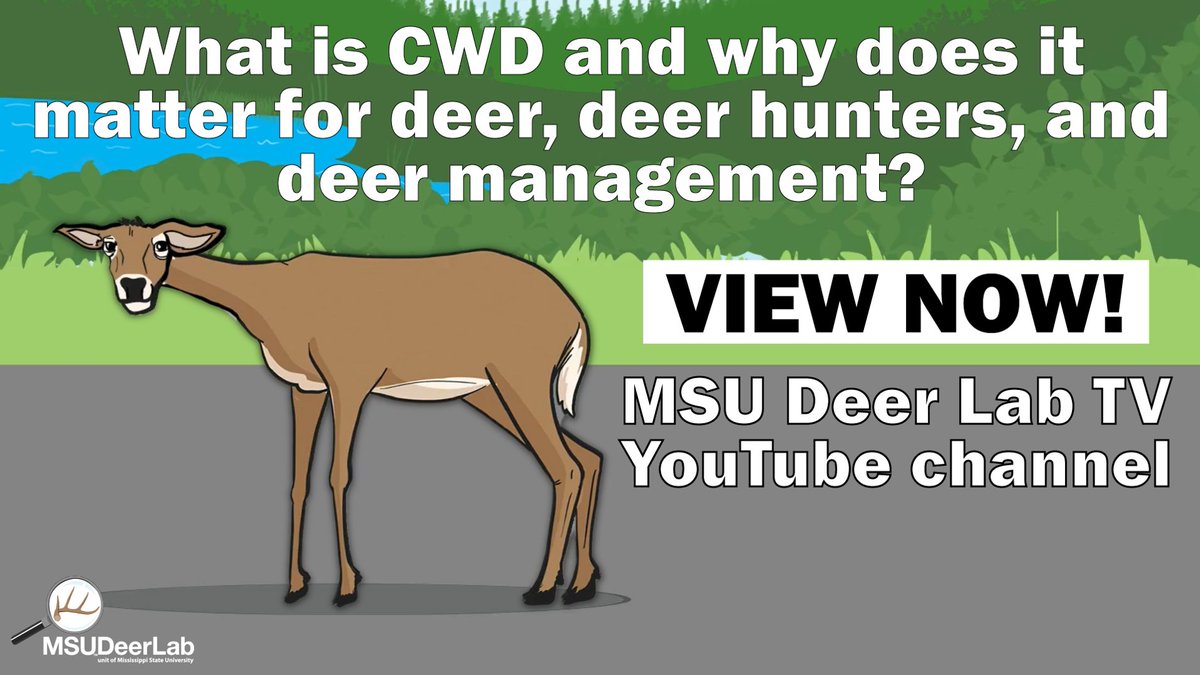
Whether you’ve known about chronic wasting disease (CWD) for years or are hearing about it for the first time now, you may have a lot of questions. Check out our new 12-part video series to learn what you need to know about CWD and how it impacts deer, hunting, and management.
MSUDeerLab tweet media
English
1
4
16
2.4K
MSUDeerLab
MSUDeerLab@MSUDeerLab·
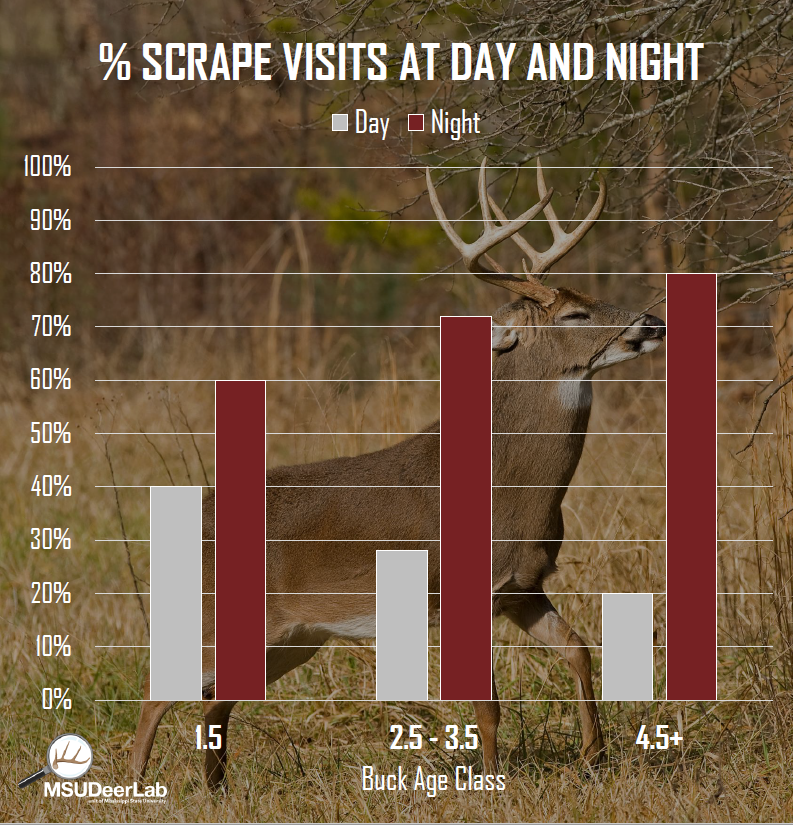
Do you think bucks are more likely to visit scrapes during the day or night? We found bucks across all age groups were more likely to visit scrapes at night. Those uneducated yearling bucks were nearly twice as likely to visit scrapes during the day compared to our oldest bucks.
MSUDeerLab tweet media
English
1
3
20
1.9K
MSUDeerLab
MSUDeerLab@MSUDeerLab·
Bucks are most actively visiting scrapes during Pre Rut, when they’re advertising and searching for does entering estrus. When Peak Rut rolls around, bucks are primarily focused on finding and breeding does. Scraping behavior continues but with less frequency during Late Rut.
MSUDeerLab tweet media
English
0
6
27
2.3K
MSUDeerLab
MSUDeerLab@MSUDeerLab·
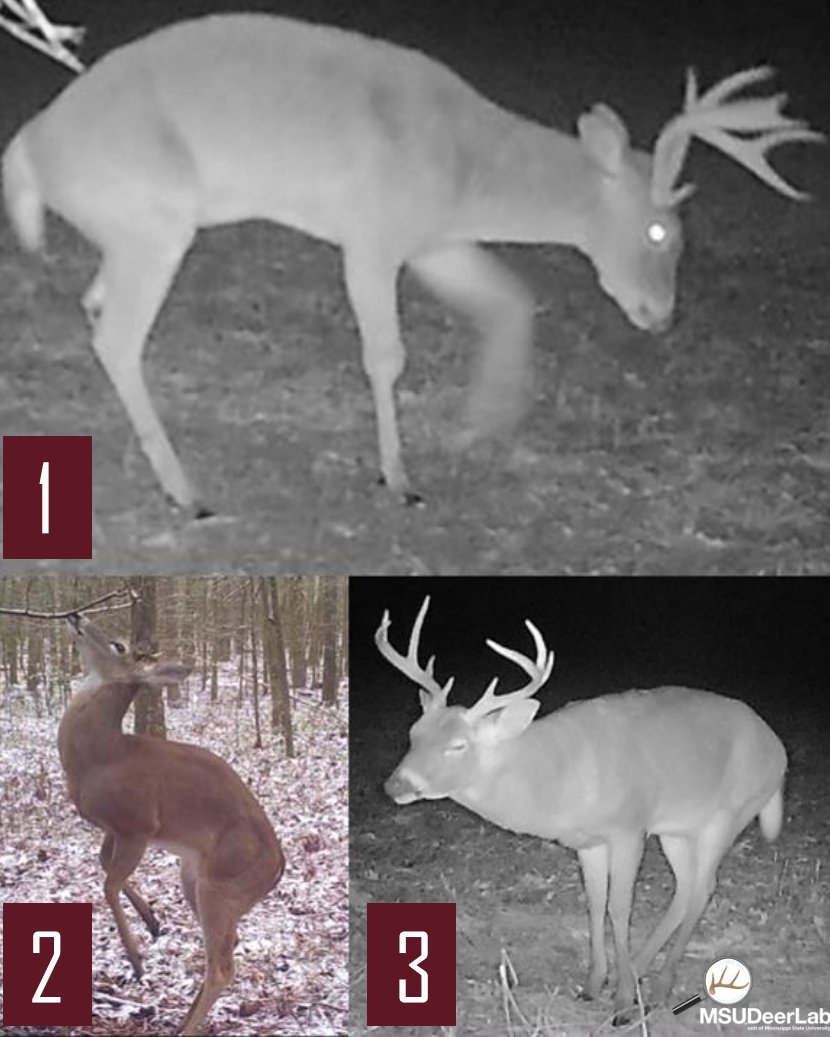
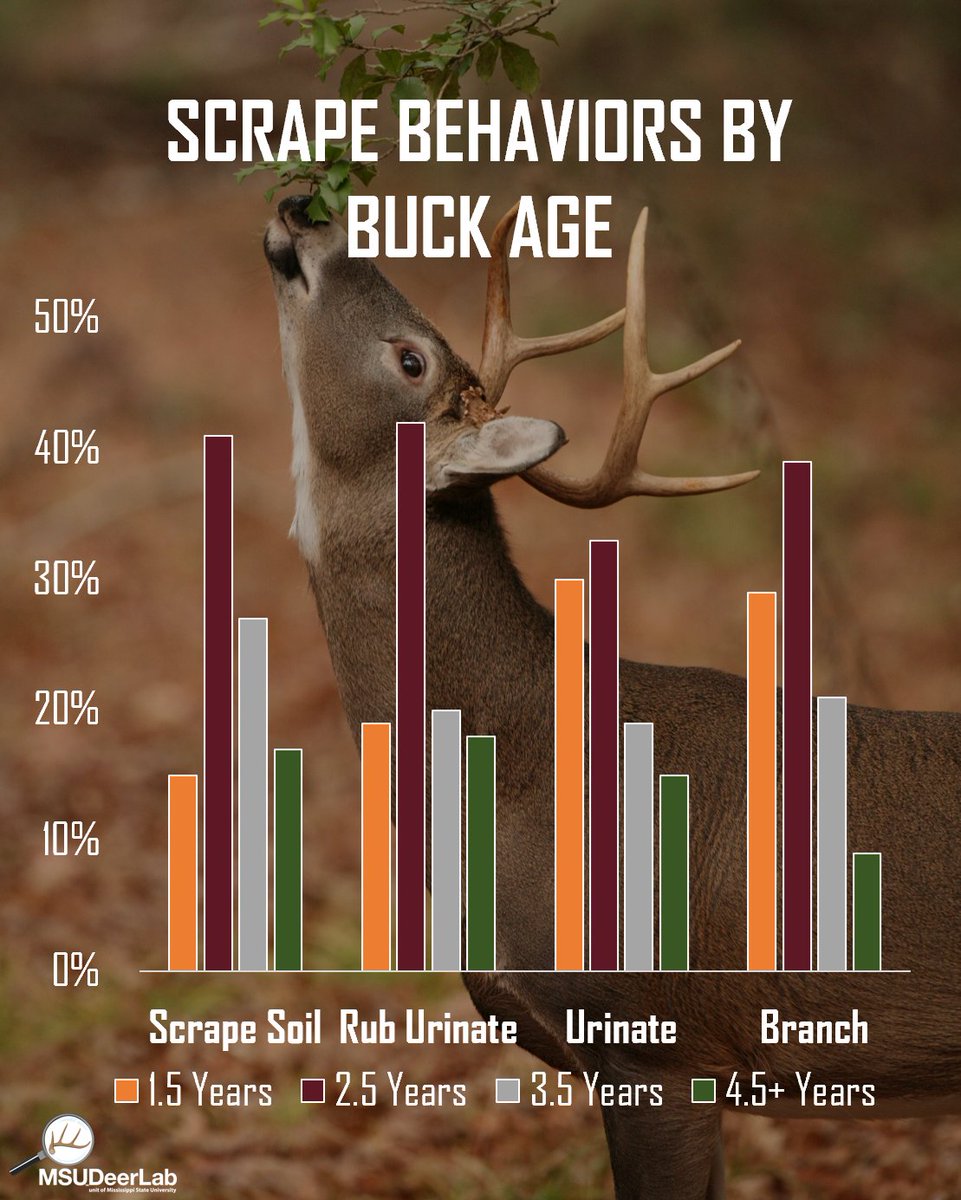
Yearling bucks often urinate & interact with the licking branch. 2.5-year-old bucks often scrape soil & rub-urinate. 3.5 & 4.5+ year-old bucks engage in all behaviors at a similar frequency. It's important to realize that each age isn't equally represented in the study population
MSUDeerLab tweet mediaMSUDeerLab tweet media
English
0
4
22
1.7K
MSUDeerLab
MSUDeerLab@MSUDeerLab·
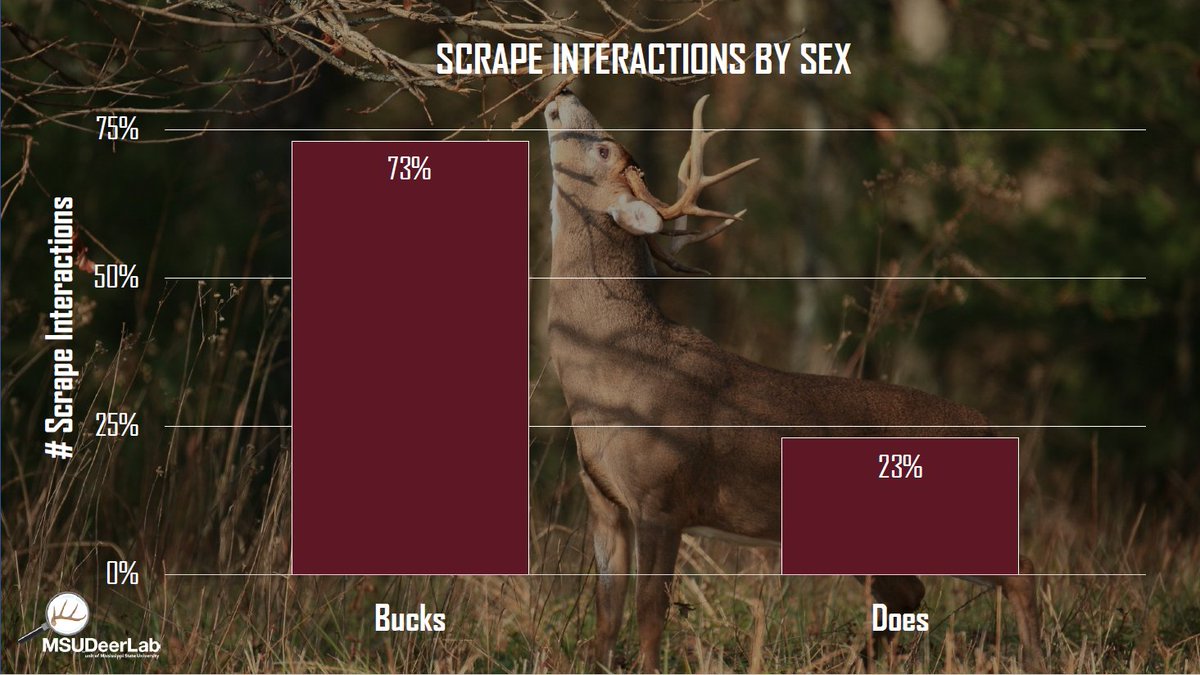
2.5 year-olds represent the majority of scrape visitors; 4.5+ year-olds represent the minority. It's opposite what's expected on a site with a well-developed buck age structure. Older bucks make up a small percentage of this deer population; they’re not well represented in graph2
MSUDeerLab tweet mediaMSUDeerLab tweet media
English
0
6
19
0
MSUDeerLab
MSUDeerLab@MSUDeerLab·
We've monitored 105 scrapes with trail cameras. Video: scrape visitation by 4 bucks moving across a 5x5 mile area; movement speed is related to time between scrape visits. Slow movements indicate longer time between sightings, fast movements indicate sightings are more frequent.
English
1
2
16
0
MSUDeerLab
MSUDeerLab@MSUDeerLab·
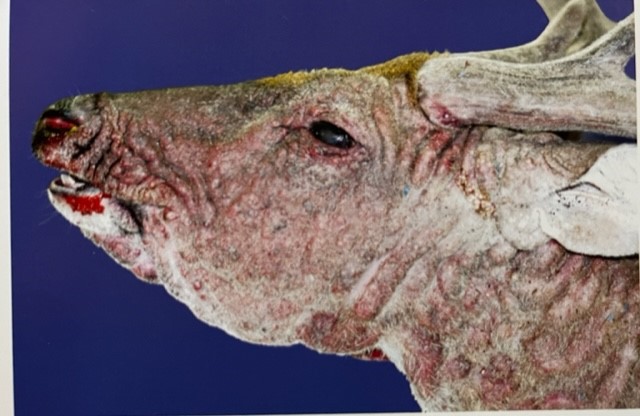
Mange is our last example in our disease & parasite series. Demodectic mites live & breed in a deer's hair follicle, causing it to become plugged up & swollen. Hair loss is accompanied by thickened & red, scabbed skin. The meat is safe to eat. Photo Credit: SCWDS
MSUDeerLab tweet media
English
0
0
4
0
MSUDeerLab
MSUDeerLab@MSUDeerLab·
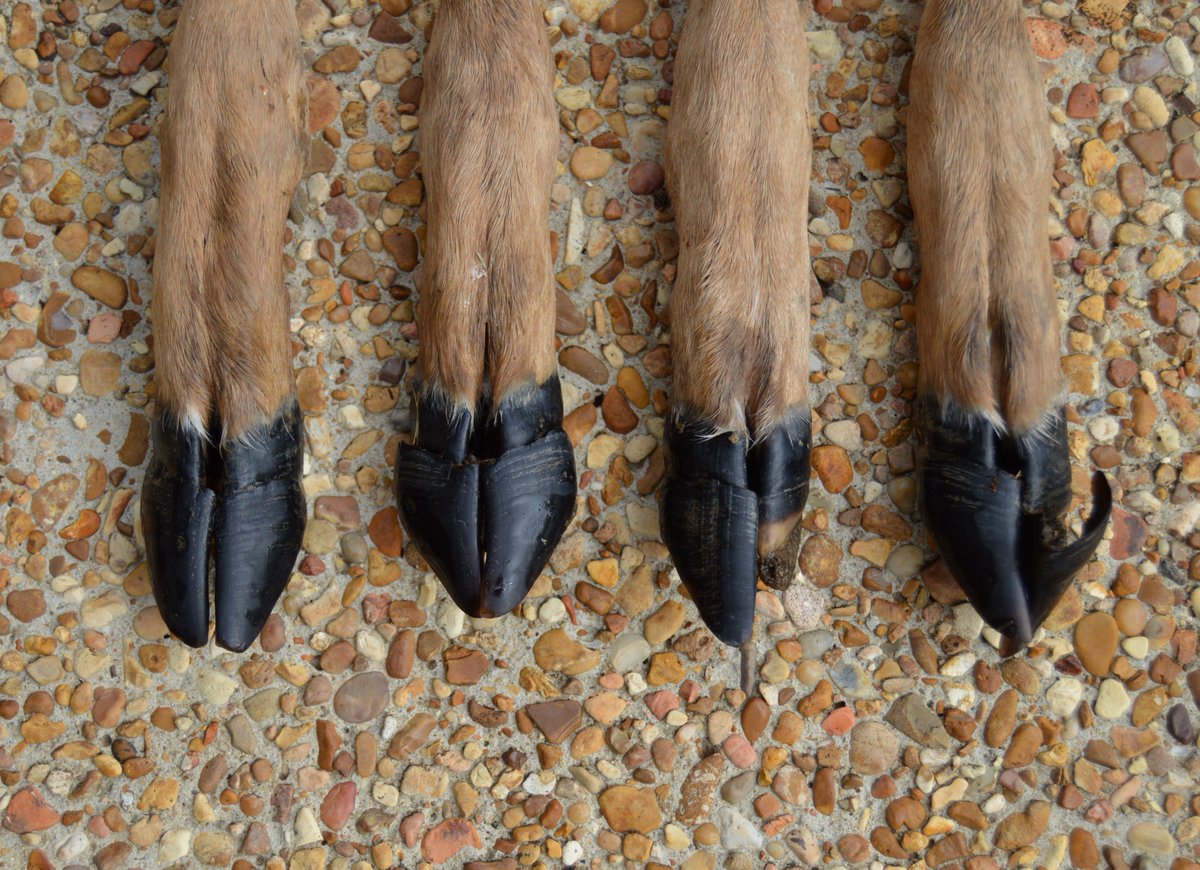
HD is caused by EHD virus or the related BT virus. It's transmitted via biting midges in late summer/early fall. Deer can recover; unlucky ones are often found dead near/in water. If a deer survives, hoof sloughing may be noticeable during hunting season. The meat is safe to eat.
MSUDeerLab tweet media
English
0
2
11
0
MSUDeerLab
MSUDeerLab@MSUDeerLab·
These are buck 293’s movements during the first week of December two years in a row. The red line is his path as a 5.5-year-old and the green line is exactly a year later at 6.5. The light portions of the video represent hours between sunrise and sunset. What do you notice?
English
4
12
53
0
MSUDeerLab
MSUDeerLab@MSUDeerLab·
Arterial worms affect blood flow in a deer's neck arteries & face muscles, making it hard for a deer to chew & swallow food. This deer is infected; it has a food impaction (“lumpy jaw”). Tooth decay & jawbone deterioration can occur. The deer meat is safe to eat.
MSUDeerLab tweet media
English
1
0
3
0
MSUDeerLab
MSUDeerLab@MSUDeerLab·
Nasal bots are botfly larvae that develop in a deer's nasal passage. Adult females lay eggs around a deer's mouth or nose. When a deer licks its nose, the eggs hatch & larvae crawl to the back of the mouth. They're harmless, don’t affect venison quality, & don’t parasitize humans
English
0
0
7
0
MSUDeerLab
MSUDeerLab@MSUDeerLab·
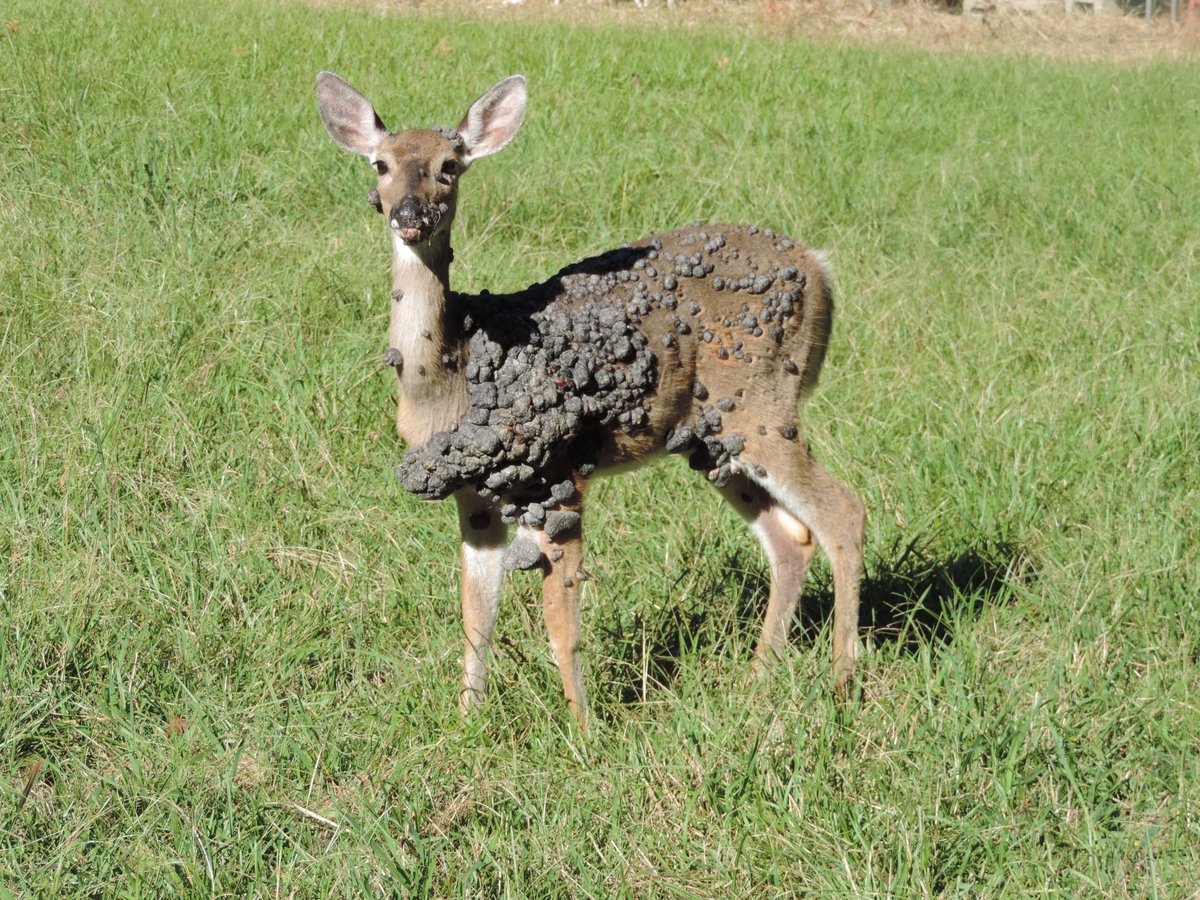
Cutaneous fibromas are hairless tumors found on skin. This disease is caused by a papilloma-virus that is host-specific. Deer warts occur only on the skin’s surface and don’t penetrate the muscle, so hunters can skin the deer and treat the meat as they would any other deer.
MSUDeerLab tweet media
English
0
4
11
0
MSUDeerLab
MSUDeerLab@MSUDeerLab·
The October Lull doesn’t exist. Studies have shown buck movement rates increase from the start of hunting season through the rut. Don’t let the October Lull myth keep you out of the woods in early season! Now is the time to observe, adjust, and capitalize on patternable behaviors
English
1
5
32
0
MSUDeerLab
MSUDeerLab@MSUDeerLab·
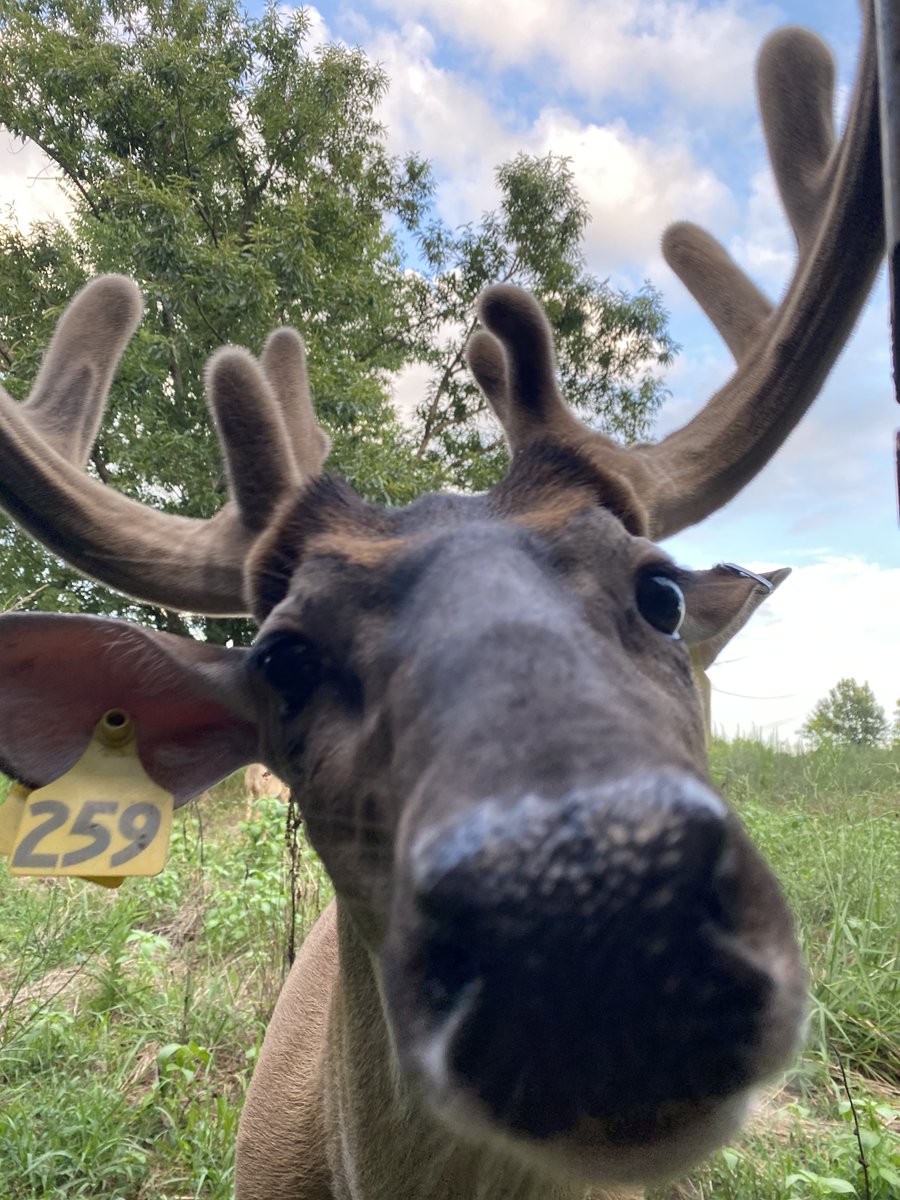
Increasing testosterone levels are associated with antler growth completion, final mineralization, & velvet shedding. Bucks also develop an aggressive personality while sorting out the dominance hierarchy. Lucky looks friendly. He'll get more aggressive due to the need to breed.
MSUDeerLab tweet media
English
0
0
6
0
MSUDeerLab
MSUDeerLab@MSUDeerLab·
Want to determine the deer density, buck age structure, sex ratio, and fawn recruitment on your property but don't know how? In the full video on our YouTube channel, MSU Deer Lab TV, we give you all the info you need to conduct a camera survey on your property.
MSUDeerLab tweet media
English
1
1
10
0
MSUDeerLab
MSUDeerLab@MSUDeerLab·
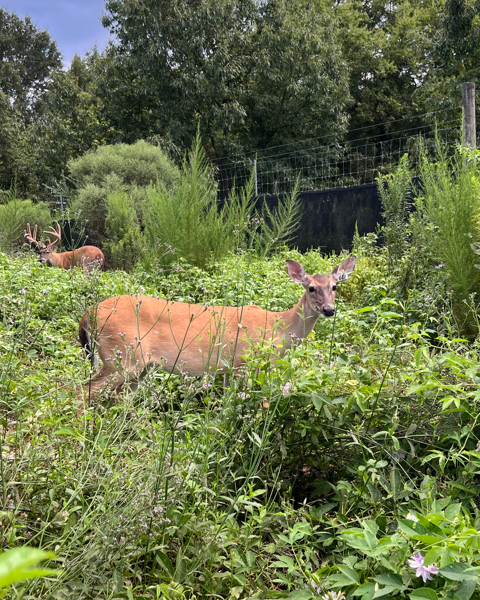
Junebug was bred last year. Implantation wasn’t successful; she didn’t have a fawn this summer. She has access to high-quality forage while staying safe from threats. This demonstrates that offspring production by yearlings is uncommon, regardless of nutritional availability.
MSUDeerLab tweet media
English
0
1
10
0
MSUDeerLab
MSUDeerLab@MSUDeerLab·
Young Buzz (534) and Woody (544) are figuring out who’s the dominant buck. Woody is rising up on his hind legs and “striking” his front hooves at Buzz. This is a socially aggressive behavior that deer of all ages will exhibit when they’re trying to display dominance.
English
0
0
20
0
MSUDeerLab
MSUDeerLab@MSUDeerLab·
When young fawns sense a threat, they enter bradycardia, where heart rate slows and breathing nearly stops to reduce the chances of predation. But, if you don't have good fawning cover, they don't stand a chance. Check out DeerUniversity episodes 4-5. Photocred: Tes Randle Jolly
MSUDeerLab tweet media
English
0
0
10
0
MSUDeerLab
MSUDeerLab@MSUDeerLab·
Belle gave birth to twin buck fawns a couple weeks ago, Woody (left) and Buzz (right). We're bottle-raising them, but we left them with her for the first 36 hours to get colostrum from her milk, which is rich in nutrients and antibodies that help jump-start the immune system.
MSUDeerLab tweet media
English
1
4
20
0