

Math Files
17.7K posts

Math Files
@Math_files
Life is nonlinear. So handle it using Math.
参加日 Haziran 2020
14 フォロー中196.9K フォロワー



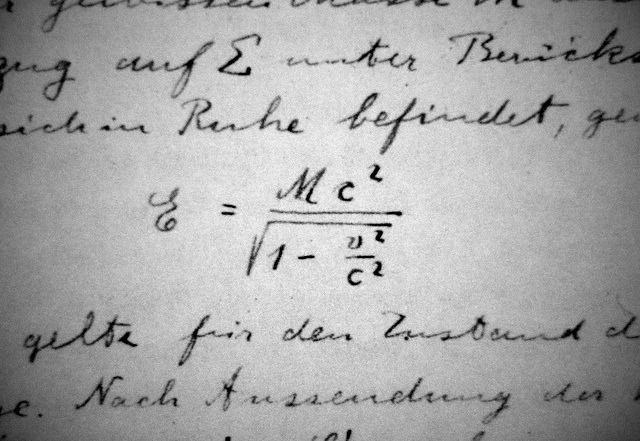
If your idea of math is boring, you're in for a surprise with François Viète. This 16th-century French genius revolutionized algebra.
Before Viète, algebra was written out in long, confusing sentences. He introduced the use of letters to represent unknowns, laying the foundation for modern algebraic notation.
But wait—there’s more! He was also a cryptanalyst, cracking secret codes during the French Wars of Religion. Talk about a versatile mind!
Viète’s work didn’t stop at algebra or cryptography. He made significant contributions to trigonometry, geometry, and even astronomy.
His methods were so groundbreaking that he was nicknamed the Father of Modern Algebra.
So next time you solve for x, give a nod to François Viète for making it all possible.
English


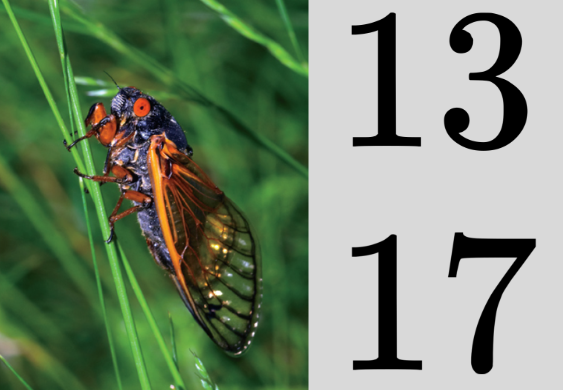
Certain cicadas display a startling behavior: their emergence from the soil is synchronized with periods that are usually prime numbers, such as 13 and 17. Sometimes, more than 1.5 million individuals emerge within a single acre over a short interval of time.
English

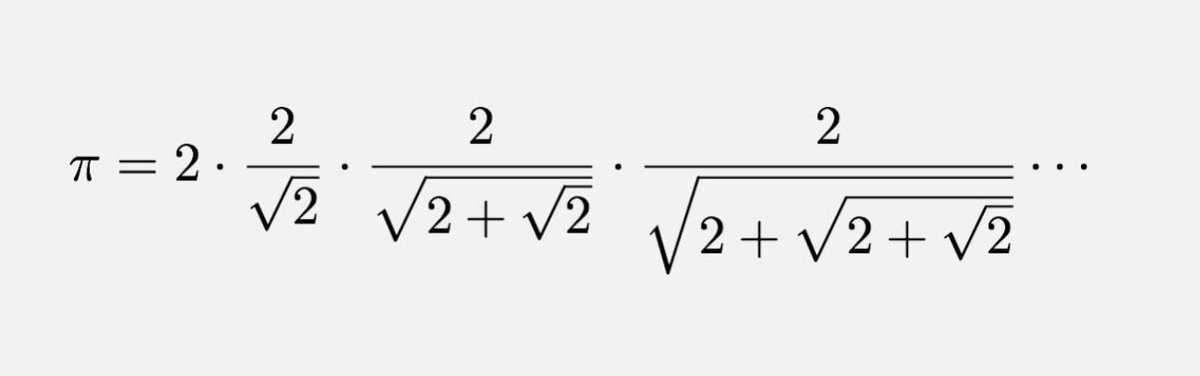
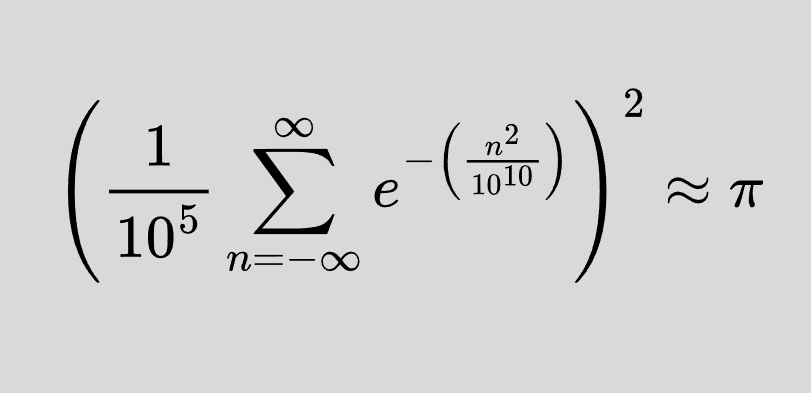
The following little-known formula yields the correct decimal digits of π to an astonishing 42 billion places; however, it is not an exact formula for π. In other words, it is only a very high-precision approximation. The symbol ≈ denotes an approximation
(Borwein and Borwein, Strange Series and High Precision Fraud, 1992).
English

If it feels like your friends have more friends than you, you’re not imagining it—it’s actually true.
A group of scientists explored this idea in the late 1990s. Using concepts from network theory, they showed that networks—including social ones—often lead to paradoxical situations. And honestly, when you look at it, it makes a lot of sense.
We all know someone who has a lot of friends—someone who is easy to like and liked by many people. You probably consider that person a friend of yours, but most people in your network—whether at school, work, or elsewhere—also consider that person their friend.
So imagine you’re in a group of 100 people and you have five friends. One of your friends, Bob, is liked by everyone and considers half the group his friends. Another friend, Morgan, has about ten friends. These highly connected individuals significantly raise the average of your network, making it more likely that you’ll feel closer to the bottom by comparison.

English
3¹² ≅ 2¹⁹
That may seem trivial and stupid, but it gives rise to practically the entire corpus of Western music, by establishing an approximate residue class of 12 half-steps per octave.
English
“Somewhere, something incredible is waiting to be known.” – Carl Sagan
😂
English
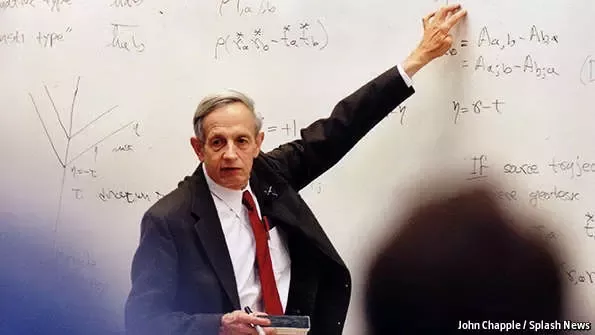
Ever seen the film A Beautiful Mind?
The mathematician that film was based on, John Nash, has one of the shortest PhD dissertations ever published: ‘Non-Cooperative Games’.
It has a grand total of 26 pages, and only cites two references.
That thesis went on to found the basis for his paper on the development of game theory, for which he won the 1994 Nobel Prize in Economics.
English