Magala Reuben

167 posts

Magala Reuben banner
Magala Reuben

Magala Reuben

@ReubenCosmos

Kampala Uganda 参加日 Ağustos 2022
411 フォロー中114 フォロワー
Magala Reuben がリツイート
Kurzgesagt
Kurzgesagt@Kurz_Gesagt·
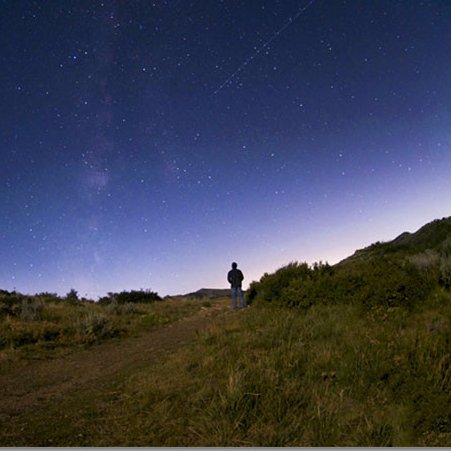
Most of the universe is not made of stars, galaxies, or beautiful glowing nebulae. Instead, the majority of it is what seems to be vast, silent emptiness. But these dark regions are not just empty space. They are dynamic structures that grow, merge, and shape the entire architecture of the universe. What exactly are cosmic void, how did they form, and what role might they play in the future of the universe? Watch our full video to find out: kgs.link/Supervoids
Kurzgesagt tweet media
English
9
74
790
30.1K
Magala Reuben がリツイート
Massimo
Massimo@Rainmaker1973·
An 18-year-old high school student harnessed artificial intelligence to uncover 1.5 million previously unknown cosmic objects. Matteo Paz, from Pasadena, California, created a sophisticated machine learning algorithm that sifted through vast archives of data from NASA's NEOWISE telescope (the Near-Earth Object Wide-field Infrared Survey Explorer). Launched in 2009, NEOWISE spent over a decade surveying the sky in infrared wavelengths, originally hunting for near-Earth asteroids and comets while capturing billions of detections—roughly 200 billion in total—of celestial sources. Hidden within this enormous dataset were subtle changes in infrared brightness that hint at dynamic phenomena: variable stars, supernovae explosions, feeding supermassive black holes, and close binary star systems, among others. Rather than relying on manual inspection, Paz trained an AI model (including techniques like waveform analysis and his VARnet algorithm) to automatically detect and classify these faint variability signals across the entire collection. The result: a groundbreaking catalog named VarWISE, which identified about 1.9 million infrared variable objects overall, with 1.5 million representing entirely new discoveries never before cataloged by astronomers. This VarWISE catalog is already aiding researchers in exploring unusual stellar behavior and other transient events across the universe. Paz's achievement—conducted during research at Caltech under mentorship and culminating in a peer-reviewed paper—earned him first place and a $250,000 prize in the 2025 Regeneron Science Talent Search. It powerfully illustrates the transformation in modern astronomy: as telescopes generate data far beyond human processing capacity, pairing cutting-edge instruments with intelligent algorithms is unlocking hidden treasures right in existing archives. The next big discoveries aren't always out in the distant cosmos—they're often buried in the data we've already collected.
Massimo tweet media
English
19
88
422
29.8K
Magala Reuben がリツイート
Massimo
Massimo@Rainmaker1973·
4 billion years of human evolution unfold in minutes [🎞️ thebrainmaze]
English
183
1.1K
3.8K
187.8K
Magala Reuben がリツイート
The Curious Tales
The Curious Tales@thecurioustales·
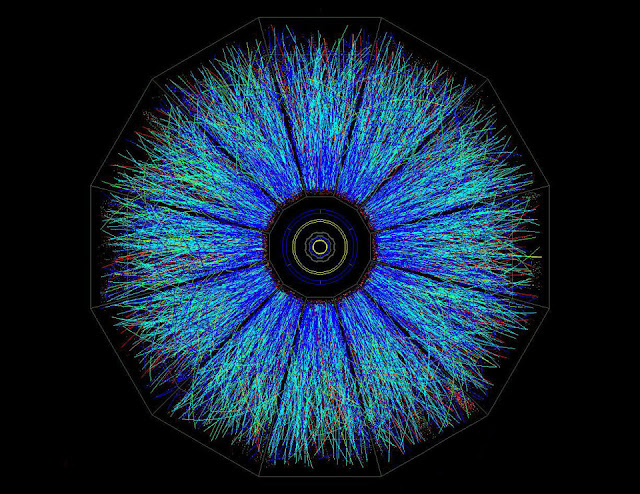
🚨 This is the most accurate image of an atom
The Curious Tales tweet media
English
240
1K
10.4K
5.1M
Magala Reuben がリツイート
Jeff Dean
Jeff Dean@JeffDean·
We've been working on the Waxal dataset project since 2021, aiming to enhance the amount of data available for African languages. This public speech dataset initially covers 27 Sub-Saharan African languages spoken by over 100 million speakers across more than 26 countries. 🌍
English
70
274
1.7K
192.8K
Magala Reuben がリツイート
The Curious Tales
The Curious Tales@thecurioustales·
The most dangerous thing about leaving Earth isn’t the vacuum. It’s the clarity. When astronauts return from long missions, most talk about the Overview Effect in poetic terms. They describe seeing Earth as fragile, borderless, beautiful. What rarely gets reported is the second layer of that experience — the part where the beauty curdles into something more disturbing. Because once you’ve watched the planet from that altitude long enough, the human activity you observe starts to look less like civilization and more like a colony of organisms running programs they never consciously chose. Wars over invisible lines. Cities choking on their own exhaust. Seven billion people sprinting toward goals that were handed to them before they were old enough to question whether they wanted them. I don’t think the “Big Lie about humanity” he’s describing is some kind of a conspiracy. It’s something quieter and far more pervasive. It’s the collective hallucination that the world you were handed at birth is the world as it actually is. That the values you absorbed from your culture are the values that exist in nature. That the urgency you feel about status, money, and approval reflects something real about the universe rather than something manufactured by systems that benefit from your compliance. Orbital altitude strips that hallucination away with brutal efficiency. Gravity keeps more than your body on the ground. It keeps your perspective locked inside the consensus. Astronauts who spend months outside that gravity field don’t just lose bone density. They lose the psychological weight of inherited assumptions. And when those assumptions lift, what sits underneath them is a question most humans never get forced to confront in a lifetime. What would you actually want if nobody had ever told you what to want? The Big Lie was never about them. It was always about that question and how hard the entire structure of modern life works to make sure you never stop long enough to ask it.
Kekius Maximus@Kekius_Sage

Astronaut Claims Humanity Is living a 'Big Lie' After 178 days in Space

English
132
2K
16.3K
2.3M
Magala Reuben がリツイート
Rohan Paul
Rohan Paul@rohanpaul_ai·
Yann LeCun (@ylecun ) explains why LLMs are so limited in terms of real-world intelligence. Says the biggest LLM is trained on about 30 trillion words, which is roughly 10 to the power 14 bytes of text. That sounds huge, but a 4 year old who has been awake about 16,000 hours has also taken in about 10 to the power 14 bytes through the eyes alone. So a small child has already seen as much raw data as the largest LLM has read. But the child’s data is visual, continuous, noisy, and tied to actions: gravity, objects falling, hands grabbing, people moving, cause and effect. From this, the child builds an internal “world model” and intuitive physics, and can learn new tasks like loading a dishwasher from a handful of demonstrations. LLMs only see disconnected text and are trained just to predict the next token. So they get very good at symbol patterns, exams, and code, but they lack grounded physical understanding, real common sense, and efficient learning from a few messy real-world experiences. --- From 'Pioneer Works' YT channel (link in comment)
English
176
361
2.2K
636K
Magala Reuben がリツイート
Qwen
Qwen@Alibaba_Qwen·
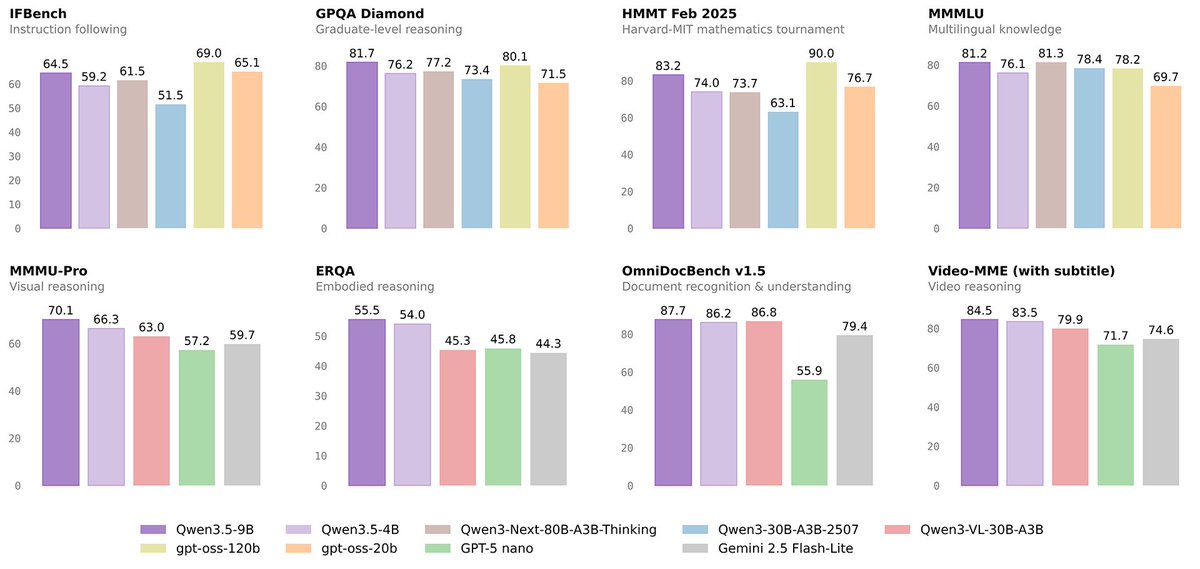
🚀 Introducing the Qwen 3.5 Small Model Series Qwen3.5-0.8B · Qwen3.5-2B · Qwen3.5-4B · Qwen3.5-9B ✨ More intelligence, less compute. These small models are built on the same Qwen3.5 foundation — native multimodal, improved architecture, scaled RL: • 0.8B / 2B → tiny, fast, great for edge device • 4B → a surprisingly strong multimodal base for lightweight agents • 9B → compact, but already closing the gap with much larger models And yes — we’re also releasing the Base models as well. We hope this better supports research, experimentation, and real-world industrial innovation. Hugging Face: huggingface.co/collections/Qw… ModelScope: modelscope.cn/collections/Qw…
Qwen tweet media
English
918
2.9K
21.4K
8.9M
Magala Reuben
Magala Reuben@ReubenCosmos·
We are a tiny window where the universe is able to look back at itself, ask questions, build ideas, care about things.
English
0
0
2
7
Magala Reuben
Magala Reuben@ReubenCosmos·
You’re not “late to the universe.” You’re part of what the universe does at this stage. it produces observers.
English
0
0
1
11
Magala Reuben がリツイート
Google
Google@Google·
Gemini 3.1 Pro be like
English
470
1.2K
17.4K
1.5M
Magala Reuben がリツイート
Google Labs
Google Labs@GoogleLabs·
Today, we’re introducing Pomelli’s latest feature update, ‘Photoshoot’ With Photoshoot, you can start from a single image of your product and easily create high quality, customized product shots to elevate your marketing. Available free of charge in the US, Canada, Australia & New Zealand! Get started with Pomelli today at labs.google/pomelli
English
1.2K
4.7K
50.2K
24M
Magala Reuben がリツイート
Ilir Aliu
Ilir Aliu@IlirAliu_·
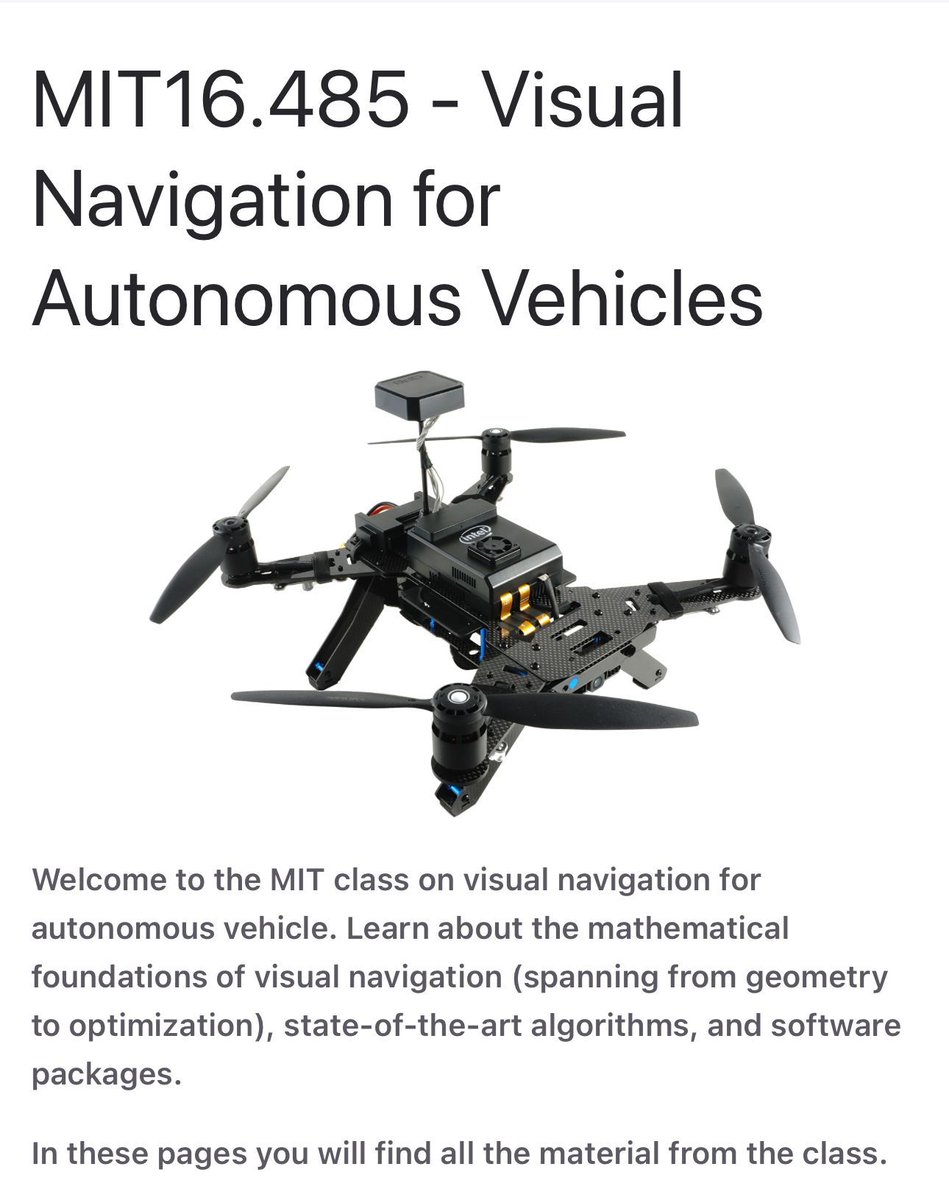
A full MIT course on visual autonomous navigation. If you work on robotics, drones, or self-driving systems, this one is worth bookmarking‼️ MIT’s Visual Navigation for Autonomous Vehicles course covers the full perception-to-control stack, not just isolated algorithms. What it focuses on: • 2D and 3D vision for navigation • Visual and visual-inertial odometry for state estimation • Place recognition and SLAM for localization and mapping • Trajectory optimization for motion planning • Learning-based perception in geometric settings All material is available publicly, including slides and notes. 📍vnav.mit.edu If you know other solid resources on vision-based autonomy, feel free to share them. —- Weekly robotics and AI insights. Subscribe free: scalingdeep.tech
Ilir Aliu tweet media
English
40
711
4.9K
197.4K
Magala Reuben がリツイート
James Zou
James Zou@james_y_zou·
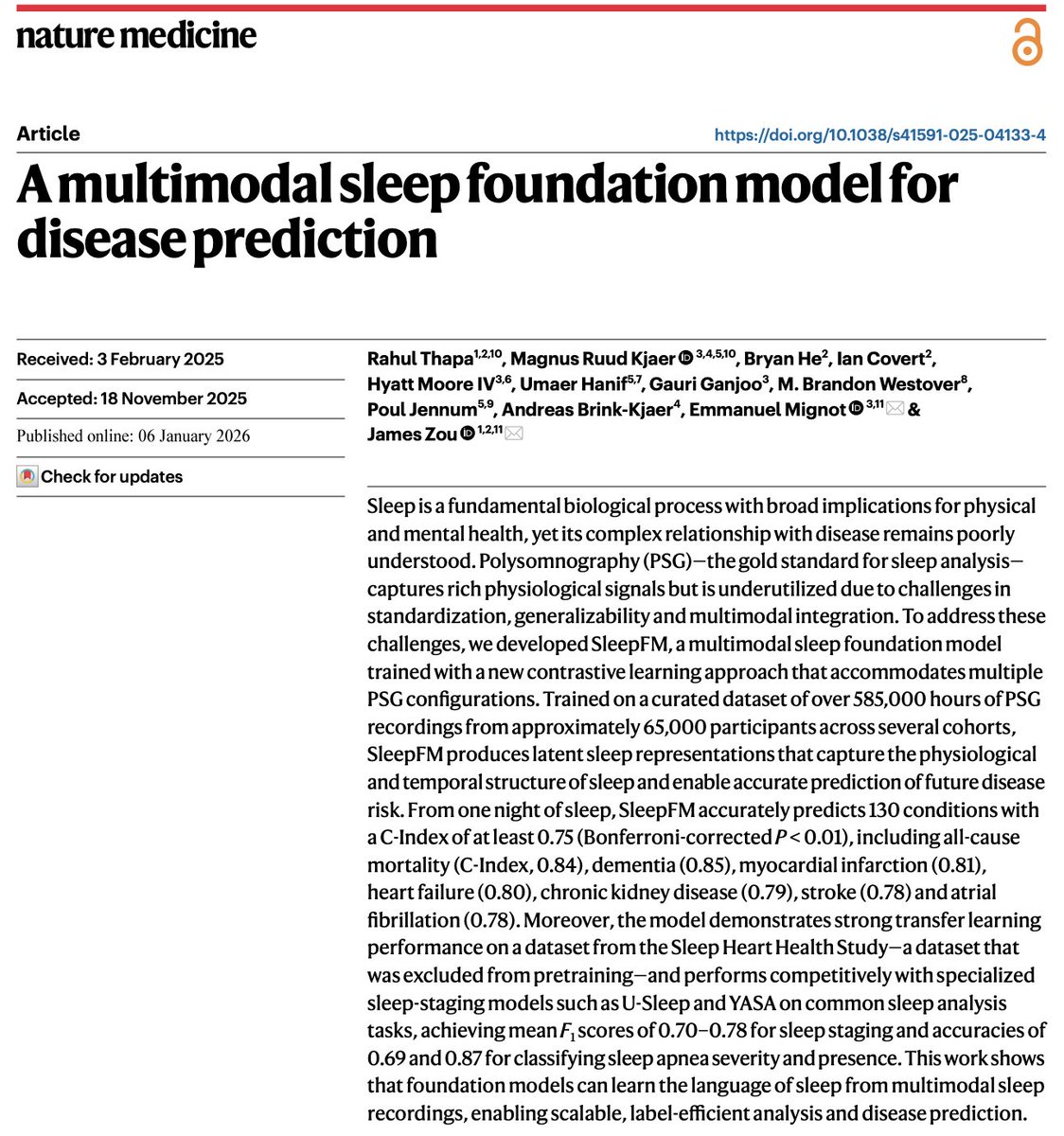
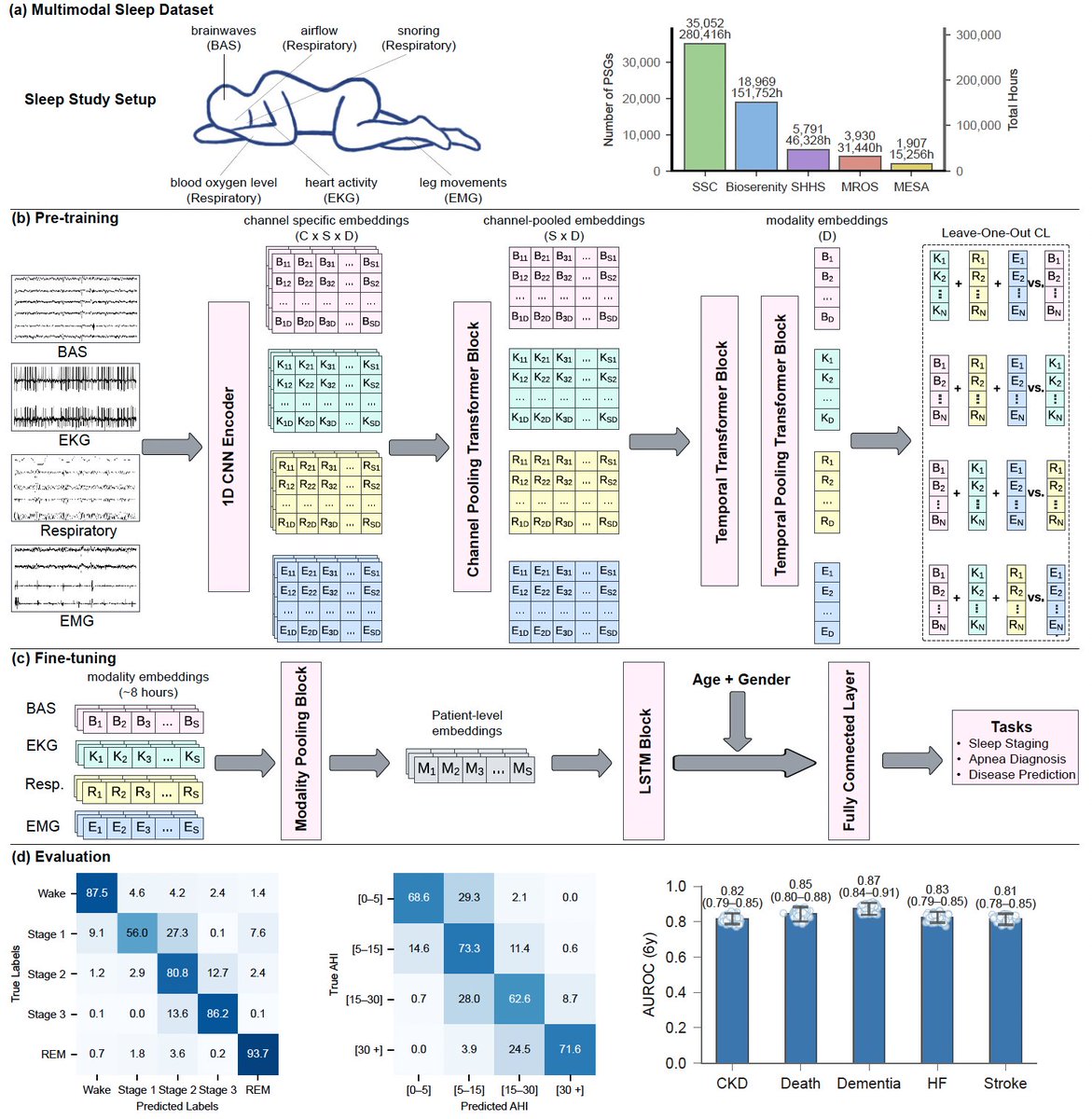
Today in @NatureMedicine we report that AI can predict 130 diseases from 1 night of sleep🛌 We trained a foundation model (#SleepFM) on 585K hours of sleep recordings from 65K people—brain, heart, muscle & breathing signals combined. AI learns the language of sleep🧵
James Zou tweet mediaJames Zou tweet media
English
276
2.1K
11K
910.5K
Magala Reuben がリツイート
Beff (e/acc)
Beff (e/acc)@beffjezos·
Boston Dynamics is so back. Very happy to see this sort of progress from the iconic firm
English
56
106
1.1K
108.7K