Sanders

1.4K posts

Sanders banner
Sanders

Sanders

@SAndT2c

Never let someone drive you crazy, it's nearby anyway and the walk is god for you 🤪

参加日 Haziran 2017
295 フォロー中63 フォロワー
Sanders がリツイート
Vipin M. Vashishtha
Vipin M. Vashishtha@vipintukur·
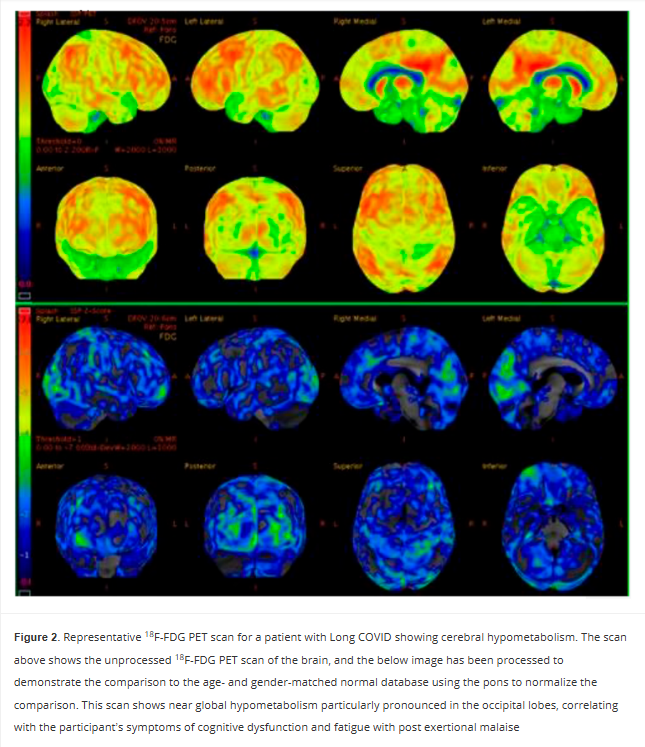
#LongCOVID may leave a visible metabolic fingerprint in the brain—years after the initial infection. ➡️ Using 18F-FDG PET-CT, researchers found persistent areas of reduced brain glucose metabolism (hypometabolism) in Long COVID patients, particularly those suffering from fatigue and post-exertional malaise (PEM). 1/
Vipin M. Vashishtha tweet media
English
4
80
226
9K
Sanders がリツイート
Harry Spoelstra
Harry Spoelstra@HarrySpoelstra·
Persistent Cerebral 18-FDG PET Changes in Patients With Long COVID Presenting With Fatigue and Post Exertional Malaise 🚨We already knew Long COVID brain damage could last 6 months. Now this new PET scan study proves it’s still there at 2 YEARS and counting. Hypometabolism hits the left sensorimotor cortex (movement + body sense), left superior parietal (spatial awareness + attention), and bilateral visual cortex (raw sight processing). This is NOT just “tired.” This is a broken sensory-motor command center. Is this the start of a lifelong neurological disease? ➡️Mayo Clinic observational cohort study of 40 Long COVID patients (70% female, median age 53) from a specialized clinic who underwent brain 18F-FDG PET-CT scans 17–149 weeks (median 62 weeks) after SarsCoV2 infection, ➡️73% had predominant fatigue with post-exertional malaise (PEM), ➡️This group showed statistically significant cerebral hypometabolism vs. non-PEM patients in the left sensorimotor cortex (p=0.0253), left superior parietal cortex (p=0.0276), and bilateral primary visual cortex (p=0.0096 and 0.0016), ➡️Abnormalities persisted already up to ~2 years post-infection, ➡️Scans used pons-normalized Z-scores against age/gender-matched controls with common comorbidities included psychiatric, GI, and cardiovascular conditions, ➡️Caveat: No references to vaccination status and/or reinfections, ➡️Authors propose 18F-FDG PET-CT as a potential diagnostic and therapeutic biomarker for the fatigue/PEM phenotype of Long COVID. ‼️So, AGAIN, Long COVID fatigue and PEM have a demonstrable, persistent neurological signature! Cerebral hypometabolism, still detectable on PET scans up to two years later and hits the left sensorimotor cortex (movement + body sense), left superior parietal cortex (spatial awareness + attention), and bilateral primary visual cortex (raw sight processing). This isn’t just “tired.” It’s a broken sensory-motor command center. 😡Study proves LC is biologically real, not psychosomatic or any other stupid FND diagnosis. Without urgent validation of this biomarker and targeted therapies, patients will continue to be dismissed despite objective brain damage! #AvoidSars2 #AvoidReinfections #BrainDamage journals.sagepub.com/doi/10.1177/21…
Harry Spoelstra tweet media
English
23
278
627
26.7K
Sanders がリツイート
Afshine Emrani  MD FACC
Afshine Emrani MD FACC@afshineemrani·
I'm a cardiologist. A 42-year-old mother of two came to my office complaining of jaw pain and crushing fatigue. She ran half-marathons. Her EKG was normal. Another doctor had sent her home with anxiety medication. When I got her into the cath lab, I found severe microvascular disease — plaque choking the tiniest vessels of her heart, the ones standard angiograms routinely miss. Her heart had been starving in silence while everyone told her she was stressed. She is alive today. Too many women like her are not. Heart disease kills more women than every cancer combined. And medicine is still diagnosing it through a male lens. 84% of cardiologists report having patients in the past year whose heart disease was misdiagnosed by another physician. Women with a STEMI heart attack have a 59% greater chance of being misdiagnosed compared to men. Women with an NSTEMI — 41% greater chance. The reason is structural. For decades, we screened, tested, and treated women using a template built for men. Men's heart attacks announce themselves — the crushing chest pain, the clutched fist, the Hollywood collapse. Women's hearts whisper. Crushing fatigue that feels like wearing a lead vest. Jaw pain written off as TMJ. Nausea blamed on a stomach bug. An ache between the shoulder blades blamed on a long week. Shortness of breath blamed on being out of shape. For years, medicine called these "atypical" symptoms. They are not atypical. They are female-typical. Half of humanity is not a variant. And the biology runs deeper than symptoms. Women have smaller hearts and narrower coronary arteries. Plaque doesn't only clog the big highway vessels — it hides in the microvasculature, the tiny branches feeding the heart muscle itself. A woman can have a heart attack with a completely "clean" standard angiogram. SCAD — spontaneous coronary artery dissection — occurs 90% of the time in women. Often young, fit women with zero traditional risk factors. It's the leading cause of heart attack in women under 50, accounting for roughly one quarter of all cases in that age group. Most doctors have never diagnosed one. And some of the most dangerous cardiac risk factors are hidden in women's medical histories where no one thinks to look: Preeclampsia or gestational hypertension doubles to quadruples lifetime heart disease and stroke risk. Pregnancy is the body's first cardiac stress test — and these complications are early warning sirens, not closed chapters. Autoimmune disease — lupus, rheumatoid arthritis, psoriasis — far more common in women, turbocharges inflammation and plaque formation at any age. Cardiovascular disease in women aged 20-44 is projected to surge nearly 50% by 2050. The youngest patients in my practice keep getting younger. What every woman should ask her doctor — and what every doctor should be asking: "Given my pregnancy history, autoimmune status, and family history — what is my full cardiovascular risk?" If they don't ask about preeclampsia or gestational diabetes, volunteer it. "Should I have an Lp(a) test and a coronary calcium score?" Standard cholesterol panels miss too much. Lp(a) is genetic, one-time, and most women have never been tested. "My tests came back normal but my symptoms haven't stopped — what's next?" Normal stress tests and angiograms can miss microvascular disease, spasm, and SCAD. Persistent symptoms warrant coronary CT angiography or cardiac MRI. And if something feels wrong — say these exact words to your doctor: "I am concerned this could be my heart." That single sentence changes the workup. Do not soften it. Do not apologize for it. 80% of heart disease is preventable. But the playbook has to be built for female biology. Two decades ago, I wrote one of the first books warning that heart disease was the number one killer of women and that medicine was diagnosing it through a male lens. It was recognized by First Lady Laura Bush at the White House during the early years of the national conversation about women's heart health. I'm haunted by how much of that book I could republish today unchanged. The science has advanced. The awareness has grown. But the gap between what we know and what happens in the exam room is still costing women their lives. Share this with every woman you love — and every doctor who treats them. READ MORE: open.substack.com/pub/afshine/p/…
English
180
2.7K
6.6K
773.9K
Sanders がリツイート
William A. Wallace, Ph.D.
William A. Wallace, Ph.D.@WilliamWallace·
EPA and DHA are both "omega-3," but they perform different jobs. DHA is structural, built into neuron and retinal membranes. EPA is a signal, metabolized fast [little of it stays (at least in the brain)]. EPA clears arachidonic acid, the raw material for inflammatory eicosanoids. DHA is the stronger trigger for the resolution molecules that shut down NF-kB, the master switch for cytokines (CRP, TNF-a, IL-6). A 2026 meta-analysis of 96 trials caught the split: DHA-leaning ratios (<1:1) cut cytokines most, EPA-leaning ratios (≥1:1) cleared AA most (dose was 1-3 g/day). Mood looks like it contradicts this. The depression benefit tracks EPA (≥60% EPA), even though EPA barely enters neurons. The best current explanation is that a share of depression is inflammation-linked, and EPA acts on that signaling at the periphery, not inside the brain. It moves the input, not the structure.
William A. Wallace, Ph.D. tweet media
English
4
57
203
7.1K
Sanders がリツイート
LUCIΞN | DARKTIMES
LUCIΞN | DARKTIMES@LucienDorman·
Hi Hannah, Your comment is not just wrong. It is deeply disrespectful and genuinely inhumane. Please, before speaking with such certainty, look at the recent medical literature on ME/CFS. This disease is not psychological. It is a serious, multi-system biological illness involving the immune system, nervous system, autonomic function, metabolism, circulation, and energy production. I’m university educated. I was a tech founder and CEO. I had a beautiful girlfriend, a full life, ambition, independence, and every reason to want to be out in the world. I snowboarded, fly-fished, hiked, travelled the world, worked relentlessly, and lived in the mountains because being outdoors was one of the great loves of my life. From my bedroom window, I can still see the peaks I would give almost anything to hike again. I would cut off my arms and legs if it meant having the physical capacity to live normally again. I now have very severe ME/CFS with extreme physical, cognitive, and sensory disability. I lost my work. I lost my partner of seven years. I lost my ability to have sex. My ability to speak is greatly diminished. I cannot tolerate light, sound, television, podcasts, reading, touch, human presence, or even emotional expression. Crying, laughing, or pushing slightly too hard can leave me with severe physical symptom exacerbation for days. Sometimes, if I push too far, the worsening is permanent. This is not anxiety. This is not deconditioning. This is not a lack of motivation. This is not a belief system. Yes, the CNS and autonomic nervous system are profoundly dysfunctional, but that is only part of the picture. The depth of biological disruption in ME/CFS is staggering. The suffering is almost impossible to describe. It is not tiredness. It is not burnout. It is a state of being trapped inside a body that punishes basic human activity. Words like yours are not harmless. They contribute to the stigma that leaves severely ill people dismissed, neglected, and abandoned while they are already living through something close to hell. Please open your eyes. Read the science. Listen to patients. This disease is real, and the people suffering from it deserve basic human respect. The opinion you have is outdated and lacking any serious scientific basis. Please, just for a moment, imagine that you might be wrong. Imagine that the people living with this disease are not lazy, anxious, deconditioned, or mistaken about their own bodies. Imagine that they are describing a real biological illness that medicine has failed to properly understand for decades. Because that is the reality.
English
24
108
605
9.8K
Sanders がリツイート
S Blitshteyn MD, FAAN, FANA, Dysautonomia Clinic
You are pushing a false narrative that is not based in science. Please read my paper to educate yourself on these disorders. In summary, "they cannot move forward" because patient care and therapeutics did not move forward. It's not on "them," it's on "us." Read my paper. tandfonline.com/doi/full/10.21…
English
6
47
393
3.9K
Sanders がリツイート
🕸️Dr.T, PhD
🕸️Dr.T, PhD@chydorina·
How did I stabilize? By the time i knew what I was actually sick with I had been sick for years. In those early years I was desperate to know 'what was wrong' - believing that if I knew I could begin to fix it. Sadly, I just kept declining and the picture kept getting more complicated. What started as a Dengue infection become hEDS and severe chronic pain, ME, SFN, POTS, MCAS, Migraine, PTSD and panic attacks, severe sleep issues, severe gut issues and microbiome issues and then of course the autoimmune issues began, the re-activations of dormant viruses, the bacterial infections and pathogens, the leaky cells, the leaky gut, the leaky BBB. Mitochondrial damage increased and endothelial damage increased and immune dysregulation increased. I lost massive amounts of muscle mass, trying to get enough calories in became a nightmare in itself, and long-term mineral and nutrient deficiencies looped and spiralled and all the key metabolic function became hypometabolic and severely constrained. The what is wrong diagnosis spiral was never-ending as dysfunction just kept piling on dysfunction. The first lever for me was the nervous system and MCAS/sleep/circadian. I had to stop the panic attacks (mostly MCAS triggered) and stop the constant flight-fright-freeze. I started doing techniques to increase HRV and breathing and calm the nervous system. After maybe a year this enabled me start working on other systems - and gut and leaky gut were among the first to get attention. I was bedridden and in a dark room 24/7 when I began to claw my way back to some life - and for months - on the outside - it would not have looked like progress. I am still very sick but am light-years away from where I was and I now understand how to keep some function going. It did start though with the nervous system and vagal work, MCAS control (diet + ketotifen was key) and sleep.
English
12
13
195
7.1K
Sanders がリツイート
Rebecca Ryan
Rebecca Ryan@DrRebeccaRyan·
I call it the “poor man’s gut transit test “ It is a surrogate marker of whole gut transit time. You should see the corn in your stool within 24 hours. So who should perform the corn test? A better question is who should not perform the corn test? Anyone allergic to corn
English
2
4
82
18.2K
Sanders がリツイート
Brittani James, MD
Brittani James, MD@DrBrittaniJ·
Millions of people got sick, then got sicker — and then stopped getting better. They came back with normal labs. Unremarkable imaging. And the quiet suggestion that maybe the problem wasn't biological. Long COVID didn't just introduce a new illness. It exposed how modern medicine responds when suffering can't yet be measured. Modern healthcare systems struggle with: - Illness without measurable biomarkers - Symptoms that fluctuate and defy categorization - Patients — especially women — whose suffering outpaces the science - Chronic complexity in a system built for acute resolution What Long COVID revealed was already there. Patients with ME/CFS, fibromyalgia, and dysautonomia (like POTS) had been describing this reality for decades. Long COVID just made it impossible to ignore. In this essay, I explore: - Why Long COVID exposed cracks in medicine that existed long before the pandemic - How "we can't explain this" quietly became "this may not be real" - Why chronically ill patients already knew this story - How a system built for acute disease failed millions with chronic illness - Why Long COVID's research funding is catastrophically misaligned with its actual harm - And what medicine still owes the patients it dismissed open.substack.com/pub/brittanija…
English
49
319
1K
24K
Sanders がリツイート
MECFS, MCAS and PTSD
MECFS, MCAS and PTSD@FatigueMe92484·
Bacterial Extracellular Vesicles/ Blood Brain Barrier / Gut Health / Intestinal Permeability / Probiotcs / BDNF describe how BEVs from pathogenic bacteria disrupt intestinal barrier integrity by targeting tight junction proteins, activating pro-inflammatory PRR signaling, and inducing epithelial apoptosis, while BEVs from probiotic and commensal bacteria confer barrier protection, enhance mucin secretion, and promote immune homeostasis. Evidence is reviewed demonstrating that BEVs can traverse both the intestinal epithelium and the blood-brain barrier (BBB), delivering bioactive cargo—including LPS, bacterial amyloids, and regulatory RNAs—that promote neuroinflammation and aggregate pathology in Alzheimer's and Parkinson's disease models. Conversely, probiotic-derived BEVs exert neuroprotective effects through modulation of serotonergic signaling, BDNF expression, and anti-inflammatory pathways. Bacterial-derived extracellular vesicles as master regulators of intestinal barrier function, neurodegenerative diseases and metabolic health sciencedirect.com/science/articl…
English
1
5
16
605
Sanders がリツイート
MECFS, MCAS and PTSD
MECFS, MCAS and PTSD@FatigueMe92484·
Microbiome / Mitochondria / Oxygen Regulation / SCFA / Immunity The bidirectional dialogue between mitochondria and the human microbiota—the mitochondria–microbiome axis—plays a pivotal role in regulating host metabolism, immune signaling, and overall physiological homeostasis. Growing evidence underscores the role of microbial metabolites—including short-chain fatty acids, secondary bile acids, and lipopolysaccharides—as direct modulators of mitochondrial bioenergetics, redox balance, and inflammatory cascades. Conversely, mitochondrial integrity governs the microbial landscape by regulating local oxygen tension, modulating immune-mediated selection, and secreting metabolic byproducts that shape commensal populations. Disruptions to this bidirectional crosstalk are linked to a diverse pathological spectrum. These include metabolic syndromes like obesity, type 2 diabetes, and NAFLD; neurodegenerative disorders such as Parkinson's and Alzheimer's; and systemic inflammatory conditions, notably inflammatory bowel disease and various autoimmune pathologies. Therapeutic interventions designed to modulate this axis—ranging from targeted probiotics, dietary interventions, and mitochondrial boosters—offer significant potential for reinstating physiological homeostasis. Molecular Dialogues in the Mitochondria–Microbiome Crosstalk: Metabolites, Signaling, and Immunity onlinelibrary.wiley.com/doi/abs/10.100…
English
4
7
27
869
Sanders がリツイート
Psychiatry Excellence
Psychiatry Excellence@psycheureka·
That means their effects may extend beyond glucose regulation, appetite, and weight. “Beyond weight” does not mean metabolism is irrelevant. It means metabolism may be the entry point into: * neuroinflammation * synaptic plasticity * brain connectivity * cognition * emotional regulation
English
1
3
10
737
Sanders がリツイート
Psychiatry Excellence
Psychiatry Excellence@psycheureka·
GLP-1 receptor agonists are not just weight-loss drugs. They sit at the intersection of metabolism, inflammation, neuroplasticity, and cognition. That is why their relevance to metabolic psychiatry is becoming harder to ignore. 🧵👇
Psychiatry Excellence tweet media
English
6
74
256
12K
Sanders がリツイート
Dr Sanil Rege FRANZCP | MRCPsych
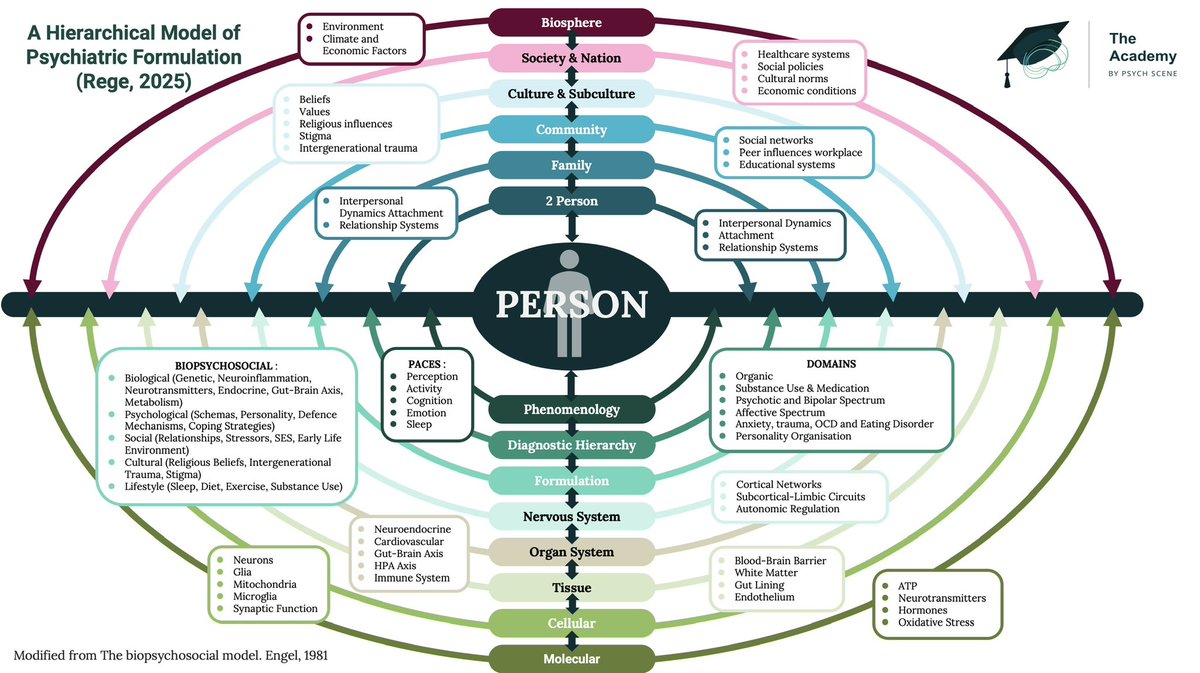
🧵Your Favourite Treatment Isn’t the Whole of Psychiatry 🚨1/16 
This image shows the range of targets we deal with in psychiatry. And it also shows why psychiatry becomes ‘dangerous’ when one target becomes the whole model. There are broadly 3 layers of targets. Let’s explore 👇
Dr Sanil Rege FRANZCP | MRCPsych tweet media
English
4
40
144
7.9K
Sanders がリツイート
William A. Wallace, Ph.D.
William A. Wallace, Ph.D.@WilliamWallace·
Vitamin B12 is absorbed through two pathways. The first is intrinsic factor, a protein produced by parietal cells in the stomach. IF binds B12 in the small intestine and carries it across the gut wall via a receptor called cubilin in the distal ileum. This pathway is efficient but has a hard ceiling: it saturates at roughly 1.5 µg per dose. No matter how much B12 you swallow beyond that, IF cannot carry any more. The second pathway is passive diffusion. About 1 to 2% of any oral dose diffuses across the intestinal lining without IF, and this occurs along the entire length of the gut. At dietary doses, this pathway is negligible. At supplement doses, it becomes the primary route of absorption. Adams et al. (1971, Scand J Gastroenterol) measured whole body retention of radiolabeled cyanocobalamin at different doses. At 1 µg, roughly 50% was retained. At 5 µg, about 20%. At 25 µg, just over 5%. The NIH Office of Dietary Supplements reports approximately 2% absorption at 500 µg and 1.3% at 1,000 µg. The fraction drops dramatically. But the total amount absorbed keeps rising. At 1 µg you absorb about 0.5 µg. At 1,000 µg you absorb roughly 13 µg total, of which approximately 10 µg comes from passive diffusion alone. The RDA is 2.4 µg. Even the backup pathway, working at 1% efficiency, delivers more than four times your daily requirement from a single pill. This is the basis for high-dose oral B12 as an alternative to injections in patients who lack intrinsic factor. The NIH notes that high-dose oral supplementation "may be another treatment option" for pernicious anemia, though injections remain standard first-line therapy and the available randomized controlled trials comparing the two approaches are considered limited in quality. One important nuance: absorbing B12 into your bloodstream is only the first step. After absorption, B12 must bind to a transport protein called transcobalamin to reach your cells. This complex, holotranscobalamin, is the biologically active fraction. It represents only about 20 to 30% of the total B12 circulating in your blood. The remaining 70 to 80% rides on a separate protein called haptocorrin, which does not deliver B12 to most tissues. This is why serum B12 can be misleading as a status marker. A person can have a "normal" total serum B12 level while their holotranscobalamin, the fraction that actually delivers B12 to cells, is low. Methylmalonic acid is a more sensitive functional marker because it rises when cellular B12 is genuinely insufficient, regardless of what total serum B12 shows. Absorption determines how much B12 enters your blood. Transport determines how much reaches your cells. Testing only total serum B12 measures neither of these processes accurately. Adams et al., Scand J Gastroenterol, 1971 NIH Office of Dietary Supplements, 2024 Allen et al., J Nutr, 2018
William A. Wallace, Ph.D. tweet media
English
10
51
213
6.5K
Sanders がリツイート
MECFS, MCAS and PTSD
MECFS, MCAS and PTSD@FatigueMe92484·
Orexin / Dysautonomia Dysautonomia, a disorder of the autonomic nervous system, shares significant overlap with orexin (hypocretin) system dysfunction, which regulates wakefulness, energy, and autonomic functions. Deficiencies in orexin, found in narcolepsy, cause autonomic instability—including tachycardia and blood pressure dysregulation—suggesting that the loss of this neurotransmitter contributes to impaired cardiovascular control. Orexin System & Autonomic Regulation Orexin is produced in the hypothalamus and regulates essential "multi-tasking" functions that are often impaired in dysautonomia patients: Autonomic Control: Orexin modulates breathing, blood pressure, thermoregulation, and heart rate, especially in res ponse to stress. Energy & Metabolism: It helps manage energy balance and metabolism. Arousal: It maintains wakefulness, and its lack results in fatigue, excessive daytime sleepiness, and brain fog. Dysautonomia & Orexin Dysfunction Overlap Fatigue & Sleep Disorders: Disruptions in the orexin system are linked to conditions like Long COVID and chronic fatigue, causing symptoms such as severe fatigue and sleep disturbances. Cardiovascular Dysfunction: Narcolepsy (a prime orexin deficiency disorder) shows autonomic dysfunction, including elevated heart rates and a "nondipping" blood pressure profile (blood pressure not decreasing at night). Neuroinflammation: Neuroinflammation is thought to damage orexin neurons in certain conditions, leading to both fatigue and dysautonomic symptoms.MCAS & Autonomic Dysfunction: Mast Cell Activation Syndrome (MCAS), often linked to EDS and POTS (types of dysautonomia), includes symptoms of autonomic dysregulation such as tachycardia, flushing, and nocturnal histamine surges. Potential Therapeutic Implications Research into orexin-related treatments, such as orexin agonists (to boost levels) and antagonists (to improve sleep quality), is an emerging area for managing fatigue and autonomic symptoms in conditions beyond narcolepsy, though this is considered experimental. Orexin in Respiratory and Autonomic Regulation, Health and Diseases - PubMed share.google/inDZT7Hzpq8fOO…
English
2
9
65
1.4K
Sanders がリツイート
William A. Wallace, Ph.D.
William A. Wallace, Ph.D.@WilliamWallace·
Your body makes collagen constantly. But the version it assembles first isn't finished. Before collagen can hold its shape, an enzyme has to modify specific amino acids in the chain. That enzyme needs vitamin C to work. Here's what vitamin C actually does: it enables the chemical modification (hydroxylation) that allows three collagen chains to lock together into a stable triple helix. Without that modification, the collagen structure is so weak it falls apart below body temperature. Literally. Unhydroxylated collagen melts at about 24°C. Your body runs at 37°C. The only thing keeping your collagen intact at body temperature is the modification that vitamin C makes possible. This is why scurvy causes bleeding gums, loose teeth, poor wound healing, and joint pain. Your body is still making collagen. It just can't hold together. Vitamin C isn't recycled in this process. It's consumed each time. Your supply has to be continuously replenished. Most collagen supplement studies co-administer vitamin C. The ones that don't rarely account for baseline vitamin C status. If you're taking collagen without adequate C, you're supplying the raw material without the tool that finishes it. Sources: Peterkofsky, Am J Clin Nutr, 1991. Shoulders & Raines, Annu Rev Biochem, 2009
William A. Wallace, Ph.D. tweet media
English
5
59
230
6K
Sanders がリツイート
Dr Nathan Keiser
Dr Nathan Keiser@DocKeiser·
She wasn’t misdiagnosed because it was complicated. She was misdiagnosed because people stopped looking. “It's in your head” shouldn’t be the end of the conversation—it should be the beginning of deeper investigation. Patients aren’t the problem. The lens is. #MedicalGaslighting #PatientAdvocacy
English
10
18
95
4.2K