Donny

1.2K posts

Donny

Donny

@SlaughterStocks

options trader looking to learn & grow | TENET

参加日 Aralık 2020
346 フォロー中222 フォロワー
Donny がリツイート
CooperBaggs 💰🍞
CooperBaggs 💰🍞@edgaralandough·
I didn’t fix my resume. I fixed my LinkedIn profile using ChatGPT. In 5 days: 53 views, 3 recruiter DMs, 2 interview invites. Here’s the exact 5-prompt system I used (and how to steal it in 6 mins):
English
9
123
1.2K
167.1K
Donny がリツイート
CooperBaggs 💰🍞
CooperBaggs 💰🍞@edgaralandough·
Turmeric kills cancer cells. Turmeric reduces arthritis pain. Turmeric clears brain fog. Turmeric heals your gut. 6,000 studies confirm it. Add black pepper. Absorption jumps 2000%. One spice. Ancient medicine. Modern proof.
English
333
4K
30.6K
1.6M
CooperBaggs 💰🍞
CooperBaggs 💰🍞@edgaralandough·
Peak male experiences : 1. Finally understanding your Father 2. Owning your first car 3. Accepting the man in the mirror 4. Randomly realizing this is the woman you will marry 5. Becoming successful with your childhood friends 6. Sports team winning a title 7. First heartbreak 8. Watching your kid grow 9. Giving back to your parents 10. Ending imposter syndrome
English
6
5
87
8.8K
Donny がリツイート
Nav Toor
Nav Toor@heynavtoor·
BREAKING: AI can now build financial models like Goldman Sachs analysts (for free). Here are 12 Claude prompts that replace $150K/year investment banking work (Save for later)
Nav Toor tweet media
English
317
2.5K
17.1K
4M
Donny がリツイート
B1
B1@4vmrv·
Tap the post
B1 tweet mediaB1 tweet mediaB1 tweet media
B1@4vmrv

My dad

English
501
1.6K
46.5K
43.2M
Donny がリツイート
L2WTrades
L2WTrades@L2WTrades·
I've made over $100k/m from trading. Here's literally everything you need to know to do the same — in one post… No course. No upsell. Just the truth that took me years to figure out. THE ONLY THING PRICE DOES: Price moves from fair value gaps (internal liquidity) to swing highs/lows (external liquidity). Then back. Forever. That's it. That's the entire market. - External liquidity = where stops cluster (highs and lows everyone sees) - Internal liquidity = where orders didn't fill (gaps in price) Price sweeps external → fills internal → targets opposite external Every day. Every asset. Every timeframe. THE ONLY SETUP YOU NEED: 1) Identify a significant high or low on the 4H/Daily 2) Wait for price to SWEEP it (not just touch it — actually take the liquidity) 3) Wait for a fair value gap to form after the sweep 4) Enter when price returns to fill that gap 5) Stop loss below/above the gap 6) Target the opposite liquidity pool (minimum 3R away) That's the whole strategy. Works on forex. Futures. Crypto. Stocks. Because it's how markets actually function. THE ONLY RULES THAT MATTER: - Never risk more than 1-2% per trade - Never trade without all criteria met - Never trade when bored/emotional/forcing it - Never enter without knowing exactly where you're wrong - Never target less than 2:1 reward to risk THE ONLY SCHEDULE THAT WORKS: - Sunday: Mark weekly levels - Monday-Thursday: Trade 9:30-12:00 AM (or London session if you're up) - Daily: If no setup by 12 AM, done for the day THE ONLY METRICS THAT MATTER: - Expectancy positive? Keep trading. - Following rules? Keep trading. - Breaking rules? Stop trading until you fix it. Win rate doesn't matter if your R:R is right. Confidence doesn't matter if your execution is wrong. Motivation doesn't matter if your system is broken. THE SIMPLE TRUTH: Trading is simple. Not easy, but simple. The market shows you exactly what it's going to do. It sweeps liquidity, fills imbalances, targets opposite liquidity. Over and over. Your job is to wait for that pattern, enter at the right spot, manage risk, and not fuck it up with emotions. 95% of traders lose because they overcomplicate it, overtrade, or can't control themselves. Be the 5%. It's not about being smarter. It's about being simpler. (I teach trading methods that made over $3m total. Anyone can get a free 7 day trial to my trading GC with the link in my bio)
English
20
51
495
35.6K
Donny がリツイート
🍻
🍻@drink2beers·
bad news twin: time is flying good news: you the pilot twin u the fuckin pilot
English
173
22.7K
179K
2.4M
Donny がリツイート
Sean trades
Sean trades@SRxTrades·
Simple rule to follow Above 8/21/50 EMA's = Swing calls and buy dips Under 8/21/50 EMAs = Swing puts and short bounces This one rule will boost your win rate Stick to the trend & be open minded when it changes
English
19
46
649
34.3K
Donny がリツイート
Han Akamatsu 赤松
Han Akamatsu 赤松@Han_Akamatsu·
For the new people in here, here’s Wyckoff's accumulation and distribution schematics for trading: 1) Basic Accumulation: Phases A-E show buying base-building (PS, SC, AR, ST, SOS, LPS). What do the acronyms mean: PS : Preliminary Support First meaningful buying appears after a downtrend. Selling pressure is still dominant, but demand starts showing up. SC : Selling Climax Panic selling. Volume and spread should explode here as weak hands dump and strong hands absorb. AR : Automatic Rally Sharp bounce caused by exhaustion of sellers after the selling climax. Not strength, just lack of supply and needs to be confirmed by volume. ST : Secondary Test Price revisits the SC area to test whether supply remains. Usually lower volume and narrower spread than the selling climax zone. SOS : Sign of Strength Price advances with ease. Higher highs, wider spreads, stronger closes. Demand here is in control at this point. LPS : Last Point of Support A controlled pullback after the Sign of Strength. There’s there little, low volume. Ideal accumulation entry for longs. 2) Basic Distribution: Selling peaks with UTAD, LPSY, SOW. What do the acronyms mean: UTAD : Upthrust After Distribution, is what Wyckoff used to call. An Upthrust. It’s a false breakout above resistance. Smart money unloading into breakout buyers. You need to see good volume here. LPSY : Last Point of Supply Weak rally after a distribution. Low volume, poor progress. Mirror image of Last Point of Support (LPS). SOW : Sign of Weakness Breakdown with expanding spread and volume. Supply is the dominant factor here. 3. Markup: Is a trending advance after accumulation. Higher highs and higher lows. Markdown: Is a trending decline after distribution. Lower highs and lower lows. 4) Creek: Is a resistance zone created during accumulation. Think of it as overhead supply. Jump Across the Creek (JAC) Strong breakout through resistance. Confirmation of accumulation success. Back-Up to the Creek (BUC) Pullback after JAC to test former resistance as support. 5) If you’re using Wyckoff’s methodology, you always need to have volume on. Back then, when Dr Richard wrote his book, all they had available was volume. Nothing else.. For it to work, you need to see how volume reacts on price action. You’ll understand whether bears are in control of the market or if bulls are in control of the market.
Han Akamatsu 赤松@Han_Akamatsu

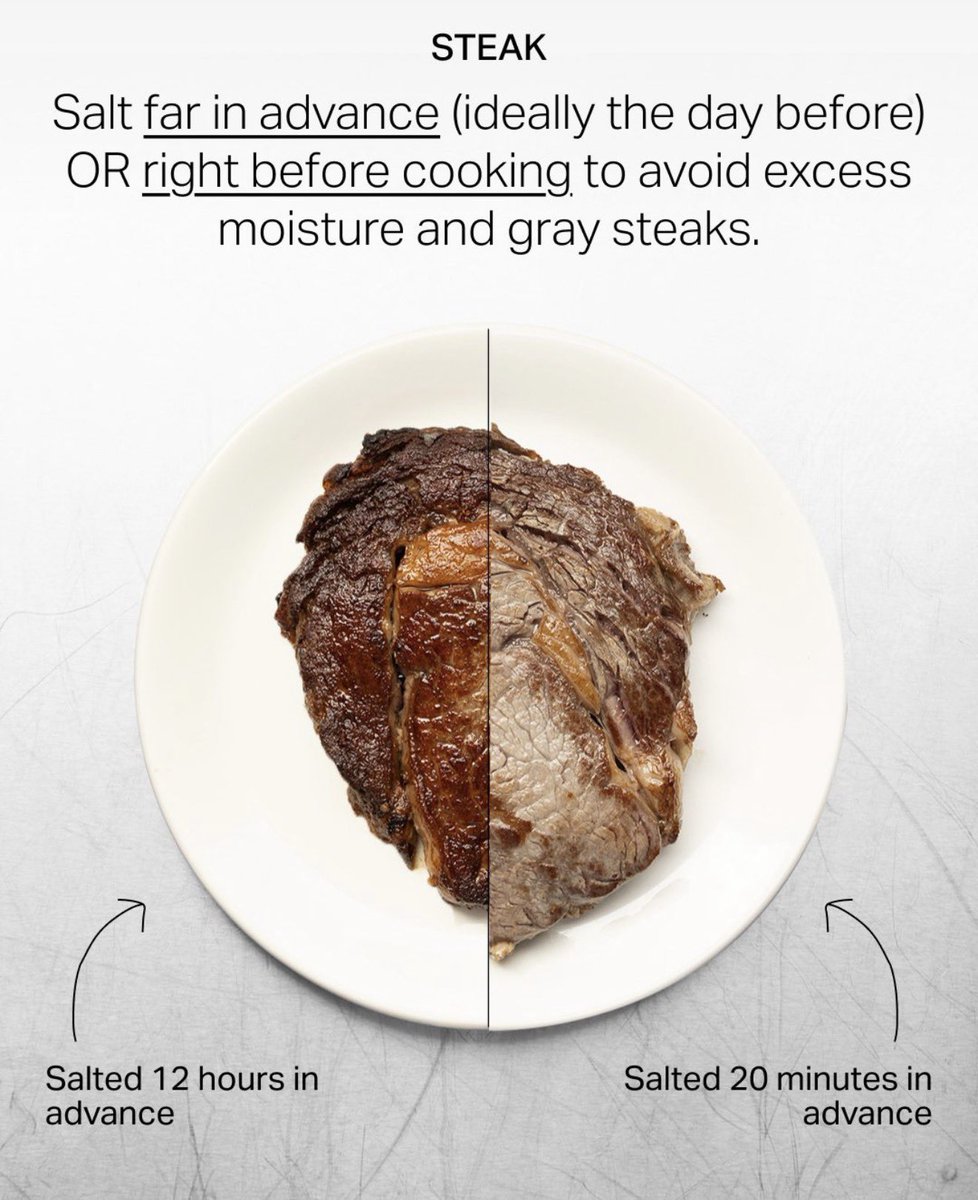
If you’re serious about trading, these are the 6 basic charts that you need to study. + Volume methodology.

English
8
29
218
34.1K
Donny
Donny@SlaughterStocks·
@_0DTE Don’t those expire today?
English
0
0
0
81
Donny がリツイート
James Walker
James Walker@jwalkermobile·
From the MadeIn site, thought some of you might find this interesting…
James Walker tweet mediaJames Walker tweet mediaJames Walker tweet mediaJames Walker tweet media
English
119
3.2K
61.2K
2.1M
Donny がリツイート
Aakash Gupta
Aakash Gupta@aakashgupta·
This is one of the most important studies in sleep science. Van Dongen et al. ran the experiment that changed how we understand chronic sleep restriction. They had subjects sleep 4h, 6h, or 8h nightly for 14 days, testing cognitive performance every 2 hours. The 6h group’s reaction time deficits by day 14 matched subjects who had been awake for 24 hours straight. The 4h group? They performed like someone awake 48 hours. But here’s what makes this study terrifying. The Stanford Sleepiness Scale ratings in Panel B plateau after day 3-4. Subjects stopped feeling more tired even as their cognitive performance continued deteriorating through day 14. Your subjective experience of fatigue is a lagging indicator that eventually just… stops updating. This explains why chronic undersleeping feels sustainable. You’ve adapted to feeling tired. Your prefrontal cortex hasn’t adapted to being impaired. The PVT (Psychomotor Vigilance Task) in Panel A measures lapses in attention. These are the moments where you’re staring at a screen and your brain simply checks out for 500ms. Every additional day of 6h sleep adds more lapses. The curve never flattens. Panel C and D show working memory and processing speed. Same pattern: continuous degradation with no subjective awareness. The practical implications: If you’re sleeping 6h and think you’re functioning fine, you’ve lost the internal calibration to know you’re not. The subjects in this study would have told you they felt “okay” while performing like they’d pulled an all-nighter. For anyone doing cognitively demanding work, this means you cannot trust how you feel. You need to track objective markers: error rates, decision latency, problem-solving throughput. Sleep need is biological, not negotiable. Most adults require 7-9 hours, and the research shows no population-level adaptation to chronic restriction. “I only need 6 hours” is almost always “I’ve forgotten what baseline cognition feels like.“
Bailey Klemmensen@iiKlemm

Competitive gamers: 6h of sleep is a hidden nerf. 6h/night for 2 weeks → reaction time & attention decline to the equivalent of pulling MULTIPLE all-nighters. Worst part: subjective fatigue plateaus, so you stop noticing. If you're not getting 7+ hours/night, you're trolling.

English
231
4.2K
31.5K
4.1M
Donny がリツイート
Jeff Sun, CFTe
Jeff Sun, CFTe@jfsrev·
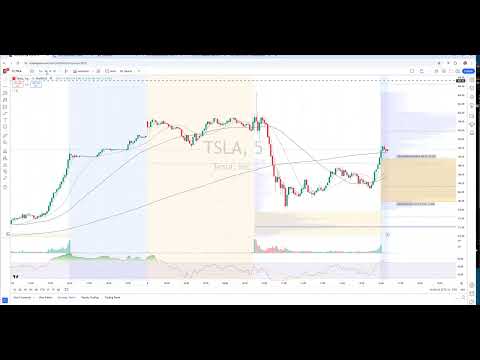
Systemizing profit taking for me, with some nuances highlighted; 1. Entry Day = Day 0, 3 stops at 33% level to final stop (usually LoD). 33% net size at each level. 2. If profit to risk exceeds 2x in day 0-2, i will shave 33% off. all 3 stops level will be maintained, have size adjusted to the net balance qty. I have highlighted several post on managing risk with 3 segregate stops to reduce your 1R loss even 0.6 to 0.8R. 1R loss is not 1R, more often than not it is 1.03 to 1.3R with slippage, spread, borrwing etc depending on liquidity of the securities on average period, and at time of explosive move u saw it is already making. 3. Day 3 = 33% size down (immediate partial profit taking or shaving risk down on trade that did not follow through but still hovering above avg entry as I have tight stops (since I only do execution when price action presents entry to LoD below 60%). All stops are consolidated to breakeven level on 1 full singular size. 4. Day 4 onwards is all mental stop on 10-MA. I do not mess with the trade if it doesn't close below 10-MA. eg. If close below 10-MA on Day 8, stop remains at breakeven level on Day 9 and I will let market trade for a opening range of 5 minutes and adjust my breakeven stop to the low of the opening range (ORL) and let it the market take it out. If stop not taken out by EOD of Day 9, during pre-market routine i will adjust back to breakeven, and reset new ORL for Day 10. I repeat this process until it get taken out. The rationale is to hold onto your winning trade as long as possible with minimal sacrifice or unrealize profit. Study my $XLU entry on 9th July. I'm still holding, and even added along the way up today (86 calendar days and running). 5. Some nuances to consider; i) if I were to take a catalyst gap trade eg. 1/10 (Day 0) $UNFI +100% surprise beat in EPS and intraday hit 10 x ATR% extension to 50-MA. When $UNFI hit 2x profit-risk in full size within 25 mins of the trade, I take 33% size off. It continue to follow through and hit 10 x ATR% extension from 50-MA. It is extremely unlikely for me to even be aware of this because I usually shut off after 3 hours from open and let my stops take care of my open heat risk. I will let Day 1 open and size down further 33% of net size as partial profit taking. When a trade ran up exceeding 4x profit to risk before my Day 4 breakeven, i will definitely consolidate all risk to a singular stop at breakeven. I am taking the risk of losing the remaining unrealized profit but it definitely don't make sense to visit losing range (below entry) by maintaining stop at 33%/66% and LoD stop at this parabolic point. ii) if i were to hold a swing trade beyond day 4 (all stops already consolidated at breakeven with partial profit taking already taken place), and trade continue to trend much faster than 50-MA to give me a 8-10x ATR% extension from 50-MA, this is a partial profit taking alert for me to sell on strength. eg. size down 33% of net size and readjust breakeven stop quantity accordingly. stop is always at breakeven with mental stop at 10-MA. iii) if Day 0 entry executed, and hit my first 33% level stop or even slice through to 66% level stop (2 stops trigger) before Day 4, i will always adjust a horizontal price alert to previous day high (the stop day), and if it trigger, i will add size inverse pyramid method (eg. 10,000 shares in, 6,666 shares stopped out and nett 3,334 shares. I will add 50% of 3,334 size (1,667 size) bringing me back to 50% net size instead of 33% net size). By doing so, if trade turn south to LoD stop on the singular day, u will not be hit risk exceeding 1R even with attempt to re-scale back up. iv) In holding a trade beyond Day 4 (with consolidated stop at breakeven at nett size), if there were to be a sideway price consolidation setup below 4x ATR% from 50-MA, i will inverse pyramid add 50% size of my nett size. @Qullamaggie treat it as a separate new setup but i prefer managing the same ticker as a single trade. By adding smaller size up this way, your avg price to the trade will not be severely disrupted and will bound to be below your 10-MA mental stop. You can continue to trail the trade like it was but with more potential profit trajectory to the trade. v) gap down open occasion below 10-MA, the routine i take is the same as 4. on ORL. The way I manage profit sizing and adjust stops in a sequential manner is aimed at reducing monthly drawdown % and achieving a smoother equity curve on a MoM basis. As your equity grows (especially when it surpasses your absolute dollar risk tolerance relative to your monthly expenses), seeing unrealized profit drop from, say, +$500,000 to +$280,000 in a single session can be hard to handle, even if you're following textbook rules. I believe not many can emotionally withstand holding 8-10 full-sized trades with 80% portfolio utilization, especially when trading with a bankroll that significantly impacts their quality of life and that of their dependents.
Alvin Tan WT@MOONBENG1

@jfsrevg With long u consider profit taking around 10xatr or so. Now with short. How do you systemise profit taking? Base on time? Or do MA levels. Also what could support the thought behind taking profits with short
English
42
124
642
156.7K
Donny がリツイート
Jeff Sun, CFTe
Jeff Sun, CFTe@jfsrev·
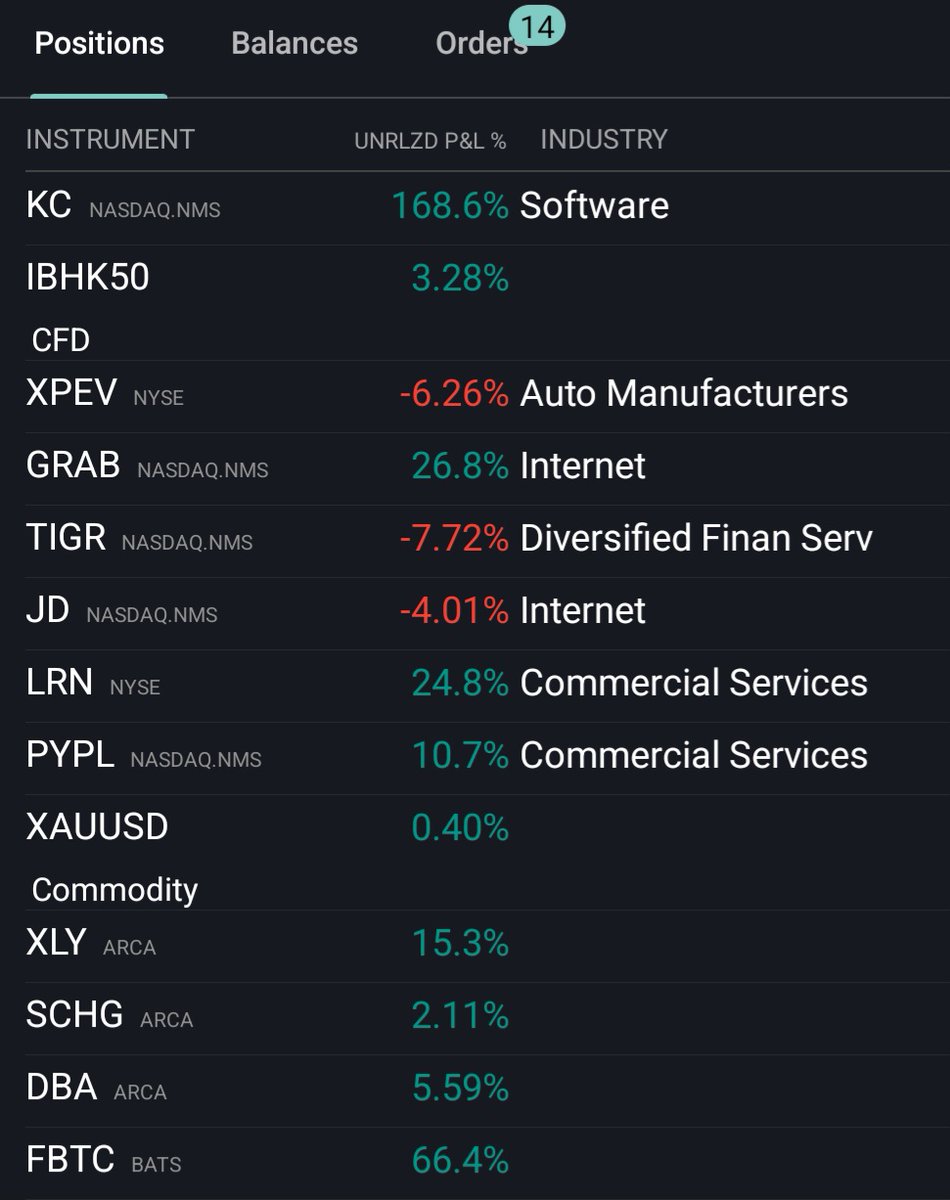
Why Certain @Qullamaggie Trading Rules Stand The Test Of Time As Golden. After a broad market pullback, most questions tend to focus on, 'What rules do you use to manage unrealized profits and avoid significant profit losses? Taking on too many new positions has always been my pitfall—how can I overcome this over time?'" I am currently carrying 13 positions, with a spare 30%-40% cash level. Aside from $FBTC, I built the portfolio with barely 6-7 position since the beginning of November at 130% level with margin. There are certain golden trading rules here that clearly demonstrate why they are considered golden in the first place, @Qullamaggie has emphasized the same principles repeatedly throughout his 7 years of streaming. So imagine him 'screaming' the following to you again; 1. "Always Sell Some Into Strength!" - because you locked in realized profit to reduce unrealized profit volatility, and you get to free up funds for newer opportunities in subsequent setup as the market continue to shape. $GRAB $FBTC $KC $XLY $DBA $LRN $PYPL $SCHG. The 8 positions highlighted undergone a 25-33% sale in T+3 day, subsequent 10 x ATR% extension from 50-MA (nett 25-33% sale), gap up sale eg. $PYPL yesterday (nett 25-33% sale). 2. "The second you think you are smarter than the 10 & 20 day MA, that's when you are doomed for mediocrity. Trust me. I talk from experience." - While you implement a partial profit/sell rule, you do not sell everything until the market proves you wrong. Who would have thought $KC trade could make a 200% gain in a month? Learn to hold your position and ride winners. The outlier position that can make a impact in your % performance are often those that you do do not expect to make a huge move. $FBTC $LRN are the only position that closed below 10-MA from yesterday's move, so those are the only position that may take me out on M15 opening range low. I wrote a piece here on systemizing profit taking a few months ago x.com/jfsrevg/status… 3. "If it hit your stop, you grab your balls and hit the sell button'' - It’s a bit embarrassing to admit, but I’ve been highlighting China names on my posts for weeks—and the move finally happened yesterday. Aside from IBHK50 futures that wastaken last week when it break its range, I took $XPEV $JD $TIGR from yesterday's breakout at open. Picture perfect setup; RVOL 60% in 5mins, LoD was less than 60% for the 3. Before the market close, I was already hit with 2/3 stop for 2 of the position and 1/3 stop for 1 of the position. The 3 are poised to open with a much reduced gap down later (the post market % loss was much more 6 hours ago), I will take the loss. This is also where the magic of 3 level stop at 33% level plays out. It protects your downside and I am very unlikely to hit with 3R loss for the 3 trade. I also wish to qualify that there are 9 further losing trades in the last 9 weeks. $VRT $SCO $TECL $AMPX $JDST $SYTA $ERX $UNG $GGLL This is how 3 level stops work if you want to read more. x.com/jfsrevg/status… Another rule that I strongly urge everyone to explore and implement is reducing and set a limit to your daily-weekly new position frequency. Go to your journal and track that 1-3 days duration (MoM) that you are 'hyper' actively executing new position, Are the outcome desirable? If not, taking on too many new positions will always be a trading pitfall, and you can fixed this immediately. I strongly believe in the edge of knowing when to go 'heavy' vs 'light' in terms of trade frequency and activity. I will be reluctant to new risk exposure when $SPY is 4 x ATR% from 50-MA when it historically pullback from 5 x ATR% from 50-MA While I was preparing this writeup, I also just came across @stamatoudism post on application of ADR% of on portfolio management. This is something worth exploring if you have unrealized profit volatility issue in your portfolio management. I sincerely believe topic like this will grow you much more as a trader than just flipping charts daily without having a tolerance and risk control of unrealized profit loss in real time situation. Here's quote from yesterday's post market TTG Stock Market Recap by @cfromhertz that may help you to look at this situation in a different light, "If you've been doing this for awhile, you actually like a little bit of these pullbacks. They help reset the market, especially when buying during a period of overheated momentum and growth wouldn't have been wise."' - @cfromhertz , 9/12/2024 Stock Market Recap by TTG: China Gaps Up / Growth Takes A Well Earned Breather - youtube.com/watch?v=sk6LEY…
YouTube video
YouTube
Jeff Sun, CFTe tweet media
Jeff Sun, CFTe@jfsrev

It's acceptable to give back one day of unrealized profit after being up for two weeks. But, it's not acceptable to lose more in a single day than what you worked hard to gain over those two weeks.

English
28
84
611
149.2K
Donny がリツイート
Prof
Prof@TheProfInvestor·
Uranium Nuclear China Solar Energy Those are my bullish bets of 2026.
English
67
111
1.5K
116.2K
Donny
Donny@SlaughterStocks·
RT @ripster47: 🚨Important: Webull Users If you want Official Ripster & MTF Clouds on Webull so you can directly trade on @WebullGlobal Ch…
English
0
33
0
3
Donny がリツイート
Saty
Saty@satymahajan·
I wish I could play Elden Ring again for the first time. Peak!
English
13
5
51
5.8K