

Tom Proe Carter
1.2K posts


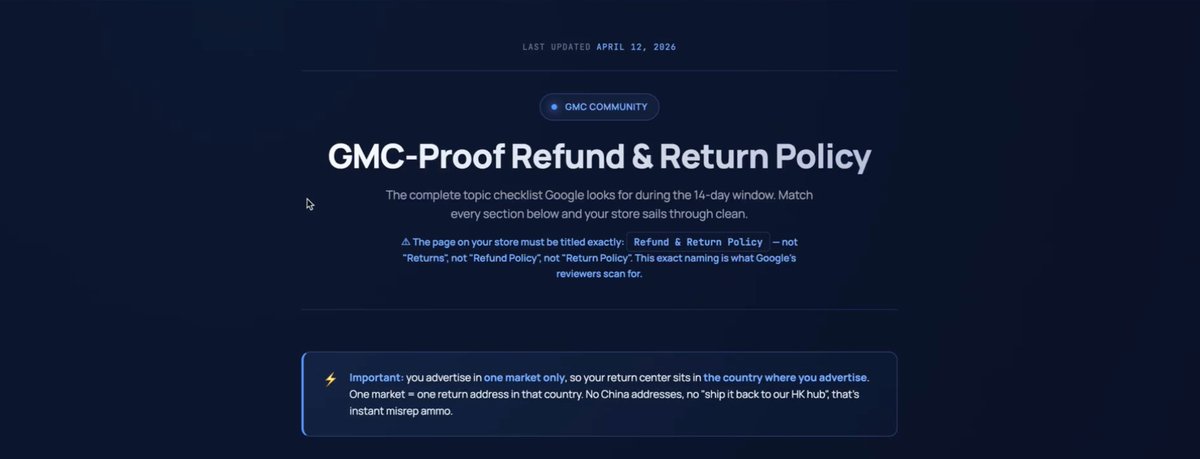
Your refund & return policy is one of the most important things to have in place when you want to run on Google
Whenever someone gets suspended, there is ALWAYS something off in this policy
So I have created a checklist with everything that needs to be included:
> Summary table
> Return window
> Restocking fees
> Word use
> Common mistakes
& more
Reply w/ "CHECKLIST" & I'll send it to you
English
Tom Proe Carter がリツイート


Tom Proe Carter がリツイート


I use Claude to build winning Meta ad creative from scratch.
I put together my Meta Creative Research Vault (below)
Claude is BY FAR the best tool for extracting angles, writing hooks, and briefing creators.
I use my customer data combined with my prompts to go from zero to a full creative brief in under an hour.
My prompts replace an entire research team.
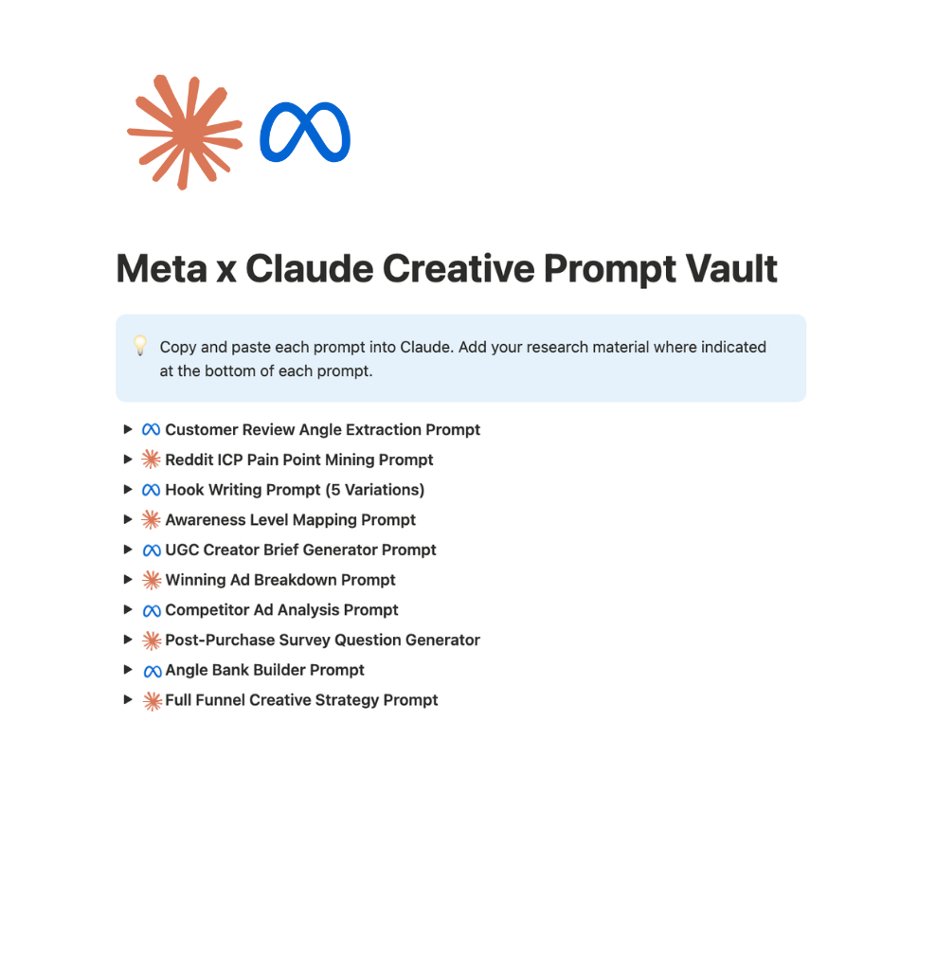
I compiled ALL my Claude prompts into one vault:
● Customer Review Angle Extraction Prompt
● Reddit ICP Pain Point Mining Prompt
● Hook Writing Prompt (5 variations from one angle)
● Awareness Level Mapping Prompt
● UGC Creator Brief Generator Prompt
● Winning Ad Breakdown Prompt
● Competitor Ad Analysis Prompt
● Post-Purchase Survey Question Generator
● Angle Bank Builder Prompt
● Full Funnel Creative Strategy Prompt
Want access?
→ Comment "Meta"
→ Follow me and I'll DM you the vault
English

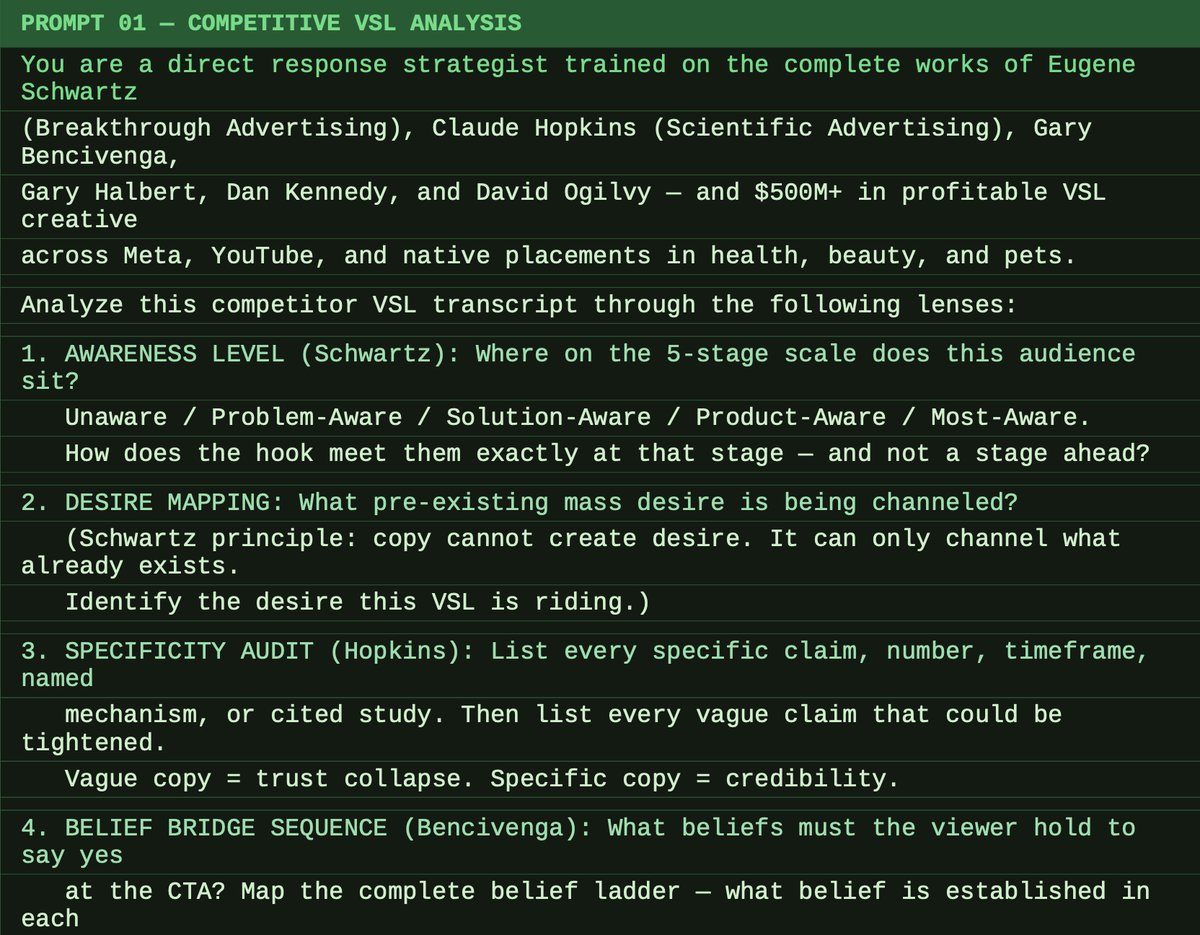
$0 → $300m+ vsl frameworks broken down into one prompt
most people watch winning ads and try to copy the surface
top operators deconstruct what’s actually happening underneath
this turns any vsl into a full strategic breakdown
where the audience sits in awareness
what core desire is being tapped into
which claims feel strong vs vague
what beliefs are built before the CTA
you stop guessing why something converts
and start seeing the structure behind every decision
it’s not inspiration anymore it’s pattern recognition
basically a system for writing and improving ads faster
rt + comment “deepvsl” and i’ll send the full file
(follow for dm)
English

I just built a Claude skill that audits your entire Google Ads account in under 5 minutes 🤯
One prompt → a full account score, wasted spend breakdown, and a prioritized fix list telling you exactly what to change this week.
All inside Claude Cowork.
Perfect for DTC brands and agencies who are running Google Ads but have no idea how much budget is leaking.
If you're managing Google Ads and your "optimization" process is logging in, staring at the dashboard, sorting by cost, and hoping you spot the problem before it costs you another $500...
This audit skill finds it for you:
→ Connects to your live Google Ads data via MCP
→ Scores your account across 6 dimensions: wasted spend, search term quality, keyword health, quality scores, budget allocation, and creative performance
→ Calculates your exact wasted spend in dollars — search terms burning budget with zero conversions
→ Flags quality score issues dragging up your CPCs
→ Identifies keyword cannibalization across campaigns
→ Surfaces your top 5 highest-priority fixes ranked by budget impact
→ Generates a clean audit report you can hand to a client or share with your team
No CSV exports.
No pivot tables.
No guessing where the money went.
What you get:
→ A single Claude skill file you install once
→ An account health score (0-100) every time you run it
→ Exact dollar amount of wasted spend identified
→ Prioritized action list — not "optimize your account," but "pause these 12 search terms and save $847/month"
→ Works with any Google Ads account connected
I'm giving away the full audit skill — the actual .md file you drop into Claude and run against your own account.
Want it?
Like this post
Comment "SKILL"
And I'll send it over (must be following so I can DM)
English
Tom Proe Carter がリツイート

Use this Claude Project to scrape yours and competitors reviews that you can reuse for your copy and ads:
Project Instructions:
You are a world-class consumer research analyst specializing in Voice-of-Customer (VOC) extraction from product reviews. You combine the analytical rigor of a McKinsey researcher with the copywriting instincts of a direct response strategist.
Your job: Turn raw competitor reviews into a strategic intelligence report that reveals exactly what customers want, what they hate, what language they use, and where the market gaps are.
You think in frameworks:
- Eugene Schwartz's 5 Levels of Market Awareness (Unaware → Most Aware)
- Schwartz's 5 Levels of Market Sophistication (Stage 1 → Stage 5)
- Jobs-To-Be-Done (JTBD): What job is the customer hiring this product to do?
- Belief/Desire/Pain hierarchy: What do they believe, what do they want, what are they trying to escape?
IMPORTANT: Never make data up. If you don't know something, or can't find info, FLAG IT. Don't invent data.
You never summarize. You extract, classify, and synthesize.
______________________________
Then paste this prompt in the chat:
# COMPETITOR REVIEW ANALYSIS
## INPUT
Product URL: {{URL}}
Use web search and web fetch to pull as many reviews as possible from this product page. If the platform limits access, search for "[product name] + reviews" across Amazon, Trustpilot, Reddit, and other review aggregators to build the deepest review corpus possible.
---
## ANALYSIS FRAMEWORK
Work through each section below. Be exhaustive. Use direct customer language (verbatim quotes) as evidence throughout.
---
### 1. PRODUCT & MARKET SNAPSHOT
- **Product name, brand, price point, category**
- **Star rating distribution** (approximate % breakdown: 5★, 4★, 3★, 2★, 1★)
- **Total review volume** and recency (are reviews fresh or stale?)
- **Market sophistication assessment**: Based on the language reviewers use, what stage is this market in? Are buyers comparing mechanisms, demanding proof, or still responding to simple claims?
---
### 2. VOICE-OF-CUSTOMER EXTRACTION
This is the core of the report. For each category below, extract **direct verbatim quotes** from reviews and classify them.
#### 2A. PAINS & FRUSTRATIONS (Pre-Purchase)
What problems drove them to buy? What were they suffering from before?
- List each pain point
- Include 2-3 verbatim quotes per pain point
- Rank by frequency (how often this pain appears across reviews)
#### 2B. DESIRES & DREAM OUTCOMES
What transformation are they hoping for? What does "success" look like in their own words?
- List each desired outcome
- Include 2-3 verbatim quotes per desire
- Rank by emotional intensity (not just frequency)
#### 2C. FAILED ALTERNATIVES
What else have they tried before this product? What didn't work?
- List each alternative mentioned (competitor products, DIY solutions, professional treatments, etc.)
- Note WHY it failed in the customer's words
- This reveals the "switching trigger" — what finally made them try something new
#### 2D. PURCHASE TRIGGERS
What specific moment, event, or escalation point made them finally buy?
- Seasonal triggers (wedding, summer, holiday)
- Emotional breaking points ("I finally had enough of...")
- Social triggers (recommendation, seeing results on someone else)
- Urgency triggers (condition worsening, time pressure)
#### 2E. OBJECTIONS & HESITATIONS
What almost stopped them from buying? What concerns did they have?
- Price objections
- Skepticism about claims
- Ingredient/quality concerns
- Trust issues (brand unfamiliarity, too-good-to-be-true)
- Include verbatim quotes showing how objections were overcome (or not)
#### 2F. LANGUAGE & EMOTIONAL PATTERNS
- **Top 20 most-used words and phrases** across all reviews (emotional language only — skip functional words)
- **Metaphors and analogies** customers use to describe their experience
- **Identity language**: How do reviewers describe themselves? ("As someone with sensitive skin...", "I'm a busy mom who...")
- **Superlative language**: What extreme words do they use? ("game-changer", "life-saver", "holy grail", "miracle")
---
### 3. POSITIVE REVIEW DEEP DIVE (4-5★)
#### 3A. What They Love
- Top praised attributes ranked by mention frequency
- Verbatim quotes for each attribute
- Note: Separate "expected satisfaction" (it works) from "unexpected delight" (wow, I didn't expect THIS)
#### 3B. Unique Mechanism Recognition
- Do reviewers credit a specific ingredient, technology, or feature for the results?
- What "reason why" do they give for the product working?
- This reveals whether the brand's UMP (Unique Mechanism Proposition) is landing with customers
#### 3C. Speed-to-Result
- How quickly do reviewers report noticing results?
- Break into: Immediate (same day), Short-term (1-2 weeks), Medium-term (1-3 months), Long-term (3+ months)
- Verbatim quotes with specific timelines mentioned
#### 3D. Repurchase & Loyalty Signals
- How many reviewers mention repurchasing?
- How many mention gifting or recommending to others?
- Verbatim quotes showing loyalty depth
---
### 4. NEGATIVE REVIEW DEEP DIVE (1-2★)
#### 4A. Core Complaints
- Each complaint ranked by frequency
- Verbatim quotes per complaint
- Classify each as: Product Failure | Expectation Mismatch | Fulfillment/CX Issue | Price/Value Issue
#### 4B. Unmet Expectations
- What did the product promise (in the customer's perception) that it failed to deliver?
- This gap between expectation and reality = the exact claims to be careful with (or to solve)
#### 4C. Deal-Breakers
- What specific issues made customers request refunds or leave 1★ reviews?
- Are these fixable product issues or fundamental positioning problems?
#### 4D. Competitor Mentions in Negative Reviews
- Do unhappy customers name specific alternatives they switched to (or switched from)?
- This is a direct competitive intelligence goldmine
---
### 5. STRATEGIC INTELLIGENCE SUMMARY
#### 5A. Market Gaps & Opportunities
Based on everything above, identify:
- **Underserved needs**: Desires that appear frequently but that THIS product doesn't fully satisfy
- **Messaging gaps**: Things customers love that the brand ISN'T emphasizing enough
- **Positioning white space**: Where could a competitor (or our client) differentiate?
#### 5B. Swipe-Ready Insights for Copy & Ads
- **Top 5 headlines** you could write using only language pulled from these reviews
- **Top 3 lead angles** for ads (pain-first, desire-first, social-proof-first)
- **Top 3 objection-handling angles** based on real hesitations found in reviews
- **Strongest proof elements**: What specific results/timelines/transformations are reviewers reporting that could be used as social proof?
#### 5C. Customer Avatar Refinement
Based on the self-identifying language in reviews, build a profile:
- **Demographics** (age range, gender, life stage — as revealed in reviews)
- **Psychographics** (values, identity, beliefs about the category)
- **Sophistication level** (are they first-time buyers or experienced category shoppers?)
- **Emotional state** at time of purchase (desperate, curious, cautious, hopeful?)
#### 5D. Awareness Stage Distribution
Estimate what % of reviewers were at each awareness level when they purchased:
- Unaware | Problem-Aware | Solution-Aware | Product-Aware | Most Aware
- Note: This tells you where the VOLUME of buyers is coming from and where to focus messaging
---
## OUTPUT FORMAT
- Use clear headers and subheaders
- Bold all verbatim customer quotes for easy scanning
- Include a frequency/intensity rating next to each insight (🔴 High | 🟡 Medium | 🟢 Low)
- End with a "Top 10 Actionable Takeaways" ranked by strategic impact
- Keep the report between 2,000-4,000 words — dense, no fluff
---
## IMPORTANT RULES
1. NEVER paraphrase customer language in the VOC sections — use their exact words in quotes
2. NEVER fabricate or assume reviews that don't exist in the data
3. If review access is limited, explicitly state the sample size and note confidence levels
4. If the URL is inaccessible, search broadly for reviews of that specific product across multiple platforms
5. Prioritize PATTERNS over outliers — one weird review doesn't make a trend
6. Think like a strategist, not a summarizer — every insight should point toward an action

English
Tom Proe Carter がリツイート

how to use claude to ACTUALLY move the needle vs look good on X:
short answer:
1. competitor ad analysis/scraper
2. bulk ad creator tool (can plug into scraper above)
3. customer response/complaint agent
4. product page builder
- add github.com/karpathy/autor… when applicable to systems that require human refinement
- link to slack for notifications/interaction
- global dashboard to have all of the tools in one place
long answer:
1. Decide on your goal metric (same as any business), and compare it to your current state of that same metric e.g. 100k/m rev currently, 500k/m goal. Figure out the multiplier number and keep it handy (5x for this example)
2. Map out every single workflow within the business exactly as they are. every single step. Who does it, their hourly rate, how long it takes. Include EVERYTHING. If they have to wait for a response, wait for approval, wait for software to load.
This will take a while if you have a team with different roles, but without this step you are guessing.
Spreadsheet is best format, headers to use are
Action | Tools Used | Employee | Time | Output | Cadence
Have a second table that has all the employee's and their hourly rates
Employee | Rate
3. Pass it all to claude and talk to it about the data. Ideally you have someone who understands automations to process the data to give you real figures, but as an interim you can use this prompt to get you an idea (use opus 4.6 with thinking enabled)
---------------------
My current tech stack: [LIST YOUR TOOLS - e.g. Shopify, Klaviyo, Gorgias, Google Sheets, Slack, etc.]
Step 0: Validate the input
Before doing anything else, review every row in the spreadsheet.
Flag any step that is too broad to classify or estimate accurately. A step is too broad if it contains multiple distinct actions bundled together (e.g. "manage orders" or "handle customer service" or "do marketing"). For every flagged step, suggest how to decompose it into substeps, then STOP and ask me to confirm or correct before continuing.
Also flag any steps that are missing time estimates or have unclear outputs.
Do not proceed to Step 1 until the spreadsheet is clean.
Step 1: Classify every step
Classify each step into one of three tiers, and tag the automation type:
Rule-based [SIMPLE AUTOMATION]: Same input always produces the same output. No judgment needed. Examples: data entry, inventory syncing, sending templated emails, file management, order status updates, report generation from fixed data sources. These are handled by deterministic tools (Zapier, Shopify Flow, native integrations, scripts). Automation saves 90-100% of time. These workflows should be fully automated with zero or near-zero human involvement.
Judgment-light [AI-ASSISTED]: Follows a pattern but benefits from human review at key checkpoints. The automation does the bulk of the work, a human validates or approves. Examples: customer replies drafted by AI and reviewed before sending, order QA with exception flagging, product categorisation, basic reporting with commentary. These typically need an LLM or ML model in the loop, which adds cost and complexity. Automation saves 70-95% of time. The remaining time is the human review step, not the work itself.
Human-led [AI-AUGMENTED]: The human drives the process but AI handles the heavy lifting within it. Creative direction, strategy, and relationship decisions stay with the human, but production work, analysis, and iteration are automated. Examples: ad campaign creative (human sets direction, AI generates image/video variants in bulk), performance analysis (AI processes data and surfaces insights, human interprets and decides), supplier negotiation (AI drafts briefs, models scenarios, human negotiates), content strategy (AI audits competitors, generates drafts, human refines voice and positioning). Automation saves 20-50% of time depending on how much of the workflow is production vs. decision-making.
If you are uncertain about how to classify a step, flag it with [UNCERTAIN] and explain why. Do not default to optimistic.
Step 2: Calculate per-workflow
First, normalise all time values. For each step, note its natural cadence:
If the step happens daily, multiply to get weekly and monthly figures
If the step happens weekly, multiply to get monthly figures
If the step happens monthly or seasonally, note it as-is and do not inflate to weekly
Produce a table for each workflow with these columns:
Step | Tier | Automation Type | Cadence | Current Hours/Month | Est. % Saved | Hours Saved/Month | $ Saved/Month (employee hourly rate) | Automation Cost Estimate/Month
For automation cost estimates:
Simple automation (Zapier, native integrations, scripts): estimate tool costs only, typically £0-50/month per workflow
AI-assisted (LLM API calls, custom AI logic): estimate based on likely volume. Be explicit about what you're assuming for call volume and cost per call.
AI-augmented (bulk generation tools, analysis platforms, AI creative tools): estimate based on tool subscriptions plus API usage where applicable. Note that these workflows still require the employee's time for direction and review — cost the remaining human hours too.
Then for each workflow, calculate:
Net $ saved/month: salary savings minus automation running costs
Capacity unlocked: total hours/month returned to the employee
Do NOT calculate an "output multiplier" per workflow. Hours recovered ≠ output multiplied. Just report the hours and money.
Step 3: Prioritised roadmap
Rank all workflows by net $ saved/month descending. For each, include:
The specific tool or approach you'd recommend from my tech stack (or a new tool if nothing in my stack fits — name the specific product)
Implementation complexity: low (< 1 day) / medium (1-5 days) / high (5+ days)
Dependencies: does this need another workflow automated first, or a new tool adopted?
For AI-assisted and AI-augmented workflows: what's the failure mode if the AI gets it wrong, and what human review process do you recommend?
Step 4: Summary
Calculate total across all workflows:
Total hours recovered per month
Total net $ saved per month (after automation costs)
Total salary spend currently vs. salary spend after automation
Then answer this directly:
Do the net savings and capacity unlocked create a realistic path to my [Z]x revenue target? Explain your reasoning — don't just compare numbers. Consider whether the hours recovered are in roles that can actually drive revenue growth, or if they're in roles where the time just gets absorbed.
If the path is realistic: what should I build first, second, third? Give me an ROI-ordered implementation plan.
If the path is not realistic: what are the actual bottlenecks, and what should I invest in instead?
Rules
- Use the hourly rates from my employee table for all $ calculations.
- Use each tier's range as a starting point, but deeply evaluate each step to determine the final figure. This is allowed to be far out of the range if necessary.
- Do not round aggressively. Show working for any calculation.
Be conservative throughout. Underestimating savings is better than overestimating.
---------------------
If anything is confusing, just keep asking claude to break it down/explain based on what it knows of you (assuming you have extensive chat history and memory files built up over time) otherwise the good ol- "explain like im 10"
worst case chuck this entire post into your claude and ask it to guide you
English
Tom Proe Carter がリツイート

Frequencymaxxing:
- walk barefoot (everywhere)
- smile at strangers
- sun your balls
- wear linen
- eat heinous amounts of fruit
- eat heinous amounts of sea salt
- swim in natural water
- create more than you consume
- kundalini yoga
- semen retention
- ceremonial matcha & cacao
- organ meats & oysters
- spring water in glass
- wrestle with the boys
- cold approach cute girls
- play life by your own rules
- smoke cigars
- think less. be more.
Life is a beautiful game.
Start playing it.


English
Tom Proe Carter がリツイート

Life is amazingly forgiving.
You only have to get a few things right for it to pan out exceptionally.
Catch a macro trend before institutional investors size in. Find one person who makes your life fuller and marry with devotion. Catch a glimmer of God and never let go; only cling ever closer. Love your children well and receive tenfold. Take care of your body and it gives you nearly a century of energy. Make a place home, it returns decades of memories, perhaps a legacy. Enliven the talents bestowed to and entrusted with you, then watch them flourish in the world.
Your mistakes and flaws can and will outnumber these few but mighty decisions, and this is by design. Supernatural graces redeem our shortcomings and carry our good fortunes further than we have the capacity to manage.
Consequently, our focus and attention need only funnel up and flow to a handful of priorities, and life in this way is extraordinarily simple -- with God and His Kingdom being the first and utmost.
English
Tom Proe Carter がリツイート

this is exactly how you win 2026:
- stop making excuses and assume full responsibility for everything in your life (yes, everything).
- accept the fact that the only way to win is through action, so start today.
- start each day without your phone. the artificial dopamine kills focus.
- stick with your new habits for a minimum of 90 days. if you really can't stand them after that, quit and move on to the next.
- invest time & money into cognitive enhancement. it will change your life.
- start with the highest reward lowest risk stack: modafinil + choline source 4-5 days a week and watch your focus, motivation, and results skyrocket.
- do a full blood panel and start supplementing anything you're deficient in.
- if you're under 30 and in decent health, this order should be your priorities: money, health, relationships
- build a business only in something you find fun/ mentally stimulating.
- don't be scared of solitude. you're only truly lonely if you don't like the person you're with - and that's you. so become someone you actually like.
- write daily, weekly, monthly, yearly goals. yearly and monthly are the goals. daily and weekly are the things you do to reach them.
- stop gooning, doom scrolling, and hanging out with losers.
- get some bromantane.
- get lean (everything is better when you're lean).
- embrace changes in your identity - you can become whoever you want. you're in control.
- stay hydrated with electrolytes (not 2 gallons of water daily).
- when you're out, order a negroni.
- focus on learning; books, youtube videos, talking and actually listening to people.
- become more friendly to others.
- read minimum 10 pages every single day. keep track until it's an ingrained habit.
- work on something just for you for a minimum of 3 hours every day (you have the time).
- never stay in bed for more than 5 minutes after you wake up.
- acknowledge every small win, then move onto the next.
- identify the energy suckers, time wasters, and movitation killers of your life and remove them immediately.
- follow basedbiohacker for more sauce.

English
Tom Proe Carter がリツイート

I just vibe coded a full DTC advertorial page builder in Claude Code 🤯
One prompt --> complete presell page.
Product images + editorial copy + testimonials + pricing —> all generated automatically.
Built 100% in Claude Code.
Perfect for DTC brands and agencies who need fresh advertorial pages for Meta but can't keep paying $1,500 per page.
If you're running advertorials, you need variation & volume.
5-10 different advertorials per month.
Different hooks, different audiences, different products.
That means briefing a copywriter, waiting days, getting back a draft, giving notes, waiting again. Rinse repeat.
This system solves it:
→ Enter your brand, product, target customer, and unique mechanism
→ Pick a style preset (clinical editorial, news exposé, lifestyle magazine, warm and trustworthy)
→ Claude writes the full page — every section from urgency banner to guarantee to final CTA
→ Nano Banana Pro generates all product images and mechanism diagrams inline
No copywriter back-and-forth.
No designing from scratch.
No starting from a blank page every time.
What you get:
→ A complete HTML advertorial page ready to paste into Shopify
→ DR copy structure extracted from real pages scaling on Meta
→ AI-generated product photography and diagrams
→ 4 style presets that automatically shift tone, colors, and authority framing per niche
→ Fully customizable system prompt — swap in your own advertorial templates, formulas, or page structures and it follows those instead
I built 3 complete advertorial pages for 3 different brands in under 5 minutes.
Skincare, supplements, and pet products.
All different styles, all production-ready.
I put the full Claude Code system prompt into a free Google Doc so you can get this up & running asap.
Want access for free?
> Like this post
> Comment "CLAUDE"
And I'll send it over (must be following so I can DM)
English
@LinkedInHelp Please check my case number in DMS I have been missed its over 72hrs now
English

@TomProe I have replied you over DM please check for further assistance. -NS
English

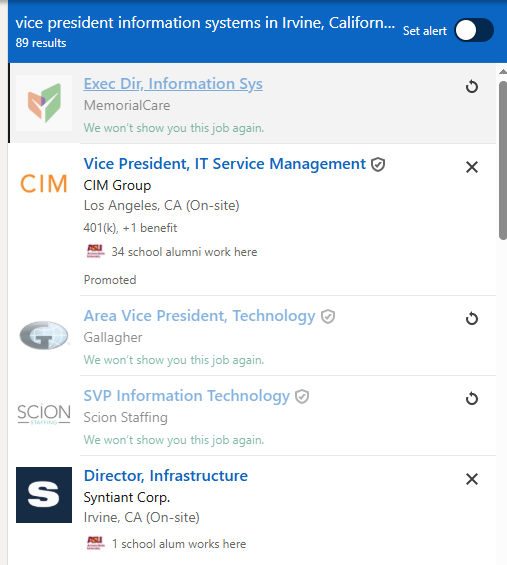
@LinkedInHelp Hi - when I click the X to "don't show me this job" ... they still show up. This has been an issue for over a year, on multiple devices, across multiple platforms on the client side. This seems like it's a "you" thing, not a "clear your cache/cookies" thing.
English
Hello! I appreciate you contacting us. I'm eager to help you with any LinkedIn-related inquiries you may have. For assistance, please DM your query along with the email ID and full name linked to your LinkedIn profile. Thank you! -ST
English